
Acting
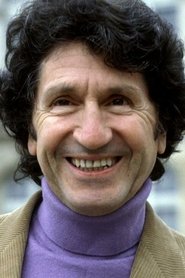
Marcel Mouloudji
Born — Died
1922-09-16 — 1994-06-14
Place of birth
Paris, France
Known for
Acting
Credits
54 titles
Marcel Mouloudji, born September 16, 1922 in the 4th arrondissement of Paris and died June 14, 1994 in Neuilly-sur-Seine is a French-Algerian singer, songwriter, painter and actor. His songs, alternately committed and sentimental, evoke love, war, nostalgia between sadness and loneliness. He has notably interpreted texts by poets such as Boris Vian, Louis Aragon and Philippe Pauletto. Marcel Mouloudji was born in 1922 in Paris to a bricklayer father and a housekeeper mother. His father, Saïd Mouloudji was born in 1896 in French Algeria in the Kabyle village of Leflaye (tribe of Aït Waghlis, daïra of Sidi-Aïch), and his mother, Eugénie Roux is a Breton born in Paris in 1901. The family knows…
Known for
 6.8
6.8No synopsis available yet.
Champs-Elysées
1982
 8.5
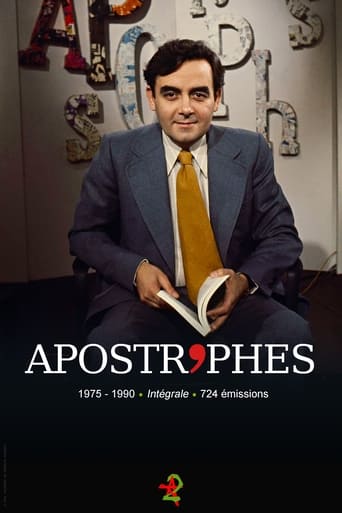
8.5Apostrophes was a live, weekly, literary, prime-time, talk show on French television created and hosted by Bernard Pivot. It ran for fifteen years (724 episodes) from January 10, 1975, to June 22, 1990, and was one of the most watched shows on French television (around 6 million regular viewers). It was broadcast on Friday nights on the channel France 2 (which was called "Antenne 2" from 1975 to 1992). The hourlong show was devoted to books, authors and literature. The format varied between one-on-one interviews with a single author and open discussions between four or five authors.
Apostrophes
1975
 6.0
6.0A talk show presented by Michel Drucker
Les Rendez-vous du dimanche
1975
 6.0
6.0No synopsis available yet.
Midi trente
1972
 7.5
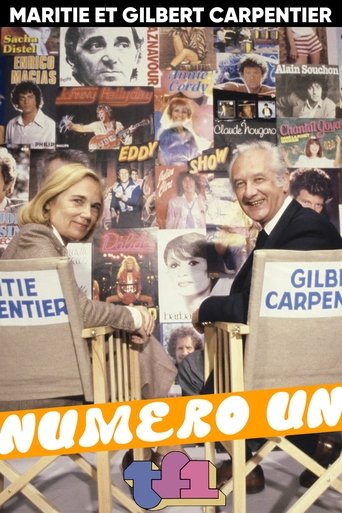
7.5A French variety show.
Numéro un
1975
 8.0
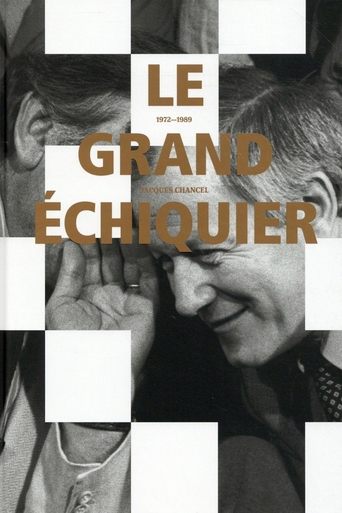
8.0Le Grand Échiquier is a French variety television program created and presented by Jacques Chancel. It aired at 8:30 pm on the first channel of the ORTF from January 12, 1972 to July 12, 1972, then on the second color channel of the ORTF from September 1972 to December 1974, and finally on Antenne 2 from January 1975 to December 21, 1989. The program returned to France 2 on December 20, 2018 and is hosted by Anne-Sophie Lapix.
Le Grand Échiquier
1972
Film credits
1950s · 18 titles
 6.7
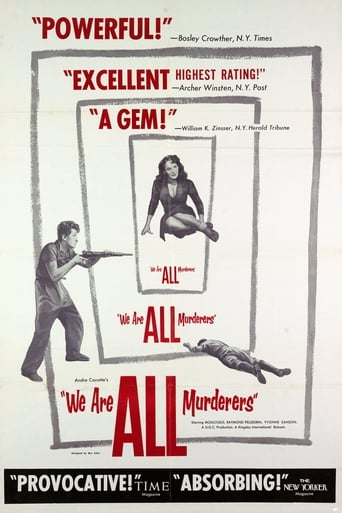
6.7Originally titled Nous Sommes Tout des Assassins, We Are All Murderers was directed by Andre Cayette, a former lawyer who detested France's execution system. Charles Spaak's screenplay makes no attempt to launder the four principal characters (Marcel Mouloudji, Raymond Pellegrin, Antoinine Balpetre, Julien Verdeir): never mind the motivations, these are all hardened murderers. Still, the film condemns the sadistic ritual through which these four men are brought to the guillotine. In France, the policy is to never tell the condemned man when the execution will occur--and then to show up without warning and drag the victim kicking and screaming to his doom, without any opportunity to make peace with himself or his Maker. By the end of this harrowing film, the audience feels as dehumanized as the four "protagonists." We Are All Murderers was roundly roasted by the French law enforcement establishment, but it won a special jury prize at the 1952 Cannes Film Festival.
We Are All Murderers
1952
 7.0
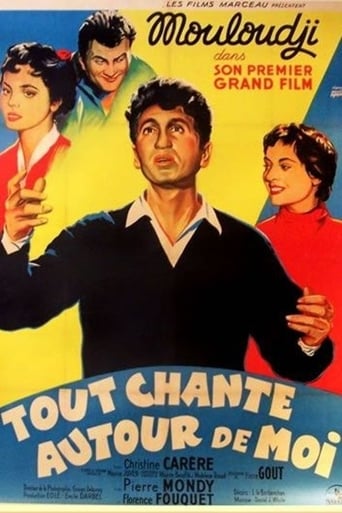
7.0Georges works in a small-town drugstore. Passionate about music, he writes songs. When Anne-Marie, whom he loves, loses her parents, he leaves with her for Paris, protecting her because she is blind. His friends Paul and Marthe put them up in the vacant apartment of the publisher Recordier. When he returns, he's irritated, but Anne-Marie sings Georges' songs so well that he makes her a radio star. Georges flies into a rage, slamming doors. An upset Anne-Marie has an accident. Operation restores her sight. All that's left for good Paul to do is reunite the brave Georges with the sweet Anne-Marie.
Tout chante autour de moi
1954
 3.8
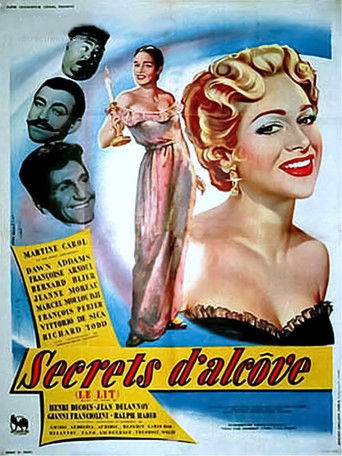
3.8Four-episode Franco-Italian omnibus film. Four men from different national and cultural background take refuge in a cabin after being sidetracked by bad weather on their way to conference.
The Secrets of the Bed
1954
 5.7
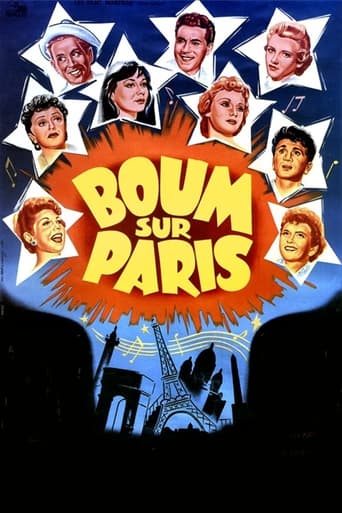
5.7In the early 1950s, the popular radio show "La Kermesse aux Étoiles", hosted by the famous Jean Nohain, mixing lottery games and performances of various artists, will be disrupted by the adventures of a man and his fiancée seeking to recover a dangerous bottle of perfume (explosive) which was unfortunately mixed with the prizes to be won ...
Boom on Paris
1954
 8.8
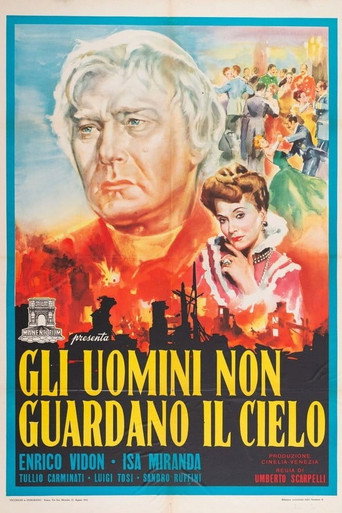
8.8No synopsis available yet.
The Secret Conclave
1952
 5.2
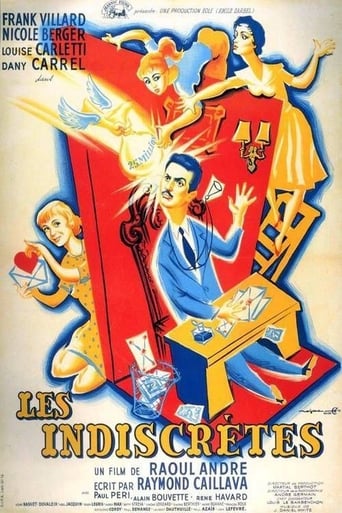
5.2A dying man entrusts 25 million to a young girl's care, but she's afraid of being suspected of theft.
The Indiscreet
1956
 6.5
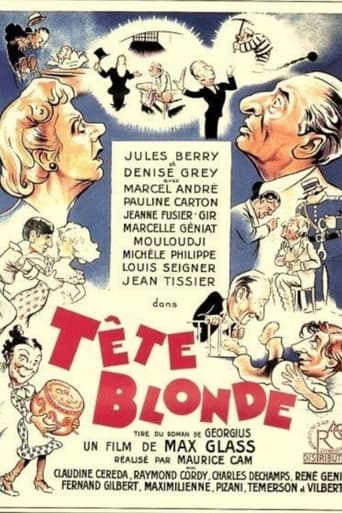
6.5When he finds a package in the metro, given this period of restrictions, Mr. Truche thinks it may be a good deal, he takes it home but discovers a woman's head inside. A friend of Mr. Truche having just disappeared, the superintendent accuses her of having murdered her and discovers the head buried in his cellar. But the girlfriend, whom Mr. Truche loves platonically, returns from the countryside and at the same time we spot the assassin of the unknown woman.
Tête blonde
1950
 6.1
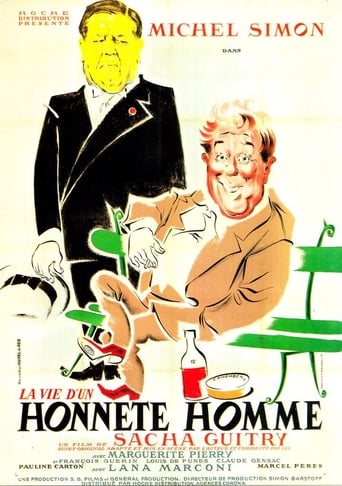
6.1La Vie d'un honnête homme English: The Virtuous Scoundrel, is a French comedy drama film from 1953, directed by Sacha Guitry, written by Sacha Guitry, starring Michel Simon and Louis de Funès.
The Virtuous Scoundrel
1953
 5.7
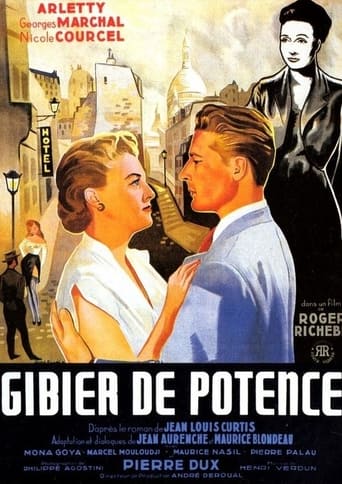
5.7Back from the war, Marceau Le Guern remembers. Educated in an orphanage run by Dominican brothers, he fell into misery when he left it. His only asset was his good looks, which did not escape the attention of Madame Alice, a shady woman who persuaded him to pose for pornographic photos meant for lonely aging women. Marceau also served as a gigolo before the war and captivity put an end to this juicy business. Now he wants to start a new life, all the more as ha has found love in the person of a pure young lady named Dominique. But Madame Alice won't hear of it...
Gigolo
1951
 6.4
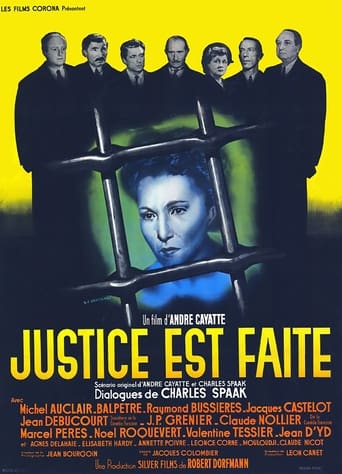
6.4Elsa Lundenstein is accused of having murdered her lover. The jury discusses the case vividly. All members are somehow prejudiced because of personal life experience and subsequently each member reads something different into the presented facts.
Justice Is Done
1950
 6.0
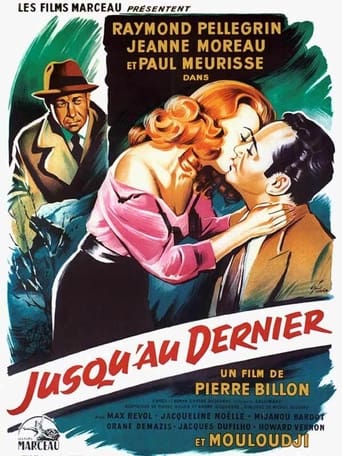
6.0Just released from prison after serving a six-month sentence, Fernand Bastia goes into hiding. He has indeed double-crossed his gang by keeping part of the product of a robbery for himself. Thanks to his sister Marcella, Fernand has taken refuge in a small circus where she works. There, he falls in love with Gina but also arouses the jealousy of Quedchi, a fairground stall-holder who has seen him hiding the stolen money. After a while, Fredo Riccioni, the boss of the gang and his men, manage to trace him...
Until the Last One
1957
 5.5
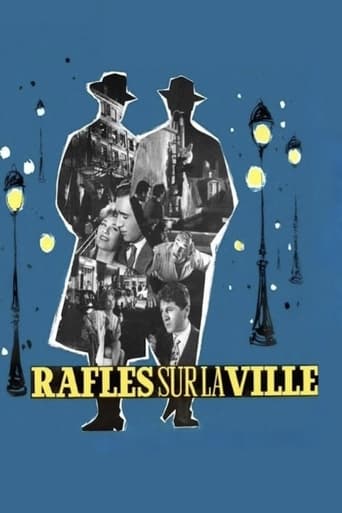
5.5Michel Piccoli plays a police inspector whose best friend is murdered on the orders of gang boss Charles Vanel. The inspector knows full well that Vanel is too crafty and well-connected to ever stand trial for his crime, so he carefully lays a subtle trap for his adversary. Unfortunately, both Piccoli and Vanel are thwarted by a pair of scheming females.
Sinners of Paris
1958
 8.0
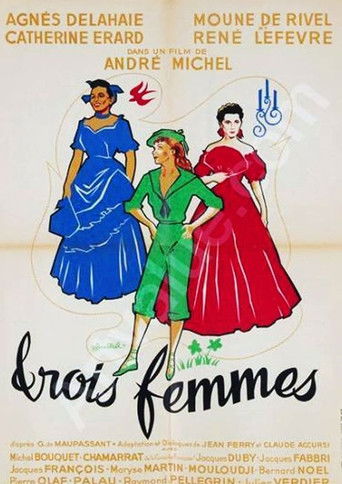
8.0The short stories of Guy de Maupassant enjoyed a renaissance in the early 1950s, thanks in great part to the Max Ophuls production Le Plaisir. In Trois Femmes, three De Maupassant stories are dramatized, each conveying the central theme of women falling in love. In the first, a black female carnival entertainer causes an uproar when she falls in love with a white soldier. In the second, a young bride is pressured into having a baby to collect a huge inheritance. And in the final episode, a pregnant girl is "adopted" and protected by a small circle of friends. In standard De Maupassant fashion, each of the three stories in Trois Femmes is capped by a surprise twist.
Three Women
1952
 9.0
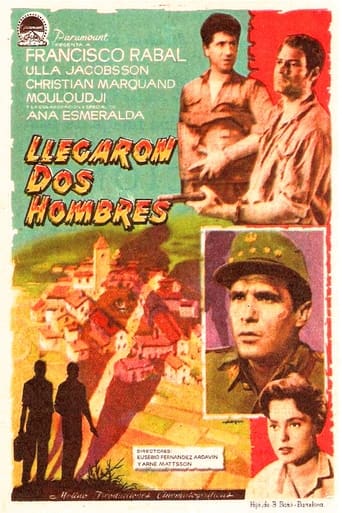
9.0In the darkness gunfire is heard. On a road near a Spanish city an abandoned prison-van is parked. Next to the van lies two dead guards. The two prisoners they transported have escaped.
Two Men in Town
1959
 9.0
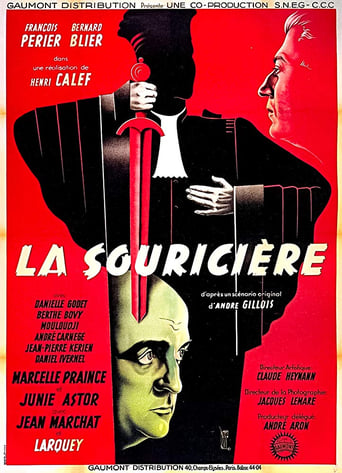
9.0A young rogue kills an old lady to rob her. Arrested, he believes it is for this crime, hides nothing from his lawyer, who soon tells him that he is only accused of another theft prior to his crime. Sentenced to six months suspended prison sentence, he will also have to answer for the crime of the old lady.
Sorceror
1950
 4.7
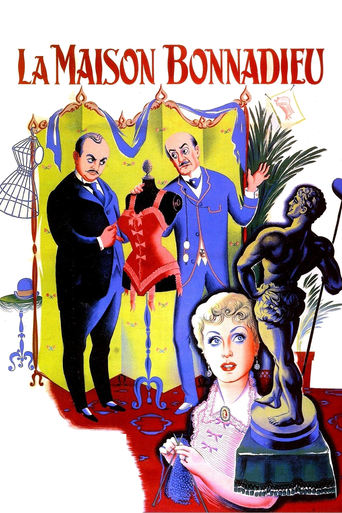
4.7Felix is a middle-aged bourgeois husband. Much to his discomfort, he learns that his wife Gabrielle is carrying on with a young man--a very young man. Rather than express outrage, Felix decides that there's something lacking in him. He spends the rest of the picture trying to keep his wife by altering his own personality and outlook.
The Bonnadieu House
1951
4.7Felix is a middle-aged bourgeois husband. Much to his discomfort, he learns that his wife Gabrielle is carrying on with a young man--a very young man. Rather than express outrage, Felix decides that there's something lacking in him. He spends the rest of the picture trying to keep his wife by altering his own personality and outlook.
The Bonnadieu House
1951
In this leftist short named after a French military unit in the Algeria War, a youth who had been called up returns to his hometown and tries to enjoy life and love but is haunted by his memory of tortures and executions.
58.2/B
1958
1940s · 14 titles
 7.9
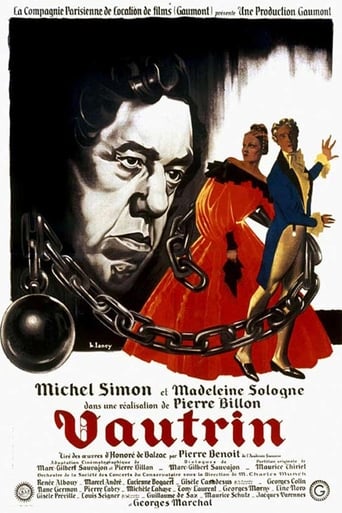
7.9A famous convict Jacques Collin, alias Trompe la mort, or abbot Carlos Herrera, also called Vautrin, escapes from prison. Chance makes him meet Lucien de Rubempré, an impetuous and eternal lover who, when he is dismissed, collapses. Moved by this fragility, he takes him under his wing, and will do everything possible to ensure that his creature reaches happiness, even if it means imagining the worst shenanigans and other scams, with the help of a band of clever villains.
Vautrin the Thief
1943
 5.6
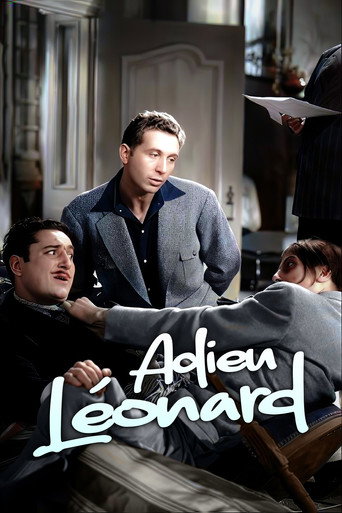
5.6A bungling thief is threatened by one target with blackmail, unless the thief will kill his own cousin, a wealthy eccentric who is considered the village idiot.
Adieu Léonard
1943
 6.0
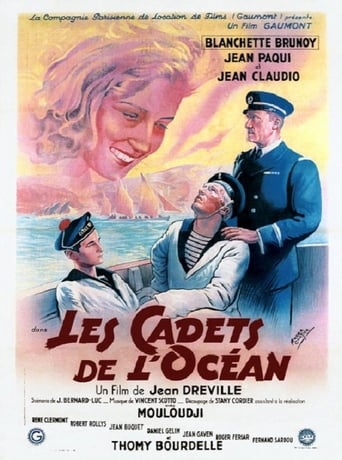
6.0In the harbor of Toulon, on the “Ocean” training ship, the apprenticeship of the cabin boys and experts of the Navy is punctuated by permissions in town, friendships, bullying, and loves.
Les Cadets de l'océan
1945
 6.8
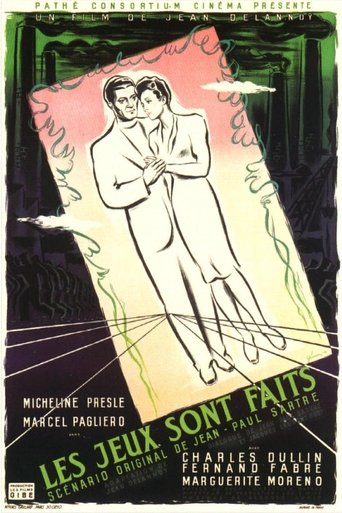
6.8A society heiress and a resistance fighter are tragically killed at the same moment and meet in the afterlife. They are offered a second chance at life if they can prove their love is real or be doomed to roam the earth as ghosts.
The Chips Are Down
1947
 7.0
7.0Loursat, a lawyer, lives with his daughter Nicole in a sinister and vast bourgeois residence. Abandoned for nearly twenty years by his wife, the brilliant lawyer has sunk into alcoholism and his relationship with his daughter is virtually non-existent. However, one day the corpse of a stranger is discovered in the residence of Loursat. Nicole, who frequents a gang of young people who escape boredom by stealing cars and other objects, is immediately suspected.
Strangers in the House
1942
 8.5
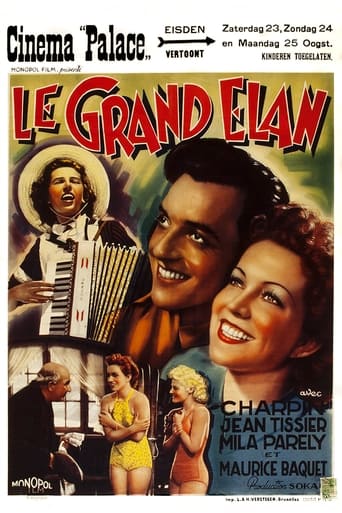
8.5The owner of the place of Chamonix covets the inn, run by the Michel's uncle, whose business goes bad. Michel decides to participate in a ski competition to help uncle.
They Met on Skis
1940
 8.0
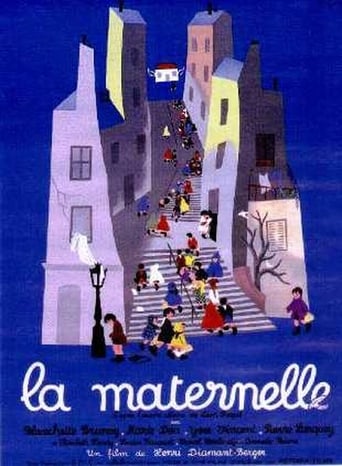
8.01948. Madeleine is the headmistress of a kindergarten in Ménilmontant. Dr Libois, the school doctor, is very close to her heart. When Rose, a new helper comes to the school, Libois is impressed at once by her understanding of the little ones and her dedication to them. Little by little, Libois grows fond of Rose while becoming estranged from Madeleine. He eventually marries Rose.
Kindergarten
1949
 5.5
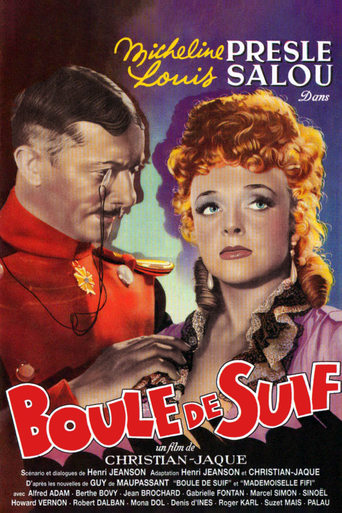
5.5During the stagecoach trip of a frightened group of inhabitants of Rouen, Elisabeth Rousset, known as "Boule de Suif", renders these people a signal service, but comes up against their stupidity and their sufficiency. A little later, Boule de Suif assassinates the formidable Prussian lieutenant whom his friends had nicknamed Fifi and who shamelessly displayed his taste for pillage and his sadistic tendencies.
Angel and Sinner
1945
 9.0
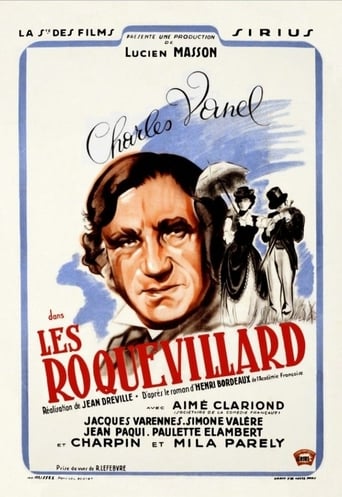
9.0France, 1880. Francois Roquevillard is a respected lawyer in Chambery and the head of a family that prides itself on its impeccable morals. Francois's world rapidly begins to fall apart when his son Maurice elopes to Italy with Edith Frasne, the wife of an esteemed notary.
The Roquevillards
1943
 7.5
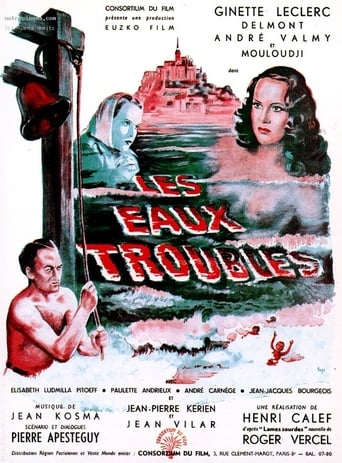
7.5A woman returns to her hometown along the French coast, seeking answers about the death of her brother.
Troubled Waters
1949
 9.0
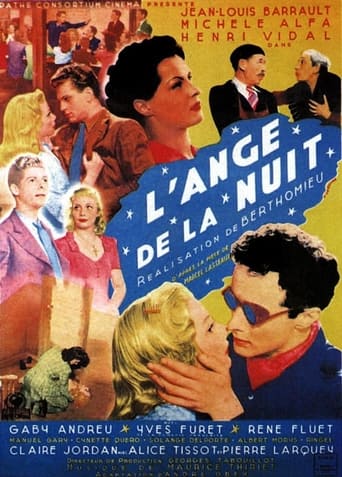
9.0A young sculptor presides over the destinies of a student club where a miserable young girl ends up one evening. The treasurer of the association falls in love with the young girl who returns the favor. The war. The sculptor comes back blind. Out of gratitude, the young girl marries him and restores his confidence in his talent; out of discretion, the treasurer steps aside.
Angel of the Night
1944
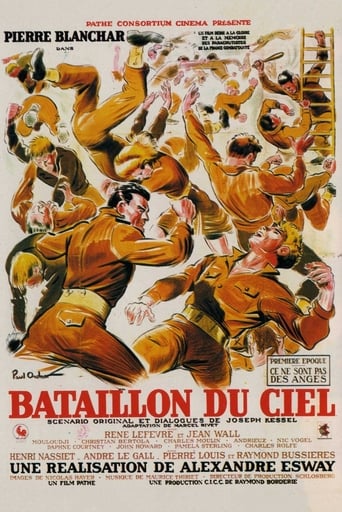 6.6
6.6Film in two eras.1st era: They are not angels. Chronicle of a Free French parachute training camp during the Second World War. 2nd era: Terre de France. A group of paratroopers landed in Brittany sabotages the German installations.
Sky Battalion
1947
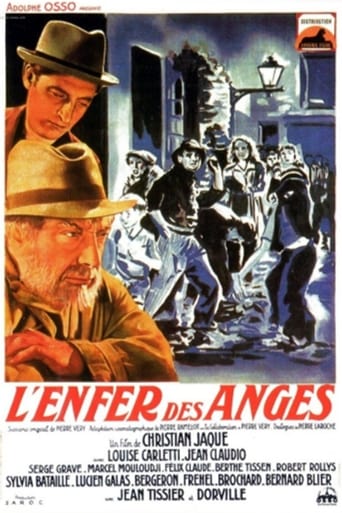 6.9
6.9Abandoned children, left to their own devices and a life of danger, are adopted by a kind man.
Hell of Angels
1941
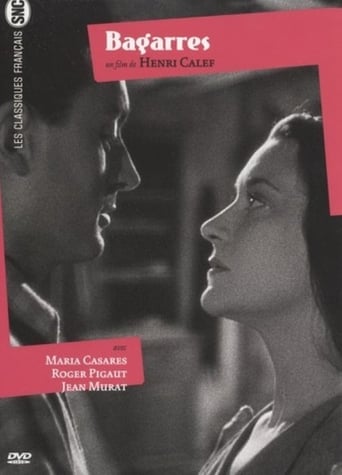 6.2
6.2A proud femme fatale who works at a mountainous farm property manages, after being prodded by her lover, to become the heiress, but she plays the rival men against each other.
Wench
1948
1930s · 8 titles
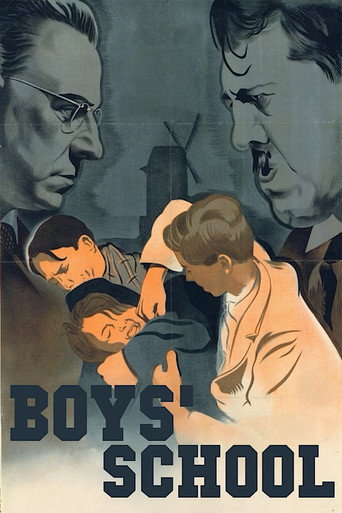 7.4
7.4In a college, three friends form a secret society. Their objective - going to America. One night, after one of their secret meetings, one of them sees a man coming out from a wall. The next day, after he talks about it, he disappears. Then, the second one vanishes. Are they gone to their dreams? That's when the art teacher is murdered. Suspicions now are too high so the third one decides to investigate.
Boys' School
1938
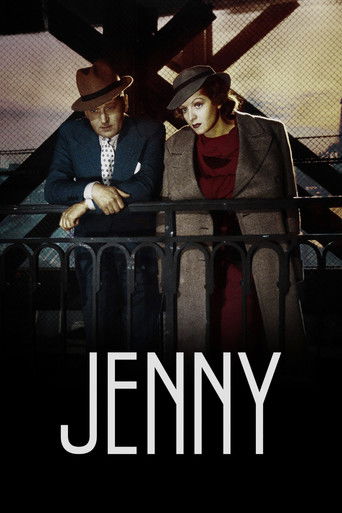 6.1
6.1When her fiancé breaks off their engagement, Danielle leaves London and returns to her mother, Jenny, in Paris. With her business partner Benoît, Jenny runs what appears to be a respectable nightclub – it is in fact a place where wealthy men can buy the favours of attractive young women. Oblivious to her mother's professional and personal life, Danielle meets a handsome young man named Lucien, and falls in love with him – not realising that he is Jenny's lover...
Jenny
1936
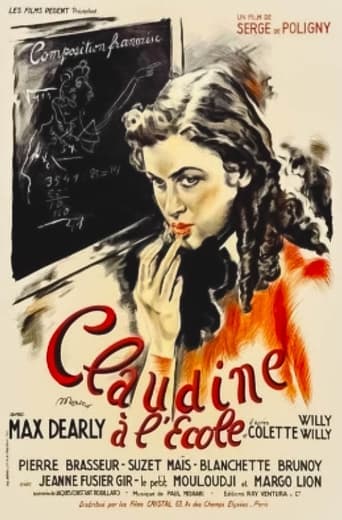 4.6
4.6Poorly educated by her father, a wacky researcher, Claudine is a teenager full of life who loves her small village school run by Miss Sergeant. A new teacher, Aimée Lanthenay, arrives at the school. Seemingly awkward, she is actually an arrivist who manages to get the departure of Miss Sergeant.
Claudine at School
1937
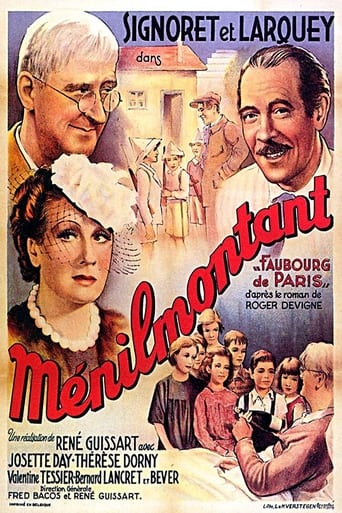 7.0
7.0Because they brought her back a lost piece of jewelry, a very rich lady accedes to the request of three old people and transforms a vacant lot into a park for the neighborhood children.
Ménilmontant
1936
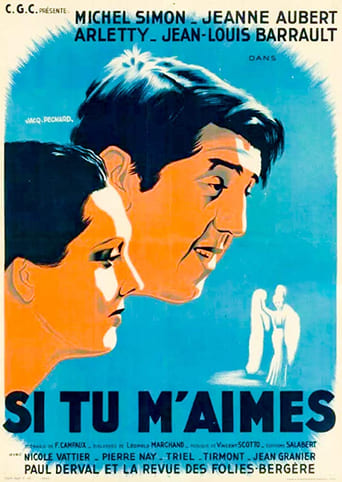 7.0
7.0A star of Les Folies Bergères has to choose between her career and her love for an engineer.
Mirages
1938
Set against the backdrop of the 1937 Paris Exposition, a mistaken identity plot where a travel agent from Morocco is confused by the French police with a dangerous swindler.
Les Gaietés de l'exposition
1938
 6.7
6.7Separated by an ancestral hatred, two small villages of the South see their infant population engaging in war, while the teacher of the first village and the mayor of the second love each other.
Generals Without Buttons
1936
 5.5
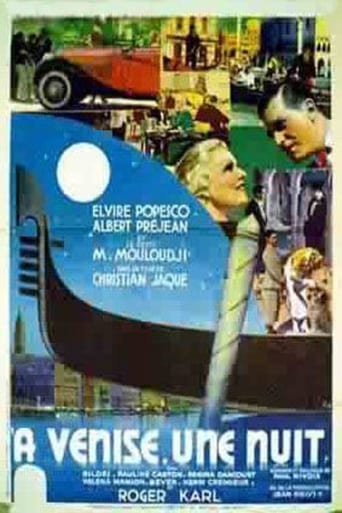
5.5Mortal is ready to do anything to obtain a divorce from his wife Nadia. To compromise her, he needs to find her a lover. He thinks he has found the ideal candidate in the person of a manly private detective by the name of Robert Arnaud. But the experience gets out of Mortal's control as, on the one hand, Robert and Nadia fall in love for good, and, on the other hand, Robert, assisted by resourceful young Toto, manages to expose Mortal as the jewel thief he is.
In Venice, One Night
1937
Series credits
6.8No synopsis available yet.
Champs-Elysées
1982
8.5Apostrophes was a live, weekly, literary, prime-time, talk show on French television created and hosted by Bernard Pivot. It ran for fifteen years (724 episodes) from January 10, 1975, to June 22, 1990, and was one of the most watched shows on French television (around 6 million regular viewers). It was broadcast on Friday nights on the channel France 2 (which was called "Antenne 2" from 1975 to 1992). The hourlong show was devoted to books, authors and literature. The format varied between one-on-one interviews with a single author and open discussions between four or five authors.
Apostrophes
1975
6.0A talk show presented by Michel Drucker
Les Rendez-vous du dimanche
1975
6.0No synopsis available yet.
Midi trente
1972
7.5A French variety show.
Numéro un
1975
8.0Le Grand Échiquier is a French variety television program created and presented by Jacques Chancel. It aired at 8:30 pm on the first channel of the ORTF from January 12, 1972 to July 12, 1972, then on the second color channel of the ORTF from September 1972 to December 1974, and finally on Antenne 2 from January 1975 to December 21, 1989. The program returned to France 2 on December 20, 2018 and is hosted by Anne-Sophie Lapix.
Le Grand Échiquier
1972
8.0Le Grand Échiquier is a French variety television program created and presented by Jacques Chancel. It aired at 8:30 pm on the first channel of the ORTF from January 12, 1972 to July 12, 1972, then on the second color channel of the ORTF from September 1972 to December 1974, and finally on Antenne 2 from January 1975 to December 21, 1989. The program returned to France 2 on December 20, 2018 and is hosted by Anne-Sophie Lapix.
Le Grand Échiquier
1972
 8.0
8.0No synopsis available yet.
Discorama
1959
No synopsis available yet.
Samedi soir
1971
 6.5
6.5No synopsis available yet.
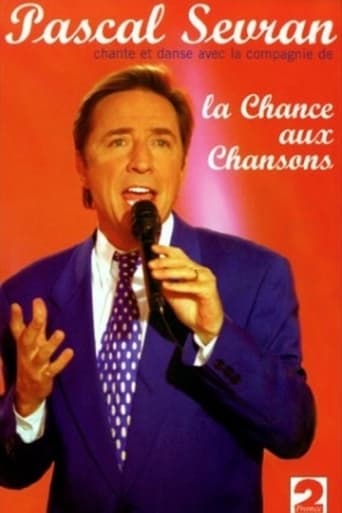
La Chance aux chansons
1984
6.5No synopsis available yet.
La Chance aux chansons
1984
 8.0
8.0No synopsis available yet.
Dim Dam Dom
1965