
Known for
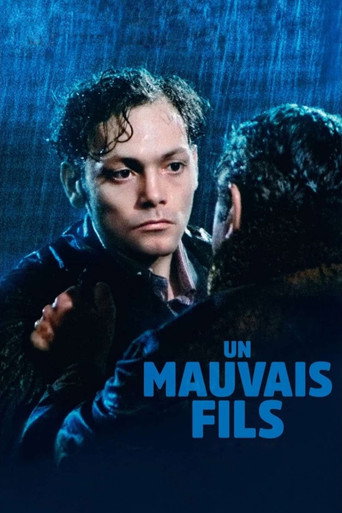 7.4
7.4Bruno is released from prison. He looks for a job and tries to start a new life. His first stop is at his father's apartment.
A Bad Son
1980
According to Bernard Cohn's review, the directors "show that the painter of British society at the beginning of the 18th century was not only ahead of his time in his aesthetic theories, but that he carried within him the signs that allow us to recognize a creator." (Positif, no. 70, June 1965, p. 73.)
William Hogarth
1965
A mysterious individual, silent and taciturn, appears one evening in a Breton inn and arouses curiosity before provoking hatred, fear and, finally, his own death. The film was screened for the 1972 Directors' Fortnight, at the Cannes Festival.
Celui qui venait d'ailleurs
1972
 NR
NRNo synopsis available yet.
Qu’est-ce que la mise en scène - Jean-Luc Godard
1969
Investigation in 1967 on the profession of variety singer. Round table with young singers little known at the time, including Michel Fugain: his hopes and the difficulties of a young singer. They give their opinion on the programmers. Two programmers, Jean Peigné and Lucien Morisse, give their criteria for selecting records. Eddy Mitchell discusses the phenomenon of stardom and the keys to success (source: Média Scérén).
Idoles et chanteurs II : La chanson, un métier
1967
Evocation of André Breton's role in the surrealist movement, on images of landscapes, Paris, surrealist paintings, faces of young girls and ruins of castles. The main themes addressed: poetry, love, freedom. (source: Media-Scéren)
André Breton (1896-1966) : Je cherche l'or du temps
1968
Behind the camera
7.4Bruno is released from prison. He looks for a job and tries to start a new life. His first stop is at his father's apartment.
A Bad Son
1980
According to Bernard Cohn's review, the directors "show that the painter of British society at the beginning of the 18th century was not only ahead of his time in his aesthetic theories, but that he carried within him the signs that allow us to recognize a creator." (Positif, no. 70, June 1965, p. 73.)
William Hogarth
1965
A mysterious individual, silent and taciturn, appears one evening in a Breton inn and arouses curiosity before provoking hatred, fear and, finally, his own death. The film was screened for the 1972 Directors' Fortnight, at the Cannes Festival.
Celui qui venait d'ailleurs
1972
NRNo synopsis available yet.
Qu’est-ce que la mise en scène - Jean-Luc Godard
1969
Investigation in 1967 on the profession of variety singer. Round table with young singers little known at the time, including Michel Fugain: his hopes and the difficulties of a young singer. They give their opinion on the programmers. Two programmers, Jean Peigné and Lucien Morisse, give their criteria for selecting records. Eddy Mitchell discusses the phenomenon of stardom and the keys to success (source: Média Scérén).
Idoles et chanteurs II : La chanson, un métier
1967
Evocation of André Breton's role in the surrealist movement, on images of landscapes, Paris, surrealist paintings, faces of young girls and ruins of castles. The main themes addressed: poetry, love, freedom. (source: Media-Scéren)
André Breton (1896-1966) : Je cherche l'or du temps
1968
Investigation in 1967 on the profession of variety singer through the testimonies of Michel Fugain whom we follow during a studio recording, of Lucien Morisse artistic director in a record company, of the lyricist and musical arranger of Michel Fugain (Jean Morlier), of the disc-jockey Mini Max. They analyze the keys to success, their respective roles, the evolution of French song in relation to Anglo-Saxon music (source: Média Scérén).
Idoles et chanteurs I : La chanson, un métier
1967