
Sound
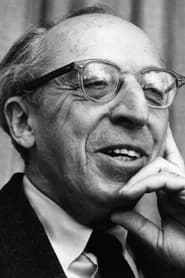
Aaron Copland
Born — Died
1900-11-14 — 1990-12-02
Place of birth
Brooklyn, New York
Known for
Sound
Credits
10 titles
Aaron Copland (November 14, 1900 – December 2, 1990) was an American composer, composition teacher, writer, and later a conductor of his own and other American music. Copland was referred to by his peers and critics as "the Dean of American Composers". The open, slowly changing harmonies in much of his music are typical of what many people consider to be the sound of American music, evoking the vast American landscape and pioneer spirit. He is best known for the works he wrote in the 1930s and 1940s in a deliberately accessible style often referred to as "populist" and which the composer labeled his "vernacular" style. Works in this vein include the ballets Appalachian Spring, Billy the Kid …
Known for
 7.4
7.4The Kennedy Center Honors is an annual honor given to those in the performing arts for their lifetime of contributions to American culture.
The Kennedy Center Honors
1978
 NR
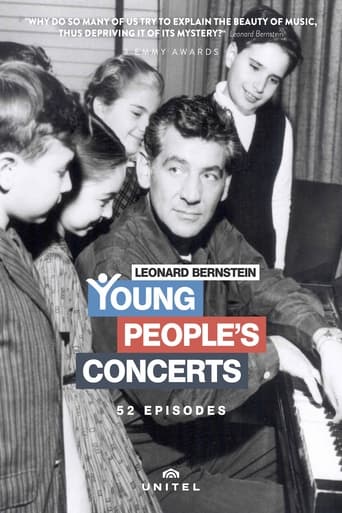
NRFrom 1958 through 1973, renowned conductor and composer Leonard Bernstein and the New York Philharmonic Orchestra thrilled audiences with wonderful concert experiences presented in a sparkling music-with-commentary format: the Young People's Concerts.
New York Philharmonic Young People's Concerts
1958
A look at the activities of the Tanglewood Music Center, America's renowned summer Academy for talented musicians, singers, composers and conductors.
Tanglewood: A Place for Music
1985
 NR
NRGerman-Brazilian production on the life of Brazilian composer Heitor Villa-Lobos.
Bachianas Brasileiras: Meu Nome é Villa-Lobos
1979
 5.0
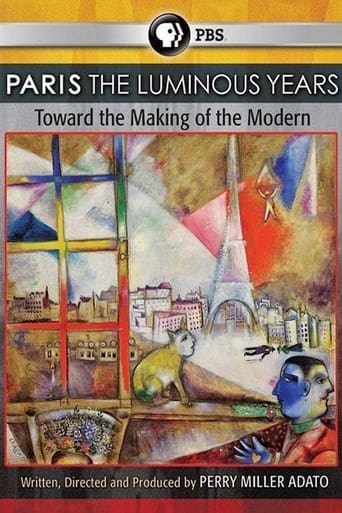
5.0A storm of Modernism swept through the art worlds of the West in the early decades of the twentieth century, uprooting centuries of tradition. The epicenter of this storm was Paris, France. For an incandescent moment from 1905 to 1930, Paris was the magnetic center for radical innovation and experiment, and the Mecca for creative talents who would change the course of art throughout the Western world.
Paris: The Luminous Years
2010
Dramatizations and actual archival film footage and photographs combine to relate the life of American composer Charles Ives and to document the musical background which influenced his work. Composers Aaron Copland and Elliott Carter reminisce about Ives and discuss his music.
Are My Ears on Wrong?: A Profile of Charles Ives
1979
Film credits
1980s · 2 titles
A look at the activities of the Tanglewood Music Center, America's renowned summer Academy for talented musicians, singers, composers and conductors.
Tanglewood: A Place for Music
1985
Copland himself is the key explicator of his own extraordinary musical career, from piano lessons in Brooklyn and study with Nadia Boulanger, a fling as a wild-eyed modernist, and finally to his preeminence in the American musical world. The program features a wealth of Copland music, including ballet sequences with Agnes de Mille dancing in Rodeo and Martha Graham in Appalachian Spring, scenes of Copland conducting, and interviews with Leonard Bernstein and Ned Rorem, who said of Copland, "He invented out of whole cloth what it means to be American." Written by Vivian Perlis and produced by Ruth Leon.
Aaron Copland: A Self Portrait
1985
1970s · 3 titles
NRGerman-Brazilian production on the life of Brazilian composer Heitor Villa-Lobos.
Bachianas Brasileiras: Meu Nome é Villa-Lobos
1979
Dramatizations and actual archival film footage and photographs combine to relate the life of American composer Charles Ives and to document the musical background which influenced his work. Composers Aaron Copland and Elliott Carter reminisce about Ives and discuss his music.
Are My Ears on Wrong?: A Profile of Charles Ives
1979
 NR
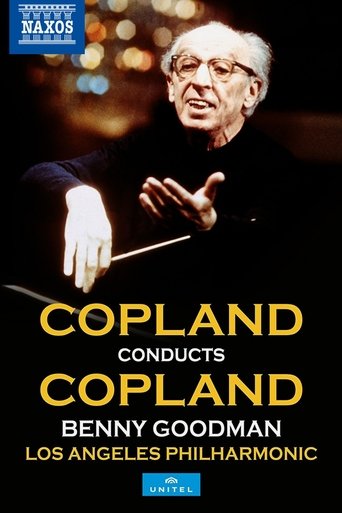
NRThis concert film made in the Dorothy Chandler Pavilion in Los Angeles in 1976 captures a memorable performance conducted by the doyen of American composers, Aaron Copland. It includes some of his greatest and most attractive music, from the patriotic flourish of Fanfare for the Common Man and the spirited orchestral fantasy El Salón México, to the colloquial warmth of his suite from the opera The Tender Land. Of particular importance is the collaboration with the great Benny Goodman in the masterwork he commissioned and premiered, the Clarinet Concerto.
Copland Conducts Copland
1976
Series credits
7.4The Kennedy Center Honors is an annual honor given to those in the performing arts for their lifetime of contributions to American culture.
The Kennedy Center Honors
1978
NRFrom 1958 through 1973, renowned conductor and composer Leonard Bernstein and the New York Philharmonic Orchestra thrilled audiences with wonderful concert experiences presented in a sparkling music-with-commentary format: the Young People's Concerts.
New York Philharmonic Young People's Concerts
1958