
Production
Martin Wiebel
Born
1943-01-28 (83)
Place of birth
Berlin, Germany
Known for
Production
Credits
14 titles
Known for
Annual awarding of the Grimme Awards.
Grimme Award
1964
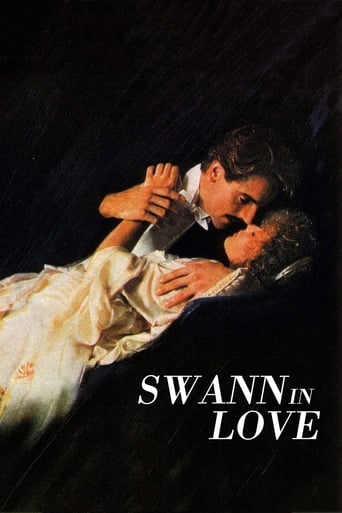 5.5
5.5In Belle Époque Paris, a 19th-century Parisian aristocrat falls in love with a lower-class prostitute who seduces him but never loves him.
Swann in Love
1984
Winterkind tells a tragic story of the Russian Yelena, who after seven years of captivity learns that her son Boris, born in the camp, has been adopted by a German couple.
Winter Child
1997
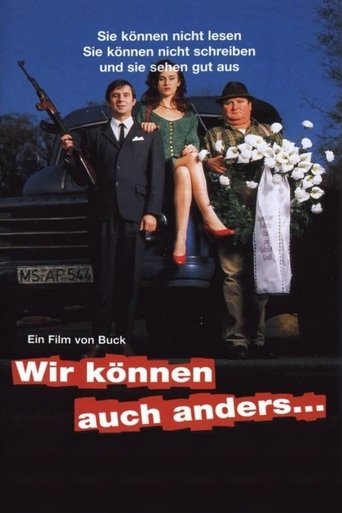 7.4
7.4The brothers Kipp and Most set off to inherit their grandmother's estate. Along the way, they meet Viktor, a deserted Russian soldier who kidnaps them, and Nadine, who joins them voluntarily. On their way to their inheritance, the protagonists get into some seemingly hopeless situations.
No More Mr. Nice Guy
1993
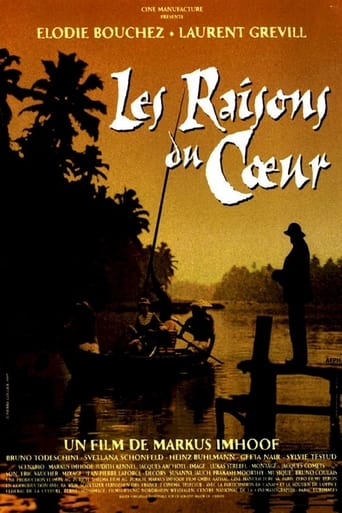 5.2
5.2On her honeymoon on a ship the daughter of a rich plant owner realizes that she's not happy with her marriage. She meets a poor woman on the way to meet her future husband, a missionary in India. The women decide to swap roles...
Fire in Paradise
1997
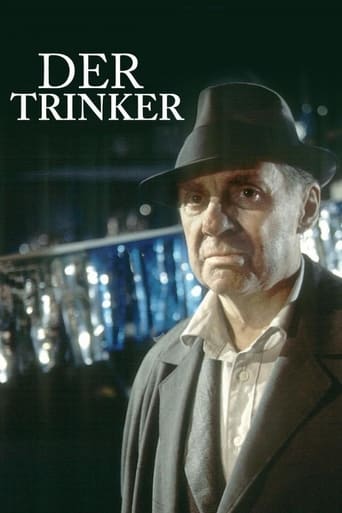 7.3
7.3Hans Fallada tells in his published after the war novel "The drinker" the story of the agricultural wholesaler Erwin Sommer, who flees from his narrow bourgeois relations under the burdens of the new times in the kingdom of the king alcohol, whose liberty and independence promises prove a lie - the only truth of the alcohol. On behalf of the WDR television play Ulrich Plenzdorf has adapted Fallada's 1944/45 novel for a film adaptation by Tom Toelle with Harald Juhnke in the main role of Erwin Sommer.
Der Trinker
1995
Film credits
1990s · 3 titles
Winterkind tells a tragic story of the Russian Yelena, who after seven years of captivity learns that her son Boris, born in the camp, has been adopted by a German couple.
Winter Child
1997
 5.4
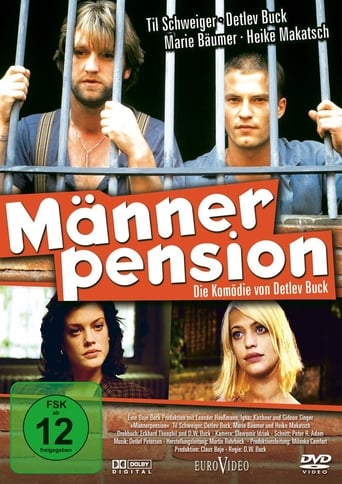
5.4A support program brings the two convicts Gerd and Steinbock into the care of women. There they are supposed to prove that they are capable of integrating into society. Now Gerd stupidly kills a bar owner. This puts an end to their excursion into freedom for the time being.
Männerpension
1996
 6.2
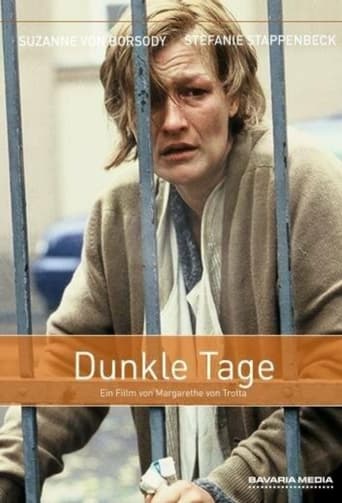
6.2Margarethe von Trotta's TV movie focuses on a woman whose life is destroyed by her addiction to alcohol. Angela Rinser is a happy mother of two children and quite successful in her job as bilingual secretary. The sudden death of her husband changes everything. She starts drinking and loses her job. Her children Felicitas and Max try to hush up their social decline for years because they don't want to live in a foster home.
Dark Days
1999
Series credits
Behind the camera
5.5In Belle Époque Paris, a 19th-century Parisian aristocrat falls in love with a lower-class prostitute who seduces him but never loves him.
Swann in Love
1984
7.4The brothers Kipp and Most set off to inherit their grandmother's estate. Along the way, they meet Viktor, a deserted Russian soldier who kidnaps them, and Nadine, who joins them voluntarily. On their way to their inheritance, the protagonists get into some seemingly hopeless situations.
No More Mr. Nice Guy
1993
5.2On her honeymoon on a ship the daughter of a rich plant owner realizes that she's not happy with her marriage. She meets a poor woman on the way to meet her future husband, a missionary in India. The women decide to swap roles...
Fire in Paradise
1997
7.3Hans Fallada tells in his published after the war novel "The drinker" the story of the agricultural wholesaler Erwin Sommer, who flees from his narrow bourgeois relations under the burdens of the new times in the kingdom of the king alcohol, whose liberty and independence promises prove a lie - the only truth of the alcohol. On behalf of the WDR television play Ulrich Plenzdorf has adapted Fallada's 1944/45 novel for a film adaptation by Tom Toelle with Harald Juhnke in the main role of Erwin Sommer.
Der Trinker
1995
Romy Haag portrays Clarissa Vornfeist who dreams of fame, while Otto Sander in his role as Wilfried plans to transform her into a plastic doll using a prepared broiler.
Plastikfieber
1979
5.4A support program brings the two convicts Gerd and Steinbock into the care of women. There they are supposed to prove that they are capable of integrating into society. Now Gerd stupidly kills a bar owner. This puts an end to their excursion into freedom for the time being.
Männerpension
1996
 4.5
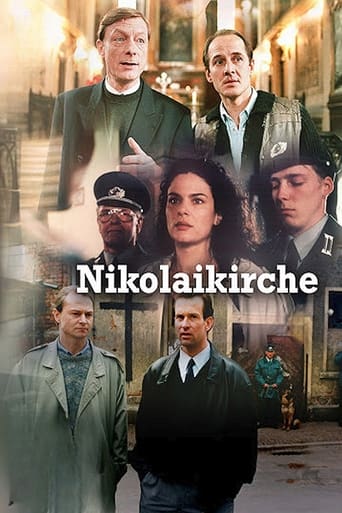
4.5The story of a Leipzig family from 1987 to the Monday demonstrations in 1989. After the death of her father, a high-ranking officer in the People's Police, the daughter joins the resistance movement around St. Nicholas Church. Phenomena such as obedience, followership, spying and resistance are illustrated in this haunting film based on individual people. A film that provides food for thought for the discussion about the fall of the Berlin Wall and recapitulates contemporary history.
Nikolaikirche
1995
No synopsis available yet.
Die Wupper
1985
The TV documentation reconstructs the incidents between May and November 1989 from the point of view of the Politburo of the GDR (German Democratic Republic). The incidents include the fraud of local elections, the opening of Hungary's borders towards Austria, the ensuing tide of East German refugees to Hungary and Czechoslovakia for transfer to West Germany, the pompous ceremonies at GDR's 40th anniversary, the inept transactions the Politburo took to salvage the situation, the resulting dismissal of their leader Erich Honecker, the international press conference in East Berlin on 9th November 1989, at which Politburo member Günther Schabowski erroneously announced the immediate opening of the 'Iron Curtain', which finally led to the collapse of socialism in the GDR and the other East Bloc countries.
Wer zu spät kommt – Das Politbüro erlebt die deutsche Revolution
1990
 7.0
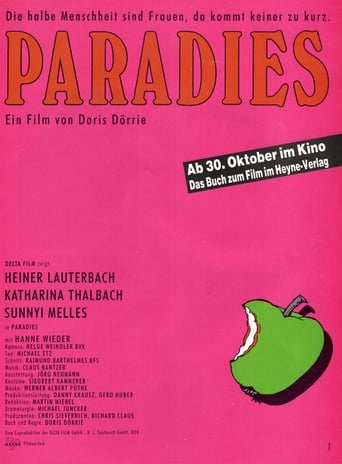
7.0Viktor and Angelika are a straight couple. He is a professor of veterinary science and she has studied art history. Both are more interested in their hobbies and professions than in each other; also, Viktor isn't terribly interested in satisfying his wife anymore. Their upright relationship changes dramatically when Viktor gets to know Lotte, a former school friend of Angelika's. Back in school, Lotte would have done anything for Angelika.
Paradise
1986