

Directing
Aldo Francia
Born — Died
1923-08-30 — 1996-10-15
Place of birth
Valparaíso
Known for
Directing
Credits
12 titles
If there is a filmmaker who embodies the so-called New Chilean Cinema, it is Aldo Francia. Although he was the author of a short filmography of only two finished films, Valparaíso mi amor (1969) and Ya no basta con rezar (1972), France understood cinema from the first moment as a collective action and his individual authorship always remained in the background with respect to his most beloved creation: the Viña del Mar Film Festival. A pediatrician by profession, Aldo Francia developed as a self-taught filmmaker. As he recalls in his book New Latin American Cinema in Viña del Mar (1990), his first approach to cinema took place in Paris on a cold autumn afternoon in November 1949. "On one …
Known for
 7.2
Assigned to South America, US official Philip Michael Santore is employed by a counterinsurgency agency. His position makes him a target for a local band of guerrillas, and, before long, Santore is kidnapped. As a prisoner, he undergoes interrogation, shedding light on the violent situation in the country. Once the insurgents are done with their questioning, they must decide whether Santore lives or dies.
State of Siege
1972
 NR
Experimental film by Aldo Francia that consists in diverse situations through the 123 steps of the Santa Justina staircase in the Cerro Larraín of Valparaíso.
La Escala
1964
 NR
Unfinished film made by Aldo Francia in 1966. It tells the story of a solitary subject who walks the streets of Valparaíso.
Solo
1966
 7.5
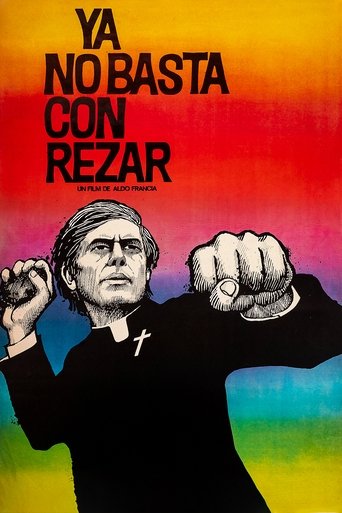
Many socially-concerned priests in Catholic Latin America have at some time left their parish churches to go and work in the fields and factories of the poor. Such priests, usually adherents of "liberation theology," are called "worker-priests." This Chilean film tells the story of how one man became a "worker-priest" and won the trust of the poor.
Enough Praying
1972
 NR
Anthropological record with aspects of this festival, when it did not yet have the subsequent production levels.
Carnaval
1960
 6.8
A story inspired by real events that took place in the port of Valparaiso. Four poor children have been abandoned because their father, who is out of work, steals cattle to feed them and the police have arrested him. The story takes up the children's point of view and is structured in four episodes that describe their inevitable descent into the world of marginality and crime. Faced with life in a brutal way, from their problematic social situation, they head towards a marginality that is difficult to avoid.
Valparaiso My Love
1969
Film credits
Behind the camera
NRExperimental film by Aldo Francia that consists in diverse situations through the 123 steps of the Santa Justina staircase in the Cerro Larraín of Valparaíso.
La Escala
1964
NRExperimental film by Aldo Francia that consists in diverse situations through the 123 steps of the Santa Justina staircase in the Cerro Larraín of Valparaíso.
La Escala
1964
NRUnfinished film made by Aldo Francia in 1966. It tells the story of a solitary subject who walks the streets of Valparaíso.
Solo
1966
7.5Many socially-concerned priests in Catholic Latin America have at some time left their parish churches to go and work in the fields and factories of the poor. Such priests, usually adherents of "liberation theology," are called "worker-priests." This Chilean film tells the story of how one man became a "worker-priest" and won the trust of the poor.
Enough Praying
1972
NRAnthropological record with aspects of this festival, when it did not yet have the subsequent production levels.
Carnaval
1960
6.8A story inspired by real events that took place in the port of Valparaiso. Four poor children have been abandoned because their father, who is out of work, steals cattle to feed them and the police have arrested him. The story takes up the children's point of view and is structured in four episodes that describe their inevitable descent into the world of marginality and crime. Faced with life in a brutal way, from their problematic social situation, they head towards a marginality that is difficult to avoid.
Valparaiso My Love
1969
 NR
A tour of one of the most famous districts of Paris, marked by the passage of umbrellas, especially a red one that seems to be the protagonist of the short film.
Rain in the Latino Quarter
1961
 NR
A counterpoint between what happens in a Parisian cemetery and in the Latin quarter of the same city.
On the Day of the Dead
1961
 NR
Sequence filmed at the popular religious festival of the Virgin of Andacollo, Chile.
Baile de los Chinos
1961