

Acting
Ernst Meyer
Born — Died
1932-03-02 — 2008-05-21
Place of birth
København, Danmark
Known for
Acting
Credits
45 titles
Known for
 7.9
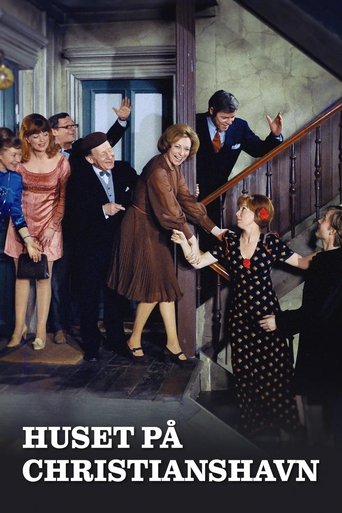
The series follows the residents of an apartment building on Copenhagen's Christianshavn, as they go about their daily lives and challenges. There is Olsen, a mover with an old fashion view of the world, Clausen who runs the local pet shop, Egon the career focused assistant, their wives who work hard to keep their spouses lives together, the young couple Tue and Rikke who recently moved in, the hard working caretaker Meyer, who never puts in to much effort, and of course Emma, the innkeeper of Rottehullet, where all the important decisions are made while running up the bar tab. The series was produced by Nordisk Film for Danmarks Radio TV station between the years 1970-77. The series' first director was Ebbe Langberg, then Erik Balling and Tom Hedegaard respectively. The series was conceived by an author team of well-known Danish authors such Leif Panduro, Benny Andersen, and Lise Nørgaard.
The House at Christianshavn
1970
 9.0
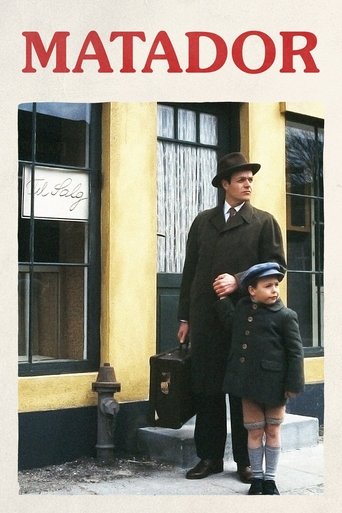
Matador is a Danish TV series produced and shown between 1978 and 1982. It is set in the fictional Danish town of Korsbæk between 1929 and 1947. It follows the lives of a range of characters from across the social spectrum, focusing specifically on the rivalry between the families of two businessmen: The banker Hans Christian Varnæs, an established local worthy, and social climber Mads Skjern, who arrives in town as the series opens. The name Matador was taken from the localised edition of the boardgame Monopoly, also the series' tentative English title. In addition, in contemporary Danish a "matador" is often used to describe a business tycoon, in the series referring to the character of Mads Skjern and his craftiness as a self-made entrepreneur. Directed by famed Danish film maker Erik Balling, Matador was the idea of author Lise Nørgaard who wrote the bulk of the episodes alongside Karen Smith, Jens Louis Petersen and Paul Hammerich. The series is one of the most well-known and popular examples of Danish television and represents the peak of longtime development of Danish TV drama by the public service channel Danmarks Radio. The series has become part of the modern self-understanding of Danes, partly because of its successful mix of melodrama and a distinct warm Danish humour in the depiction of characters, which were portrayed by a wide range of the most popular Danish actors at the time; but also not least because of its accurate portrayal of a turbulent Denmark from around the start of the Great Depression and through Nazi Germany's occupation of Denmark in World War II.
Matador
1978
 4.2
A story about Carlsberg founder JC Jacobsen, his son Carl, and their struggle to create a brewing company, and simultaneously a look at fifty years of Danish history.
Bryggeren
1996
 NR
No synopsis available yet.
Landsbyen
1991
 7.8
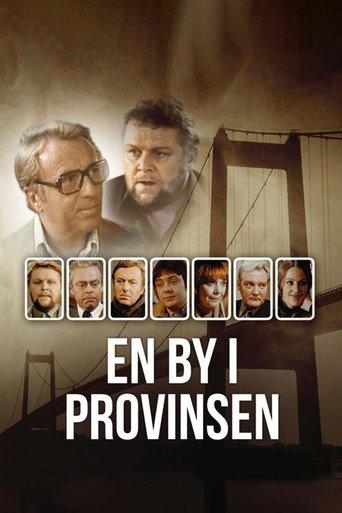
In 1970s Denmark, the criminal police in a provincial town solve different criminal cases, when the police was dominated by men and DNA was not yet a tool in investigation.
A Town in the Province
1977
 10.0
No synopsis available yet.
Anthonsen
1984
Film credits
1980s · 2 titles
 6.0
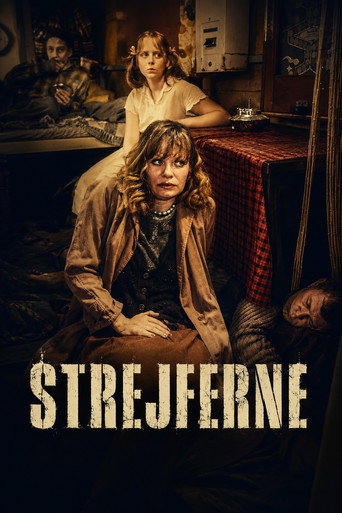
In a dystopian future, Denmark's lower classes must live as nomads—living in vans, always on the move, endlessly driving on a system of ring roads. Although they try to maintain a certain degree of humanity in their daily lives, there is no room for emotion or compassion among the wanderers.
Strejferne
1980
 7.0
"GEMINI - THE TWIN STARS" is a story of star-crossed friendship, growing from one young man's flight from danger and another's quest for adventure. This lush and romantic thriller moves from New York to Geneva, and from remote Swiss mountain villages to the jet-set night life of Mykonos.
Gemini: The Twin Stars
1988
1970s · 16 titles
 7.3
Egon and his two cronies managed to sneak a fortune with them to Spain. Here they live a life in a whirl of pleasures, but they are not truly happy. While Egon always has the money chained to him, Bøffen still manages to steal them. Egon ends up in jail once again, and when he comes out, he has a brilliant plan.
The Olsen Gang on the Track
1975
 7.4
Egon and the gang are hired to stage a robbery of an antique Chinese vase for an economically challenged baron. Naturally they fooled, which infuriates Egon. The gang tries to get back at the baron by switching the vase with a cheap Hong Kong copy. One attempt is made during the barons hunting party, where Egon ends up being bricked up in the catacombs. In another attempt, the gang has to coordinate breaking through several walls at The Royal Theater in Copenhagen with the "Elverhøj" overture.
The Olsen Gang Sees Red
1976
 6.9
When Egon Olsen gets out of Vridlose State Prision once again, his friends Benny and Kjeld do not want to know about his new ingenious plan: they are actually WORKING in a shop! Thus, he has to think of something else to get his hands on the money of some international gangster.
The Olsen Gang Runs Amok
1973
 6.8
Egon plans to exploit knowledge gained during his latest term of incarceration. By stealing the unmanipulated financial records of DanInvest he obtains the majority of the stocks in the department store Magasin du Nord, just in time for their closing sale. The attempt to get the red suitcase that will save the day they rob the main vault at the EEC headquarters in Brussels and end up hijacking a tank.
The Olsen Gang Never Surrenders
1979
 6.9
Some criminal EU ministers plan to turn Denmark into a gigantic fair ground and holiday paradise. Egon gets his hand at some important documents which could both make him rich and take care of Denmark's future.
The Olsen Gang Goes to War
1978
 7.0
The Olsen gang in Jutland. Ones again Egon Olsen has a plan when he gets out of Vridslose State Prison. He has found out that the Germans left a large sum of money (in American dollars and gold bars) in one of their commando bunkers, when they were defeated in 1945; the only problem it's in Jutland. Egon, Benny and Kjeld "appropriate" a car and drives to Jutland along with Kjelds wife and child Yvonne and Borge. They look forward to fooling the the people in Jutland, but of course, things don't go quite as planed. It ends with Benny, Kjeld, Borge and Yvonne sitting in the train back to Copenhagen, were they are overtaken by Egon in his car on the road next to the track. This is the last time the Olsen gang goes to Jutland.
The Olsen Gang in Jutland
1971
 9.0
No synopsis available yet.
Pelsen
1971
 7.0
Egon is starting to be a little forgetful; he forgot the zone number, so he fails to open the strongbox. When he gets out of Vridslose State Prison, Kjeld and Benny have become associates of Yvonne's cousin Georg from America. He is not just some old-fashioned strongbox thief that can't remember like Egon, but a young hip IT criminal, that thinks that everyone else is inferior. However, Egon doesn't take lightly to the Georg's patronizing so he sabotages Georg's computer and ruins his cup. This time Egon's ambitions reaches a new high, when he and his gang break in to the World Bank, and they get away with it. Of course, thanks to Yvonne, they aren't rich very long.
The Olsen Gang Outta Sight
1977
 6.8
After his usual stay behind bars, Egon has another cunning plan involving millions. They rob over 4 million from a money transport. The gang keeps a low profile and hide the money. But it's stolen by "Kongen" and "Knægten", who immediately start living it up - in the penthouse suite at the Sheraton. The suitcase with the money changes hands several times, before Kongen's daughter takes of with all the money.
The Olsen Gang's Big Score
1972
 6.1
The last day of school before the summer, held farewell to the school year. Hurray a long summer ahead. Rikke joined the feminist and is demonstrating against marriage.
Kid Gang on the Go
1971
 6.0
Petty crook “Viffer” Hansen pulls off a daring $10 million swindle selling Copenhagen’s Rundetårn to an oil sheikh, then substitutes the loot with expertly forged bills thanks to his counterfeit friend Valde. Hounded by both the mob’s Don Luigi, who promised Viffer the hand of his shrill-voiced daughter Elvira as reward, and the betrayed sheikh’s thuggish enforcer Olfert, Viffer adopts a new disguise, suffers amnesia in a madhouse, and narrowly escapes to face the final showdown when Luigi and Elvira arrive in Denmark to collect on his broken promise.
Me, Too, in the Mafia
1974
 6.4
A comedy about a Danish private detective, normally just occupied with cases about unfaithful spouses, is suddenly involved in murder, arms deal, revolution in Guateragua, briefcase full of money and the Danish intelligence agency.
Revolution My A..
1970
 8.7
Mølleby is a small, cozy market town. The year is 1924, and the sight of a Rolls Royce from Copenhagen is a sensation. But all is not as idyllic as it seems. The town's new mayor is trying to build a new brickworks to ensure the town's growth and future, but the previous mayor is doing everything he can to thwart these ambitious plans...
The Moelleby affair
1976
 6.8
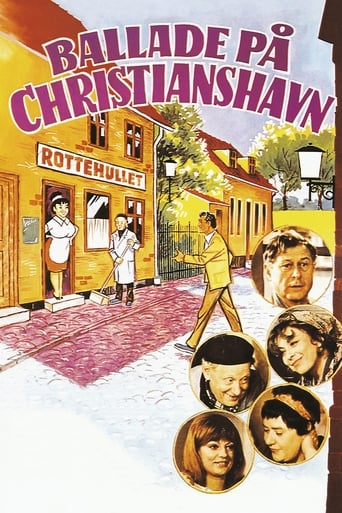
Residents of the old house are quite happy with their existence. But once they find out that the authorities plan to demolish the entire neighborhood including their house in order to build a business center they decide to unite and fight the plan...
Our Home Is Our Castle
1971
 5.7
The family Gyldenkål is actually called Iversen, but have changed their name, after numerous problems with the IRS, loan sharks and employers. Using clever scams, the family builds up a reputation as a wealthy and respectable part of society.
The Goldcabbage Family
1975
 10.0
No synopsis available yet.
En ordentlig omgang
1977
1960s · 11 titles
 6.6
A good looking female social welfare worker makes Egon Olsen forget about crimes for some time, but when an American gangster breaks into a local bank and the police think its Egon's work, he has to get back to work to prove he's innocent.
The Olsen Gang in a Fix
1969
 7.0
The first of 14 Olsen Gang films presents us with Egon Olsen, head of the gang, and his friends Benny and Kjeld, who want to become the best known gang in Denmark and eventually Europe by stealing a famous Bavarian work of art currently displayed in a Copenhagen museum. Although Egon's plan works out fine, there is only trouble ahead for the little gang.
The Olsen Gang
1968
 6.0
Erik and Lisbeth are getting married and then honeymoon to Austria. When Mom and Dad need to have another baby, the four small decides to go on the honeymoon as well. They hide in the caravan and come unseen to Austria. Since they do not have passports, Erik can not just send them home. The children are only listed in their mother's passport and she is in the hospital giving birth. Lisbeth and Erik have to take care of the kids. It provides a lot of fun entanglements between the wedding couple and the children. Erik and Lisbeth doing now what they can just get a few moments alone. However, there is always something, so it will be an unforgettable honeymoon with my sister's children.
Six Kids and the Honeymooners
1967
 6.2
Police constable Møller'og psychiatrist Dr. Mogensen will have something to watch as the Pusle to everyone's surprise finds out that she can do magic. On her birthday she gets sent an ancient, magical figure from her uncle in South America. On the same day Pusle's parents has to travel to London, and the large family is now left to strict aunt Alma.
Magic in Town
1968
 6.3
This festive comedy has a theme song that was incredibly popular in its day – but which is missing a verse! The penultimate verse ends as follows: "...there were 39 sailors and one girl, and that's why the censors deleted the last verse." In 1965, it was new and very daring for a girl to go to sea in the merchant navy. But fortunately, Peer Guldbrandsen and director Annelise Reenberg saw that girls also had a future at sea when they wrote the film's screenplay based on Else Boyes' best-selling novel. The moral frown is replaced by a big smile when the pretty radio operator, Else, boards the M/S Warrigal, owned by the magnificent shipowner, Wilhelmine Jacobsen. The trip from Brønshøj to Bangkok – and back – becomes as festive as an archetypal Danish male society can manage when a pretty girl destroys their age-old traditions.
Een pige og 39 sømænd
1965
 7.2
No synopsis available yet.
Min kone fra Paris
1961
 6.0
The landowner couple Von Rambow are experiencing significant financial difficulties and are therefore forced to leave their residence and their happy life in Copenhagen. Instead, they must settle for the more down-to-earth life of farmers. The young maiden Marie Møller is deeply in love with Von Rambow's cousin Count Frantz, but he prefers the estate inspector's beautiful Louise. The unfortunate Triddelfitz, on the other hand, is madly in love with Marie Møller, which leads to many complications before all the pieces of the puzzle of love fall into place.
Landmandsliv
1965
 6.9
A gang transport drugs with a little girl inside her teddy bear.
Fun in the Streets
1969
 5.8
A folk comedy for the whole family. The two carefree farm musicians, Poul Otto Madsen and Bernhard Iversen, along with the dog Hannibal, move into the garden houses Nokken on Amager. Shortly afterwards, Bernhard's two children, Anne and Peter, show up after living with his sister in the United States. The children thrive among Nokken's free spirits and helpful people, but the social services want to take them away because the environment is not in the children's best interests (!) - Of course, everything ends as it should. The feisty Olga, owner of the Faldgruben pub, suddenly becomes a mother of two – initially to please the authorities and the children.
Ta' lidt solskin
1969
 NR
Mr. Biedermann naively allows two men to stay in his house, which they end up setting on fire.
Biedermann og brandstifterne
1965
 5.8
Lykke Jeppsen is beautiful and young, but she is best served by not being much else. She certainly shouldn't set her sights on driving a car, because no woman in her family has been allowed to do so since Lykke's mother had a terrible accident in a car from another era. But Lykke secretly takes driving lessons, and one day she has to pass the test: Who is the best driver?
Mor bag rattet
1965
1950s · 2 titles
 5.8
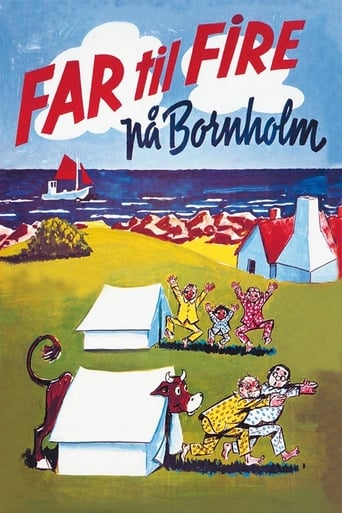
The popular Danish family are vacationing on the island of Bornholm. Unfortunately, they have not been able to get hotel rooms, but Tiny Per, always resourceful, have come up with the idea that they must sleep in a tent. Father and Uncle Anders are not quite enthusiastic about the idea, but there is nothing else to do.
Father of Four: On Bornholm
1959
 5.2
Outside the large hotel, there is a lot of activity. It is teeming with foreigners, buses arrive and depart, and indoors the air is filled with foreign languages. But if you look more closely, you will discover that the doorman, hotel porter, waitresses, and waiters are not "real" hotel staff at all, but just students who take on extra jobs in the summer to earn money for their studies and who live in the "hotel" themselves in the winter, which is actually a student dormitory called "Egmont."
De sjove aar
1959
Series credits
7.9The series follows the residents of an apartment building on Copenhagen's Christianshavn, as they go about their daily lives and challenges. There is Olsen, a mover with an old fashion view of the world, Clausen who runs the local pet shop, Egon the career focused assistant, their wives who work hard to keep their spouses lives together, the young couple Tue and Rikke who recently moved in, the hard working caretaker Meyer, who never puts in to much effort, and of course Emma, the innkeeper of Rottehullet, where all the important decisions are made while running up the bar tab. The series was produced by Nordisk Film for Danmarks Radio TV station between the years 1970-77. The series' first director was Ebbe Langberg, then Erik Balling and Tom Hedegaard respectively. The series was conceived by an author team of well-known Danish authors such Leif Panduro, Benny Andersen, and Lise Nørgaard.
The House at Christianshavn
1970
9.0Matador is a Danish TV series produced and shown between 1978 and 1982. It is set in the fictional Danish town of Korsbæk between 1929 and 1947. It follows the lives of a range of characters from across the social spectrum, focusing specifically on the rivalry between the families of two businessmen: The banker Hans Christian Varnæs, an established local worthy, and social climber Mads Skjern, who arrives in town as the series opens. The name Matador was taken from the localised edition of the boardgame Monopoly, also the series' tentative English title. In addition, in contemporary Danish a "matador" is often used to describe a business tycoon, in the series referring to the character of Mads Skjern and his craftiness as a self-made entrepreneur. Directed by famed Danish film maker Erik Balling, Matador was the idea of author Lise Nørgaard who wrote the bulk of the episodes alongside Karen Smith, Jens Louis Petersen and Paul Hammerich. The series is one of the most well-known and popular examples of Danish television and represents the peak of longtime development of Danish TV drama by the public service channel Danmarks Radio. The series has become part of the modern self-understanding of Danes, partly because of its successful mix of melodrama and a distinct warm Danish humour in the depiction of characters, which were portrayed by a wide range of the most popular Danish actors at the time; but also not least because of its accurate portrayal of a turbulent Denmark from around the start of the Great Depression and through Nazi Germany's occupation of Denmark in World War II.
Matador
1978
4.2A story about Carlsberg founder JC Jacobsen, his son Carl, and their struggle to create a brewing company, and simultaneously a look at fifty years of Danish history.
Bryggeren
1996
NRNo synopsis available yet.
Landsbyen
1991
7.8In 1970s Denmark, the criminal police in a provincial town solve different criminal cases, when the police was dominated by men and DNA was not yet a tool in investigation.
A Town in the Province
1977
10.0No synopsis available yet.
Anthonsen
1984
 7.0
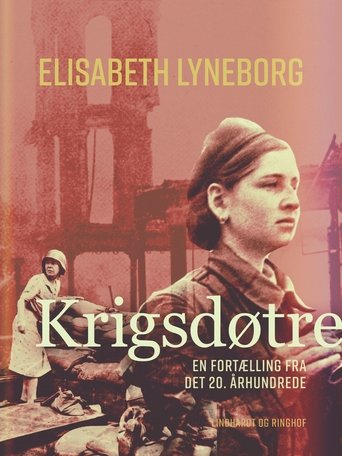
No synopsis available yet.
Krigsdøtre
1981