

Acting
Joel Barcellos
Born — Died
1936-11-27 — 2018-11-10
Place of birth
Vitória, Espírito Santo, Brazil
Known for
Acting
Credits
64 titles
Joel Dias Barcellos, better known as Joel Barcelos (Vitória, November 27, 1936 – Rio das Ostras, November 10, 2018), was a Brazilian actor, having also worked as a screenwriter and director. In some films, he was credited as Joel Martins. He was a very active actor in New Cinema, especially in the 1960s. He received the Candango Award for Best Actor at the Brasília Festival for his performance in Jardim de Guerra, in 1968. He was also elected 'Best Supporting Actor' by the same award when acting in Kiss 2348/72. Despite preferring cinema, he also played roles on television, mainly in miniseries.
Known for
 7.4
7.4Twin sisters with contrasting personalities, Ruth and Raquel, rival in the fictional Pontal D'Areia, on the coast of Rio de Janeiro.
Secrets of Sand
1993
 7.6
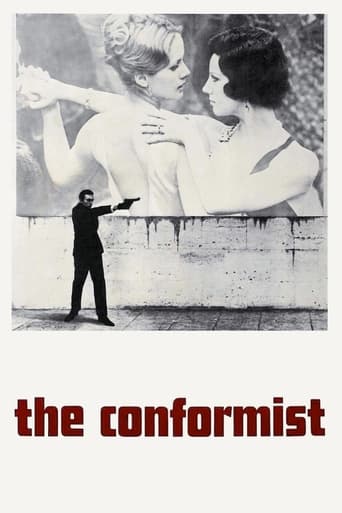
7.6A weak-willed Italian man becomes a fascist flunky who goes abroad to arrange the assassination of his old teacher, now a political dissident.
The Conformist
1971
 8.0
8.0Diana is woman who lost her child for her Husband. A evil man behind a series of crime operations. Searching for her son, Diana is hired for a underground organization to fight crimes all over Brazil. Now, Diana has the meanings to locate her former husband and search for her son.
A Justiceira
1997
 5.9
5.9Raised in a conservative home, Engraçadinha challenges taboos and forbidden passions over two decades. Between desires, guilt and secrets, she lives intensely her loves and her sins.
Cutie Pie... Her Loves and Sins
1995
 7.2
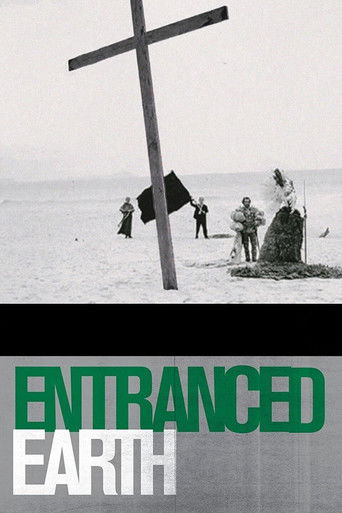
7.2Eldorado, a fictitious country in America, is sparkling with the internal struggle for political power. In the eye of this social convulsion, the jaded journalist Paulo Martins opposes two equally corrupt political candidates: a pseudopopulist and a conservative. In this context, Paulo is torn between the madness of the elite and the blind submission of the masses. But, in this complex tropical reality, nothing really is what it seems to be.
Entranced Earth
1967
 6.8
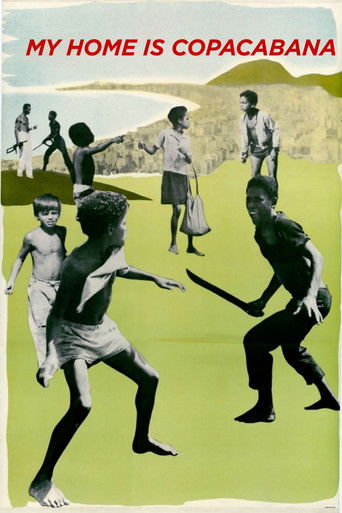
6.8Arne Sucksdorff’s drama follows four homeless children—Jorginho, Rico, Lici, and Paulinho—struggling to survive in the Rio de Janeiro slums. They shine shoes, scavenge food, and pickpocket while dreaming of escape from the streets. When Rico, once escaped from a brutal institution in Caxambu, falls ill, he chooses to return there rather than die outside. A somber portrait of poverty and resilience, the film was selected for the 1965 Cannes Film Festival.
My Home Is Copacabana
1965
Film credits
2020s · 2 titles
 NR
NRIn Esdras Baptista's film archives, kept at his home for decades, one can feel the fervor of those who believed in a new tomorrow. Filmed in Brazil in the early 1960s, in the heat of a libertarian political movement, the filmmaker's images materialize the incandescence of collective desires at the historic moment of their emergence. Utopia, though unattainable, is never a mere abstraction. A force that mobilizes actions and feelings, it constitutes the impetus necessary for human existence.
A Film to Remind Us of Utopia
2026
 NR
NRNo synopsis available yet.
Cinema, Poema e Gangrena
2026
2010s · 4 titles
 6.6
6.6Zulmira is an old mistress who lives in the neighborhood of Estácio, in Rio de Janeiro. One day, she wakes up obsessed with the idea of dying. All she needs is a good coffin. A tribute to Leon Hirszman's "The Deceased", the first film starred by Fernanda Montenegro.
The Lady from Estácio
2012
 NR
NRFollows the story of Opinião, a theatre group created in 1964 during the early Brazilian dictatorship period to oppose the government through artistic performances. Considered the first left-wing response to the dictatorship, the group gathered now famous Brazilian artists such as Nara Leão, Maria Bethânia, João do Vale and Millôr Fernandes.
Memórias do Grupo Opinião
2019
 10.0
10.0This film seeks to rescue the role of filmmaker Neville D'Almeida by using many rare images, numerous interviews, vast archival and audiovisual material.
Neville D'Almeida: Chronicler of Beauty and Chaos
2019
 5.2
5.2In his film Rua Aperana 52 Júlio Bressane describes the invention of a landscape, the topology of a corner of Rio de Janeiro. The film consists of a series of photographs taken between 1909 and 1955 by, among others, Bressane's parents at and around the address used as a title. These are interlarded with scenes from films made between 1957 and 2005, bringing the total fictional time the film covers to almost a century; one hundred years in which the winding road featured in almost every shot structures the new landscape behind the Aperana, which means 'wrong road'. Rua Aperana 52 is autobiographical, as it is a landscape from Bressane's youth, but it is also not so; it is more a multi-subjective mythology of a place seen through all those films and photographs. Bressane refers to his editing as an intuitive form of thinking aimed at evoking moods which make the viewer the new witness of the fictional landscape. A fiction about a fiction,
Aperana Street 52
2012
1990s · 6 titles
 5.6
5.6Writer Sílvio Proença needs to travel to São Paulo in order to promote his new book. At the airport, he meets a group of old mates. With the boarding canceled due to a strong storm, the group goes to the apartment of Marialva, daughter of one of Proença's friends. Seduced by Marialva's music and charms, Proença spends the night there, where he wakes up the next day, completely naked. Still groggy from his hangover, he goes to pick up the bread left outside the apartment; that's when the wind closes the door and leaves him naked outside.
The Naked Man
1997
 NR
NR"Portraits and excerpts from Brazilian films from all times. Actors, directors and images that affirm cinema."
Celebração - 100 Anos do Cinema Nacional
1997
 NR
NRNo synopsis available yet.
Sant'Anna dos Pescadores
1993
 NR
NRSix episodes set in and focusing on the history of Brasília, the capital of Brazil. Episode list: A Paisagem Natural (dir. Vladimir Carvalho), O Sinal da Cruz (dir. Pedro Jorge de Castro), A Volta de Chico Candango (dir. Roberto Pires), Além do Cinema do Além (dir. Pedro Anísio), Suíte Brasília (dir. Moacir de Oliveira) and A Capital dos Brasis (dir. Geraldo Moraes).
Brasília - A Última Utopia
1993
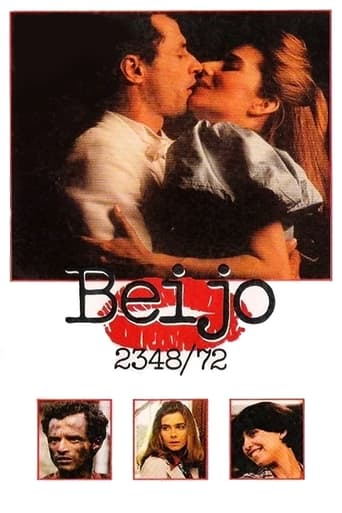 6.9
6.9Worker Norival's life turns upside down when he is caught kissing his co-worker Catarina during work hours. He is fired for just cause and faces the hardships of the labor lawsuit he filed against the company.
Kiss 2348/72
1990
 3.1
3.1A beautiful woman is found dead, with a peach in her mouth, a bite in her butt and without blood in the body. When other women are found dead in the same modus-operandi, the police gives the nickname of "Vampa" to serial killer. Detective Leôncio is assigned to investigate the murder together with fetishist photographer Oscar. Without any lead, they decide to follow a sexy and popular night-club dancer on the streets of São Paulo, trying to identify possible suspects.
Vampire Eyes
1996
1980s · 15 titles
 7.5
7.5In hopes of unraveling the causes and cure for various forms of insanity, a psychiatrist in Brazil created the Museum of Images from the Unconscious in 1952. It gathered paintings and drawings made by mental patients from all over Brazil. Many of the works in the museum are paired with the case-histories of the patients who created them in this fascinating film.
Images of the Unconscious
1987
 4.6
4.6A mad scientist attempts to bring an ancient Egyptian mummy back to life.
The Secret of the Mummy
1982
 5.5
5.5A public relations man is invited to guide an American millionaire during his stay in Rio de Janeiro. He gets involved in the most bizarre situations, from orgiastic mega-parties to confrontations with the police, meetings with drug dealers and movie stars, facing corruption and even murder.
Rio Babilonia
1982
 NR
NRRio de Janeiro is a city of very well defined contrast between the seafront, narrow, where the rich live and very close, the hills with their slums, where life changes very quickly in the short space of time.
Crônica À Beira do Rio
1980
 5.1
5.1Biography of a Brazilian dancer who lived on an island and practiced nudism when it was forbidden by law.
Luz Del Fuego
1982
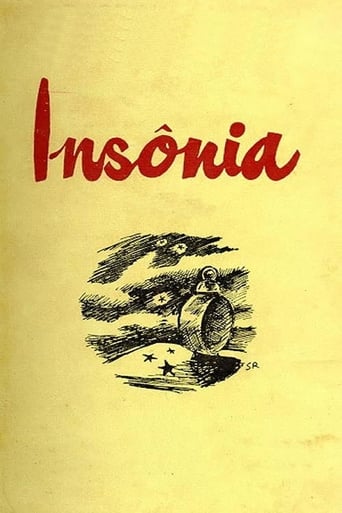 9.0
9.0A three-episode anthology film based on short stories by Brazilian writer Graciliano Ramos.
Insônia
1982
 NR
NRNo synopsis available yet.
Arrepio
1987
 9.0
9.0Milionário and José Rico are robbed of their money and their fans' enthusiasm. But a female truck driver is out to help them.
Sonhei com Você
1988
The story of two brothers who are trying to farm in the Brazilian Amazon.
Soul's Boundary
1988
A couple of filmmakers facing difficulties to make a film in the midst of an economic crisis, affecting the relationship between them.
Amenic - Entre o Discurso e a Prática
1984
 4.3
4.3University teacher investigates the life of a famous Brazilian musician, trying to discover the secret of mass communication through his songs and performances, while ultimately falling in love with one of his groupies.
Corações a Mil
1983
No synopsis available yet.
Salvar o Brasil
1987
The hero without character is back. Here, two Macunaímas encounter with one mission in common which is to leave the place they're currently living: one is running away from the deforestation in the Amazon while the other got tired of living in heaven and wants to return to his land.
Exu-Piá, Coração de Macunaíma
1986
An overlook at the southern Rio de Janeiro neighborhoods, from the perspective of one of its most well-known places: Jardim de Alah, a group of squares on the middle of neighborhoods Ipanema and Leblon. There, people of different social classes interact together - workers who live in the Cruzada de São Sebastião building and the local bourgeois class who live in fancy condos. There, the rich and the poor unite in the same spirit.
Jardim de Alah
1989
No synopsis available yet.
Presença de Marisa
1988
1970s · 17 titles
7.6A weak-willed Italian man becomes a fascist flunky who goes abroad to arrange the assassination of his old teacher, now a political dissident.
The Conformist
1971
 7.0
7.0Residents of the city of Parada 88, contaminated in 1994 due to the explosion of a chemical industry reactor, live in plastic tunnels, the only way of life that can guarantee their survival, since oxygen, which has become a good consumption, used needs to be reused so as not to generate more expenses. One day, Joaquim wins a lottery that gives him enough money to pay for his and his family's oxygen; but to claim the prize, he'll need to go to the ruins of the factory to collect news from a group of contamination experts adventurers posted there.
Stop 88
1978
 6.1
6.1Life and death of the jesuit who fought for the peaceful relationship between colonists and the indigenous peoples of Brazil.
Anchieta, José do Brasil
1977
 9.0
9.0In the early 17th century, the Dutch have occupied Bom Jesus village, the last native stronghold in the Pernambuco captaincy. An adventurer, João Fernandes Vieira, sees himself in the middle of a conflict, torn between joining his friend Mauricio de Nassau alongside the ruling Dutch and siding with his lover Ana Paes in the fight to free his homeland.
Batalha dos Guararapes
1978
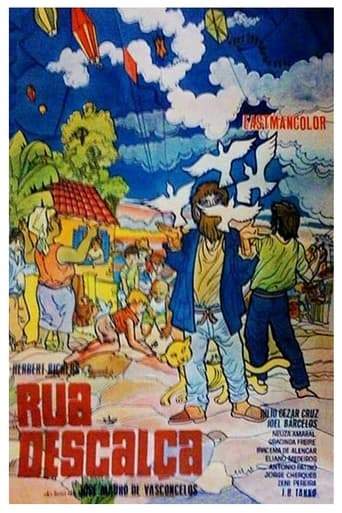 9.0
9.0No synopsis available yet.
Rua Descalça
1971
 7.8
7.8Cropped hair, a rosemary branch behind the ear, yellow shirt of shiny satin, he's behind the wheel of his car when passing by a woman who walks by the roadside. Strongly painted lips, printed dress with round skirt and red shoes matching the color of the lipstick, she catches his attention. He gives her a ride, the two of them stare in silence for a few moments. They introduce themselves to one another and between the two establishes an absurd dialogue and full of metaphors. And they are driving around in corners of Rio de Janeiro, to the sound of Noel Rosa and Lamartine Babo. Eva and Antena, she a seer, he, an assassin on the run, initiate an unusual case of love, a marginal love, where boredom often gives way to tragedy, creating the agony of a holiday spent in an abyss.
The Agony
1976
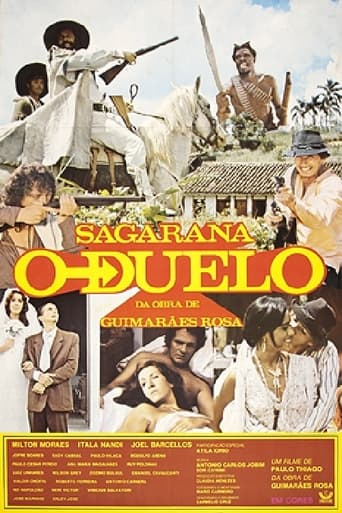 7.0
7.0Unable to endure the idea that he would go without punishment, a criminal's victim chases him the length and breadth of Brazil for a showdown.
Sagarana: O Duelo
1974
 5.8
5.8The painter Tino, in professional and political crisis, receives a telegram from his mother-in-law, Selma, announcing her return from Europe. After his wife's death, Tino continues living with Selma, with whom he had ambiguous relations, which he now wants to sever. Weak at this impossible love, he asks the maid Enedina to lock him in his room. There, he revives memories through letters, notes and photographs. Selma's son João is waiting for her at the airport and dreams of loving fulfillment in his own mother's arms.
A Man and His Cage
1974
 9.0
9.0Expedito, after being abandoned by his parents, became Zefa's adopted son until he became a man and started earning his living as an independent fisherman. As soon as he finds out that Zefa is very ill, Expedito runs back home and finds his adoptive mother in agony. At the edge of the bed, a mysterious woman, who claims to be Death, sits.
Tatu Bola
1971
 6.2
6.2This controversial film from director Glauber Rocha records the funeral of his friend, major Brazilian painter Emiliano Di Cavalcanti.
Di Cavalcanti Di Glauber
1977
 7.0
7.0The events of Giuliano Sartori, correspondent from Genoa for a newspaper in the capital, involved in a complicated investigation set in a psychiatric clinic. Not a simple Italian thriller but a "Russian doll", an open story with different levels of reading and interpretation, in which the distance between the madness of authenticity of feelings and the sprawling social normality that leads to 'annulment of the person and loneliness. Collaborators on the subject and the script of the film are Bernardo Bertolucci and Enzo Carra.
L'inchiesta
1971
 5.8
5.8João, a playboy, spends his last day as a single in a resort hotel, where he seduces a teenager and gets involved with the casino singer.
Ovelha Negra, Uma Despedida de Solteiro
1974
 4.4
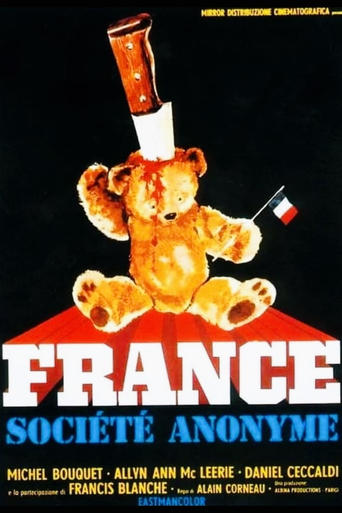
4.4In the year 2222, a former drug dealer is kept in a state of hibernation. Reanimated, he tells his story. Leader in the narcotics market, his situation was prosperous until, during a political change, the government legalized its use.
France, Incorporated
1974
 8.0
8.0"Seven women on motorcycles, through Via Dutra, go to the Baixada Fluminense, a microcosm of Brazil. Diving into the memory and questioning the behavior imposed on women, they seek to rescue the strength of the feminine. The new woman, born in the Brazilian land, incorporates the Amazons and Santa Guerreira. At his side, the new man, more loose and creative. Closing the cycle, the initial road is resumed. " (HBH / QC)
Feminino Plural
1976
 4.2
4.2Ring whose previous owner was a prostitute with supernatural powers causes double personality in a young woman about to marry. After some time, her face gets disfigured, forcing her to wear a mask.
Virgin on the Hill
1977
 8.5
8.5The Viscount of Sabugosa is locked in the library writing an encyclopedia about the characters in children's fables. Dona Benta receives a letter from little Thumb, written on a rose petal, in which he, realizing that the inhabitants of the world of fables are forgotten in the books on the shelves, requests that everyone live in Sítio do Picapau Amarelo. Emília and the children love the idea, and Dona Benta says yes. They move
O Picapau Amarelo
1973
 5.0
5.0A lesson in conciseness, expressiveness, and humor on the inexhaustible theme of the dream of making movies. A parodic lesson, a Brazilian version of historical scenes filmed by the Lumiére brothers in 1895—the baby, the bath in the garden, the workers leaving, and the arrival of the train. The melodrama of a couple of lovers through time and the history of cinema. Many sequence shots, as preferred and taught by Cinema Novo. Everything about a film being made and being watched. The language of cinema (shot, reverse shot, tracking shot, editing, mixing, dubbing, etc.), interspersed with quotes from Humberto Mauro, Godard, Glauber Rocha, and Rossellini.
Cinema
1974
1960s · 16 titles
7.2Eldorado, a fictitious country in America, is sparkling with the internal struggle for political power. In the eye of this social convulsion, the jaded journalist Paulo Martins opposes two equally corrupt political candidates: a pseudopopulist and a conservative. In this context, Paulo is torn between the madness of the elite and the blind submission of the masses. But, in this complex tropical reality, nothing really is what it seems to be.
Entranced Earth
1967
6.8Arne Sucksdorff’s drama follows four homeless children—Jorginho, Rico, Lici, and Paulinho—struggling to survive in the Rio de Janeiro slums. They shine shoes, scavenge food, and pickpocket while dreaming of escape from the streets. When Rico, once escaped from a brutal institution in Caxambu, falls ill, he chooses to return there rather than die outside. A somber portrait of poverty and resilience, the film was selected for the 1965 Cannes Film Festival.
My Home Is Copacabana
1965
 7.2
7.2Marquinhos is in his early 20s and lives in Copacabana with his petits bourgeois parents and older brother. He doesn't have a job, he doesn't go to school, he just lives on the spur of the moment, watches TV, plays soccer on the beach by day and goes out with his mates by night. He meets Irene, a 40 year-old woman and they have a love affair that is going to change his life - for a while.
Copacabana Fools Me
1969
 7.2
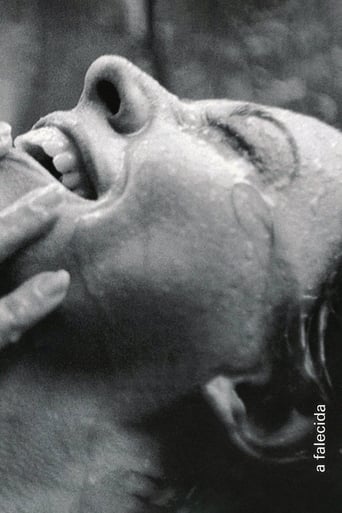
7.2After visiting a fortune teller, Zulmira is informed that a blonde woman will threaten her peace. After talking to her husband Toninho, she suspects that her cousin Glorinha may be that blonde.
The Deceased
1965
 6.7
6.7In the village of Leva-e-Traz, the discovery of a oil field is responsible for a mass evasion of the townspeople. Left are the old and incapable for the extraction job. When the local priest announces he, too, is leaving the town, Satan emerge thrilled with the chance of overtaking the place.
Satan's Feats in the Village of Take-and-Bring
1967
 7.9
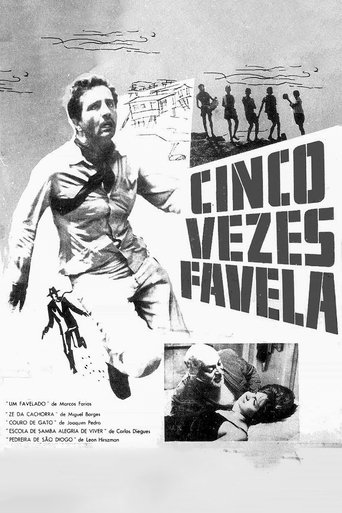
7.9Five segments about the hardships faced by people living in slums on hills in Rio de Janeiro.
Five Times Favela
1962
 6.3
6.3Chronicles the life of a 17 year-old girl living in the upper-class Rio de Janeiro neighbourhood of Ipanema. Márcia lives a life of parties and spend her days among bohemians, musicians and intellectuals. While seeming happy in the outside, she's extremely anguished inside. Based on the famous song by Antonio Carlos Jobim and Vinicius de Moraes.
The Girl from Ipanema
1967
 9.2
9.2During a flight, passengers confront their aspirations, frustrations, fears, wishes and fears, mixing up reality and fiction.
Journey to the End of the World
1968
 7.5
7.5A group of armed soldiers is sent to the Northeast of Brazil in an attempt to stop a famine-struck population from invading and stealing a food deposit in the dry backlands. While the alienation and insanity of people driven to hallucination by their latent hunger is conducted by the predictions of a religious figure, a truck driver observes the situation and remains torn between his friendship with the soldiers and his revolt against the lack of government action in fighting the misery that lingers over the region.
The Guns
1964
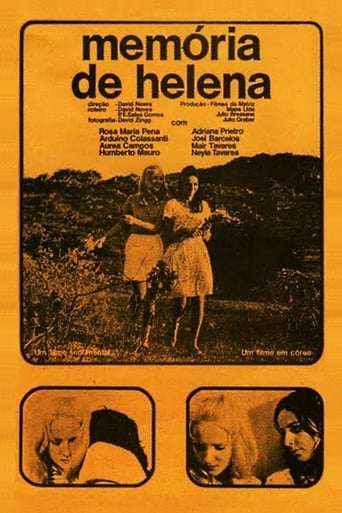 10.0
10.0Couple whose marriage is at stake delve into the past, with the help of a diary and some home movies. In these movies, Helena, the woman's suicidal friend, has an important role.
Memories of Helen
1969
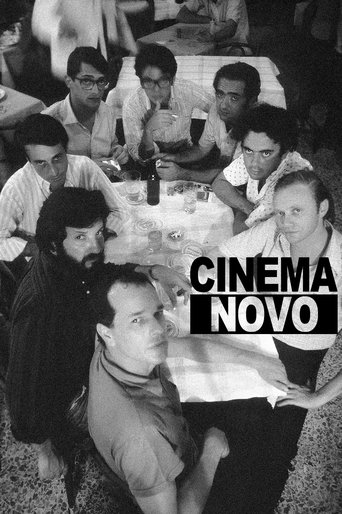 7.5
7.5Originally produced for German TV, Improvised and Purposeful is a firsthand look at the "Cinema Novo" movement (otherwise known as the 'Brazilian New Wave'). Director Joaquim Pedro de Andrade focuses on six Cinema Novo filmmakers working in Rio in 1967.
Improvised and Purposeful: Cinema Novo
1967
 7.0
7.0A family of Brazilian farmers is desperately looking for work and moves from city to city.
Tropico
1969
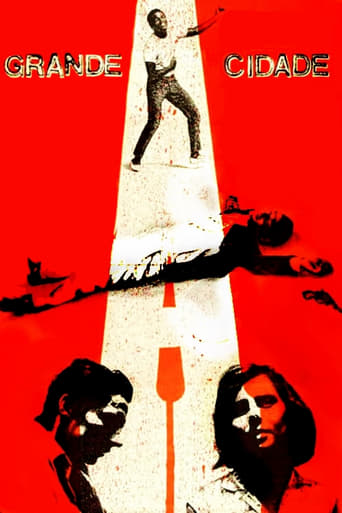 6.4
6.4In search of a better life, Luzia leaves the Northeast of Brazil and goes to Rio de Janeiro, looking for her fiance who went first to pave their way. Alone in the Marvelous City, she is forced to accept the friendship and protection of Calunga and, later, the company of Inácio.
The Big City
1966
 9.0
9.0A young female fugitive escapes from a juvenile institution (the Child Assistance Service) and joins a group of poor beggars with the intention of finding a potential partner to marry in order to avoid her return to that place.
The Beggars
1963
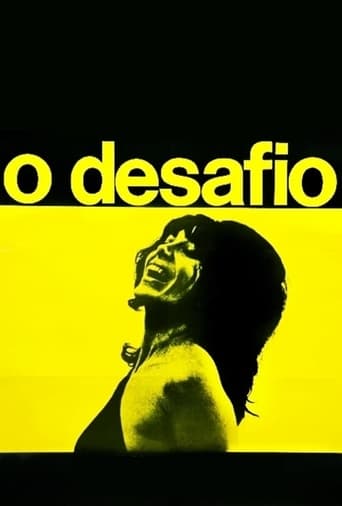 7.8
7.8Passively facing the repression imposed by military dictatorship in 1960s Brazil, a journalist enters a personal crisis, aggravated by his affair with an industrialist's wife, who doesn't want to leave her home because of her son.
The Dare
1965
 7.1
7.1Edson is having an affair with actress Maria do Rosário, who dreams of being a movie director. So he tries to get some easy money for her film, but is arrested and meets a police torturer instead.
Garden of War
1969
Series credits
7.4Twin sisters with contrasting personalities, Ruth and Raquel, rival in the fictional Pontal D'Areia, on the coast of Rio de Janeiro.
Secrets of Sand
1993
8.0Diana is woman who lost her child for her Husband. A evil man behind a series of crime operations. Searching for her son, Diana is hired for a underground organization to fight crimes all over Brazil. Now, Diana has the meanings to locate her former husband and search for her son.
A Justiceira
1997
5.9Raised in a conservative home, Engraçadinha challenges taboos and forbidden passions over two decades. Between desires, guilt and secrets, she lives intensely her loves and her sins.
Cutie Pie... Her Loves and Sins
1995