
Acting
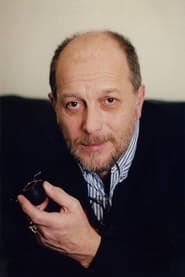
Lajos Balázsovits
Born
1946-12-04 (79)
Place of birth
Nagykanizsa, Hungary
Known for
Acting
Credits
44 titles
Known for
 7.0
7.0From Bonaparte to Casanova, history is cast in the light of famous escapes from various European countries.
the famous escapes
1972
 10.0
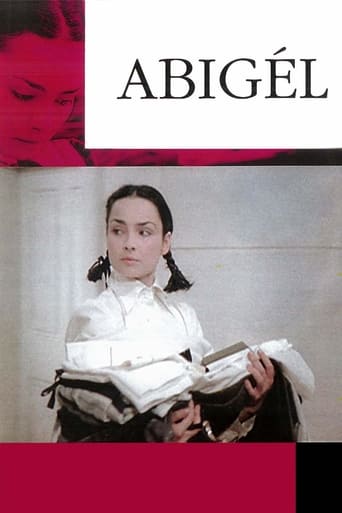
10.0The story takes place during World War II. Vitay Georgina is enrolled by her father, General Vitay, in the completely closed, residential Calvinist Matula Girls' Institute in the town of Árkod, on the outskirts of the country. He does not tell Gina why, as her new classmates would accept her, but after she fights with them over a silly game and betrays them, she is ostracised.
Abigel
1978
 5.2
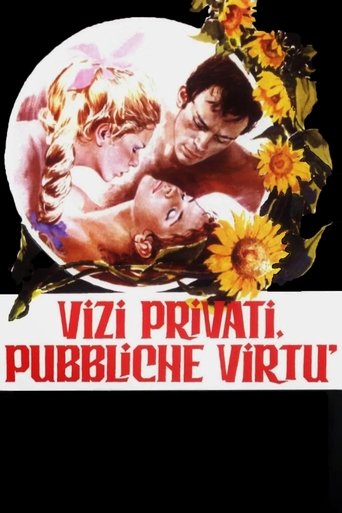
5.2The setting is a Central European kingdom, near the turn of the century. Bored by his very proper wife, the youthful heir to the throne spends his time in amorous dalliances at a sprawling country estate. His wife departs at the arrival of his friends, and they organize a celebration which becomes a wild orgy and culminates in death and tragedy.
Private Vices, Public Virtues
1976
 4.1
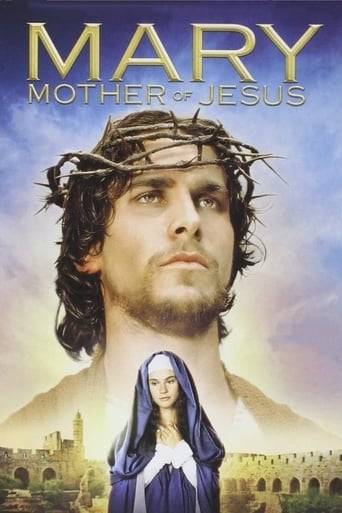
4.1Mary, Mother of Jesus is a 1999 made-for-television Biblical film that retells the story of Jesus through the eyes of Mary, his mother.
Mary, Mother of Jesus
1999
 9.0
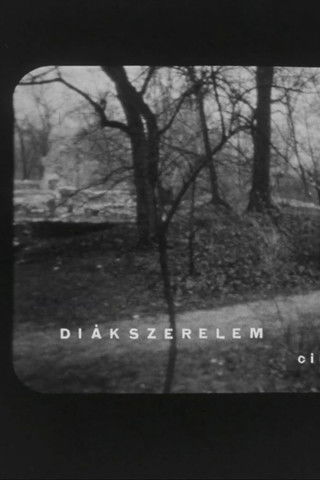
9.0No synopsis available yet.
Diákszerelem
1968
 6.4
6.4An adaptation of the classic, "The Prince and the Pauper" is the retelling of Edward Tudor and young Thomas Canty, two amazing look-alikes caught up in imperial intrigue and scandal. In fleeing from his violent father, Tom stumbles into the palace courtyard, and is seen by young Prince Edward, who takes him in. Each desiring to see what the other's life is like, the boys impulsively switch identities... little knowing what disaster lies ahead at this fault of thought. And soon Thomas becomes a pawn in the hands of Edward's malicious and greedy uncle, who would have the kingdom for himself.
The Prince and the Pauper
2000
Film credits
2010s · 2 titles
 5.5
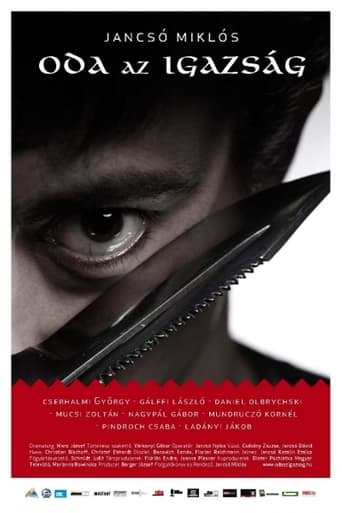
5.5Concerning the Mátyás era in Hungarian history, during the reign of Matthias Corvinus (1443–1490), the film focuses on three eras of the king's life: the young Mátyás fights for the throne, the older Mátyás as king, and the fate of the royal crown and the royal heir after his death.
So Much for Justice!
2010
5.5Concerning the Mátyás era in Hungarian history, during the reign of Matthias Corvinus (1443–1490), the film focuses on three eras of the king's life: the young Mátyás fights for the throne, the older Mátyás as king, and the fate of the royal crown and the royal heir after his death.
So Much for Justice!
2010
2000s · 3 titles
6.4An adaptation of the classic, "The Prince and the Pauper" is the retelling of Edward Tudor and young Thomas Canty, two amazing look-alikes caught up in imperial intrigue and scandal. In fleeing from his violent father, Tom stumbles into the palace courtyard, and is seen by young Prince Edward, who takes him in. Each desiring to see what the other's life is like, the boys impulsively switch identities... little knowing what disaster lies ahead at this fault of thought. And soon Thomas becomes a pawn in the hands of Edward's malicious and greedy uncle, who would have the kingdom for himself.
The Prince and the Pauper
2000
 6.0
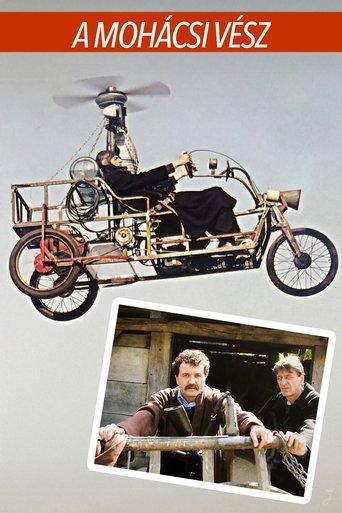
6.0By the notes of Fiáth Pompeiusz, the one-time friend of Kapa and Pepe, Professor Szirtes has solved the secret of the time machine, and he realizes the invention relying on "special" H2O. Kapa and Pepe shall return by it into the past in order to set time right, which is out of joint, that is, to correct history, to save King Louis II, and prevent the Mohács Disaster. Pepe yields to the not too tender persuasion to enter upon the great journey through time, dies and revives, and they arrive at the battlefield of Mohács in time. Kapa films the events. The Turks win and cut off the king’s, Pepe’s, head, still the Hungarians dictate the peace treaty. Kapa and Pepe want to return, they fill the time machine up with water from the well, yet it won’t start. Even so Kapa and Pepe hover over Budapest and quarrel.
The Battle of Mohács
2004
 5.2
5.2Jancsó’s farce, similar to the previous ones, is about our time and about death. Pepe marries into a family of mafiosi, with the father-in-law rolling in money. In a joint venture they establish the first Hungarian Prison Limited company, where there is a menu, the prisoners are residents, and they furnish the place of execution for those volunteering to execute themselves. It turns out that the first voluntary hanging should be demonstrated on Pepe. In 180 AD Emperor Marcus Aurelius is dying in Vindobona, being fed with blades of hay by uncle Miki himself, and his son Kornél Mundruczó. Kapa provides for communication: he insists on telling lies, lies and again lies. Furthermore, there are several to die and to revive, to win and to lose, and Melancholy Béla is still alive.
Ed's Eaten Elevenses
2006
1990s · 3 titles
4.1Mary, Mother of Jesus is a 1999 made-for-television Biblical film that retells the story of Jesus through the eyes of Mary, his mother.
Mary, Mother of Jesus
1999
 6.6
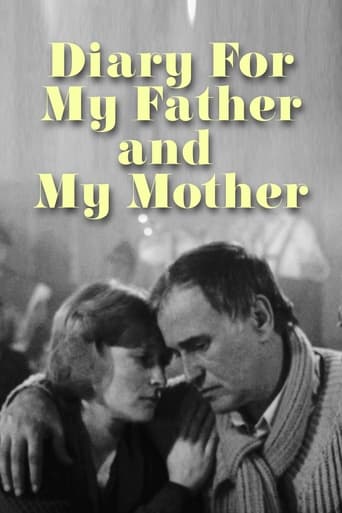
6.6This story follows a young student, who is orphaned as she grows to adulthood in the shadow of the 1956 Hungarian uprising. Coming from the Communist intelligentsia, she sees her friends and family react differently. Her lover, a married factory manager, supports the patriots and later assists fellow workers in staging a strike. Meanwhile her sister and others express anger at being forced from their homes during the revolution and continue to express a hatred for the rebels afterwards. But in the end they realize that for all people, real life is not possible after the revolt and its brutal suppression by the Soviets and their collaborators.
Diary for My Father and My Mother
1990
 4.7
4.7From the film-shooting in the Buda Castle Marci and his friend go to a well-paying job. The scene is a big castle in the middle of a huge park. They enjoy the company of the Kid and the beautiful naked French girl, Nathalie. Their job is to watch the monitors on which they can see the Moscow coup détat. By the time Gorbachev is executed the Communist and the Nationalists have taken turns in occupying the castle and the park.
God Walks Backwards
1991
1980s · 8 titles
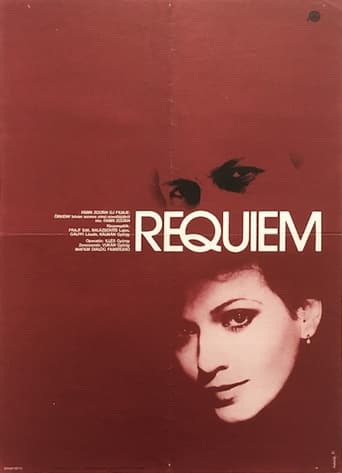 4.9
4.9A woman learns that one of her doctor husband's patients used to be the cellmate of her first husband, who died in prison years before.
Requiem
1982
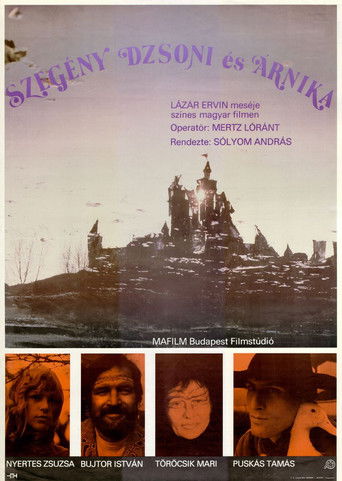 7.5
7.5The poor but carefree vagabond Johnny meets the princess Árnika and they fall in love. An evil witch casts a spell on them which turns one of them into a duck. In order to be free of the spell they embark on a long journey to meet King Ajahtan Kutarbani, the only one who can lift the spell.
Poor Johnny and Arnika
1983
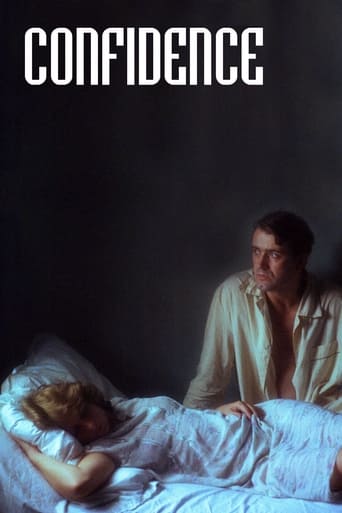 7.5
7.5Janos and Kata are thrown together during the Second World War and forced to pose as husband and wife to hide from the Nazis. The intensity and suffocating intimacy of their new relationship and the circumstances in which they find themselves, forces them to confront past prejudices and assumptions and challenge what they truly believe.
Confidence
1980
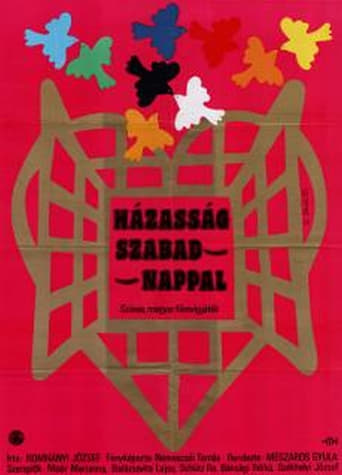 8.0
8.0Mici, a pretty young girl is a selected swimmer. Laci, her trainer looks after her jealously, mainly because of her condition.
Marriage with Days off
1984
 7.3
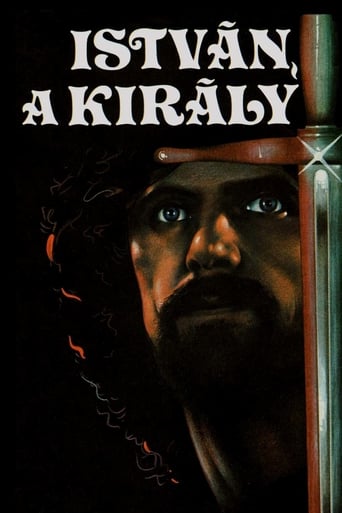
7.3István, a király ("Stephen, the King") is a Hungarian rock opera written by Levente Szörényi (music) and János Bródy (lyrics), based on the life of Saint Stephen of Hungary. The storyline was based on the play Ezredforduló (Turn of the Millennium) by Miklós Boldizsár, who co-wrote the libretto. The opera was first staged in 1983 on an open-air stage in Budapest. This first performance was also made into a 1984 film, directed by Gábor Koltay, and its music released on an album. The musical became a smash hit and is still very popular in Hungary and among Hungarian minorities in neighboring countries.
Stephen, the King
1984
 5.5
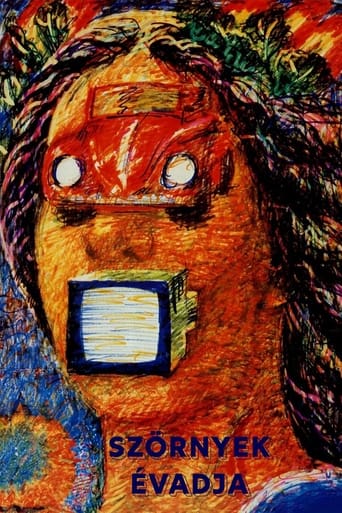
5.5Zoltai is a Hungarian professor who returns home after a visit to the United States. Following a television interview, he commits suicide and leaves a note for his longtime friend Dr. Bardocz. The doctor and Zoltai's colleague Komindi join the police in investigating what drove the man to suicide.
Season of Monsters
1987
 10.0
10.0A mediocre countryside actress is invited to a Budapest casting call. She hopes she might become the new Marilyn Monroe.
Happy Birthday, Marilyn!
1980
 5.0
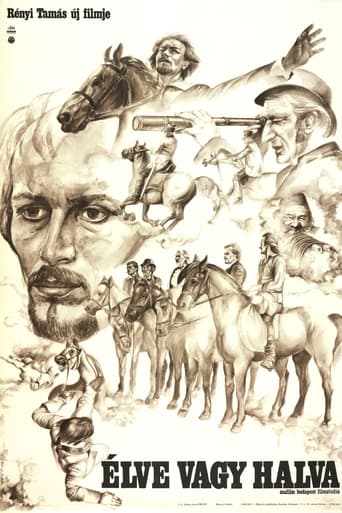
5.01852. Gáspár Noszlopy escapes from prison in order to capture the emperor, who is to visit Hungary, with his companions and force him to sign the Declaration of Independence. He is only able to find four fanatic men, as his one-time soldiers have already accepted the established order as unalterable, each of them having found a satisfactory way of life and unwilling to undertake a suicidal experiment.
Dead or Alive
1980
1970s · 18 titles
5.2The setting is a Central European kingdom, near the turn of the century. Bored by his very proper wife, the youthful heir to the throne spends his time in amorous dalliances at a sprawling country estate. His wife departs at the arrival of his friends, and they organize a celebration which becomes a wild orgy and culminates in death and tragedy.
Private Vices, Public Virtues
1976
 6.3
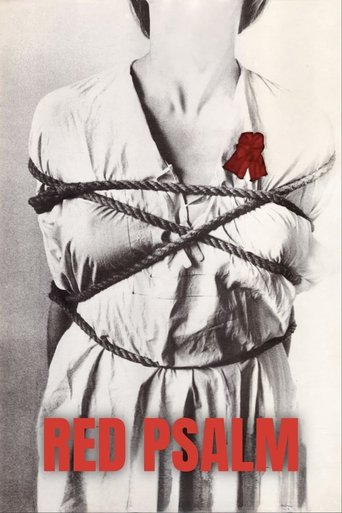
6.3Set in the 1890s on the Hungarian plains, a group of farm workers go on strike in which they face harsh reprisals and the reality of revolt, oppression, morality and violence.
Red Psalm
1972
 5.0
5.0Allegory of the suppression of the 1919 revolution and the advent of fascism in Hungary; in the countryside, a unit of the revolutionary army spares the life of father Vargha, a fanatical priest. He comes back and leads massacres. A new force, represented by Feher, apparently avenges the people, but only to impose a different, more refined and effective kind of repression.
Agnus Dei
1971
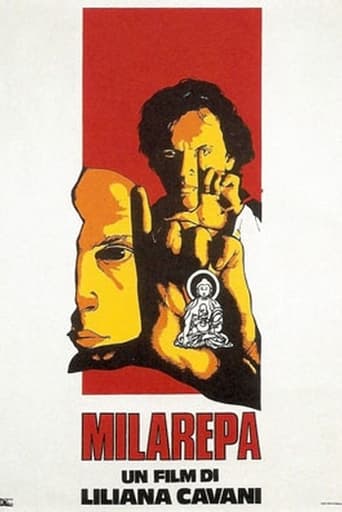 6.7
6.7After a car accident, a professor, trapped and awaiting help, hears a student recount the life of Milarepa. The tale unfolds in three parts: dark vengeance, spiritual discipline, and ultimate transcendence, reflecting a journey of inner transformation.
Milarepa
1974
 6.1
6.1It has been fifteen years since the death of her father, Agamemnon, and Elektra still burns with hatred for Aegisztosz, who conspired with Elektra's mother to kill him.
Electra, My Love
1974
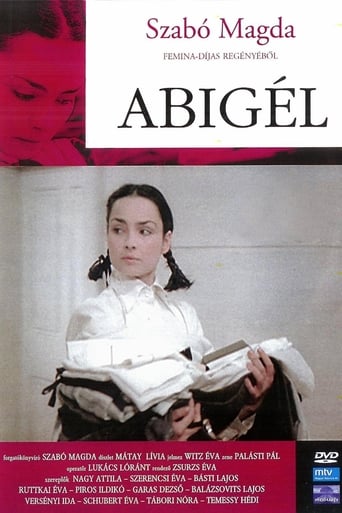 8.1
8.1No synopsis available yet.
Abigél
1978
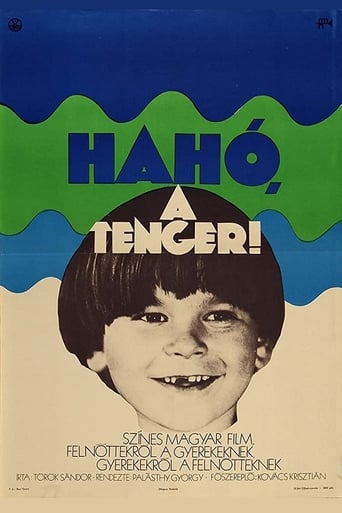 8.0
8.0Öcsi is going to have a little brother. The little child is sulking, he is deeply hurt because he learns the great secret not from his parents but his best friend, Évike.
Junior Jr. Comes
1972
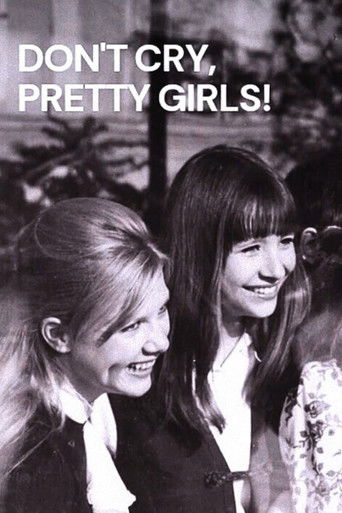 5.4
5.4Savanyú and his friend work at a plant. After the monotonous shifts they engage in the pleasures of the afternoon and the night, i.e. parties and concerts. Savanyú dates Juli, they are already engaged. The young men live as sub-tenants, the young women in workers' hostels. None of these places are suited for spending time together. They are in need of an apartment. Out of the ruinous apartment which they lay siege on, however, they are sent away by the otherwise friendly policeman. At a concert held in the Park of Youth, Juli gets to know Géza. They flirt, then go to the country with a pop-group. Savanyú and his friends follow them. A minor fight cools the atmosphere.
Don’t Cry, Pretty Girls!
1970
 6.3
6.3The movie portrays a peasant revolt in Hungary in the early twentieth century.
Hungarian Rhapsody
1979
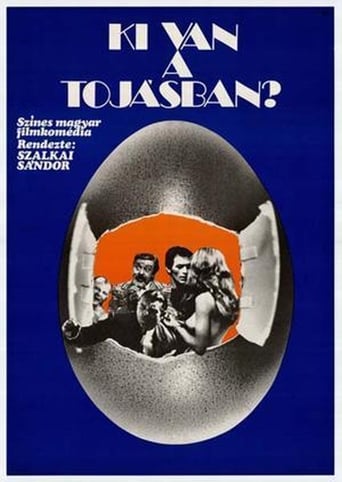 10.0
10.0Zeke, the agile young meteorologist finds out at once that the Szélervé Meteorological Research Institute is dealing exclusively with illegal poultry export. What is more, the genial director Keve invented an artificial hen laying 150 gigantic eggshells at a time.
Who is in the Egg?
1974
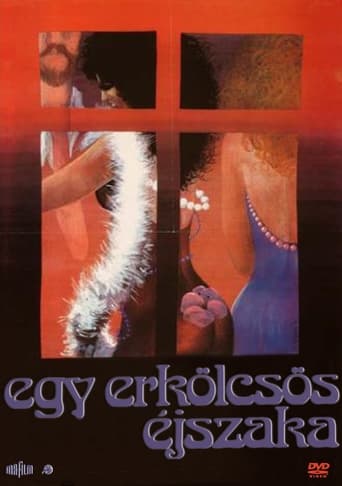 5.9
5.9A brothel in a small Hungarian town becomes the home of a medical student after his favorite working girls find out he's out of rent money. Trouble brews as they learn his mother is coming for a visit and they must transform the house.
A Very Moral Night
1977
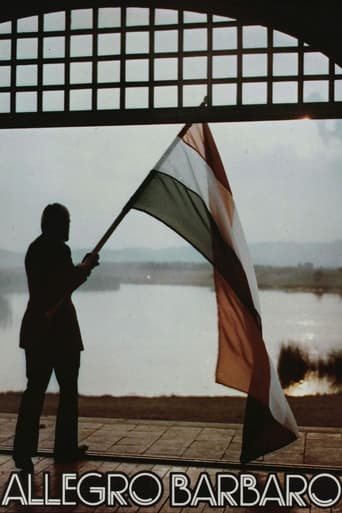 6.8
6.8Zsadányi flees from the authorities with his goddaughter, Bankós Mari, and they escape into the forest. The film then skips ahead thirty-fold years: Zsadány and Mari are now lovers, with the sound of war in the background halting their romance. The old friends of Zsadányi have joined with the Nazis, and the landowner living with his peasants in a socialist community grows distant from them. Zsadányi is held responsible for political problems in the country, and will pay with his life.
Allegro Barbaro
1979
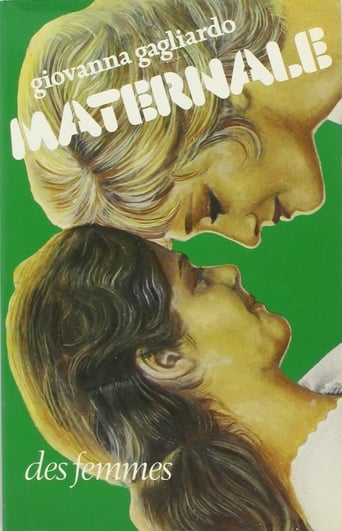 10.0
10.0In a wealthy Italian home, the daughter of the family is trying to cut her mother's apron strings. Not only is she having difficulty with this, for her mother is extremely protective, but she cannot even cut vegetables skillfully. Despite that, she wants to go out and party, mother or no mother.
Mother and Daughter
1978
 6.0
6.0No synopsis available yet.
Kaputt
1974
50 min. TV movie directed by Károly Makk, based on a short story by Tibor Déry (director-writer team of the 1971 classic "Szerelem"). Also shown as part of the director's two-part movie, "Két történet a félmúltból" (1980; with "Téglafal mögött").
Philemon és Baucis
1978
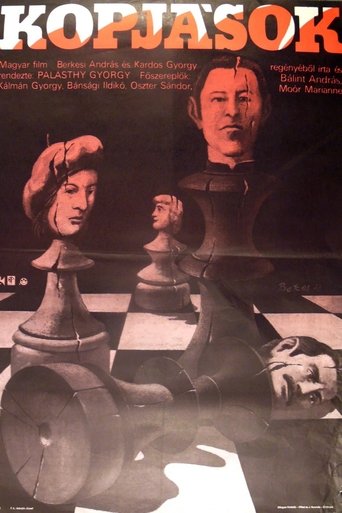 9.0
9.0No synopsis available yet.
Pikemen
1975
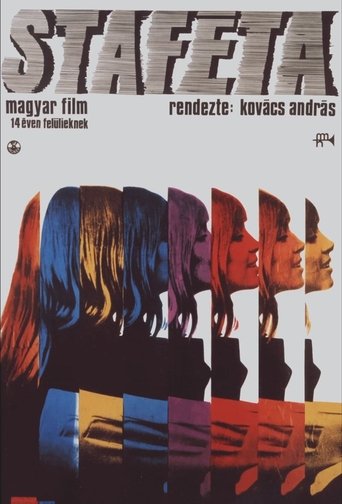 10.0
10.0This film is a documentaristic dispute about the possibilities of young people to assert themselves, to make a career. Zsuzsa is a third-year university student studying pedagogy. She has been dating Zoltán for three years, and her thinking has been fundamentally shaped by this relationship. Yet now she would like to break up with him.
Relay Race
1971
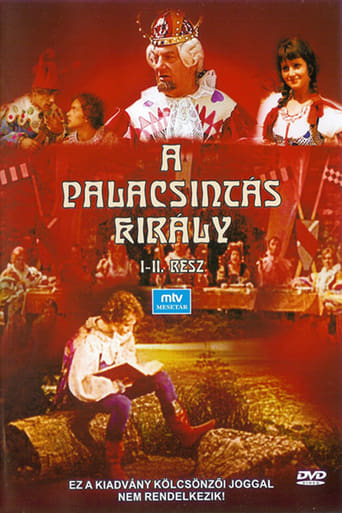 7.5
7.5The ruler of the country of Dino-Danom, King Tobias (Zoltán Greguss), announces a pancake-making competition for the girls of the area. He plans to give his son to the one who bakes the best pancakes. As is usually the case in fairy tales, all the enterprising girls fail. Not so with Kökényszemű Katica (Annamária Detre), who eventually wins the competition, but she doesn't want the prince... Meanwhile, Derelye (Flórián Kaló), the evil cook who destroys countries one after another with his gang, is currently robbing the pantry of the country of Dino-Danom, but Prince Elias (Lajos Balázsovits) is determined to put an end to the wastefulness and thievery. He is aided by Csöröge, the loyal fool, and the pancake-making skills of Kökényszemű Katica are of great help in the fight.
The Pancake King
1973
1960s · 6 titles
9.0No synopsis available yet.
Diákszerelem
1968
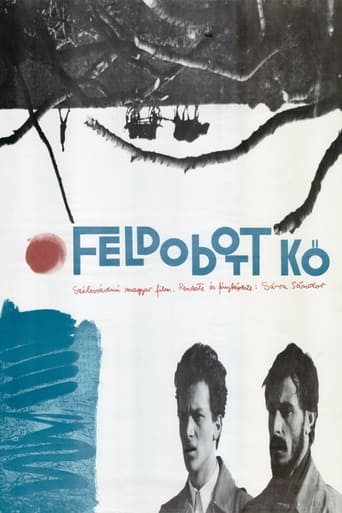 6.7
6.7An aspiring film student is denied a scholarship to the state-funded university when his father is thrown in jail. The man had stopped a train in order to facilitate the union between two old friends. The son then takes a job as a land surveyor and meets a Greek man who works towards the collective benefits of the peasants. The man is killed in a peasant uprising prompted by a bureaucratic boondoggle. The surveyor looks after the man's widow as his emerging political and social awareness leads him take a stand against government injustice. Another incident, in which gypsies are rounded up by state hygiene workers, further galvanizes the man's beliefs. He photographs the incident, and his work allows him to be accepted into the school from which he was previously denied admission.
The Upthrown Stone
1969
A governor of Tsarist Russia throws a punch at striking workers. Many die as the governor looks on dutifully. From that moment on, he feels he has sinned against the people and expects to be killed too. Despite all the precautions taken by the chief of police, the governor cannot escape his fate, an eye for an eye, a tooth for a tooth - the principle of talio is fulfilled.
A kormányzó
1968
Anika, the daughter of the Greek partisan refugee and the Hungarian medical student, Zoltán fall in passionate love. But Anika's mother wants her to marry a Greek, for she is very homesick and wants to go home. The under-age girl cannot protest.
Before God and Man
1968
 6.5
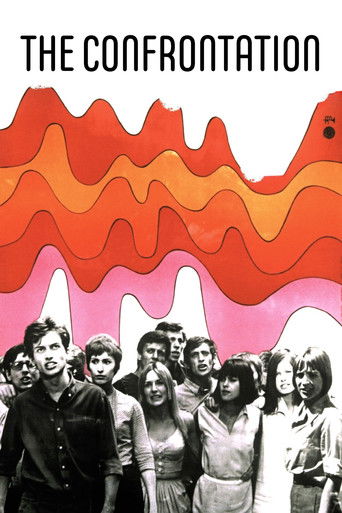
6.5In post-WWII Hungary, a group of Communist college students arrive at a Catholic seminary hoping to engage in peaceful debate with its students.
The Confrontation
1969
 6.7
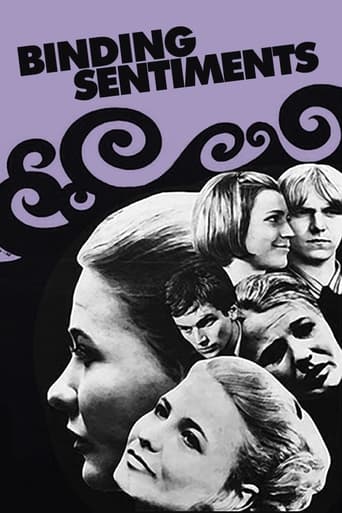
6.7Edit, who became the wife of a politician out of a simple peasant girl, suddenly becomes a widow as a result of an accident. She never loved her husband. She lives a wealthy and lonely life amidst false friends, facing one of the last alternatives of her life, i.e. having to face her past in the hope of an independent new beginning.
Binding Sentiments
1969
Series credits
7.0From Bonaparte to Casanova, history is cast in the light of famous escapes from various European countries.
the famous escapes
1972
10.0The story takes place during World War II. Vitay Georgina is enrolled by her father, General Vitay, in the completely closed, residential Calvinist Matula Girls' Institute in the town of Árkod, on the outskirts of the country. He does not tell Gina why, as her new classmates would accept her, but after she fights with them over a silly game and betrays them, she is ostracised.
Abigel
1978
 7.0
7.0No synopsis available yet.
Őrjárat az égen
1970
 NR
NRNo synopsis available yet.
Az eltűnt miniatűr
1978