
Writing
František Pavlíček
Born — Died
1923-11-20 — 2004-09-29
Place of birth
Lukov, Czechoslovakia [now Czech Republic]
Known for
Writing
Credits
23 titles
Known for
 7.5
Popelka, a resourceful and independent young girl, is a servant in her stepmother's house and confides in her closest friend the owl. When she comes across three magical acorns, she's granted a single wish for each one of them.
Three Wishes for Cinderella
1973
 7.8
Mikolás and his brother Adam end up with a young German hostage of noble blood during a robbery. While their clan prepares for the wrath of the German king, Mikolás is sent to pressure his neighbor Lazar into a defense pact. Persuasion fails and he abducts Lazar's daughter Marketa on the eve of her initiation as a nun in an act of vengeance.
Marketa Lazarová
1967
 6.2
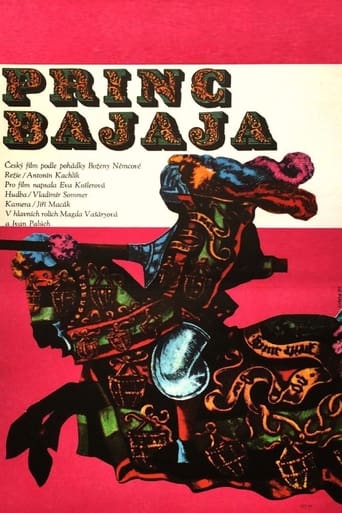
The hero of this popular fairy tale is a young prince who, after the death of his parents, goes out into the world. During his travels he meets a magical talking horse and falls in love with the beautiful princess Slavna. On the advice of his horse, he binds one eye and pretends to be dumb and enters into service as the castle gardener.
Prince Bajaja
1971
No synopsis available yet.
Tři zlaté vlasy děda Vševěda
1970
No synopsis available yet.
Růžový květ
1993
No synopsis available yet.
Vítr na konci léta
1993
Behind the camera
7.5Popelka, a resourceful and independent young girl, is a servant in her stepmother's house and confides in her closest friend the owl. When she comes across three magical acorns, she's granted a single wish for each one of them.
Three Wishes for Cinderella
1973
7.8Mikolás and his brother Adam end up with a young German hostage of noble blood during a robbery. While their clan prepares for the wrath of the German king, Mikolás is sent to pressure his neighbor Lazar into a defense pact. Persuasion fails and he abducts Lazar's daughter Marketa on the eve of her initiation as a nun in an act of vengeance.
Marketa Lazarová
1967
6.2The hero of this popular fairy tale is a young prince who, after the death of his parents, goes out into the world. During his travels he meets a magical talking horse and falls in love with the beautiful princess Slavna. On the advice of his horse, he binds one eye and pretends to be dumb and enters into service as the castle gardener.
Prince Bajaja
1971
No synopsis available yet.
Tři zlaté vlasy děda Vševěda
1970
No synopsis available yet.
Růžový květ
1993
No synopsis available yet.
Vítr na konci léta
1993
The story, set in the 1930s, takes place in the peaceful summer atmosphere of a small town, where the famous barrel organ player Ferdinand Houra arrives with his song, which is particularly popular with the local women and girls. It tells the story of the turbulent love affair between a young lawyer, Jindřich Koza, and the charming Alžběta, daughter of the prominent lawyer Drbohlav...
Usmívej se, lásko má
1995
 NR
No synopsis available yet.
Až bude padat hvězda
1976
 7.0
Sliding, skiing, snow forts, snowball fights, in short, winter is the right season for the children from the village under the Šibeničák hill to have fun. Their leader has always been Zrzek, the son of the local undertaker. But then Myšák, whose father had become the chairman of the agricultural cooperative, moved into the village, and he pulled all the boys to his side, especially because he could take the boys on the horses his father sometimes lent him. Proud Zrzek left the group rather than submit to Myshak. Only his friend Barbora remained faithful to him, helping him catch birds, especially the proverbial black raven.
Lišáci – Myšáci a Šibeničák
1970
 7.0
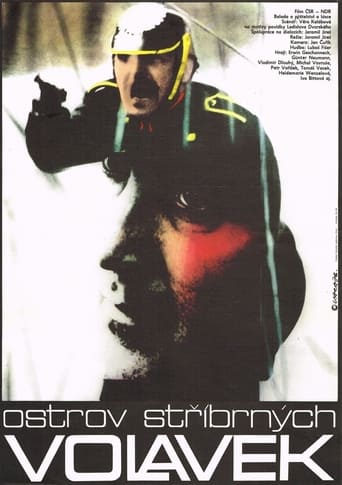
The late summer of 1918. Paul, Willi and Heinrich from an age-old German town are good friends, although there is a great deal that divides them. Heinrich comes from an officer's family with an army tradition and is preparing to enter cadet college. Paul's father and grandfather are workers, and Willi, left to depend on himself, works as a hotel messenger. The last year of the war is hard for everyone, but while Paul and Willi know their own minds and do not hesitate to help the war fugitives Tony and Sepp, for Heinrich everything is more complicated.
The Island of the Silver Herons
1977
 8.5
In the village cemetery, the funeral of a married couple - victims of a car crash - is ending. The relatives unscrupulously take away the facilities of the dead people's little cottage, totally ignorant of the fate of eight-year old Ruda, whom the childless couple took from a children's home and adopted. Fortunately, an elderly lonesome uncle named Tony remains in the empty cottage and decides to take care of the boy, nicknamed Münchie after Baron Münchhausen for his wild imagination.
Toni, You're Crazy
1969
 7.0
Peter is unwilling to learn the multiplication tables at school. He would rather work as an acrobat at the circus, just like his friend Susanne. When the class plans a trip to the circus, Peter is supposed to buy the tickets. Since he miscounts and buys one ticket less than needed, he cannot join his schoolmates. Susanne, however, comes up with an idea and lets him work in the circus arena where he is supposed to check on the arithmetic problems of a numerate donkey. When Peter fails to control the donkey, he feels deeply ashamed and has to assess that math is needed in all parts of life.
Peter und das Einmaleins mit der Sieben
1962
 7.0
A summer picture of a small village and its inhabitants, where several love relationships intertwine.
The End of Summer
1968
 5.2
Jana is forced to live in a foster home and always dreams about family reunion.
Great Sorrow
1975
 7.4
A tale based on novel by Czech writer Bozena Nemcova.
Granny
1971
No synopsis available yet.
Sokratův podzim
1991
No synopsis available yet.
Ohnice
1969
The years 1851-1856: events from the life of the writer Božena Němcová, who, because of her free-thinking views and strong patriotic feelings, comes into conflict with the society, the church and the Austrian authorities... A cold, too readable version of the writer's biography. The playwright František Pavlíček dealt with the theme of "Němcová" also later - in the times of his dissidence.
Horoucí srdce
1963
No synopsis available yet.
Bajaja
1960
Against the petty, which places its own glory above honest work and honest human relationships. Čapek's Foltýn is from the family of eternally recurring dramatic themes about the conflict between talent and untalent, soundness and dilettancy, vocation and parasitism, of all kinds.
Život a dílo skladatele Foltýna
1993
Life in a rural retirement home is peaceful, with long-standing friendships and rivalries. One day, the residents find a bedraggled, exhausted person lying at the door. The next day, however, the poor woman transforms into a charming lady who becomes the object of attention, especially among the male population. Her charm triggers a strange emotional epidemic in the home – people awaken from their slumber, becoming interested in the world around them, both near and far, and feeling a greater need for tolerance. This lyrical television play by director P. Háši and playwright F. Pavlíček, starring K. Fialová, tells of the remarkable influence of love on human life, even if it is already fulfilled and balanced. On life in the time of rowan berries.
Čas jeřabin
1997
 10.0
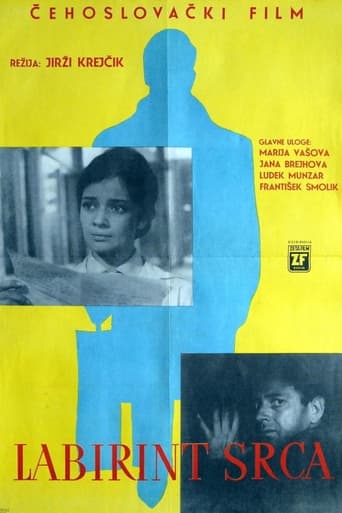
It is 1955 and the government in Czechoslovakia has declared an amnesty for post-war emigrants. Many of them returned to their families, only young Pavel Kocián's single mother waits in vain for him. Despite her protests, Tomáš Stach, an assembler, is accommodated in her flat as a lodger. Until recently, his fiancée Jana was also waiting for Pavel's return, but she has given up hope and visits Mrs Kocián only out of pity. One evening, an unknown man who introduces himself as Jonáš and claims to know Pavel visits her.
Labyrint srdce
1961
No synopsis available yet.
Slavík
1996