
Sound
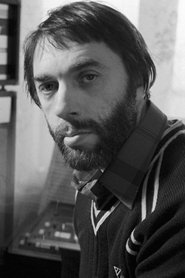
Eduard Artemyev
Born — Died
1937-11-30 — 2022-12-29
Place of birth
Novosibirsk, Novosibirskaya oblast, RSFSR, USSR
Known for
Sound
Credits
3 titles
Eduard Nikolaevich Artemyev PAR (Russian: Эдуа́рд Никола́евич Арте́мьев, IPA: [ɛdʊˈard ɐrˈtʲemʲjɪf]; born 30 November 1937) is a Soviet and Russian composer of electronic music and film scores. Outside of Russia he is mostly known for his soundtracks for films such as Solaris, Siberiade, Stalker and Burnt by the Sun. He was awarded the title People's Artist of Russia in 1999. Artemyev was born in Novosibirsk and studied at the Moscow Conservatory under Yuri Shaporin. His interest in electronic music and synthesizers began after his graduation in 1960 when electronic music was still in its infancy. He wrote his first composition in 1967 on one of the first synthesizers, the ANS synthesizer d…
Known for
 7.2
7.2In visiting his ex-wife’s apartment a man learns that she plans to remarry a scientist named Valentin Shlyakhov. In his past, the man wrote a scathing letter about Shlyakhov which greatly impacted his career. Fearing that this information will come to light when his ex-wife marries Shlyakhov, the man insists that the wedding be called off. What follows is an intimate portrayal of the relationship between a man and a woman (who are never named), whose history as husband and wife plays out during a heated conversation.
Without Witness
1983
 NR
NRAlexander Scriabin (1872–1915) born in Moscow, was an innovative, mystical, avant-garde Russian pianist and composer. This film explores Scriabin’s profound vision of art's unity — where music, movement, light and colour merge to create transcendent experiences. Some claim Scriabin pioneered atonality before Schoenberg. Key works: Poème, Op. 32 No. 1 (1903) and Vers la flamme, Op. 72 (1914). Featuring commentary from esteemed musicians like Eduard Artemyev, Vladimir Ashkenazy and Vladimir Horowitz, Artist: Hermann Nitsch, conductor Mikhail Pletnev and insights from Scriabin’s daughter: Marina Scriabine, this documentary offers a unique glimpse into the life and works of one of music’s most enigmatic figures. Shot across stunning locales in Switzerland, Italy and Russia, enriched with Scriabin’s own writings and rare archival materials. The highlight includes a historic recording of Scriabin himself, playing his Poem Op. 32 No. 1 on a Welte Mignon player-piano, recorded in 1908.
Alexander Scriabin – Towards the Light / Calculation and Ecstasy
1996
 9.0
9.0A documentary which features interviews with collaborators and family members of director Andrei Tarkovsky's, along with scholars of his work. Special attention is paid to his 1975 film "Mirror."
The Dream in the Mirror
2021