

Directing
Amina Maher
Born
1992-03-05 (34)
Place of birth
Tehran, Iran
Known for
Directing
Credits
6 titles
Amina Maher (Persian: امین ماهر, born 1992) is an Iranian-born queer feminist artist, activist, actress, and filmmaker living in Berlin, Germany. Her works are focused on the breakdown of family structure, shame culture, and patriarchal myths. Her creative works criticize traditions, media, culture, and norms. Her cinematic activity began as the main actor in Abbas Kiarostami and Mania Akbari´s Ten (2002) nominated for the Palme d'Or at Cannes Film Festival. Since then, she acted, edited and has been in films that have been part of festivals such as Cannes Film Festival, British Film Institute, San Sebastián International Film Festival and International Film Festival Rotterdam. Her director…
Known for
 7.3
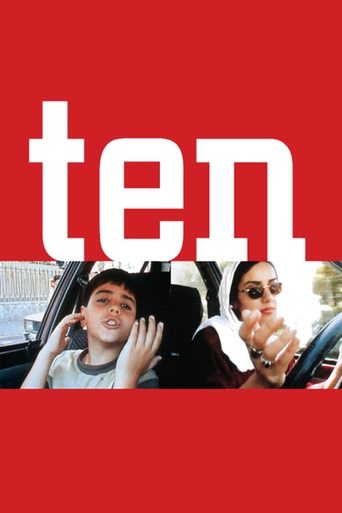
7.3A visual social examination in the form of ten conversations between a driving woman and her various pick-ups and hitchhikers.
Ten
2002
 4.0
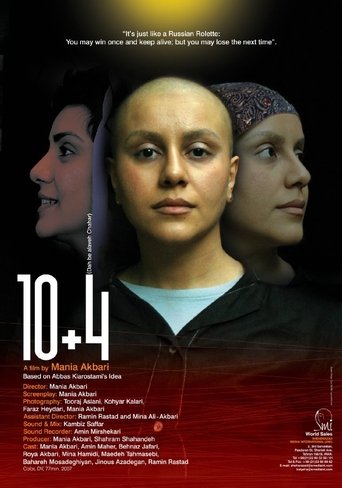
4.0After casting painter and video artist Mania Akbari as the central figure of his groundbreaking Ten (2002), and then witnessing her outstanding debut as a feature film director in 20 Fingers (2004), Abbas Kiarostami urged her to direct a sequel to the film. In Dah be alaveh Chahar (10 + 4), though, circumstances are different: Mania is fighting cancer. She has undergone surgery; she has lost her hair following chemotherapy and no longer wears the compulsory headscarf; and sometimes she is too weak to drive. So the camera follows her to record conversations with friends and family in different spaces, from the gondola she had famously used in her first feature to a hospital bed.
10 + 4 (Dah be alaveh chahar)
2007
 1.0
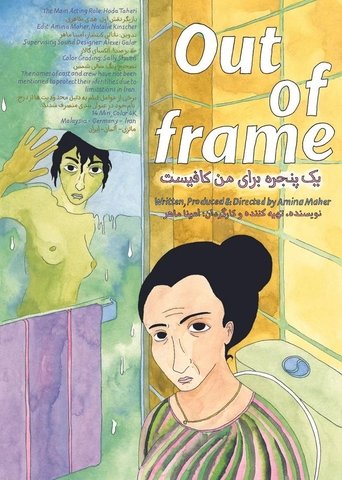
1.0Living in the confinement of a shared apartment with her controlling mother, Narges is soon confronted with the traumatic situation that women face under patriarchy. A sensitive, brave account about womanhood in modern-day Iran.
Out of Frame
2022
 9.5
9.5A daughter pushes at the bounds of her relationship with her mother as she unpicks the psychological consequences of the violence she suffered.
Letter to My Mother
2019
 NR
NRIn search of the creation of an autonomous body, Amina Maher reveals her unspoken desires in the process of honest self-exploration, sharing the most private of moments and breaking silences with the help of a friend.
Where Is the Friend's Home?
2022
I Look Like My Mother follows Amina Maher’s courageous journey to free herself from the constraints of norms, taboos and traditions. Her coming-out as a trans woman is her rebellious stand against rape culture and patriarchy, and her strong support for a future beyond cis-normativity. Ten by Kiarostami recorded ten-year-old Amina sitting in the passenger seat of her mother’s car without her consent. Now, she has taken the wheel, driving her actress mother, Mania Akbari, through Berlin – in a new body and with a new name, Amina. On her journey, Amina navigates through highs and lows with humour and energy, looking to transform the overshadowing past in playful dream sequences and in honest discussions with her queer community. With sheer endless creative energy, she transforms her present and past experiences into beautiful elegies of a struggle for her own truth – in her own terms. There is nothing to stop Amina from putting her foot down on the accelerator now.
I Look Like My Mother
—
Film credits
2000s · 2 titles
7.3A visual social examination in the form of ten conversations between a driving woman and her various pick-ups and hitchhikers.
Ten
2002
4.0After casting painter and video artist Mania Akbari as the central figure of his groundbreaking Ten (2002), and then witnessing her outstanding debut as a feature film director in 20 Fingers (2004), Abbas Kiarostami urged her to direct a sequel to the film. In Dah be alaveh Chahar (10 + 4), though, circumstances are different: Mania is fighting cancer. She has undergone surgery; she has lost her hair following chemotherapy and no longer wears the compulsory headscarf; and sometimes she is too weak to drive. So the camera follows her to record conversations with friends and family in different spaces, from the gondola she had famously used in her first feature to a hospital bed.
10 + 4 (Dah be alaveh chahar)
2007
Behind the camera
1.0Living in the confinement of a shared apartment with her controlling mother, Narges is soon confronted with the traumatic situation that women face under patriarchy. A sensitive, brave account about womanhood in modern-day Iran.
Out of Frame
2022
9.5A daughter pushes at the bounds of her relationship with her mother as she unpicks the psychological consequences of the violence she suffered.
Letter to My Mother
2019
NRIn search of the creation of an autonomous body, Amina Maher reveals her unspoken desires in the process of honest self-exploration, sharing the most private of moments and breaking silences with the help of a friend.
Where Is the Friend's Home?
2022
I Look Like My Mother follows Amina Maher’s courageous journey to free herself from the constraints of norms, taboos and traditions. Her coming-out as a trans woman is her rebellious stand against rape culture and patriarchy, and her strong support for a future beyond cis-normativity. Ten by Kiarostami recorded ten-year-old Amina sitting in the passenger seat of her mother’s car without her consent. Now, she has taken the wheel, driving her actress mother, Mania Akbari, through Berlin – in a new body and with a new name, Amina. On her journey, Amina navigates through highs and lows with humour and energy, looking to transform the overshadowing past in playful dream sequences and in honest discussions with her queer community. With sheer endless creative energy, she transforms her present and past experiences into beautiful elegies of a struggle for her own truth – in her own terms. There is nothing to stop Amina from putting her foot down on the accelerator now.
I Look Like My Mother
—