
Directing
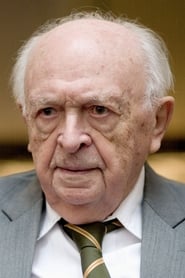
Otakar Vávra
Born — Died
1911-02-28 — 2011-09-15
Place of birth
Hradec Králové, Austria-Hungary [now Czech Republic]
Known for
Directing
Credits
48 titles
Otakar Vávra (28 February 1911 – 15 September 2011) was a Czech film director, screenwriter and pedagogue. Vávra attended universities in Brno and Prague, where he studied architecture. During 1929–30, while still a student, he participated in the making of a handful of documentaries and wrote movie scripts. In 1931, he produced the experimental film Světlo proniká tmou. The first movie he directed was 1937's Panenství. His 1938 film The Merry Wives was praised in Variety for "first-rate direction, a salty yarn and elaborate production effort", even though it had undergone certain cuts because it was considered too "ribald" by American censors. Vávra was a member of the Communist Party fr…
Known for
No synopsis available yet.
GENUS
1995
Television series Golden Sixties examines new insights into Czech and Slovak cinema of the 1960s and the role of the Czechoslovak New Wave. Each episode focuses on a different filmmaker.
Golden Sixties
2009
 7.6
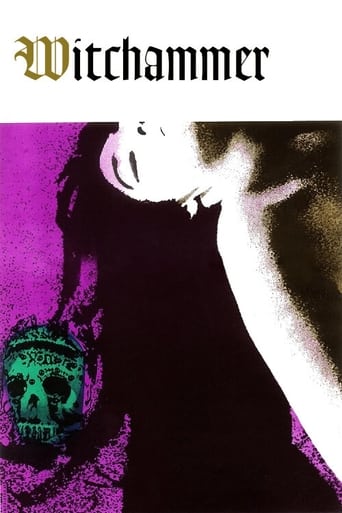
7.6In the 1600s, an overzealous clergy hauls innocent women in front of tribunals, forces them to confess to imaginary witchery, and engages in brutal torture and persecution of their subjects.
Witchhammer
1970
 4.2
4.2The plot begins in the Soviet Union showing first efforts to establish the Czechoslovak legion in 1942. The film also shows the assassination of Heydrich and the subsequent annihilation of Lidice. The main topis of the film is battles with German troops for Sokolovo.
Sokolovo
1975
A man and a woman meet on the streetcar. Six years ago, they were close . . .
Listopad
1935
No synopsis available yet.
Vlast vítá
1945
Film credits
2000s · 2 titles
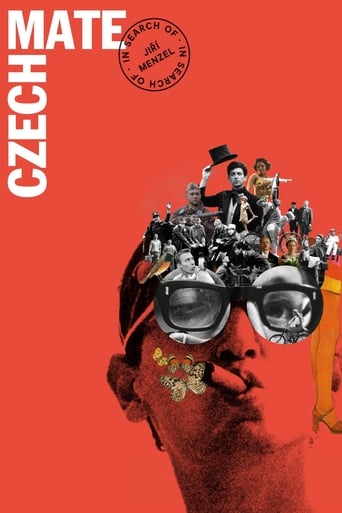
Otakar Vávra walks through Prague in front of the camera and with the camera, and remembers those who in the 1930s determined the pulse of the cultural and political life of that time.
Moje Praha
2002
 8.0
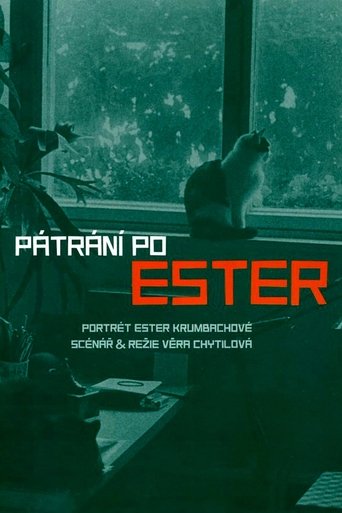
8.0Ester Krumbachová - a costume designer, screenwriter, director; one of the boldest personalities of the Czech New Wave. She worked in theatre, she was a writer and an illustrator. She co-created films such as O slavnosti a hostech (1966), Sedmikrásky (1966), Vsichni dobrí rodáci (1969), Pension pro svobodné pány (1968), Valerie a týden divu (1970), Slamený klobouk (1972) and many others. In the 1960s, she was a 'pivot' of the art scene in Prague, attracting artists who were on the threshold of their career, just setting out to find their own form of self-realization. Those who underwent her tutelage remember her forever. Director Vera Chytilová talks to those who knew Ester Krumbachová, who worked with her, befriended her, loved her. She sets off on a search that is to end by answering the question: Who was Ester?
Searching for Ester
2005
1980s · 2 titles
The 50th anniversary of the Barrandov studios was celebrated with a spectacular show: many directors and other important people gathered in the expensive decorations of the Variety Theatre auditorium (built for the Circus Humberto series). They smiled and showed well-deserved relaxation after a job well done in managing socialist cinema. Vladimir Sís interspersed this with excerpts from films, mainly his own and also a little of others who had worked on the "Hill of Dreams".
Barrandovské nokturno aneb Jak film tančil a zpíval
1985
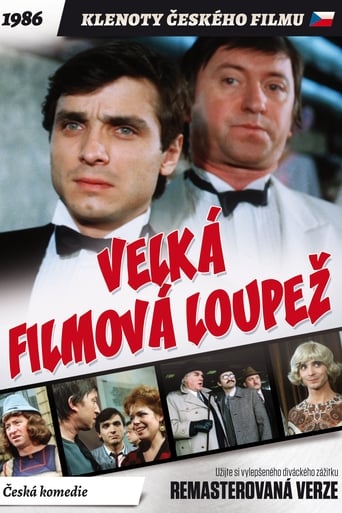 6.8
6.8The film is essentially a feature-length commercial for an exhibition to mark the 40th anniversary of the nationalisation of the Czechoslovak film industry, to be held at the Prague U Hybernu venue. The protagonists of the piece are comedians Oldrich Kaiser and Jirí Lábus, who are set to accept an award from Japanese television representatives at the exhibition. At the same time, five gangsters plot to seize a revolutionary invention devised by professor Suzuki - a super holograph, which enables any figure from television to be transported in the flesh into the real world, and vice-versa.
The Great Movie Robbery
1987
1950s · 1 titles
Series credits
Behind the camera
7.6In the 1600s, an overzealous clergy hauls innocent women in front of tribunals, forces them to confess to imaginary witchery, and engages in brutal torture and persecution of their subjects.
Witchhammer
1970
7.6In the 1600s, an overzealous clergy hauls innocent women in front of tribunals, forces them to confess to imaginary witchery, and engages in brutal torture and persecution of their subjects.
Witchhammer
1970
4.2The plot begins in the Soviet Union showing first efforts to establish the Czechoslovak legion in 1942. The film also shows the assassination of Heydrich and the subsequent annihilation of Lidice. The main topis of the film is battles with German troops for Sokolovo.
Sokolovo
1975
4.2The plot begins in the Soviet Union showing first efforts to establish the Czechoslovak legion in 1942. The film also shows the assassination of Heydrich and the subsequent annihilation of Lidice. The main topis of the film is battles with German troops for Sokolovo.
Sokolovo
1975
A man and a woman meet on the streetcar. Six years ago, they were close . . .
Listopad
1935
A man and a woman meet on the streetcar. Six years ago, they were close . . .
Listopad
1935
No synopsis available yet.
Vlast vítá
1945
No synopsis available yet.
Vlast vítá
1945
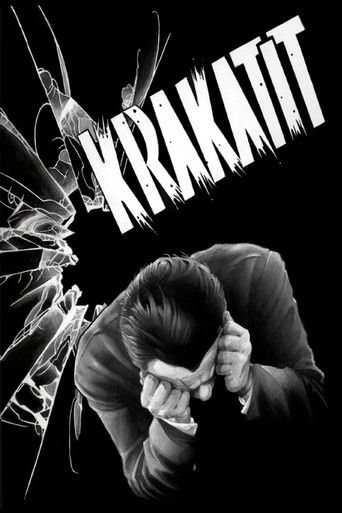 6.5
6.5In Czechoslovakia, in the early 20th century, a seriously ill chemist recalls how he discovered a powerful explosive and how it ended up in the hands of anarchists.
Krakatit
1948
6.5In Czechoslovakia, in the early 20th century, a seriously ill chemist recalls how he discovered a powerful explosive and how it ended up in the hands of anarchists.
Krakatit
1948
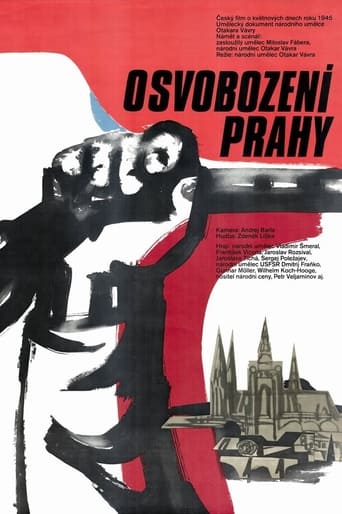 5.3
5.3On 20th of April 1945 the Soviet army launches its attack on Berlin. The end has come for Nazi Germany and Hitler decides to commit suicide. In Prague K.H. Frank (Nazi Secretary of State and Chief of police in the Protectorate of Bohemia a Moravia) discusses with his commanders how to transform the city into an impregnable fortress, but the Praguers do not intend to wait any longer. From the early hours of 4th of May people start assembling in the streets and tearing down German signs. On the next day, the 5th of May, the uprising begins.
The Liberation of Prague
1977
5.3On 20th of April 1945 the Soviet army launches its attack on Berlin. The end has come for Nazi Germany and Hitler decides to commit suicide. In Prague K.H. Frank (Nazi Secretary of State and Chief of police in the Protectorate of Bohemia a Moravia) discusses with his commanders how to transform the city into an impregnable fortress, but the Praguers do not intend to wait any longer. From the early hours of 4th of May people start assembling in the streets and tearing down German signs. On the next day, the 5th of May, the uprising begins.
The Liberation of Prague
1977
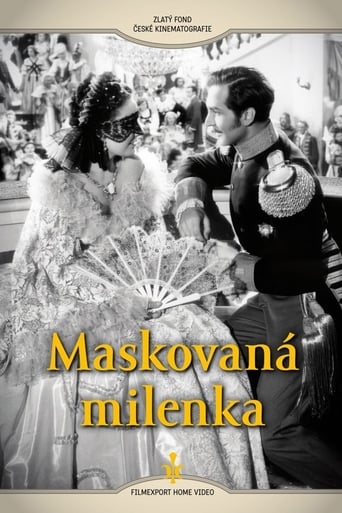 8.0
8.0A romantic story of a noble lady who wanted to live without the bonds of marriage, but her desire for a child led her - carefully disguised - into the arms of a young nobleman. Only years later did she believe in his love and make herself known.
The Masked Lover
1940
8.0A romantic story of a noble lady who wanted to live without the bonds of marriage, but her desire for a child led her - carefully disguised - into the arms of a young nobleman. Only years later did she believe in his love and make herself known.
The Masked Lover
1940
 4.5
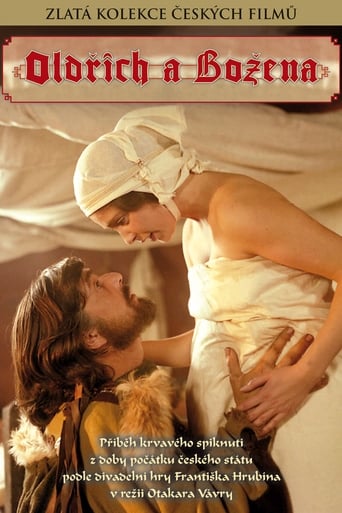
4.5At the turn of the 10th and 11th centuries Boleslav's kingdom fell apart in the fratricidal war between the Přemyslovci and the other clans the main profiteer of this being the German emperor. At that time it seemed as if the Czech state and the lineage of its princes was awaiting its end..." It is with these words that the tale of this film begins, whose narrative is based upon the the play by František Hrubín of the same name.
Oldrich and Bozena
1985
4.5At the turn of the 10th and 11th centuries Boleslav's kingdom fell apart in the fratricidal war between the Přemyslovci and the other clans the main profiteer of this being the German emperor. At that time it seemed as if the Czech state and the lineage of its princes was awaiting its end..." It is with these words that the tale of this film begins, whose narrative is based upon the the play by František Hrubín of the same name.
Oldrich and Bozena
1985
Montage of documentary footage from the liberation and building of the republic as a tribute to JV Stalin on his seventieth birthday.
Láska
1950
Montage of documentary footage from the liberation and building of the republic as a tribute to JV Stalin on his seventieth birthday.
Láska
1950
 8.0
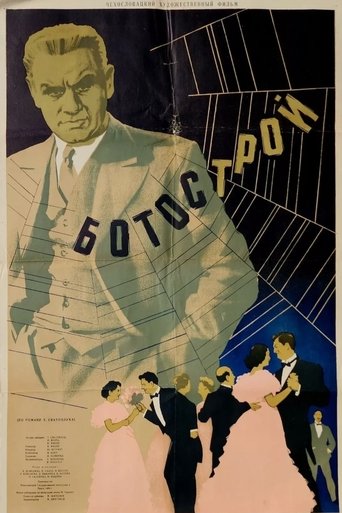
8.0The happenings in a shoe factory serve as a not very thinly veiled examination of the pros and cons of both socialism and democracy.
Shoesmachine
1954
 7.3
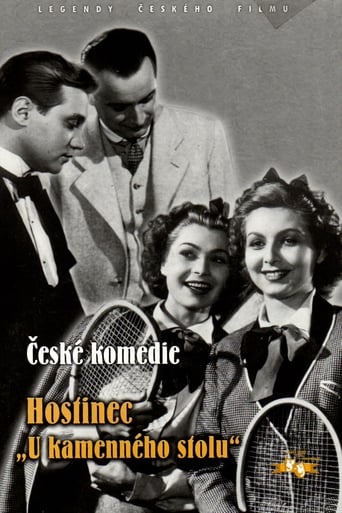
7.3An innkeeper is grieving because his wife left him for a second-rate actor. His two nephews, who are not on speaking terms, have to take over the running of the establishment...
Hostinec „U kamenného stolu“
1949
 5.4
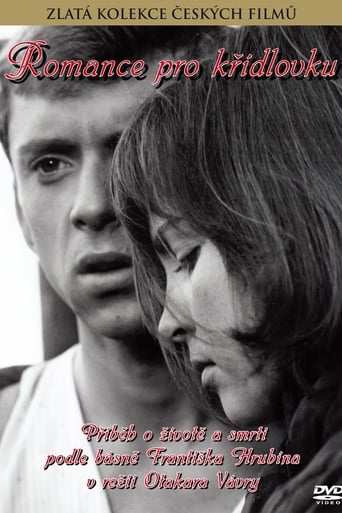
5.4A lyrical story about first love, death and disappointment, based on a poem of the same title.
Romance for Bugle
1967
5.4A lyrical story about first love, death and disappointment, based on a poem of the same title.
Romance for Bugle
1967
 6.5
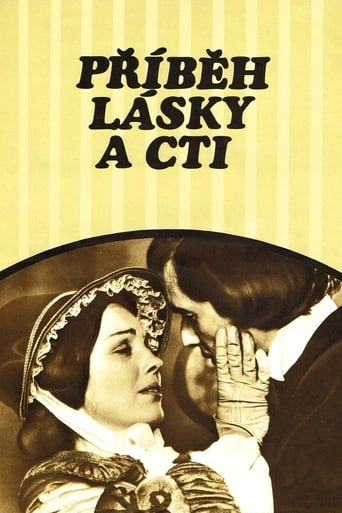
6.5A story of love and honor that takes place during the mid-nineteenth century during revolutions, as well as economic, political, and social hypocrisy. Two extraordinary but lonely artists share a passionate love, as evidenced by the preserved letters that they exchanged.
A Story of Love and Honor
1978
6.5A story of love and honor that takes place during the mid-nineteenth century during revolutions, as well as economic, political, and social hypocrisy. Two extraordinary but lonely artists share a passionate love, as evidenced by the preserved letters that they exchanged.
A Story of Love and Honor
1978
 8.0
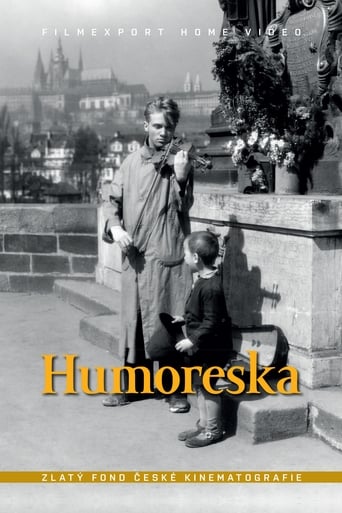
8.0Dvořák's well-known composition reappears again and again in the serious moments of the lives of the father and son Hupeks - talented non-professional musicians for whom music gives them the opportunity to rise above difficulties and problems...
Humoreska
1939
8.0Dvořák's well-known composition reappears again and again in the serious moments of the lives of the father and son Hupeks - talented non-professional musicians for whom music gives them the opportunity to rise above difficulties and problems...
Humoreska
1939
 6.5
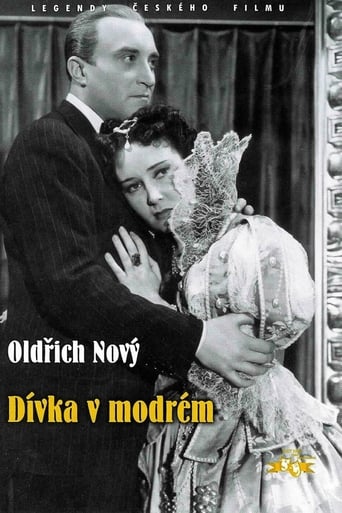
6.5A painting of a girl from another time comes to life for it's buyer in this costume comedy.
The Girl in Blue
1940
6.5A painting of a girl from another time comes to life for it's buyer in this costume comedy.
The Girl in Blue
1940
The family of the worker Kučera lives happily. His daughter Anežka, engaged to technical draftsman Adolf, is a seamstress. His son Váš is studying to be a machinist. The family also includes his grandfather, a former miner. However, an economic crisis is beginning. Factories stop production. Adolf loses his job and has an argument with Anežka, who has no idea the cause of his nervousness.
Svítání
1933
 7.0
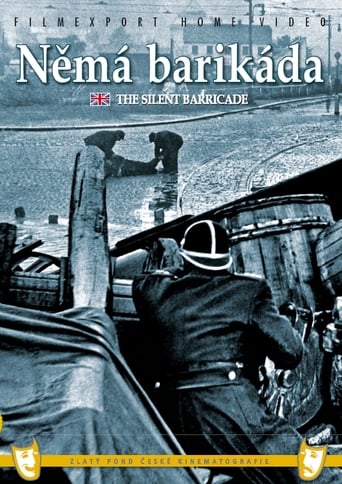
7.0A fiction piece centered around the Czech resistance to the Nazis.
Silent Barricade
1949
7.0A fiction piece centered around the Czech resistance to the Nazis.
Silent Barricade
1949
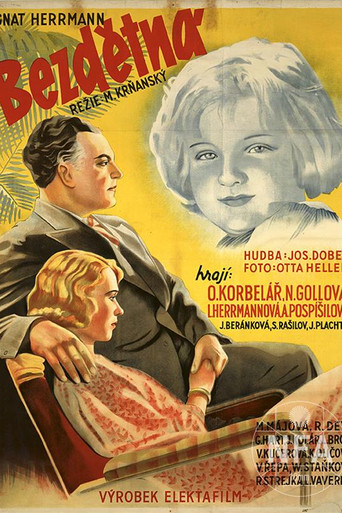 7.0
7.0No synopsis available yet.
Bezdětná
1935
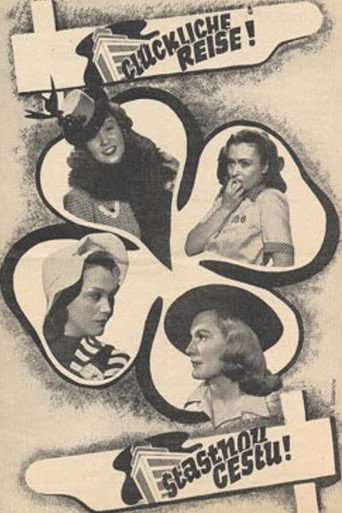 6.7
6.7Filmed during the Nazi occupation, this panoramic drama set in a Prague department store follows the divergent destinies of four female coworkers, each of whom seeks happiness in a different way.
Happy Journey
1943
6.7Filmed during the Nazi occupation, this panoramic drama set in a Prague department store follows the divergent destinies of four female coworkers, each of whom seeks happiness in a different way.
Happy Journey
1943
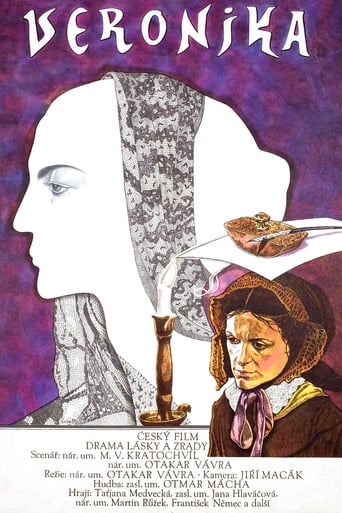 4.0
4.0Emperor Francis Joseph I is about to arrive in Prague, and among those who came to Stromovka to welcome him is Veronika Pavlitová. She wants to submit a request for clemency for her imprisoned father to the emperor, because she is barely able to support herself and her siblings on the meager salary of a seamstress. By chance, the girl meets Božena Němcová, whom she admires immensely. She becomes her friend and confidant for a while. However, police director Paümann, who has been following Božena Němcová for a long time, takes advantage of the naivety of the young girl. Veronika, in her simple-mindedness, tells him many things. Only later will she understand how she was abused.
Veronika
1986
4.0Emperor Francis Joseph I is about to arrive in Prague, and among those who came to Stromovka to welcome him is Veronika Pavlitová. She wants to submit a request for clemency for her imprisoned father to the emperor, because she is barely able to support herself and her siblings on the meager salary of a seamstress. By chance, the girl meets Božena Němcová, whom she admires immensely. She becomes her friend and confidant for a while. However, police director Paümann, who has been following Božena Němcová for a long time, takes advantage of the naivety of the young girl. Veronika, in her simple-mindedness, tells him many things. Only later will she understand how she was abused.
Veronika
1986
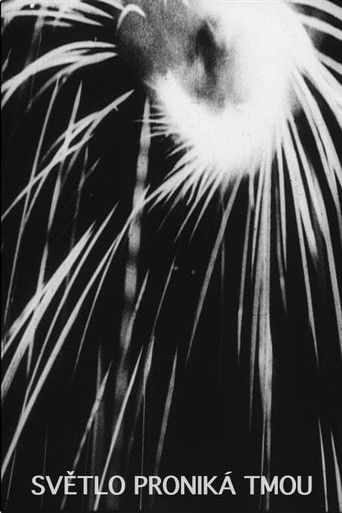 5.7
5.7Zdenek Pešánek created the first public kinetic sculpture, for the power station in Prague. This short experimental film focuses on a kinetic sculpture by Zdenek Pešánek. For a period of eight years it issued beams of light from the outside wall of a transformer station at Prague’s power utility before its destruction in 1939. Though genuine, these shots seem abstract to us. They are a rhythmically assembled ode to the light-creating devices and phenomena of electricity. Light arcs, coils, bulbs and various luminous elements support the alternation of positive and negative film images, creating an impressive universe of light and shade. In the 1920s, Pešánek had obtained financial support for his work with electric kinetic light art. In the 1930s, he was the first sculptor to use neon lights. He built several kinetic light pianos, and published a book titled “Kinetismus” in 1941. —http://www.centerforvisualmusic.org
The Light Penetrates the Dark
1931
5.7Zdenek Pešánek created the first public kinetic sculpture, for the power station in Prague. This short experimental film focuses on a kinetic sculpture by Zdenek Pešánek. For a period of eight years it issued beams of light from the outside wall of a transformer station at Prague’s power utility before its destruction in 1939. Though genuine, these shots seem abstract to us. They are a rhythmically assembled ode to the light-creating devices and phenomena of electricity. Light arcs, coils, bulbs and various luminous elements support the alternation of positive and negative film images, creating an impressive universe of light and shade. In the 1920s, Pešánek had obtained financial support for his work with electric kinetic light art. In the 1930s, he was the first sculptor to use neon lights. He built several kinetic light pianos, and published a book titled “Kinetismus” in 1941. —http://www.centerforvisualmusic.org
The Light Penetrates the Dark
1931
Otakar Vávra walks through Prague in front of the camera and with the camera, and remembers those who in the 1930s determined the pulse of the cultural and political life of that time.
Moje Praha
2002
Otakar Vávra walks through Prague in front of the camera and with the camera, and remembers those who in the 1930s determined the pulse of the cultural and political life of that time.
Moje Praha
2002