Acting
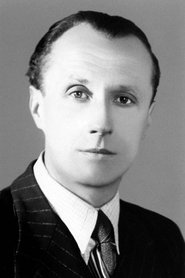
Vladimir Osenev
Born — Died
1908-09-08 — 1977-04-01
Place of birth
Moscow, Russian Empire
Known for
Acting
Credits
37 titles
Known for
 6.1
6.1Historical epic about the legendary Russian naval commander of the 18th century, admiral Fyodor Ushakov, and his fight for Crimea during the Russo-Turkish War.
Admiral Ushakov
1953
 6.8
6.8As an adviser to the emperor Nicholas II, mystic Grigori Rasputin holds great influence over the empire. However, many in St Petersburg begin to regard Rasputin, with his strange practices and mesmerizing qualities, as a liability and plot his assassination. When Rasputin, known to many as the 'Mad Monk', leads Nicholas to embrace an ill-conceived military strategy, a group of determined conspirators set down a plan to eliminate him.
Agony: The Life and Death of Rasputin
1981
 6.3
6.3Successful work and life of a brave militia captain who does not know much about human psychology.
Keys to Paradise
1976
 7.0
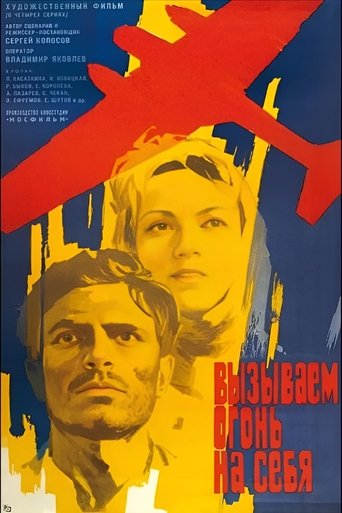
7.0In the Soviet airbase, occupied by the Nazis, a resistance group occurs, led by a modest girl Anna Morozova. For each victory (important, albeit small on a scale of the war) they have to pay a heavy price.
Call Fire for Ourselves
1965
 NR
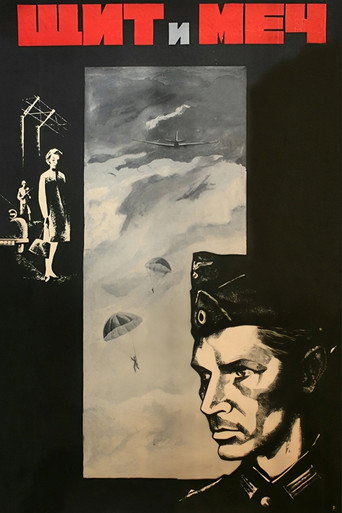
NRThe year is 1940 and Nazi Germany is at the height of its military prowess, having captured most of Europe and eyeing the Soviet Union to the East. The Russian military command suspects hostile intent from Germany and so arranges for its spies to infiltrate ranks of the German military and the SS. Alexander Belov is a Russian spy, who travels from Soviet-held Latvia to Nazi Germany under an alias of Johann Weiss. His mastery of the German language, steel nerves and an ability to manipulate others help him to use his connections in the SS to ascend the ladder of the German intelligence. He uses his position to identify sympathetic Germans, who help him to procure vital intelligence, and to help local resistance movements in their collective fight against Nazism.
The Shield and the Sword
1968
 6.7
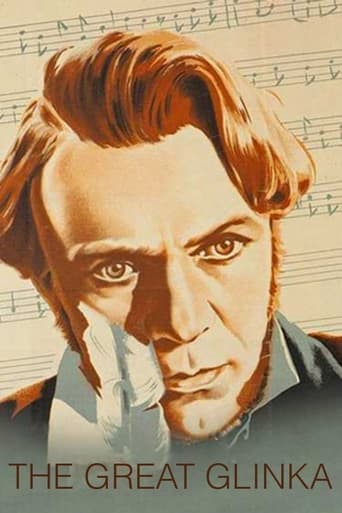
6.7About the life of the Russian composer Mikhail Glinka.
The Great Glinka
1946
Film credits
1970s · 22 titles
6.3Successful work and life of a brave militia captain who does not know much about human psychology.
Keys to Paradise
1976
 5.9
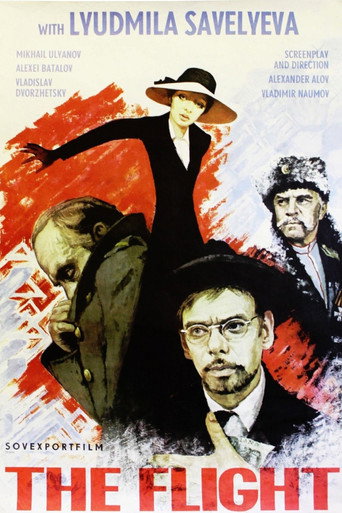
5.9The film is about a group of people who in other times wouldn't have anything in common, some of them innocent bystanders, some moral criminals. But nothing is straightforward and simple. From Russia "the flight" continues to Constantinople, to Paris, back to Russia. Some of them have understood that they can't live outside Russia and go back maybe to be happy, maybe not, some go back to face sure death for their crimes, some don't go back and know that are going to miss homeland forever, some are comfortably well off (are they?) in exile.
The Flight
1971
 8.0
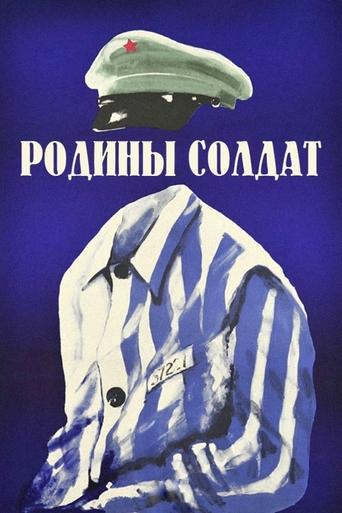
8.0About the famous fortification scientist, Lieutenant General of Engineering Troops Dmitry Mikhailovich Karbyshev. Before the war, he led the work on strengthening the Brest Fortress and the approaches to Leningrad. In 1940 he was 60 years old. The beginning of the war found him in Belorussia. After one of the battles, seriously wounded, he was taken prisoner to the Mauthausen camp, where he fought against fascism for 1320 days.
Soldier of the Motherland
1975
 7.5
7.5Another Soviet Winnie-the-Pooh story. This time the donkey, known from the Pooh stories as Eeyore, is sad because he has no tail. Pooh goes in search of one and finds it attached to a bell that hangs from the treehouse of one Owl.
Winnie-the-Pooh and a Busy Day
1972
 7.5
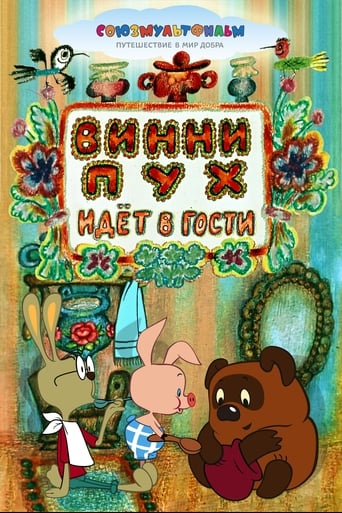
7.5The second of the Soviet Winnie-the-Pooh series. This one had Pooh and Piglet visiting Rabbit for a meal with honey.
Winnie-the-Pooh Goes Visiting
1971
 7.2
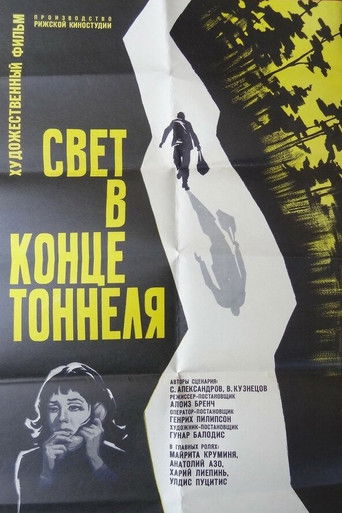
7.2A load of gold is stolen. Detectives make criminals play by their rules.
Light at the End of the Tunnel
1974
 7.5
7.5A Soviet KGB agents are trying to prevent British-American operation of stealing information about an important scientific project from USSR.
Fifty-Fifty
1972
 NR
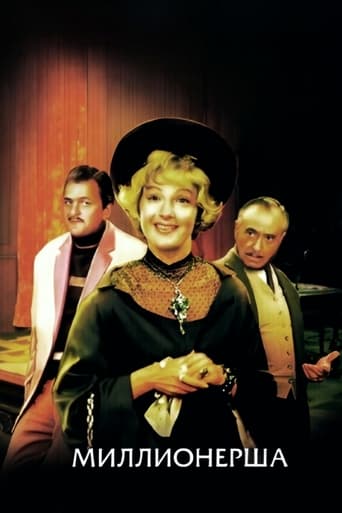
NRTeleplay by the Vakhtangov Theater based on B. Shaw's play of the same name.
The Millionairess
1974
 6.2
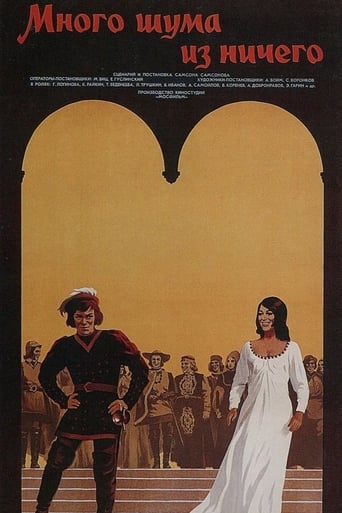
6.2Young lovers Hero and Claudio, soon to wed, conspire to get verbal sparring partners and confirmed singles Benedick and Beatrice to wed as well.
Much Ado About Nothing
1973
 1.0
1.0Based on the eponymous novel by É. Zola, directed by the State Academic Theatre named after Evgeny Vakhtangov.
The Trap
1972
 4.2
4.2In 1921, the Cheka became aware that gold and jewelry were stolen from the treasury of Gokhran, and that a special organization was involved in transporting the stolen to Estonia. Scout Maksim Isayev is sent to this country. He establishes that the cipher of the Soviet embassy Olenetskaya works for the German resident Nolmar, with whom employees of Gokhran Kozlovskaya and an appraiser Yakov Shelekhes are associated. As a result of the provocation, Isayev was arrested. In the prison cell, he finds himself together with the famous Russian writer Nikandrov, who could not find himself in post-revolutionary Russia and went abroad. Released soon by the efforts of his comrades, Isayev continues the struggle for the fate of Nikandrov — for his return to his homeland.
Diamonds for the Dictatorship of the Proletariat
1976
 4.0
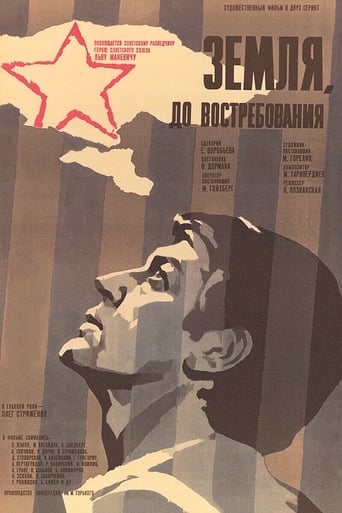
4.0Based on a true story about Soviet spy Lev Manevich. He lives in Italy and operates in the Nazi Germany and Austria. Manevich, who is posing as a businessman, collects information about the latest German airplanes made by Messerschmitt for Luftwaffe. On his spying trip to Berlin, Manevich noticed that a stranger was following him. Now his life is in danger, but he must do something to complete his mission...
Land, Poste Restante
1973
No synopsis available yet.
Upside Down
1974
 4.8
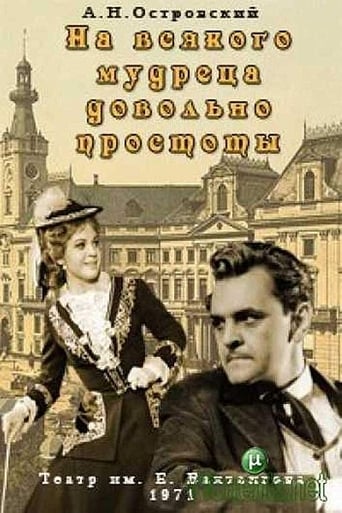
4.8TV version of the Vakhtangov's Theater play. The plot makes fun of secular society and shows what can turn cynical attempts to deceive people if they want to get to power and money.
Enough Stupidity in Every Wise Man
1971
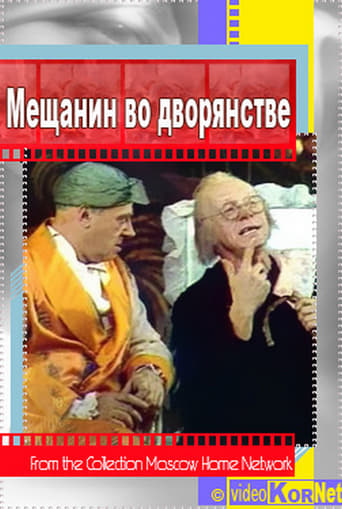 NR
NRA recording of the Vakhtangov Theatre’s production of the play by Jean-Baptiste Molière. "The Bourgeois Gentleman" is a brilliant, sparkling comedy by the great French literary classic Jean-Baptiste Molière. The attempts of an uneducated, ignorant, and coarse man with a great deal of money to present himself as a refined nobleman are nothing short of laughable.
The Bourgeois Gentleman
1977
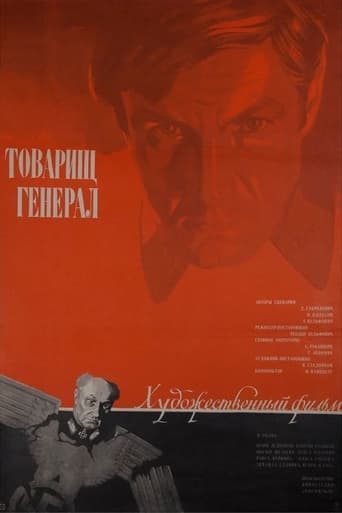 NR
NR1941. Army commander Kapitonov takes the brunt of the German forces, striving to Rostov. Well aware of the tactics of the German General Leynts, Kapitonov brilliantly conducting an operation that was incorporated into the history of the war under the name "Dyakovo defense."
Comrade General
1974
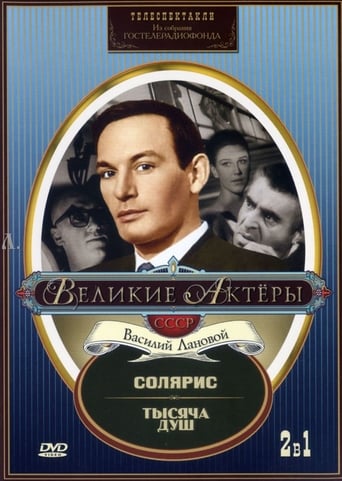 NR
NRBased on the eponymous novel by A.F. Pisemsky. A play about the all-powerful influence of money and the morals of the bureaucratic world that destroy everything honest, good, and humane.
A Thousand Souls
1971
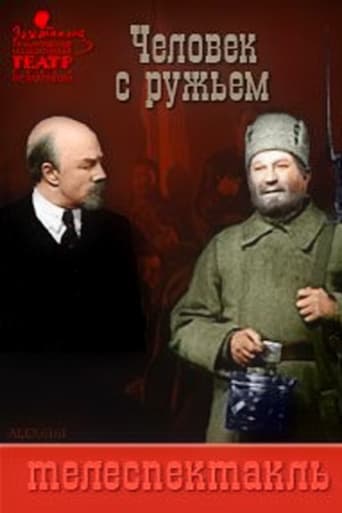 NR
NRThe events take place in Russia in 1917. A former peasant, and now a soldier, Ivan Shadrin, was sent by fellow soldiers from the German front to revolutionary Petrograd to hand Lenin a letter with questions from his comrades.
The Man with the Gun
1977
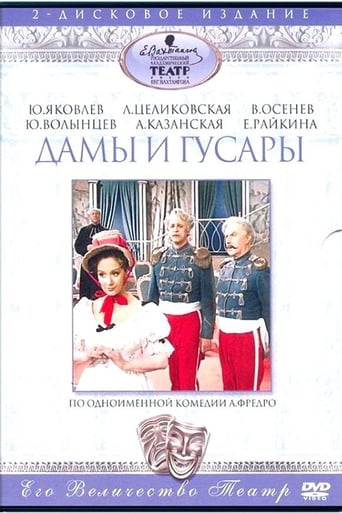 NR
NRThe action takes place on the estate of a major, where his friends, inveterate bachelors, and the sisters of the major, who came to marry him with his niece, meet. But the niece has long loved Lieutenant Edmund, and then a plan matures to persuade the major to marry, at the last moment, replacing him with the lieutenant. To do this, the ladies have woven insidious intrigues. At the end of the play, the mutual rejection of the ladies and the hussar develops into sympathy and even love ...
Ladies and Hussars
1976
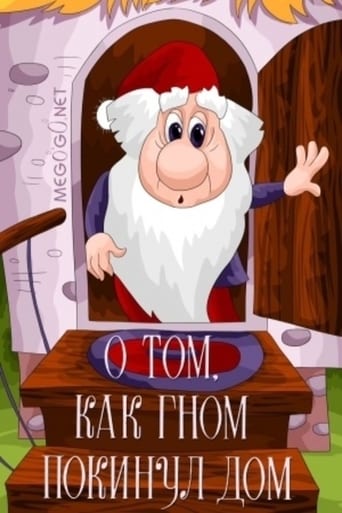 5.3
5.3The story about the gnome and his anthropomorphic house which is afraid of the dark.
About the Gnome Which Left the Home
1976
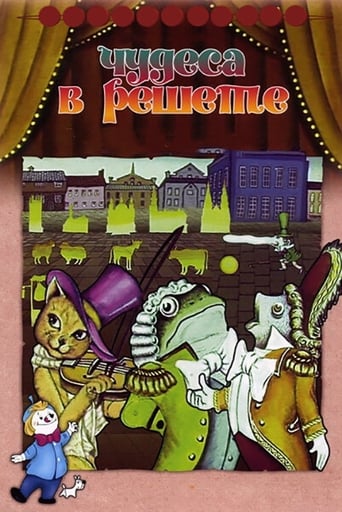 1.0
1.0A bizarre cartoon based on English nursery rhymes.
Miracles in the Sieve
1978
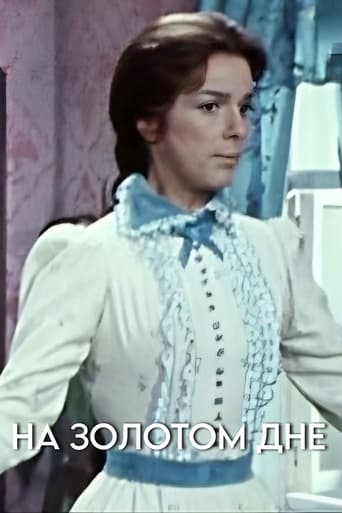 NR
NRThe play of the same name by Mamin-Sibiryak, staged by the Vakhtangov State Academic Theater. At the center of the play is the daughter of a bankrupt gold miner, who, faced with cruel morals, herself becomes a predator.
The Golden Depths
1978
1960s · 9 titles
NRThe year is 1940 and Nazi Germany is at the height of its military prowess, having captured most of Europe and eyeing the Soviet Union to the East. The Russian military command suspects hostile intent from Germany and so arranges for its spies to infiltrate ranks of the German military and the SS. Alexander Belov is a Russian spy, who travels from Soviet-held Latvia to Nazi Germany under an alias of Johann Weiss. His mastery of the German language, steel nerves and an ability to manipulate others help him to use his connections in the SS to ascend the ladder of the German intelligence. He uses his position to identify sympathetic Germans, who help him to procure vital intelligence, and to help local resistance movements in their collective fight against Nazism.
The Shield and the Sword
1968
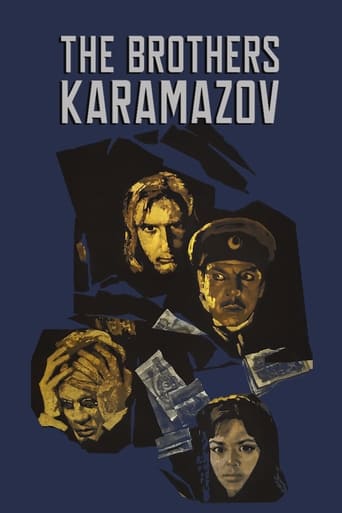 6.4
6.4The tragic story of the Karamazov family takes place in a Russian province in the late 19th century. The relations of their father and three brothers are very complicated and contradictory. One of the brothers is accused of killing his father, whom he did not commit. The brothers are unable to help him, and only a loving girl follows him to hard labour.
The Brothers Karamazov
1969
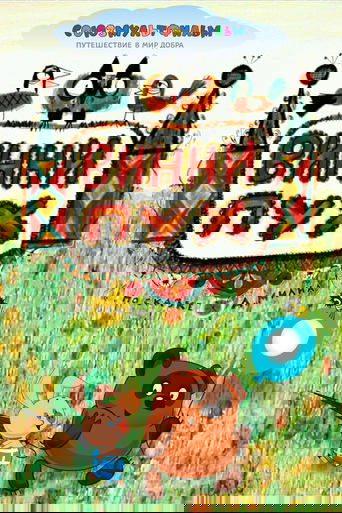 7.4
7.4According to Winnie-the-Pooh himself, bears love honey very much. That's why it always runs out very quickly. And you can't do without honey, so Winnie, along with Piglet, sets off for a tall tree with a beehive hanging from it. Winnie fearlessly climbs up to the beehive on a balloon, singing a song about a little cloud.
Winnie-the-Pooh
1969
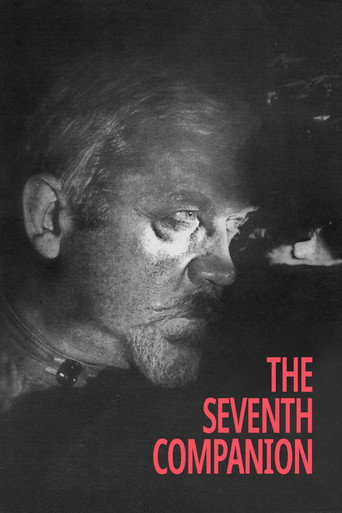 6.4
6.4A portrait of the era of "Red Terror" during the civil war that followed the Bolshevik revolution, The Seventh Companion offers a character study in General Adamov (Andrei Popov), a law professor in the tsarist army, who is incarcerated by the Bolshevik secret police along with many other members of the bourgeoisie. Finally released into the new world of the Soviet Union, the resigned officer finds that he has lost everything from his old life except a mantel clock that he carries through the night from place to place, until he ends up back where he started.
The Seventh Companion
1967
 NR
NRThe action takes place at the construction site of a large power plant in Siberia. A professional conflict arises between the construction manager, Krotov, and the chief engineer, Yuryev, which is complicated by personal relationships—Elena, Krotov's wife, has genuinely fallen in love with Yuryev, a man of principles, honesty, and kindness.
Hearts Must Burn
1960
 5.9
5.9The film tells about Anton Pavlovich Chekhov. October 17, 1896. On the facade of the Alexandrinsky Theater — a poster about the premiere of "The Seagull". A few hours are left before the performance. Chekhov and his sister Masha are expecting Lika Mizinova from Moscow station to arrive from Moscow. Chekhov is alarmed by the upcoming premiere, excited by the meeting with love, which never took place. Memories of acquaintance with Lika, of the experiences caused by the rude scolding of newspaper men who predicted the young writer the inglorious "death under the fence", about the unexpected decision for everyone to go to Sakhalin...
Subject for a Short Story
1969
 8.0
8.0A group of Soviet counterintelligence officers manage to neutralize spies sent to the territory of the country to obtain secret information about the construction of a large military-industrial complex in Priozersk.
Man Without a Passport
1966
 NR
NRThe last days of the Second World War in Prague.
Under the Chestnut Trees of Prague
1965
 8.0
8.0Beth Tyson is murdered in her mansion. Chief Inspector Fields, Inspector Bramell and Detective Philbert present three different versions of this crime.
Shares in Murder
1964
1950s · 2 titles
6.1Historical epic about the legendary Russian naval commander of the 18th century, admiral Fyodor Ushakov, and his fight for Crimea during the Russo-Turkish War.
Admiral Ushakov
1953
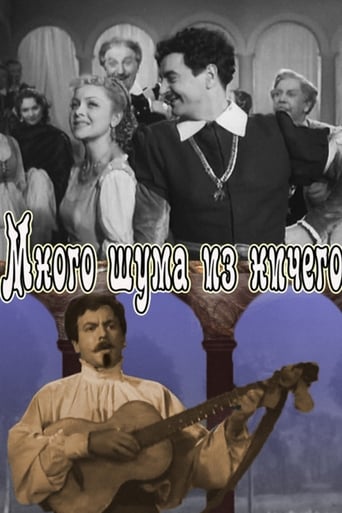 NR
NRLeonato, governor of sunny Messina in Sicily, warmly welcomes Don Pedro, Prince of Aragon, to his home. Don Pedro has arrived in the city accompanied by his retinue after the victorious conclusion of the war. The retinue includes the prince's friends, young officers: Claudio from Florence and Signor Benedick from Padua. The romantic Claudio immediately falls in love with the beautiful Hero, Leonato's daughter, and the prince offers to help the lover. At night, at a masquerade ball, he reveals Claudio's feelings to the girl on his behalf and agrees with her father on the wedding...
Much Ado About Nothing
1956