Acting
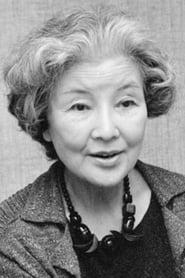
Tanie Kitabayashi
Born — Died
1911-05-21 — 2010-04-27
Place of birth
Tokyo, Japan
Known for
Acting
Credits
62 titles
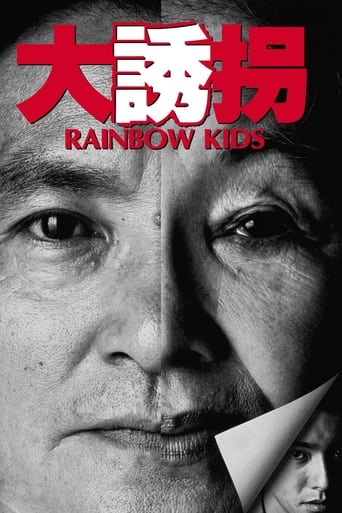
Tanie Kitabayashi (北林谷栄, Kitabayashi Tanie, May 21, 1911 – April 27, 2010) was a Japanese actress and voice actress. Born Reiko Ando in Tokyo, she began as a stage actress. Early in her career, she became well known for portraying older women. Kitabayashi was a founding member of the famed Mingei Theatre, founded in 1950. In 1960, she won best actress awards at the 10th Blue Ribbon Awards and at the Mainichi Film Awards for Kiku to Isamu. She also won the Japan Academy Prize for best actress in Rainbow Kids (1991), a film that also earned her honors from the Mainichi Film Awards and from Kinema Junpo. She died on April 27, 2010, of pneumonia at a Tokyo hospital. She was 98.
Known for
 8.1
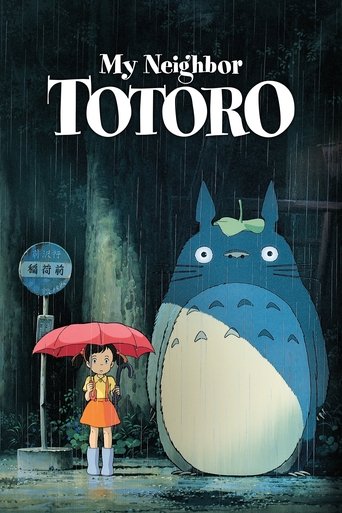
8.1Two sisters move to the country with their father in order to be closer to their hospitalized mother, and discover the surrounding trees are inhabited by Totoros, magical spirits of the forest. When the youngest runs away from home, the older sister seeks help from the spirits to find her.
My Neighbor Totoro
1988
 NR
NRKano is known as a "cocoon child" whose father is an agriculturist. Her mother disappeared when she was little and since then Kano has been wondering why her mother left her thus changing the shape of her life.
Mayuko hitori
1971
 NR
NRA coming-of-age film.
My Son's Revolt
1958
 NR
NRNo synopsis available yet.
おくさまは18歳
1970
 7.8
7.8In Burma during the closing days of WWII, a Japanese soldier separated from his unit disguises himself as a Buddhist monk to escape imprisonment as a POW.
The Burmese Harp
1956
 7.2
7.2A woman, Tome, is born to a lower class family in Japan in 1918. The title refers to an insect, repeating its mistakes, as in an infinite circle. Imamura, with this metaphor, introduces the life of Tome, who keeps trying to change her poor life.
The Insect Woman
1963
Film credits
1980s · 15 titles
8.1Two sisters move to the country with their father in order to be closer to their hospitalized mother, and discover the surrounding trees are inhabited by Totoros, magical spirits of the forest. When the youngest runs away from home, the older sister seeks help from the spirits to find her.
My Neighbor Totoro
1988
 6.5
6.5Japan in the 1940s. A high school boy went into a magic encounter with Ozuka Hana, a geisha (pub-girl) when he traveled through Amagi Pass. A mysterious murder took place afterwards, an Ozuka was held responsible. 40 years later, the boy, who became a printing shop owner, was visited by a retired policeman who came from Amagi Pass. The truth then started to reveal itself.
Amagi Pass
1983
 4.7
4.7A girl suffering from an incurable disease get in a coma, while her boyfriend visit her to the hospital, she visits the beyond.
Love: Starting on a Journey
1985
 7.5
7.5Late in the 1500s, an aging tea master teaches the way of tea to a headstrong Shogun. Through force of will and courageous fighting, Hideyoshi becomes Japan’s most powerful warlord, unifying the country.
Rikyu
1989
 5.6
5.6Uta married a priest who saved her when she tried to commit suicide at a waterfall. The love triangle between a lustful priest, his second wife and his son Masao.
White Snake Enchantment
1983
 NR
NRShuhei, a mystery writer, is invited to a dinner party at a country house. The guests include Tanase and his wife Noriko. Next day, Tanase is shot and Noriko with a gun stands near him. Tanase calls one of the guest's name and dies.
Dangerous Women
1985
 6.2
6.2A detective goes out of his way to crack the case of a serial killer who specialises in murdering police officers.
Station
1981
 6.2
6.2The cockroaches of Saito's apartment live in peace with their human host, who gives them lots of space to breed and plenty of leftovers to munch on. In the midst of these high living times, Naomi and Ichiro plan to get married and start a family. But when a hard-bitten stranger roach named Hans appears with news of war with the humans across the lawn, it foretells disruption-not only of Naomi and Ichiro's relationship, but of the hive's entire way of life.
Twilight of the Cockroaches
1987
 7.0
7.0A car going at 25 mph plunges into the sea at Shinko Harbour, Toyama prefecture. Inside is the local business magnate Fukutaro Shirakawa, who perishes. Riding alongside him and surviving unhurt is his second wife, Kumako. It soon comes to light that Kumako’s husband was insured for 300 million yen and she is arrested on suspicion of murdering her husband for the insurance money. The newspapers denounce her as an evil woman, while the public is in no doubt about Kumako’s crime. Ritsuko Sahara is chosen as her defence attorney but the pair clash over almost everything...
Suspicion
1982
 7.0
7.0Five-year-old Masako gets a scratch on her finger. After that, she begins to suffer horrible spasms. The doctor checks on her and concludes that she has tetanus. Her parents have to bear the sufferings of their child. The once peaceful family has changed completely.
Writhing Tongue
1980
 5.6
5.6In the War's closing days, when a conscience-driven Japanese soldier fails to get his countrymen to surrender to overwhelming force, he adopts the lifestyle of a Buddhist monk.
The Burmese Harp
1985
 8.3
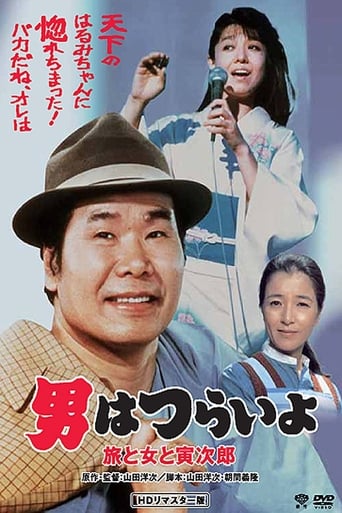
8.3Tora-san returns to his family home to learn that his brother-in-law cannot go to Mitsuo's (Tora-san's nephew) athletic event. Tora-san volunteers to take his place, but gets into an argument with his brother-in-law's boss and returns to the road. He meets a young woman in Niigata who, unbeknownst to him, is a popular enka singer.
Tora-san's Song of Love
1983
 7.0
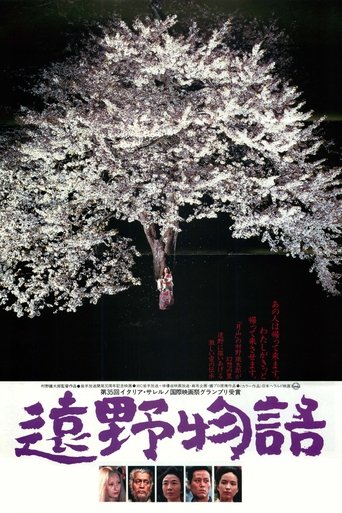
7.0Sayo has just celebrated her sixteenth birthday when she attends a temple festival. On her way back she sees a large cherry tree which is infamous for the legend of dead white horse. When her fiancé returns from war and visits her he comes across a white horse which he takes in. The man also does not see himself engaged anymore as his family has lost its wealth.
The Legend of Sayo
1982
Rumiko Arai, a 20-year-old girl working in a sawmill, meets a driver, Sekiguchi, and they begin a relationship with the promise of marriage. But Rumiko's grandmother tells her that they are both cursed by an ancient evil.
Haze of Love
1985
 6.3
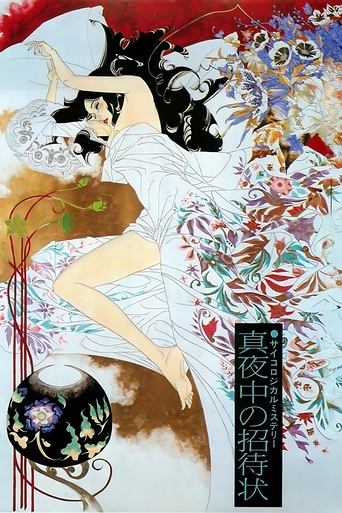
6.3Keiko Inagawa pays a visit to neurologist Aizawa about her fiancé Tatsuo Tamura. A mysterious case involving the disappearance of Tatsuo’s three brothers, one after the other, is yet to be resolved and now Tatsuo, seized with the idea that he too may disappear, has had a nervous breakdown. Aizawa suggests that Tatsuo recount his dreams as a means of solving the mystery, since human beings have an instinct that foretells the near future in the form of a dream. Keiko and Tatsuo eventually discover that the three disappearances have a strange connection…
Call from Darkness
1981
1970s · 4 titles
 6.4
6.4Special forces officer Ajisawa leaves his paramilitary group to take care of his newly-adopted daughter, Yoriko: the sole survival of a bloodbath for which he is responsible. Years later, Ajisawa is forced to return to the scene of the tragedy for his new job as a claims adjuster where he is subsequently arrested for his suspected involvement. But the threat of jail time is the least of his worries as his former organization comes gunning for him.
Never Give Up
1978
 7.8
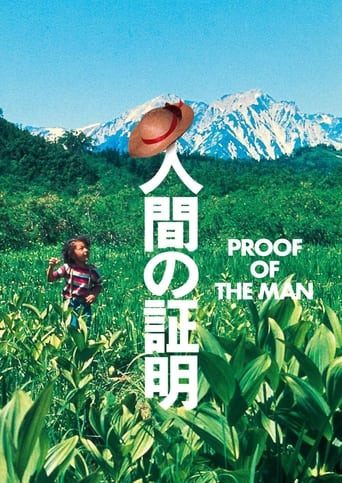
7.8When an American is murdered in a Japanese inn, Tokyo police detective Munesue follows the trail of the killer to New York. There he is joined by a New York City detective named Shuftan and together they sort out the crime.
Proof of the Man
1977
 6.0
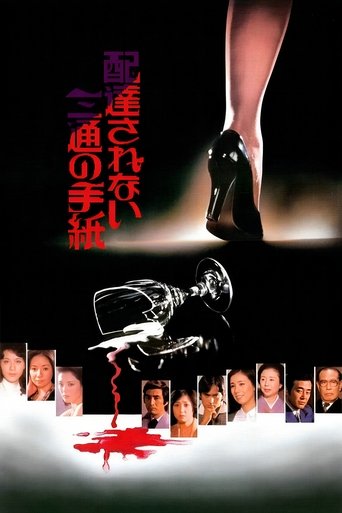
6.0A young Japanese-American man arrives at his grandmother's old hometown in Yamaguchi, begins to stay at her family's elite but dysfunctional household, and gets entangled in a sinister plot of murder.
The Three Undelivered Letters
1979
 7.2
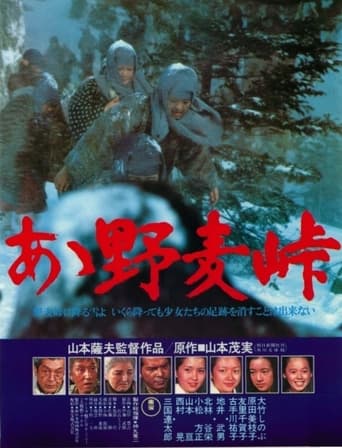
7.2The story of the silk industry and the young girls who worked as silk spinners in the early 1900s in Japan. The silk mills were located in Okaya which lies just beyond the Nomugi Pass. The women and girls worked in a hot, humid atmosphere without rest, and endured those conditions and sexual harassment to earn money for their poor families. Across the ocean, it was the great depression in America.
Nomugi Pass
1979
1960s · 17 titles
7.2A woman, Tome, is born to a lower class family in Japan in 1918. The title refers to an insect, repeating its mistakes, as in an infinite circle. Imamura, with this metaphor, introduces the life of Tome, who keeps trying to change her poor life.
The Insect Woman
1963
 6.3
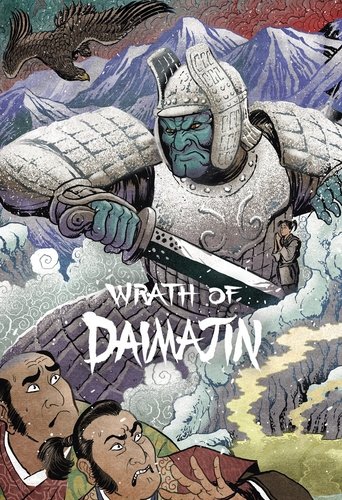
6.3In a mountainous region of Japan, Lord Arakawa kidnaps the men of nearby villages to use as slave labor, producing gunpowder from his sulfur pits. A band of young boys decide to rescue their enslaved fathers on their own.
Wrath of Daimajin
1966
 7.0
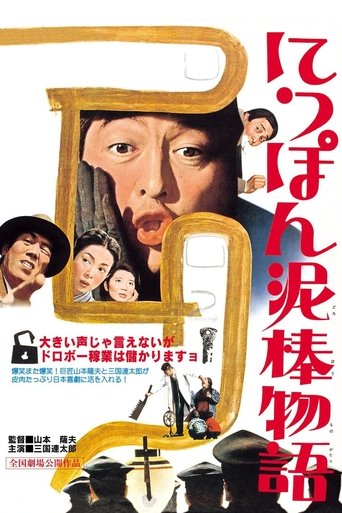
7.0Gisuke Hayashida is an illegal dentist during the day and a burglar by night. One night during a burglary he witnesses a train derailment. Some communists are found guilty of causing the incident, but he knows it wasn't them. He can save innocent people but for that he must confess his own crime.
Tale of Japanese Burglars
1965
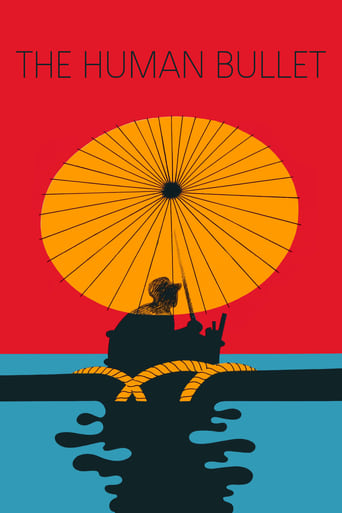 6.0
6.0A soldier has been in the Japanese military for the entirety of WWII, and in that time, his dedication to the army has never faltered. However, as the war draws to a close, his commanding officers become increasingly desperate and push their men to ever more absurd extremes. The ridiculousness of the orders from above peak when the hero of the story is assigned to drive a one-man submarine straight into the hull of an enemy battleship.
The Human Bullet
1968
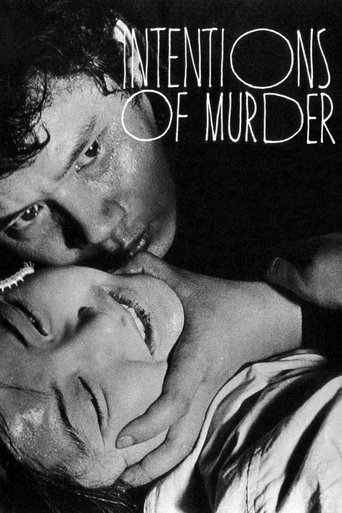 7.0
7.0The neglected common-law wife of a Japanese librarian is repeatedly harassed by a young man with a heart condition who seduces her with the prospect of a better life.
Intentions of Murder
1964
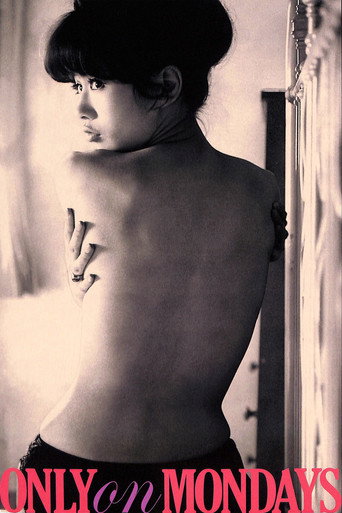 6.7
6.7Yuka is a “good-time girl” from Yokohama who is persuaded by her papa to sleep with a foreign business executive so that he can close an important deal. Nakahira presents a shrewdly observed portrait of a modern, sexually assertive woman—an unsettling character for a changing but still patriarchal society.
Only on Mondays
1964
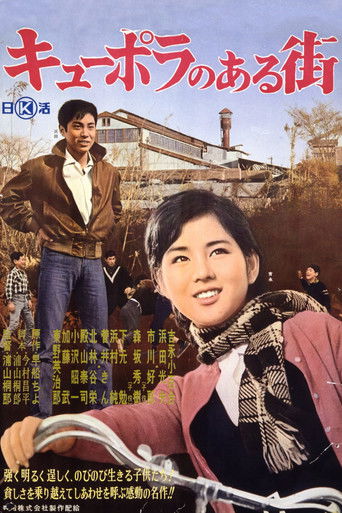 7.8
7.8Set in Kawaguchi in the early 60s, this simple story chronicles the lives of foundry families and one girl's dreams of higher education.
Foundry Town
1962
 10.0
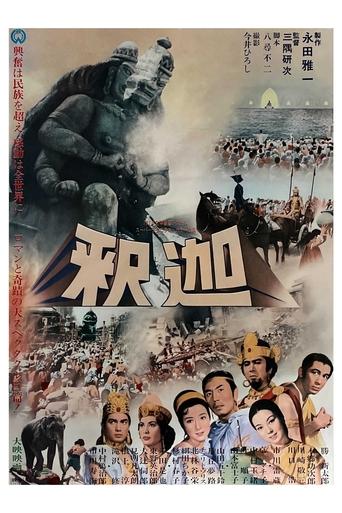
10.0An Indian prince leaves his world of comfort and riches behind to wander and meditate for six years in search of spiritual enlightenment. Siddartha (Cojoin Hong) turns his back on the old religion when people are starving needlessly and holy rituals include human sacrifices. During his meditations, he is tempted by erotic dancing women, demons, and the evil machinations of his criminal cousin. Devastate to attain the spiritual perfection and become the Buddha. He travels to convert followers by his kindness and wisdom, gaining a multitude of believers when he stops an elephant from crushing a local priest. Buddha of course goes on to become one of the great religious leaders of the world.
Buddha
1961
 6.5
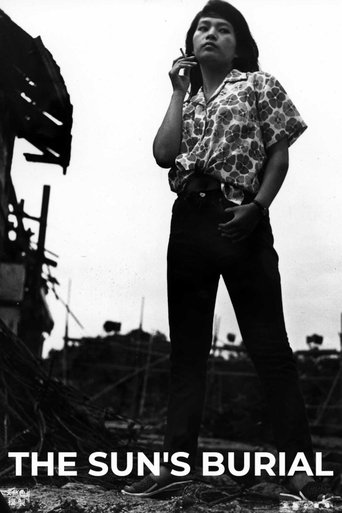
6.5In Osaka's slum, capricious folks without futures engage in pilfering, assault and robbery, prostitution, and the trading of ID cards and blood.
The Sun's Burial
1960
 7.0
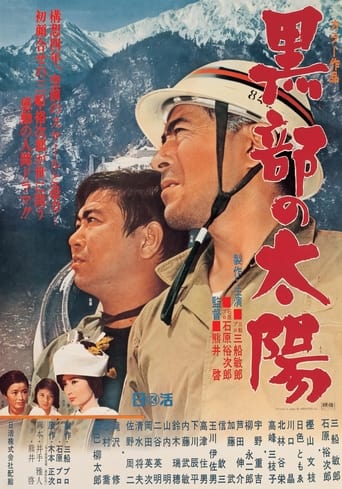
7.0Kitagawa is an engineer charged with construction of a gigantic tunnel through the Japan Alps for the transportation of equipment in the building of the massive Kurobe Dam. The tunnel crosses an earthquake fault and Kitagawa is beleaguered not only by cave-ins and flooding, but by strife between management and the workers's union. Adding to Kitagawa's stress is the knowledge that as his attention is pulled inexorably toward the tunnel construction, his youngest daughter is dying from leukemia.
The Sands of Kurobe
1968
 6.5
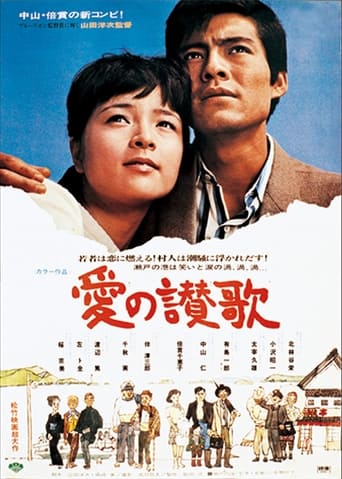
6.5The life in a small village in Shikoku and the love story between two young people.
Song of Love
1967
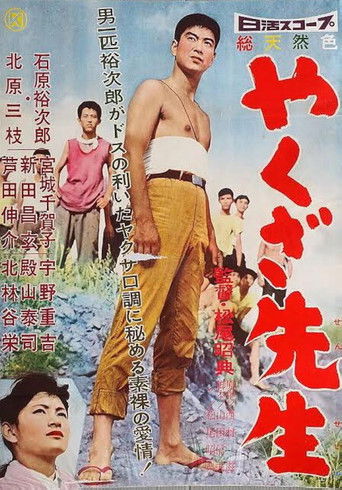 7.0
7.0No synopsis available yet.
Yakuza sensei
1960
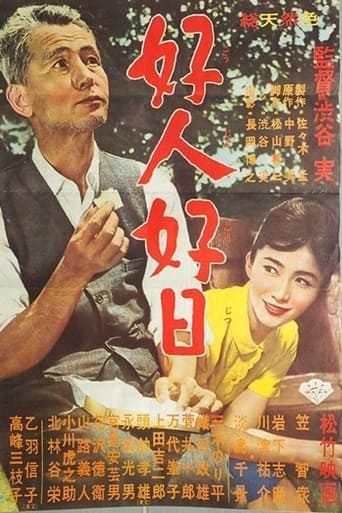 NR
NRThe university professor Ozeki Hitoshi (Ryu Chishu) is regarded as an eccentric by people in his surroundings. When his daughter Tokiko is asked to marry a colleague, she and her mother are overjoyed, but Hitoshi is not satisfied with the situation.
A Good Man, A Good Day
1961
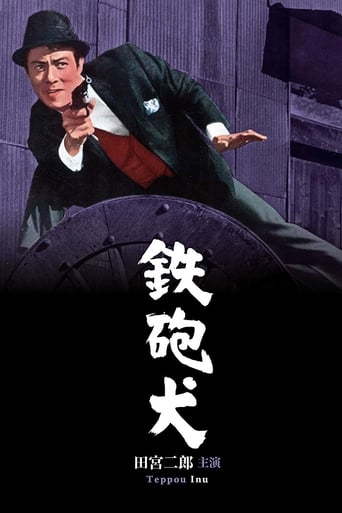 7.5
7.5Fifth film in the "Inu" series.
Trigger Happy Romeo
1965
 9.0
9.0On January 26, 1948, a robbery of the Teigin bank took place in Tokyo - the criminal poisoned the bank employees and fled the scene with a large amount of money. In parallel with the investigation conducted by the Japanese police, journalists are also trying to find the culprit. Based on a true incident.
The Long Death
1964
 7.0
7.0A high school boy and girl in the midst of their youth try to get their parents to remarry.
Red Bud and White Flower
1962
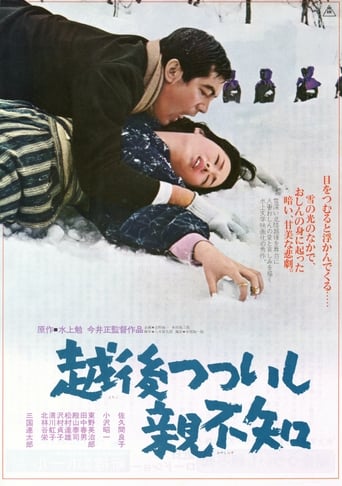 7.2
7.2A sake factory worker on holiday returns to his home town, where he rapes the wife of one of his co-workers in the forest. The other man returns home to find his wife changed and suspects that she has been unfaithful.
A Story from Echigo
1964
1950s · 21 titles
NRA coming-of-age film.
My Son's Revolt
1958
7.8In Burma during the closing days of WWII, a Japanese soldier separated from his unit disguises himself as a Buddhist monk to escape imprisonment as a POW.
The Burmese Harp
1956
 7.1
7.1Two detectives begin a stakeout based on the slim chance of catching a murderer whom they suspect will try to reunite with an old flame.
Stakeout
1958
 6.2
6.2A middle-aged husband of a younger woman finds her youth intimidating to the point that he cannot become aroused. His solution involves the introduction of his daughter's lover to his wife.
Odd Obsession
1959
 5.8
5.8At the close of the war in Japan, a widowed mother makes every possible sacrifice to bring up her ungrateful son and daughter who are unimpressed with their poor standard of living at home. They gradually reject her in search of the material comforts that working as a maid cannot provide. The mother's despair becomes interminable.
A Japanese Tragedy
1953
 6.9
6.9A celebrity photograph sparks a court case as a tabloid magazine spins a scandalous yarn over a painter and a famous singer.
Scandal
1950
 NR
NRAn innocent bus girl who gave up on getting into a women’s college and is now filled with new hope and the cheerful, slightly flirtatious young man who loves her, inside the car on a stormy night...
Dawn Chorus
1955
 6.9
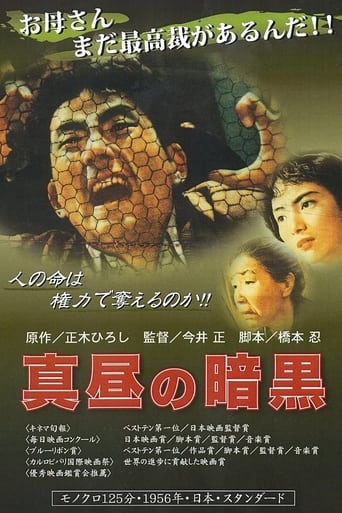
6.9Police beat a murder confession out of four innocent men who are then sentenced to death. Based on a true story.
Darkness at Noon
1956
 5.6
5.6Keiko Yukawa is a former prostitute and the newest inmate at White Lily, a female rehabilitation facility.
White Beast
1950
 NR
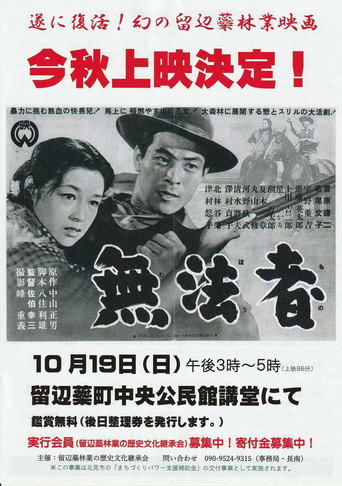
NRA young engineer and a pure-hearted mountain girl take on the challenges of the Akan primeval forest, where lawlessness and violence run rampant.
Outlaw
1953
 7.0
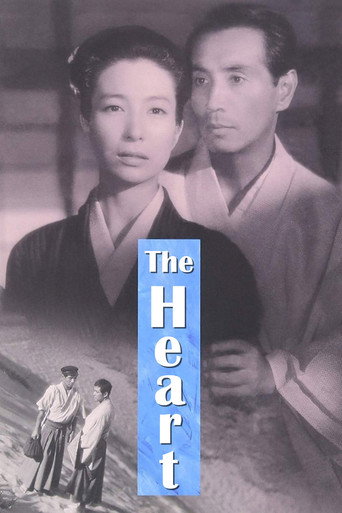
7.0In the dying months of the Meiji era, a sympathetic student befriends a married couple, but soon realizes they share a curiously strained relationship stemming from an unknown incident in their past.
The Heart
1955
 7.1
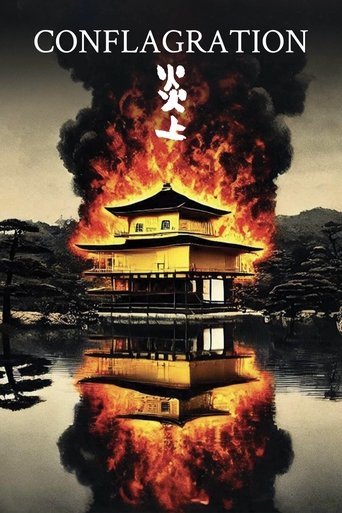
7.1Learning of his family's collapse, acolyte Goichi, sent to study silently at the Temple of the Golden Pavilion, must endure acute psychological distress.
Conflagration
1958
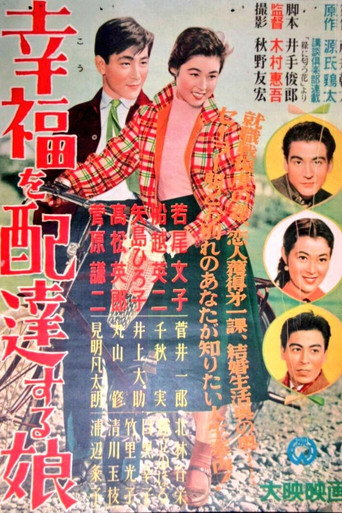 NR
NRNo synopsis available yet.
A Girl Who Delivers Happiness
1955
 NR
NRChieko Izumi is a reporter for the magazine "Weekly Japanese Women". She had come to Tokyo to stay with her aunt in order to escape her stubborn grandmother in her hometown in Kyushu, who was trying to force her to marry Komori, the local ringleader.
Inhibited Love
1955
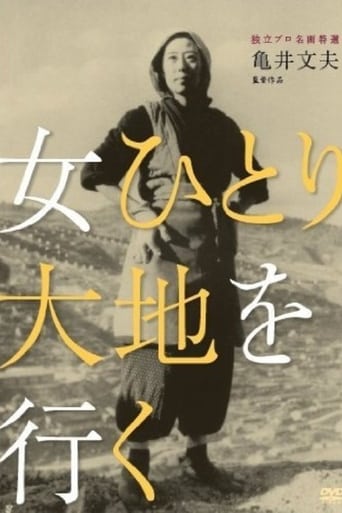 7.0
7.0Onna Hitori Daichi wo Yuku (A Lonely Woman in a Lonely Land, Kinuta Production, 1953) was the second feature film directed by Kamei Fumio, who is known as a master of documentary films, and followed his “Haha Nareba Onna Nareba(Become a Mother, Become a Woman)” (1952).
A Lonely Woman in a Lonely Land
1953
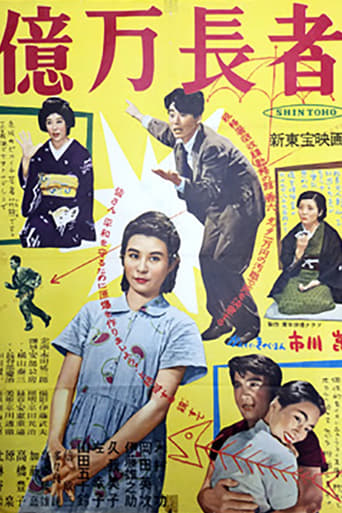 6.8
6.8An ethical, young tax collector new to his area encounters increasingly absurd individuals and groups coping with their post-war woes.
A Billionaire
1954
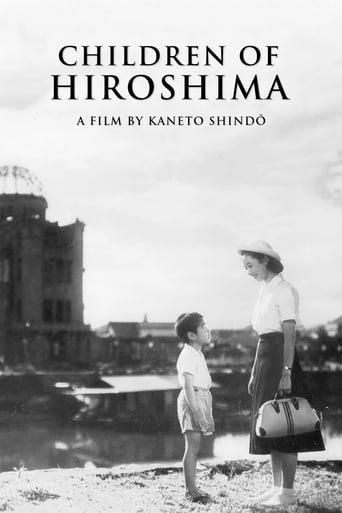 7.1
7.1Shows the devastation caused by the atomic bomb, and by use of a fictional storyline, portrays the struggle of the ordinary Japanese people in dealing with the aftermath.
Children of Hiroshima
1952
 NR
NRNo synopsis available yet.
Paper Pigeon
1959
 6.6
6.6The film tells the story of four orphans living in an impoverished mining town. An adaptation of a best-selling book based on the diary of a ten-year-old zainichi (ethnic Korean Japanese) girl, it was one of the first films to deal with the subject of zainichi identity and struggles in Japan.
My Second Brother
1959
 7.0
7.0Students in a small rural school love their poor but unconventional teacher Mr. Matsukuma, although he is misunderstood by most of the villagers and is forced to leave. After his departure there is great depression, but there is a chance to rekindle the lantern of the title and the values Matsukuma represented ...
Tomoshibi
1954
 6.9
6.9In 1906, after finishing a tough migrant job in the Philippines, Takichi has returned to Japan. He starts to work as a rickshaw driver, but his lover had died of an illness, leaving a baby girl, Hatsue. Hatsue grows up beautifully and falls in love with Shintaro. But Takichi objects to their relationship...
Our Town
1956