
Directing
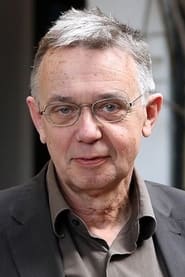
Heinz Emigholz
Born
1948-01-22 (78)
Place of birth
Achim, Germany
Known for
Directing
Credits
57 titles
Born in 1948 near Bremen in Germany, Heinz Emigholz trained first as a draftsman before studying philosophy and literature in Hamburg. He began filmmaking in 1968 and has worked since 1973 as a filmmaker, artist, writer and producer in Germany and the USA. In 1974 he started his encyclopaedic drawing series The Basis of Make-Up . He looks back on numerous exhibitions, retrospectives, lectures and publications. In 1984 he started his film series Photography and beyond. He has held a professorship in Experimental Filmmaking at the Universität der Künste Berlin from 1993 to 2013, and co-founded the Institute for Time-based Media and the program Art and Media, there. Since 2012 member of the Aca…
Known for
 7.3
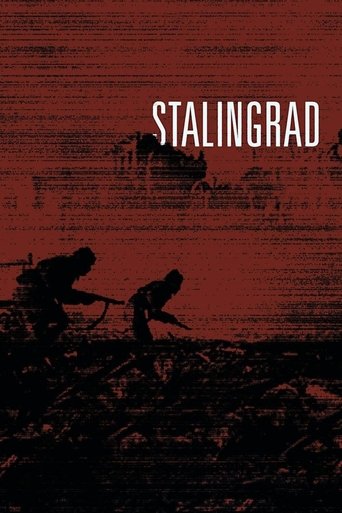
7.3A German Platoon is explored through the brutal fighting of the Battle of Stalingrad. After half of their number is wiped out and they're placed under the command of a sadistic captain, the platoon lieutenant leads his men to desert. The platoon members attempt escape from the city, now surrounded by the Soviet Army.
Stalingrad
1993
 8.0
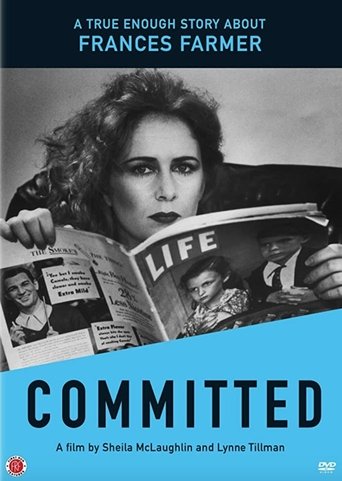
8.0Stylized, black and white biography of Frances Farmer by author Lynne Tillman and Sheila McLauglin.
Committed
1984
![Bickels [Socialism] poster](https://image.tmdb.org/t/p/w342/7l3LMzod0pJoDIlOlyne1jwOGYW.jpg) 4.5
4.5The ‘Casa do Povo’ cultural centre in São Paulo, an icon of the secular Jewish workers’ movement: a crumbling theatre flanked by staircases, entryways and corridors. Construction noise drones away in the background, clinking crockery, a broom sweeping over tiled floors, an expressive façade of countless adjustable panes of glass covered by a patina. It’s October 2016 and a group of young people are preparing a preview of Bickels [Socialism]. The venue is to form a prologue to the completed film, which tours 22 buildings in Israel designed by Samuel Bickels, most of which for kibbutzim. Dining halls, children’s houses, agricultural buildings, bright structures inserted into the Mediterranean landscape with great ingenuity. An architecture with a sell-by date: That many are now empty or have been repurposed at best is linked to the decline of the socialist ideals they embody.
Bickels [Socialism]
2016
 6.7
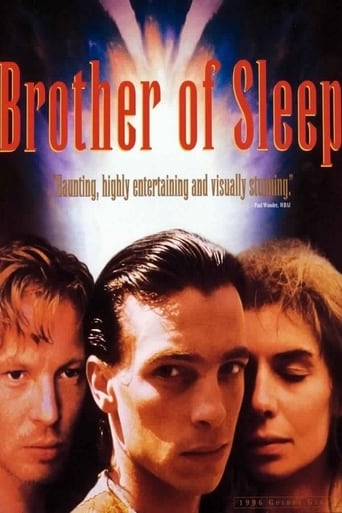
6.7In the beginning of the 19th century, Johannes Elias Alder is born in a small village in the Austrian mountains. While growing up he is considered strange by the other villagers and discovers his love of music, especially rebuilding and playing the organ at the village church. After experiencing an "acoustic wonder", his eye color changes and he can hear even the most subtle sounds.
Brother of Sleep
1995
 8.0
8.0An experimental German film
Ordinary Sentence
1982
![Streetscapes [Dialogue] poster](https://image.tmdb.org/t/p/w342/lbaDCCZJ6xwvNLO5qFDBmjnjaOH.jpg) 5.8
5.8A film director confides in his interlocutor. He talks about the working process, about creative blocks, about artistic crises and expressive forces. At some point, the idea takes hold that this conversation could be turned into a film. And this is the very film we’re watching the two of them in.
Streetscapes [Dialogue]
2017
Film credits
1990s · 4 titles
7.3A German Platoon is explored through the brutal fighting of the Battle of Stalingrad. After half of their number is wiped out and they're placed under the command of a sadistic captain, the platoon lieutenant leads his men to desert. The platoon members attempt escape from the city, now surrounded by the Soviet Army.
Stalingrad
1993
6.7In the beginning of the 19th century, Johannes Elias Alder is born in a small village in the Austrian mountains. While growing up he is considered strange by the other villagers and discovers his love of music, especially rebuilding and playing the organ at the village church. After experiencing an "acoustic wonder", his eye color changes and he can hear even the most subtle sounds.
Brother of Sleep
1995
This story is told by the boy's father: "My father wrote letters from the front. He didn't come back from the war. In my dream, I saw a hundred thousand letters falling from the sky." The letters are memories and trauma. No one talks about them. The boy knows nothing yet about the legacy of all wars. The setting for this story is a former military airfield and its surroundings.
Bombenwerfer
1996
Experimental short film set in a military environment.
Sons
1992
1980s · 7 titles
8.0Stylized, black and white biography of Frances Farmer by author Lynne Tillman and Sheila McLauglin.
Committed
1984
8.0An experimental German film
Ordinary Sentence
1982
 6.5
6.5Max Taurus, a sort of amateur detective, pursues the traces of general omni-present crime back to a partially demolished house. There, the remaining tenants try to gain pleasure and power from progressive abandonment in order to tear down their own conventionalities.
Macumba
1982
 6.0
6.0Clonetown 1974 to 1979: a terrorist defector named Charon sits on the edge of oblivion and commentates on the imminent putrification of an abducted car dealer.
The Meadow of Things
1988
 NR
NRHome movies shot on Super 8mm by W+B Hein over 10 years.
Home Movies 1971-81
1985
 NR
NRDocumentary on the city of Berlin and a personal essay on alienation and being an alien in that city. Cynthia Beatt raises questions and provokes reflection on a wide range of issues concerning language and culture, politics and history.
Fury Is a Feeling Too
1984
 10.0
10.0A woman on a train.
Die blaue Distanz
1983
1970s · 4 titles
 NR
NRAdaptation of the novel "Bartleby the Scrinener: A story of Wall Street" (1853) by Hermann Melville.
Bartleby
1976
 7.0
7.0A German TV movie
Der Ort der Handlung
1977
 7.5
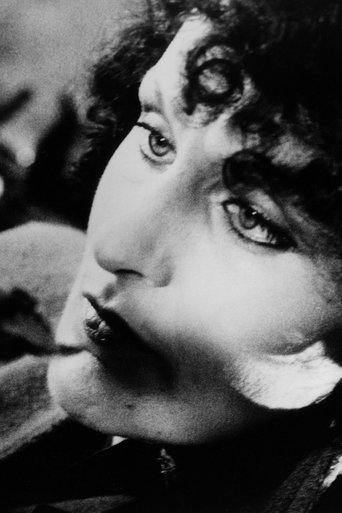
7.5This film is in effect a slideshow of exquisite single photographic images in sparkling black and white, representing Mikesch’s own version of Mary Stuart. “The drama of a woman who attempted a kind of liberal emancipation in a time of upheaval, but got caught in the snares of men,” in her words. Confronted with layers and layers of conflicting information about “how it really was” Mikesch decided not to try to be a historian, but to radicalise the narrative and condense it into striking images of passion, power, love, pain and death.
Exekution: A Study of Mary
1979
 7.0
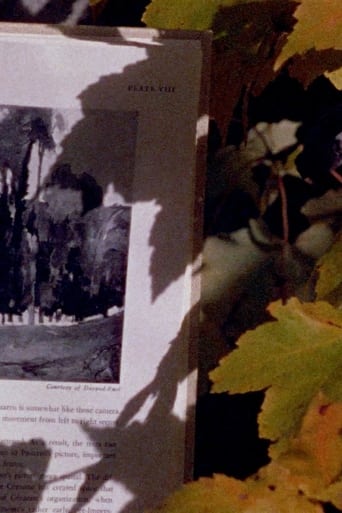
7.0Four four-minute image sections and four four-minute sound sections are linked in all combinations of the sound sections with each of the image sections. This established affinities between each of the image sections to the others, and the sound sections to each other. The image sections are: surveyors measuring the land near my house as seen through an old window, a family of Siamang Gibbon apes in the Washington zoo, an industrial site, and a page turned from a book on Cézanne’s composition showing a diagram of his painting Mardi Gras, filmed against bright leaves. The sound sections are: a dramatic scene from Debussy’s opera “Pelléas et Mélisande”, a passage from William Wordworth’s autobiographical poem “The Prelude,” sounds from rowing on a lake at night, and the sounds of the apes vocalizing.
Four Shadows
1978
Behind the camera
4.5The ‘Casa do Povo’ cultural centre in São Paulo, an icon of the secular Jewish workers’ movement: a crumbling theatre flanked by staircases, entryways and corridors. Construction noise drones away in the background, clinking crockery, a broom sweeping over tiled floors, an expressive façade of countless adjustable panes of glass covered by a patina. It’s October 2016 and a group of young people are preparing a preview of Bickels [Socialism]. The venue is to form a prologue to the completed film, which tours 22 buildings in Israel designed by Samuel Bickels, most of which for kibbutzim. Dining halls, children’s houses, agricultural buildings, bright structures inserted into the Mediterranean landscape with great ingenuity. An architecture with a sell-by date: That many are now empty or have been repurposed at best is linked to the decline of the socialist ideals they embody.
Bickels [Socialism]
2016
4.5The ‘Casa do Povo’ cultural centre in São Paulo, an icon of the secular Jewish workers’ movement: a crumbling theatre flanked by staircases, entryways and corridors. Construction noise drones away in the background, clinking crockery, a broom sweeping over tiled floors, an expressive façade of countless adjustable panes of glass covered by a patina. It’s October 2016 and a group of young people are preparing a preview of Bickels [Socialism]. The venue is to form a prologue to the completed film, which tours 22 buildings in Israel designed by Samuel Bickels, most of which for kibbutzim. Dining halls, children’s houses, agricultural buildings, bright structures inserted into the Mediterranean landscape with great ingenuity. An architecture with a sell-by date: That many are now empty or have been repurposed at best is linked to the decline of the socialist ideals they embody.
Bickels [Socialism]
2016
8.0An experimental German film
Ordinary Sentence
1982
8.0An experimental German film
Ordinary Sentence
1982
5.8A film director confides in his interlocutor. He talks about the working process, about creative blocks, about artistic crises and expressive forces. At some point, the idea takes hold that this conversation could be turned into a film. And this is the very film we’re watching the two of them in.
Streetscapes [Dialogue]
2017
5.8A film director confides in his interlocutor. He talks about the working process, about creative blocks, about artistic crises and expressive forces. At some point, the idea takes hold that this conversation could be turned into a film. And this is the very film we’re watching the two of them in.
Streetscapes [Dialogue]
2017
6.0Clonetown 1974 to 1979: a terrorist defector named Charon sits on the edge of oblivion and commentates on the imminent putrification of an abducted car dealer.
The Meadow of Things
1988
![2 + 2 = 22 [The Alphabet] poster](https://image.tmdb.org/t/p/w342/xZmFnEC2gNQq2NjIpoLYaws5TRO.jpg) 4.8
4.8Worn-down pavements, broken paving stones. Trees that jut out of the concrete, casting shadows on to crumbling façades. The centre of Tbilisi in the summer of 2013. Glimpses of side and main streets, over railings and under balconies, of an architectural cacophony. The voiceover spoken by Natja Brunckhorst reflects on the nature of streets and public spaces.
2 + 2 = 22 [The Alphabet]
2017
4.8Worn-down pavements, broken paving stones. Trees that jut out of the concrete, casting shadows on to crumbling façades. The centre of Tbilisi in the summer of 2013. Glimpses of side and main streets, over railings and under balconies, of an architectural cacophony. The voiceover spoken by Natja Brunckhorst reflects on the nature of streets and public spaces.
2 + 2 = 22 [The Alphabet]
2017
4.8Worn-down pavements, broken paving stones. Trees that jut out of the concrete, casting shadows on to crumbling façades. The centre of Tbilisi in the summer of 2013. Glimpses of side and main streets, over railings and under balconies, of an architectural cacophony. The voiceover spoken by Natja Brunckhorst reflects on the nature of streets and public spaces.
2 + 2 = 22 [The Alphabet]
2017
 NR
NRAn archaeologist and a weapons designer, who knew each other in a previous life as a filmmaker and a psychoanalyst, meet at an excavation site in the Negev desert and begin a conversation about love and war, which they continue in the Israeli city of Be’er Sheva. A series of encounters with alternating actors in different roles ensues, which leads the viewer through the cities of Athens, Berlin, Hong Kong and São Paulo. Among those appearing are: an old artist who meets his younger self; a mother who lives with her two grown-up sons, a priest and a policeman; a Chinese and a Japanese woman; a curator and a cosmologist.
The Last City
2021
NRAn archaeologist and a weapons designer, who knew each other in a previous life as a filmmaker and a psychoanalyst, meet at an excavation site in the Negev desert and begin a conversation about love and war, which they continue in the Israeli city of Be’er Sheva. A series of encounters with alternating actors in different roles ensues, which leads the viewer through the cities of Athens, Berlin, Hong Kong and São Paulo. Among those appearing are: an old artist who meets his younger self; a mother who lives with her two grown-up sons, a priest and a policeman; a Chinese and a Japanese woman; a curator and a cosmologist.
The Last City
2021
![Dieste [Uruguay] poster](https://image.tmdb.org/t/p/w342/iXdwycGTb426h8wf5Ogr8PD0UDh.jpg) 4.4
4.4The final part of Heinz Emigholz’s "Streetscapes" series is again a triptych. A prologue examines three buildings from the 1930s designed by Julio Vilamajó in Montevideo which could have inspired the work of Eladio Dieste, the subject of the main part of the film. The industrial and functional buildings presented span the period from 1955 to 1994; their organic brick construction is astonishing and inspiring.
Dieste [Uruguay]
2017
4.4The final part of Heinz Emigholz’s "Streetscapes" series is again a triptych. A prologue examines three buildings from the 1930s designed by Julio Vilamajó in Montevideo which could have inspired the work of Eladio Dieste, the subject of the main part of the film. The industrial and functional buildings presented span the period from 1955 to 1994; their organic brick construction is astonishing and inspiring.
Dieste [Uruguay]
2017
 5.5
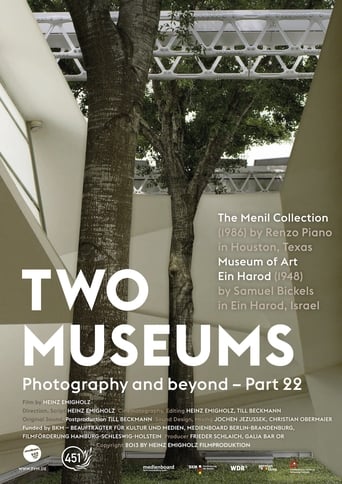
5.5The film juxtaposes/compares two museums: The Museum of Art, Ein Harod, Israel, which Samuel Bickels (1909-1975) built there in 1948, and The Menil Collection in Houston, Texas, built by Renzo Piano (b. 1937) 1986 . The method of natural lighting in Bickels‘s construction was the direct model for Piano, who adopted for his construction at the request of its patroness Dominique de Menil.
Two Museums
2014
 5.0
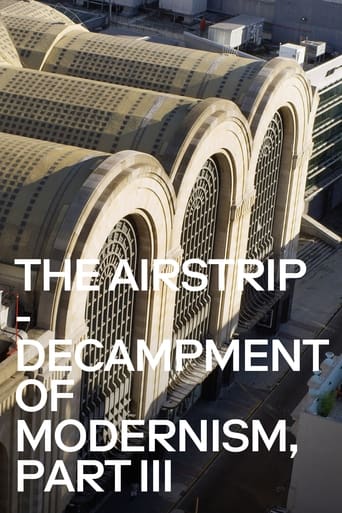
5.0In the 21st part of his Photography and beyond series, Heinz Emigholz projects as usual a series of structures into our brains and from there on to the screen: Airports, motorways and bus stops; department stores, market halls and warehouses.
The Airstrip - Decampment of Modernism, Part III
2014
 6.5
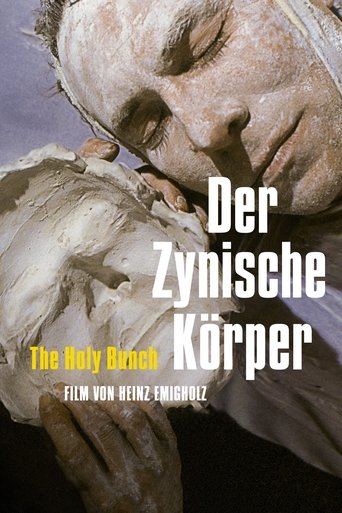
6.5After Roy's demise, five friends try to reconstruct his life by reading through the late editor's notebooks - only to face some very personal demons. The Holy Bunch is a modernist melodrama: beyond-Antonioni in its images, decisively Dreyerian in its spirituality. One of German cinema's few modern (or Modernist) masterpieces.
The Holy Bunch
1991
6.5After Roy's demise, five friends try to reconstruct his life by reading through the late editor's notebooks - only to face some very personal demons. The Holy Bunch is a modernist melodrama: beyond-Antonioni in its images, decisively Dreyerian in its spirituality. One of German cinema's few modern (or Modernist) masterpieces.
The Holy Bunch
1991
 NR
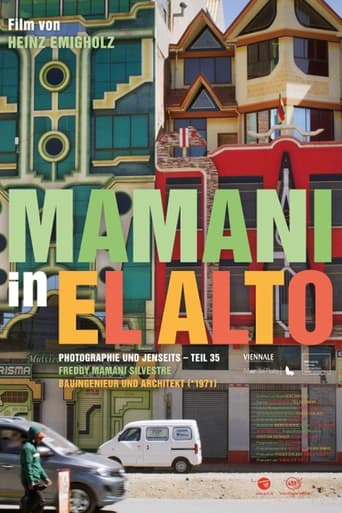
NRHis buildings are garish, colorful and completely overloaded. Columns and glittering chandeliers everywhere, and way too much of everything. The Bolivian civil engineer and architect Freddy Mamani Silvestre (*1971) builds houses in El Alto for a nouveau riche upper class of the Aymara, the largest indigenous ethnic group in Bolivia.
Mamani in El Alto
2022
NRHis buildings are garish, colorful and completely overloaded. Columns and glittering chandeliers everywhere, and way too much of everything. The Bolivian civil engineer and architect Freddy Mamani Silvestre (*1971) builds houses in El Alto for a nouveau riche upper class of the Aymara, the largest indigenous ethnic group in Bolivia.
Mamani in El Alto
2022
 NR
NRA character simply named Old White Male holds court in the lobbies of various apartment buildings in Buenos Aires and expounds with measured disgust on death, consciousness, and the state of contemporary human relations. The man’s mostly unsolicited remarks form an unsparing, stitched-together modern-day monologue that alternates between absurd and chilling, reasonable and grotesque. Filmed in Buenos Aires in October 2019, Heinz Emigholz’s spare continuation—and sardonic distillation—of certain themes explored in The Last City is morbid, confrontational, and hilarious.
The Lobby
2020
 NR
NRThe film shows the Antivilla built by Arno Brandlhuber in Potsdam, Krampnitz, between 2010 and 2015. The building has the project number 0131 in the catalog of works by Brandlhuber +. The shooting of Antivilla took place on April 4, 2016 in preparation for the feature film Streetscapes [Dialogue].
Antivilla
2021
 NR
NRContemporary cinema’s preeminent chronicler of architecture and its intersection with the ever-present crisis of 20th-century modernity, Heinz Emigholz returns with an alternately mournful and sly treatise on how the presence—and, in some cases, absence—of municipal and communal building architecture is inseparable from capitalist ideology. Focusing mainly on cities and provinces in Argentina, Germany, and Bolivia, Emigholz’s latest film is a work of quiet observation and historical excavation. From slaughterhouses in Salamone to the flooded former spa city of Epecuén to the newly built Humboldt Forum in Berlin, the film demonstrates the effect of capital on public spaces, where creation and destruction go hand in hand, and as always, Emigholz makes the journey one of intellectual force and cinematic beauty.
Slaughterhouses of Modernity
2023
NRContemporary cinema’s preeminent chronicler of architecture and its intersection with the ever-present crisis of 20th-century modernity, Heinz Emigholz returns with an alternately mournful and sly treatise on how the presence—and, in some cases, absence—of municipal and communal building architecture is inseparable from capitalist ideology. Focusing mainly on cities and provinces in Argentina, Germany, and Bolivia, Emigholz’s latest film is a work of quiet observation and historical excavation. From slaughterhouses in Salamone to the flooded former spa city of Epecuén to the newly built Humboldt Forum in Berlin, the film demonstrates the effect of capital on public spaces, where creation and destruction go hand in hand, and as always, Emigholz makes the journey one of intellectual force and cinematic beauty.
Slaughterhouses of Modernity
2023
 5.7
5.7Heinz Emigholz, the premiere purveyor of architectural oddities (Sullivan’s Bridges, Goff in the Desert), meticulously documents 15 rooms of the enormous Villa Cargnacco in Lombardy, Italy, designed by proto-fascist poet Gabriele D’Annunzio (1863–1938). The controversial figure spent 17 years designing the Vittoriale, a state museum on Lake Garda, and furnishing the Villa Cargnacco, which is part of the grand complex. This unusual documentary resulted from a photography session in the villa, when four friends—cinematographers Irene von Alberti, Elfi Mikesch, Klaus Wyborny and Heinz Emigholz—simultaneously filmed the rooms and furnishings of the villa in their own specific styles.
D’Annunzio’s Cave
2005
5.7Heinz Emigholz, the premiere purveyor of architectural oddities (Sullivan’s Bridges, Goff in the Desert), meticulously documents 15 rooms of the enormous Villa Cargnacco in Lombardy, Italy, designed by proto-fascist poet Gabriele D’Annunzio (1863–1938). The controversial figure spent 17 years designing the Vittoriale, a state museum on Lake Garda, and furnishing the Villa Cargnacco, which is part of the grand complex. This unusual documentary resulted from a photography session in the villa, when four friends—cinematographers Irene von Alberti, Elfi Mikesch, Klaus Wyborny and Heinz Emigholz—simultaneously filmed the rooms and furnishings of the villa in their own specific styles.
D’Annunzio’s Cave
2005
 7.0
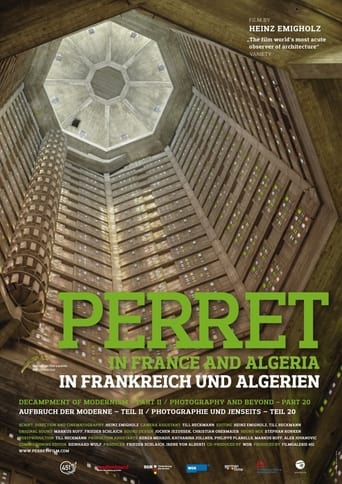
7.0Lauded artist-filmmaker Heinz Emigholz (Schindler's Houses) offers an exquisite excursus on the work of pioneering French architect Auguste Perret, including privileged views of his innovative concrete structures in Algeria and such magnificent landmarks as Paris' Art Deco Théâtre des Champs Elysées. (TIFF)
Perret in France and Algeria
2012
 NR
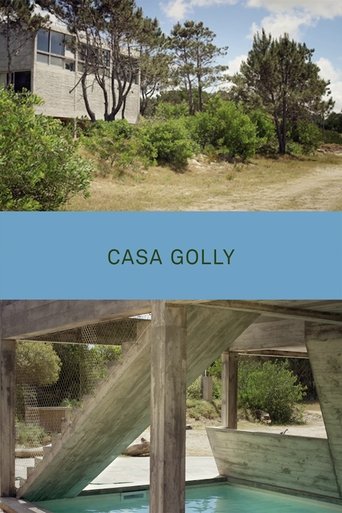
NRThe films of pre-eminent documentary filmmaker Heinz Emigholz present the most important architects of the 20th century not through explanation or biography, but by using the camera to reveal the structures that define their art. From Bruce Goff’s churches to Gabriele D’Annunzio’s villas to Robert Maillart’s bridges, each exploratory and contemplative film is dedicated to the work of a single architect; taken together, the series shows us some of the most beautiful buildings of our time.
Casa Golly
2021
 4.8
4.8Famed Swiss architect and artist Robert Maillart was renowned for his concrete bridges; this documentary examines the elegant design of his engineering masterpieces, which, the film argues, embrace both functionality and aesthetics. Instead of following a traditional journalistic structure, director Heinz Emigholz's spellbinding film reads more like ethereal visual poetry, allowing the beauty of Maillart's work to speak for itself.
Maillart's Bridges
2001
4.8Famed Swiss architect and artist Robert Maillart was renowned for his concrete bridges; this documentary examines the elegant design of his engineering masterpieces, which, the film argues, embrace both functionality and aesthetics. Instead of following a traditional journalistic structure, director Heinz Emigholz's spellbinding film reads more like ethereal visual poetry, allowing the beauty of Maillart's work to speak for itself.
Maillart's Bridges
2001
 5.8
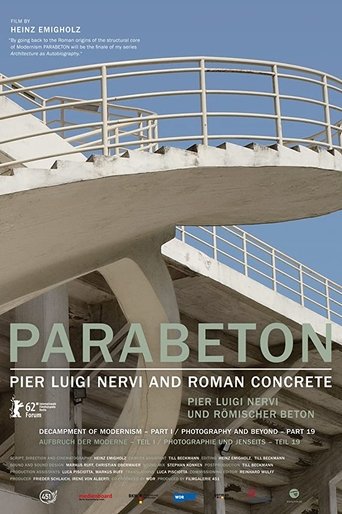
5.8The third autobiography in the series deals with modern architecture. For the grand finale, he covers a broad historical spectrum: Parabeton tells of the great Roman concrete buildings from the start of the Common Era and compares them with Pier Luigi Nervi’s work, the Italian master of concrete construction. As concrete can be made into many different shapes, the buildings and the domes, slopes and spiral staircases they contain have an innovative, seminal quality. Those familiar with Emigholz's work will note that the skewed camera angles used in the past are replaced by straight-on views. Moreover, the ancient constructions seem more dynamic than those of the last century. Almost devoid of people, the images we know from his preceding films make the ruins from the 1930s to the 70s, the familiar cement constructions of daily life with their play of light and shadow or even the Pope’s Audience Hall appear more ghostly than the famous sights of the ancient world.
Parabeton: Pier Luigi Nervi and Roman Concrete
2012
The first part shows the progression from high tide to low tide in 15 minutes. The second, equally long part follows the changes from high tide to low tide. The artist's special work consisted of defining a complex recording plan (score) that had to be precisely described. The end result is a multi-layered, flowing film plot that does not depict a linear progression of time, but juxtaposes successive moments simultaneously.
Tide
1975
 NR
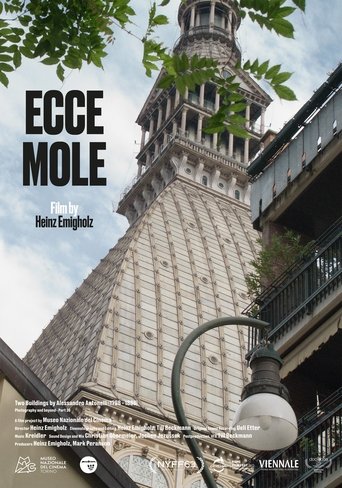
NRThe latest entry in Heinz Emigholz’s (Slaughterhouses of Modernity, NYFF60) incisive, decades-long inquiry into the cinematic representation of space contrasts two Turin landmarks designed by Italian neoclassical architect Alessandro Antonelli: the narrow Casa Scaccabarozzi and the towering Mole Antonelliana, now home to the Museo Nazionale del Cinema. With Emigholz’s signature metrical cutting and oblique framings, Ecce Mole explores cinema’s own spatial and symbolic dimensions through the buildings’ opposing scales and functions—interior and exterior, domestic and civic, modest and monumental.
Ecce Mole
2025
 NR
NRWith Marcia Bronstein and Silke Grossmann. Hamburg, Wandsbek-Gartenstadt, May 1976.
Wandsbek Gartenstück
1976
 5.0
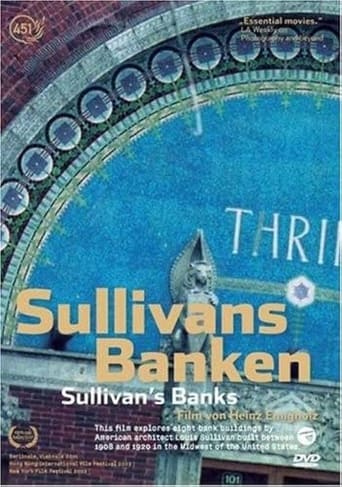
5.0Emigholz presents the buildings of the great American architect Louis Sullivan (1856–1924). “In everything that men do they leave an indelible imprint of their minds. If this suggestion be followed out, it will become surprisingly clear how each and every building reveals itself naked to the eye; how its every aspect, to the smallest detail, to the lightest move of the hand, reveals the workings of the mind of the man who made it, and who is responsible to us for it.”
Sullivan's Banks
2001
 NR
NRThat loquacious cynic known as “Old White Male,” played by John Erdman in Heinz Emigholz’s 2020 film The Lobby, returns in this delirious, sci-fi-comic follow-up that covers an even wider spectrum of human absurdity and wrestles with the biggest question mark of all: The Future.
The Suit
2024
 NR
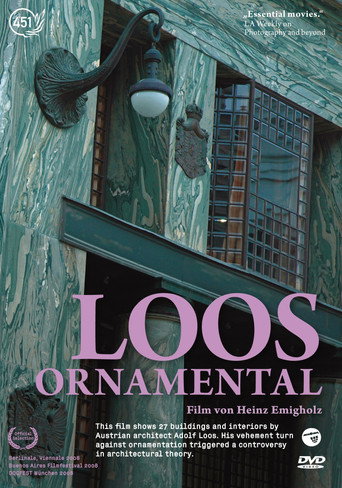
NROne of the pioneers of the European Modernism in architecture, Adolf Loos turned against building ornamentation, triggering a controversy in architectural theory. His development of a spatial plan launched a new approach to thinking about building spaces. His houses, furniture, facades, and monuments were constructed between 1899 and 1931 and represent a refreshing approach to modern architecture.
Loos Ornamental
2008
A dash of nostalgia, then a shrug and self-irony: The portraits of Berlin subway stations in Berlin [Underground] begin in Schöneberg’s Regenbogenkiez only to evaporate towards Dahlem, the location of the Freie Universität. The western underground academically frittered away. The trees in Argentina are more exciting. And over and over, the unfathomable notebooks of Heinz Emigholz.
Berlin [Underground]
2021
 NR
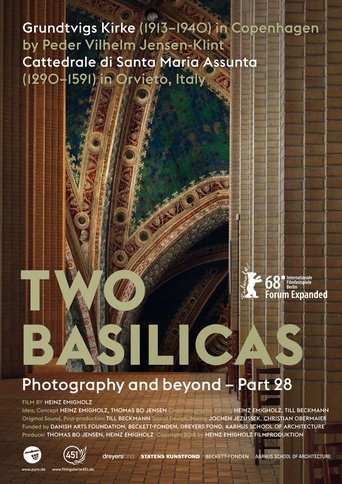
NRA confrontation and comparison of two church buildings, which could hardly be more different, but also a dialogue between various concepts of church and community: the Protestant Grundtvig’s Church in Copenhagen and the Catholic Cathedral in Orvieto.
Two Basilicas
2018
The film explores two projects by Austrian artist and visionary Frederick Kiesler (1890–1965): the model for ENDLESS HOUSE (1959) that is currently exhibited at the Kiesler Foundation in Vienna and THE SHRINE OF THE BOOK designed and built by Frederick Kiesler and Armand Bartos in Jerusalem (1959-65).
Two Projects by Friedrich Kiesler
2009