

Acting
Yukiko Shimazaki
Born — Died
1931-02-25 — 2014-02-15
Place of birth
Tokyo, Japan
Known for
Acting
Credits
39 titles
Yukiko Shimazaki (島崎 雪子 Shimazaki Yukiko, born 25 February 1931) is a Japanese actress and singer. She appeared in more than twenty films from 1950 to 1964. She was married to film director Tatsumi Kumashiro from 1955 to 1967.
Known for
 8.5
8.5A samurai answers a village's request for protection after he falls on hard times. The town needs protection from bandits, so the samurai gathers six others to help him teach the people how to defend themselves, and the villagers provide the soldiers with food.
Seven Samurai
1954
 7.6
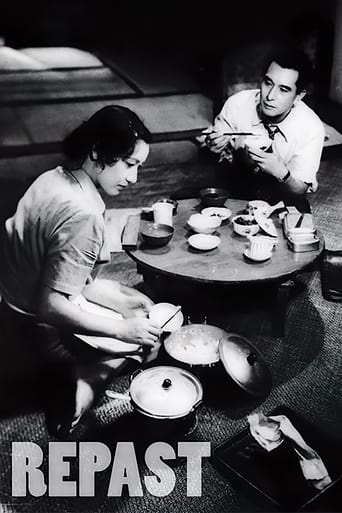
7.6In post-WWII Osaka, a middle-aged woman is forced to examine her dreary life and marriage when her husband's young and flirtatious cousin arrives for a brief stay to escape an arranged marriage.
Repast
1951
 9.0
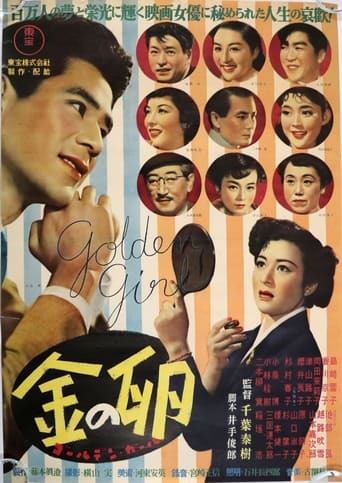
9.0Once an average and seemingly ordinary Tokyo girl, she suddenly finds herself as a TV star owing to her discovery by a casting company, which noticed photographs that her cousin had sent. When another actress falls ill she is given the role instead. Her first film is a success propelling the young actress to popularity, her own fans, money and a house. While everything looks dandy from the outside not all is well within the family however.
Kin no tamago: Golden Girl
1952
 6.4
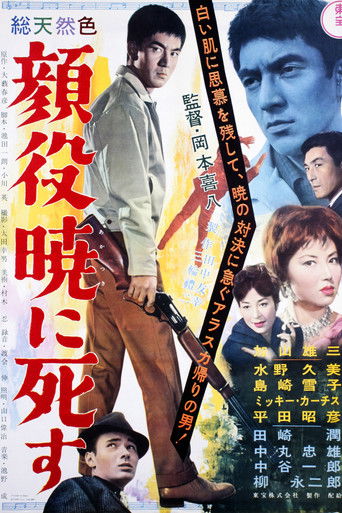
6.4Grown up son arrives home to learn his father, the newly elected mayor, has been assassinated. So he journeys down a path to find the assassin and gets involved with two opposing yakuza gangs.
Big Shots Die at Dawn
1961
 NR
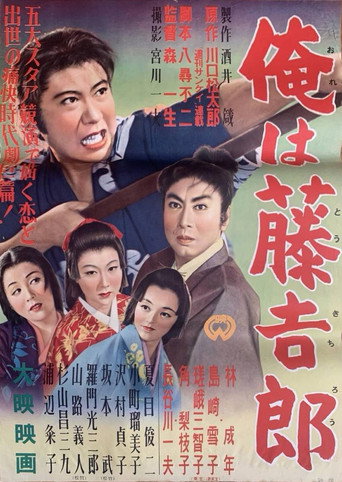
NRNo synopsis available yet.
I Was Tokichiro
1955
 8.0
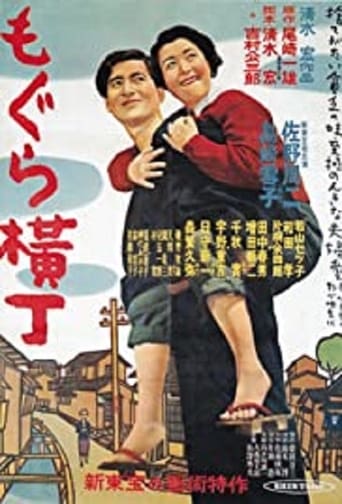
8.033-year-old poor writer Ogata was able to endure his miserable life cheerfully thanks to Yoshie, a 19-year-old innocent young wife. After graduating from a girls' school in Hokuriku, she immediately moved to Tokyo to meet and marry Ogata. After neatly writing Ogata's manuscript, he would buy dorayaki as a gratuity and devour it.
Mole Alley
1953
Film credits
1960s · 6 titles
6.4Grown up son arrives home to learn his father, the newly elected mayor, has been assassinated. So he journeys down a path to find the assassin and gets involved with two opposing yakuza gangs.
Big Shots Die at Dawn
1961
 6.4
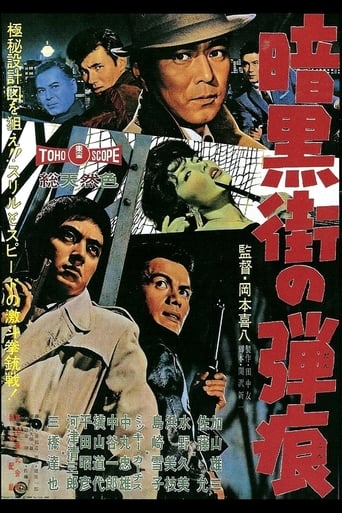
6.4Yuzo Kayama plays the protagonist, a whale-hunting cannon manufactuing supervisor, whose brother is an automobile tester for Komatsu Motors which has a fatal accident. As his brother investigates the "Accident" with his old college friend (makoto Sato), now a reporter... They stumble across murder, espionage and cover-ups. High-class night club, femme fatale, and a "Blueprint of Murder" all adds up to a bigger plot then first expected.
Blueprint of Murder
1961
 7.0
7.0Gang of robbers quarrel about the loot, but when one of them gets killed, his younger brother seeks them out to ice them one by one.
Get 'em All
1960
 9.0
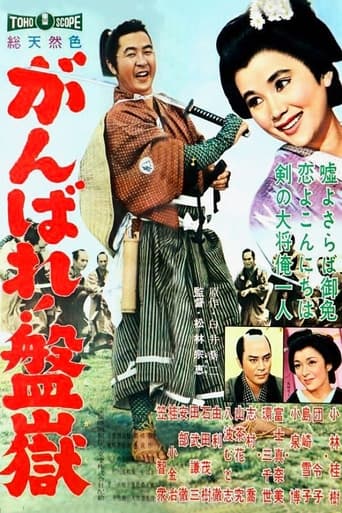
9.0A historical drama that depicts the touching beauty of world obsession and human love in the style of light comedy, in the center of which is a young man who has a master license menkyo kaiden in the art of swordsmanship, but weak against lies and women. A remake of Bungaku no Issue, shot by Sadao Yamanaka in 1933.
Master Fencer Sees the World
1960
 7.0
7.01961 Japanese movie
Lovers of Ginza
1961
 6.3
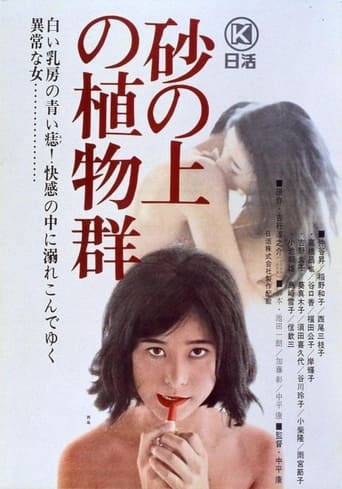
6.3One evening, at the Marine Tower observatory, cosmetics salesman Ichiro Iki is drawn into conversation with an unfamiliar young lady Akiko. She invites Ichiro back to a hotel where they make love but part without even exchanging names. A week later, they have a second chance encounter at the observatory. This time, Ichiro is the one who pursues her. Back at the hotel, Akiko begs Ichiro to give her sister – Kyoko, a bar hostess – absolute hell. Akiko resents her sister for lecturing on chastity, while wantonly indulging in promiscuous activity. Ichiro takes an interest in Kyoko and sets out towards her bar…
Flora on the Sand
1964
1950s · 33 titles
8.5A samurai answers a village's request for protection after he falls on hard times. The town needs protection from bandits, so the samurai gathers six others to help him teach the people how to defend themselves, and the villagers provide the soldiers with food.
Seven Samurai
1954
7.6In post-WWII Osaka, a middle-aged woman is forced to examine her dreary life and marriage when her husband's young and flirtatious cousin arrives for a brief stay to escape an arranged marriage.
Repast
1951
9.0Once an average and seemingly ordinary Tokyo girl, she suddenly finds herself as a TV star owing to her discovery by a casting company, which noticed photographs that her cousin had sent. When another actress falls ill she is given the role instead. Her first film is a success propelling the young actress to popularity, her own fans, money and a house. While everything looks dandy from the outside not all is well within the family however.
Kin no tamago: Golden Girl
1952
NRNo synopsis available yet.
I Was Tokichiro
1955
8.033-year-old poor writer Ogata was able to endure his miserable life cheerfully thanks to Yoshie, a 19-year-old innocent young wife. After graduating from a girls' school in Hokuriku, she immediately moved to Tokyo to meet and marry Ogata. After neatly writing Ogata's manuscript, he would buy dorayaki as a gratuity and devour it.
Mole Alley
1953
 7.5
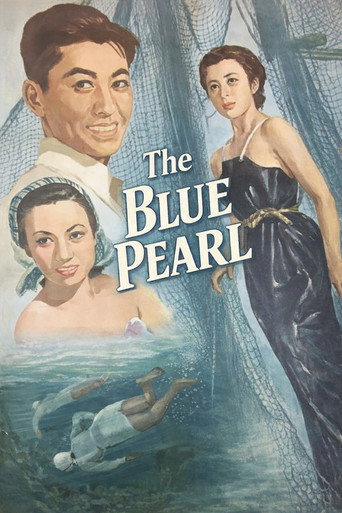
7.5The Blue Pearl depicts the interplay between a young man from Tokyo and two ama (pearl divers; literally “women of the sea”) in a superstitious coastal town. Though raised within the same tradition-bound crucible, the two women – Noe and Riu – are portrayed as diametric opposites; the former meek but affectionate, the latter strong-willed but jaded by a tryst with metropolitan life.
The Blue Pearl
1951
 NR
NRFukagawa's chef Ushimatsu of the restaurant Kawatake fell in love with a maid named Omame and changed dramatically. He stopped gambling and womanizing much to the surprise of his friends. As their wedding day approached, Minosuke who had long been infatuated with Omame threatened her mother Okuma by using a promissory note for three ryō that he lent to her.
Hatsu sugata ushimatsu gōshi
1954
 NR
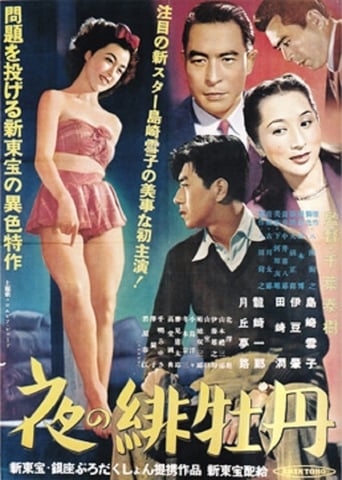
NRA romantic melodrama about the shifting relationship between Ryosuke and Miki as their precarious employment and social circumstances shift around them.
Red Peony of Night
1950
 NR
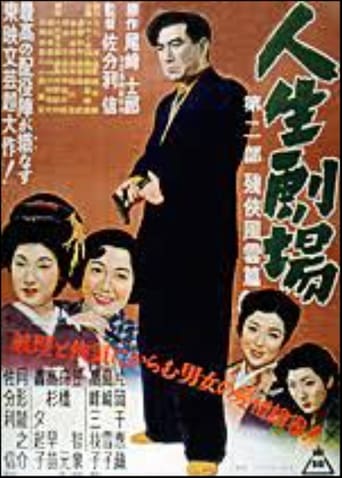
NRPart two of Shin Saburi's Theater of Life adaptation.
Jinsei Gekijo: dai ni bu
1953
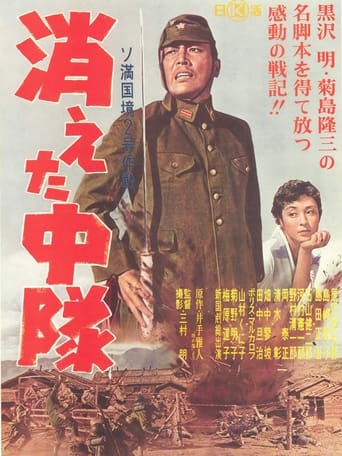 7.0
7.0In June 1941, Captain Kagawa (Ryutaro Tatsumi), who had just graduated from the military academy, was assigned as the captain of a sentry patrol in Beiman, which was located on the opposite side of the Heilongjiang River from the Semidomka region of the Soviet Union. His predecessor, Lieutenant Kishi (Kawamura Kenichiro), a mild-mannered middle-aged man, had earned the trust of his men and the villagers by relaxing his military duties. However, newly appointed Lieutenant Kagawa thinks that Kishi's way of doing things is sloppy and begins to train the soldiers furiously in order to teach them a lesson.
Vanished Enlisted Man
1955
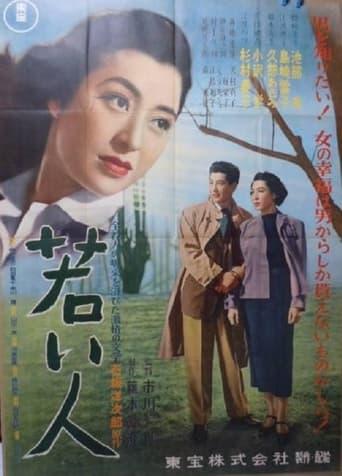 8.0
8.0No synopsis available yet.
Forbidden Path
1952
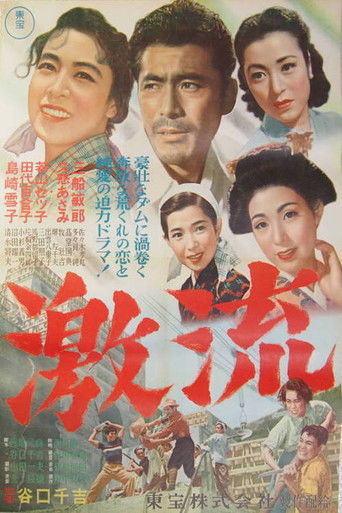 7.0
7.0The film follows a young civil engineer, played by Toshiro Mifune, who is assigned to the Tase Dam construction site in what is now Hanamaki City, Iwate Prefecture, and the human relationships involved in building the dam. A masterpiece by director Senkichi Taniguchi, who has worked on numerous films starring Mifune.
Swift Current
1952
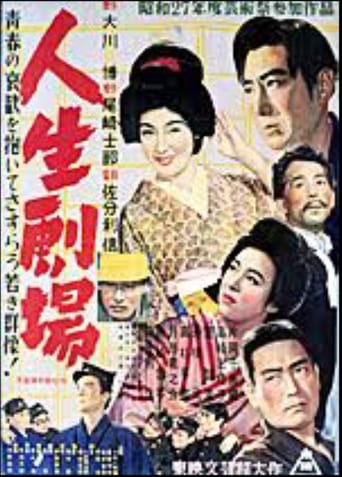 NR
NRPart one of Shin Saburi's Theater of Life adaptation.
Jinsei Gekijo: dai ichi bu
1952
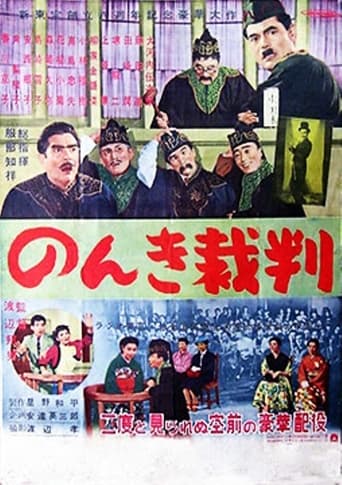 NR
NRA spectacular comedy with a star-studded cast that depicts unusual trials and unexpected verdicts regarding the five deadly sins: the crime of beauty, the crime of a terrifying wife, the crime of taking the wrong course, the crime of seducing, and the crime of killing with laughter.
Nonki saiban
1955
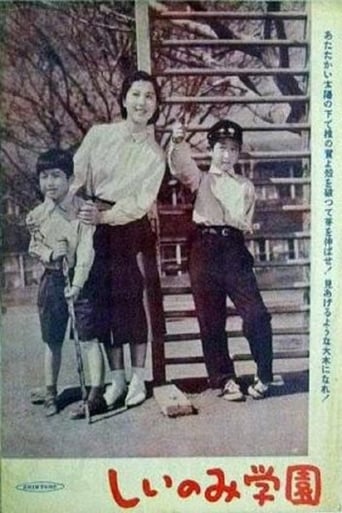 6.5
6.5A university professor and his wife have two sons with infantile paralysis. Through trial and error, they struggle to open a school for disabled children at their own expense. Based on a true story, it features natural child performances under Hiroshi Shimizu’s skillful direction.
The Shiinomi School
1955
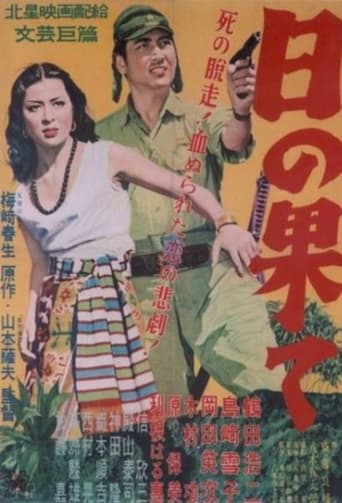 7.5
7.5Military doctor Leutenant Hanada deserts during the war in the Philippines with a local girl. The officer in command orders Lieutenant Uji to shoot Hanada. Uji takes a sharpshooter called Takagi and tracks him. At first Uji cannot forgive Hanada but as Uji is isolated from the main force he too starts to think of desertion.
The End of a Day
1954
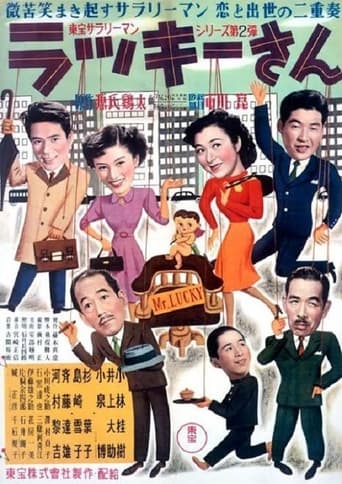 10.0
10.0No synopsis available yet.
Mr. Lucky
1952
Adaptation of a novel by Yojiro Ishizaka, originally released in two parts.
Beyond the Hills
1950
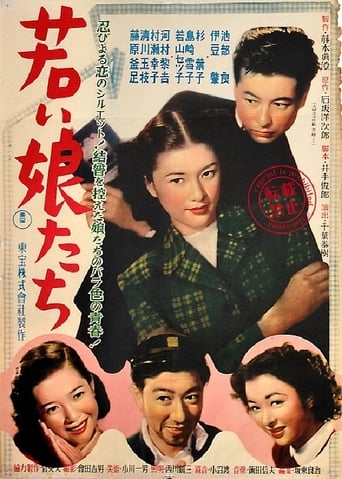 NR
NRNo synopsis available yet.
Wakai musumetachi
1951
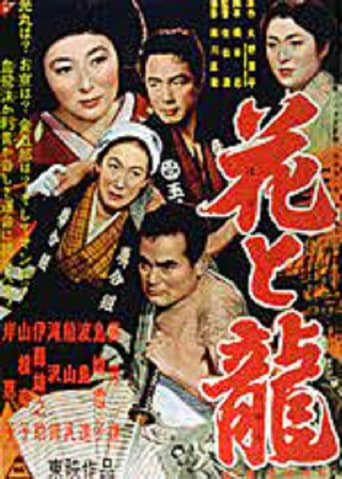 NR
NRDai-ni-bu: Aijô ruten: Kiyoshi Saeki directed movie
Hana to ryû - Dai-ni-bu: Aijô ruten
1954
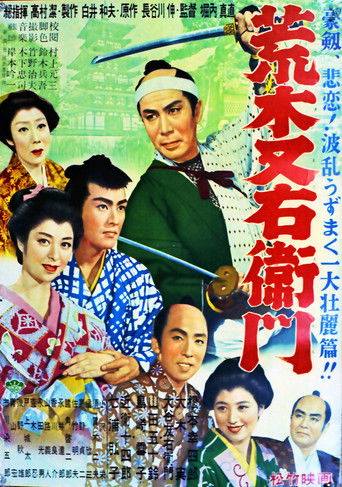 NR
NRWatanabe Kazuma and Kawai Matagorō from the Bizen Okayama Ikeda clan were close friends, but they inevitably became enemies after Matagorō killed Kazuma's younger brother, Gentayū, and fled. Seeking assistance, Kazuma asked his brother-in-law, Araki Mataemon, for help, but Mataemon refused, saying that it was against the code for a brother to avenge another brother's death. On the other hand, the lord of the clan, Ikeda Tadao, ordered a search for Matagorō, who was found to be sheltered by the Hatamoto, including Andō Jiemon, in Edo. Tadao was furious but unable to act. Matagorō, in Edo, came to regret his birth as a samurai. He met and fell in love with Okō, a bathhouse maid. As the discord between the Hatamoto and the Ikeda clan deepened, Tadao died of illness. Seizing the opportunity to ease the conflict, the shogunate ordered the Ikeda clan to be succeeded by the young lord Katsugorō and to relocate to the Ikeda clan of Inshū Tottori. Meanwhile, Matagorō was exiled from Edo.
荒木又右衛門
1955
Produced by Shochiku’s all-star cast as a commemorative film to mark the completion of the “Shochiku Kaikan” in Tsukiji, Tokyo, this movie introduces both the Shochiku Ofuna and Kyoto studios. Part One focuses on the studio’s behind-the-scenes staff: set designers, prop masters, and lighting technicians. Part Two presents a digest-style overview of the process surrounding a young woman who auditions for the “New Faces” program, from the auditions to her debut as an actress.
Shochiku Festival: All-Star Lineup – Studio Express / The Birth of an Actress
1956
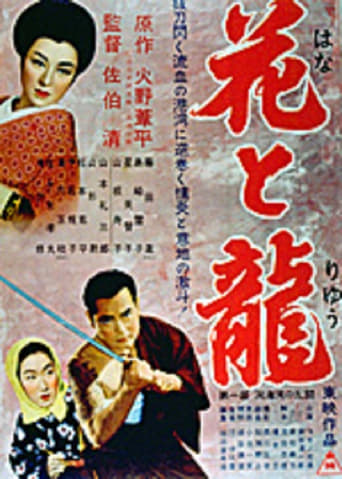 NR
NRDai-ichi-bu: Dôkai-wan no rantô - Kiyoshi Saeki directed movie.
Hana to ryû - Dai-ichi-bu: Dôkai-wan no rantô
1954
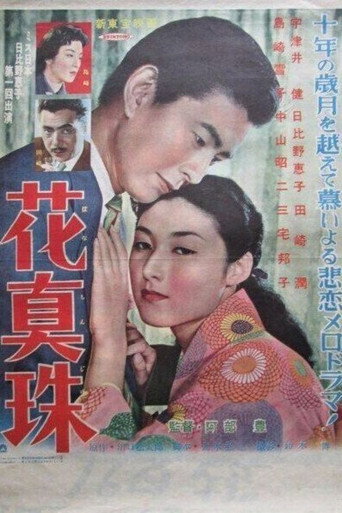 NR
NRNo synopsis available yet.
Hanamazu
1955
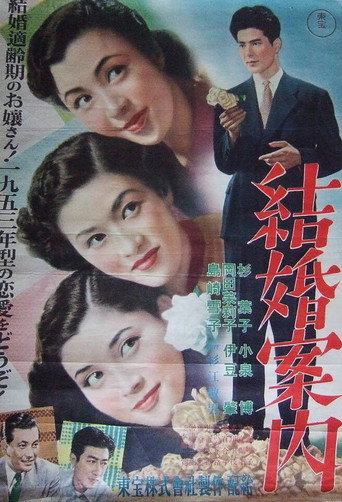 NR
NRNo synopsis available yet.
A Guide to Marriage
1952
 NR
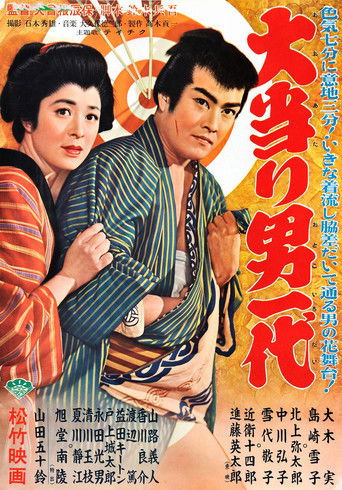
NRShinzō, the heir of the prominent Edo lumber dealer Yamashiroya, left home when his stubborn father, Chōzaemon, dismissed his lover, the maid Oyasu. Shinzō and Oyasu set up a household near a soba shop in Fukagawa, but Shinzō struggled financially, turning to gambling and fighting, while Oyasu worked as a tea server in a theater, constantly harassed by a small-time gangster, Rikichi, for cigarette money. The only ones concerned about Shinzō and Oyasu were Shinzō’s sister, Omitu, and her dance teacher, Oyoshi. Later, Shinzō managed to get a job at another lumber dealer, but after a conflict with the detective Hansuke, who was also infatuated with Oyasu, Shinzō accidentally dropped lumber into the river and was fired. Unaware that Oyasu had borrowed money from a bar to repay the lumber dealer, Shinzō left to earn money in the Mito clan's crew quarters and ended up rescuing Rikichi from a dice game trouble.
大当り男一代
1956
Japanese film.
Blood Festival of Akagi
1955
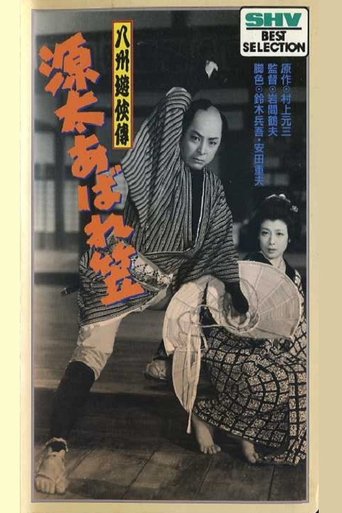 NR
NRNo synopsis available yet.
The Further Adventures of Genta
1955
 NR
NRNo synopsis available yet.
Tekka bugyō
1954
 NR
NRNo synopsis available yet.
Firefly Grass
1954
 10.0
10.0Chuji Kunisada runs into strange adventures which tests his skill as a samurai as he untangles intrigue and murder against the backdrop of the majestic Mount Akagi.
The Adventures of Chuji
1957
 NR
NRA foot soldier from Tottori domain named Shirai Gonpachi showcased exceptional swordsmanship that even surpassed the domain's champion Honjo Sukehichi during a ceremonial match. Though Gonpachi was promised a promotion to samurai status due to his skills, Sukehichi's father Sukezaemon's intervention out of jealousy prevented this. In anger, Gonpachi killed Sukezaemon and, without realizing it, also mistakenly killed Tomoe, his lover's brother Tsushimo Uemon. Following this, he fled to Kyoto, seeking shelter at the "Murasa" inn operated by Uemon's aunt.
Beautiful Gonpati
1954
 NR
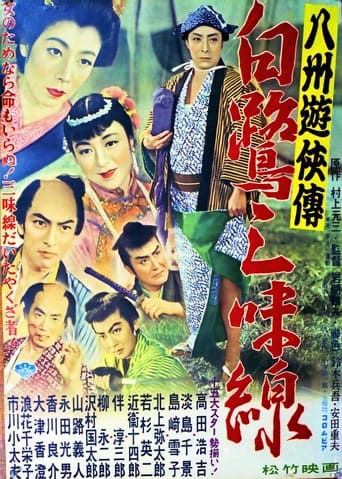
NRHatamoto Ooka Gentaro was deeply committed to a future with a beautiful girl named Omachi, a relationship facilitated by his love of the shamisen. Omachi was stalked by a ronin named Akiyama Kanosuke, and at one point, Gentaro and Akiyama dueled at Matanuiyama, but the confrontation was left unresolved when Omachi, sensing urgency, called the authorities. Meanwhile, Gentaro's uncle, Kii-no-kami, concerned about Gentaro's whereabouts, ordered him to investigate a conspiracy by Tachibana Tadama, a tyrannical director of Hachijo who exercised his power oppressively in Shimousa Iioka. Gentaro attempted to leave on a journey with Omachi but was obstructed by his uncle's retainers.
八州遊侠伝 白鷺三味線
1955