
Known for
 6.4
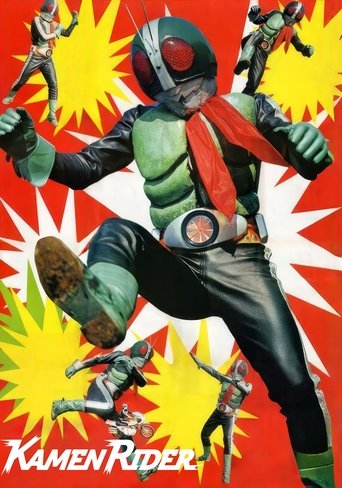
6.4Takeshi Hongo is a promising young man with a passion for motorcycle racing. However, his dreams are suddenly ruined when he gets kidnapped by Shocker, the evil secret organization planning to dominate the world. After being remodeled into a cyborg, Takeshi escapes and swears to protect the world from the inhuman monsters.
Kamen Rider
1971
 8.4
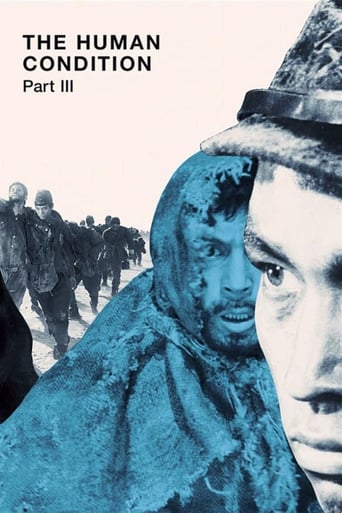
8.4After the Japanese defeat to the Russians, Kaji leads the last remaining men through Manchuria. Intent on returning to his old life, he faces great odds in a variety of different harrowing circumstances as he and his men sneak behind enemy lines.
The Human Condition III: A Soldier's Prayer
1961
 7.8
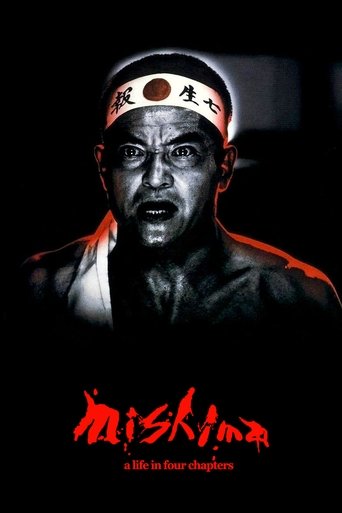
7.8A fictional account of the life of Japanese author Yukio Mishima, combining dramatizations of three of his novels and a depiction of the events of November 25th, 1970.
Mishima: A Life in Four Chapters
1985
 7.2
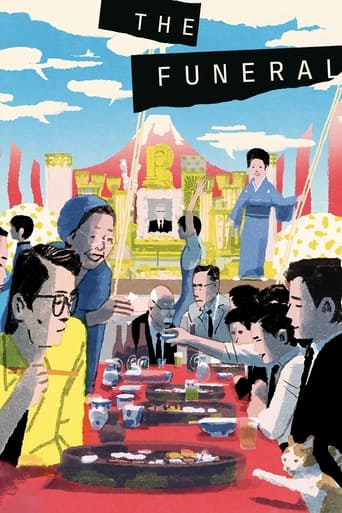
7.2When Wabisuke's father-in-law unexpectedly dies, the family goes through a series of random events and occurrences as the funeral unfolds over three days in their home.
The Funeral
1984
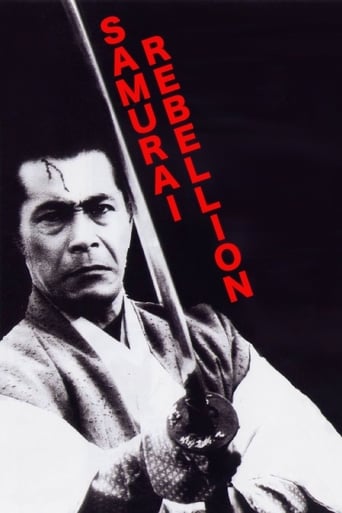 8.2
8.2The mother of a feudal lord's only heir is kidnapped by the lord. Her husband and his samurai father must decide whether to accept the unjust decision, or risk death to rescue her.
Samurai Rebellion
1967
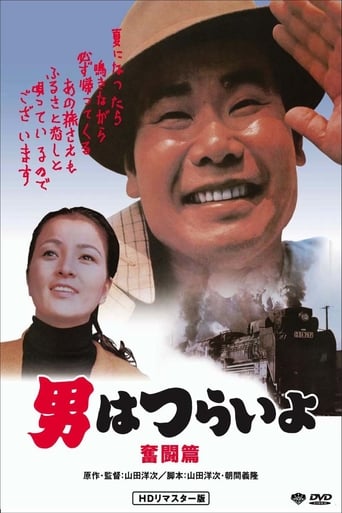 8.0
8.0After a quarrel with his mother, Torajiro sets off to find a bride.
Tora-san, the Good Samaritan
1971
Film credits
1980s · 3 titles
7.8A fictional account of the life of Japanese author Yukio Mishima, combining dramatizations of three of his novels and a depiction of the events of November 25th, 1970.
Mishima: A Life in Four Chapters
1985
7.2When Wabisuke's father-in-law unexpectedly dies, the family goes through a series of random events and occurrences as the funeral unfolds over three days in their home.
The Funeral
1984
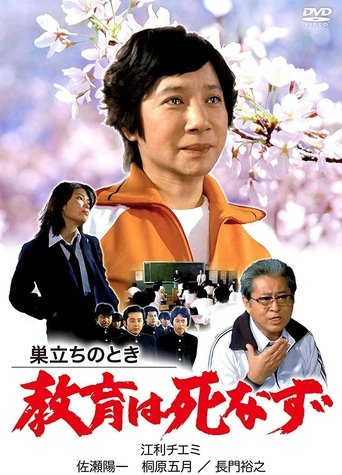 4.0
4.0Here is a school that has never expelled a single student, believing in its children even after betrayal and betrayal after betrayal! Yoji (Yoichi Sase), the son of a doctor in Suwa, and Nobuko (Mayuki Kirihara), the daughter of a weaver in Kyoto, are transferred to the class of Omura (Chiemi Eri), a PE teacher at Shinonoi Asahi High School, a private school for troubled children. The school principal (Hiroyuki Nagato) says that the school's policy of "not letting anyone drop out of school" must be upheld, and Omura struggles to do everything in his power to respond. Based on a true story by Shigeta Wakabayashi, an education critic, the film depicts the relationship between a student abandoned by his parents and a teacher who sincerely deals with them.
Sudachi no toki kyoiku wa shinazu
1981
1970s · 3 titles
8.0After a quarrel with his mother, Torajiro sets off to find a bride.
Tora-san, the Good Samaritan
1971
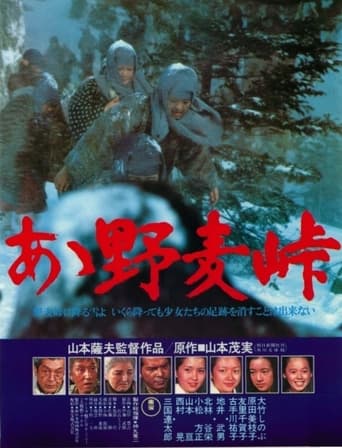 7.2
7.2The story of the silk industry and the young girls who worked as silk spinners in the early 1900s in Japan. The silk mills were located in Okaya which lies just beyond the Nomugi Pass. The women and girls worked in a hot, humid atmosphere without rest, and endured those conditions and sexual harassment to earn money for their poor families. Across the ocean, it was the great depression in America.
Nomugi Pass
1979
 7.0
7.0No synopsis available yet.
Sixteen Years Old: Nymphets' Room
1977
1960s · 5 titles
8.4After the Japanese defeat to the Russians, Kaji leads the last remaining men through Manchuria. Intent on returning to his old life, he faces great odds in a variety of different harrowing circumstances as he and his men sneak behind enemy lines.
The Human Condition III: A Soldier's Prayer
1961
8.2The mother of a feudal lord's only heir is kidnapped by the lord. Her husband and his samurai father must decide whether to accept the unjust decision, or risk death to rescue her.
Samurai Rebellion
1967
 7.0
7.0Kiroku boards with a Roman Catholic family and falls for the daughter Michiko. He ignores his feelings, joins a gang, gets in fights and, eventually, becomes involved with the radical Kita Ikki group.
Fighting Elegy
1966
 10.0
10.0As Japan's economic growth policies intensify, small-scale farmers embark on a first-ever communal dairy farming initiative in their village. They are joined by Riki, a young man who thinks communal farming will give him some leisure time.
Farm Girls
1962
 NR
NRIt's a story of the life of a man who advocated the necessity of sex education to children, which was unusual at the time, solely opposed to the amendment of the Peace Preservation Law, and was assassinated by a rightist prior to his opposition speech.
The War Without Weapons
1960
1950s · 5 titles
 6.6
6.6The film tells the story of four orphans living in an impoverished mining town. An adaptation of a best-selling book based on the diary of a ten-year-old zainichi (ethnic Korean Japanese) girl, it was one of the first films to deal with the subject of zainichi identity and struggles in Japan.
My Second Brother
1959
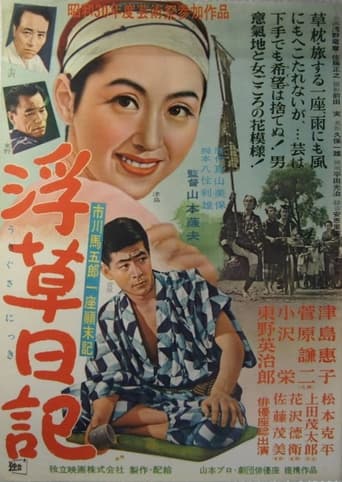 4.3
4.3A travelling theater troupe, led by Umagoro Ichikawa, comes to play in a mining town, and manages to sell every seat. Before the play begins, however, a miners' strike is announced, creating an uproar. In addition, the players find they have been cheated out of their profits by a crooked impresario.
Floating Weeds Diary
1955
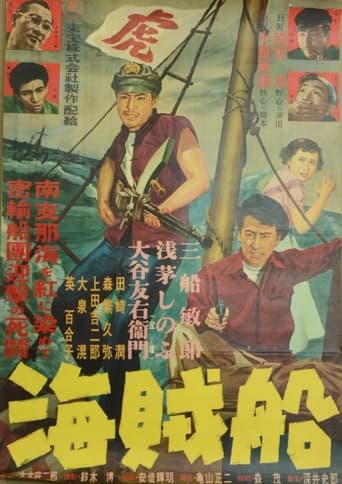 10.0
10.0No synopsis available yet.
Pirates
1951
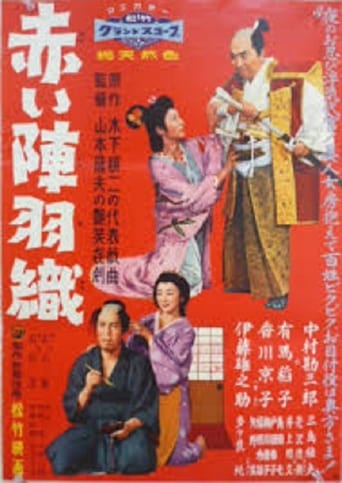 8.0
8.0The humorous tale of Jimbei, a miller, and his wife Osen who live in complete happiness. But Osen's beauty attracts numerous would-be lovers among whom is the local governor, a timid creature, who is dominated by his high-born and beautiful wife, who dresses in a scarlet battle-tunic, a sign of his family's military merit around which he fabricates fantastic tales of his prowess in war. During the traditional festival when the villagers are released from observance of all social customs and restrictions, it is permissible for any man to attempt win the favors of the one he loves. However, the timid but romantic governor goes to the length of having the miller arrested to clear the way for his seduction of Osen. But Osen fights off his advances with an old hunting gun and dashes out of the mill. Jimbei, meanwhile, has escaped from jail and dashes home to finds the governor in his bed. Convinced that his wife has been violated, he decides to take an eye for an eye.
His Scarlet Cloak
1958
One of the earliest Japanese cop films following a mysterious killing on the last train to Mitaka, Tokyo.
Murder on the Last Train
1955