

Directing
Charles Eames
Known for
Directing
Credits
43 titles
Charles Eames was an American designer, architect and film maker. In creative partnership with his spouse, Ray Kaiser Eames, he was responsible for groundbreaking contributions in the field of architecture, furniture design, industrial design, manufacturing and the photographic arts.
Known for
 6.0
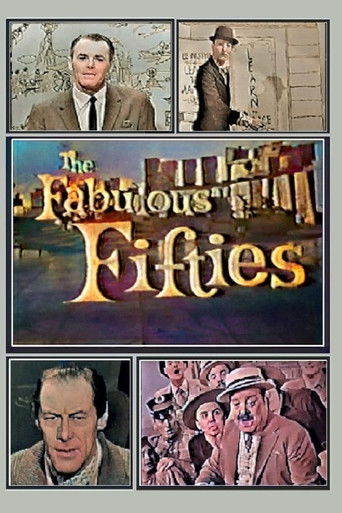
The Fabulous Fifties, CBS, combines style, humor, and imagination. It was rich in touches of quality showmanship and equally rich in the memories of a decade which it revived. In recognition, the Peabody Television Award for entertainment is presented to The Fabulous Fifties, with a special word of praise for producer Leland Hayward and the top talent which appeared in this memorable entertainment special*. *The two-hour special featured comic takes and commentary about the previous decade by, among others, Rex Harrison and Julie Andrews, Mike Nichols and Elaine May, Dick Van Dyke, Shelley Berman, Betty Comden and Adolph Green, Jackie Gleason, Eric Severeid and Henry Fonda.
The Fabulous Fifties
1960
 NR
"Based on the exhibition "Photography and the city", designed by the Eames Office for the Smithsonian Institute". A primer on the modern problems of and future solutions to growing cities.
The Image of the City
1969
 7.0
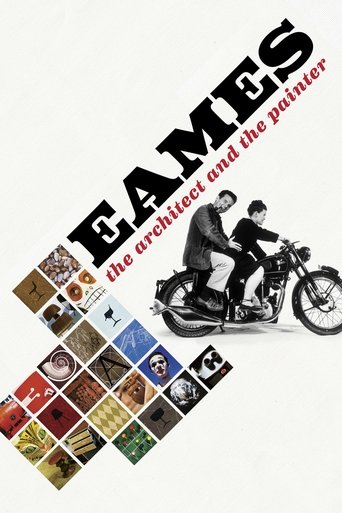
Interviews with the junior designers swept into the 24-7 world of "The Eamery" are the heart of this complex picture of a husband-and-wife creative team that define the era of Mid-Century Modernism. Narrated by James Franco, the film draws from a trove of archival material, primarily the stunning films and photographs produced in mind-boggling volume by Charles, Ray, and their staff during the hyper-creative forty years of the Eames Office.
Eames: The Architect and the Painter
2011
 6.7
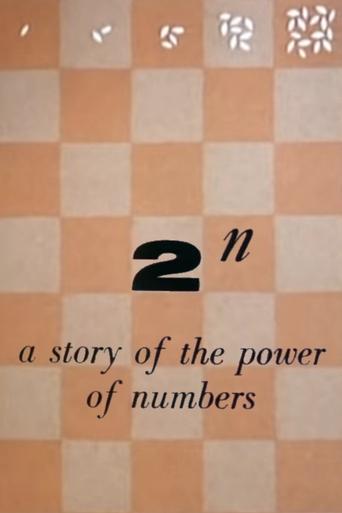
2ⁿ is a story about the exponential growth of numbers raised to powers. Part of the Mathematica Peep Shows, one of five films made to accompany the Mathematica: A World of Numbers and Beyond exhibition at the California Museum of Science and Industry and the Museum of Science and Industry in Chicago.
2ⁿ: A Story of the Power of Numbers
1961
 10.0
The short film uses a variety of familiar examples that have the feedback principle in common to present a broad view of the phenomena present in control mechanisms and social situations.
An Introduction to Feedback
1960
A morality film where Sherlock Holmes solves a case using Boolean logic.
The Singular Case of the Plural Green Mustache
1965
Film credits
Behind the camera
6.0The Fabulous Fifties, CBS, combines style, humor, and imagination. It was rich in touches of quality showmanship and equally rich in the memories of a decade which it revived. In recognition, the Peabody Television Award for entertainment is presented to The Fabulous Fifties, with a special word of praise for producer Leland Hayward and the top talent which appeared in this memorable entertainment special*. *The two-hour special featured comic takes and commentary about the previous decade by, among others, Rex Harrison and Julie Andrews, Mike Nichols and Elaine May, Dick Van Dyke, Shelley Berman, Betty Comden and Adolph Green, Jackie Gleason, Eric Severeid and Henry Fonda.
The Fabulous Fifties
1960
NR"Based on the exhibition "Photography and the city", designed by the Eames Office for the Smithsonian Institute". A primer on the modern problems of and future solutions to growing cities.
The Image of the City
1969
6.72ⁿ is a story about the exponential growth of numbers raised to powers. Part of the Mathematica Peep Shows, one of five films made to accompany the Mathematica: A World of Numbers and Beyond exhibition at the California Museum of Science and Industry and the Museum of Science and Industry in Chicago.
2ⁿ: A Story of the Power of Numbers
1961
10.0The short film uses a variety of familiar examples that have the feedback principle in common to present a broad view of the phenomena present in control mechanisms and social situations.
An Introduction to Feedback
1960
A morality film where Sherlock Holmes solves a case using Boolean logic.
The Singular Case of the Plural Green Mustache
1965
The subject of problem solving begins with an explanation of what the Eameses called “the information machine, “a device for presenting information in fragments so that viewers are compelled to see new relationships among events, objects and people.” The narrative accompanying the images points out the relationships between solving both simple and complicated problems, and then demonstrates that complex problems are solved by the computer with the same logical procedures that people use to solve simple ones. Los Angeles International Film Exposition (Filmex) Acknowledgement of participation, 1973.
View from the People Wall
1966
 7.7
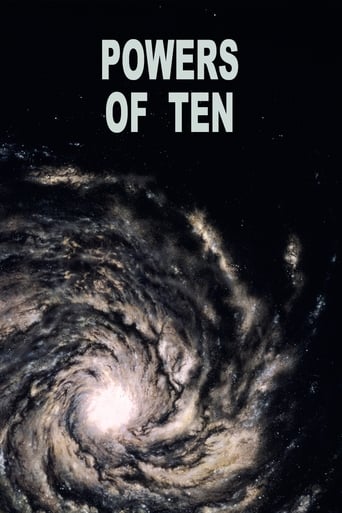
A scientific film essay, narrated by Phil Morrison. A set of pictures of two picnickers in a park, with the area of each frame one-tenth the size of the one before. Starting from a view of the entire known universe, the camera gradually zooms in until we are viewing the subatomic particles on a man's hand.
Powers of Ten
1977
Using live-action footage, animation, and still photography of a scale model, this film presents the Eames unique multimedia concept for making the museum’s resources more accessible via a central information center and guide to the myriad collections and galleries of the Metropolitan Museum of Art.
Metropolitan Overview
1975
 8.0
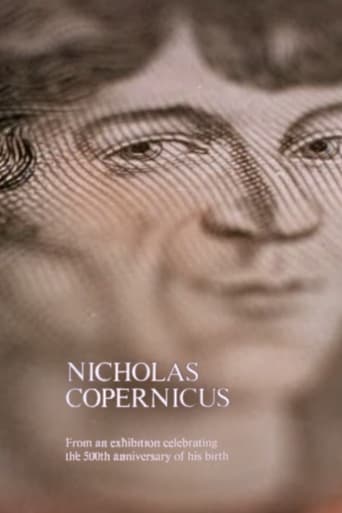
The life and work of the astronomer Nicolas Copernicus are shown by means of images of his writings and drawings and places he was associated with.
Nicholas Copernicus
1973
 7.2
A Rough Sketch features a linear view of our universe from the human scale to the sea of galaxies, then directly down to the nucleus of a carbon atom. With images, narration, and a dashboard, it gives a clue to the relative size of things and what it means to add another zero to any number. The 1977 film, Powers of Ten, was an expanded and updated version of this 1968 study film. Charles and Ray often gave projects long titles to indicate that they were still exploring their ideas—that the presentation was a model or a type of “sketch.”
A Rough Sketch for a Proposed Film Dealing with the Powers of Ten and the Relative Size of Things in the Universe
1968
 7.5
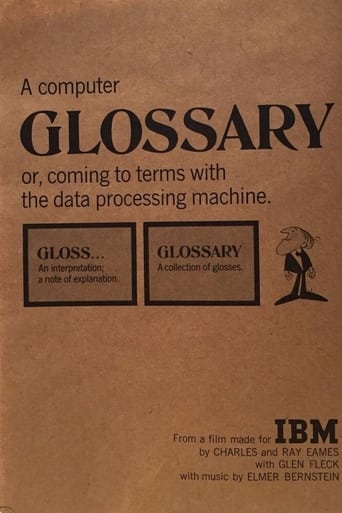
From hardware to software, the basics of then-current computing technology is explained.
A Computer Glossary
1968
 6.7
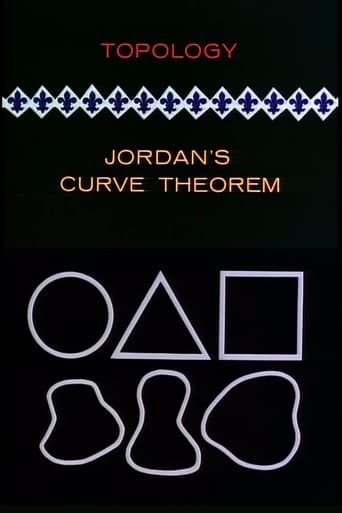
Short animated film commissioned by IBM - to illustrate Camille Jordan's concept of topology - the fact that a simple closed curve divides a plane into an inside and an outside.
Topology: Jordan's Curve Theorem
1961
6.7Short animated film commissioned by IBM - to illustrate Camille Jordan's concept of topology - the fact that a simple closed curve divides a plane into an inside and an outside.
Topology: Jordan's Curve Theorem
1961
 5.8
A portrayal of the Mexican Day of the Dead consisting of still shots and narration. Deals with the special objects and events surrounding the annual Mexican celebration of “All Souls Day”. It is not only a rich flood of folk art, but a view of the way that the Mexicans have come to terms with death. Searched out with the help of Alexander Girard and a moving guitar score by Laurindo Almeida.
Day of the Dead
1957
 6.0
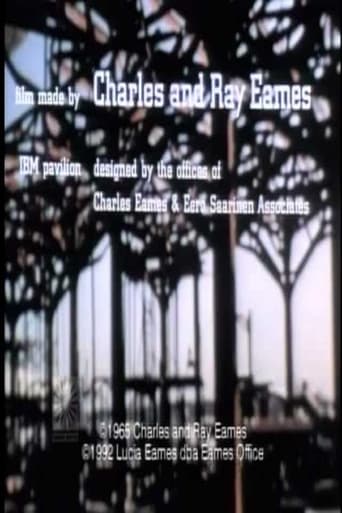
This film reveals design proposals for the IBM pavilion at the 1964 New York World's Fair. It incorporates photography and animation to present the concepts, architecture, and overall look of the pavilion and to convey an impression of the exhibition's spirit and content.
IBM at the Fair
1965
Created as a demonstration of multi-disciplinary thinking, this film was produced in association with UCLA Mathematics professor, Ray Redheffer. With the exclusive use of storytelling through animation this lively and exuberant presentation of the “architecture of algebra,” the film explains the behavior of specific exponents and concludes with the general laws that all exponential expressions obey – all achieved without the use of narration. Council on International Non-Theatrical Events (C.I.N.E.) Gold Eagle Award, 1975. Columbus International Film Festival Bronze Chris Plaque Award-C, 1975. New York International Animation Festival Bronze Praexinoscope Award, 1975. Melbourne Film Festival Selected for Participation, 1976.
Exponents: A Study in Generalization
1973
 NR
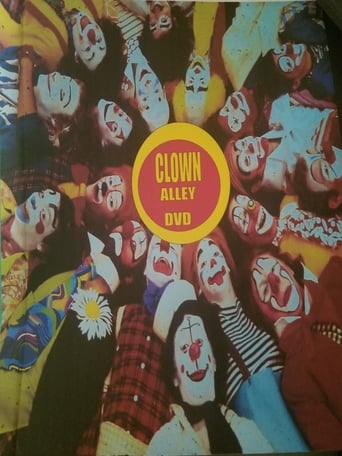
The movie "Clown Face" offers a very rare glimpse into the backstage private world of Circus Clowns. Here, you can look behind the curtain. You will see the clowns in their backstage habitat, Clown Alley, preparing for a circus performance
Clown Face!
1971
Various kinds of tops are shown spinning.
Tops
1969
 NR
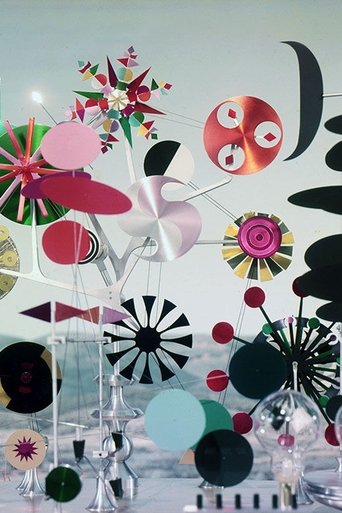
In 1957, Charles and Ray designed the Solar Do-Nothing Machine for Alcoa, the Aluminum Company of America. True to the Eameses’ belief that toys are not as innocent as they appear, the machine was one of the first uses of solar power to produce electricity. In the 1990s, Eames Demetrios discovered unedited footage of the wonderful machine. He cut it together to produce a new film that shares a bit of its flavor for future generations to enjoy.
Solar Do-Nothing Machine
1990
 6.6
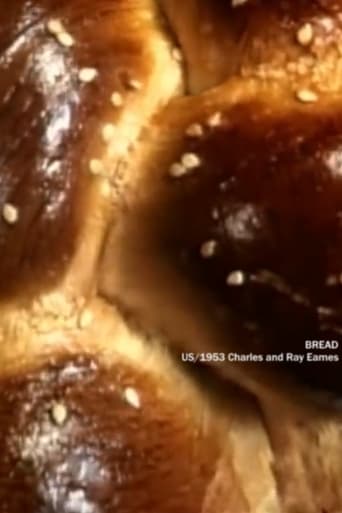
Presented without voiceover, various kinds of breads are displayed and broken in a joyous celebration of starch, seed and salt.
Bread
1953
6.6Presented without voiceover, various kinds of breads are displayed and broken in a joyous celebration of starch, seed and salt.
Bread
1953
6.6Presented without voiceover, various kinds of breads are displayed and broken in a joyous celebration of starch, seed and salt.
Bread
1953
 5.8
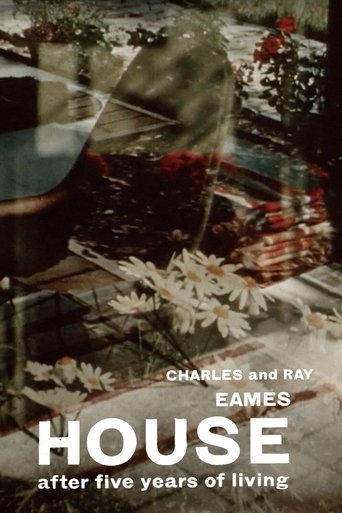
The Eames House and Studio is explored via a series of slides.
House: After Five Years of Living
1955
Utilizing surveys and reports on the background of cable television, this film explores its place in the world of television, and its future potential as a communication tool in workplaces, educational institutions, the home, and the community. Includes both live-action sequences of people using cable television as a means of accessing information, and animated sequences which explain the history of cable television and how the medium functions.
Cable: The Immediate Future
1972
 10.0
The Eames design philosophy presented in the form of a series of questions posed by a curator at the Louvre and answered by Charles Eames.
Design Q & A
1972
 NR
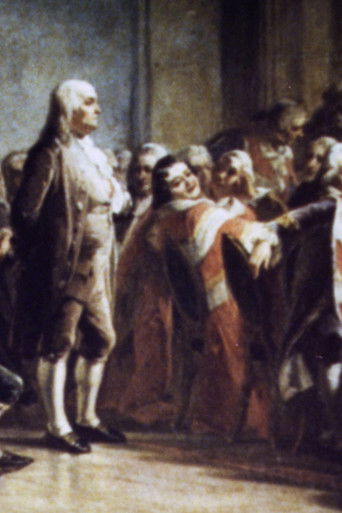
This film was produced to present the Eames proposal to make an American Revolution Bicentennial celebration. The exhibition would compare and contrast the lives of Thomas Jefferson and Benjamin Franklin, providing a cinematic trip for the viewer through the exhibit, using animation, live-action, and still photography. It was later used by the USIA to provide information to the embassies and museums which would be hosting the exhibition.
The World of Franklin & Jefferson: Authors of Independence and Architects of the American Experiment
1973
 NR
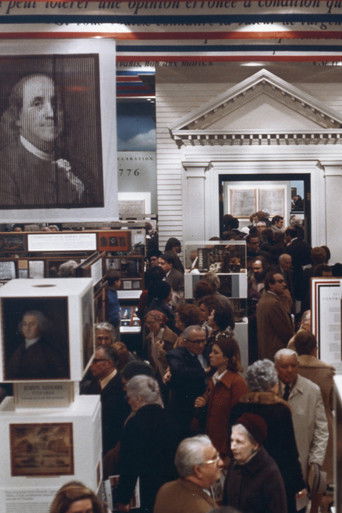
A short film of the opening of the last museum exhibition prepared by the Eames. The exhibition was called "The World of Franklin and Jefferson" and was to celebrate the bicentennial of the American Revolution.
The World of Franklin and Jefferson: The Opening Of An Exhibition
1976
 NR
A live-action film of a rare sea creature. The tiny transparent life form (only 5/8″ high) has only rarely been observed in its natural habitat. The remarkable Eames macro-photography provides an intimate view of the animal and demonstrates the creature’s symmetrical shape and its movement in the water.
A Small Hydromedusan: Polyorchis Haplus
1970
 7.5
An interesting look at the world of toy trains, shot from the perspective of the little world itself. Originally created for model train enthusiasts, this short film transcends it's intended audience to delight viewers of all ages and interests!
Toccata for Toy Trains
1957
7.5An interesting look at the world of toy trains, shot from the perspective of the little world itself. Originally created for model train enthusiasts, this short film transcends it's intended audience to delight viewers of all ages and interests!
Toccata for Toy Trains
1957
Produced to introduce the functions and design properties of the Eames Contract Storage units. This innovative use of live-action and animation accompanies an Eames script which includes the famous Eames quote “The details are not details, they made the architecture – the gauge of the wire, the selection of the wood, the finish of the castings – connections, the connections, the connections. It will, in the end, be these details that provide service to the customer and give the product its life.” Featured in the Festival International du Film de Montreal, 1961.
ECS (Eames Contact Storage)
1961
 NR
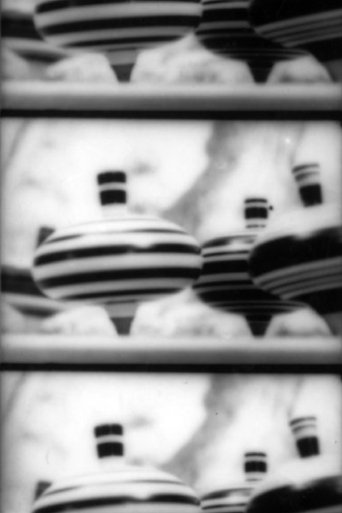
This film was made by the Eamses on a weeks notice for a local Los Angeles TV show where jazz musicians improvised to the images live. The music that overlays the released edition is specifically recorded for that edition.
Tops (from Stars of Jazz)
1957
The lives of Franklin and Jefferson are used as prisms through which to evoke colonial America. With a dynamic timeline and a wealth of images drawn from architecture, science, and politics, the film brings alive the way American history shaped, and was shaped by, these two men. Benjamin Franklin, standing for the best in colonial wisdom, and Thomas Jefferson, representing the opportunities and ambitions of a new nation, together offer a compelling approach to this richly textured area.
The World of Franklin and Jefferson
1973
 NR
A rare, live-action, and close-up study of the only existing Babbage Difference Engine, a machine designed in the first quarter of the 19th-Century by English inventor and mathematician, Charles Babbage. The engine, designed to calculate and print-out tables of numbers for use in navigation, insurance, and astronomy, is considered an important artifact in the history of computing. Babbage is considered to be the father of the modern computer, and the Difference Engine and Analytical Machine are forerunners of the computer. The music is ”Alamaine” and “The Scot’s March” performed by Carl Dolmetsch and the Dolmetsch Quartet.
Babbage’s Calculating Machine or Difference Engine
1968
 NR
Animated graphic symbols presented in a constant time frame are used to diagram and explain the laws of planetary motion devised by the Sixteenth-century astronomer Johannes Kepler. “Little Suite”, guitar and lute music composed by Galileo Galilei’s father Vincenzo, is performed by Laurindo Almeida
Kepler's Laws
1974
 7.0
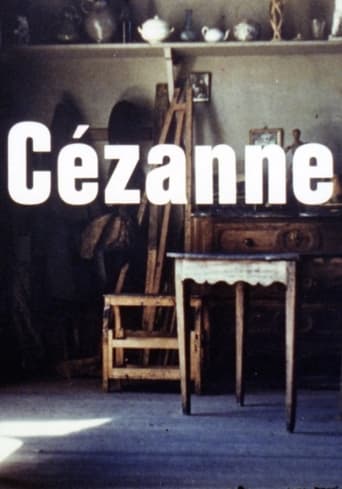
A film record of an exhibition of the late work of Paul Cezanne, organized by The Museum of Modern Art and the Reunion des Musees Nationaux in Paris. The camera moves across details of paintings, as well as details of Cezanne’s studio, providing an intimage, close-up view of the artist’s work. The narration is provided by Cezanne’s own words, taken directly from records of correspondence. 22nd Annual San Francisco International Film Festival Participation- Communication Competition, 1978.
Cezanne
1978
 5.0
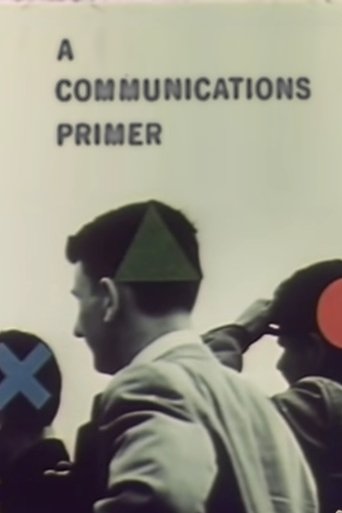
An early attempt to present communications theory, made to encourage the breaking down of barriers of thinking between disciplines and to discourage thinking of communications in a limited way. Music composed by Elmer Bernstein.
A Communications Primer
1953
 6.7
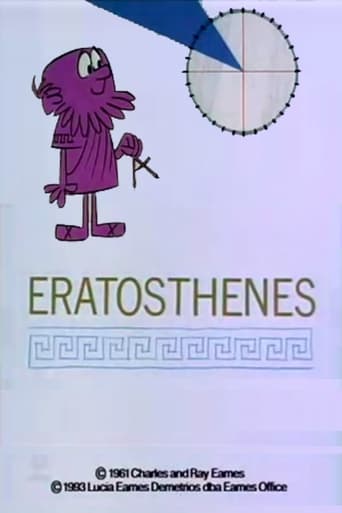
The Greek mathematician Eratosthenes estimates the circumference of the earth.
Eratosthenes
1961