

Directing
Fyodor Khitruk
Born — Died
1917-05-01 — 2012-12-03
Place of birth
Tver, Russian Empire
Known for
Directing
Credits
45 titles
Fyodor Savelyevich Khitruk (Russian: Фёдор Савельевич Хитрук; 1 May 1917 – 3 December 2012; Tver) was a Russian (and Soviet) animator and animation director. Khitruk was born in Tver (Russian Empire), into a Jewish family. He came to Moscow to study graphic design at the OGIS College for Applied Arts. He graduated in 1936 and started to work with "Soyuzmultfilm" in 1938 as an animator. From 1962 onwards, he worked as a director. His first film "Story of One Crime" was an immense success. Today, this film is seen as the beginning of a renaissance of Soviet animation after a two-decade-long life in the shadows of Socialist realism. Diverging from the “naturalistic” Disney-like canons that wer…
Known for
 7.5
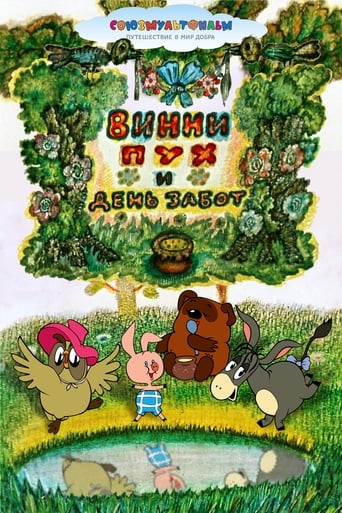
7.5Another Soviet Winnie-the-Pooh story. This time the donkey, known from the Pooh stories as Eeyore, is sad because he has no tail. Pooh goes in search of one and finds it attached to a bell that hangs from the treehouse of one Owl.
Winnie-the-Pooh and a Busy Day
1972
 3.0
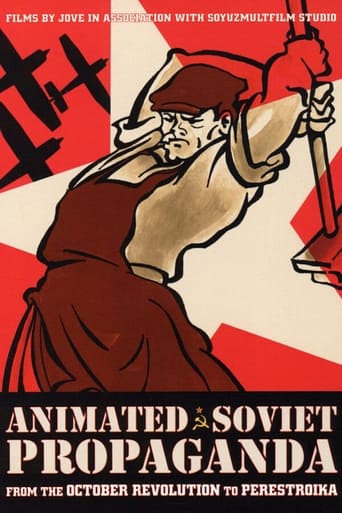
3.0A landmark four disc Box Set - Unearthed from Moscow's legendary Soyuzmultfilm Studios, the 41 films in ANIMATED SOVIET PROPAGANDA span sixty years of Soviet history (1924 - 1984), and have never been available before in the U.S.
Animated Soviet Propaganda
1997
 7.7
7.7The trials and tribulations of putting a feature film together.
Film, Film, Film
1968
 6.1
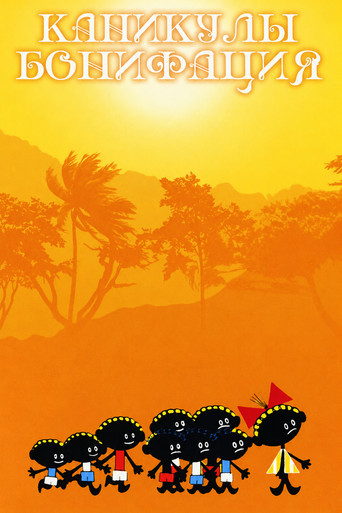
6.1A circus lion goes on holiday to Africa, but his circus skills doesn't let him be. Based on the tale of the Czech writer Milos Macourek "Boniface and his nephews»
Boniface's Holiday
1965
 7.4
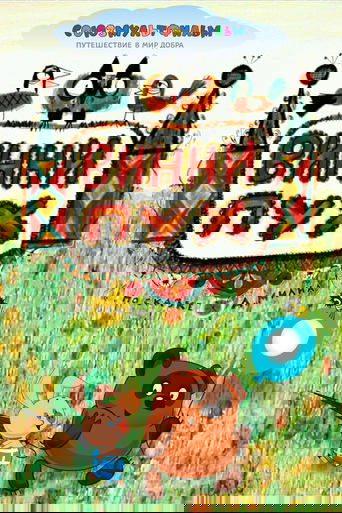
7.4According to Winnie-the-Pooh himself, bears love honey very much. That's why it always runs out very quickly. And you can't do without honey, so Winnie, along with Piglet, sets off for a tall tree with a beehive hanging from it. Winnie fearlessly climbs up to the beehive on a balloon, singing a song about a little cloud.
Winnie-the-Pooh
1969
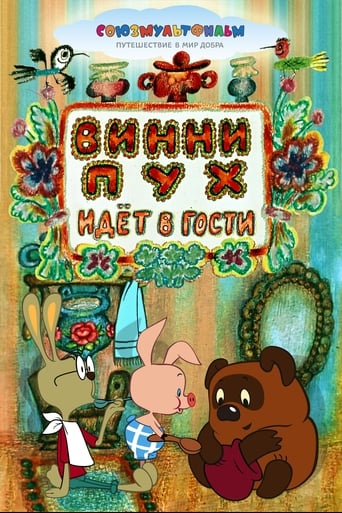 7.5
7.5The second of the Soviet Winnie-the-Pooh series. This one had Pooh and Piglet visiting Rabbit for a meal with honey.
Winnie-the-Pooh Goes Visiting
1971
Film credits
2000s · 2 titles
 NR
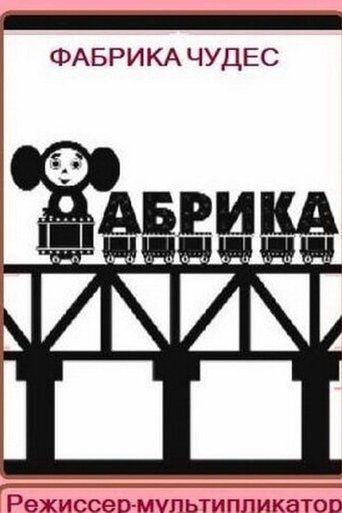
NRThe history of Russian animated films.
Miracle Factory. Animation Director
2005
 9.5
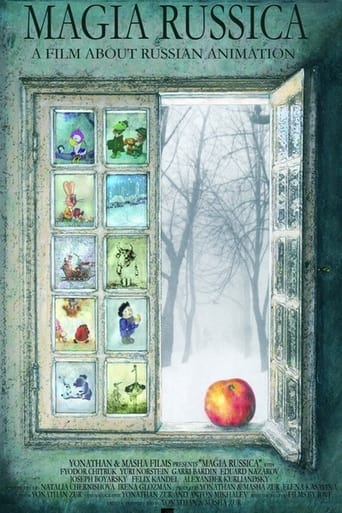
9.5A poetic view of Russian animation and of cultural and social transformations Russian society has been gone through. It is about multi faceted and humorous animation, almost never exposed to western eyes.
Magia Russica
2004
1990s · 2 titles
3.0A landmark four disc Box Set - Unearthed from Moscow's legendary Soyuzmultfilm Studios, the 41 films in ANIMATED SOVIET PROPAGANDA span sixty years of Soviet history (1924 - 1984), and have never been available before in the U.S.
Animated Soviet Propaganda
1997
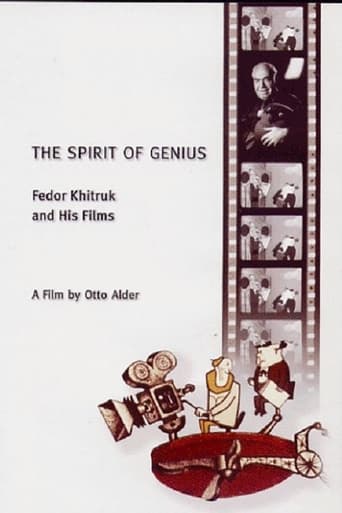 NR
NRAlder uncovers not only the life and works of the elusive Cold War soviet master, but also sheds light on the Soviet animation regime.
The Spirit of Genius - Fedor Khitruk and His Films
1997
Behind the camera
7.5Another Soviet Winnie-the-Pooh story. This time the donkey, known from the Pooh stories as Eeyore, is sad because he has no tail. Pooh goes in search of one and finds it attached to a bell that hangs from the treehouse of one Owl.
Winnie-the-Pooh and a Busy Day
1972
7.5Another Soviet Winnie-the-Pooh story. This time the donkey, known from the Pooh stories as Eeyore, is sad because he has no tail. Pooh goes in search of one and finds it attached to a bell that hangs from the treehouse of one Owl.
Winnie-the-Pooh and a Busy Day
1972
7.7The trials and tribulations of putting a feature film together.
Film, Film, Film
1968
7.7The trials and tribulations of putting a feature film together.
Film, Film, Film
1968
6.1A circus lion goes on holiday to Africa, but his circus skills doesn't let him be. Based on the tale of the Czech writer Milos Macourek "Boniface and his nephews»
Boniface's Holiday
1965
6.1A circus lion goes on holiday to Africa, but his circus skills doesn't let him be. Based on the tale of the Czech writer Milos Macourek "Boniface and his nephews»
Boniface's Holiday
1965
7.4According to Winnie-the-Pooh himself, bears love honey very much. That's why it always runs out very quickly. And you can't do without honey, so Winnie, along with Piglet, sets off for a tall tree with a beehive hanging from it. Winnie fearlessly climbs up to the beehive on a balloon, singing a song about a little cloud.
Winnie-the-Pooh
1969
7.4According to Winnie-the-Pooh himself, bears love honey very much. That's why it always runs out very quickly. And you can't do without honey, so Winnie, along with Piglet, sets off for a tall tree with a beehive hanging from it. Winnie fearlessly climbs up to the beehive on a balloon, singing a song about a little cloud.
Winnie-the-Pooh
1969
7.5The second of the Soviet Winnie-the-Pooh series. This one had Pooh and Piglet visiting Rabbit for a meal with honey.
Winnie-the-Pooh Goes Visiting
1971
7.5The second of the Soviet Winnie-the-Pooh series. This one had Pooh and Piglet visiting Rabbit for a meal with honey.
Winnie-the-Pooh Goes Visiting
1971
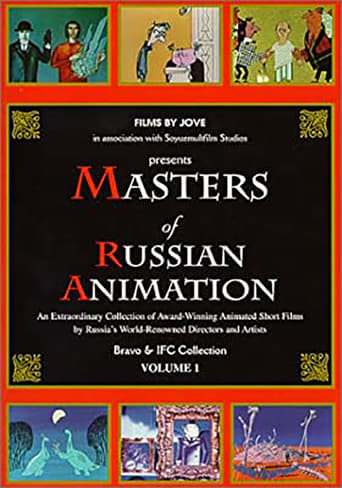 NR
NRVolume 1 (1962-1968): "Story of One Crime", "Man in the Frame", "My Green Crocodile", "There Lived Kozyavin", "Mountain of Dinosaurs", "Passion of Spies", "Glass Harmonica", "Ball of Wool", "Singing Teacher", "Film, Film, Film".
Masters of Russian Animation - Volume 1
2000
NRVolume 1 (1962-1968): "Story of One Crime", "Man in the Frame", "My Green Crocodile", "There Lived Kozyavin", "Mountain of Dinosaurs", "Passion of Spies", "Glass Harmonica", "Ball of Wool", "Singing Teacher", "Film, Film, Film".
Masters of Russian Animation - Volume 1
2000
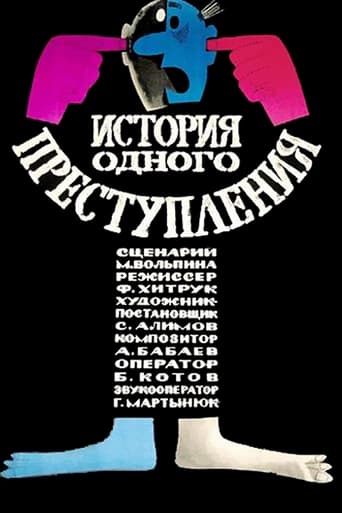 6.0
6.0The story about an everyman who one morning suddenly leaps out on the courtyard and bludgeons two conversing housewives to death with a frying pan.
Story of One Crime
1963
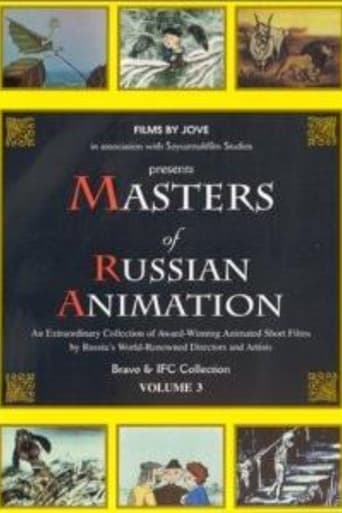 NR
NRVolume 3 (1979-1985): "Tale of Tales", "Hunt", "Cabaret", "Last Hunt", "There Was a Dog", "Travels of an Ant", "Lion and Bull", "Wolf and Calf", "Old Stair", "King's Sandwich", "About Sidorov Vova".
Masters of Russian Animation - Volume 3
2000
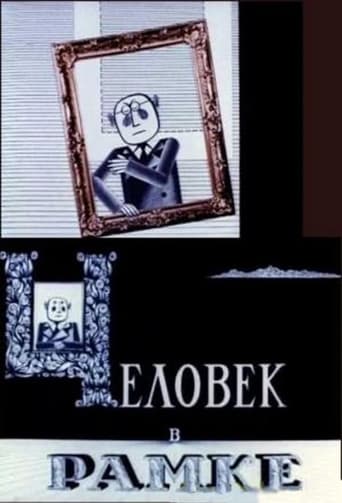 6.2
6.2The way bureaucracy works is told by men in the frames.
Man in the Frame
1966
6.2The way bureaucracy works is told by men in the frames.
Man in the Frame
1966
 NR
NRThe royal son fell ill. Visiting doctors could not cure the royal heir. A passing lumberjack pledged to help in trouble.
The Tale of the Tsarevich and the Three Healers
1965
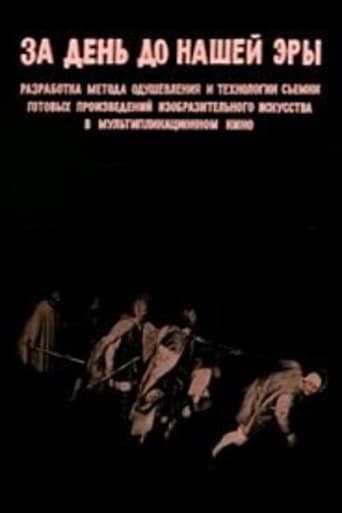 7.0
7.0Montage of still photos with lighting effects.
One Day Before Our Era
1977
7.0Montage of still photos with lighting effects.
One Day Before Our Era
1977
7.0Montage of still photos with lighting effects.
One Day Before Our Era
1977
 6.2
6.2Award winning animated short film by Fyodor Khitruk.
Lion and Bull
1984
6.2Award winning animated short film by Fyodor Khitruk.
Lion and Bull
1984
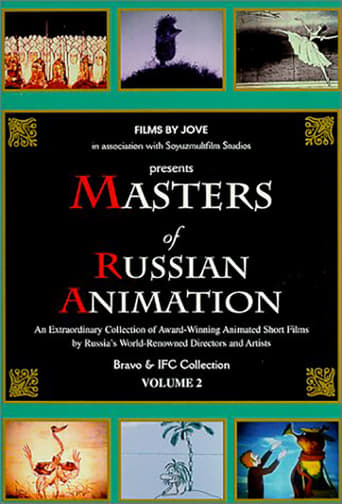 NR
NRVolume 2 (1969-1978): "Ballerina on the Boat", "Seasons", "Armoire", "The Battle of Kerzhenets", "Butterfly", "Island", "Fox and Rabbit", "The Heron and the Crane", "Hedgehog in the Fog", "Crane's Feathers", "Firing Range" Contact
Masters of Russian Animation - Volume 2
2000
NRVolume 2 (1969-1978): "Ballerina on the Boat", "Seasons", "Armoire", "The Battle of Kerzhenets", "Butterfly", "Island", "Fox and Rabbit", "The Heron and the Crane", "Hedgehog in the Fog", "Crane's Feathers", "Firing Range" Contact
Masters of Russian Animation - Volume 2
2000
 NR
NRThree stories about how citizens need nature
Three Novels
1986
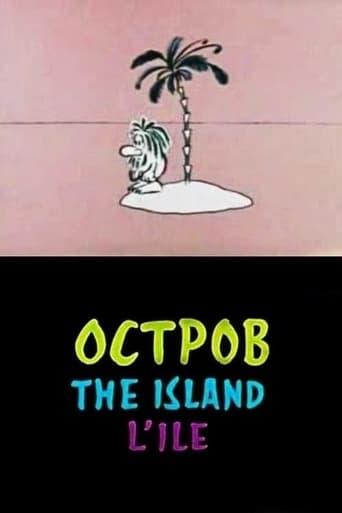 6.2
6.2A castaway is interrogated by Interpol, conquered by an imperialist ship, loses his lone palm tree to greedy loggers, is consoled by a missionary who promptly abandons him, is thoroughly examined by scientists, and harassed by journalists.
Island
1973
6.2A castaway is interrogated by Interpol, conquered by an imperialist ship, loses his lone palm tree to greedy loggers, is consoled by a missionary who promptly abandons him, is thoroughly examined by scientists, and harassed by journalists.
Island
1973
 3.8
3.8This is a somewhat ironic, but very informative story about the origin, development and decline of the Greek Olympiad tradition, set out with the help of an off-screen commentary read by Z. Gerdt. Ancient history is described in great detail and exciting. In the graphic decision, artists were guided by the ancient Greek monuments, first of all - vase paintings, stylized for them and characters, and decorations, up to imitation cracks. In the film there are a lot of full-scale shots, and in particular it is interesting to frame the photographs of the bas-reliefs of the Pergamon altar shot by Yuriy Norshtein. The film ends with documentary shots of the opening of the Olympics-80 in Moscow.
Olympians
1982
3.8This is a somewhat ironic, but very informative story about the origin, development and decline of the Greek Olympiad tradition, set out with the help of an off-screen commentary read by Z. Gerdt. Ancient history is described in great detail and exciting. In the graphic decision, artists were guided by the ancient Greek monuments, first of all - vase paintings, stylized for them and characters, and decorations, up to imitation cracks. In the film there are a lot of full-scale shots, and in particular it is interesting to frame the photographs of the bas-reliefs of the Pergamon altar shot by Yuriy Norshtein. The film ends with documentary shots of the opening of the Olympics-80 in Moscow.
Olympians
1982
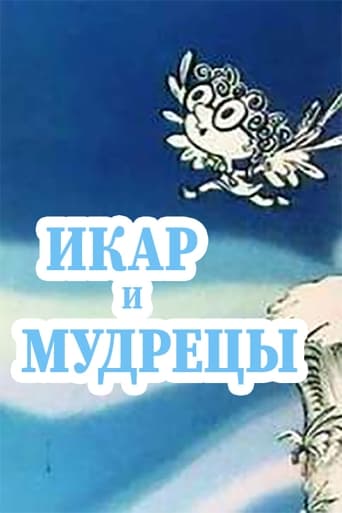 6.6
6.6It is a parable about world wisdom and "madness of brave men" who are ready to risk their life for the sake of new opening.
Ikar and Sages
1976
6.6It is a parable about world wisdom and "madness of brave men" who are ready to risk their life for the sake of new opening.
Ikar and Sages
1976
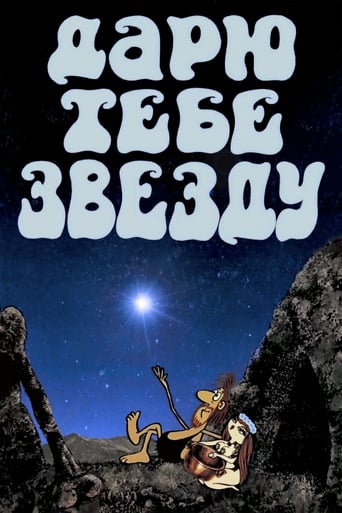 6.9
6.9A comedy that humorously addresses the issue of a woman's role in the family. The film consists of four short stories, united by the same characters: a Man and a Woman, living in different eras.
I Give You a Star
1974
6.9A comedy that humorously addresses the issue of a woman's role in the family. The film consists of four short stories, united by the same characters: a Man and a Woman, living in different eras.
I Give You a Star
1974
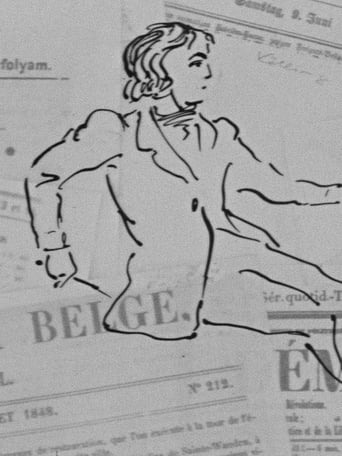 10.0
10.0With the young Friedrich Engel’s letters and drawings from the years between 1838 and 1842, a unique cinematic portrait is created. The viewer thus gets to know the young Engels personally, learning about the significant moments of his development from a bourgeois-liberal upbringing to the theoretical partner of Karl Marx. Later be awarded the Gold Dove at the International Leipzig Documentary and Short Film Week.
A Young Man Named Engels – A Portrait in Letters
1970
10.0With the young Friedrich Engel’s letters and drawings from the years between 1838 and 1842, a unique cinematic portrait is created. The viewer thus gets to know the young Engels personally, learning about the significant moments of his development from a bourgeois-liberal upbringing to the theoretical partner of Karl Marx. Later be awarded the Gold Dove at the International Leipzig Documentary and Short Film Week.
A Young Man Named Engels – A Portrait in Letters
1970
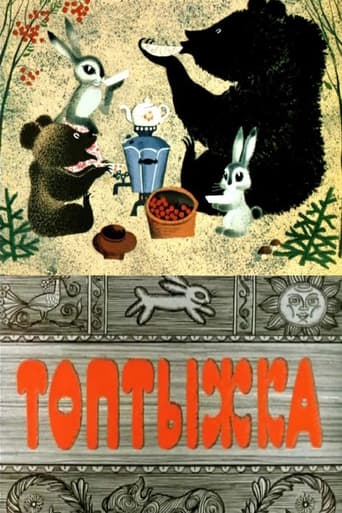 6.3
6.3A bear cub who has trouble sleeping during winter sneaks out of the house and makes a new friend.
Little Stomper
1964
6.3A bear cub who has trouble sleeping during winter sneaks out of the house and makes a new friend.
Little Stomper
1964
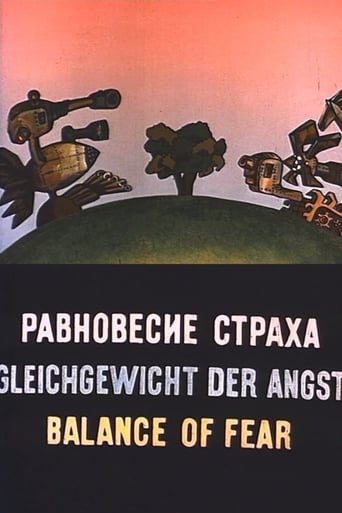 4.6
4.6Two neighbors live side-by-side. One decides to buy a shotgun. The other responds by buying his own shotgun. This quickly escalates into a massive arms race between the two neighbors.
Balance of Fear
1973
4.6Two neighbors live side-by-side. One decides to buy a shotgun. The other responds by buying his own shotgun. This quickly escalates into a massive arms race between the two neighbors.
Balance of Fear
1973
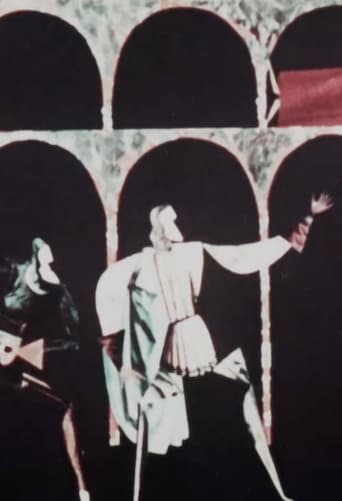 6.5
6.5In half a minute, a person who braked at a traffic light has time to look at the screen of a special roadside demonstration device-a movie comic-a "lightweight" version of the creation of the great classic Shakespeare based on the tragedy "Othello". A parable about how modern civilization devalues world culture.
Othello-67
1967