

Directing
Zhao Dayong
Known for
Directing
Credits
11 titles
Zhao Dayong (Chinese: 赵大勇) is a Chinese film director. After graduating from China’s Lu Xun Art Academy in 1992, where he studied oil painting, Zhao worked for a number of years as a professional artist and advertising director. He was also founding editor of Culture & Morals, a journal for the contemporary arts in China. Zhao’s directorial debut, STREET LIFE, which explored the lives of homeless Chinese living on the backstreets of Shanghai, premiered at Austria’s Viennale in 2006. The film screened the following year at Berlin’s Globale Film Festival, and at the Rome Asiatica Film Mediale, where it won the City of Rome Prize.
Known for
 7.1
Escaping a dubious past, Liang Renwei and his pregnant girlfriend Pomegranate return to his home village. The couple plans to remain until the child is born, then see what opportunities arise. While he takes a job enforcing the One Child Policy quotas, she begins to see faceless ghosts of the past.
Shadow Days
2014
 6.5
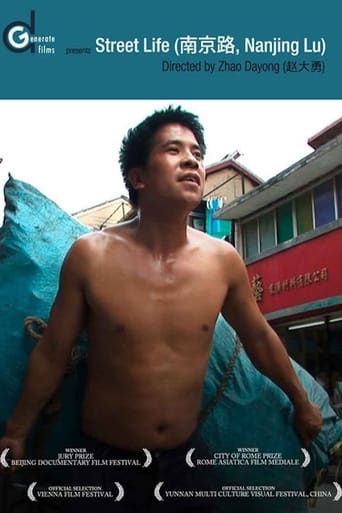
Street Life documents the lives of Chinese migrants in Shanghai, one of the world’s largest and most vibrant cities, now symbolic of China’s economic might. The film centers on Nanjing Road, one of China’s oldest commercial streets and today a popular destination for tourists and moneyed Chinese. The street has also become a Mecca for uprooted and homeless Chinese, who make ends by collecting garbage and recyclables. These characters and their stories are the focus of the film. The central character in Street Life is a migrant known as “Black Skin.” Black Skin faces numerous pressures in the course of the film, including police violence. In the end, these pressures are too much for him to bear and he goes mad. Black Skin’s story intersects with those of fellow bottle collectors, enterprising thieves and even a young boy who has been abandoned.
Street Life
2006
 10.0
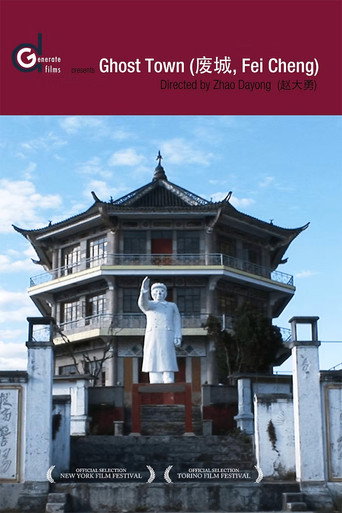
A remote village in southwest China is haunted by traces of its cultural past while its residents piece together their existence. Zhiziluo is a town barely clinging to life. Tucked away in a rugged corner of Yunnan Province, Lisu and Nu minority villagers squat in the abandoned halls of this remote former Community county seat. Divided into three parts, this epic documentary takes an intimate look at its varied cast of characters, bringing audiences face to face with people left behind by China's new economy. A father-son duo of elderly preachers argue over the future of their village church. Two young lovers face a break-up over harsh financial realities. A twelve year-old boy, abandoned by his family, scavenges the hillside to feed himself.
Ghost Town
2010
 NR
It was February 2012, on a crowded Spring Festival train traveling from Guangzhou to Dazhou, Sichuan. A green passenger train was packed with travelers. A railway police officer walked through one overcrowded carriage after another, keeping watch over the passengers. During the patrol, the officer crossed paths with a young woman. Then, the crowded carriages gradually became empty. The train picked up speed. No one knew where it was truly headed.
Green Train
2012
 NR
Chinese cities expand and gradually absorb the countryside. The village of Yangji was yet another victim to the expansion, which benefits local developers linked to the government. Rural residents are forced to vacate their simple dwellings and make room for new houses and entrepreneurs from the cities. The vast majority of local resistance will subside despite meager compensation and low prospects for decent housing, but Azhong is one of a handful of people who choose to fight against the corrupt system.
One Says No
2020
Combining street realism and surprising artifice, the first fiction feature by the director of acclaimed documentaries “Street Life” and “Ghost Town” depicts hustlers, migrants, prisoners and others on the shabby outskirts of Guangzhou, where everyone is on the move but nobody is getting anywhere.
The High Life
2010
Film credits
Behind the camera
7.1Escaping a dubious past, Liang Renwei and his pregnant girlfriend Pomegranate return to his home village. The couple plans to remain until the child is born, then see what opportunities arise. While he takes a job enforcing the One Child Policy quotas, she begins to see faceless ghosts of the past.
Shadow Days
2014
6.5Street Life documents the lives of Chinese migrants in Shanghai, one of the world’s largest and most vibrant cities, now symbolic of China’s economic might. The film centers on Nanjing Road, one of China’s oldest commercial streets and today a popular destination for tourists and moneyed Chinese. The street has also become a Mecca for uprooted and homeless Chinese, who make ends by collecting garbage and recyclables. These characters and their stories are the focus of the film. The central character in Street Life is a migrant known as “Black Skin.” Black Skin faces numerous pressures in the course of the film, including police violence. In the end, these pressures are too much for him to bear and he goes mad. Black Skin’s story intersects with those of fellow bottle collectors, enterprising thieves and even a young boy who has been abandoned.
Street Life
2006
10.0A remote village in southwest China is haunted by traces of its cultural past while its residents piece together their existence. Zhiziluo is a town barely clinging to life. Tucked away in a rugged corner of Yunnan Province, Lisu and Nu minority villagers squat in the abandoned halls of this remote former Community county seat. Divided into three parts, this epic documentary takes an intimate look at its varied cast of characters, bringing audiences face to face with people left behind by China's new economy. A father-son duo of elderly preachers argue over the future of their village church. Two young lovers face a break-up over harsh financial realities. A twelve year-old boy, abandoned by his family, scavenges the hillside to feed himself.
Ghost Town
2010
NRIt was February 2012, on a crowded Spring Festival train traveling from Guangzhou to Dazhou, Sichuan. A green passenger train was packed with travelers. A railway police officer walked through one overcrowded carriage after another, keeping watch over the passengers. During the patrol, the officer crossed paths with a young woman. Then, the crowded carriages gradually became empty. The train picked up speed. No one knew where it was truly headed.
Green Train
2012
NRChinese cities expand and gradually absorb the countryside. The village of Yangji was yet another victim to the expansion, which benefits local developers linked to the government. Rural residents are forced to vacate their simple dwellings and make room for new houses and entrepreneurs from the cities. The vast majority of local resistance will subside despite meager compensation and low prospects for decent housing, but Azhong is one of a handful of people who choose to fight against the corrupt system.
One Says No
2020
Combining street realism and surprising artifice, the first fiction feature by the director of acclaimed documentaries “Street Life” and “Ghost Town” depicts hustlers, migrants, prisoners and others on the shabby outskirts of Guangzhou, where everyone is on the move but nobody is getting anywhere.
The High Life
2010
No synopsis available yet.
Lead to
2007
 NR
Explores the growing African migrant community in Southern China through the turbulent history of a church founded by a Nigerian missionary.
My Father's House
2011