
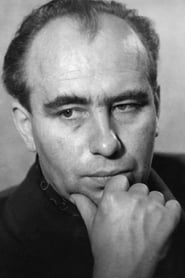
Acting
Otomar Krejča
Born — Died
1921-11-23 — 2009-11-06
Place of birth
Skrýsov by Pelhrimov, Czechoslovakia [now Czech Republic]
Known for
Acting
Credits
57 titles
Known for
No synopsis available yet.
William Shakespeare: Monology
1964
 8.5
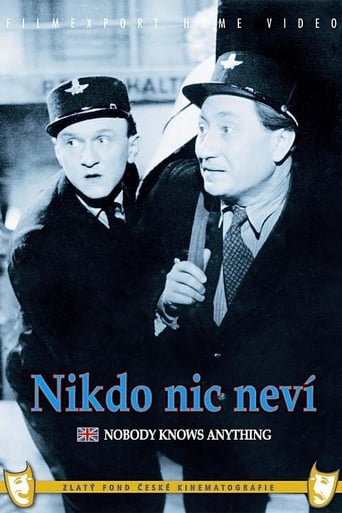
8.5Martin Plechatý and Petr Nový roam occupied Prague with their trams. Times are hard and sometimes survival is not easy - especially when, in an attempt to help a threatened (and charming) neighbor, you get involved with an SS man, hit him on the head and kill him. At least that's how the two friends explained the situation to each other when their opponent collapsed to the ground. What to do with the body now? An endless anabasis begins, in which even a baby stroller comes into play...
Nobody Knows Anything
1947
 6.7
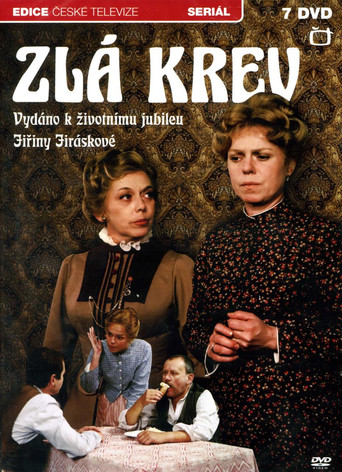
6.7No synopsis available yet.
Zlá krev
1987
No synopsis available yet.
Divadlo Svoboda
2011
 6.5
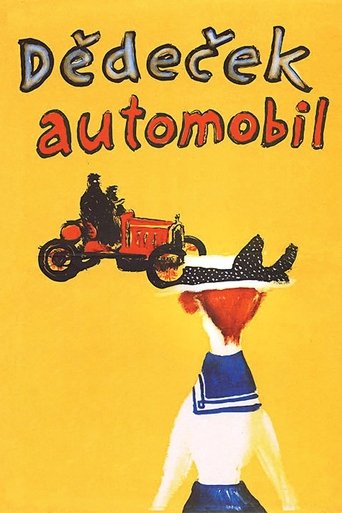
6.5The history of motoring in Bohemia begins when Laurin and Klement founded a factory for the production of motorcycles. In 1904, the first motorcycle races were held in Dourdan, France, in which Czechs also participated. Czech mechanic František and Nanette, daughter of French mechanic Frontenac, met and fell in love there. Czech racer Vondřich finished second due to a breakdown. In 1905, the race was held again, Vondřich insured himself with a suitcase of spare parts and won. Nanette and František, who had been writing to each other all year, met again. After motorcycles, cars began to be produced everywhere, and in 1909 their first race was organized in Gaillon, France. The Czech racer Count Kolovrat won. His mechanic František married his beloved Nanette in the local church.
Vintage Car
1957
No synopsis available yet.
Veselý večer Leonida Lenče
1954
Film credits
1960s · 18 titles
 5.9
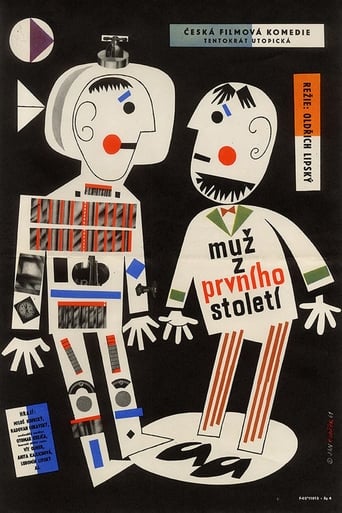
5.9An upholsterer who is preparing a rocket for takeoff accidentally jettisons himself into space and returns to Earth 500 years later with an alien companion who wishes to learn more about the human race.
Man in Outer Space
1962
 8.2
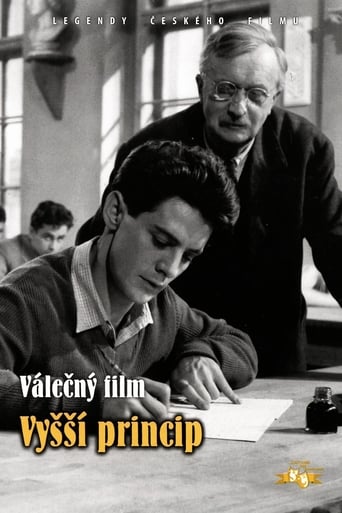
8.2During the Nazi occupation of a Czech city civilians are being rounded up on the slightest of pretexts and shot. One day three high school boys who crack jokes about a recently deceased "hero of the Reich" are pulled out of school by the Gestapo.
Higher Principle
1960
 6.8
6.8Wandering through the forest, a woodcutter finds a golden fern whose seed turns into a beautiful woman - they fall in love. After getting drunk in a village feast, he gets to sign up to the army. The fairy gives him a shirt to wear and asks him to swear he will never abandon it. At the war front, he falls in love with the the colonel's daughter and will have to perform various feats to get her attention.
The Golden Fern
1963
 3.2
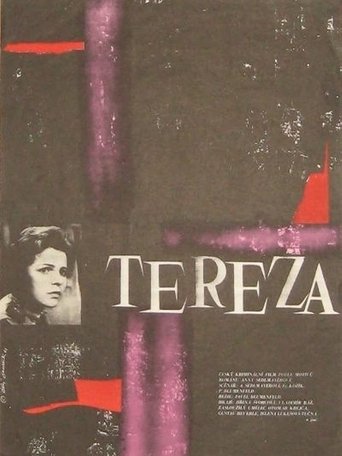
3.2Ing. Bernard announces that his wife has not returned from visiting relatives in Berlin. Lieutenant Tereza Machátová, who together with Captain Landa is investigating the matter, puts the facts into connection with the discovery of the drowned woman's body.
Tereza
1961
An outdated fireclay factory is due to close, but its long-time employees can't imagine stopping what has fed them all their lives and what they do best...
Bez svatozáře
1964
There are fairy tales that appear on TV screens every Christmas and there are fairy tales that have somewhat fallen into oblivion and few people remember them anymore. This is one of the lesser known ones. Its plot certainly needs no further introduction. After all, the fairy tale story of the Swimmer, the charcoal-maker's son, to whom the judges attribute the hand of a royal princess born at the same moment, is one of those which are not forgotten. And the Swimmer's difficult journey in pursuit of an almost impossible task, the three golden hairs of Grandfather Allfather, who is the Sun and dislikes mankind, is as fabulous as the advice he brings to three towns beset by strange woes.
Tři zlaté vlasy děda Vševěda
1963
No synopsis available yet.
Evžen Oněgin
1967
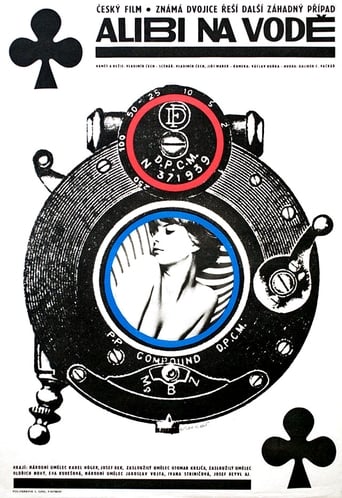 7.0
7.0Miss Nováková reports to Major Tuma (Karel Höger) from the police about the disappearance of her roommate, the model Zuzana. Shortly afterwards, a film director named Konrád (Otomar Krejca) asks Tuma to cooperate on a new cinéma-vérité film describing the story of Zuzana's disappearance.
Alibi on the Lake
1966
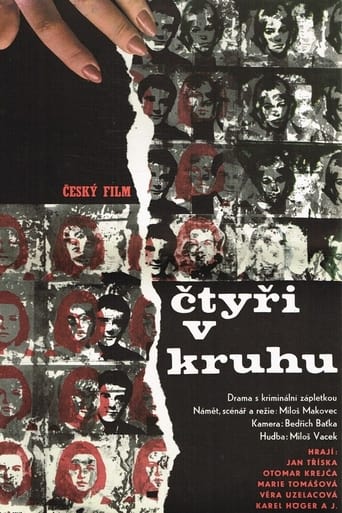 9.0
9.0This drama with a criminal plot is a study of the intricately intertwined relationships of four people whose lives have been interrupted by the violent death of a loved one. The story begins almost classically: when a visitor rings the doorbell of a prominent scientist's villa, there is an explosion. The owner is found poisoned by gas in the demolished room. Everything suggests that he committed suicide. But then a major twist comes and the seemingly obvious suicide becomes a well thought out and carefully prepared crime...
Čtyři v kruhu
1968
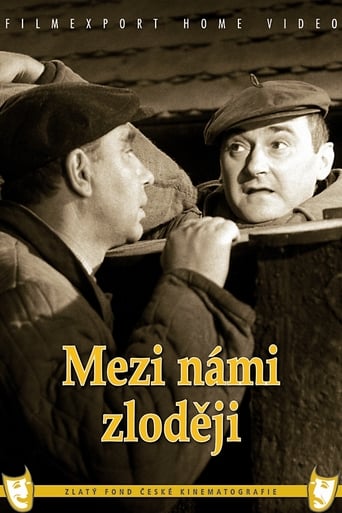 9.0
9.0The story of a trio of released criminals that even prison re-education did not reform. They intend to "bankrupt" a farming cooperative, but soon discover that they must first deal with the local thieves. Not surprisingly, therefore, they end up championing the right cause and make the commons flourish...
Among Us Thieves
1964
No synopsis available yet.
Pas de quatre
1967
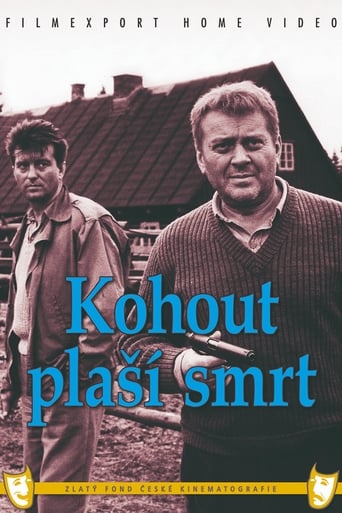 9.0
9.0A group of saboteurs search for a weapons cache hidden by the Nazi army. Beskydy in the summer of 1950: the StB agent Borek infiltrates a group of saboteurs hidden in the Beskydy mountains. They are preparing terrorist actions against the ongoing collectivisation in the village. The group is led by Ervín Kopal and Metud Hanák. Borek is to make contact with them, secure the saboteurs and discover a weapons depot. After many dramatic events, the task is accomplished, but at the highest cost...
Kohout plaší smrt
1962
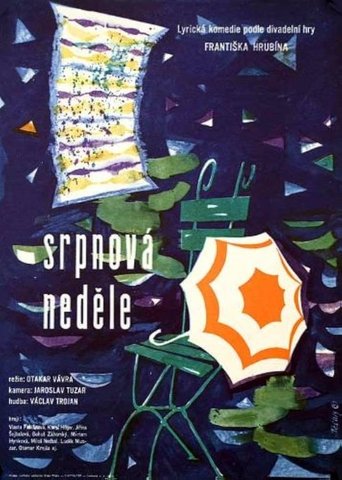 6.0
6.0This lyrical comedy story takes place in two hot days in the small South Bohemian village. On the shore of a small pond, summer guests and local youth meet. As is typical of the works of Hrubín, it is a conflict of youth and age, life and death, represented by the medical student Zuzana and her beloved Jirka.
August Sunday
1961
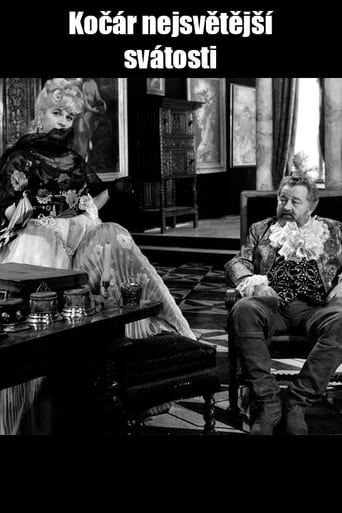 6.7
6.7Jan Werich, as the Spanish viceroy in Lima, Peru, at the end of the eighteenth century, is not only afflicted with gout but also doubts about the fidelity of his mistress, an actress of the local theatre, with whom he intends to settle his scores very firmly...
Kočár nejsvětější svátosti
1963
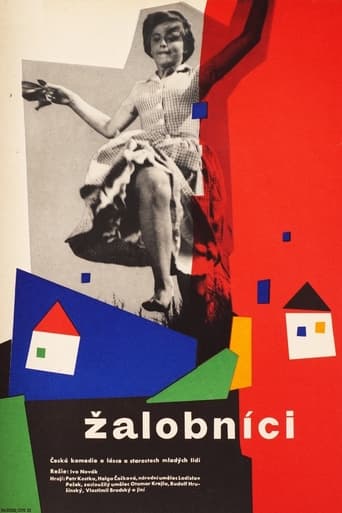 10.0
10.0The young generation is not very at peace with the morality of their parents. In a story set in a Moravian village, the otherwise contented cooperators indulge in stealing from the common property without seeing anything wrong with such actions. After being reprimanded by their own children, they first get angry but then become ashamed. The result is a late agitational comedy that no longer deals with the peasants' entry into the agricultural cooperative, but with the mores prevailing there. The ideologically mature youth act as a guarantee of a happy future.
Žalobníci
1961
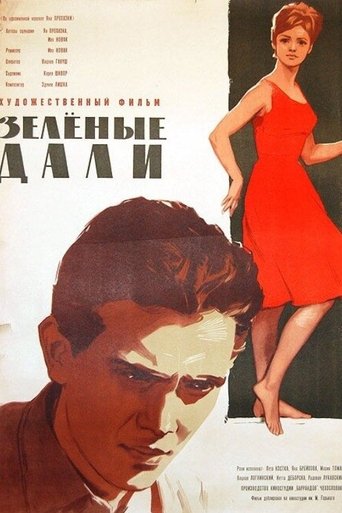 6.0
6.0A young agricultural expert fails as the manager of a cattle farm on a state farm in the borderlands... The attempt at a realistic view of the problems of nationalised agriculture did not exceed the average of the time.
Zelené obzory
1962
 4.0
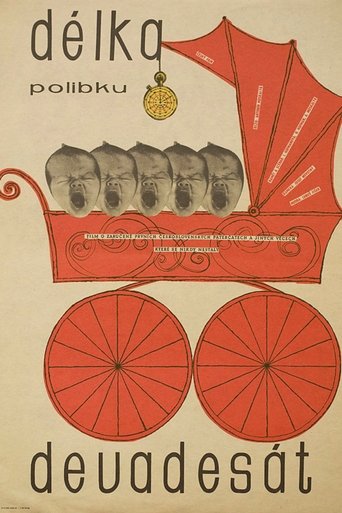
4.0Young couple Eva and Jarda Tům face housing shortages just as Eva miraculously gives birth to quintuplets, drawing intense media and state attention. Authorities install them in a high-tech villa monitored by a commission led by Drahoslav Svitáček. As intrusive experiments, constant scrutiny, and malfunctioning gadgets strain their family life, a planned railway project momentarily frees them. Eva conceives again, but when only one baby arrives amid fading public interest, the state and the spotlight move on.
Délka polibku devadesát
1965
 6.0
6.0The unfortunate 1930s also befell the student Standa Půlpán. For existential reasons, he had to abandon his studies and entered the mines. However, he only slowly and with difficulty became close to the older miners, rough men who were closed in on themselves. Only his brave stand in rescuing people who were trapped in a mining accident will win him the solidarity of the entire mining collective. Even Karel Čapek's draft once lent itself to promoting an exacerbated class interpretation of social relations.
První parta
1960
1950s · 24 titles
6.5The history of motoring in Bohemia begins when Laurin and Klement founded a factory for the production of motorcycles. In 1904, the first motorcycle races were held in Dourdan, France, in which Czechs also participated. Czech mechanic František and Nanette, daughter of French mechanic Frontenac, met and fell in love there. Czech racer Vondřich finished second due to a breakdown. In 1905, the race was held again, Vondřich insured himself with a suitcase of spare parts and won. Nanette and František, who had been writing to each other all year, met again. After motorcycles, cars began to be produced everywhere, and in 1909 their first race was organized in Gaillon, France. The Czech racer Count Kolovrat won. His mechanic František married his beloved Nanette in the local church.
Vintage Car
1957
No synopsis available yet.
Veselý večer Leonida Lenče
1954
No synopsis available yet.
Naši furianti
1955
No synopsis available yet.
Maršovská kronika
1951
 6.3
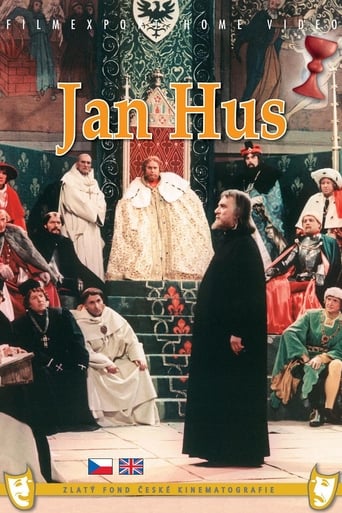
6.3The first part of the "Hussite Revolutionary Trilogy", completed with Jan Žižka (1955) and Proti všem (Against All Odds, 1957). The film captures the period from May 1412 to the summer of 1415, a turbulent time in the Czech Kingdom, during which there were protests in Prague against the sale of "omnipotent indulgences" whose sale throughout the kingdom was announced by Pope John XXIII. The ideological leader of this movement is the preacher Master Jan Hus, whose words, calling for the elimination of church abuses, are listened to in the Bethlehem Chapel by thousands of ordinary Praguers, Czech lords and Queen Sophie, wife of the Czech King Wenceslas IV.
Jan Hus
1955
 7.5
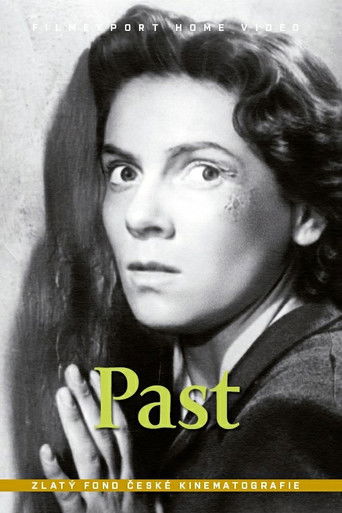
7.5The drama from the time of the Nazi occupation begins at the train station, where a transport with German soldiers is passing. The train is stopped due to improvised sabotage by one of the railway workers. Resistance liaison Růžena Kubínová is arrested in a random raid. The cynical councilor Dönnert discovers her false documents and has her brutally interrogated. He suspects that she could contribute to exposing the entire group. He puts a informant, Herta, in her cell.
The Trap
1950
No synopsis available yet.
Pohádka o stromech a větru
1951
 6.5
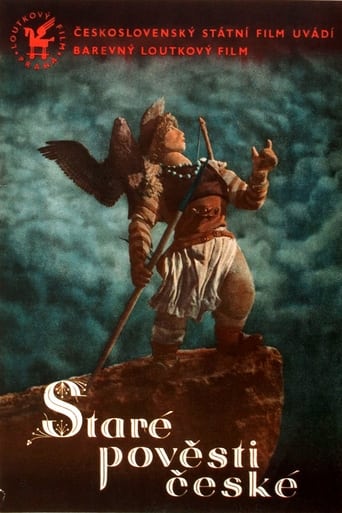
6.5A monumental piece of art bringing the heroes of the ancient Czech myths back to life. The picture consists of seven parts: Cech the Forefather, Bivoj, Libuse, Premysl, Girls War, Horymir, Lucka War.
Old Czech Legends
1953
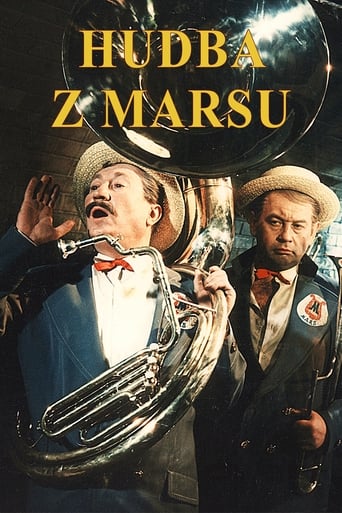 6.1
6.1The employees of the furniture company MARS welcome a rare visitor with hired music. Their boast that they would put together an orchestra is taken seriously, so they receive a small gift - musical instruments for thirty musicians.
Hudba z Marsu
1955
A socialist drama from the time of the February coup. The owner of the brickyard will use several workers before February in order to subvert worker solidarity and continue to do his black business. However, the vigilance of a young, aware worker prevents him from doing so.
Dva ohně
1950
The story of a gypsy named Fabian, who came to work in Kunčice, and his son. Their lives change fundamentally on the great construction site of socialism. They both learn to read and write; Fabian becomes a skilled welder, and little Fabian is accepted into the pioneer organization. However, their transformation is not easy, it is not without many encounters, just like the transformation of Fabian's co-workers, many of whom have not yet overcome their racist prejudices.
Můj přítel Fabián
1955
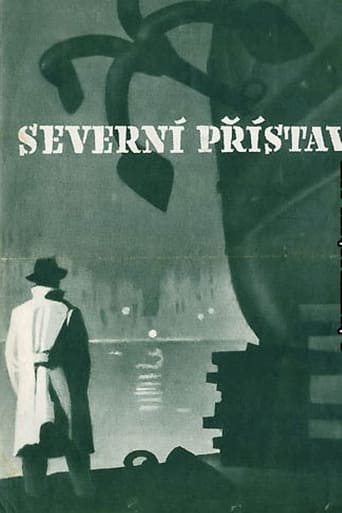 8.0
8.0A spy film about how saboteurs obtain important data about the activities of a key company, while also trying to thwart the plan and undermine work morale. But vigilant security agencies intervene in time and stop their heinous raids.
Severní přístav
1954
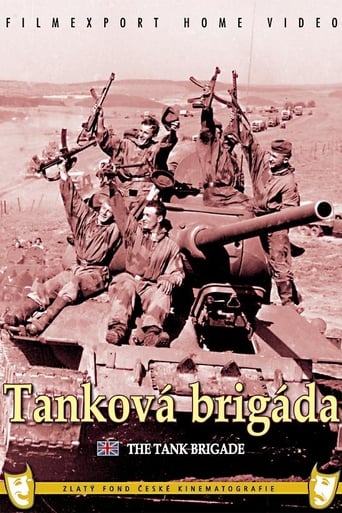 6.2
6.2The fate of a tank crew on the most difficult part of the First Czechoslovak Independent Brigade's combat path during World War II. We also follow the fate of its commander, Sergeant Juraj Klimka. During the bloody battles for the Dukel Pass, he falls in love and it turns out that behind the mask of a sovereign, he is actually a shy and sensitive person.
Tank Brigade
1955
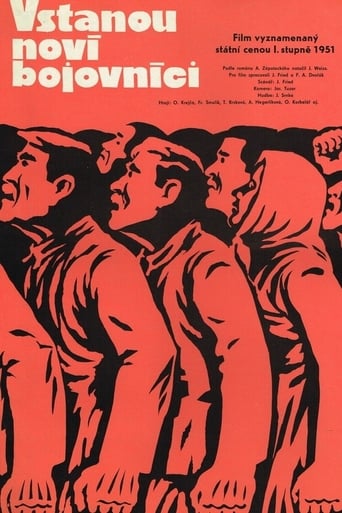 7.0
7.0The leader of the emerging organized labor movement in the 1880s, Ladislav Zápotocký-Budečský, is exiled to his native village, where he works as a tailor and continues to raise social awareness among members of the working class.
Vstanou noví bojovníci
1951
 7.0
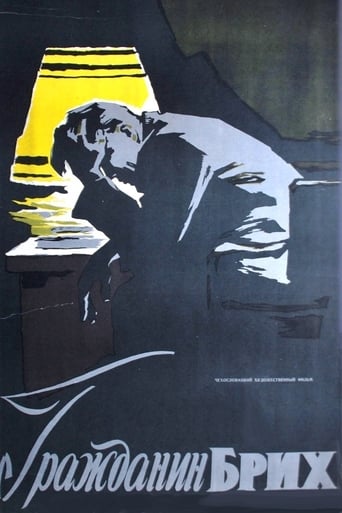
7.0František Brych, a principled lawyer, refuses to back the new Communist regime at his factory and grows increasingly alienated, even as his former love Irena, unhappily married to factory owner Ondřej Ráž, seeks his understanding. When he helps plan an escape over the Šumava border, the group’s panic and violence lead to murder, prompting Brych to abandon the scheme and return home with Irena.
Občan Brych
1959
 6.5
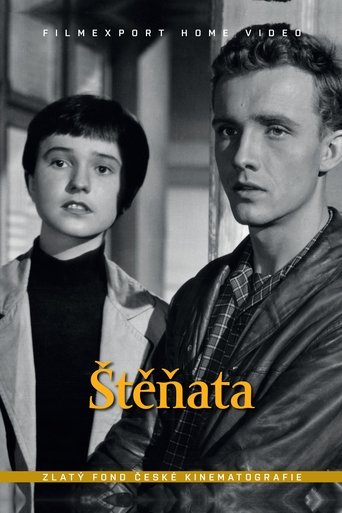
6.5Explores young adults' fears of being conscripted by the communist government into working outside of Prague, a relative oasis of creativity and freedom of thought. From an early script by Milos Forman.
Puppies
1958
An ideologically-oriented film set in a prestigious medical sanatorium - a young doctor sympathizes with the poor people of the area, helping workers and their sick children.
Případ dr. Kováře
1950
 8.0
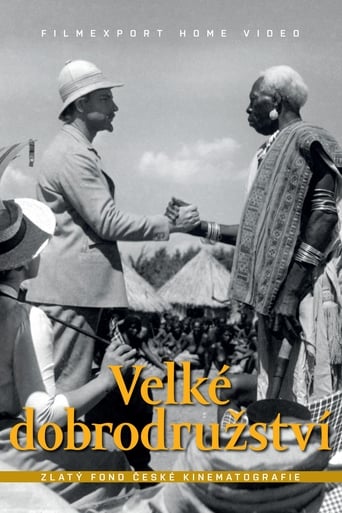
8.0A biographical film about the traveler Emil Holub, conceived as an illustrative story of an exceptional man, who, however, encounters the disinterest and rejection of the domestic Czech bourgeoisie. To this is added an international perspective - Holub encounters British expansionism in Africa and indignantly rejects colonial methods, trying to help black people.
Velké dobrodružství
1952
 6.5
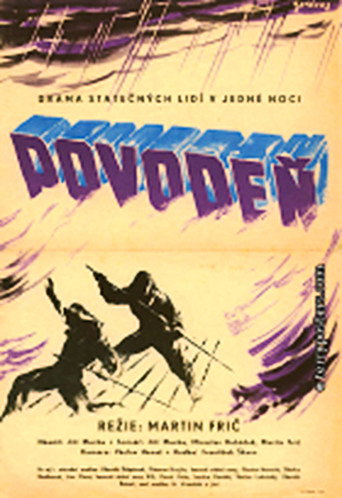
6.5The construction of the new dam deprived the ferryman Ryba of his trade. The new dam replaced the ferry. However, Ryba's ancestors were ferrymen and the old man would have liked his two sons to take up the same profession. But Joseph is an indecisive weakling and Karel found work on the dam. That's why old Ryba drove him out of the house. The persistent rain brings Ryba miserable joy. The man knows well that a sudden flood can endanger the unfinished dam. In his fanatical hatred, he forgets that the water from a broken dam would sweep away his house and his daughter-in-law and sick grandchild in the first place...
Povodeň
1958
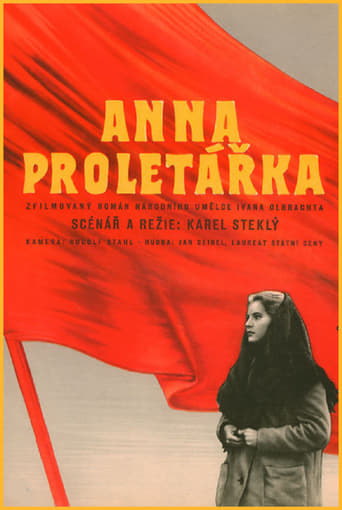 5.0
5.0The movie describes proletarian life in the Czech Lands after World War I.
Anna the Proletarian
1953
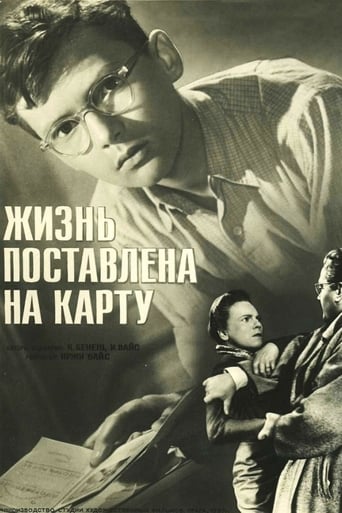 6.2
6.2The year is 1941 and the German Nazis rule Bohemia with a free hand. Engineer Otakar Racek is an extremely cautious man who tries to avoid problems at all costs. While some of his colleagues are being arrested by the Gestapo, he receives an offer to become the director of a new department. When he refuses to help the wife of an arrested resistance fighter, his wife Vlasta is shaken. However, she loves him, to the point of even resigning herself to the hatred of Otakar's wealthy mother. One day, Vlasta lets her old acquaintance Ondřej Rýdl, who is on the run from the Gestapo, stay at her house for a few days. The wife passes him off to her husband as a distant relative. However, Otakar succumbs to jealousy and, on his mother's advice, hires a private detective to follow Vlasta. However, the detective is also a Gestapo informant and receives a hefty reward for every arrested resistance fighter...
A Life at Stake
1956
No synopsis available yet.
Olověný chléb
1954
No synopsis available yet.
Days of Joy
1951
No synopsis available yet.
Země milovaná – Polabí
1952
1940s · 7 titles
8.5Martin Plechatý and Petr Nový roam occupied Prague with their trams. Times are hard and sometimes survival is not easy - especially when, in an attempt to help a threatened (and charming) neighbor, you get involved with an SS man, hit him on the head and kill him. At least that's how the two friends explained the situation to each other when their opponent collapsed to the ground. What to do with the body now? An endless anabasis begins, in which even a baby stroller comes into play...
Nobody Knows Anything
1947
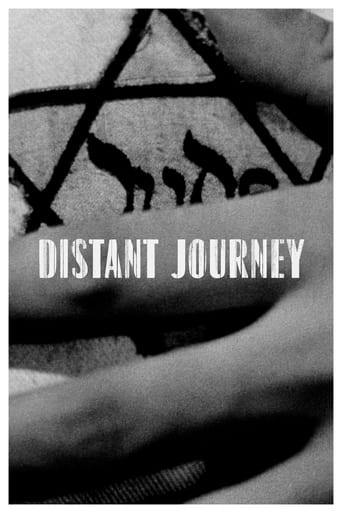 6.9
6.9Prague, during World War II. Hana Kaufmann, a Jewish ophthalmologist, marries Dr. Antonín Bureš, a Christian man. When her family is sent to the Theresienstadt concentration camp, their romance turns into a struggle for survival.
Distant Journey
1949
Cold War Spy FIlm
Pan Habětín odchází
1949
 4.6
4.6Inspector Cadek from the 13th police station keeps an eye on the released safe-cracker nicknamed The Cat. He rightly suspects that Cat will go and pick up his last loot which the police didn't manage to find and that he will want revenge on Karta who helped put him behind bars. At the hospital, Cat's ex-lover Fróny hopelessly falls for doctor Chrudimský and decides to start a new life. She still refuses to help the inspector in his search for The Cat and Karta.
13th district
1946
Building a bridge is no simple matter. The city council has to decide between two competing proposals, one of which is submitted by villainous scoundrels and scoundrels who would like to enrich themselves everywhere. Although the film was made before the communist coup, it already anticipates the political diction of the stories that the approaching Stalinist period will produce.
Wild Beasts
1948
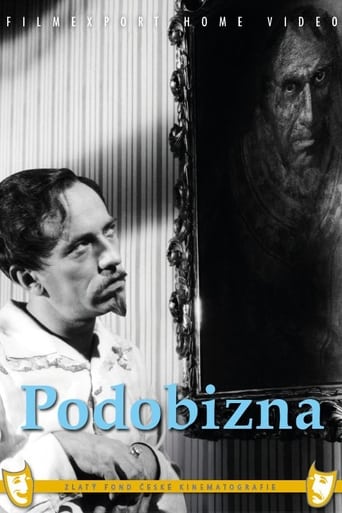 7.7
7.7People are afraid of the usurer Chazaj and are convinced that he is the bearer of evil. One day Chazaj pays a visit to the poor artist Simon Jordán and asks him to paint his portrait. Simon agrees but as he progresses with the work his mind conjures up terrible thoughts and in the end he commits suicide. The portrait looks lifelike and Chazaj is content with the results. After Chazaj's death the picture changes hands and brings misfortune to all who own it. The last victim is the young painter Roman who buys Chazaj's portrait in a bazaar. He finds a treasure in the frame and begins to live well off it. The comfortable life suits him so well that he rejects his original artistic aims and becomes a painter of fashionable kitsch.
The Portrait
1948
 NR
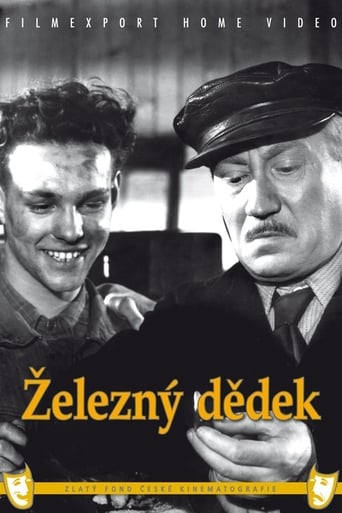
NRAt the end of the war, the old train driver Matys saves his beloved locomotive Líza from depth charges. However, the locomotive is damaged and he is injured. At a critical moment, he stands in for his son-in-law, also a train driver, and thus prevents a train accident. Despite this, he is sent into retirement. To show what the "iron old man" can do, he reconstructs Líza with a group of apprentices...
Old Ironside
1948
Series credits
Behind the camera
6.8Wandering through the forest, a woodcutter finds a golden fern whose seed turns into a beautiful woman - they fall in love. After getting drunk in a village feast, he gets to sign up to the army. The fairy gives him a shirt to wear and asks him to swear he will never abandon it. At the war front, he falls in love with the the colonel's daughter and will have to perform various feats to get her attention.
The Golden Fern
1963
6.0This lyrical comedy story takes place in two hot days in the small South Bohemian village. On the shore of a small pond, summer guests and local youth meet. As is typical of the works of Hrubín, it is a conflict of youth and age, life and death, represented by the medical student Zuzana and her beloved Jirka.
August Sunday
1961
 7.7
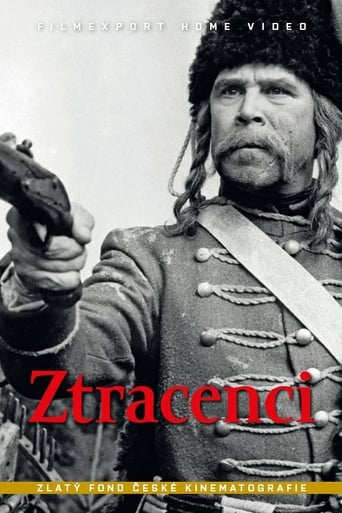
7.7In the middle of the eighteenth century, at the time of the Prusso-Austrian War, a cuirassier, a hussar and an infantryman meet by chance and hide together in a secluded place. The war has left different marks on each of them, but they all long for normal human happiness. Although they initially have different attitudes towards military service, they are changed by their stay in seclusion and the atmosphere of life in a peasant cottage and refuse to return to the Austrian army. But all three Theresian "misfits" take up arms again, which they no longer want to touch, when the solitude is overrun by the Prussians. They manage to cover the escape of the family and their child, but pay with their lives.
Lost Children
1957