
Acting
Vladimír Řepa
Born — Died
1900-11-08 — 1957-08-19
Place of birth
Prague, Bohemia, Austria-Hungary [now Czech Republic]
Known for
Acting
Credits
60 titles
Known for
 7.5
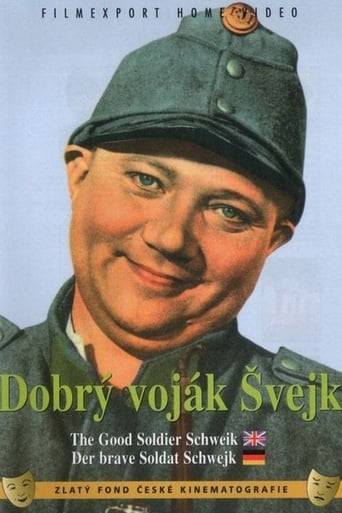
7.5Good-natured and garrulous, Schweik becomes the Austrian army's most loyal Czech soldier when he is called up on the outbreak of World War I -- although his bumbling attempts to get to the front serve only to prevent him from reaching it. Playing cards and getting drunk, he uses all his cunning and genial subterfuge to deal with the police, clergy, and officers who chivy him toward battle.
The Good Soldier Švejk
1957
 7.0
7.0The Emperor's mismanagement of his country is provoking some in his court to plot to overthrow him. He feels successful, at least, when he discovers the legendary Golem, which he believes can protect him and even cure his imaginary illnesses but, when he disappears while on a bender, his kindly baker, who looks just like him, is mistaken for him, and begins to put things in order. However, the conspirators, not to be outdone, determine to bring the Golem back to life to do their bidding.
The Emperor and the Golem
1951
 6.9
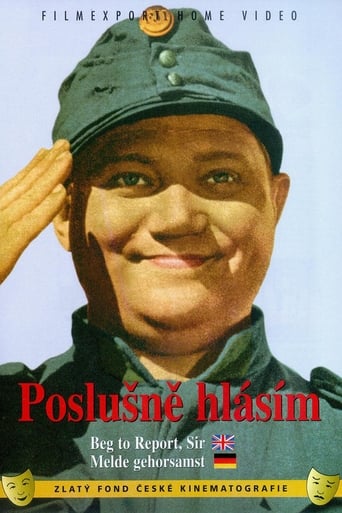
6.9A comedy based on the novel of Jaroslav Hašek's The Good Soldier Svejk happens during the World War I. I Dutifully Report: In the introduction to the second part of the film adaptation of Hašek's novel The Good Soldier Švějk presents his main character Josef Švejk. With the distinctive traditional Czech cartoon character of a soldier Svejk, this time you meet on the way to the front and eventually right in the firing line. You can look at his famous train events, and also probably the most famous episode of the novel, Švejk's Budějovice anabasis. Don't miss the scene with the secretly bought cognac, the episode with Svejk as a fake Russian prisoner of war, including the court scene, and the scene in which lieutenant Dub is caught in a brothel. Despite the criticism, Steklý's adaptation is undoubtedly the most famous and memorable at present.
I Dutifully Report
1958
 6.0
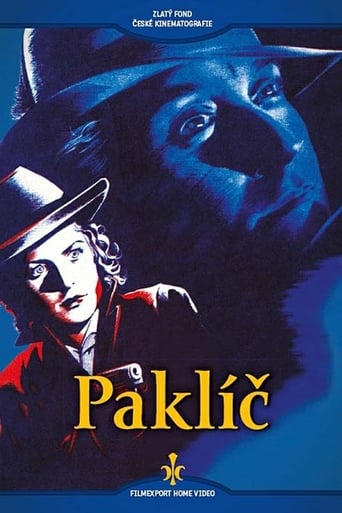
6.0Successful writer Gabriel Anděl still loves his wife Lola very much, but he can't stand the way she is always getting involved in his work, so he decides to divorce her. Just as he is about to move into his country villa, a police inspector appears on the scene with a warning that some crooks are planning to sell the house in question to a rich Czech-American. Anděl and the inspector immediately drive there and indeed find a gang of criminals disguised as servants. However, these are far from the only crooks involved in this complicated case. Before the crazy night is over, Gabriel and Lola will have many more surprises and complicated situations...
Paklíc
1944
 8.0
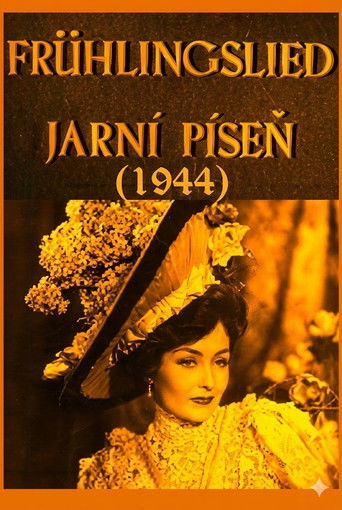
8.0No synopsis available yet.
Jarní píseň
1944
 5.0
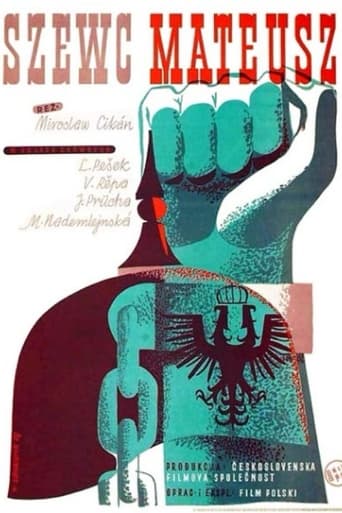
5.0The revolutionary year of 1848 brought great hopes among the hitherto silent classes, awakening social and national hopes. The response also penetrated the remote countryside, even as far as the Podkrkonoše Mountains. The young shoemaker there began to take an interest in social and political events, and he also experienced disappointment in later developments.
O ševci Matoušovi
1948
Film credits
1950s · 21 titles
7.5Good-natured and garrulous, Schweik becomes the Austrian army's most loyal Czech soldier when he is called up on the outbreak of World War I -- although his bumbling attempts to get to the front serve only to prevent him from reaching it. Playing cards and getting drunk, he uses all his cunning and genial subterfuge to deal with the police, clergy, and officers who chivy him toward battle.
The Good Soldier Švejk
1957
7.0The Emperor's mismanagement of his country is provoking some in his court to plot to overthrow him. He feels successful, at least, when he discovers the legendary Golem, which he believes can protect him and even cure his imaginary illnesses but, when he disappears while on a bender, his kindly baker, who looks just like him, is mistaken for him, and begins to put things in order. However, the conspirators, not to be outdone, determine to bring the Golem back to life to do their bidding.
The Emperor and the Golem
1951
6.9A comedy based on the novel of Jaroslav Hašek's The Good Soldier Svejk happens during the World War I. I Dutifully Report: In the introduction to the second part of the film adaptation of Hašek's novel The Good Soldier Švějk presents his main character Josef Švejk. With the distinctive traditional Czech cartoon character of a soldier Svejk, this time you meet on the way to the front and eventually right in the firing line. You can look at his famous train events, and also probably the most famous episode of the novel, Švejk's Budějovice anabasis. Don't miss the scene with the secretly bought cognac, the episode with Svejk as a fake Russian prisoner of war, including the court scene, and the scene in which lieutenant Dub is caught in a brothel. Despite the criticism, Steklý's adaptation is undoubtedly the most famous and memorable at present.
I Dutifully Report
1958
No synopsis available yet.
Naši furianti
1955
 6.3
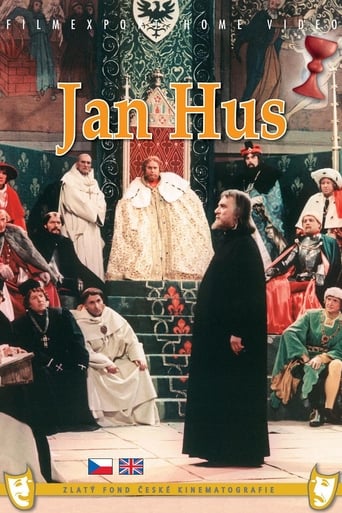
6.3The first part of the "Hussite Revolutionary Trilogy", completed with Jan Žižka (1955) and Proti všem (Against All Odds, 1957). The film captures the period from May 1412 to the summer of 1415, a turbulent time in the Czech Kingdom, during which there were protests in Prague against the sale of "omnipotent indulgences" whose sale throughout the kingdom was announced by Pope John XXIII. The ideological leader of this movement is the preacher Master Jan Hus, whose words, calling for the elimination of church abuses, are listened to in the Bethlehem Chapel by thousands of ordinary Praguers, Czech lords and Queen Sophie, wife of the Czech King Wenceslas IV.
Jan Hus
1955
 5.9
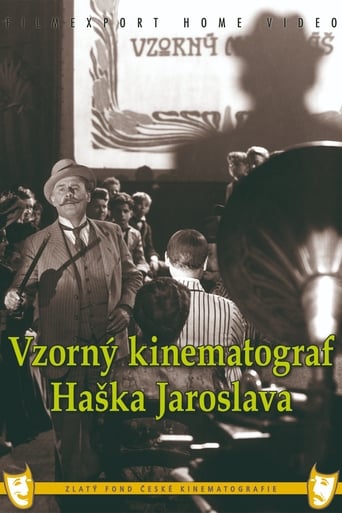
5.9Jaroslav Hašek screens four film stories in the fairground shed around 1900. After period advertising slides and a "newspaper", we see "the first part of a sensational, exemplary, parfuss, salon program - a film from the life of school-age children, shot under very difficult circumstances". The plot of this film takes place partly in a school classroom and partly in a gymnasium toilet, where the primate Chocholka took refuge from a Latin composition. "Exemplary Family Happiness" is the second film that takes the viewer into the family of the municipal official Honzátek, in which many stormy scenes occurred when the hamster, provided by Honzátek Jr., moved into the sofa - a wedding gift from Sister Ema. Equally surprising are two other stories, one of which tells about the "father of the poor", the owner of a company with unrecoverable cash flow and a famous patron, and the other about the fateful consequences of a joint trip between the old bachelor Mr. Hanzlíček and his neighbors.
Jaroslav Hasek's Exemplary Cinematograph
1956
 6.0
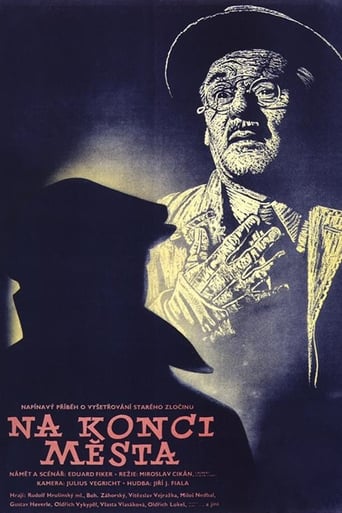
6.0Captain Jirák of the SNB is searching for the perpetrator of the murder of the former owner of an apartment building on the outskirts of town, which took place more than twenty years ago.
Na konci města
1955
 6.7
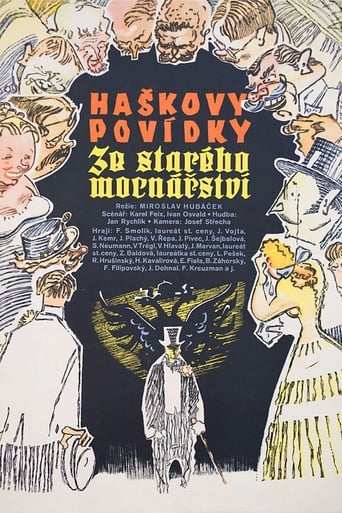
6.7Four short stories by the greatest Czech satirist Jaroslav Hašek. "Soup for Poor Children" tells the story of how Prince Robert himself cooked soup for poor children, "Meeting of the Municipal Council in Mejdlovary" is the history of filling the position of municipal policeman, "Trampotes of Mr. Tenkrát" shows how strange events lead to marriage and promotion, "Revolt of the Convict Šejba" depicts the victorious fight of the convict Šejba for a dumpling for ministering at mass.
Hasek’s Tales from the Old Monarchy
1952
 9.0
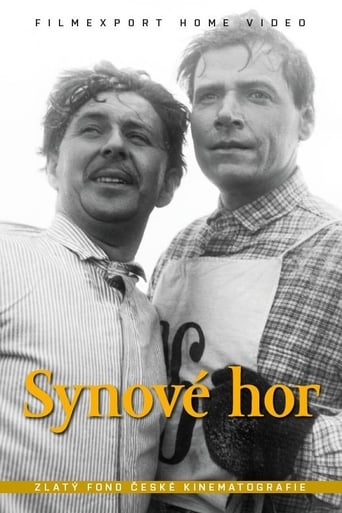
9.0The story of a friendship for life and death captures a real event that took place in the snowy Krkonoše Mountains in 1913. The actors of the drama were Bohumil Hanč, one of our first ski racers, and his friend Václav Vrbata. The film's plot takes place between 1912 and 1913 and is framed by two international 50 km races. After winning in 1912, Bohumil Hanč wants to stop racing at the behest of his wife Slávka. In 1913, strong foreign competitors enter the race, so Bohumil succumbs to the pleas of his friends and decides to race for the last time. However, the weather changes during the race. Strong winds and snow begin to blow, severe frost sets in, and for the racers, it means a fight for their lives.
Sons of the Mountains
1956
 6.5
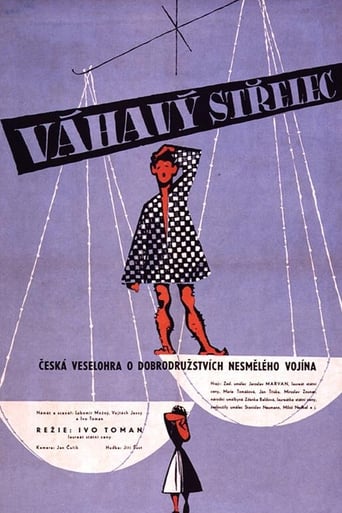
6.5The hesitant shooter becomes a timid young man who only the war will make a real man.
Váhavý střelec
1957
 7.6
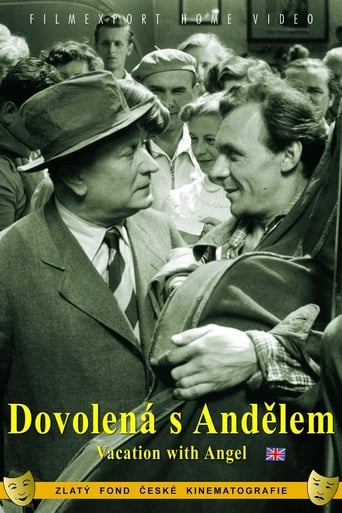
7.6Strict and always dissatisfied grumbler Mr. Angel gets a voucher for summer recreation. He rejects it at first but he eventually decides to use it and spend 14 days in unionist hut Jezerka together with other merited co-workers.
Holiday with Angel
1953
A hardworking employee at a printing plant takes on all sorts of roles until he nearly collapses under their weight. He learns that those who try to do everything end up doing nothing.
Nechte to na mně
1955
 6.1
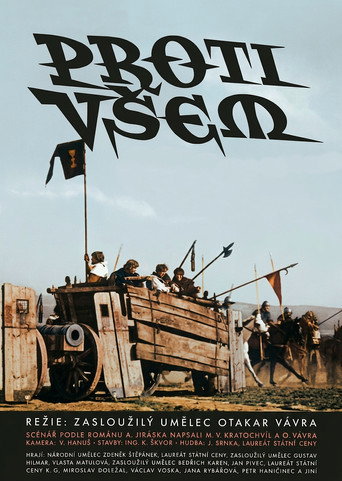
6.1After the battle of Sudoměř the Hussite teaching spreads through the whole country and people start leaving their homes to help build the fortification of Tábor. Prague citizens request help against the army of Zikmund. The Hussite army with Jan Žižka in the lead make their way towards Prague. They fortify themselves on the mountain Vítkov and engage in a bloody battle with Zikmund’s huge army.
Against All
1957
 5.0
5.0The year is 1918. Toník returns home from the front. In Kladno, where he arrives, things are seething with discontent. The Social Democrats are in government, but nothing has changed. Socialization has not been implemented, there is hunger and food is still being skimped on. The first news about a socialist state arrives from Russia. On May 1st, the workers' Kladno manifests its loyalty to the ideals of the Great October Socialist Revolution. In December 1920, a general strike is declared in Kladno as well. The workers arm themselves, workers' councils take over the administration of the city and are also established in the surrounding villages. An armed uprising is being prepared. However, the right-wing leadership of the Social Democratic Party attacks the workers in the back. The army is sent to Kladno...
A red glow over Kladno
1956
 6.3
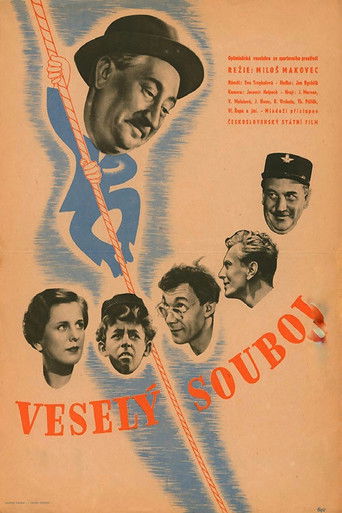
6.3A young company doctor will awaken interest in active and regular sports activities among employees of repair shops of Prague transport companies. Through her personal example, she will lead them to fulfill the conditions of the Tyrš badge of fitness.
Veselý souboj
1951
 6.3
6.3In the past, most of the wood from the mountain forests was transported to the sawmills by river. The rafters were gradually replaced by trucks and railways, but they still remember the days of their glory and the romance of water travel. Two experienced old swimmers, Váň and Šindelář, managed to push for a return to the old way, at least for one trip. They got a group of like-minded enthusiasts and rafts made of logs can set off down the river...
Plavecký mariáš
1953
 8.0
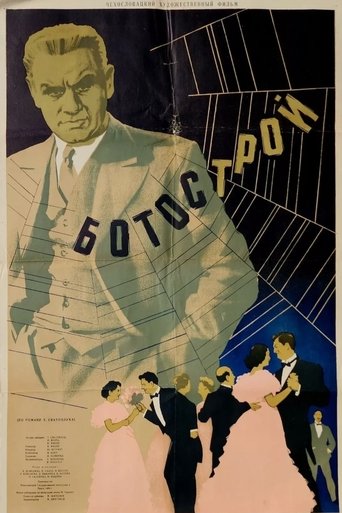
8.0The happenings in a shoe factory serve as a not very thinly veiled examination of the pros and cons of both socialism and democracy.
Shoesmachine
1954
On his first day in a new place, waiter Josef Kučera stands up for his old servant Bartoš and bellhop Svát. His actions earn him the distrust of the café owner Stýbl, the admiration of the maid Jindřiška, and the hatred of her suitor, the waiter Vacek. One evening, Kučera overhears a strange conversation between two guests and confides in the editor of Rudý právo Rokos. When a scandal breaks out about the bank robbery of the minister's son-in-law Zakhar, Rokos deduces from the conversation that it was a fake robbery...
Kavárna na hlavní třídě
1954
In a South Bohemian village in 1951, the local rich organize acts of sabotage and try to stop the establishment of an agricultural cooperative with threatening letters and arson. A kulak's son even secretly returns from the West to terrorize the village with his brother. However, the ordinary villagers stand up to them.
Přicházejí z tmy
1954
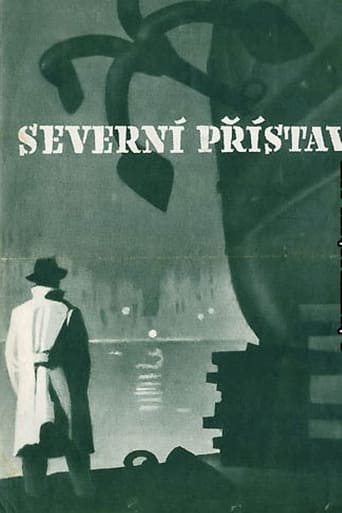 8.0
8.0A spy film about how saboteurs obtain important data about the activities of a key company, while also trying to thwart the plan and undermine work morale. But vigilant security agencies intervene in time and stop their heinous raids.
Severní přístav
1954
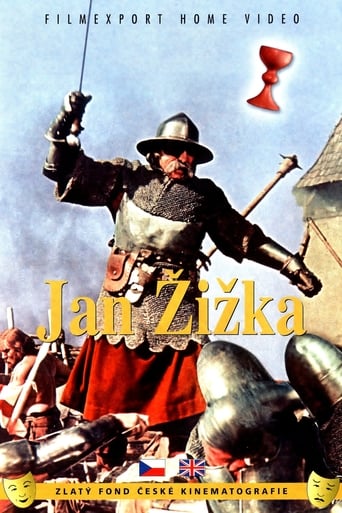 7.3
7.3The second part of the revolutionary Hussite trilogy takes place in the years 1419-1420.
Jan Žižka
1956
1940s · 30 titles
6.0Successful writer Gabriel Anděl still loves his wife Lola very much, but he can't stand the way she is always getting involved in his work, so he decides to divorce her. Just as he is about to move into his country villa, a police inspector appears on the scene with a warning that some crooks are planning to sell the house in question to a rich Czech-American. Anděl and the inspector immediately drive there and indeed find a gang of criminals disguised as servants. However, these are far from the only crooks involved in this complicated case. Before the crazy night is over, Gabriel and Lola will have many more surprises and complicated situations...
Paklíc
1944
8.0No synopsis available yet.
Jarní píseň
1944
5.0The revolutionary year of 1848 brought great hopes among the hitherto silent classes, awakening social and national hopes. The response also penetrated the remote countryside, even as far as the Podkrkonoše Mountains. The young shoemaker there began to take an interest in social and political events, and he also experienced disappointment in later developments.
O ševci Matoušovi
1948
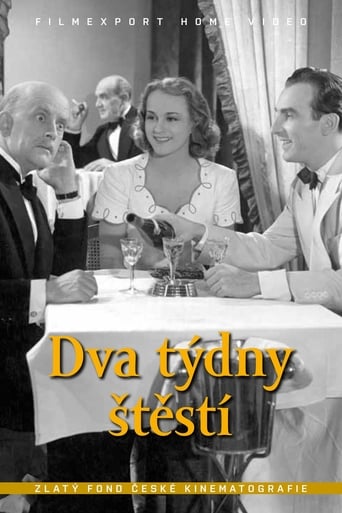 7.0
7.0Young civil servant Marta Urbanová wins a two-week stay at a luxury hotel. While looking for a typing room, she accidentally finds herself in the suite of the Minister of Finance, who mistakes her for a typist. Marta complies with the request of the Minister's secretary Diviš and stays to take dictation...
Dva týdny štěstí
1940
No synopsis available yet.
Žíznivé mládí
1943
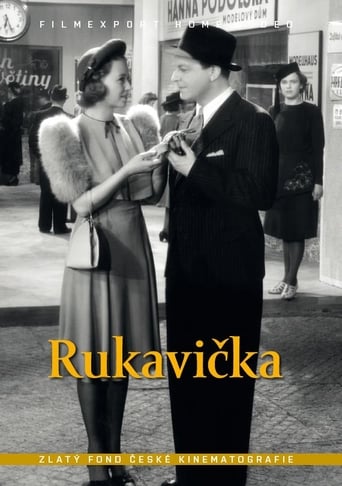 7.5
7.5A lost lady's glove that connects several human destinies. The focus here is not on the lost part of the wardrobe, but on piano virtuoso Arne Brant, a man armed with a charming smile and surrounded by women, two of whom have particularly influenced his life. The first is the daughter of a famous can-can star, dancer Pavlína Doré-Zejdová, the second is Mařenka Berková, the main character of the film and a kind of Kristián in skirts. An orderly and well-bred daughter from an honorable family who lives her second life as a lady of high society. The lost glove complicates the situation for all of them considerably, but in the end she finds her rightful place, just like the heroes of the film...
Rukavička
1941
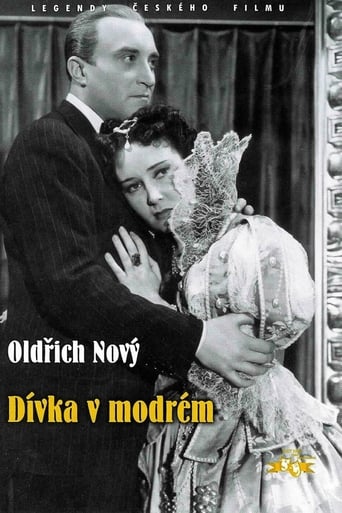 6.5
6.5A painting of a girl from another time comes to life for it's buyer in this costume comedy.
The Girl in Blue
1940
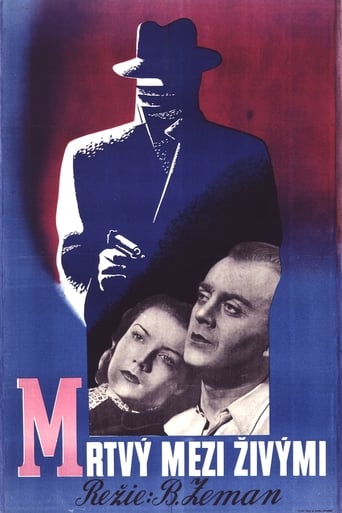 7.0
7.0Human bravery can take many forms, just as ideas about it can. Small-town public opinion begins to despise a postal clerk because he gave cash to robbers who didn't hesitate to shoot. The result is a successful study of a man whose previous certainties begin to crumble due to a fateful event.
A Dead Man among the Living
1947
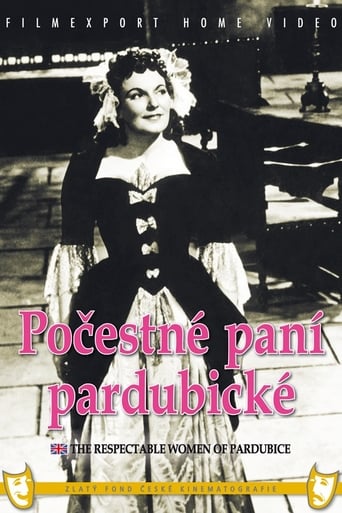 8.0
8.0The bickering of envious mistresses, the criminal intentions of fraudsters and the love of two young people are at the center of events, in the middle of which unfolds the fate of the city executioner Jiří, who longs to break free from his destiny and become a proper burgher. He is not heard, but he manages to expose the iniquities and their culprits, reunites a hard-pressed couple in love and his undeniable merits for the city and eventually bring him luck.
The Respectable Ladies of Pardubice
1944
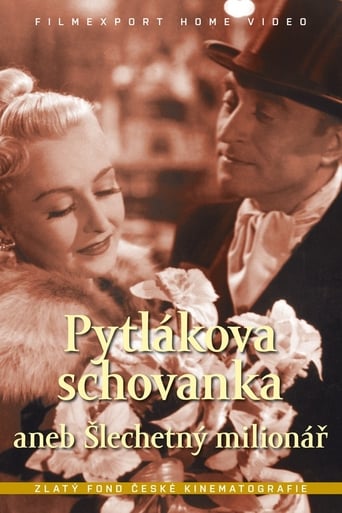 6.6
6.6Elén, a girl living with her mother and stepfather in a secluded forest, has a great singing talent. On her twenty-first birthday, she runs away from home and on the train, millionaire René falls in love with her. Their paths soon diverge, only to be reunited soon after. Violinist Pavel Sedloň falls in love with Elén, and although Elén does not love him, she is determined to marry him. At that time, René dies, exhausted from working on the operetta Srdce v delirium. However, he is saved at the last moment and everything comes to a happy ending when Oldřich Nový explains how the authors actually meant it all.
The Poacher's Foster Daughter or Noble Millionaire
1949
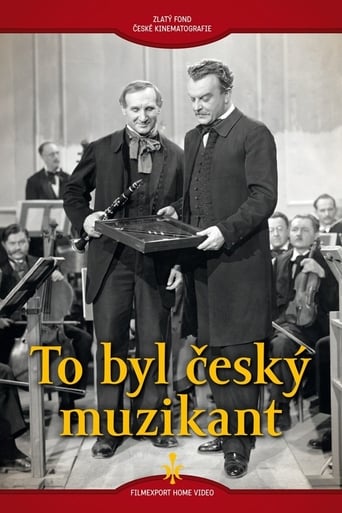 6.0
6.0Teacher František Kmoch is suspended because he plays at dances or composes at night. He forms a band in Kolín and his supporter Baron Hrubý helps him perform in public. His music is popular not only at home but also around the world...
To byl český muzikant
1940
No synopsis available yet.
Prosťáček
1945
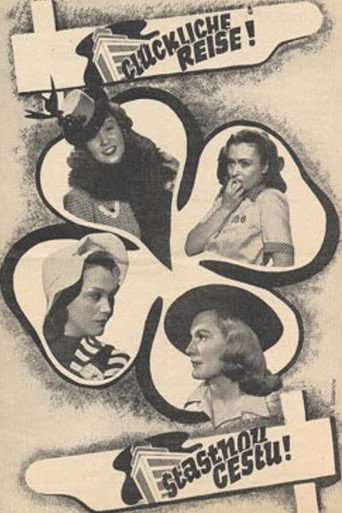 6.7
6.7Filmed during the Nazi occupation, this panoramic drama set in a Prague department store follows the divergent destinies of four female coworkers, each of whom seeks happiness in a different way.
Happy Journey
1943
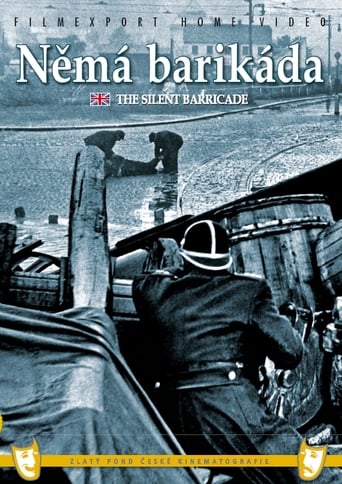 7.0
7.0A fiction piece centered around the Czech resistance to the Nazis.
Silent Barricade
1949
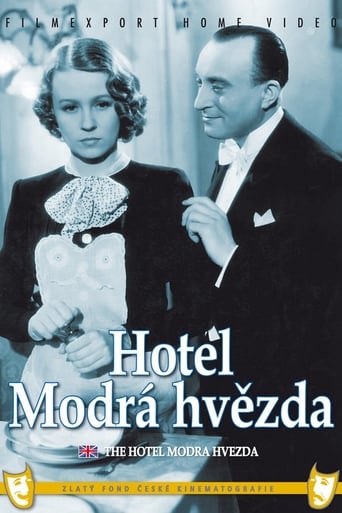 8.4
8.4It all begins when Zuzanka, the new young owner, arrives at the dilapidated Blue Star Hotel. Determined to put the declining inheritance back on its feet, she starts chasing three young men, including the composer Jirka, who, dressed in a waiter's tailcoat, is to work off his debt to the new owner. Like his two friends, Jirka succumbs to the charms of his new boss and, with some confidence, hopes that he is the one who has the best chance of becoming her chosen one. At that moment, however, a guest arrives, intent on carrying out the family tradition and throwing an engagement party at the Blue Star Hotel, regardless of his condition. This, however, is not to the liking of his wilful fiancée. Fortunately, there is the sympathetic Zuzanka, who charms the unusual guest so much that he resolutely breaks off his engagement to the rich girl and prefers to marry the cute hotelier.
The Blue Star Hotel
1941
 7.0
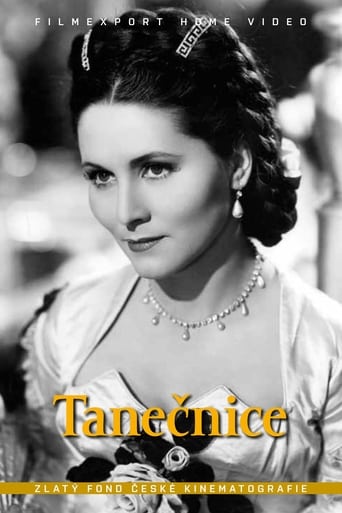
7.0The bourgeois family does not forgive, from her point of view, inappropriate behavior - contempt overtakes both the girl who decides to dedicate her life to dancing and her sister, who takes in her child, passing it off as her own. The sinister lesson is that even the greatest career cannot compensate for lost maternal love...
Tanečnice
1943
 7.2
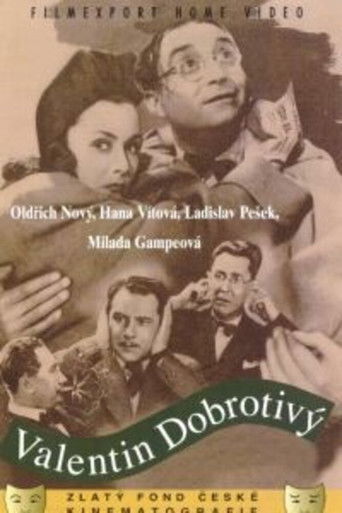
7.2A very hardworking but also very naive insurance company clerk, Valentin Plavec, becomes the target of endless pranks, jokes and recessions from his colleagues Bejšovec and Voborník. However, their last successful trick somewhat gets out of hand. They add a one to the winning number 8456 and convince Valentin that he has won a million in the lottery. However, since Valentin cannot collect his winnings immediately, he withdraws twenty thousand, which is all the savings he has saved together with his fiancée Helena, and starts shopping for a deposit. However, the truth soon comes out and when his colleagues reveal to him that it was just a joke, they all leave him, only the faithful Helena stays and even helps the unfortunate fiancé cancel all the deposits and agreed deals. When the newspaper reports that there has been a mistake and the winning ticket is number 18456, Valentin decides to take revenge on the two pranksters...
Valentin Dobrotivý
1942
 7.5
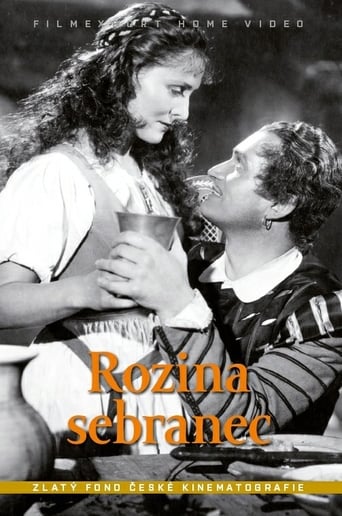
7.5Prague, the beginning of the 17th century. Rozina falls in love with Italian glass worker Nikolo, but after returning home, she gets a message that will never come to Prague. She falls for the promise of an older man to marry her, but when Nikolo does return, the tragic fate of Rozina is sealed.
Rozina the Love Child
1945
 6.5
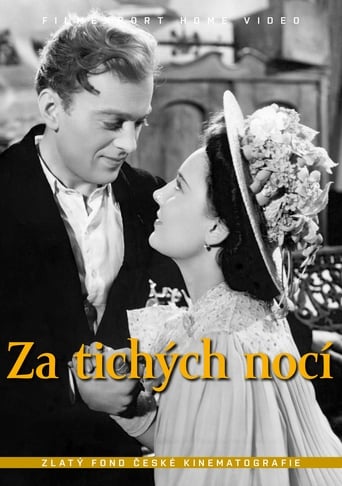
6.5Jana's beautiful niece arrives in Prague to live with two spinster aunts. Both women wish to marry her off. The son of the court councilor Petr is courting her. However, Jana has met a young official Záviš and the two fall in love. But Záviš is poor and cannot marry yet. They keep it a secret from Jana that he composes songs. Coincidentally, Petr is his friend and both men talk about the girls they love, unaware that in both cases it is Jana...
Za tichých nocí
1941
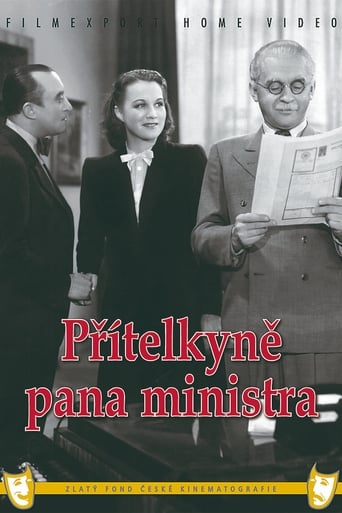 8.1
8.1The main character of the funny story is an ordinary typist Julinka Svobodová, who works for the established business firm Hrubý a syn and lives in a sublet with the seamstress Mrs. Pokorná. Although she is poor and sometimes manages to be late, she is still cheerful and pleasant. However, a small coincidence is enough and everything changes. That is when she takes an elevator ride with the Minister of Trade, Dr. Horák, who coincidentally lives in the same building. Mrs. Pokorná, in good faith, hints to the inquisitive landlady that Julinka is the Minister's girlfriend. From the talkative woman, an innocent rumor spreads like wildfire and, surprisingly, it helps the girl in every way...
Přítelkyně pana ministra
1940
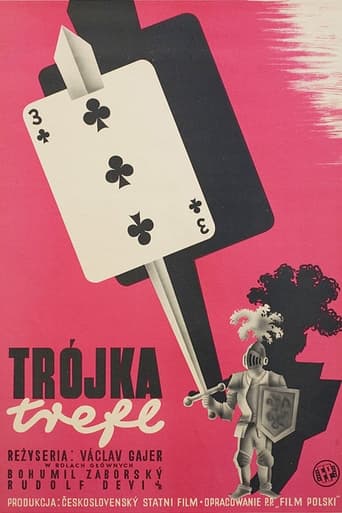 6.0
6.0An attempted theft of a rare antique is uncovered at a castle that houses an apprentice recreation center. The apprentices help uncover the real perpetrators and their accomplices.
Křížová trojka
1949
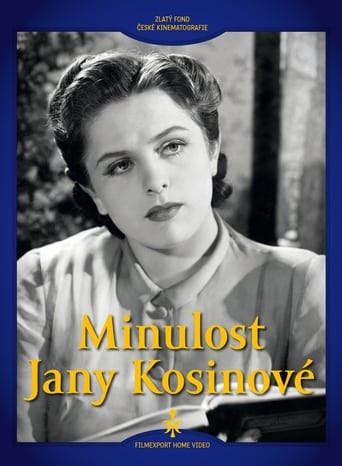 10.0
10.0No synopsis available yet.
Minulost Jany Kosinové
1940
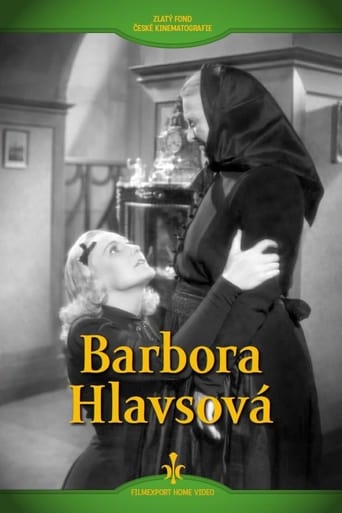 8.0
8.0The generally respected director of a small-town savings bank, Hlavsa, commits embezzlement because of his wasteful and spoiled wife, and when the situation cannot be saved, he shoots himself. His mother, a simple village woman, takes in her widowed daughter-in-law and teenage grandson on the condition that they both help her to compensate for all the damage. For the city lady, the hard village work is suffering. The same goes for young Bořík, a gifted pianist who finds it difficult to give up his dreams of an artistic career...
Barbora Hlavsová
1943
 6.5
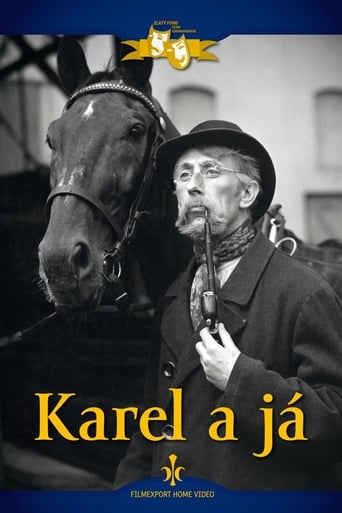
6.5The factory owner's son Oldřich missed his own wedding. He overdid his bachelor party and spent the night before the wedding in Mr. Šourek's carriage, who asked him in vain for his address. In the morning, the cabman went to the police for advice, but the passenger woke up and drove away with his carriage. He headed for his bride, but she was offended and threw him out. Oldřich also became hardened and declared that he would marry the first girl he met. The further development of events was ensured by Šourek's horse Karel, when he headed home, bringing Boženka, his master's daughter, to Oldřich's path. But she was not interested in the spoiled young man either. So Oldřich bet with her father that he would work hard for a month. If he won, he would win Boženka's hand, the cab, and the faithful Karel...
Karel a já
1942
The Czech revival movement is divided at the end of the first half of the 19th century. While the older generation, such as František Palacký, urges restraint, students lean towards radical positions. A report on the revolutionary events in Paris prompts Czech Prague residents to write down the demands of the Czech nation for self-determination and the proclamation of a constitution. Tensions peak during the All-Slavic Congress in Prague's Žofín. Vienna rejects the Czech demands and the congress is brutally dispersed by the Austrian police. Prague begins to build barricades...
Year of the Revolution 1848
1949
 8.8
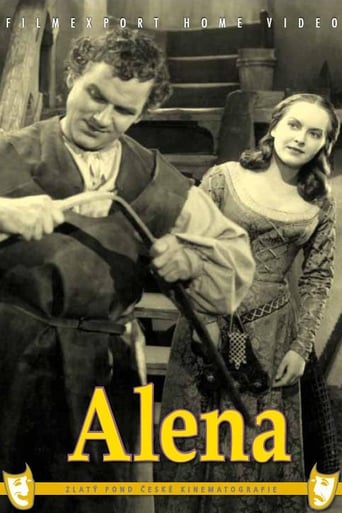
8.8Master armourer Tomás has young wife Alena, of whom he is very jealous. One day the ruler of town sees Alena and decides to win her over for himself. To get a free hand for his love affairs, he sends Master Tomás to acquire more skills in Flanders. Jealous husband does not know how to secure fidelity of his beautiful wife while he is away, and finally accepts aid of the devil, to whom he signs his soul as a reward. Devil in the disguise of Master Ondrej works in Tomás's workshop and protects Alena against various courtiers and the ruler of town. But finally he falls in love with Alena himself and becomes her lover.
Alena
1947
 7.0
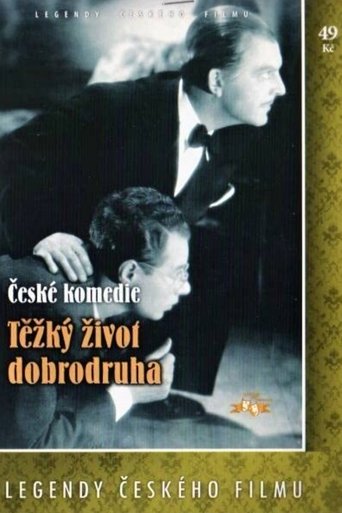
7.0A writer of pulp crime novels is drawn into a series of real crimes. This film was one of the first Czech attempts on a genre parody.
The Hard Life of an Adventurer
1941
Mist on the Moors examines fates of just about a few people. Their stories are outlined in a short space of time and are a symbolic representation of the drama of life, struggle for justice, human cognizance and the healing power of love. One of the most important components of the film is the nature, which ceases to be a mere stage for its plot—it serves almost as an autonomous plot agent. The movie landscape is a precisely defined and localized one. Only the South Bohemian ponds can serve as the right environment for development of such earthy and typically human stories as we encounter in the Mist on the Moors.
Mist on the Moors
1944
 7.7
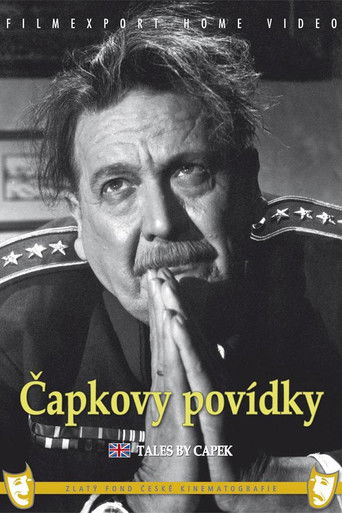
7.7Five crime stories connected by the narration of police superintendent Bartosek.
Capek's Tales
1947
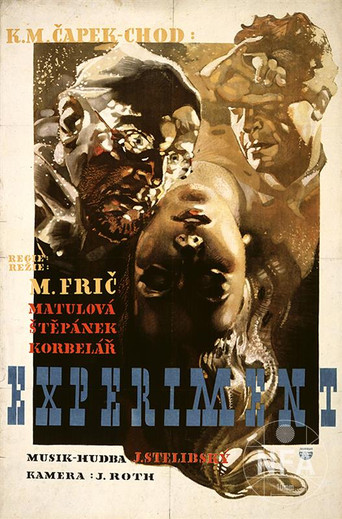 6.5
6.5No synopsis available yet.
Experiment
1943
1930s · 7 titles
A young farmer, Jan Aleš, is drafted from his native Pošumaví to join the army. Since he likes his new environment, he stays with the army as a long-term serviceman. He even successfully passes the exams for the military academy. There he becomes friends with his Slovak colleague Milan Jurčík. He studies diligently, but thanks to Milan he sometimes finds time to go out into the city. That is how he meets the factory owner's daughter, Zdenka, with whom he falls in love. However, her father is not very happy about the promising relationship.
Neporažená armáda
1938
No synopsis available yet.
Mořská panna
1939
An old peasant from Chodský, Záhor, claims to the young Podestát that he returned three hundred gold pieces to his father before the old Podestát died. Out of greed, Záhor even decides to perjure himself in court. The indignant creditor warns him of God's wrath. Záhor's sons, Matěj and Vondra, are vying for the same girl - the daughter of a blacksmith, Nana.
Boží mlýny
1938
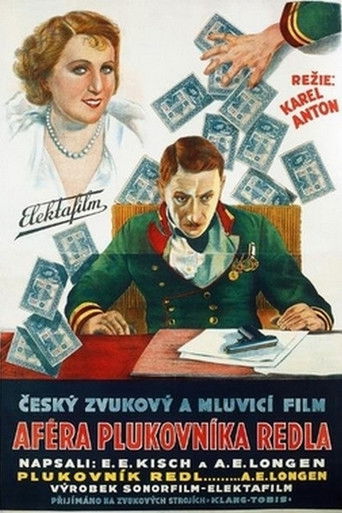 7.0
7.0The case of Colonel Redl -- an officer blackmailed into spying by virtue of his homosexuality. Alternate-language version of "Der Fall des Generalstabs-Oberst Redl" (1931)
The Case of Colonel Redl
1931
No synopsis available yet.
Hvězda z poslední štace
1939
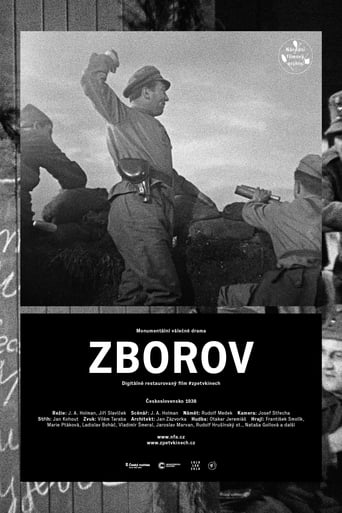 6.0
6.0In the Škoda factory, where they are feverishly rearming in 1914, works the foreman Kalina, the father of the young men Pavel and Jan. Pavel is a supporter of the monarchy, while Jan, on the contrary, defends the idea of our national independence. Just before mobilization, Jan escapes to Russia, where he joins a group of volunteer legionnaires called the "Czech Company", fighting against the Austro-Hungarian monarchy. Pavel enlists in the Austrian army. The brothers do not meet again until July 1917 in the battle of Zborov in Ukraine, which marked a successful breakthrough of the Austro-Hungarian front.
Zborov
1939
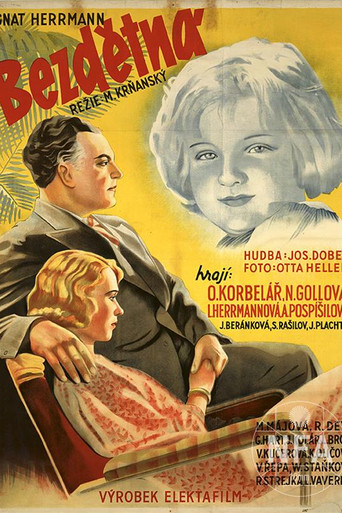 7.0
7.0No synopsis available yet.
Bezdětná
1935