

Acting
Charles Trenet
Born — Died
1913-05-18 — 2001-02-19
Place of birth
Narbonne, Aude, France
Known for
Acting
Credits
36 titles
Louis Charles Augustin Georges Trenet (18 May 1913 – 19 February 2001) was a renowned French singer-songwriter who composed both the music and the lyrics for nearly 1,000 songs over a career that lasted more than 60 years. These songs include "Boum!" (1938), "La Mer" (1946) and "Nationale 7" (1955). Trenet is also noted for his work with musicians Michel Emer and Léo Chauliac, with whom he recorded "Y'a d'la joie" (1938) for the first and "La Romance de Paris" (1941) and "Douce France" (1947) for the latter. He was awarded an Honorary Molière Award in 2000. Trenet was born in Avenue Charles Trenet, Narbonne, Occitanie, France, the son of Françoise Louise Constance (Caussat) and Lucien Etien…
Known for
 5.7
5.7No synopsis available yet.
Sacrée soirée
1987
 6.8
6.8No synopsis available yet.
Champs-Elysées
1982
 9.0
9.0Midi Première is a French variety show presented by Danièle Gilbert, directed by Jacques Pierre and broadcast from January 6, 1975 until January 1, 1982 on TF1. The program was generally broadcast between 12:15 p.m. and 12:55 p.m., then giving way to the 1:00 p.m. TV news. However, the broadcast schedule could change, depending on the guests, and the setting where the recording of the program was shot. Certain performances by artists who have become cult like the one where Ringo jostles with a demonstrator in interpretation (1977), that of Dalida with the title There is always a song with the soundtrack that does not start, twice, at the right speed (1978), Claude François and his Clodettes, who, in the provinces, are unable to join "the set" in order to interpret his song, the latter being taken by the crowd of delirious fans (summer 1977) . The group Supertramp performed there with the title "Dreamer" on March 8, 1975.
Midi Première
1975
 8.5
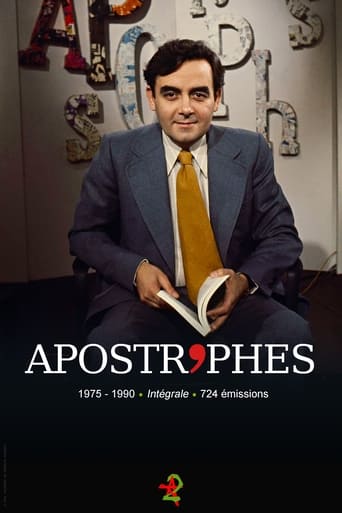
8.5Apostrophes was a live, weekly, literary, prime-time, talk show on French television created and hosted by Bernard Pivot. It ran for fifteen years (724 episodes) from January 10, 1975, to June 22, 1990, and was one of the most watched shows on French television (around 6 million regular viewers). It was broadcast on Friday nights on the channel France 2 (which was called "Antenne 2" from 1975 to 1992). The hourlong show was devoted to books, authors and literature. The format varied between one-on-one interviews with a single author and open discussions between four or five authors.
Apostrophes
1975
 NR
NRNo synopsis available yet.
Le monde est à vous
1987
 6.0
6.0A talk show presented by Michel Drucker
Les Rendez-vous du dimanche
1975
Film credits
2020s · 3 titles
 7.2
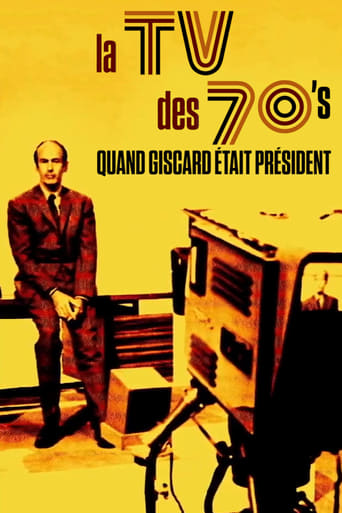
7.2In May 1974, Valéry Giscard d'Estaing became President of the Republic and wanted to bring about a new era of modernity. One of his first decisions was to break up the ORTF with the creation of three new television channels: TF1, Antenne 2 and FR3. Three new public channels but autonomous and competing. It is a race for the audience which is engaged then, and from now on the channels will make the war! This competition will give birth to a real golden age for television programs, with variety shows in the forefront. The stars of the song are going to invade the living rooms of the French for their biggest pleasure. This unedited documentary tells the story of the metamorphosis of this television of the early 1970s, between freedom of tone, scandals, political intrigues and programs that have become mythical.
La TV des 70's : Quand Giscard était président
2022
 8.0
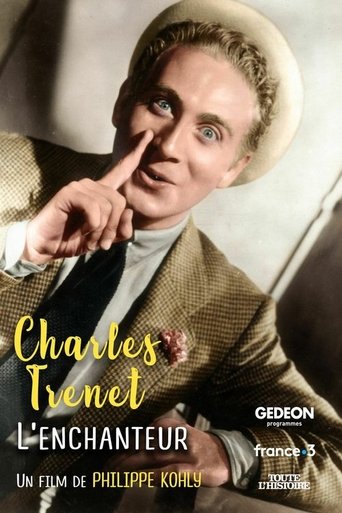
8.0Portrait of Charles Trenet. Twenty years after his death, this documentary offers a new look at the artist. When, in 1956, the singer appeared on television, he was 43 years old. And it is a man of 60 or even 70 years old that today's audience has known. The first Charles Trenet, the one who transported France when he was 25 or 30 years old, remains largely unknown. Yet it was this kid of genius who, at the age of 25, invented French chanson. But the archives that are scattered throughout this portrait also show that he invented a certain idea of joy. For joy in Trenet was a sport, a daily gymnastics.
Charles Trenet, l'enchanteur
2022
 8.7
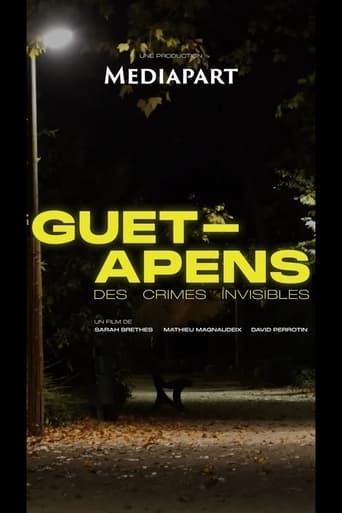
8.7The result of an investigation that lasted several months, this documentary film reveals the extent of a phenomenon that we thought had disappeared: the traps, sometimes deadly, that target homosexuals on dating applications or sites. Ten years after the law opening marriage to same-sex couples, and in the run-up to the World Day against LGBTphobia on May 17, it demonstrates the persistence of homophobia in France. It also questions the way the police and the justice system respond to these attacks. The voice of the film is provided by Eddy de Pretto, a singer committed against homophobia.
Guet-apens, des crimes invisibles
2023
1950s · 5 titles
 5.0
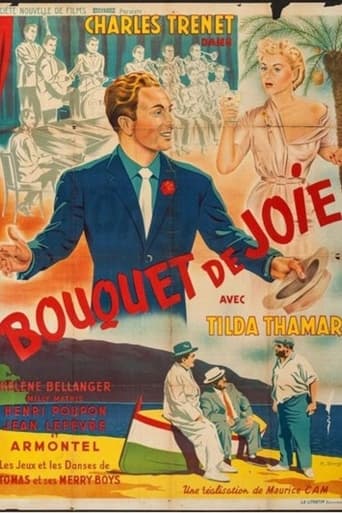
5.0Back from America, famous singer Charles Trénet, nicknamed "Le Fou Chantant", makes the conquest of a bombshell called Anita. He tries to persuade his young friend Georges to follow them to the French Riviera but the pessimistic gloomy finicky fellow won't do it. Instead, he decides to go on holiday with his newly married wife but the trip , due to his grim mood, is no bed of roses. In Juan-lès-Pins they finally meet Charles, who is so infatuated with Anita that he has forgotten to meet his old friend Henri Poupon, the Meridional actor. Thanks to cheerful Charles and to the sunny climate, Georges relaxes and things improve in his relationships with his wife. The couple can applaud Charles who is giving one of his concerts there before he flies back to the USA, on Anita's arm this time.
Bouquet de joie
1951
 5.7
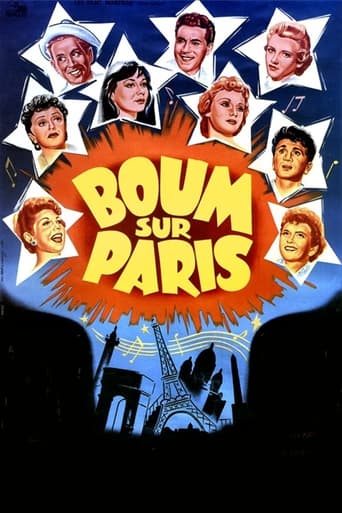
5.7In the early 1950s, the popular radio show "La Kermesse aux Étoiles", hosted by the famous Jean Nohain, mixing lottery games and performances of various artists, will be disrupted by the adventures of a man and his fiancée seeking to recover a dangerous bottle of perfume (explosive) which was unfortunately mixed with the prizes to be won ...
Boom on Paris
1954
 4.2
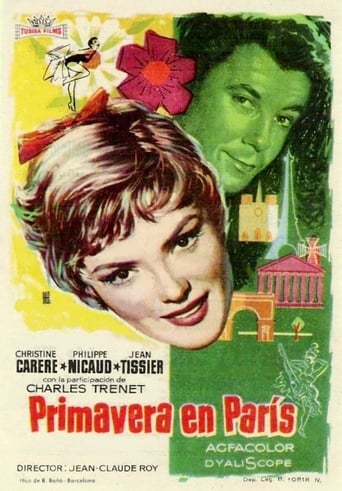
4.2On her way to Paris, Gisèle meets a young motorist who offers to be her guide. Gisèle, suspicious, refuses and disappears. But Pierre finds her and takes her to dinner at Saint-Germain-des-Prés. On the other hand, Gisèle, out of jealousy, goes off on her own to visit "Paris by Night", showing us some of the attractions of the "Moulin Rouge", "Naturistes", "Rock and Roll", etc., etc., etc. Pierre pursues her and eventually discovers her hotel. The next day, he takes her for a walk around Paris. They dine at an inn where a supposed car breakdown forces them to spend the night. There was only one room, but the virtuous Gisèle locked Pierre in the bathroom. All ends in the most honest engagement in the world.
Springtime in Paris
1957
 5.5
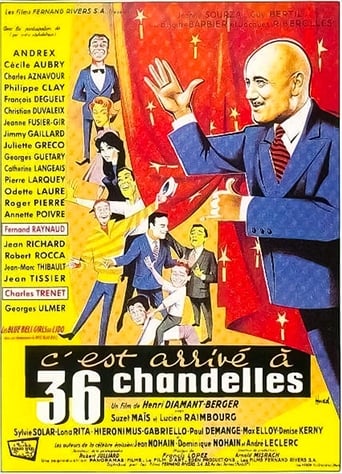
5.5Rejecting the union of her daughter Brigitte with a modest worker, Madame Magnin invents an adultery for the lover, then introduces Brigitte to a good-looking man working on the famous RTF entertainment show 36 Chandelles. The show ultimately seals the reunion of the two estranged young lovers. The story features a parade of music-hall stars from the era: Charles Trenet, Charles Aznavour, Georges Guétary, Juliette Gréco, Roger Pierre and Jean-Marc Thibault, Fernand Raynaud, Georges Ulmer and many more.
It Happened on the 36 Candles
1957
 9.0
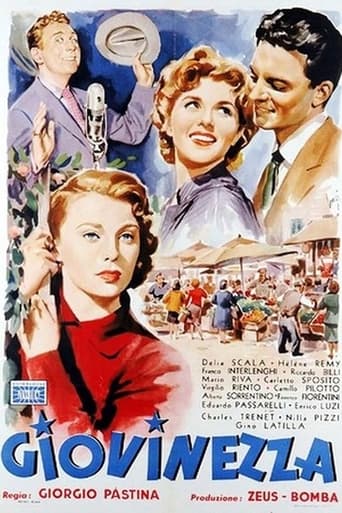
9.0No synopsis available yet.
Giovinezza
1952
1940s · 4 titles
 6.3
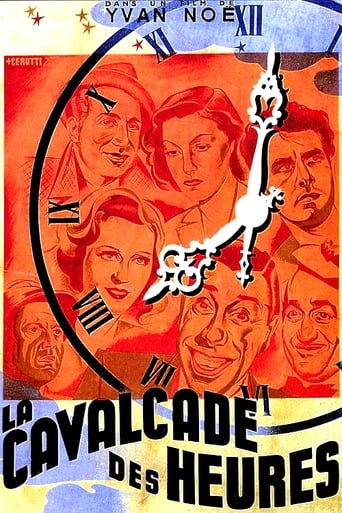
6.3Symbolizing the destiny of man, Hora imposes her destiny on everyone. She appears to a petty bourgeois trying to escape from his mediocre life, to a frivolous mother, to a reveler in nightclubs, to a man stranded without money in a restaurant, to a young sportsman, to a singer tired of the selfishness of his listeners and to a condemned man. To each, she brings the imperative message of Time...
Love Around the Clock
1943
 5.6
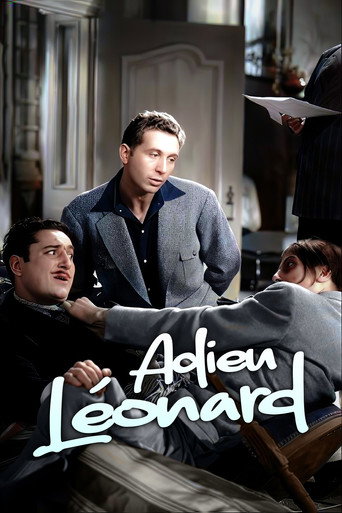
5.6A bungling thief is threatened by one target with blackmail, unless the thief will kill his own cousin, a wealthy eccentric who is considered the village idiot.
Adieu Léonard
1943
 5.5
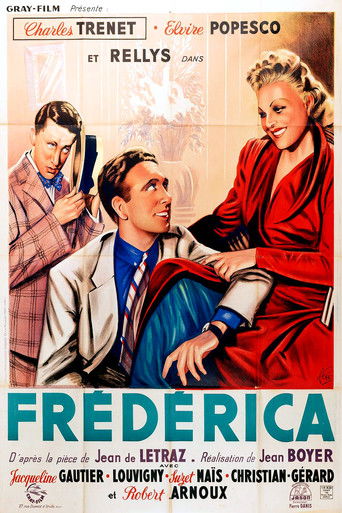
5.5Gilbert, poet and singer, is about to marry Lilette but deep inside himself he is not quite sure that she is the woman he needs. That is the reason why he has made up an imaginary woman, Frédérica" to whom he writes love letters, actual ones this time. When Lilette finds one of these, she sees red. Théodule, one of Gilbert's many friends, sets out the problem with the help of Claudine, his own girlfriend, posing as Frédérica. After Gilbert and "Frédérica" have played a phony breakup scene in front of Lilette, things seem to come right when... another Frédérica appears...
Frédérica
1942
 5.8
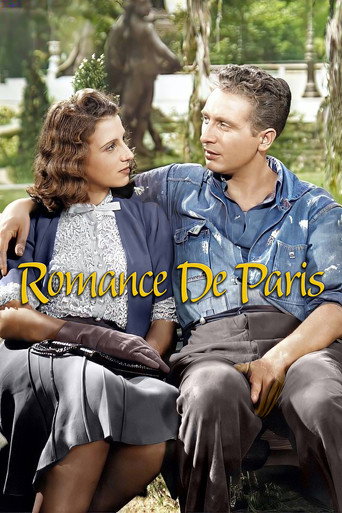
5.8Georges Gauthier is an electrician who lives with his mother and his sister Madeleine. He is the son of a womanizing singer who made his mother miserable. For all that, Georges is attracted to show business all the more as he falls in love with Jeanne, the daughter of singer Lormel. Georges is spotted by Cartier, the manager of the Folies Concert and makes his debut as a singer under the assumed name of Jean Papillon.
Paris Romance
1941
Series credits
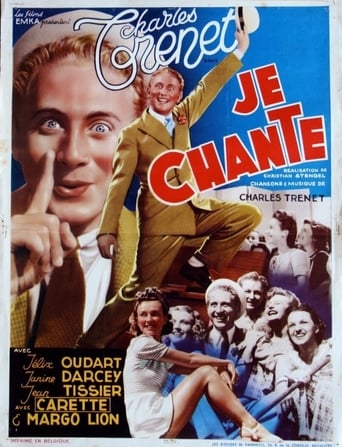
5.7No synopsis available yet.
Sacrée soirée
1987
5.7No synopsis available yet.
Sacrée soirée
1987
6.8No synopsis available yet.
Champs-Elysées
1982
9.0Midi Première is a French variety show presented by Danièle Gilbert, directed by Jacques Pierre and broadcast from January 6, 1975 until January 1, 1982 on TF1. The program was generally broadcast between 12:15 p.m. and 12:55 p.m., then giving way to the 1:00 p.m. TV news. However, the broadcast schedule could change, depending on the guests, and the setting where the recording of the program was shot. Certain performances by artists who have become cult like the one where Ringo jostles with a demonstrator in interpretation (1977), that of Dalida with the title There is always a song with the soundtrack that does not start, twice, at the right speed (1978), Claude François and his Clodettes, who, in the provinces, are unable to join "the set" in order to interpret his song, the latter being taken by the crowd of delirious fans (summer 1977) . The group Supertramp performed there with the title "Dreamer" on March 8, 1975.
Midi Première
1975
8.5Apostrophes was a live, weekly, literary, prime-time, talk show on French television created and hosted by Bernard Pivot. It ran for fifteen years (724 episodes) from January 10, 1975, to June 22, 1990, and was one of the most watched shows on French television (around 6 million regular viewers). It was broadcast on Friday nights on the channel France 2 (which was called "Antenne 2" from 1975 to 1992). The hourlong show was devoted to books, authors and literature. The format varied between one-on-one interviews with a single author and open discussions between four or five authors.
Apostrophes
1975
NRNo synopsis available yet.
Le monde est à vous
1987
6.0A talk show presented by Michel Drucker
Les Rendez-vous du dimanche
1975
 8.0
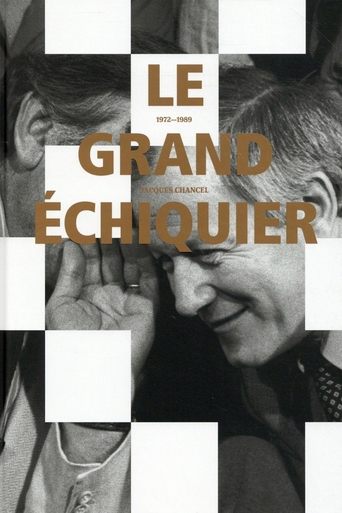
8.0Le Grand Échiquier is a French variety television program created and presented by Jacques Chancel. It aired at 8:30 pm on the first channel of the ORTF from January 12, 1972 to July 12, 1972, then on the second color channel of the ORTF from September 1972 to December 1974, and finally on Antenne 2 from January 1975 to December 21, 1989. The program returned to France 2 on December 20, 2018 and is hosted by Anne-Sophie Lapix.
Le Grand Échiquier
1972
8.0Le Grand Échiquier is a French variety television program created and presented by Jacques Chancel. It aired at 8:30 pm on the first channel of the ORTF from January 12, 1972 to July 12, 1972, then on the second color channel of the ORTF from September 1972 to December 1974, and finally on Antenne 2 from January 1975 to December 21, 1989. The program returned to France 2 on December 20, 2018 and is hosted by Anne-Sophie Lapix.
Le Grand Échiquier
1972
 6.0
6.0No synopsis available yet.
Midi trente
1972
 7.5
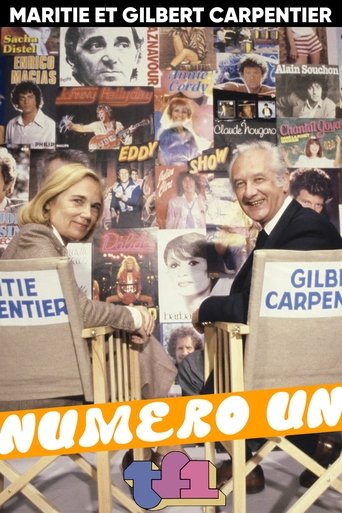
7.5A French variety show.
Numéro un
1975
 6.5
6.5No synopsis available yet.
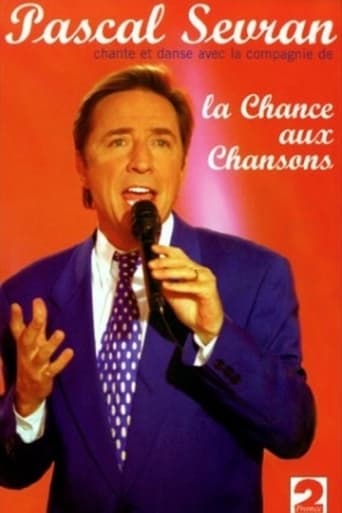
La Chance aux chansons
1984
6.5No synopsis available yet.
La Chance aux chansons
1984
No synopsis available yet.
Samedi soir
1971
 3.3
3.3No synopsis available yet.
Victoires de la musique
1985
No synopsis available yet.
Système 2
1975
 8.0
8.0No synopsis available yet.
Dim Dam Dom
1965
 NR
NRNo synopsis available yet.
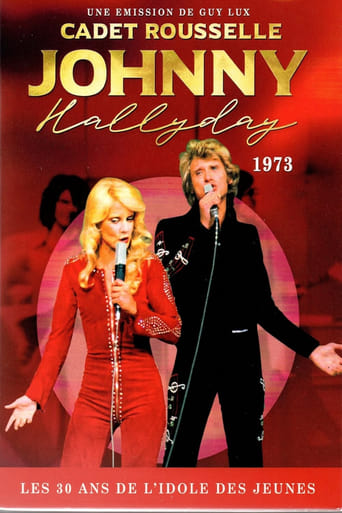
Cadet Rousselle
1971
 6.5
6.5No synopsis available yet.
Il était une fois Champs-Élysées
2022
No synopsis available yet.
Melodie der Welt
1956