
Directing
Philippe Condroyer
Born — Died
1927-05-03 — 2017-11-05
Place of birth
Paris, Ile-de-France, France
Known for
Directing
Credits
6 titles
Philippe Condroyer was a French film and television director and screenwriter, recognized for his contributions to mid-20th-century French cinema. Born in Paris, he was the son of journalist and novelist Émile Condroyer, the first recipient of the Prix Albert-Londres in 1933. Philippe began his career as an assistant director before making his directorial debut with the short film Fugue in 1960. He gained prominence with Tintin and the Blue Oranges (1964), a live-action adaptation of Hergé's famous comic series. Condroyer continued to direct and write for both film and television, with notable works including Un homme à abattre (1967) and La Coupe à dix francs (1974). His work is characteriz…
Known for
 5.0
5.0Professor Calculus's friend develops a blue-skinned orange that can grow on any kind of land and survive harsh weather (in the manner of Lue Gim Gong) and therefore solve world hunger. The Professor and his friends, however, run afoul of gangsters who also covet the fruit. The adventure takes them from their home in Marlinspike Hall (Moulinsart), a fictional mansion that is presumably in Belgium, to Spain, where Calculus and another scientist are kidnapped.
Tintin and the Blue Oranges
1964
 7.0
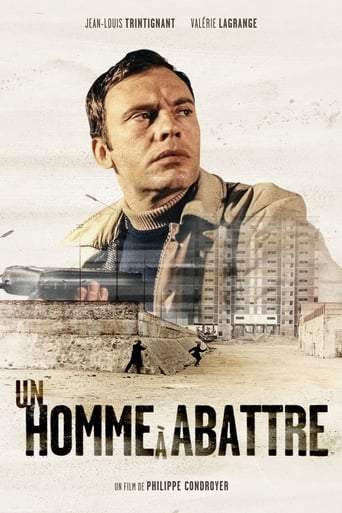
7.0Barcelona, 1967. Hans Fromm, a German-born architect, lives an well-ordered everyday life. He has become the target of an antifascist death squad though. Indeed their leader, Julius, whose brother was killed by Schmidt, a merciless S.S., believes, without being absolutely certain, that Fromm and Schmidt are the same man. The team, whose other members are Georges, the son of a deportee liquidated by Schmidt craving for action, Raphaël, a mercenary type, Nils, the photographer and Romain, watch Fromm's every move until Julius, convinced at last that the quiet German is their man, gives the green light for the operation. They manage to lure the former Nazi to an old house but Schmidt/Fromm won't let himself be captured so easily...
A Man to Kill
1967
 9.0
9.0No synopsis available yet.
Un paquebot dans la tête
1981
 7.4
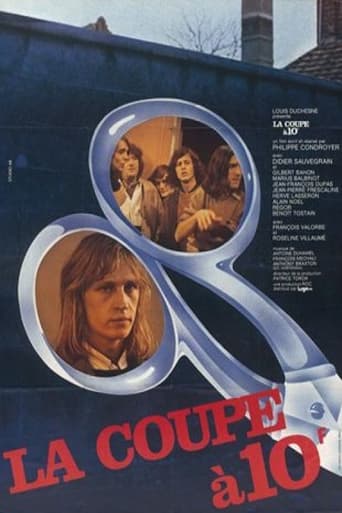
7.4The furniture factory in which all the young guys in this film work is also full of older workers who make fun of their long hair, which for them is a badge of their independence. The boss, particularly, thinks long hair on men is dirty. When they refuse to cut their hair, he finds an excuse to fire them. The meaning of long hair is felt particularly deeply for one fellow, a painter, who, when he succumbs to his fathers' pleas that he cut his hair, turns his paintings to the wall and burns himself to death.
The $2 Haircut
1975
Behind the camera
5.0Professor Calculus's friend develops a blue-skinned orange that can grow on any kind of land and survive harsh weather (in the manner of Lue Gim Gong) and therefore solve world hunger. The Professor and his friends, however, run afoul of gangsters who also covet the fruit. The adventure takes them from their home in Marlinspike Hall (Moulinsart), a fictional mansion that is presumably in Belgium, to Spain, where Calculus and another scientist are kidnapped.
Tintin and the Blue Oranges
1964
5.0Professor Calculus's friend develops a blue-skinned orange that can grow on any kind of land and survive harsh weather (in the manner of Lue Gim Gong) and therefore solve world hunger. The Professor and his friends, however, run afoul of gangsters who also covet the fruit. The adventure takes them from their home in Marlinspike Hall (Moulinsart), a fictional mansion that is presumably in Belgium, to Spain, where Calculus and another scientist are kidnapped.
Tintin and the Blue Oranges
1964
7.0Barcelona, 1967. Hans Fromm, a German-born architect, lives an well-ordered everyday life. He has become the target of an antifascist death squad though. Indeed their leader, Julius, whose brother was killed by Schmidt, a merciless S.S., believes, without being absolutely certain, that Fromm and Schmidt are the same man. The team, whose other members are Georges, the son of a deportee liquidated by Schmidt craving for action, Raphaël, a mercenary type, Nils, the photographer and Romain, watch Fromm's every move until Julius, convinced at last that the quiet German is their man, gives the green light for the operation. They manage to lure the former Nazi to an old house but Schmidt/Fromm won't let himself be captured so easily...
A Man to Kill
1967
7.0Barcelona, 1967. Hans Fromm, a German-born architect, lives an well-ordered everyday life. He has become the target of an antifascist death squad though. Indeed their leader, Julius, whose brother was killed by Schmidt, a merciless S.S., believes, without being absolutely certain, that Fromm and Schmidt are the same man. The team, whose other members are Georges, the son of a deportee liquidated by Schmidt craving for action, Raphaël, a mercenary type, Nils, the photographer and Romain, watch Fromm's every move until Julius, convinced at last that the quiet German is their man, gives the green light for the operation. They manage to lure the former Nazi to an old house but Schmidt/Fromm won't let himself be captured so easily...
A Man to Kill
1967
9.0No synopsis available yet.
Un paquebot dans la tête
1981
7.4The furniture factory in which all the young guys in this film work is also full of older workers who make fun of their long hair, which for them is a badge of their independence. The boss, particularly, thinks long hair on men is dirty. When they refuse to cut their hair, he finds an excuse to fire them. The meaning of long hair is felt particularly deeply for one fellow, a painter, who, when he succumbs to his fathers' pleas that he cut his hair, turns his paintings to the wall and burns himself to death.
The $2 Haircut
1975