
Directing
Petr Schulhoff
Born — Died
1922-07-10 — 1986-05-04
Place of birth
Berlin, German Empire [now Germany]
Known for
Directing
Credits
41 titles
Petr Schulhoff was a Czech film director, screenwriter, and actor, recognized for his contributions to Czechoslovak cinema. Born in Berlin to the Czech-Jewish composer and pianist Ervín Schulhoff, he moved to Czechoslovakia during his youth. During World War II, Schulhoff and his father were interned in the Wülzburg concentration camp, where his father died of tuberculosis. This traumatic experience profoundly affected Schulhoff's life and work. After the war, he began his career in the film industry, initially working as an assistant director and screenwriter. He directed several notable films, including I Killed Einstein, Gentlemen (1970) and The Murderer Hides His Face (1966), which show…
Known for
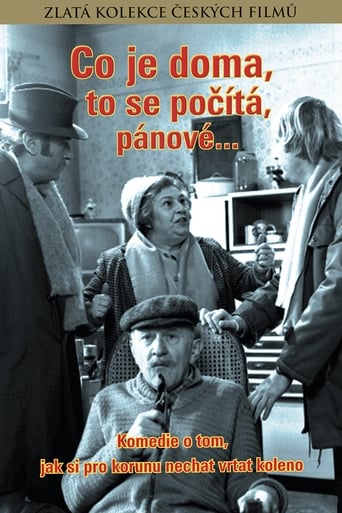 6.7
6.7For the Novák and Bartáček families, money is king, and they'll do just about anything to get it. While René Novák pitches his parents a lucrative scheme to swindle as many people with the last name Novák in the country as possible, the Bartáček clan decides to pretend to be much poorer than they really are in order to siphon some dollars from an American relative. And it doesn't take long before these separate scams start to intertwine.
Co je doma to se počítá, pánové...
1980
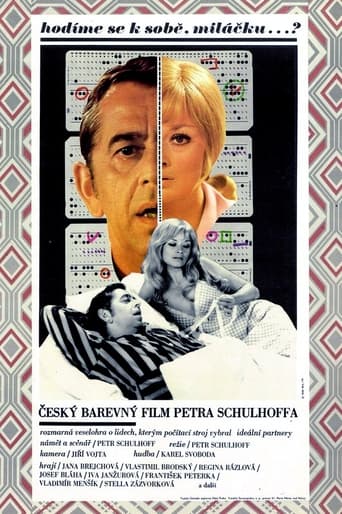 4.5
4.5Marta (Jana Brejchová) and Viktor (Vlastimil Brodský) celebrate the tenth anniversary of their wedding half-heartedly. They both think they don't suit together. While visiting Marta's friend Alena (Iva Janzurová), who just got married for the third time, they learn an interesting thing. It was a computer which selected a husband for Alena and she claims she is happy. The couple gets off after certain hesitation to a cybernetic institute, where the computer tells them that living together is a risk for them. At the same time the computer selects them ideal partners - Mrs Tuchlová, a doctor for Viktor, and Petr Karát, a music composer for Marta. By a coincidence Viktor and Marta meet wrong people.
Do We Match Each Other, Darling?
1975
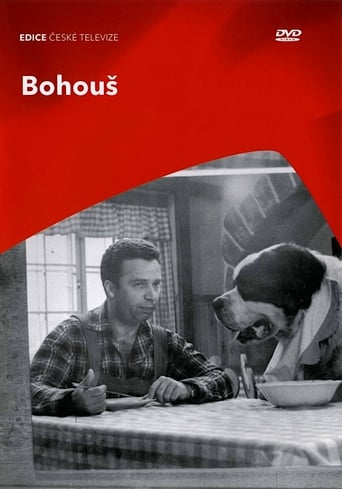 8.2
8.2Alois, manager of a remote mountain inn, loses his maid when she can’t stand his oversized Saint Bernard, Bohouš. When a ravenous guest arrives, Alois makes a wager: if the guest can out-eat Bohouš in one sitting, they earn a free week’s stay; if not, they must serve as the inn’s maid for a week.
Bohous
1968
No synopsis available yet.
Proč lže...
1958
No synopsis available yet.
Silvestrovské kousky Františka Housky
1971
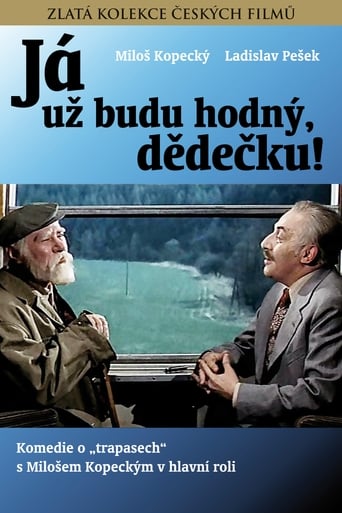 5.8
5.8To the intolerant and bloody-minded Prague actor Bergner (Milos Kopecký) is the lead in Moliere's Misanthrope which he is studying now as tailor-made. On top of that he is malicious and he advises to the new actress Helenka (Dagmar Havlová) in such a way that she upsets the theatre director. If Bergner accuses somebody of a mischief and he is wrong, he never apologizes. When he almost crashes an older elegant lady by his car on the zebra crossing, instead of an apology he calls her an old ballet dancer... But in Brno's TV he takes part in a discussion on manners and he gives himself as an example of good manners and grace. In the train he meets a magic old man (Ladislav Pesek) who warns him and admonishes him to change his behavior. After he arrives to Prague the old man's threat comes true.
I'll Be Good, Old Man!
1979
Film credits
Behind the camera
6.7For the Novák and Bartáček families, money is king, and they'll do just about anything to get it. While René Novák pitches his parents a lucrative scheme to swindle as many people with the last name Novák in the country as possible, the Bartáček clan decides to pretend to be much poorer than they really are in order to siphon some dollars from an American relative. And it doesn't take long before these separate scams start to intertwine.
Co je doma to se počítá, pánové...
1980
6.7For the Novák and Bartáček families, money is king, and they'll do just about anything to get it. While René Novák pitches his parents a lucrative scheme to swindle as many people with the last name Novák in the country as possible, the Bartáček clan decides to pretend to be much poorer than they really are in order to siphon some dollars from an American relative. And it doesn't take long before these separate scams start to intertwine.
Co je doma to se počítá, pánové...
1980
4.5Marta (Jana Brejchová) and Viktor (Vlastimil Brodský) celebrate the tenth anniversary of their wedding half-heartedly. They both think they don't suit together. While visiting Marta's friend Alena (Iva Janzurová), who just got married for the third time, they learn an interesting thing. It was a computer which selected a husband for Alena and she claims she is happy. The couple gets off after certain hesitation to a cybernetic institute, where the computer tells them that living together is a risk for them. At the same time the computer selects them ideal partners - Mrs Tuchlová, a doctor for Viktor, and Petr Karát, a music composer for Marta. By a coincidence Viktor and Marta meet wrong people.
Do We Match Each Other, Darling?
1975
4.5Marta (Jana Brejchová) and Viktor (Vlastimil Brodský) celebrate the tenth anniversary of their wedding half-heartedly. They both think they don't suit together. While visiting Marta's friend Alena (Iva Janzurová), who just got married for the third time, they learn an interesting thing. It was a computer which selected a husband for Alena and she claims she is happy. The couple gets off after certain hesitation to a cybernetic institute, where the computer tells them that living together is a risk for them. At the same time the computer selects them ideal partners - Mrs Tuchlová, a doctor for Viktor, and Petr Karát, a music composer for Marta. By a coincidence Viktor and Marta meet wrong people.
Do We Match Each Other, Darling?
1975
8.2Alois, manager of a remote mountain inn, loses his maid when she can’t stand his oversized Saint Bernard, Bohouš. When a ravenous guest arrives, Alois makes a wager: if the guest can out-eat Bohouš in one sitting, they earn a free week’s stay; if not, they must serve as the inn’s maid for a week.
Bohous
1968
No synopsis available yet.
Proč lže...
1958
No synopsis available yet.
Proč lže...
1958
No synopsis available yet.
Silvestrovské kousky Františka Housky
1971
No synopsis available yet.
Silvestrovské kousky Františka Housky
1971
5.8To the intolerant and bloody-minded Prague actor Bergner (Milos Kopecký) is the lead in Moliere's Misanthrope which he is studying now as tailor-made. On top of that he is malicious and he advises to the new actress Helenka (Dagmar Havlová) in such a way that she upsets the theatre director. If Bergner accuses somebody of a mischief and he is wrong, he never apologizes. When he almost crashes an older elegant lady by his car on the zebra crossing, instead of an apology he calls her an old ballet dancer... But in Brno's TV he takes part in a discussion on manners and he gives himself as an example of good manners and grace. In the train he meets a magic old man (Ladislav Pesek) who warns him and admonishes him to change his behavior. After he arrives to Prague the old man's threat comes true.
I'll Be Good, Old Man!
1979
5.8To the intolerant and bloody-minded Prague actor Bergner (Milos Kopecký) is the lead in Moliere's Misanthrope which he is studying now as tailor-made. On top of that he is malicious and he advises to the new actress Helenka (Dagmar Havlová) in such a way that she upsets the theatre director. If Bergner accuses somebody of a mischief and he is wrong, he never apologizes. When he almost crashes an older elegant lady by his car on the zebra crossing, instead of an apology he calls her an old ballet dancer... But in Brno's TV he takes part in a discussion on manners and he gives himself as an example of good manners and grace. In the train he meets a magic old man (Ladislav Pesek) who warns him and admonishes him to change his behavior. After he arrives to Prague the old man's threat comes true.
I'll Be Good, Old Man!
1979
Within the cultural policy framework of the 1950s, Mikoláš Aleš was, in terms of fine art, equivalent to Bedřich Smetana in music and Alois Jirásek in history and literature. This biopic presents Aleš as an artist of a devoted to his nation and its folk traditions. The movie depicts the most important events of the celebration of “Aleš’s Year” (in honour of the hundredth anniversary of Aleš’s birth), which was conceptually prepared first and foremost by the then education minister Zdeněk Nejedlý, who was also a crucial figure in terms of cultural policy.
Aleš's Year
1953
Within the cultural policy framework of the 1950s, Mikoláš Aleš was, in terms of fine art, equivalent to Bedřich Smetana in music and Alois Jirásek in history and literature. This biopic presents Aleš as an artist of a devoted to his nation and its folk traditions. The movie depicts the most important events of the celebration of “Aleš’s Year” (in honour of the hundredth anniversary of Aleš’s birth), which was conceptually prepared first and foremost by the then education minister Zdeněk Nejedlý, who was also a crucial figure in terms of cultural policy.
Aleš's Year
1953
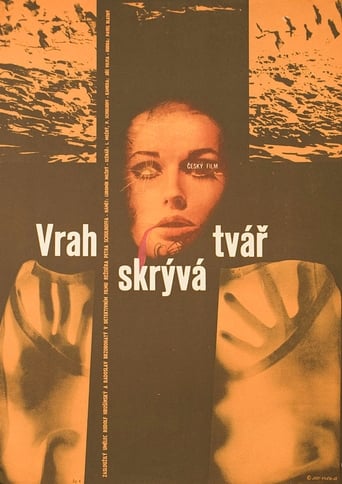 5.7
5.7In the forest near the village of Drahovice, a nurse from the local health center is found murdered. Three months ago, another young woman died nearby and a sexual motive was proved in the case of her murder. In the case of the nurse, the motives are not so clear. Two criminologists from Prague - Major Kalas (Rudolf Hrusínský) and Lieutenant Varga (Radoslav Brzobohatý) - patiently collect all available leads and question the villagers.
The Murderer Hides His Face
1966
5.7In the forest near the village of Drahovice, a nurse from the local health center is found murdered. Three months ago, another young woman died nearby and a sexual motive was proved in the case of her murder. In the case of the nurse, the motives are not so clear. Two criminologists from Prague - Major Kalas (Rudolf Hrusínský) and Lieutenant Varga (Radoslav Brzobohatý) - patiently collect all available leads and question the villagers.
The Murderer Hides His Face
1966
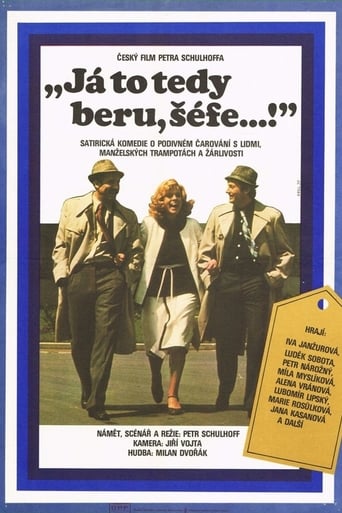 5.8
5.8Láda Pitras (Ludek Sobota) and Oto Vacák (Petr Nározný) founded in the company Pragokov a Research department of recruitment of labor. For recruitment of workers in professions sought after both recruiters worked out an effective, often almost illegal methods. They followed secretly for instance the welder Niederle and managed to record his lovesick courting to his colleague Anicka. The fear of his jealous wife made him to join Pragokov.
'Okay, Boss...!'
1978
5.8Láda Pitras (Ludek Sobota) and Oto Vacák (Petr Nározný) founded in the company Pragokov a Research department of recruitment of labor. For recruitment of workers in professions sought after both recruiters worked out an effective, often almost illegal methods. They followed secretly for instance the welder Niederle and managed to record his lovesick courting to his colleague Anicka. The fear of his jealous wife made him to join Pragokov.
'Okay, Boss...!'
1978
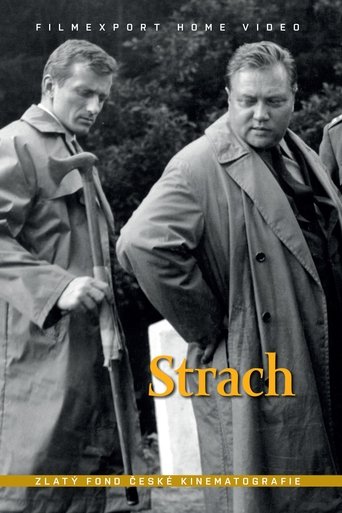 5.3
5.3A car deliberately runs down a young man on a road by a small border town. The locals recognize the dead man as one of the students who were there on volunteer work some time before. The police detectives, Major Kalas (Rudolf Hrusínský) and Lieutenant Varga (Radoslav Brzobohatý) can then get on the trail of the people with whom the victim was involved, especially at the photographic studio headed by Bohuslav Pacer (Bohus Záhorský).
Fear
1964
5.3A car deliberately runs down a young man on a road by a small border town. The locals recognize the dead man as one of the students who were there on volunteer work some time before. The police detectives, Major Kalas (Rudolf Hrusínský) and Lieutenant Varga (Radoslav Brzobohatý) can then get on the trail of the people with whom the victim was involved, especially at the photographic studio headed by Bohuslav Pacer (Bohus Záhorský).
Fear
1964
No synopsis available yet.
Vidím město veliké...
1964
No synopsis available yet.
Vidím město veliké...
1964
No synopsis available yet.
Vražedný týden
1970
No synopsis available yet.
Vražedný týden
1970
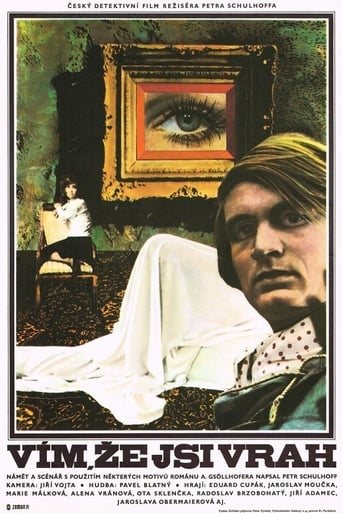 4.6
4.6Dana Martinová, a young woman of loose morals, dies at the hands of a mentally unstable young man, Pavel Zach. In a fit of jealousy, he could not restrain himself and killed the girl with a blow to the head. The police find the corpse thanks to Dana's friend Eva Simonova. And it's Eva who becomes Pavel's second victim. The young man, afraid of being found out, attacks the girl and drowns her in the bathtub. Lieutenant Zeman, a criminal investigator, is put in charge of the double murder as his first case, assisted by his more experienced colleague Suchánek. However, the investigation initially goes nowhere. While Pavel's father tries to have his mentally ill son committed to a psychiatric hospital, Pavel commits another murder out of fear. Neither he nor the investigators know that Pavel has been a mere tool in the hands of someone else for some time...
Vím, že jsi vrah...
1972
4.6Dana Martinová, a young woman of loose morals, dies at the hands of a mentally unstable young man, Pavel Zach. In a fit of jealousy, he could not restrain himself and killed the girl with a blow to the head. The police find the corpse thanks to Dana's friend Eva Simonova. And it's Eva who becomes Pavel's second victim. The young man, afraid of being found out, attacks the girl and drowns her in the bathtub. Lieutenant Zeman, a criminal investigator, is put in charge of the double murder as his first case, assisted by his more experienced colleague Suchánek. However, the investigation initially goes nowhere. While Pavel's father tries to have his mentally ill son committed to a psychiatric hospital, Pavel commits another murder out of fear. Neither he nor the investigators know that Pavel has been a mere tool in the hands of someone else for some time...
Vím, že jsi vrah...
1972
No synopsis available yet.
Hrozné dítě
1962
No synopsis available yet.
Hrozné dítě
1962
No synopsis available yet.
Zločin a trik II.
1967
No synopsis available yet.
Zločin a trik II.
1967
Visiting the company cafeteria is like going through the nine circles of Dante’s Inferno. At least that’s how Valoušek, editor of Kulturní noviny, sees it when he unwittingly becomes the protagonist of a social experiment at the local company cafeteria, where everything happens the opposite of how it should. This humorous satire about the conflict between reality and ideals highlights the pitfalls of the journalism profession, and the fact that culture is created not by institutions, but by people.
Troubles with Culture
1962
Visiting the company cafeteria is like going through the nine circles of Dante’s Inferno. At least that’s how Valoušek, editor of Kulturní noviny, sees it when he unwittingly becomes the protagonist of a social experiment at the local company cafeteria, where everything happens the opposite of how it should. This humorous satire about the conflict between reality and ideals highlights the pitfalls of the journalism profession, and the fact that culture is created not by institutions, but by people.
Troubles with Culture
1962
A TV comedy about an aunt who would like to get married.
Tetička za všechny peníze
1973
A TV comedy about an aunt who would like to get married.
Tetička za všechny peníze
1973
No synopsis available yet.
Píseň česká
1954
No synopsis available yet.
Píseň česká
1954
No synopsis available yet.
Poselství míru
1953
No synopsis available yet.
Poselství míru
1953
No synopsis available yet.
Trapasy II
1971
No synopsis available yet.
Trapasy II
1971
 7.4
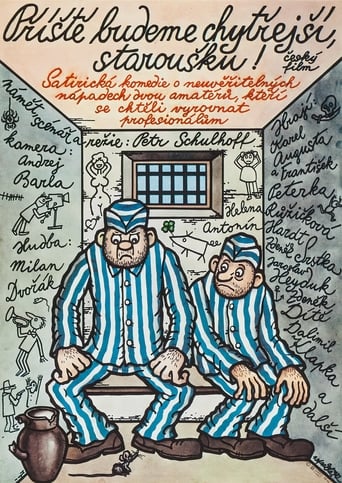
7.4This satirical comedy depicts the fate of two con artists who constantly encounter sharper and more experienced rivals. In their quest for easy profits, they often change several jobs and come up with a variety of original tricks and thievery. Each time, however, someone else profits from their ideas. And when they seek revenge on their crooked rivals, they end up back where they started - behind bars...
Příště budeme chytřejší, staroušku!
1982