
Acting
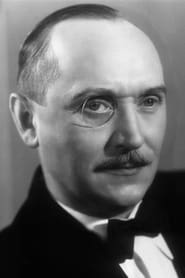
František Kreuzmann
Born — Died
1895-10-11 — 1960-12-28
Place of birth
Plzen/Pilsen, Bohemia, Austria-Hungary [now Plzen, Czech Republic]
Known for
Acting
Credits
60 titles
Known for
 7.5
7.5Good-natured and garrulous, Schweik becomes the Austrian army's most loyal Czech soldier when he is called up on the outbreak of World War I -- although his bumbling attempts to get to the front serve only to prevent him from reaching it. Playing cards and getting drunk, he uses all his cunning and genial subterfuge to deal with the police, clergy, and officers who chivy him toward battle.
The Good Soldier Švejk
1957
 7.0
7.0Vojtěch's beloved Frantina is leaving for Prague to work. Vojtěch promises his dying mother that he will become a priest. His brother Karel is to inherit the mill. However, during the feast, he attacks the weak Josífek and then flees the village. He hides in a quarry with an unknown vagrant. While blasting a stone in the quarry, the vagrant dies, and Karel exchanges his documents for his own. Vojtěch is still thinking about Frantina in the seminary.
Father Vojtech
1936
 7.0
7.0The wealthy factory owner Osten has achieved his position thanks to his energy and diligence. However, he has one weakness - he cannot admit that he too must grow old one day. What scares him most is the thought of becoming a grandfather. To prevent this, he is willing to become a rival in love with his own son. One day, Jiří has had enough of his father's actions and decides to leave his house and his comfortable life. He even changes his name and starts working in a competing factory as an ordinary worker to prove to his father that he too is capable of working his way up from scratch. That is when Jiří meets the energetic seamstress Tonička, who is studying in the evenings to become an office worker. The young people are happy together, but the factory owner Osten comes between them. He offers Tonička a position as a secretary and is ready to win her over...
Dědečkem proti své vůli
1939
No synopsis available yet.
Veselý večer Leonida Lenče
1954
 5.5
5.5Věra accepts the offer of her friend Kajetán, who arranges a position for her in Dominik's puppet factory. The spirited girl impresses her employer, Antonín Dominik, so much that he falls in love with her. Dominik's mother notices her son's interest in Věra and immediately fires her. Kajetán, who works in the studio of sculptor Výr, who is engaged in the production of mechanical puppets that can be used to advertise goods, asks Věra for help...
Panenka
1938
 5.0
5.0The revolutionary year of 1848 brought great hopes among the hitherto silent classes, awakening social and national hopes. The response also penetrated the remote countryside, even as far as the Podkrkonoše Mountains. The young shoemaker there began to take an interest in social and political events, and he also experienced disappointment in later developments.
O ševci Matoušovi
1948
Film credits
1960s · 2 titles
1950s · 16 titles
7.5Good-natured and garrulous, Schweik becomes the Austrian army's most loyal Czech soldier when he is called up on the outbreak of World War I -- although his bumbling attempts to get to the front serve only to prevent him from reaching it. Playing cards and getting drunk, he uses all his cunning and genial subterfuge to deal with the police, clergy, and officers who chivy him toward battle.
The Good Soldier Švejk
1957
No synopsis available yet.
Veselý večer Leonida Lenče
1954
No synopsis available yet.
Naši furianti
1955
 6.3
6.3The first part of the "Hussite Revolutionary Trilogy", completed with Jan Žižka (1955) and Proti všem (Against All Odds, 1957). The film captures the period from May 1412 to the summer of 1415, a turbulent time in the Czech Kingdom, during which there were protests in Prague against the sale of "omnipotent indulgences" whose sale throughout the kingdom was announced by Pope John XXIII. The ideological leader of this movement is the preacher Master Jan Hus, whose words, calling for the elimination of church abuses, are listened to in the Bethlehem Chapel by thousands of ordinary Praguers, Czech lords and Queen Sophie, wife of the Czech King Wenceslas IV.
Jan Hus
1955
 3.8
3.8May 1945. On the outskirts of Prague, ordinary people meet Soviet soldiers-liberators with tears of joy in their eyes. In the early days of the lull, someone sadly recalls a pre-war life; someone unexpectedly meets his love; someone is returning from enemy dungeons looking hopefully into the future; and someone, having moved from a tank into a Czech tram, warmly recalls his craft as a car driver... These days, all those who survived the Great War fire swear an oath to keep peace on Earth forever, honoring the memory of those who gave their lives for simple human happiness.
May Stars
1959
 5.9
5.9Jaroslav Hašek screens four film stories in the fairground shed around 1900. After period advertising slides and a "newspaper", we see "the first part of a sensational, exemplary, parfuss, salon program - a film from the life of school-age children, shot under very difficult circumstances". The plot of this film takes place partly in a school classroom and partly in a gymnasium toilet, where the primate Chocholka took refuge from a Latin composition. "Exemplary Family Happiness" is the second film that takes the viewer into the family of the municipal official Honzátek, in which many stormy scenes occurred when the hamster, provided by Honzátek Jr., moved into the sofa - a wedding gift from Sister Ema. Equally surprising are two other stories, one of which tells about the "father of the poor", the owner of a company with unrecoverable cash flow and a famous patron, and the other about the fateful consequences of a joint trip between the old bachelor Mr. Hanzlíček and his neighbors.
Jaroslav Hasek's Exemplary Cinematograph
1956
 6.7
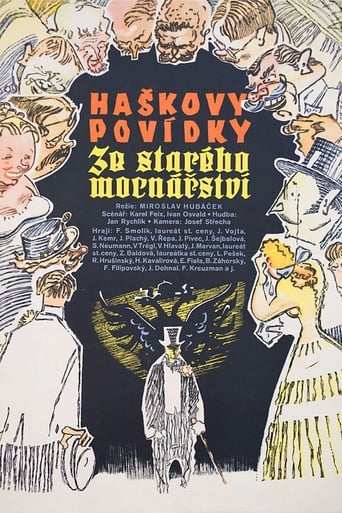
6.7Four short stories by the greatest Czech satirist Jaroslav Hašek. "Soup for Poor Children" tells the story of how Prince Robert himself cooked soup for poor children, "Meeting of the Municipal Council in Mejdlovary" is the history of filling the position of municipal policeman, "Trampotes of Mr. Tenkrát" shows how strange events lead to marriage and promotion, "Revolt of the Convict Šejba" depicts the victorious fight of the convict Šejba for a dumpling for ministering at mass.
Hasek’s Tales from the Old Monarchy
1952
 4.4
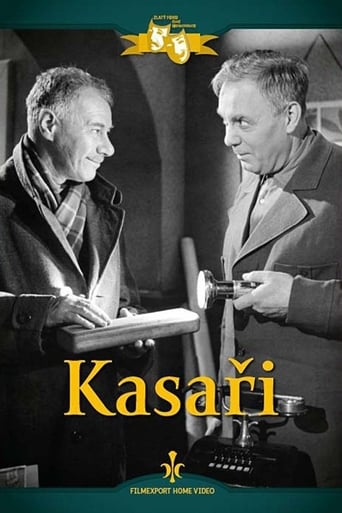
4.4A detective comedy about ex-cashiers who - except for one - have improved and lead a proper and peaceful life and mostly desperately resist the slightest reminder of their past. However, one of them, Josef Fiala, formerly known as Procházka, is one day asked to open a safe in the Sitex factory that has been slammed open with keys inside by careless employees. The operation goes well, but in time Fiala finds himself suspected of theft...
Kasaři
1958
 7.0
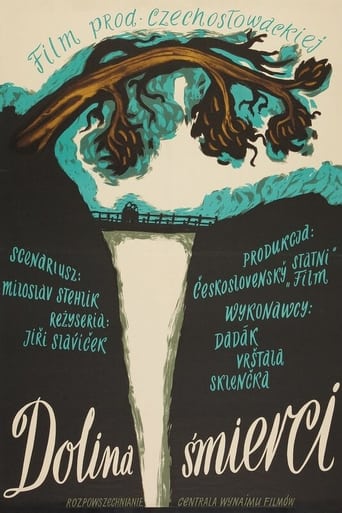
7.0A new owner of the estate, Konrád Ritter von Schiess, arrives in the Czech village of Sluky. On his orders, the inhabitants of the village are to be evicted and only 30 families are allowed to remain, who volunteer to work on the estate. However, the inhabitants refuse to work for the lords, and their solidarity only strengthens when one of them is murdered by the Gestapo based on a report by the estate manager Prokeš...
Mordová rokle
1952
A hardworking employee at a printing plant takes on all sorts of roles until he nearly collapses under their weight. He learns that those who try to do everything end up doing nothing.
Nechte to na mně
1955
 9.0
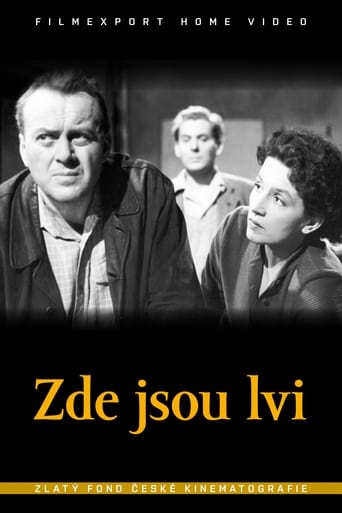
9.0The rude and bitter mining engineer Štěrba strongly opposes the proposal of his colleague Ing. Vochoče to reopen mining in the old mine. Vochoč's plan is precisely prepared and could solve many problems. However, Štěrba does not want to explain anything to anyone, he does not want to talk to anyone, his only refuge is the pub and his only friend is a glass of alcohol. He has resigned himself to a relationship with his wife. No one knows that he has very good reasons to prevent Vochoč and the others from taking their meritorious initiative...
Zde jsou lvi
1958
 6.3
6.3In the past, most of the wood from the mountain forests was transported to the sawmills by river. The rafters were gradually replaced by trucks and railways, but they still remember the days of their glory and the romance of water travel. Two experienced old swimmers, Váň and Šindelář, managed to push for a return to the old way, at least for one trip. They got a group of like-minded enthusiasts and rafts made of logs can set off down the river...
Plavecký mariáš
1953
Innovator Ludvík Zach is in love with his technical data and improvement proposals and does not believe that women could be able to understand these problems. However, on his way back from a conference, he meets Jarmila, an electromechanic, and arranges a meeting with her. He would prefer to talk to her about technology, but he discovers that Jarmila is more interested in poetry and music...
Slovo dělá ženu
1953
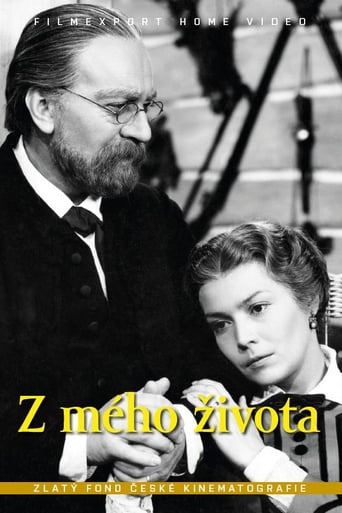 7.5
7.5The film, in individual episodes, captures the fate of Bedřich Smetana from 1856 until the end of his life, from his young years until the moment when, exhausted by human and artistic hardship, he sees the fulfillment of his great dream, the opening of the National Theatre.
From My Life
1955
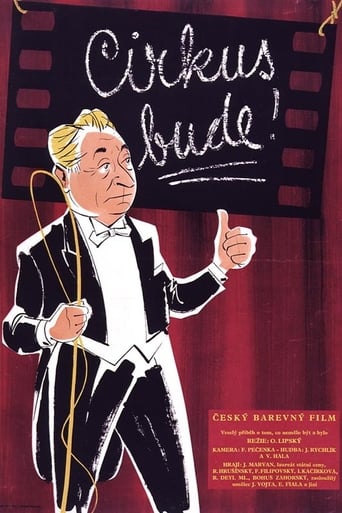 7.5
7.5A few bus-loads of holidaymakers from the agricultural cooperative on a day trip arrive to see the show at the Slavia Circus. But, they have bad luck. It is Monday, the day on which the employees have their extra day off.
The Circus Will Be
1954
On his first day in a new place, waiter Josef Kučera stands up for his old servant Bartoš and bellhop Svát. His actions earn him the distrust of the café owner Stýbl, the admiration of the maid Jindřiška, and the hatred of her suitor, the waiter Vacek. One evening, Kučera overhears a strange conversation between two guests and confides in the editor of Rudý právo Rokos. When a scandal breaks out about the bank robbery of the minister's son-in-law Zakhar, Rokos deduces from the conversation that it was a fake robbery...
Kavárna na hlavní třídě
1954
1940s · 15 titles
5.0The revolutionary year of 1848 brought great hopes among the hitherto silent classes, awakening social and national hopes. The response also penetrated the remote countryside, even as far as the Podkrkonoše Mountains. The young shoemaker there began to take an interest in social and political events, and he also experienced disappointment in later developments.
O ševci Matoušovi
1948
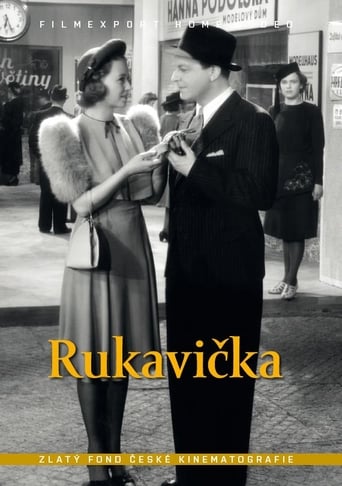 7.5
7.5A lost lady's glove that connects several human destinies. The focus here is not on the lost part of the wardrobe, but on piano virtuoso Arne Brant, a man armed with a charming smile and surrounded by women, two of whom have particularly influenced his life. The first is the daughter of a famous can-can star, dancer Pavlína Doré-Zejdová, the second is Mařenka Berková, the main character of the film and a kind of Kristián in skirts. An orderly and well-bred daughter from an honorable family who lives her second life as a lady of high society. The lost glove complicates the situation for all of them considerably, but in the end she finds her rightful place, just like the heroes of the film...
Rukavička
1941
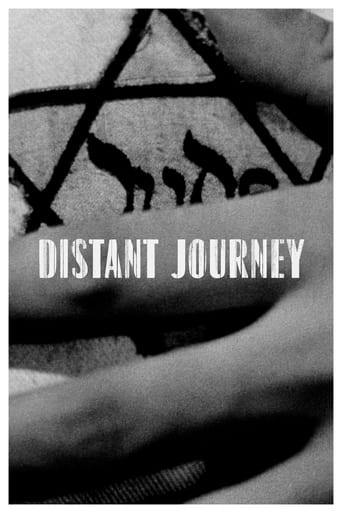 6.9
6.9Prague, during World War II. Hana Kaufmann, a Jewish ophthalmologist, marries Dr. Antonín Bureš, a Christian man. When her family is sent to the Theresienstadt concentration camp, their romance turns into a struggle for survival.
Distant Journey
1949
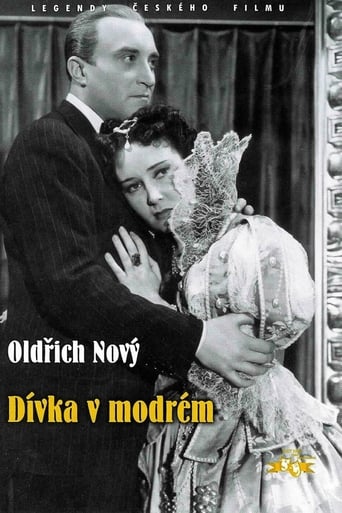 6.5
6.5A painting of a girl from another time comes to life for it's buyer in this costume comedy.
The Girl in Blue
1940
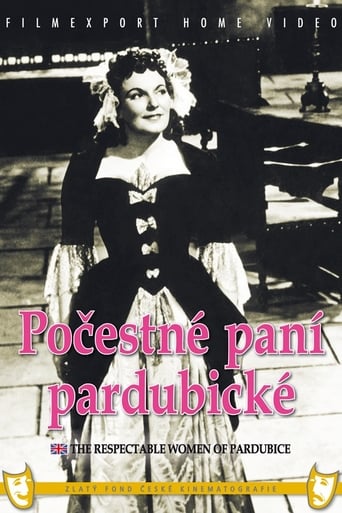 8.0
8.0The bickering of envious mistresses, the criminal intentions of fraudsters and the love of two young people are at the center of events, in the middle of which unfolds the fate of the city executioner Jiří, who longs to break free from his destiny and become a proper burgher. He is not heard, but he manages to expose the iniquities and their culprits, reunites a hard-pressed couple in love and his undeniable merits for the city and eventually bring him luck.
The Respectable Ladies of Pardubice
1944
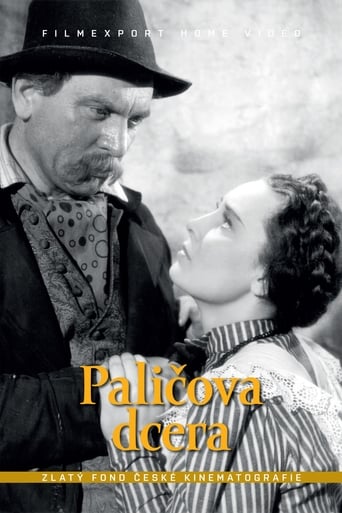 5.5
5.5The fiddler Valenta has troubled his wife with his drinking and disorderly life. His daughter Rozárka and her younger sisters go to their aunt's in Prague, and their father sets fire to the abandoned house. Rozárka is suspected...
The Incendiary's Daughter
1941
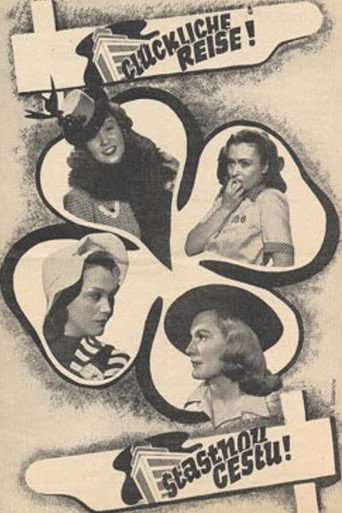 6.7
6.7Filmed during the Nazi occupation, this panoramic drama set in a Prague department store follows the divergent destinies of four female coworkers, each of whom seeks happiness in a different way.
Happy Journey
1943
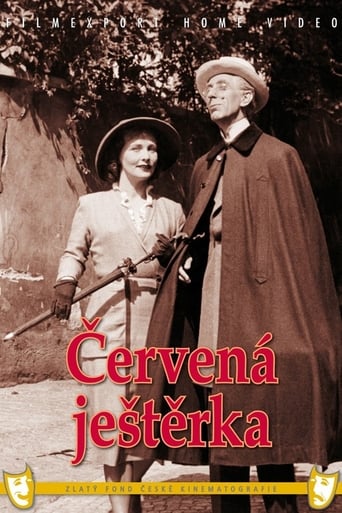 10.0
10.0Grammar school teacher Bláha hurts himself in pursuit of a red lizard, and is lying unconscious in the lonely house of Santrucek family. The postman, who found Bláha's coat and hat in the water, announces to everyone in town that the professor has drowned. But, the venerable citizens are at that moment more interested in the theatre group with the beautiful guest actress Eva Gazdová. They demand a change of repertoire and manage to persuade the theatre manager to have the group play the musical comedy The Red Lizard instead of an established play.
Red Lizard
1949
No synopsis available yet.
Love Song
1940
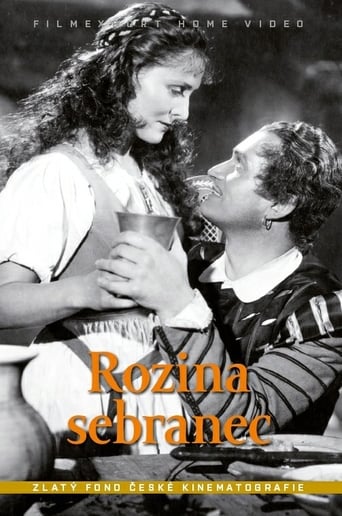 7.5
7.5Prague, the beginning of the 17th century. Rozina falls in love with Italian glass worker Nikolo, but after returning home, she gets a message that will never come to Prague. She falls for the promise of an older man to marry her, but when Nikolo does return, the tragic fate of Rozina is sealed.
Rozina the Love Child
1945
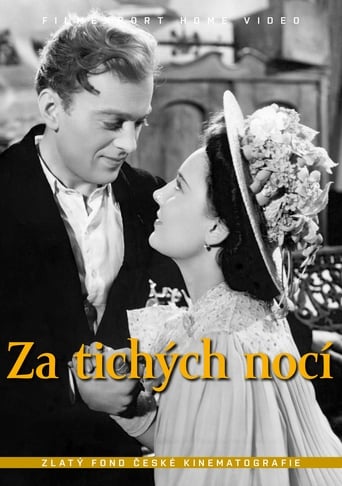 6.5
6.5Jana's beautiful niece arrives in Prague to live with two spinster aunts. Both women wish to marry her off. The son of the court councilor Petr is courting her. However, Jana has met a young official Záviš and the two fall in love. But Záviš is poor and cannot marry yet. They keep it a secret from Jana that he composes songs. Coincidentally, Petr is his friend and both men talk about the girls they love, unaware that in both cases it is Jana...
Za tichých nocí
1941
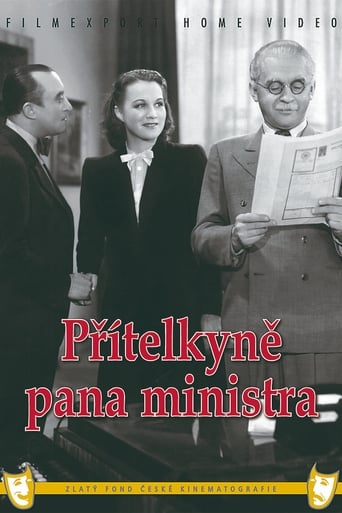 8.1
8.1The main character of the funny story is an ordinary typist Julinka Svobodová, who works for the established business firm Hrubý a syn and lives in a sublet with the seamstress Mrs. Pokorná. Although she is poor and sometimes manages to be late, she is still cheerful and pleasant. However, a small coincidence is enough and everything changes. That is when she takes an elevator ride with the Minister of Trade, Dr. Horák, who coincidentally lives in the same building. Mrs. Pokorná, in good faith, hints to the inquisitive landlady that Julinka is the Minister's girlfriend. From the talkative woman, an innocent rumor spreads like wildfire and, surprisingly, it helps the girl in every way...
Přítelkyně pana ministra
1940
 5.8
5.8Folk song collector Dr. Šerk arrives in the remote village of Lesov. He is enchanted by the singing of sixteen-year-old Madla Satranová and he records her songs for radio broadcast. Šerk's friend, composer Jaroslav Klán, takes care of a group of orphans, from whom he has formed a choir. Šerk brings the orphaned Madla to him. The teenage girl begins to help the housewife Nána with the care of the children.
Madla zpívá Evropě
1940
 NR
NRMr. Novák, an insurance company clerk, only cares about his job, nothing else interests him. Even the social changes in February 1948 leave him indifferent. He only becomes aware of them when the insurance company is closed down. He has to make a decision: either retire or go to work in a factory. Neither of these options appeals to Mr. Novák...
Pan Novák
1949
The Czech revival movement is divided at the end of the first half of the 19th century. While the older generation, such as František Palacký, urges restraint, students lean towards radical positions. A report on the revolutionary events in Paris prompts Czech Prague residents to write down the demands of the Czech nation for self-determination and the proclamation of a constitution. Tensions peak during the All-Slavic Congress in Prague's Žofín. Vienna rejects the Czech demands and the congress is brutally dispersed by the Austrian police. Prague begins to build barricades...
Year of the Revolution 1848
1949
1930s · 27 titles
7.0Vojtěch's beloved Frantina is leaving for Prague to work. Vojtěch promises his dying mother that he will become a priest. His brother Karel is to inherit the mill. However, during the feast, he attacks the weak Josífek and then flees the village. He hides in a quarry with an unknown vagrant. While blasting a stone in the quarry, the vagrant dies, and Karel exchanges his documents for his own. Vojtěch is still thinking about Frantina in the seminary.
Father Vojtech
1936
7.0The wealthy factory owner Osten has achieved his position thanks to his energy and diligence. However, he has one weakness - he cannot admit that he too must grow old one day. What scares him most is the thought of becoming a grandfather. To prevent this, he is willing to become a rival in love with his own son. One day, Jiří has had enough of his father's actions and decides to leave his house and his comfortable life. He even changes his name and starts working in a competing factory as an ordinary worker to prove to his father that he too is capable of working his way up from scratch. That is when Jiří meets the energetic seamstress Tonička, who is studying in the evenings to become an office worker. The young people are happy together, but the factory owner Osten comes between them. He offers Tonička a position as a secretary and is ready to win her over...
Dědečkem proti své vůli
1939
5.5Věra accepts the offer of her friend Kajetán, who arranges a position for her in Dominik's puppet factory. The spirited girl impresses her employer, Antonín Dominik, so much that he falls in love with her. Dominik's mother notices her son's interest in Věra and immediately fires her. Kajetán, who works in the studio of sculptor Výr, who is engaged in the production of mechanical puppets that can be used to advertise goods, asks Věra for help...
Panenka
1938
 10.0
10.0The likeable and charming Vanda Karhanová has problems in every job because of her appearance. So when she is about to start a new job, she decides to decisively prevent similar problems. She adjusts and dresses in a way that men do not notice her and do not pay attention to her. She has no idea that she will cause even more problems for herself, and not only because she now bears an uncanny resemblance to the millionaire Czech-American Ruth Baretová, who ran away from home to avoid getting married. First, Vanda is mistakenly arrested and ends up in the police station, so she cannot return to work. At the factory, they suspect her of having disappeared with a large sum of money that they had entrusted to her to deposit in the bank. Then the whole situation is complicated by the arrival of the real Miss Baretová.
Vandiny trampoty
1938
A young farmer, Jan Aleš, is drafted from his native Pošumaví to join the army. Since he likes his new environment, he stays with the army as a long-term serviceman. He even successfully passes the exams for the military academy. There he becomes friends with his Slovak colleague Milan Jurčík. He studies diligently, but thanks to Milan he sometimes finds time to go out into the city. That is how he meets the factory owner's daughter, Zdenka, with whom he falls in love. However, her father is not very happy about the promising relationship.
Neporažená armáda
1938
No synopsis available yet.
Osudná chvíle
1935
 10.0
10.0Two young composers offer their operetta in vain - it is rejected before anyone reads it. By a coincidence, when its text ends up in the wrong briefcase, it ends up with a popular singer who, on the contrary, likes it very much, but has no idea who wrote the play... The search for the authors, personality confusion and budding love become the main plot elements of this pleasantly naive film, where there is constant singing.
Veselá bída
1939
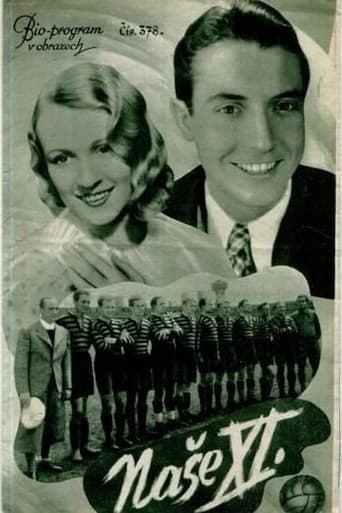 10.0
10.0No synopsis available yet.
Naše XI.
1936
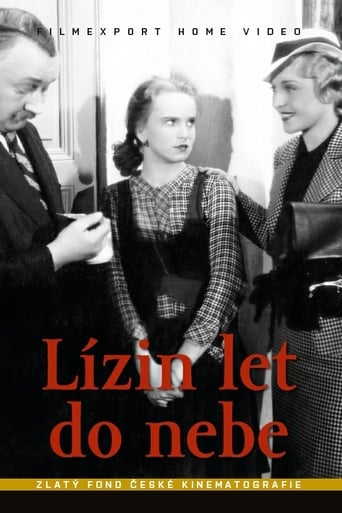 5.8
5.8The orphan Eliška Irovská, nicknamed Líza, arrives in her native village of Ptačice. As an orphan she is housed in the local poorhouse and has to go out begging. Her guardian Petr Tumlíř, however, sees that she is competent enough to go to school.
Líza Soars to the Skies
1938
 10.0
10.0No synopsis available yet.
Třetí zvonění
1938
 6.7
6.7Film about famous poet Karel Hynek Mácha
Karel Hynek Mácha
1937
No synopsis available yet.
Bláhové děvče
1938
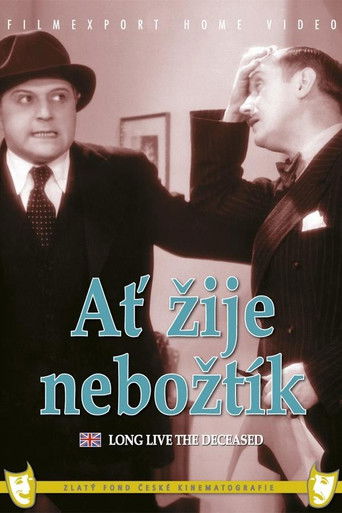 7.0
7.0Wealthy and ill Petr Kornel (Karel Hasler) is not pleased with the carousing lifestyle of his nephew. He stops supporting him financially and demands that he change his name. Out of gratitude Kornel bequeaths a substantial sum of money to his nurse Alice (Adina Mandlová) with the condition that she marries. Petr Suk (Hugo Haas), as the nephew is now named, visits the doctor. In the waiting room his X-ray is mistakenly switched with one of another patient's. On the basis of this he presently learns that he is seriously ill and has only one day of life left to him.
Long Live the Dead Man
1935
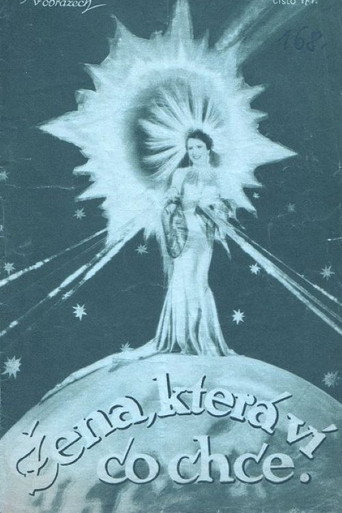 9.0
9.0Woman concert star seeks to connect with her adult daughter, by her former marriage to a staid industrialist who has kept the two apart since the girl was very small, and receives inadvertent help from the industrialist's just-fired employee who has fallen in love with the girl.
Žena, která ví, co chce
1934
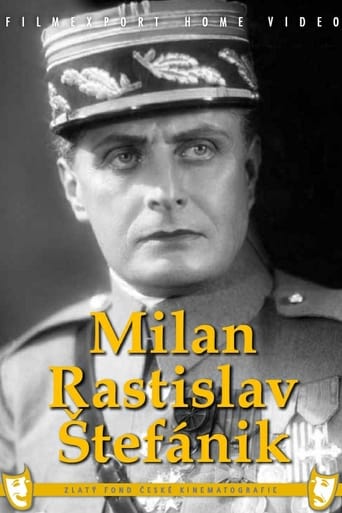 7.5
7.5The life story of a prominent Slovak scientist, soldier, diplomat and politician who contributed to the creation of conditions for the formation of an independent Czechoslovakia. He died in a plane crash on May 4, 1919.
Milan Rastislav Štefánik
1935
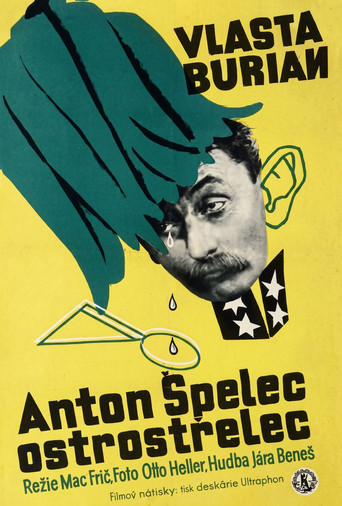 7.1
7.1Anton Špelec (Vlasta Burin) is a producer of musical instruments by trade but a sharp-shooter at heart. He expects to be awarded a medal at a large parade in town where veteran sharp-shooters will be honored. When the town council is one medal short, Anton must wait another year for his prized possession. He drowns his disappointment in drink at the local pub and becomes so drunk that he insults the emperor who sentences him to jail. Instead of fulfilling the emperor’s orders himself, Anton sends his employee in his stead.
Anton Špelec, Sharp-Shooter
1932
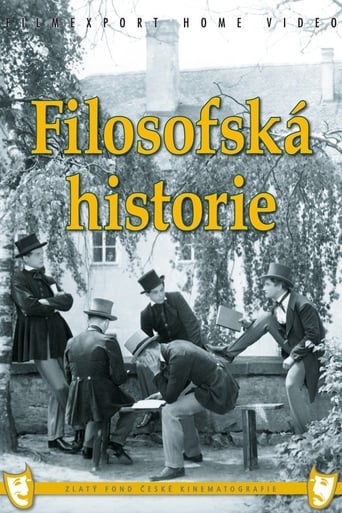 7.0
7.0A student rebellion precedes revolutionary events in Prague.
History of Philosophy
1937
An old peasant from Chodský, Záhor, claims to the young Podestát that he returned three hundred gold pieces to his father before the old Podestát died. Out of greed, Záhor even decides to perjure himself in court. The indignant creditor warns him of God's wrath. Záhor's sons, Matěj and Vondra, are vying for the same girl - the daughter of a blacksmith, Nana.
Boží mlýny
1938
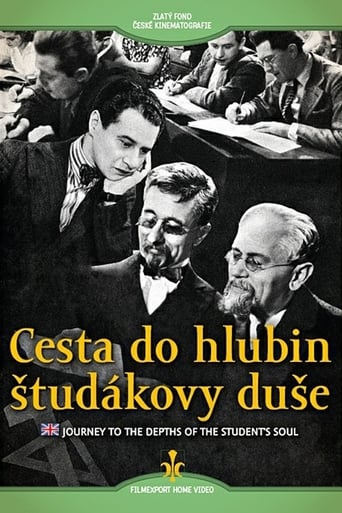 7.6
7.6Small stories from a grammar school.
Journey Into the Depth of the Student's Soul
1939
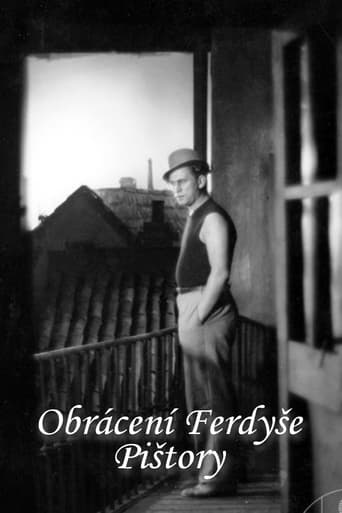 6.0
6.0Cashier Ferdyš Pištora goes to rob the villa of banker Rosenštok. At that moment, a fire breaks out and Ferdyš saves the banker's two young children. He is hailed as a hero by everyone and Rosenštok makes him a messenger in the bank. This changes Ferdyš's entire life. He becomes a moralist and bullies the whole neighborhood with his sermons. He falls in love with Terezka, a member of the Salvation Army. Ferdyš's former lover Irma is jealous of Terezka. The two women argue and Terezka, in anger, claims that she killed her child and buried it in the cellar. Ferdyš believes this fabrication. In order to save her, he wants to give her the money that he was supposed to hand over to the bank. Out of jealousy, Irma tells the police that Ferdyš wanted to rob the banker's villa, and Ferdyš is arrested. However, Rosenštok intercedes for him and Ferdyš is acquitted. Terezka confesses that she made up the child's murder and celebrates her wedding with Ferdyš.
Conversion of Ferdys Pistora
1932
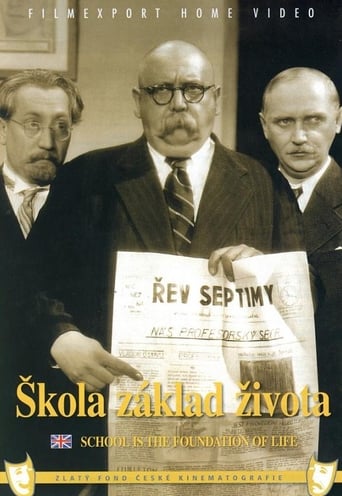 8.2
8.2Seventh form pupils at a grammar school in Přívlaky are preparing for a secondary school sports competition. Class creep Krhounek gives the class teacher Lejsal a copy of the seventh form’s magazine Roar. Most of the teachers insist on severe punishing the culprit. The author does not own up and consequently the whole class is punished by being banned from taking part in the schools competition. The most gifted pupil, Benetka, rather sharply criticises the school in a homework essay on a subject of his choice. The strict Czech language teacher is convinced Benetka is the author of the school magazine. Benetka denies the charge but his expulsion from school is proposed anyway on account the views he expounded in his essay. Eventually, Boukal, the author of the school magazine comes forward and admits to writing it. The pupils are allowed to take part in the contest and thanks to Benetka they win. In the meantime however the teachers vote to expell him.
School Is the Foundation of Life
1938
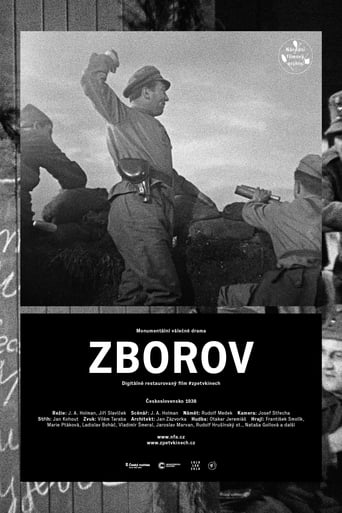 6.0
6.0In the Škoda factory, where they are feverishly rearming in 1914, works the foreman Kalina, the father of the young men Pavel and Jan. Pavel is a supporter of the monarchy, while Jan, on the contrary, defends the idea of our national independence. Just before mobilization, Jan escapes to Russia, where he joins a group of volunteer legionnaires called the "Czech Company", fighting against the Austro-Hungarian monarchy. Pavel enlists in the Austrian army. The brothers do not meet again until July 1917 in the battle of Zborov in Ukraine, which marked a successful breakthrough of the Austro-Hungarian front.
Zborov
1939
 7.0
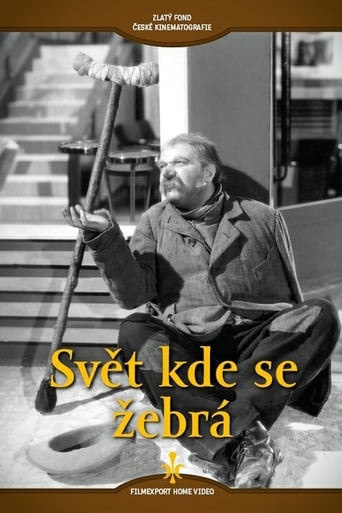
7.0The smooth narration, corresponding to the requirements of a light comedy, develops the smiling and optimistic story of the "one-armed" beggar Dostál, who earned enough money with his excellent begging skills to buy a nice house, become a respectable master of the house, and save the impoverished lawyer Neprosil from poverty, who he contributed regularly to him when he was still well off. He also wanted to get him together with his pretty ward Zorka, for whom he said he would be an ideal husband, but the young people were able to do that by themselves and without his clumsy help, or rather despite his rather ineffective help... The film was shown at the VI. IFF in Venice in 1938.
The World Where One Goes Begging
1938
 7.5
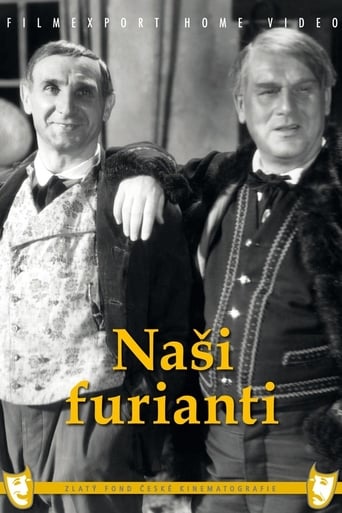
7.5The richest farmer and at the same time mayor Dubský and first councilman Bušek are constantly competing for supremacy. Their rivalry affects not only the fates of their families, but also the entire village, in which every problem, even the smallest one, everything that the board of directors discusses becomes a battleground for the two rivals. And it is not just about who will be appointed night watchman due to the increasing thefts. It is also about the love of Václav, Dubský's son, and Verunka, the daughter of councilman Bušek.
Naši furianti
1938
 8.0
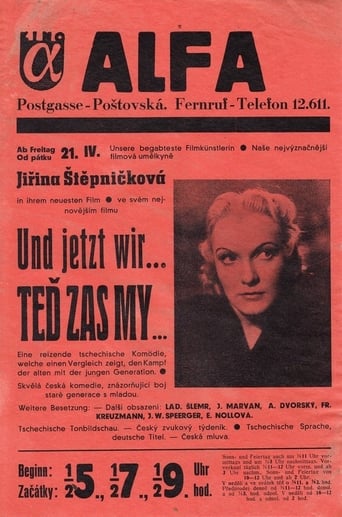
8.0The factory owner Hložek is in a constant dispute with his son Jiří. Jiří wants to modernize the factory, but his father is afraid that the new machines will deprive the workers of their jobs. News of the factory modernization divides the employees into two hostile camps. To prevent unrest, Hložek offers his son money from his mother's inheritance in exchange for his departure. Jiří's biggest opponents include two older employees of the company - the correspondent Málek and the accountant Mazara...
Teď zas my
1939
 7.2
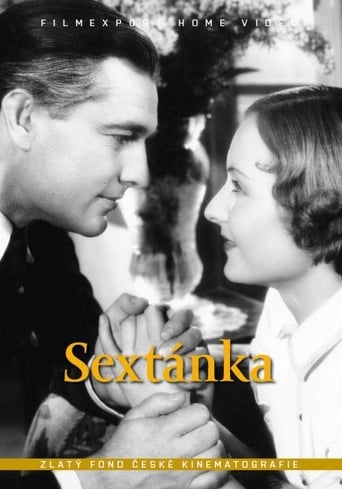
7.2Sixth-year student Eva Martenová falls in love with the new young professor Jiří Hron. She cannot concentrate in his lessons, even though she is as well prepared as ever for teaching. On a school trip, Professor Bruncvíková tries to win Hron over, but the professor dances with Eva at a party. At school, Eva's thoughts are elsewhere again and she refuses to give Bruncvíková Hron's portrait. She goes to Hron's office crying and he tries to calm her down. His friendly gesture is seen by Professor Bernard, who had previously had reservations about Hron's modern teaching methods. He informs the principal that Hron was holding student Martenová in his arms. When Eva learns that Hron is facing disciplinary proceedings because of her, she attempts suicide. However, her friend Martina's brother, Dr. Pavel Haler, saves her. In the hospital, Eva is visited by a vindicated Hron and confesses his love for her.
Sextánka
1936
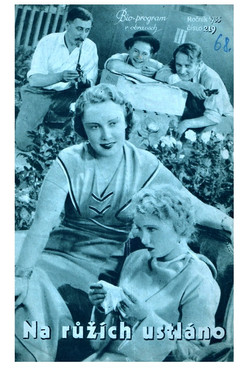 7.0
7.0No synopsis available yet.
Na růžích ustláno
1935