
Acting
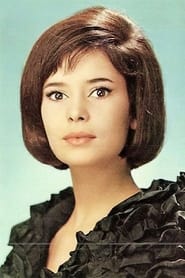
Marie-José Nat
Born — Died
1940-04-20 — 2019-10-10
Place of birth
Bonifacio, Corse, France
Known for
Acting
Credits
63 titles
Marie-José Benhalassa (22 April 1940 – 10 October 2019), known professionally as Marie-José Nat, was a French actress. Among her notable works in cinema were the sequel films Anatomy of a Marriage: My Days with Jean-Marc and Anatomy of a Marriage: My Days with Françoise (1963), directed by André Cayatte. In 1974, she received a Cannes Film Festival Award for Best Actress for her performance in the film Violins at the Ball. Benhalassa was born in Bonifacio, Corse-du-Sud, to a Kabyle Berber father, Abdelkader Benhalassa, and a Corsican mother, Vincentine (Biancarelli). In 1960, she married the actor Roger Dumas and divorced him in 1962. She then married French director Michel Drach with whom…
Known for
 9.5
9.5Marcello Mastroianni, Isabelle Adjani, Alain Delon, Martin Scorsese, Woody Allen... the biggest stars in cinema were welcomed by Christian Defaye on his show Spécial cinéma. Between intimate confessions from actors and immersion in the world of the greatest filmmakers, Christian Defaye took viewers on a journey into the fascinating world of cinema for nearly thirty years.
Spécial cinéma
1974
 3.6
3.6No synopsis available yet.
Vivement dimanche
1998
 6.8
6.8No synopsis available yet.
Champs-Elysées
1982
 7.5
7.5A French variety show.
Numéro un
1975
 6.0
6.0A talk show presented by Michel Drucker
Les Rendez-vous du dimanche
1975
 6.0
6.0No synopsis available yet.
Midi trente
1972
Film credits
2010s · 2 titles
 5.7
5.7The murder of a woman in an abandoned house is the first murder this rural French island has had in 100 years. Or is it? A cop who left the island 20 years earlier and a young intern who moved away when she was six years old - but doesn't remember those first six years of her life - team up to solve the murder and some other mysteries that develop during the course of their investigation.
Murder in Batz
2015
 10.0
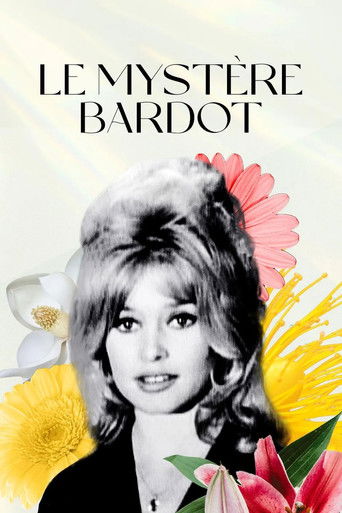
10.0Who hides behind Brigitte Bardot? Extraordinarily photogenic, a tumultuous love life, the ultimate sex symbol for the 1950s and 1960s, the actress, singer and animal rights activist left an indelible mark on her era. Despite over 30,000 photos published in the press, her true personality has long-remained in the shadows.
The Bardot mystery
2012
2000s · 6 titles
 10.0
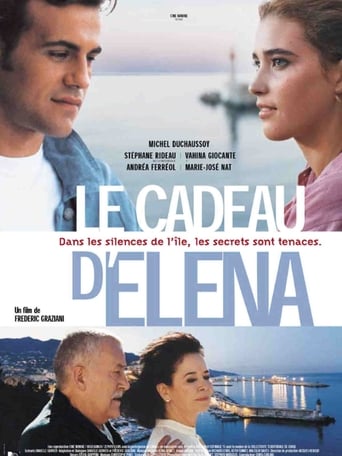
10.0After more than 40 years of absence, Socrates spends some days in Corsica, accompanied by his son Antoine, to see his cousins. But Antoine discovers his father's secret before his birthday party.
Elena's Gift
2004
 NR
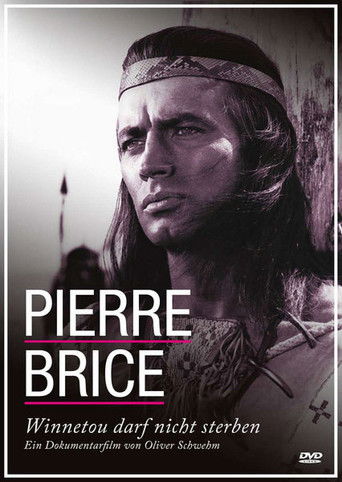
NRHe is a living legend in Germany, but never became known to a wider audience in France: Winnetou actor Pierre Brice. Director Oliver Schwehm sensitively traces the career of the French actor, whose career only took off very hesitantly in the 1950s before he experienced a meteoric rise through the role of the noble Apache chief. Brice reflects on his role as "Winnetou" and visits the original locations in Croatia 40 years after the last filming was completed. Statements from colleagues and former companions (including Mario Adorf and Marie Versini) as well as numerous film clips round off this entertaining documentary.
Winnetou darf nicht sterben
2007
Officially declared missing in 1945, Gaston Boissac suddenly comes back at 70 years old in his home village.
My Russian Uncle
2006
 9.0
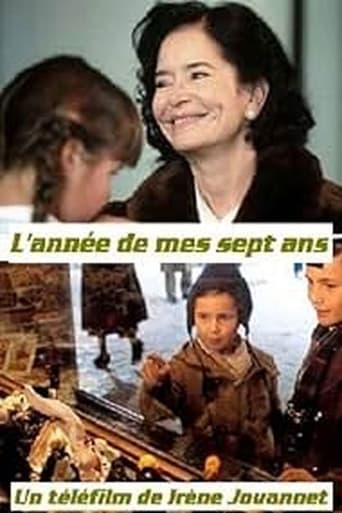
9.0My name is Hélène and 1952 was not an easy year for me. First, because my parents decided to leave Montpellier for Paris but without taking me and my big brother Michel along with them. Why, I don't know... The fact remains that I had to leave the south for Lille, in the North, where my grandmother Yaya (her true name is Alice but this is the way call her) and my grandfather Georges were living. What I disliked most was that Yaya had a preference for Michel and that Granddaddy was too grumpy. In Lille I also got very upset when pupils at the catholic school I attended told me I was... Jewish. Jewish? I didn't even know that Jews even existed. And when I knew better about them (Michel was more informed than I was), what a shock it was when I learned that my two other grandparents had been sent to a concentration during the war. A little too much for a little girl like me. A sure thing is that I will never forget the year 1952, the year when I was seven...
The Year when I Was Seven
2003
 4.2
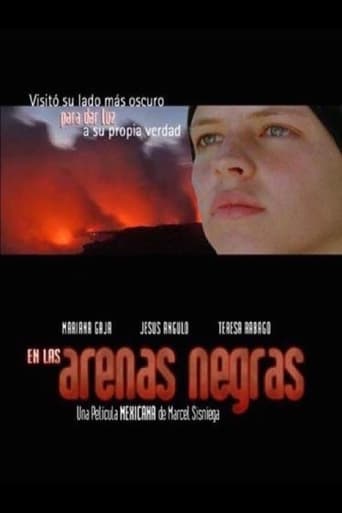
4.2A young woman, Anacruz, goes up to a cabin on the slopes of the volcano Popocatéptl intending to finish her thesis on the prehispanic myths of the area. However, she encounters local characters, such as the hermit Soto, who makes her aware of the false myths in her own life.
En las arenas negras
2003
 10.0
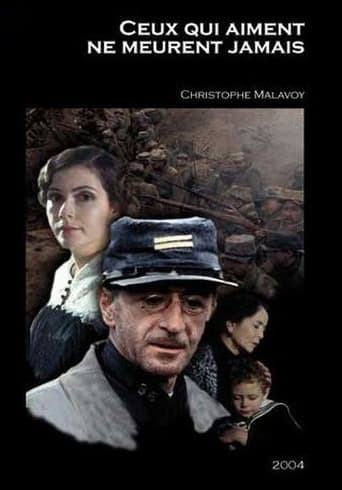
10.0During WW-I Odette gets to know that her husband André has fallen. Her littler son never saw him. He tries to recapitulate his last hours.
Ceux qui aiment ne meurent jamais
2004
1990s · 4 titles
 7.3
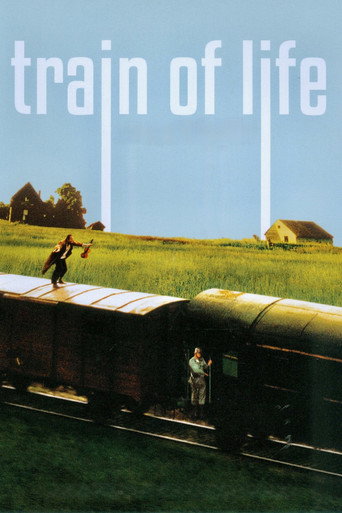
7.3In 1941, the inhabitants of a small Jewish village in Central Europe organize a fake deportation train so that they can escape the Nazis and flee to Palestine.
Train of Life
1998
 4.7
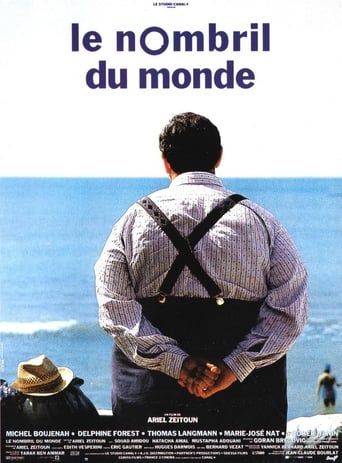
4.7Tunisia, early thirties, the young and plump Bajou, lives modestly with his parents. One day after a flood, his father suddenly disappears. Thanks to his uncle and his cousin Marcel, he moves with his mother Oumi to work for the wealthy landowner Mr. Scali, a talkative and boastful man.
Le Nombril du monde
1993
 8.0
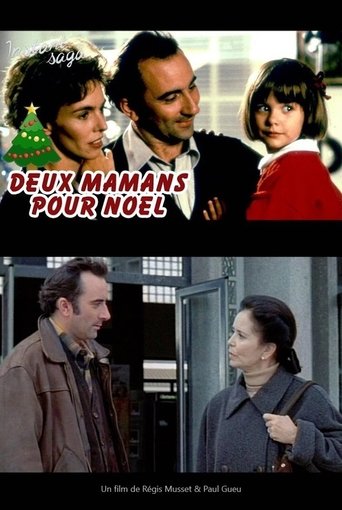
8.0After years, Eric decides to track down his mother.
Deux mamans pour Noël
1998
 6.8
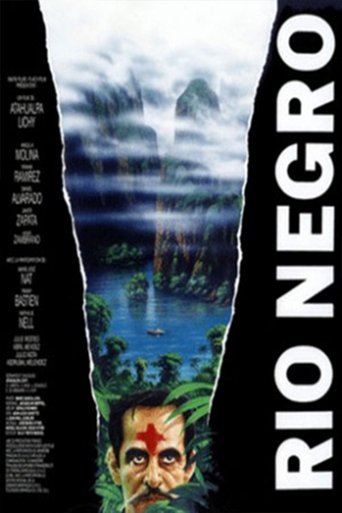
6.8The struggle of two men, Osuna and Funes, hungry for power and wealth in a small town in Venezuela, during the dictatorship of Juan Vicente Gómez.
Black River
1990
1980s · 4 titles
 4.0
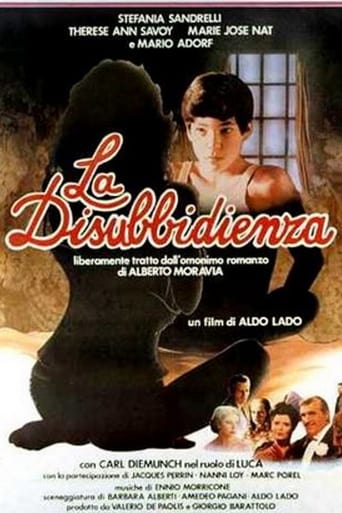
4.0Luca Manzi is a fourteen year old boy when the Northern Italy Republic of Salò is governed by the Fascists. He becomes a partisan but when the war ends he is disappointed because things have not changed as he had hoped they wood, and he decides to let himself die. He is saved by Edith who tries to introduce him to sex. Based on the novel by Alberto Moravia.
Disobedience
1981
 5.9
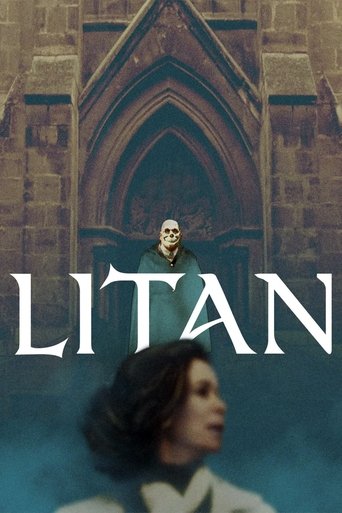
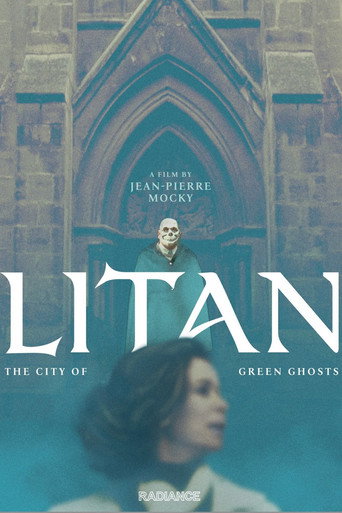
5.9Married couple Jock & Nora are visiting the town of Litan during Litan's Day, with its carnivalesque atmosphere. When Nora wakes that morning from dreaming the bizarre death of her husband, she sets out across town to find him and warn him. But as she does, she encounters stranger and stranger people and events erupting into a frenzy in front of her. Now, she and Jock must elude all of the impediments in their way of reaching safety on the outskirts of town.
Litan
1982
 NR
NRFrench television documentary on the making of Jean-Pierre Mocky's Litan
The Making of Litan
1982
 7.5
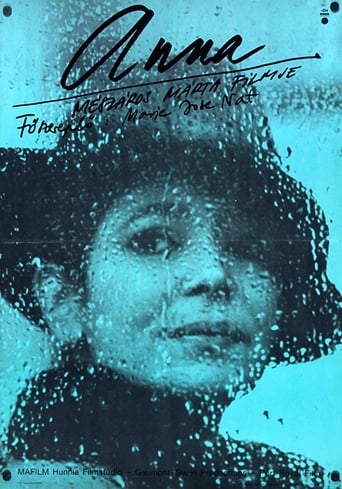
7.5Anna is a stylist in Budapest. One day at a restaurant, she thinks she recognizes Marie Aubier, a 22-year-old French girl, her own daughter.
A Mother, a Daughter
1981
1970s · 9 titles
 7.8
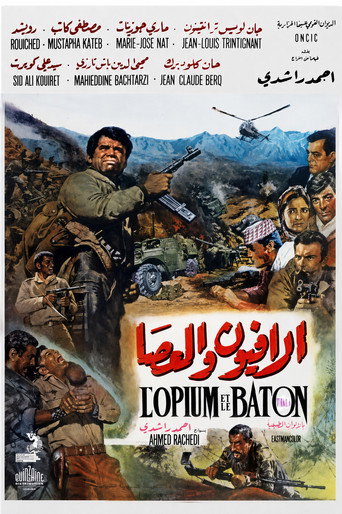
7.8In 1950, in Algeria, in a village in Kabylia, Algerian resistance fighters resisted the French occupation army. Bachir returns to the village to escape the clashes ravaging Algiers. In Thala, he has two brothers, Ali and Belaïd. The first is engaged with the ALN (The National Liberation Army) and fights against the colonizer. His second brother, Belaïd, the eldest, is convinced of a French Algeria. His family torn apart, Bachir decides to join the war and takes sides against the repression of the French army. The French army is trying in vain to turn the population against the insurgents by using disinformation. The more time passes, the more the inhabitants of the village and surrounding areas, oppressed, rally to the cause of the FLN, their houses and their fields will be burned... Adaptation to the cinema of the eponymous novel Opium and the Stick, published in 1965, by Mouloud Mammeri, the film was dubbed into Tamazight (Berber), a first for Algerian cinema.
Opium and the Stick
1970
 9.0
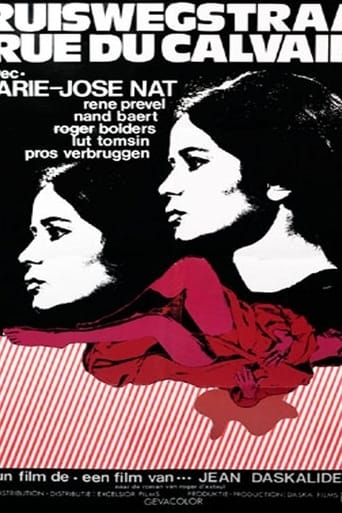
9.0Octave Verbrugge, a powerful Belgian building contractor, met Hugo Saint-Laurent, a brilliant French engineer, during a business trip and made friends with him. Now that his bureau of expertise is experiencing difficulties with one of their important projects he has the idea to hire his friend to help resolve the problem. Hugo agrees and stays as a guest at Octave's home in Ghent, where the promoter lives with his two unmarried sisters, Françoise, a beautiful but mysterious woman, and Aurélie, a very strict and withdrawn lady.
6 Calvary Street
1973
9.0Octave Verbrugge, a powerful Belgian building contractor, met Hugo Saint-Laurent, a brilliant French engineer, during a business trip and made friends with him. Now that his bureau of expertise is experiencing difficulties with one of their important projects he has the idea to hire his friend to help resolve the problem. Hugo agrees and stays as a guest at Octave's home in Ghent, where the promoter lives with his two unmarried sisters, Françoise, a beautiful but mysterious woman, and Aurélie, a very strict and withdrawn lady.
6 Calvary Street
1973
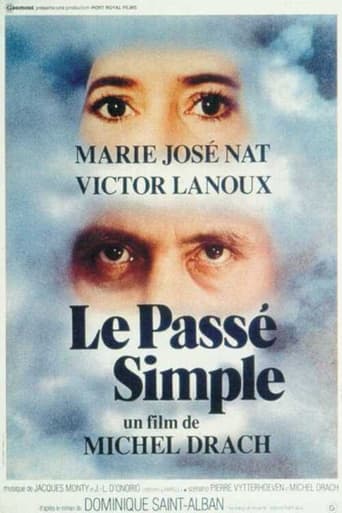 6.9
6.9When François' wife Cecile was leaving him because of his affairs with other women, she had an auto accident. In this drama, he makes uses of her amnesia to try to win her back and misleads her at every turn in her quest to recover her memories.
Replay
1977
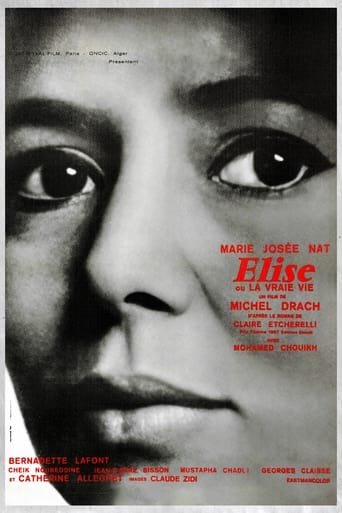 6.2
6.2In the middle of the Algerian war, Elise, from Bordeaux, “goes” to Paris to join her brother to earn her living in an automobile factory. There she meets Arezki, an Algerian nationalist activist with whom she falls in love. A chronicle of working life at the time and which highlights the extent of police repression against Algerians.
Elise, or Real Life
1970
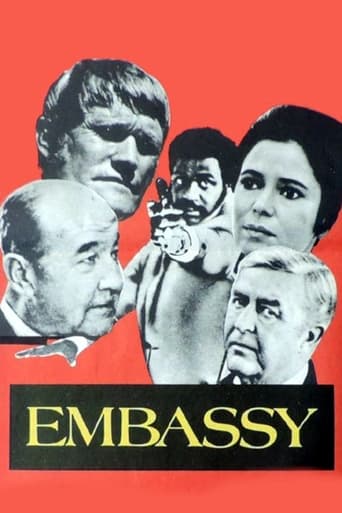 6.5
6.5A KGB assassin infiltrates the American embassy in Beirut in an attempt to eliminate a Russian defector being protected by the CIA.
Embassy
1972
 4.8
4.8Two couples, undermined by frequent scenes, fall apart: the men, Richard and Bertrand, directors of an advertising agency, move into their office; soon Lucien, their main client and friend, suffering from the same afflictions, joins them in this new bachelor life. For their part, the women regroup and organize themselves: Victoire absorbs herself in her work as a decorator; Charlotte, long submissive to Richard's personality, raises her head and finds a job; as for Pascaline, she runs off with Tabard, her husband Lucien's groom, to start raising sheep. These three crises, combined with a series of twists and turns, bring unexpected results for each of the couples.
Tell Me You Love Me
1974
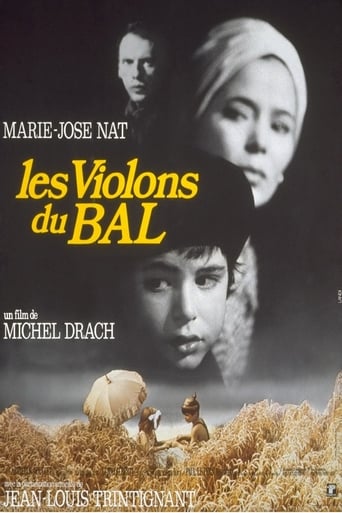 6.0
6.0In this WW II drama based on an autobiographical story by director Michel Drach, a Jewish boy and his family living in Nazi occupied France, attempt to escape the cruel invaders. Later the boy grows up to become a filmmaker obsessed with chronicling his childhood.
Violins at the Ball
1974
 7.0
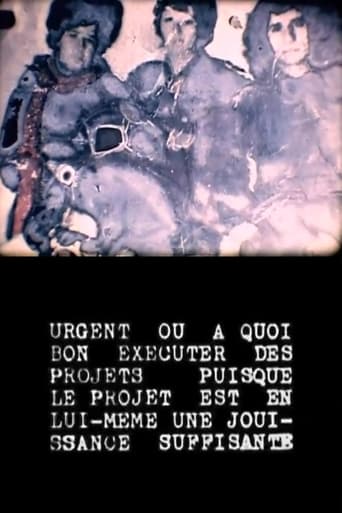
7.0Gérard Courant applies the Lettrist editing techniques of Isidore Isou to footage of late 70's pop culture. Courant posits that his cinema offers an aggressive détournement to the French mainstream, reifying a Duchampian view of film: "I believe in impossible movies and works without meaning... I believe in the anti-movie. I believe in the non-movie. I believe in Urgent... My first full length movie that is so anti-everything that I sometimes wonder if it really does exist!"
Urgent ou à quoi bon exécuter des projets puisque le projet est en lui-même une jouissance suffisante
1977
1960s · 17 titles
 5.9
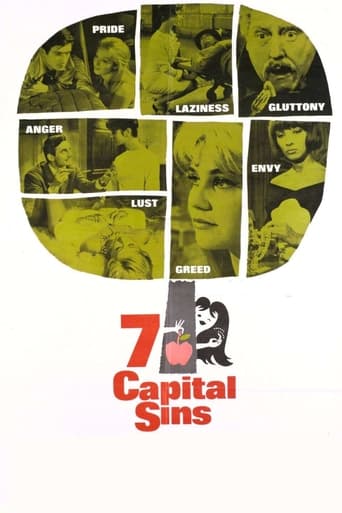
5.9Seven directors each dramatize one of the seven deadly sins in a short film. In "Anger," a domestic argument over a fly in the Sunday soup escalates into nuclear war. In "Sloth," a movie star would rather pay someone to tie his shoe than bend over to do it himself, and he can't be bothered to accept a starlet's sexual favors. In "Gluttony," a peasant family on its way to the funeral of a relative who died from indigestion stops regularly to eat and drink en route, arriving in time to eat some more. In "Greed," a high-class prostitute refunds the price of a cadet's lottery ticket. In "Pride," an unfaithful wife finds reason to reform. And so on through lust and envy.
The Seven Deadly Sins
1962
 7.6
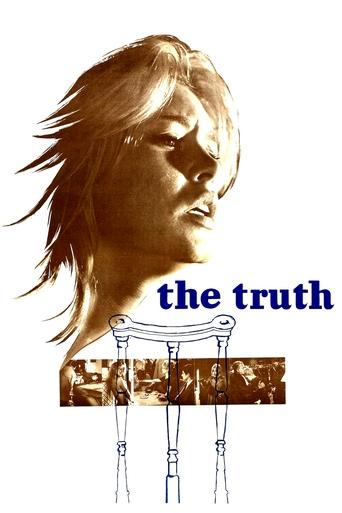
7.6As Dominique Marceau is being tried for the murder of Gilbert Tellier, accounts by different witnesses paint a picture of the kind of relationship the two used to share.
The Truth
1960
 4.9
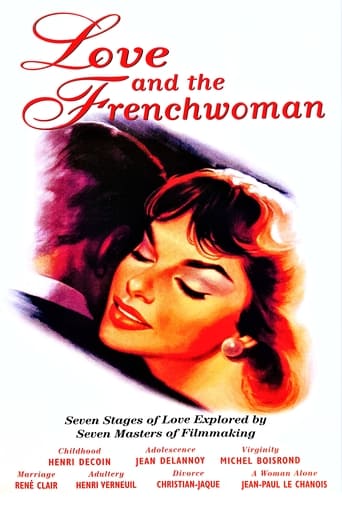
4.9The seven stages in the life of the modern Frenchwomen are disclosed by seven directors in a witty way: 1 - Childhood, 2 - Adolescence, 3 - Virginity, 4 - Marriage, 5 - Adultery, 6 - Divorce, 7 - The Single Woman.
Love and the Frenchwoman
1960
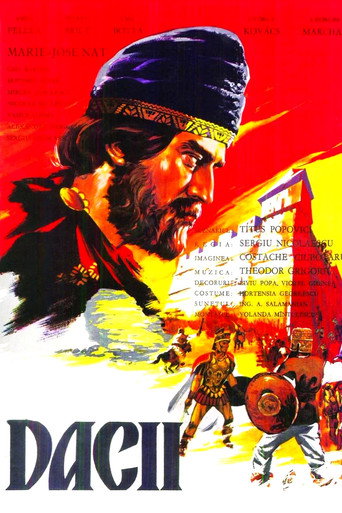 7.1
7.1The great King of Dacia, Decebal (Decebalus), is disposed to make the ultimate sacrifice in order to keep the integrity of his people. His own son, Cotyso, is given to the god Zamolxis to the dismay of the King and his daughter Meda. Septimius Severus, a young Roman devoted to his adopted country, must make the choice between his blood origins and the culture he was introduced to.
The Dacians
1967
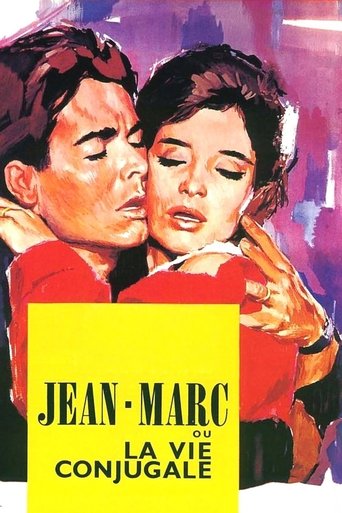 6.2
6.2The story of the couple from the very first meeting to break up told from a view of a man, Jean-Marc. The film shares the same plot with "Françoise ou La vie conjugale", that tells the same story from another perspective.
Anatomy of a Marriage: My Days with Jean-Marc
1964
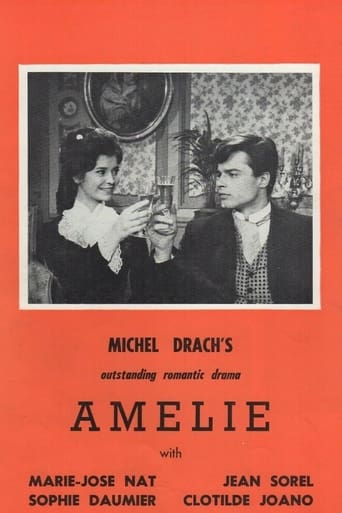 5.5
5.5The vagaries of love are often tragic, as Amelie ou le Temps d'Aimer seems to say. Directed by Michel Drach in his second try at a feature-length film, the well-wrought romance revolves around the love that develops between Amelie (Marie-Jose Nat) and her cousin Alain (Jean Sorel). Amelie is an orphan who lives with Alain and his family on an island off the coast of France. Alain has dreams of working as a seaman, while Amelie works for Alain's father. The budding romance between the two takes a nose-dive when Alain falls for a glamorous actress who shows up on the island one day. Not mature enough yet to make a wise choice, Alain's betrayal of Amelie turns out to be a grievous mistake.
Amelie or The Time to Love
1961
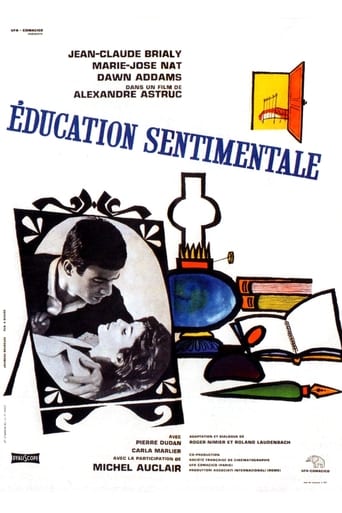 5.3
5.3Frédéric, a shy small-town man, falls in love with Anne, a middle class woman married to Didier, who cheats on her with top model Barbara. Catherine, a very determined woman, is secretly in love with Frédéric and in order to keep him away from Anne, pushes him into Barbara's arms.
Sentimental Education
1962
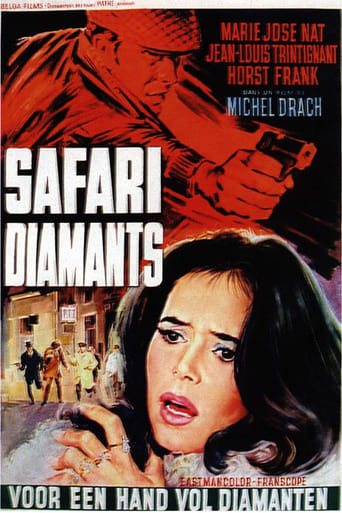 5.0
5.0Raphaël, a former paratrooper, is unable to adapt to the constraints of social life. One day, he becomes the unwilling accomplice of jewel thieves and falls in love with Electre, the mistress of Alaphène, their boss. Electre gives herself to Raphäel and incites him to run away with her. The couple tries to reach Monte-Carlo, where the diamonds are hidden, but they are chased by Federico, one of the gangsters who craves the loot as well...
Diamond Safari
1966
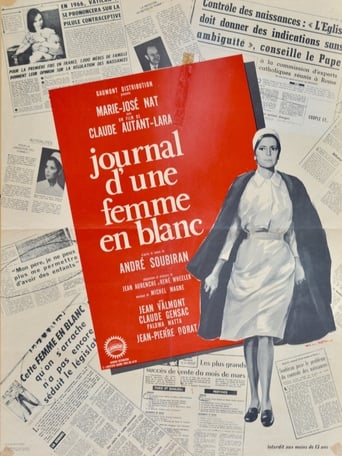 5.3
5.3Claude Sauvage, a tenacious young gynecologist takes a months long internship in a Paris hospital. Between her private life and medical career, she set her doubts and desires in a society where the square and the plight of women remain at that time a secondary issue. The film follows Claude and the staff through the case of some patients while the crucial debate on women's professional ambition, contraception and abortion rights.
A Woman in White
1965
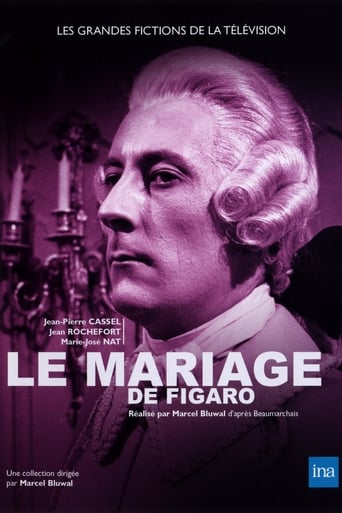 6.3
6.3Comedy in five acts by Beaumarchais, filmed by Marcel Bluwal in studio and on location. The cast, in accordance with Marcel Bluwal's wishes, is in keeping with the age and character of the characters, to give it rhythm. At once "a comic baroque play, a bourgeois drama, a chansonnier's number, a social satire, a farce and a very pretty love story" according to Marcel Bluwal, it can also be summed up, according to Beaumarchais, as "the most bantering of intrigues".
The Marriage of Figaro
1961
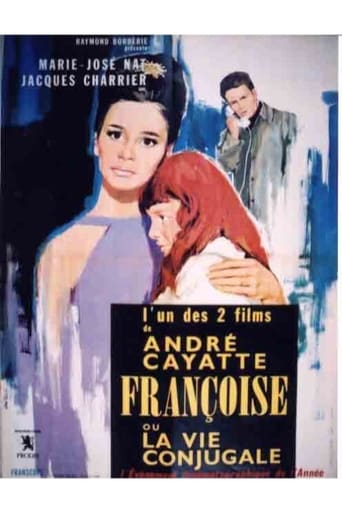 5.9
5.9The story of the couple from the very first meeting to break up told from a view of a woman, Francoise. The film shares the same plot with "Jean-Marc ou La vie conjugale", that tells the same story from another perspective.
Anatomy of a Marriage: My Days with Françoise
1964
 5.9
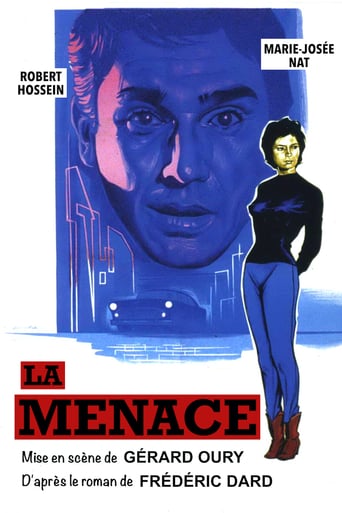
5.9Josepha is on the verge eighteen living with her drunken washed up actor uncle. She longs for the companionship of a group of her mo-ped riding peers who dabble in activities on the shady side of a legal dividing line. In order to get the semi-delinquent group to accept her, Josepha runs to the police with a tall tale about the local druggist, Savary. The police are looking for a sex murderer, and Josepha insists Savary is their man. What she does not know, however, can do her considerable damage.
The Menace
1961
 5.5
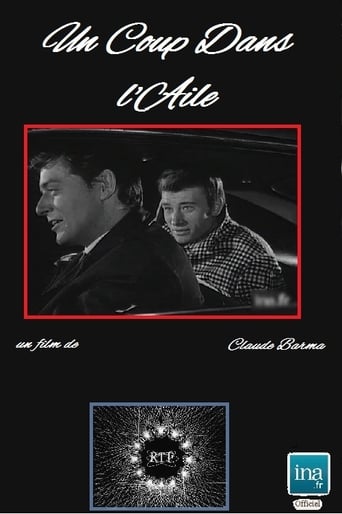
5.5No synopsis available yet.
Un coup dans l'aile
1963
 4.0
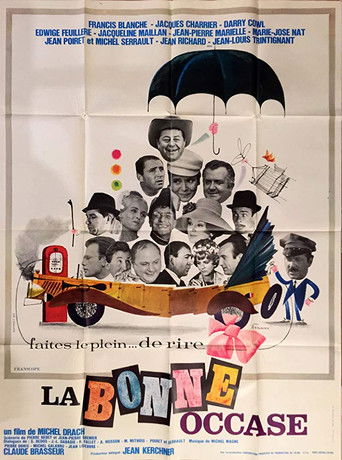
4.0The eccentric Comtesse de Saint-Plâs sells a black Citroën DS to car dealer Paul Souflé. He sells it to the young mathematics teacher Jacques Denzac who is about to marry.
The Real Bargain
1965
 5.2
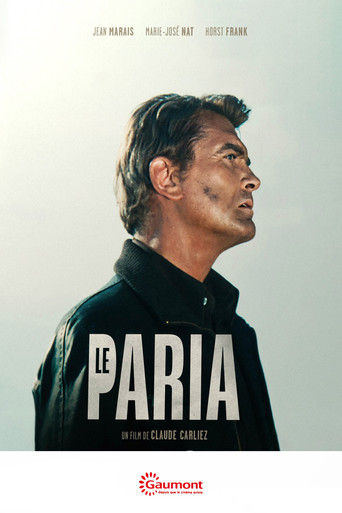
5.2Traumatized by the War of Algeria and by the accidental death of his wife and his son, Manu left the right road. His last caper was the attack of the Antwerp-Tangiers Express, carrying a precious cargo of industrial diamonds. But the whole affair was bungled and all of his accomplices got shot. The only survivor of this disaster, Manu now finds refuge in the mountain house of Lucia, the widow of a smuggler who lives alone there with her little boy.
Diamond Rush
1969
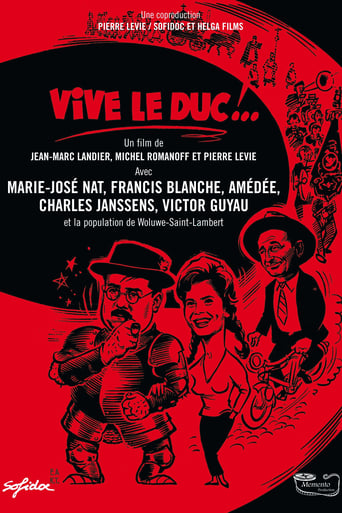 8.0
8.0A Belgian village is struck by repeated flooding, all this because they lack a new sewer. But the Ministry delays in providing the funding needed to build it. To alert public opinion, the villagers decide to do something. This "something" will be a play describing the life of their saint patron. Trouble follows, partly fueled by the short-tempered mayor.
Long Live the Duke!
1960
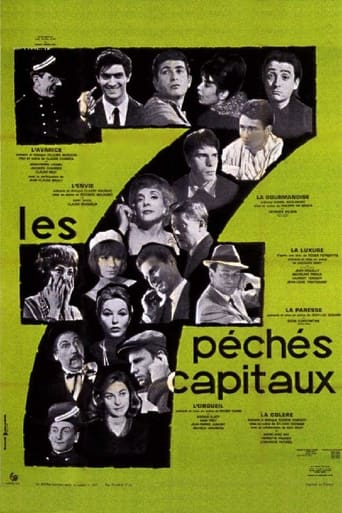 NR
NRAnger seizes a man who finds a fly in his Sunday soup. It spreads through his neighborhood, his city, his country and soon the whole world. (Segment of "Les sept péchés capitaux")
La Colère
1962
1950s · 7 titles
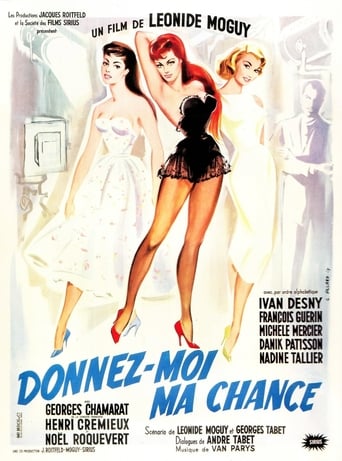 6.5
6.517 year-old small-town girl Nicole Noblet comes to Paris dreaming of becoming a world-famous actress.
Give Me My Chance
1957
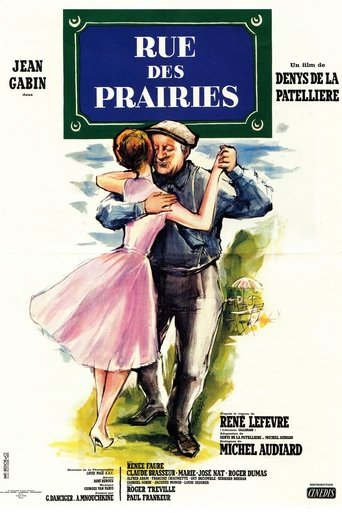 6.6
6.6While Henri was a POW during the war, his wife passed away, and he returned to face the challenges of bringing up three children alone. Henri may get drunk and angry at times, but he also has a better side that will not stay buried.
Rue de Paris
1959
 7.2
7.2How did Master Brown turn from a man of faith into a cantankerous, distrustful and cynical man? Nathaniel Hawthorne's character recounts the night when everything changed. In Canada, in a village where everyone seems more virtuous than he is, Tom Brown meets a man who claims to be the devil.
La Nuit de Tom Brown
1959
 6.0
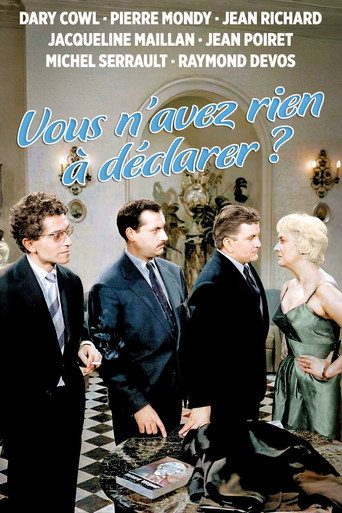
6.0Married against her will to the Comte de Trivelin, Paulette Dupont shares her anxieties with her childhood friend Labaule. Warned too late to prevent the ceremony from taking place, Labaule follows the couple on their honeymoon and prevents the consummation of the marriage by repeatedly intruding on the couple's privacy. Put on notice by Paulette's parents to consummate the marriage, Trivelin - who believes himself to be at fault - consults a psychiatrist. The latter advises him to visit a lady of lesser virtue: Gloria. But Gloria's clientele includes Dupont himself - Paulette's father - and Labaule!
You Have Nothing to Declare?
1959
 7.0
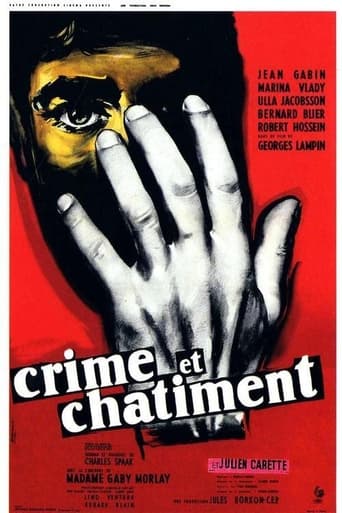
7.0Former student Raskolnikov is pushed to murder when struggling to pay the rent on his apartment. When the murder is being investigated by the police, Raskolnikov struggles between trying to hide his guilt and the pressure to confess.
Crime and Punishment
1956
 7.0
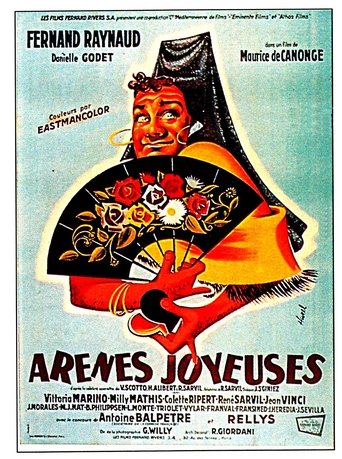
7.0A watchman with a sensitive heart, Fernand falls in love with Violette and Pervenche, two of the daughters of his boss, Maître Arno. At a bullfight starring three attractive Spaniards, the girls and their sister Marguerite - with whom Fernand's companion Rémy is in love - compete in charm, to the despair of both suitors. Followed by Marina, a pretty girl who seems to take a keen interest in Fernand, the two friends decide to retire to Les Martigues, far from their belles. But soon annoyed by Marina's insistence, Fernand returns to Maître Arno's manade, while Rémy decides to become a bullfighter to win back Marguerite.
Happy Arenas
1958
 7.0
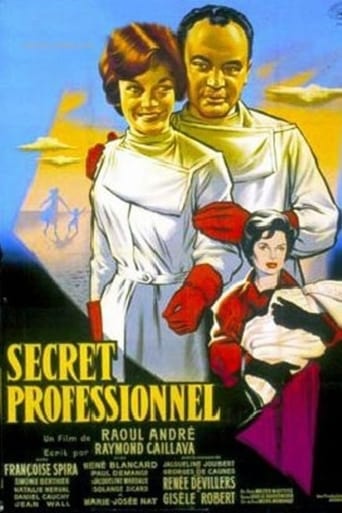
7.0Catherine Langeac and André Foucaud are a medical couple, she a general practitioner and he a gynecologist. Their attentiveness and understanding enable them to solve many of their patients' problems.
Secret professionnel
1959
Undated · 1 titles
Series credits
9.5Marcello Mastroianni, Isabelle Adjani, Alain Delon, Martin Scorsese, Woody Allen... the biggest stars in cinema were welcomed by Christian Defaye on his show Spécial cinéma. Between intimate confessions from actors and immersion in the world of the greatest filmmakers, Christian Defaye took viewers on a journey into the fascinating world of cinema for nearly thirty years.
Spécial cinéma
1974
3.6No synopsis available yet.
Vivement dimanche
1998
6.8No synopsis available yet.
Champs-Elysées
1982
7.5A French variety show.
Numéro un
1975
6.0A talk show presented by Michel Drucker
Les Rendez-vous du dimanche
1975
6.0No synopsis available yet.
Midi trente
1972
 8.7
8.7No synopsis available yet.
Cinépanorama
1956
 5.0
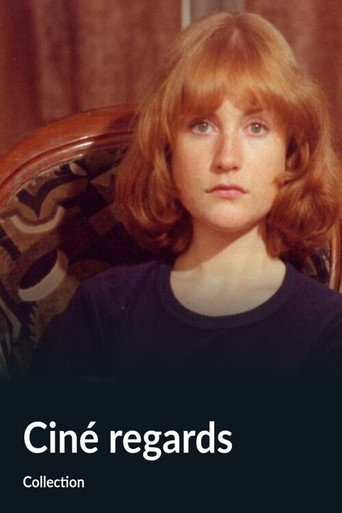
5.0No synopsis available yet.
Ciné regards
1978
 NR
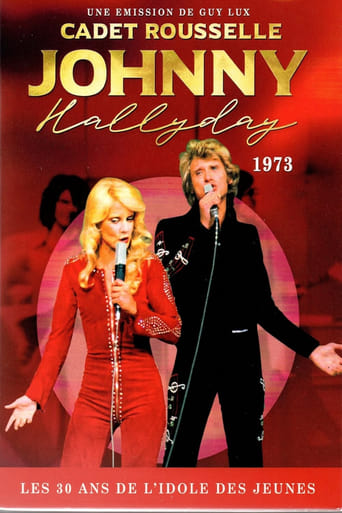
NRNo synopsis available yet.
Cadet Rousselle
1971
 8.0
8.0No synopsis available yet.
Dim Dam Dom
1965
 8.0
8.0No synopsis available yet.
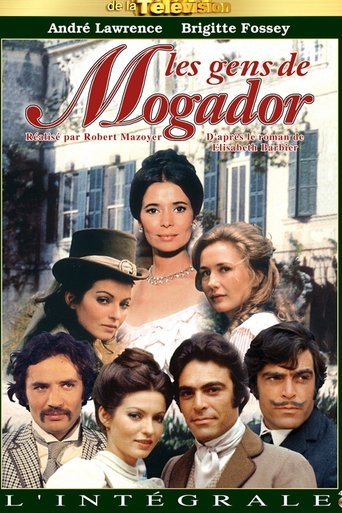
Les Gens de Mogador
1972
 NR
NRNo synopsis available yet.
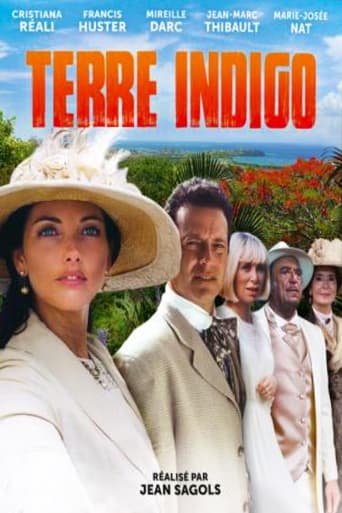
Terre indigo
1996
 NR
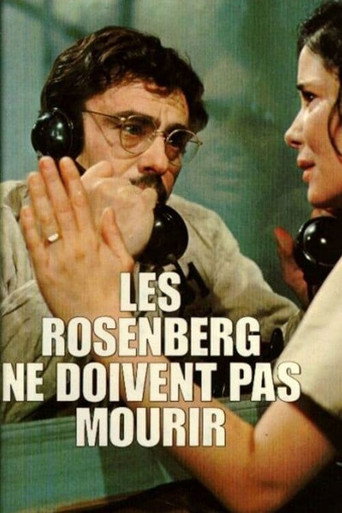
NRA French two-parter about a famous American trial - that of Julius and Ethel Rosenberg, who became the first people in American history to receive the death penalty for espionage.
Les Rosenberg ne doivent pas mourir
1975