
Directing
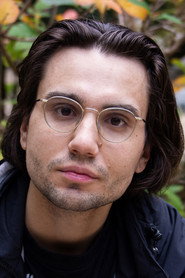
Matthew Berka
Known for
Directing
Credits
7 titles
Filmmaker and composer. Born in Australia. His work crosses the boundaries of the film-essay and poetic cinema. Often constructed through the connective tissue of disparate sounds and images, his films find patterns of meaning through association and feeling. Defying a materialist view of the world, they offer a speculative vision of matter. Berka’s previous work has screened at International Film Festival Rotterdam, the Melbourne IFF, Onion City Experimental Film Festival in Chicago, and Antimatter [Media Art] in Victoria, Canada, and has been shown at the London galleries Mackintosh Lane and ZÉRUÌ. Matthew Berka also works as a time-based media conservator at Tate and contributing programm…
Known for
 NR
Retracing Karkarook stumbles through the traumatised spaces of Australian suburbia, dredging up layers of denial buried beneath the surface of Karkarook, “a sandy place”, an artificial wetland in Moorabbin, Melbourne, built on a former sand quarry and the traditional lands of the Boonwurrung people of the Kulin Nation. De Bruyn and Berka, separated by 40 years yet both having occupied this region, waywardly trace and retrace its inconspicuous surfaces whilst navigating a fractured technological terrain where analog film and digital collage are collapsed.
Retracing Karkarook
2025
 NR
Mourning can happen at any time, whether the name is known or not. Funeral rites will often take place in a church or architectural space where the so-called 'real' world is demarcated at the boundary of its frame. In certain Abrahamic faiths, aniconism may prohibit the representation of god, nature or everything that exists. When their churches are emptied out, they are referred to as halls or meeting rooms that resemble a house bare of furnishings or ornament. Like the dark chamber of a camera; light filters through the translucent, frosted glass windows illuminating the walls, pews and flooring. A reminder that there is another world.
under the palms
2020
 NR
Obscure, aging, and living on the outskirts of London, writer of supernatural fiction Quentin Crisp asks himself a fundamental existential question: ‘Who am I?' This feature-length film-essay is structured around readings of Crisp’s own zuihitsu of the same name, which, in essence, is the story of his life. As we follow Crisp on a walk deeper into the ‘‘little wood’’ of his private landscape, the binaries of success and failure begin to fade away.
Duckweed
2026
 NR
A fragmentary essay combining Super 8 and digital footage, X-ray imagery, and medical animation to exorcize a portrait of the soul caught somewhere between the viscera and their subjection to electromagnetic forces.
True Colours
2022
 NR
Aftersong is a film-poem based on the writings of the English nature writer Richard Jefferies and the music of French composer Lili Boulanger. It is a meditation on the lingering afterimages left behind by the dead where the tension between absence and presence continues to endure across time, rippling through fragments of “period drama: cinema, architecture and nature.” Filmed on 16mm with a voice-over from the contemporary supernatural English writer Quentin S. Crisp.
Aftersong
2025
 NR
The lens of the camera is a key to the senses and the sensual. The close-up renders tactility inviting touch, the obscured image tests the boundaries of the frame beckoning one to enter. But as all the senses are awakened, the lens of the projector relays a distance that cannot be collapsed.
Body, Remember...
2026
Behind the camera
NRRetracing Karkarook stumbles through the traumatised spaces of Australian suburbia, dredging up layers of denial buried beneath the surface of Karkarook, “a sandy place”, an artificial wetland in Moorabbin, Melbourne, built on a former sand quarry and the traditional lands of the Boonwurrung people of the Kulin Nation. De Bruyn and Berka, separated by 40 years yet both having occupied this region, waywardly trace and retrace its inconspicuous surfaces whilst navigating a fractured technological terrain where analog film and digital collage are collapsed.
Retracing Karkarook
2025
NRMourning can happen at any time, whether the name is known or not. Funeral rites will often take place in a church or architectural space where the so-called 'real' world is demarcated at the boundary of its frame. In certain Abrahamic faiths, aniconism may prohibit the representation of god, nature or everything that exists. When their churches are emptied out, they are referred to as halls or meeting rooms that resemble a house bare of furnishings or ornament. Like the dark chamber of a camera; light filters through the translucent, frosted glass windows illuminating the walls, pews and flooring. A reminder that there is another world.
under the palms
2020
NRObscure, aging, and living on the outskirts of London, writer of supernatural fiction Quentin Crisp asks himself a fundamental existential question: ‘Who am I?' This feature-length film-essay is structured around readings of Crisp’s own zuihitsu of the same name, which, in essence, is the story of his life. As we follow Crisp on a walk deeper into the ‘‘little wood’’ of his private landscape, the binaries of success and failure begin to fade away.
Duckweed
2026
NRA fragmentary essay combining Super 8 and digital footage, X-ray imagery, and medical animation to exorcize a portrait of the soul caught somewhere between the viscera and their subjection to electromagnetic forces.
True Colours
2022
NRAftersong is a film-poem based on the writings of the English nature writer Richard Jefferies and the music of French composer Lili Boulanger. It is a meditation on the lingering afterimages left behind by the dead where the tension between absence and presence continues to endure across time, rippling through fragments of “period drama: cinema, architecture and nature.” Filmed on 16mm with a voice-over from the contemporary supernatural English writer Quentin S. Crisp.
Aftersong
2025
NRThe lens of the camera is a key to the senses and the sensual. The close-up renders tactility inviting touch, the obscured image tests the boundaries of the frame beckoning one to enter. But as all the senses are awakened, the lens of the projector relays a distance that cannot be collapsed.
Body, Remember...
2026
 NR
A film-poem made after Gerald Murnane’s short story ‘The Battle of Acosta Nu’ (1985), about the aftermath of a failed Paraguayan socialist colony, New Australia, founded in 1912. Murnane’s unnamed narrator, a displaced Australian descendent living in Paraguay, is beset by his son’s dire physical illness. His concern for his son’s life is matched only by his own mental fixation to communicate the secret meaning of his true homeland; a place which he can never fully return to. Landscape with sick child searches for a different set of audiovisual signs, streaming a psychogeographic illness through overlapping passages of disparate sounds and images, setting landscape with landscape.
Landscape with sick child
2020