
Acting
Herbert W. Franke
Born — Died
1927-05-14 — 2022-07-16
Place of birth
Wien, Austria
Known for
Acting
Credits
4 titles
Known for
No synopsis available yet.
Wir sind Österreich
2010
 NR
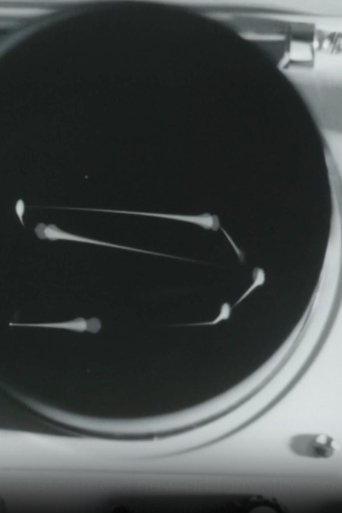
NRImages/videos were produced with an analog computer, that was built by Franz Reimund and Herbert W. Franke – output device was an oscillograph provided for the film by Siemens AG. The film TANZ DER ELEKTRONEN was made in 1958 – directed by documentary filmmaker Rolf Engler, who also narrated the film. The script and the text of the voiceover were written by Herbert W. Franke. He also provided the electronic equipment and directed the visual effect. Franke was a young artist at the time and lived as a subtenant in Engler's small castle in Kreuzpullach (a little village south of Munich). Franke is seen from behind working on the analog computer and the control panel for the oscilloscope at the beginning of the film.
Dance of Electrons
1958
 NR
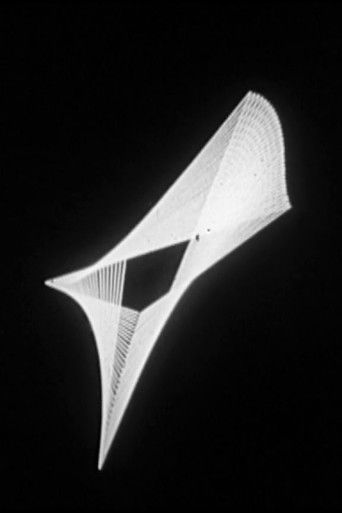
NRThe two 16-mm films ROTATIONEN and PROJEKTIONEN used one of the earliest three-dimensional programs for the graphic real-time output as a projection on a two dimensional screen. They were calculated and displayed with an interactive graphic screen of the Siemens Research Laboratory, Munich, in connection with a digital data processing unit. The unit allowed interactive operation – work under interactive visual control; a keyboard was used to change the elements interactively – for example, by specifying the number of picture elements, the angle of intersection, the speed of the sequence, and so on. The movement could be stopped for a static image at any time. Herbert W. Franke created also a longer film ROTATIONEN with background electronic music by his friend and acoustic artist Peter Scheffler. Scheffler had invented a “sound robot”, this machine detected and processed the cosmic radiation from outer space into tonal effects in the 1970s.
Rotationen
—
 NR
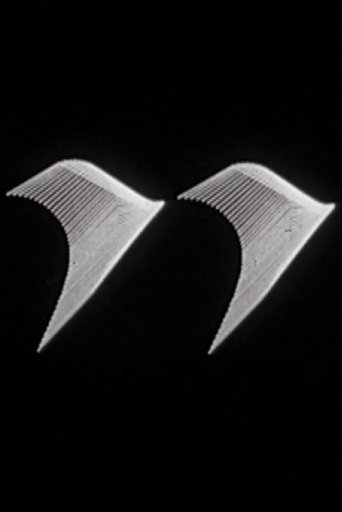
NRThe two 16-mm films ROTATIONS and PROJECTIONS (originally ROTATIONEN and PROJEKTIONEN) used one of the earliest three-dimensional programs for the graphic real-time output as a projection on a two dimensional screen. They were calculated and displayed with an interactive graphic screen of the Siemens Research Laboratory, Munich, in connection with a digital data processing unit. The unit allowed interactive operation – work under interactive visual control; a keyboard was used to change the elements interactively – for example, by specifying the number of picture elements, the angle of intersection, the speed of the sequence, and so on. The movement could be stopped for a static image at any time. Ces séquences de film de PROJEKTIONEN ont été utilisées en 1974 comme décor, projeté sur un écran, pour un spectacle de danse expérimentale avec Gerald Bohner dans la « Experimentierbuehne » de l'Opéra d'État de Bavière à Munich, sous la direction de Walter Haupt.
Projecktionen
1974
Series credits
Behind the camera
NRImages/videos were produced with an analog computer, that was built by Franz Reimund and Herbert W. Franke – output device was an oscillograph provided for the film by Siemens AG. The film TANZ DER ELEKTRONEN was made in 1958 – directed by documentary filmmaker Rolf Engler, who also narrated the film. The script and the text of the voiceover were written by Herbert W. Franke. He also provided the electronic equipment and directed the visual effect. Franke was a young artist at the time and lived as a subtenant in Engler's small castle in Kreuzpullach (a little village south of Munich). Franke is seen from behind working on the analog computer and the control panel for the oscilloscope at the beginning of the film.
Dance of Electrons
1958
NRThe two 16-mm films ROTATIONEN and PROJEKTIONEN used one of the earliest three-dimensional programs for the graphic real-time output as a projection on a two dimensional screen. They were calculated and displayed with an interactive graphic screen of the Siemens Research Laboratory, Munich, in connection with a digital data processing unit. The unit allowed interactive operation – work under interactive visual control; a keyboard was used to change the elements interactively – for example, by specifying the number of picture elements, the angle of intersection, the speed of the sequence, and so on. The movement could be stopped for a static image at any time. Herbert W. Franke created also a longer film ROTATIONEN with background electronic music by his friend and acoustic artist Peter Scheffler. Scheffler had invented a “sound robot”, this machine detected and processed the cosmic radiation from outer space into tonal effects in the 1970s.
Rotationen
—
NRThe two 16-mm films ROTATIONS and PROJECTIONS (originally ROTATIONEN and PROJEKTIONEN) used one of the earliest three-dimensional programs for the graphic real-time output as a projection on a two dimensional screen. They were calculated and displayed with an interactive graphic screen of the Siemens Research Laboratory, Munich, in connection with a digital data processing unit. The unit allowed interactive operation – work under interactive visual control; a keyboard was used to change the elements interactively – for example, by specifying the number of picture elements, the angle of intersection, the speed of the sequence, and so on. The movement could be stopped for a static image at any time. Ces séquences de film de PROJEKTIONEN ont été utilisées en 1974 comme décor, projeté sur un écran, pour un spectacle de danse expérimentale avec Gerald Bohner dans la « Experimentierbuehne » de l'Opéra d'État de Bavière à Munich, sous la direction de Walter Haupt.
Projecktionen
1974