

Directing
Luigi Zanuso
Place of birth
Vicenza, Italy
Known for
Directing
Credits
38 titles
Luigi Zanuso is an Italian filmmaker renowned for his provocative and experimental style, blending elements of pornography, surrealism, and philosophy. Born in Vicenza, Italy, Zanuso began his cinematic journey later in life, initially working as a video store owner before transitioning into directing, producing, acting, and talent scouting within the Italian erotic film scene only at 60 years old. Operating under various pseudonyms, including Luigi Atomico, Dario Lussuria, and Rodolfo Babilonia, Zanuso developed a unique approach to filmmaking that he describes as "crazy surrealism." His works are characterized by their transgressive nature and philosophical undertones, challenging convent…
Known for
Short film by Luigi Zanuso.
Human robots
2013
Surreal short film by director Luigi Zanuso.
Introspections
—
Short body horror film by master Dario Lussuria.
Quartering
—
In this definitive work, the author distills a radical and deeply personal vision of reality and human madness, crafting a film without a linear plot, composed instead of a sequence of autonomous and powerful visual scenes. In a continuous and hallucinatory flow, extreme grotesque and baroque pornography, mysticism, art, and desire merge into a single sensory and symbolic experience. Accompanied by the music of S. Lummi and M. Capitanio, the film takes the form of a contemporary infernal circle, where the viewer is dragged through images that reflect human obsessions, deviations, and ecstasies. A visionary and unsettling journey, where each fragment represents a piece of the eternal tension between the sublime and the perverse.
Sublime & Perverso
2013
 NR
NRShort film by Luigi Zanuso.
Cannibal women
2013
Short horror film by Luigi Atomico.
Nightmares
—
Film credits
2010s · 3 titles
In this definitive work, the author distills a radical and deeply personal vision of reality and human madness, crafting a film without a linear plot, composed instead of a sequence of autonomous and powerful visual scenes. In a continuous and hallucinatory flow, extreme grotesque and baroque pornography, mysticism, art, and desire merge into a single sensory and symbolic experience. Accompanied by the music of S. Lummi and M. Capitanio, the film takes the form of a contemporary infernal circle, where the viewer is dragged through images that reflect human obsessions, deviations, and ecstasies. A visionary and unsettling journey, where each fragment represents a piece of the eternal tension between the sublime and the perverse.
Sublime & Perverso
2013
 NR
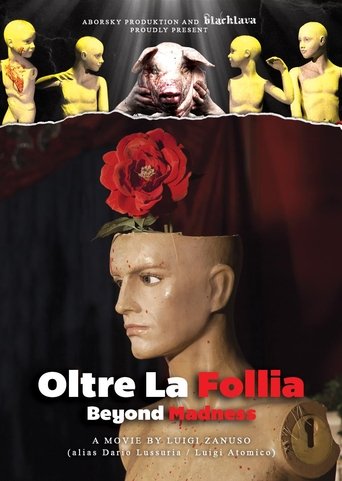
NRLike the previous works, Beyond Madness has no real plot: everything unfolds through a series of visual scenes, each introduced by Zanuso himself while reading one of his book of aphorisms (in life he is also a writer); preceded by his own phrases or those of famous philosophers, impressive tableaux vivants follow one another, dreamlike glimpses which, as in dreams, proceed by accumulation and without a precise apparent meaning. Zanuso, who at the beginning appears in the role of Diogenes with the lantern while "looking for man", peppers them with psychoanalytic metaphors, but more than the meaning, what matters is the signifier, the visible, which here reaches the zenith of that "sublime and perverse” has always been sought after in his poetics.
Oltre La Follia
2016
 NR
NRLuigi Atomico Zanuso, in the role of the Greek philosopher Diogenes, searches for man in a world of robots and dehumanized people.
Futurus
2019
Behind the camera
Short film by Luigi Zanuso.
Human robots
2013
Short film by Luigi Zanuso.
Human robots
2013
Surreal short film by director Luigi Zanuso.
Introspections
—
Surreal short film by director Luigi Zanuso.
Introspections
—
Short body horror film by master Dario Lussuria.
Quartering
—
Short body horror film by master Dario Lussuria.
Quartering
—
In this definitive work, the author distills a radical and deeply personal vision of reality and human madness, crafting a film without a linear plot, composed instead of a sequence of autonomous and powerful visual scenes. In a continuous and hallucinatory flow, extreme grotesque and baroque pornography, mysticism, art, and desire merge into a single sensory and symbolic experience. Accompanied by the music of S. Lummi and M. Capitanio, the film takes the form of a contemporary infernal circle, where the viewer is dragged through images that reflect human obsessions, deviations, and ecstasies. A visionary and unsettling journey, where each fragment represents a piece of the eternal tension between the sublime and the perverse.
Sublime & Perverso
2013
In this definitive work, the author distills a radical and deeply personal vision of reality and human madness, crafting a film without a linear plot, composed instead of a sequence of autonomous and powerful visual scenes. In a continuous and hallucinatory flow, extreme grotesque and baroque pornography, mysticism, art, and desire merge into a single sensory and symbolic experience. Accompanied by the music of S. Lummi and M. Capitanio, the film takes the form of a contemporary infernal circle, where the viewer is dragged through images that reflect human obsessions, deviations, and ecstasies. A visionary and unsettling journey, where each fragment represents a piece of the eternal tension between the sublime and the perverse.
Sublime & Perverso
2013
In this definitive work, the author distills a radical and deeply personal vision of reality and human madness, crafting a film without a linear plot, composed instead of a sequence of autonomous and powerful visual scenes. In a continuous and hallucinatory flow, extreme grotesque and baroque pornography, mysticism, art, and desire merge into a single sensory and symbolic experience. Accompanied by the music of S. Lummi and M. Capitanio, the film takes the form of a contemporary infernal circle, where the viewer is dragged through images that reflect human obsessions, deviations, and ecstasies. A visionary and unsettling journey, where each fragment represents a piece of the eternal tension between the sublime and the perverse.
Sublime & Perverso
2013
In this definitive work, the author distills a radical and deeply personal vision of reality and human madness, crafting a film without a linear plot, composed instead of a sequence of autonomous and powerful visual scenes. In a continuous and hallucinatory flow, extreme grotesque and baroque pornography, mysticism, art, and desire merge into a single sensory and symbolic experience. Accompanied by the music of S. Lummi and M. Capitanio, the film takes the form of a contemporary infernal circle, where the viewer is dragged through images that reflect human obsessions, deviations, and ecstasies. A visionary and unsettling journey, where each fragment represents a piece of the eternal tension between the sublime and the perverse.
Sublime & Perverso
2013
NRShort film by Luigi Zanuso.
Cannibal women
2013
NRShort film by Luigi Zanuso.
Cannibal women
2013
Short horror film by Luigi Atomico.
Nightmares
—
Short horror film by Luigi Atomico.
Nightmares
—
NRLike the previous works, Beyond Madness has no real plot: everything unfolds through a series of visual scenes, each introduced by Zanuso himself while reading one of his book of aphorisms (in life he is also a writer); preceded by his own phrases or those of famous philosophers, impressive tableaux vivants follow one another, dreamlike glimpses which, as in dreams, proceed by accumulation and without a precise apparent meaning. Zanuso, who at the beginning appears in the role of Diogenes with the lantern while "looking for man", peppers them with psychoanalytic metaphors, but more than the meaning, what matters is the signifier, the visible, which here reaches the zenith of that "sublime and perverse” has always been sought after in his poetics.
Oltre La Follia
2016
NRLike the previous works, Beyond Madness has no real plot: everything unfolds through a series of visual scenes, each introduced by Zanuso himself while reading one of his book of aphorisms (in life he is also a writer); preceded by his own phrases or those of famous philosophers, impressive tableaux vivants follow one another, dreamlike glimpses which, as in dreams, proceed by accumulation and without a precise apparent meaning. Zanuso, who at the beginning appears in the role of Diogenes with the lantern while "looking for man", peppers them with psychoanalytic metaphors, but more than the meaning, what matters is the signifier, the visible, which here reaches the zenith of that "sublime and perverse” has always been sought after in his poetics.
Oltre La Follia
2016
 NR
NRSecond film of the Great Power trilogy
Lack of communicability part II° - Rebellion
2014
NRSecond film of the Great Power trilogy
Lack of communicability part II° - Rebellion
2014
 NR
NRThird film of the Great Power trilogy
Lack of communicability part III° - Slavery
2014
NRThird film of the Great Power trilogy
Lack of communicability part III° - Slavery
2014
 NR
NRShort surreal film by Luigi Zanuso.
Homage to Andrè Breton
—
NRShort surreal film by Luigi Zanuso.
Homage to Andrè Breton
—
 NR
NRFirst film of the Great Power trilogy
Lack of communicability part I° - Incommunicability
2014
NRFirst film of the Great Power trilogy
Lack of communicability part I° - Incommunicability
2014
Short film by Luigi Zanuso.
Revolt and awakening
—
Short film by Luigi Zanuso.
Revolt and awakening
—
NRLuigi Atomico Zanuso, in the role of the Greek philosopher Diogenes, searches for man in a world of robots and dehumanized people.
Futurus
2019
NRLuigi Atomico Zanuso, in the role of the Greek philosopher Diogenes, searches for man in a world of robots and dehumanized people.
Futurus
2019
 NR
NRThrough a series of dreamlike, sculptural, and surreal images, united by the depth of their essence, and replacing words with music, I have sought to express the mysterious force that is the mother of all things: Love.
Research of the absolute love
—
NRThrough a series of dreamlike, sculptural, and surreal images, united by the depth of their essence, and replacing words with music, I have sought to express the mysterious force that is the mother of all things: Love.
Research of the absolute love
—
Short film by Luigi Atomico.
Hermaphrodite the doll and symbiosis
—
Short film by Luigi Atomico.
Hermaphrodite the doll and symbiosis
—
Short film by Luigi Zanuso.
Lustful Beauties
—
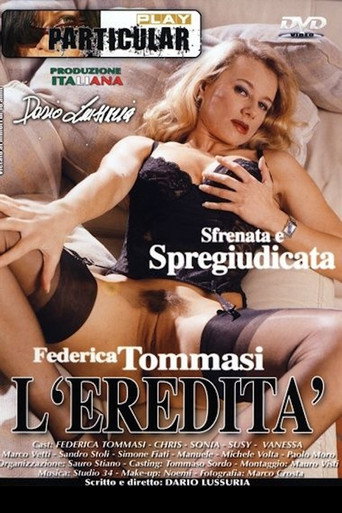 NR
NRDon’t miss Federica Tommasi as she takes all of the dicks she can find. She sucks and swallows like you can’t believe!
My Legacy
2008