

Acting
Mártha Eggerth
Born 1912-04-17 · Budapest, Austria-Hungary (now Budapest, Hungary)
Acting credits
A group of struggling artists, poets, and musicians struggle to survive in squalor without giving up their artistic ideals.
The Eternal Melody
1949
 9.0
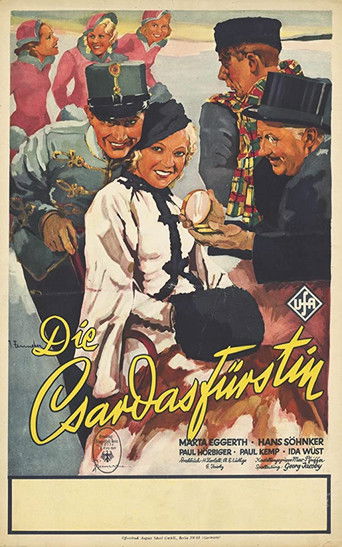
9.0Sylva Varescu is an operetta singer performing Kálmán's Die Czardasfürstin through Europe with great success. Before going to Vienna she meets handsome Prinz Weylerstein and they fall in love. Offered a contract for America, she doubts until she finds out that he is already engaged to a countess.
The Csardas Princess
1934
 6.5
6.5Starstruck Indiana small-town girl Lily is pestering theatrical producer John Thornway for a role but he is reluctant.
Presenting Lily Mars
1943
György Bánáth landowner and Miklós Vass the teacher, on the verge of collapse, trudging all the way from Siberia where they have spent more than ten years as POWs, trying to prevent each other from falling from fatigue on the way home. Both become regular visitors to the Pálffy family and they both make amorous advances to Katinka, the beautiful daughter of the local vicar.
There's Only One Girl in the World
1930
 9.0
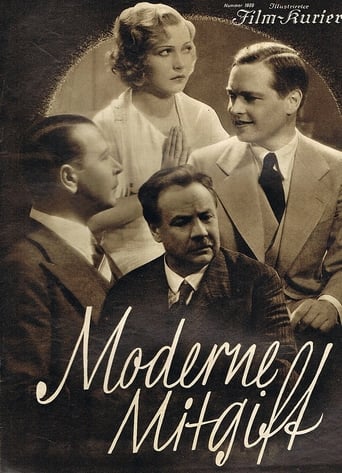
9.0Dan Douglas is a typical Scottish. When his niece Evelyne marries engineer Fred Keller aboard the ship to Scotland, he gives her a pearl necklace as dowry, but it's false. The newlyweds face their differences when the necklace gets lost.
Modern dowry
1932
 8.0
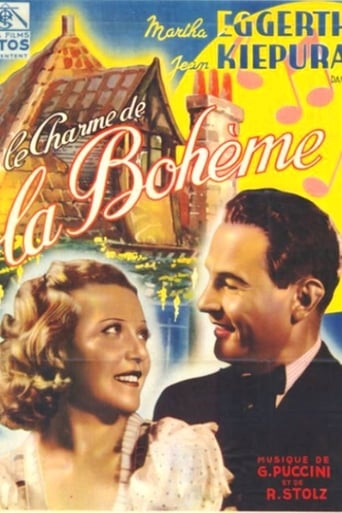
8.0René and his two artist friends lead a meager but careless life in a Parisian small apartment, their main worry being to avoid the housekeeper. Whenever they get some money they call more friends in and celebrate. This is how he meets beautiful but fragile Denise, who wants to be a singer as himself, and they fall in love. Yet when she finds out her real condition she takes a drastic decision which will determine their fates. La Bohème arias, and more.
The Charm of La Bohème
1937
 7.0
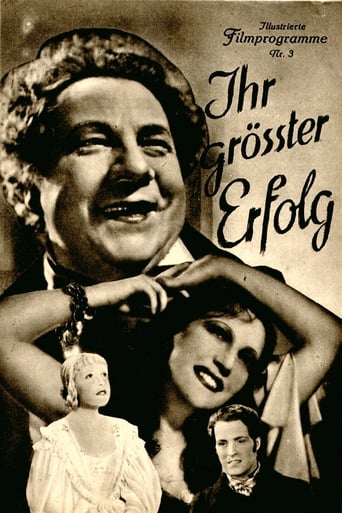
7.0No synopsis available yet.
Ihr größter Erfolg
1934
 6.5
6.5Two vaudeville performers fall in love, but find their relationship tested by the arrival of WWI.
For Me and My Gal
1942
 5.5
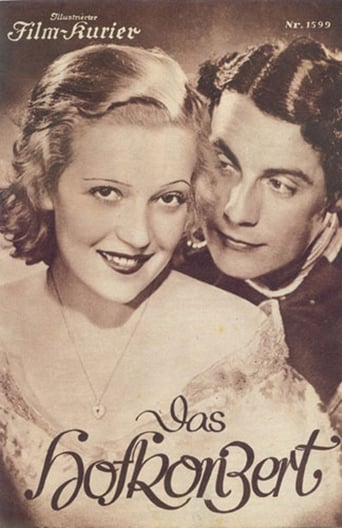
5.5Before he became cult director Douglas Sirk, Detlef Sierck cut his teeth on such lavish European star vehicles as Das Hofkonzert (The Court Concert). Marta Eggerth is cast as Christine, a young singer who aspires to find out who her father was. Her odyssey brings her to the court of a mythical kingdom, where she is romanced by handsome lieutenant Walter (Johannes Heesters). He is warned not to lose his heart to a "commoner," but all turns out all right when King Serenissimus (Otto Tressler) turns out to be Christine's long-lost daddy. Hofkonzert was designed as a comeback for Marta Eggerth, whose star had eclipsed by the mid-1930s.
The Court Concert
1936
 7.0
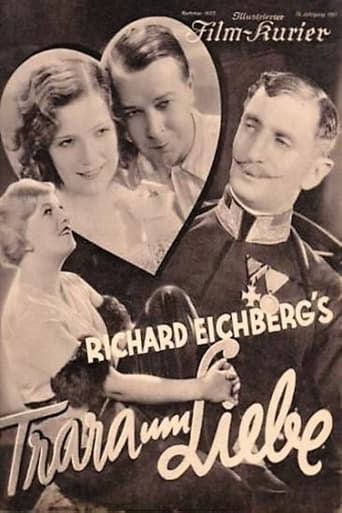
7.0Caught by Archduke Max in an embarrassing situation with Marie-Charlote, Captain Rudi is forced into marriage. Yet he approaches actress Josefine, the Archduke's girlfriend, being outright transferred as punishment. Then both girls appear.
Fanfare about love
1931
 10.0
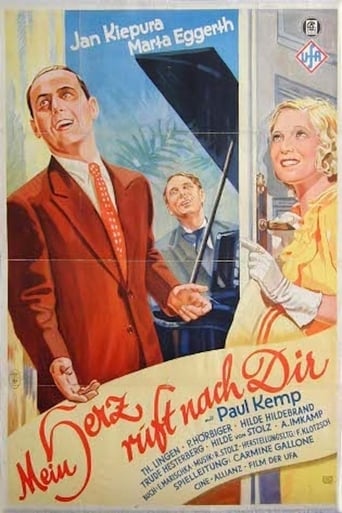
10.0An opera company tries to get an engagement.
My Heart Calls You
1934
 9.0
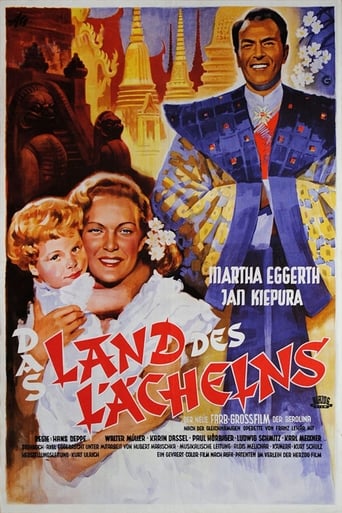
9.0An Austrian singer and an oriental prince who loves singing, fall in love in Vienna, get married and go to his country. She discovers how different the role for women is there, and he fights the old tradition refusing to marry a princess.
The Land of Smiles
1952
 8.0
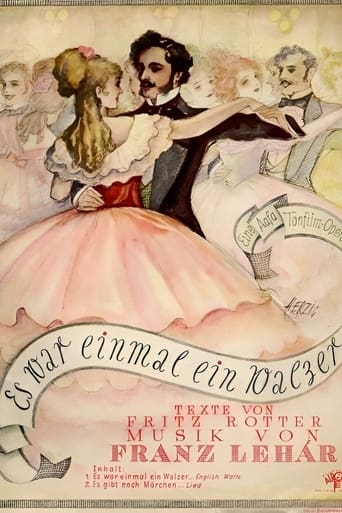
8.0Banker Rudi Moebius and his counselor arrive in Wien for an arranged marriage which should solve their financial problems. Only they don't know, but Lucie Weidling is broken too, and in love with Gustl, a musician without the courage to elope. Meanwhile Rudi meets Steffi and falls in love not even knowing her name. He and Lucie become good friends and decide to help each other.
Once There Was a Waltz
1932
 7.0
7.0A singer tired of the stage retreats to a hotel in the country. There, she finds love and a way back into show business.
The Blonde Carmen
1935
 7.0
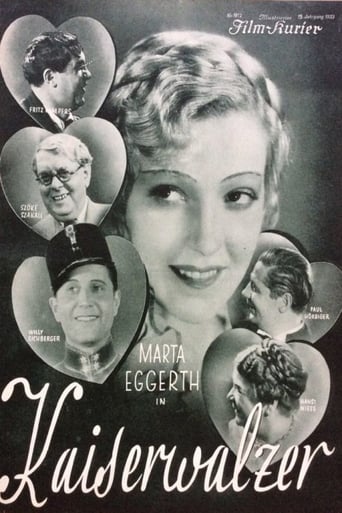
7.0No synopsis available yet.
Kaiserwalzer
1933
Fritz is in love with artist Glay, who stays at the Grand Hotel. In spite of not having any money he gets to know her, invites her to supper and after dancing a tango even hires the royal suite. How will he get out of this is a mystery even to himself.
One Night at the Grand Hotel
1931
No synopsis available yet.
Es leuchten die Sterne
1935
 9.0
9.0Princess Christine is impelled to be married, and expected to perform at the next Schönbrunn festival. But she takes a break and goes to Vienna instead, where she finds herself sharing a carriage with a young stranger.
Dream Of Schoenbrunn
1932
 8.0
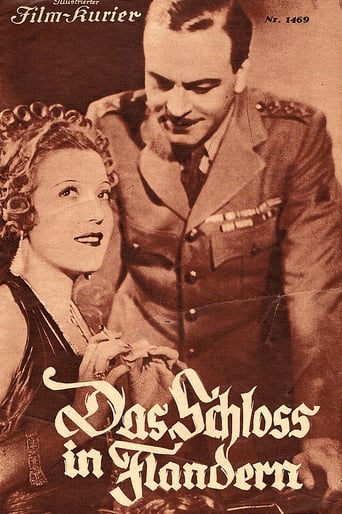
8.0Officers stationed in a castle in Flandes during WWI are comforted by Gloria Delamare's recorded voice. One of them even writes her a letter that will never be sent. When the war is over Miss Delamare takes a tour in Belgium and spends a night in that castle. Most unexpectedly her former admirer appears and they dine and dance together. In the morning he has disappeared and she finds the letter. She tries to find him, only to discover he is presumably dead and involved in a family secret.
A Castle in Flanders
1936
 4.6
4.6The big revue star Marietta falls in love and gives up the stage career. The theatre stands before the bankruptcy. Only when her husband has convinced himself that she will remain loyal to him, Marietta may go on working. Revue film according to pattern: a lot of music, sturdy situation comic and popular stars.
Waltz Melodies
1938
 7.5
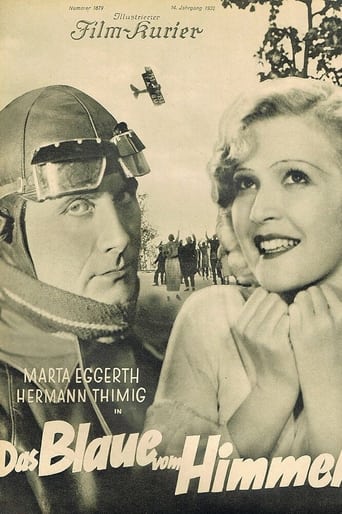
7.5Out of unlikely circumstances an underground ticket vending girl and a mail pilot fall in love.
The Blue from the Sky
1932
 5.8
5.8No synopsis available yet.
Frühling in Berlin
1957
 10.0
10.0The night before his wedding George gets drunk and marries a chorus girl. Her boyfriend appears, they fight and are believed dead, so she is now "the bridegroom's widow" (die Bräutigamswitwe). When they both come back one after another they must hide from the Police as they believe they have murdered each other, while the inspector believes there are ghosts in the house.
The Bridegroom's Widow
1931
 NR
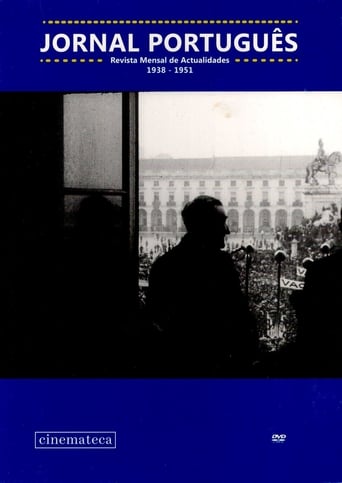
NRThe newsreel series Jornal Português (1938-1951) was produced for the Secretariat of National Propaganda (SPN/SNI) by the "Portuguese Newsreel Society" (SPAC), under the technical supervision of António Lopes Ribeiro. It was conceived and employed as part of the propaganda machinery of Salazar's regime. Screened in cinema theatres prior to the main feature film, each issue of Jornal had approximately ten minutes in length and covered a variety of official government acts, national political news, major sports events and other assorted social and cultural affairs. Jornal Português is not only an indispensable document for the history of Estado Novo's propaganda, but also an unparalleled audiovisual archive of 1940s Portugal.
Jornal Português (1938-1951)
2015