
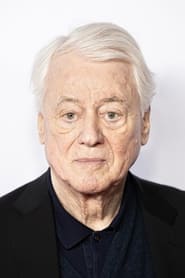
Directing
Alexander Kluge
Born — Died
1932-02-14 — 2026-03-25
Place of birth
Halberstadt, Germany
Known for
Directing
Credits
76 titles
Alexander Kluge (14 February 1932 - 25 March 2026) was a German author, philosopher, academic and film director. Kluge became known in the 1960s and 1970s as one of the most influential representatives of the New German Cinema, which he helped to establish and develop in theory and practice.
Known for
No synopsis available yet.
Alpha Forum
1998
 9.0
9.0The Bambi, often called the Bambi Award and stylised as BAMBI, is a German award presented annually by Hubert Burda Media to recognize excellence in international media and television to personalities in the media, arts, culture, sports, and other fields "with vision and creativity who affected and inspired the German public that year", both domestic and foreign. First held in 1948, it is the oldest media award in Germany. The trophy is named after Felix Salten's book Bambi, A Life in the Woods and its statuettes are in the shape of the novel's titular fawn character. They were originally made of porcelain until 1958, when the organizers switched to using gold, with the casting done by the art casting workshop of Ernst Strassacker in Süßen.
Bambi
1948
 4.7
4.7No synopsis available yet.
Kulturzeit
1995
Annual awarding of the Grimme Awards.
Grimme Award
1964
No synopsis available yet.
Sternstunde Philosophie
1998
No synopsis available yet.
German Film Award
1951
Film credits
2020s · 3 titles
 7.7
7.7"Wings Of Desire" and "Buena Vista Social Club", "Paris, Texas" and "The State Of Things": Wim Wenders is considered one of the pioneers of New German Cinema and one of the most important and influential representatives of contemporary cinema. With never-before-shown archive material and extraordinary encounters with companions and contemporary witnesses such as Francis Ford Coppola, Willem Dafoe, Andie MacDowell, Hanns Zischler, Patti Smith, and Werner Herzog, this documentary provides unique insights into the life and work of one of the most multifaceted artists of our times. Renowned documentary filmmaker Eric Friedler ("It Must Schwing. The Blue Note Story") and his co-director Andreas Frege were given the exclusive opportunity to portray Wenders for this film. From Düsseldorf to Paris, and all the way to the desert of Texas, the film traces iconic locations and decisive moments in Wenders' work as director, producer, photographer, and author.
Wim Wenders, Desperado
2020
 NR
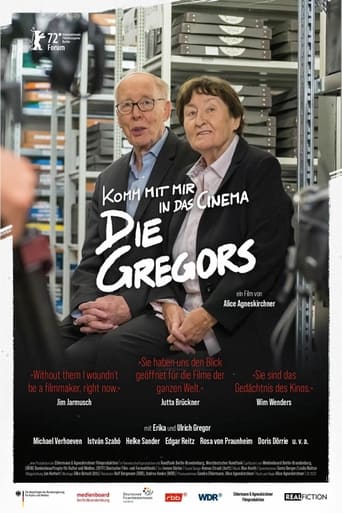
NRFrom the 1950s onwards, Erika and Ulrich Gregor brought countless film historical milestones to Berlin and shaped cinema discourse in post-war Germany. A look at the life and work of the couple without whom Arsenal and the Forum wouldn’t exist.
Come with Me to the Cinema – The Gregors
2022
 5.8
5.8A mockumentary about the life of the german musician and comedian Helge Schneider
The Klimperclown
2025
2010s · 9 titles
 5.5
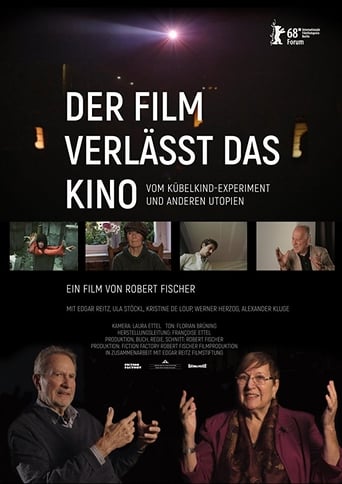
5.5For over half a century, the filmmaker Edgar Reitz, one of the signatories of the Oberhausen Manifesto and a pioneer of epic film narration, has explored, as a practitioner and theoretician, the rules and limits of cinema, which he always seeks to break and extend in new ways. One example of his tireless search and research are the Geschichten vom Kübelkind, which he co-directed with Ula Stöckl in 1969/70, 22 absurdly funny, subversive and anarchistic short films of different lengths, which consciously oppose all conventions, with incredible success. The films remain unrivalled in their Dadaistic inventiveness.
Film Beyond Cinema: The Dumpster Kid Experiment and Other Utopias
2018
 NR
NRNo synopsis available yet.
Anyone who dares will take the cold off their horse
2010
 NR
NRAlexander Kluge - October 22 2016
On the Holy Spirit
2016
 NR
NRA collaborative essay film regarding Fritz Lang.
Mimosa Tank: A Prologue for a Film
2017
 NR
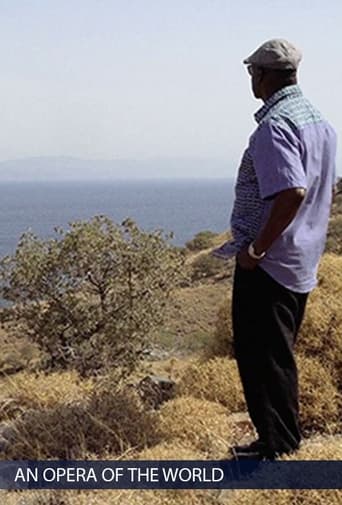
NRIn An Opera of the World, Malian scholar and filmmaker Manthia Diawara reflects upon the refugee crisis and the relationship between Europe and Africa. The film revolves around a 2008 performance of Bintou Were, a Sahel Opera, by Zé Manel Fortes with a libretto by Koulsy Lamko, in Bamako, around which Diawara builds a story about migration, interweaving interviews with documentary and archival footage. In the course of the film, one crosses into the world of opera from the tradition of sung wisdoms and sentiments, which has characterized West African culture for centuries. If opera is often understood as an über-European art form—the Gesamtkunstwerk invoked by Richard Wagner—Diawara chooses to meditate on its movement or migration as opposed to its expansion or totality. What happens when opera moves south, from Europe to Africa, just as so many people from that continent are moving north, in search of better lives?
An Opera of the World
2017
In conversations with his friends and colleagues, among them Bernd Upnmoor, Helmut Herbst, Alexander Kluge, Klaus Wyborny, Daniel Kothenschulte and Helge Schneider, Ulrike Pfeiffer takes us on a journey into the broad expanse of Nekes' cabinet of wonder and his cinematic works. At the same time, this documentary provides an insight into the history of experimental film in Germany.
Werner Nekes - Life Between the Pictures
2017
 NR
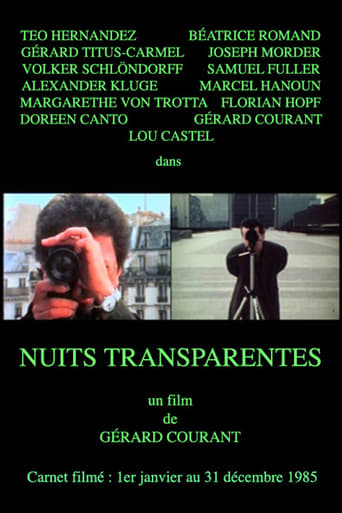
NRStrolling through France (Roanne, Nice and Carcassonne) with some excursions abroad (Munich, Montreal, New York).
Nuits transparentes
2011
 NR
NRAnselm Kiefer is one of the most important painters of the present, Alexander Kluge's television interviews are legendary. Over several years, the two have met again and kept detailed discussions. With their youthful joy of associating, they talk about Kiefer's career and his way of working, about sources of inspiration and materials, about myths and of course history. Between the thematic blocks, Alexander Kluge switched cinematic miniatures, in which he spun common ideas and deepened individual aspects. A great dialogical artist portrait.
Dancing with Pictures
2017
 NR
NRAlexander Kluge's 2012 Frankfurt lectures on poetics.
Theorie der Erzählung
2013
2000s · 5 titles
 NR
NRA study of Alexander Kluge that also emulates his technique of seeking and linking. Kluge reads aloud, Kluge recounts, including stories from his childhood and youth, from the bombing of Halberstadt, his home town. “What you don’t understand as a child you will contemplate for the rest of your life.” Kluge does this as the author of films, books, TV programs. He has always had several professions at once. He is a legal advisor, director, author, founder of the television production company DCTP, and person in charge of its culture magazines. But if you think that these are all different jobs, you’re mistaken.
Alle Gefühle glauben an einen glücklichen Ausgang
2002
 6.7
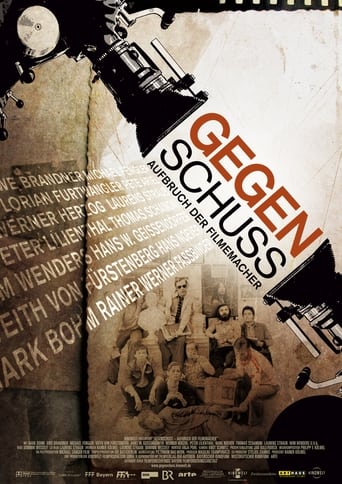
6.7Documentary about filmmakers of the New German Cinema who were members of the legendary Filmverlag für Autoren (Film Publishing House for Authors). Among them are Werner Herzog, Rainer Werner Fassbinder, and Wim Wenders.
Counter Shot: Departure of the Filmmakers
2008
 NR
NRA talk with Alexander Kluge and Jean-Luc Godard.
Blinde Liebe/Jean-Luc Godard: Meine Mutter hat nur Stummfilme gesehen!
2001
NRA portrait of Manfred Pichota, played by Peter Berling, tells about the period in which he was the Führer's bodyguard.
Ich war Hitlers Bodyguard
2000
 NR
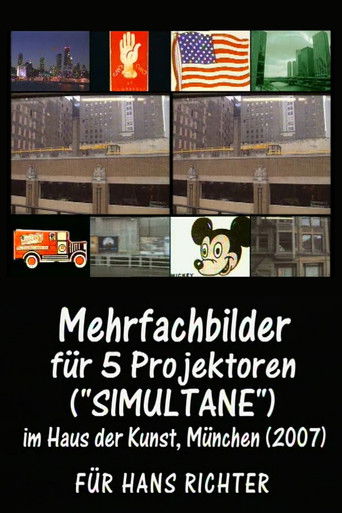
NRThe film is both a representation of the installation elements (tiled mosaics of images projected on four walls and the ceiling of a gallery) and a record of the installation / performance, with footage of the installation in situ with Kluge seated within it reading out his texts. It's dedicated to Hans Richter and begins with an account of a 1975 meeting with the great experimental director, and goes on to reflect on the simultaneity of film history and the nature of art (the bond between epoch).
Multiple Images for Five Projectors
2007
1990s · 3 titles
 6.0
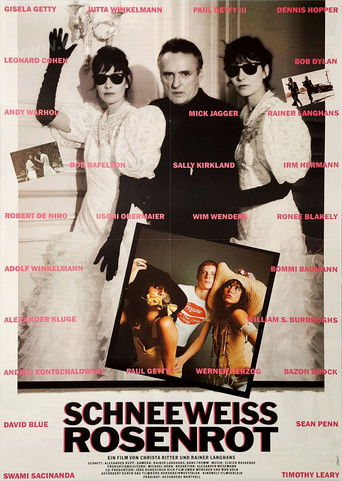
6.0Documentary about the twin sister Jutta and Gisela Schmidt. In the late sixties the two women rebelled against middle class society as if they gave vent to a new kind of art. They became active in the underground communist party KPD and showed a heart-felt interest in the colour red, the aesthetics of the revolution. Soon, though, the twins quit their experiments in Germany. They left their husbands and went to Rome, where they met the fabulously wealthy Paul Getty III, and soon things got really out of hand.
SnowwhiteRosered
1991
 6.2
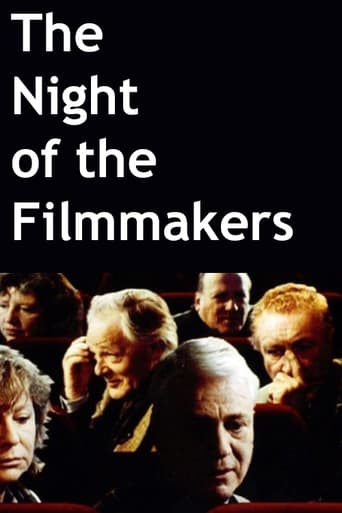
6.2A meditation on the first 100 years of German cinema, featuring an assembly of German filmmakers.
The Night of the Filmmakers
1995
Since German Classicism, it has become customary to translate extreme, emotional events into a ballad, a popular form of song. This ‘Balladen Magazin’ brings Cossack lamentations, the horrors of the war in Chechnya, and the execution of the unfortunate Emperor Maximilian of Mexico, among others...
Ballad Journal No. 9: “Cold Death Interrupts Love”
1995
1980s · 2 titles

1960s · 2 titles
Series credits
No synopsis available yet.
Alpha Forum
1998
9.0The Bambi, often called the Bambi Award and stylised as BAMBI, is a German award presented annually by Hubert Burda Media to recognize excellence in international media and television to personalities in the media, arts, culture, sports, and other fields "with vision and creativity who affected and inspired the German public that year", both domestic and foreign. First held in 1948, it is the oldest media award in Germany. The trophy is named after Felix Salten's book Bambi, A Life in the Woods and its statuettes are in the shape of the novel's titular fawn character. They were originally made of porcelain until 1958, when the organizers switched to using gold, with the casting done by the art casting workshop of Ernst Strassacker in Süßen.
Bambi
1948
4.7No synopsis available yet.
Kulturzeit
1995
Annual awarding of the Grimme Awards.
Grimme Award
1964
No synopsis available yet.
Sternstunde Philosophie
1998
No synopsis available yet.
German Film Award
1951
No synopsis available yet.
Lebensläufe
1998
 7.8
7.8German talkshow hosted by Richard David Precht, a well known german philosopher and publisher, in which he speaks with a guest about a topic from culture, science, economy or politics in every episode
Precht
2012
 6.0
6.0No synopsis available yet.
druckfrisch
2003
No synopsis available yet.
Literatur im Foyer
2000
Behind the camera
 5.0
5.0Combining fictional and documentary modes, the film takes a critical stance toward Frankfurt's public sphere and urban redevelopment. Despite the serious formal and political concerns of the film, Kluge's heightened sense of the absurd safeguards a reserve of utopian optimism.
In Danger and Dire Distress the Middle of the Road Leads to Death
1974
5.0Combining fictional and documentary modes, the film takes a critical stance toward Frankfurt's public sphere and urban redevelopment. Despite the serious formal and political concerns of the film, Kluge's heightened sense of the absurd safeguards a reserve of utopian optimism.
In Danger and Dire Distress the Middle of the Road Leads to Death
1974
 6.4
6.4Nine fictitious documentaries and films reflect the mood of late 1970s Germany, particularly the two-month period in 1977 when a businessman was kidnapped by the RAF (Red Army Faction). The kidnap had been made to orchestrate the release of the original leaders of the RAF, aka the Baader-Meinhof.
Germany in Autumn
1978
6.4Nine fictitious documentaries and films reflect the mood of late 1970s Germany, particularly the two-month period in 1977 when a businessman was kidnapped by the RAF (Red Army Faction). The kidnap had been made to orchestrate the release of the original leaders of the RAF, aka the Baader-Meinhof.
Germany in Autumn
1978
 5.8
5.8A young circus director ends up going into television after her father, a trapeze performer, dies in a circus accident.
Artists Under the Big Top: Perplexed
1968
5.8A young circus director ends up going into television after her father, a trapeze performer, dies in a circus accident.
Artists Under the Big Top: Perplexed
1968
5.8A young circus director ends up going into television after her father, a trapeze performer, dies in a circus accident.
Artists Under the Big Top: Perplexed
1968
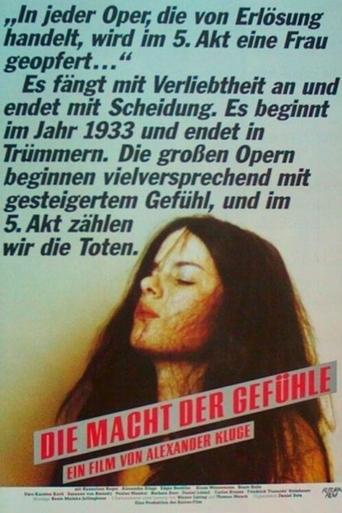 4.8
4.8Emotions and feelings should not be confused with sentimentality. Emotion is ancient and more powerful than any artistic expression. The film observes young couples facing difficulties while trying to move their love experiences towards clear decision making. A film full of ideas, details and associations, fictional scenes, documentary footage, archival materials and opera music.
The Power of Emotion
1983
4.8Emotions and feelings should not be confused with sentimentality. Emotion is ancient and more powerful than any artistic expression. The film observes young couples facing difficulties while trying to move their love experiences towards clear decision making. A film full of ideas, details and associations, fictional scenes, documentary footage, archival materials and opera music.
The Power of Emotion
1983
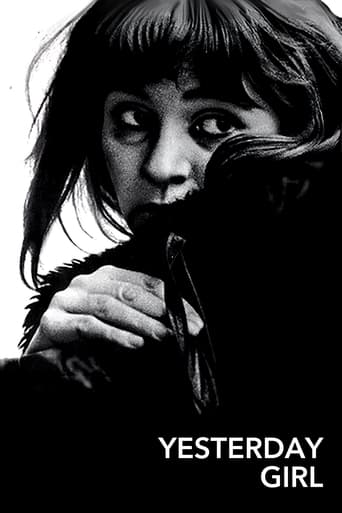 6.5
6.5A young German woman searches for happiness, liberation, and independence in the illusive wake of a transformative national recovery.
Yesterday Girl
1967
6.5A young German woman searches for happiness, liberation, and independence in the illusive wake of a transformative national recovery.
Yesterday Girl
1967
6.5A young German woman searches for happiness, liberation, and independence in the illusive wake of a transformative national recovery.
Yesterday Girl
1967
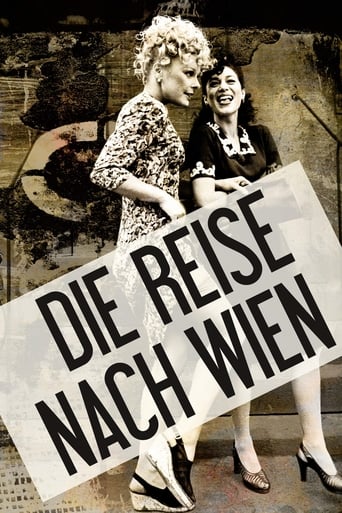 5.2
5.2Two women during WW2 living in a Hunsrück village embark on a trip to Vienna.
The Journey to Vienna
1973
 NR
NRNo synopsis available yet.
Nachrichten vom Großen Krieg
2014
 6.0
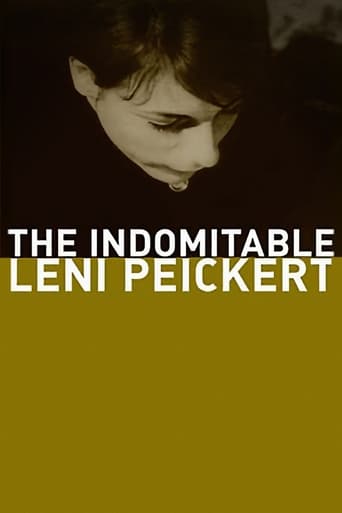
6.0The Indomitable Leni Peickert is a loose, half-hour sequel to Alexander Kluge's second feature film, Artists in the Big Top: Perplexed. This shorter work, seemingly assembled from leftover footage from the longer film, continues the story of the circus owner Leni Peickert after she first abandoned her idea of a radical circus in favor of a job in television. It opens where the previous film left off, at a TV station where Leni and her friends have gathered as employees, attempting to infiltrate the corporate establishment with their own revolutionary ideas.
The Indomitable Leni Peickert
1970
6.0The Indomitable Leni Peickert is a loose, half-hour sequel to Alexander Kluge's second feature film, Artists in the Big Top: Perplexed. This shorter work, seemingly assembled from leftover footage from the longer film, continues the story of the circus owner Leni Peickert after she first abandoned her idea of a radical circus in favor of a job in television. It opens where the previous film left off, at a TV station where Leni and her friends have gathered as employees, attempting to infiltrate the corporate establishment with their own revolutionary ideas.
The Indomitable Leni Peickert
1970
 NR
NRAn old building in Venice hosts an exhibition. A visitor walks through empty rooms discovering a fictionalized architectural space that functions like an abandoned theatre set. Inspired by Alexander Kluge’s oeuvre, this exploration attempts to de-construct the subjective experience and liberate the cinematic energy from the horror vacui of the display.
The Leaks of Venice
2020
NRNo synopsis available yet.
Anyone who dares will take the cold off their horse
2010
 NR
NRAdorno is not just a theorist and philosopher, he was also a composer and student of Alban Berg in Vienna. The text of the short song goes: “What’s driving there, on a cart and stretches out his long trunk?/ It is a mammoth! It is a mammoth! It is a mammoth which wants to go home.”
The Mammoth’s Homecoming, a Composition of Th. W. Adorno in the Year 1941
2020
NRA talk with Alexander Kluge and Jean-Luc Godard.
Blinde Liebe/Jean-Luc Godard: Meine Mutter hat nur Stummfilme gesehen!
2001
NRA talk with Alexander Kluge and Jean-Luc Godard.
Blinde Liebe/Jean-Luc Godard: Meine Mutter hat nur Stummfilme gesehen!
2001
Movie scenes, montages of images and text, as well as conversations between Alexander Kluge, playwright Heiner Müller and classicist Wilfried Stroh provide a multifaceted insight in the far-away world of Ancient Rome. The conversation with Müller revolves around Tacitus' representation of the Roman Empire around 112 AD. First, Müller reads passages from the historicist's annals that describe Tiberius' tragic death (37 AD). Kluge and Müller discuss the text's aesthetic qualities. Müller is interested in Tacitus for the aesthetic pleasures rather than out of historical curiosity. He describes Tacitus' style as "transition from chronicle to literature," which manifests in his "elliptical," sometimes laconic narration.
Rome, as Far Away as the Moon
1991
 6.4
6.4A poignant film essay about 'superfluous people' facing up to a moment of crisis in their lives.
The Assault of the Present on the Rest of Time
1985
6.4A poignant film essay about 'superfluous people' facing up to a moment of crisis in their lives.
The Assault of the Present on the Rest of Time
1985
No synopsis available yet.
Utopie der Oper
2026
 6.0
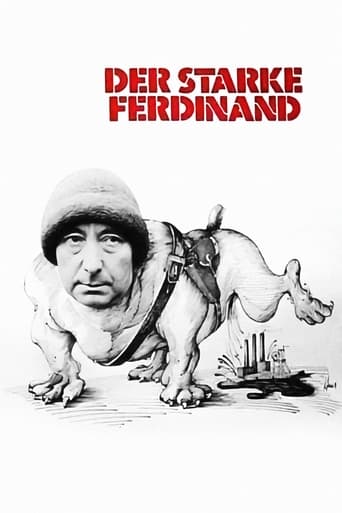
6.0The clownish security chief of a West German business is obsessed with protecting his factory from fancied and real breaches, especially from groups such as The Red Army Faction. Ferdinand's paranoia and methods can't be contained by his company. The sympathetically-drawn Ferdinand's ludicrous actions recall those of the cynical, disastrous axis between fascism and big business in 1930's Europe: satire of the rise of private security.
Strongman Ferdinand
1976
6.0The clownish security chief of a West German business is obsessed with protecting his factory from fancied and real breaches, especially from groups such as The Red Army Faction. Ferdinand's paranoia and methods can't be contained by his company. The sympathetically-drawn Ferdinand's ludicrous actions recall those of the cynical, disastrous axis between fascism and big business in 1930's Europe: satire of the rise of private security.
Strongman Ferdinand
1976
Chamberlain, Mussolini and their aides attend a 1938 performance of Macbeth in Rome. This audience is itself made into the raw material of opera. The site of the negotiations between Chamberlain and Hitler, which resulted in the invasion of Czechoslovakia, is diagrammed, and Chamberlain and his aides are charged with lack of fantasy, a fatal flaw. Meanwhile, in September 1939 a Nazi officer's happy love story is interrupted only to be resumed (we are told) in 1953, as he comes back from Soviet captivity. A film clip of two bodies in the midst of war devastation asks, "Why are you crying, Antonio? Are you afraid to die?" The theme of "a new beginning" is the fantasy outcome here, as a "film" in computer graphics shows a parade of French soldiers in 1918 celebrating the end of war in disbelief and hunger for freedom.
Why Are You Crying, Antonio?
1988
 5.9
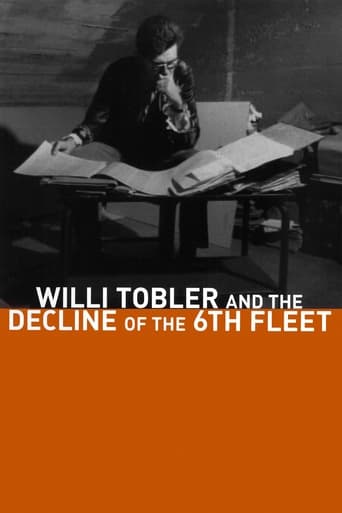
5.9Willi endeavors to survive in a world where annihilistic galactic battles rage, by taking a job at the centre of power. But it's the wrong side that he takes in this civil war...
Willi Tobler and the Decline of the 6th Fleet
1972
5.9Willi endeavors to survive in a world where annihilistic galactic battles rage, by taking a job at the centre of power. But it's the wrong side that he takes in this civil war...
Willi Tobler and the Decline of the 6th Fleet
1972
 4.5
4.5The third episodic film, after Deutschland im Herbst and Der Kandidat, in which notable German filmmakers reflect on the state of their country. A collage of documentary and dramatised sequences dealing with such topics as overkill, peace demonstrations, NATO arms policy, and life after the next war.
War and Peace
1982
4.5The third episodic film, after Deutschland im Herbst and Der Kandidat, in which notable German filmmakers reflect on the state of their country. A collage of documentary and dramatised sequences dealing with such topics as overkill, peace demonstrations, NATO arms policy, and life after the next war.
War and Peace
1982
In this conversation, taking place shortly after the German reunification, Alexander Kluge and Heiner Müller discuss historical developments from the perspective of playwright Heiner Müller’s view on subjectivity. Among other things, they talk about the theoretical work of political philosopher Carl Schmitt, Russian literature, Müller’s play “Mauser” and an artwork by Anselm Kiefer.
“Wastage” of humans / Comrade Mauser / “Victim of History”
1991
No synopsis available yet.
Auf Messers Schneide: das Jahr 1929
2026
No synopsis available yet.
Auf Messers Schneide: das Jahr 1929
2026
No synopsis available yet.
Auf Messers Schneide: das Jahr 1929
2026
 6.0
6.0Made with an eye to the autumn of 1980 when the German parliamentary elections took place, The Candidate examines Germany’s history past and present and Franz Josef Strauß, the man who, as the CDU/CSU candidate, aspires to be elected to the most important political office in the land.
The Candidate
1980
6.0Made with an eye to the autumn of 1980 when the German parliamentary elections took place, The Candidate examines Germany’s history past and present and Franz Josef Strauß, the man who, as the CDU/CSU candidate, aspires to be elected to the most important political office in the land.
The Candidate
1980
Straschek's film points to the gap between workers and intellectuals and describes the "difficulties of the revolution" in a biting and witty way.
Zum Begriff des 'kritischen Kommunismus' bei Antonio Labriola (1843-1904)
1970
Kluge’s short-film starring his sister/muse Alexandra.
E. A. Winterstein, Fire Extinguisher
1968