
Directing
Samia Chala
Known for
Directing
Credits
19 titles
Samia Chala was born in Algiers in 1964. After studying engineering, she left Algeria at the height of the civil war and arrived in France in 1994. She initially worked as a production assistant before becoming an investigative journalist for numerous documentary productions. For the past seven years, Samia Chala has been directing her own films. Her documentaries focus on Algeria, women, exile, and, more broadly, migration from the Global South to the North. Since 1995, she has directed numerous documentaries and short films. She also works as a journalist and writer for the series Algérie(s), as well as for NHK and Channel 4.
Known for
Who remembers that unlikely handful of marchers—campaigning "for equality and against racism"—who set out on the roads of France in October 1983 in obscurity, only to culminate in a triumphant finale in Paris, with nearly 100,000 people at the Bastille and the Élysée Palace as the finish line? "Put your guns away, we’re coming—hunting season is over," proclaimed the March, a response to the police violence and numerous racist crimes that had marked the early 1980s. A novel of the "Beur generation," Les Marcheurs revisits this little-known story.
Les Marcheurs, chronique des années beurs
2013
 8.5
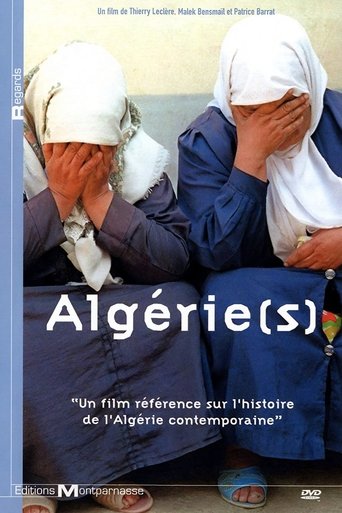
8.5Documentary series in two parts: 1. A people without a voice (80'), 2. A land in mourning (78'). Part 1: A people without a voice: October 88, the Algerian Republic is faltering, the film goes back to the sources of this tragedy and explains how the face to face between the Islamists and those in power began. The interruption of the legislative elections of December 91, followed shortly after the assassination of President Boudiaf in June 92, plunged Algeria into chaos. Part 2: A land in mourning: the cycle of violence that leads to massacres and the economic and geopolitical underside of the war. More than 100,000 deaths, an incredible degree of barbarity, massacres, apparently incomprehensible... Behind the official window of power and its artificial political scene, hides a shadow power.
Algeria's Bloody Years
2002
 NR
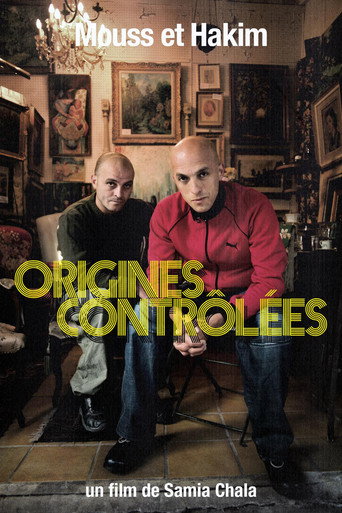
NRThis film will tell the story of a tour of France undertaken by two children of "controlled origin"—as Mouss and Hakim wryly put it. For us, the reference to the century-old schoolbook Le Tour de la France par deux enfants by Augustine Fouillée is far more than a mere nod; published in the wake of the Franco-Prussian War of 1870, this reader was a fiercely patriotic manual designed to shape the education and morals of young French children. Written under the pseudonym "G. Bruno," the book recounted the journey of two children, André and Julien Volden, who—following the Prussian annexation of Alsace-Lorraine and the death of their father—set out to find their uncle across France’s beautiful provinces. The book was steeped in nationalism and a martial spirit, instilling the values of the Third Republic—equality and citizenship—with a heavy hand, ensuring that no one dared to stand out from the crowd.
Mouss et Hakim, controled origins
2011
In the early 20th century, one of the biggest stars of the Parisian stage was a Black artist who has since been forgotten: the clown Chocolat. This film by Samia Chala and Thierry Leclère tells the extraordinary story of this former Cuban slave who captivated the Lumière brothers, inspired the painter Toulouse-Lautrec, and later influenced writers such as Jean Cocteau. The meteoric rise of Chocolat—who was physically struck and mocked on stage by the "white clown" Footit—reflects the French public's discovery of the "Black man" during the era of colonial exhibitions and the Third Republic. It is a story that still resonates today. Drawing on exceptional archival footage, Chocolat’s epic life story is recounted by historian Gérard Noiriel and actor Marcel Bozonnet, both of whom brought the clown back to life on stage.
Le Clown Chocolat
2013
"In Algeria, I fought to ensure that girls—like me—would not be forced to wear the veil. In France, I began defending women's right to wear it, should they choose to do so. Does that surprise you? To me, it is the same fight. By revisiting the stereotypes that have clung to Arab women since the colonial era, Madame la France, ma mère et moi examines the way French people view women of Maghrebi origin. This film—for which I retraced the steps of my mother and aunt in Algeria—will, I hope, help people understand my anger, an anger shared by many Arabs in France." (Samia Chala)
Madame la France, ma mère et moi
2013
Farida Belghoul, a teacher at a high school in the northern suburbs of Paris, has decided to withdraw her own children from the school system. Believing the system is in a state of total collapse, she wants to save her own children—as she puts it. Alternating between outrage and disillusionment, Farida fights a daily battle to keep her "closed-door" school alive.
Sauve qui peut
2007
Behind the camera
Who remembers that unlikely handful of marchers—campaigning "for equality and against racism"—who set out on the roads of France in October 1983 in obscurity, only to culminate in a triumphant finale in Paris, with nearly 100,000 people at the Bastille and the Élysée Palace as the finish line? "Put your guns away, we’re coming—hunting season is over," proclaimed the March, a response to the police violence and numerous racist crimes that had marked the early 1980s. A novel of the "Beur generation," Les Marcheurs revisits this little-known story.
Les Marcheurs, chronique des années beurs
2013
Who remembers that unlikely handful of marchers—campaigning "for equality and against racism"—who set out on the roads of France in October 1983 in obscurity, only to culminate in a triumphant finale in Paris, with nearly 100,000 people at the Bastille and the Élysée Palace as the finish line? "Put your guns away, we’re coming—hunting season is over," proclaimed the March, a response to the police violence and numerous racist crimes that had marked the early 1980s. A novel of the "Beur generation," Les Marcheurs revisits this little-known story.
Les Marcheurs, chronique des années beurs
2013
8.5Documentary series in two parts: 1. A people without a voice (80'), 2. A land in mourning (78'). Part 1: A people without a voice: October 88, the Algerian Republic is faltering, the film goes back to the sources of this tragedy and explains how the face to face between the Islamists and those in power began. The interruption of the legislative elections of December 91, followed shortly after the assassination of President Boudiaf in June 92, plunged Algeria into chaos. Part 2: A land in mourning: the cycle of violence that leads to massacres and the economic and geopolitical underside of the war. More than 100,000 deaths, an incredible degree of barbarity, massacres, apparently incomprehensible... Behind the official window of power and its artificial political scene, hides a shadow power.
Algeria's Bloody Years
2002
NRThis film will tell the story of a tour of France undertaken by two children of "controlled origin"—as Mouss and Hakim wryly put it. For us, the reference to the century-old schoolbook Le Tour de la France par deux enfants by Augustine Fouillée is far more than a mere nod; published in the wake of the Franco-Prussian War of 1870, this reader was a fiercely patriotic manual designed to shape the education and morals of young French children. Written under the pseudonym "G. Bruno," the book recounted the journey of two children, André and Julien Volden, who—following the Prussian annexation of Alsace-Lorraine and the death of their father—set out to find their uncle across France’s beautiful provinces. The book was steeped in nationalism and a martial spirit, instilling the values of the Third Republic—equality and citizenship—with a heavy hand, ensuring that no one dared to stand out from the crowd.
Mouss et Hakim, controled origins
2011
NRThis film will tell the story of a tour of France undertaken by two children of "controlled origin"—as Mouss and Hakim wryly put it. For us, the reference to the century-old schoolbook Le Tour de la France par deux enfants by Augustine Fouillée is far more than a mere nod; published in the wake of the Franco-Prussian War of 1870, this reader was a fiercely patriotic manual designed to shape the education and morals of young French children. Written under the pseudonym "G. Bruno," the book recounted the journey of two children, André and Julien Volden, who—following the Prussian annexation of Alsace-Lorraine and the death of their father—set out to find their uncle across France’s beautiful provinces. The book was steeped in nationalism and a martial spirit, instilling the values of the Third Republic—equality and citizenship—with a heavy hand, ensuring that no one dared to stand out from the crowd.
Mouss et Hakim, controled origins
2011
In the early 20th century, one of the biggest stars of the Parisian stage was a Black artist who has since been forgotten: the clown Chocolat. This film by Samia Chala and Thierry Leclère tells the extraordinary story of this former Cuban slave who captivated the Lumière brothers, inspired the painter Toulouse-Lautrec, and later influenced writers such as Jean Cocteau. The meteoric rise of Chocolat—who was physically struck and mocked on stage by the "white clown" Footit—reflects the French public's discovery of the "Black man" during the era of colonial exhibitions and the Third Republic. It is a story that still resonates today. Drawing on exceptional archival footage, Chocolat’s epic life story is recounted by historian Gérard Noiriel and actor Marcel Bozonnet, both of whom brought the clown back to life on stage.
Le Clown Chocolat
2013
In the early 20th century, one of the biggest stars of the Parisian stage was a Black artist who has since been forgotten: the clown Chocolat. This film by Samia Chala and Thierry Leclère tells the extraordinary story of this former Cuban slave who captivated the Lumière brothers, inspired the painter Toulouse-Lautrec, and later influenced writers such as Jean Cocteau. The meteoric rise of Chocolat—who was physically struck and mocked on stage by the "white clown" Footit—reflects the French public's discovery of the "Black man" during the era of colonial exhibitions and the Third Republic. It is a story that still resonates today. Drawing on exceptional archival footage, Chocolat’s epic life story is recounted by historian Gérard Noiriel and actor Marcel Bozonnet, both of whom brought the clown back to life on stage.
Le Clown Chocolat
2013
"In Algeria, I fought to ensure that girls—like me—would not be forced to wear the veil. In France, I began defending women's right to wear it, should they choose to do so. Does that surprise you? To me, it is the same fight. By revisiting the stereotypes that have clung to Arab women since the colonial era, Madame la France, ma mère et moi examines the way French people view women of Maghrebi origin. This film—for which I retraced the steps of my mother and aunt in Algeria—will, I hope, help people understand my anger, an anger shared by many Arabs in France." (Samia Chala)
Madame la France, ma mère et moi
2013
"In Algeria, I fought to ensure that girls—like me—would not be forced to wear the veil. In France, I began defending women's right to wear it, should they choose to do so. Does that surprise you? To me, it is the same fight. By revisiting the stereotypes that have clung to Arab women since the colonial era, Madame la France, ma mère et moi examines the way French people view women of Maghrebi origin. This film—for which I retraced the steps of my mother and aunt in Algeria—will, I hope, help people understand my anger, an anger shared by many Arabs in France." (Samia Chala)
Madame la France, ma mère et moi
2013
Farida Belghoul, a teacher at a high school in the northern suburbs of Paris, has decided to withdraw her own children from the school system. Believing the system is in a state of total collapse, she wants to save her own children—as she puts it. Alternating between outrage and disillusionment, Farida fights a daily battle to keep her "closed-door" school alive.
Sauve qui peut
2007
Farida Belghoul, a teacher at a high school in the northern suburbs of Paris, has decided to withdraw her own children from the school system. Believing the system is in a state of total collapse, she wants to save her own children—as she puts it. Alternating between outrage and disillusionment, Farida fights a daily battle to keep her "closed-door" school alive.
Sauve qui peut
2007
Three months of riots and street fighting. Three months of marches and demonstrations, but the anger of Algerias Kabyle population has not diminished. This rank and file mouvement mistrusts political parties, and presents a real threat to the Algerian government. Berber-speaking, Kabylian native, director Samia Chala followed Mohand, one of the young people who initiated those riots, through his village of Avizar, 40 kilometers from Tizi Ouzou, to get the inside story. Because of her background and intimate knowledge of the region, Samia was allowed to film without any police escort, and this produced a rare document.
Kabylie : au cœur de la révolte
2001
Three months of riots and street fighting. Three months of marches and demonstrations, but the anger of Algerias Kabyle population has not diminished. This rank and file mouvement mistrusts political parties, and presents a real threat to the Algerian government. Berber-speaking, Kabylian native, director Samia Chala followed Mohand, one of the young people who initiated those riots, through his village of Avizar, 40 kilometers from Tizi Ouzou, to get the inside story. Because of her background and intimate knowledge of the region, Samia was allowed to film without any police escort, and this produced a rare document.
Kabylie : au cœur de la révolte
2001
Chahinaz is a young Algerian woman who dreams of freedom and who cannot understand why her life is being dictated to her. A student in Constantine, this young sparkling woman loves her country but is suffocated by the weight of tradition and religion. How can you change society in a country where the law officially sanctions inequality between men and women? How can women’s rights be advanced on a global level? In order to find answers to her questions, we have travelled to her country and across several continents, comparing her situation with that of other women. And also to inform those who have the power to change what Chahinaz does not accept. Chahinaz asks questions without blinkers, and seeks answers that are not just black and white. She brings a fresh and intelligent view to the condition of women in the North and the South, and in the process challenges some widely prevalent clichés about Muslim women.
Chahinaz : quels droits pour les femmes ?
2006
Chahinaz is a young Algerian woman who dreams of freedom and who cannot understand why her life is being dictated to her. A student in Constantine, this young sparkling woman loves her country but is suffocated by the weight of tradition and religion. How can you change society in a country where the law officially sanctions inequality between men and women? How can women’s rights be advanced on a global level? In order to find answers to her questions, we have travelled to her country and across several continents, comparing her situation with that of other women. And also to inform those who have the power to change what Chahinaz does not accept. Chahinaz asks questions without blinkers, and seeks answers that are not just black and white. She brings a fresh and intelligent view to the condition of women in the North and the South, and in the process challenges some widely prevalent clichés about Muslim women.
Chahinaz : quels droits pour les femmes ?
2006
Louzine is a place uniting several music styles and several destinies. Men and women work there, who have come together because they master music instruments and have almost all had the same type of life: exile. Louzine is a mecca for tolerance concerning music. Gnawa music plays with rock and blues, chaâbi (traditional from Algiers) is on familiar terms with jazz, Kabyle music dances with Celtic sounds. This is where groups like Orchestre National de Barbès, Zerda, Thalweg, Gaâda, Cheikh Sidi Bémol could develop, thanks to such fecund diversity in which Breton bagpipes and North African qarqabous joyfully mingle, and free improvisation mixes with unchanging traditional chorus. All songs, be they in Arabic, Kabyle, French or English, tell about home, about love, hope, immigration, daily life, and are often full of humour.
Bled Music à l'usine
2007
Louzine is a place uniting several music styles and several destinies. Men and women work there, who have come together because they master music instruments and have almost all had the same type of life: exile. Louzine is a mecca for tolerance concerning music. Gnawa music plays with rock and blues, chaâbi (traditional from Algiers) is on familiar terms with jazz, Kabyle music dances with Celtic sounds. This is where groups like Orchestre National de Barbès, Zerda, Thalweg, Gaâda, Cheikh Sidi Bémol could develop, thanks to such fecund diversity in which Breton bagpipes and North African qarqabous joyfully mingle, and free improvisation mixes with unchanging traditional chorus. All songs, be they in Arabic, Kabyle, French or English, tell about home, about love, hope, immigration, daily life, and are often full of humour.
Bled Music à l'usine
2007
For fifteen years, Lamine Bouasla, "Lamine the escape" as his friends called him, only dreamt about this: get a visa for France. Get out of Algeria to see the El Dorado. A Western dream, shared by millions of candidates to exodus, ready to leave family and friends to see what’s on the other side of the mirror. We met by chance and followed for weeks, the wandering of this Titi (young Parisian in French slang) from Algiers who is also an extraordinary character who could have been made by Fellini in Commedia dell’arte. Amusing, earthy, sensitive. A tormented soul who, in an Algerian style, that transforms daily pain and despair into a hilarious human comedy. "Lamine the escape" is Algeria. It is the South, full of hope and illusions that, stuck to the Western window, asks for a ticket to enter this fantasy world that enter everyday into every home through satellite.
Lamine "la fuite"
2009
For fifteen years, Lamine Bouasla, "Lamine the escape" as his friends called him, only dreamt about this: get a visa for France. Get out of Algeria to see the El Dorado. A Western dream, shared by millions of candidates to exodus, ready to leave family and friends to see what’s on the other side of the mirror. We met by chance and followed for weeks, the wandering of this Titi (young Parisian in French slang) from Algiers who is also an extraordinary character who could have been made by Fellini in Commedia dell’arte. Amusing, earthy, sensitive. A tormented soul who, in an Algerian style, that transforms daily pain and despair into a hilarious human comedy. "Lamine the escape" is Algeria. It is the South, full of hope and illusions that, stuck to the Western window, asks for a ticket to enter this fantasy world that enter everyday into every home through satellite.
Lamine "la fuite"
2009