

Production
Moisey Aleynikov
Born — Died
1885-11-26 — 1964-04-30
Known for
Production
Credits
35 titles
The first and the last film producer in Soviet cinema production system. One of the first Russian film journalists.
Known for
 6.7
Arriving in St. Petersburg in search of work, a peasant unwittingly aids in the arrest of an old friend who is now a labour leader. The unemployed man is arrested and sent to fight in the Great War. After three years, he returns to rebel.
The End of St. Petersburg
1927
 6.0
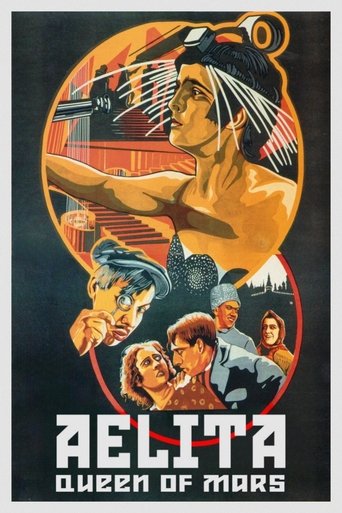
A young man travels to Mars in a rocket ship, where he leads a popular uprising against the ruling group with the support of Queen Aelita, who has fallen in love with him after watching him through a telescope.
Aelita: Queen of Mars
1924
 7.1
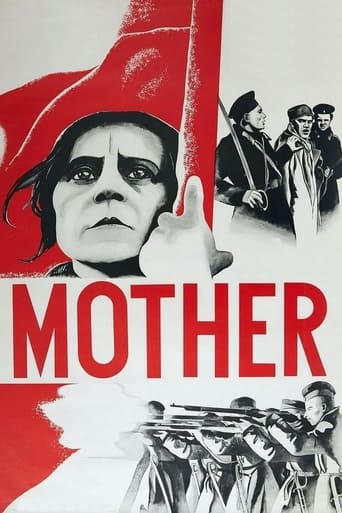
A Soviet woman is caught between her husband and son, who find themselves on opposing sides of the Russian Revolution.
Mother
1926
 6.1
Three episodes comprise three songs sung by anonymous Soviet peoples about Vladimir Ilyich Lenin.
Three Songs About Lenin
1934
 6.3
In a remote Russian village during World War I, colourful and nuanced characters experience divided loyalties: family loyalty vs. personal desire, nationalism vs. transcendent humanism.
Outskirts
1933
 7.0
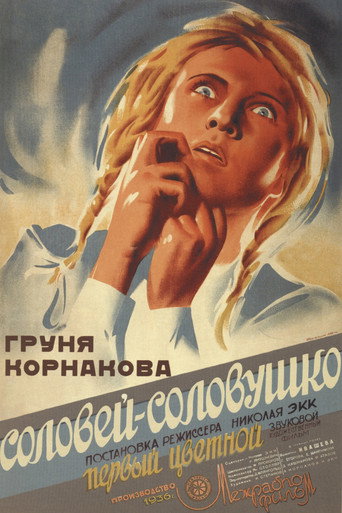
The events in the film take place in pre-revolutionary Russia. A riot of workers of a large porcelain factory is taking place. After the burning of one of the shops, Grunya's father dies in the fire. The owner of the factory caused the fire in order to obtain a fine from the workers. Grunya urgers the workers to fight, but is injured, yet she still urges the people not to give up.
Nightingale
1936
Behind the camera
6.7Arriving in St. Petersburg in search of work, a peasant unwittingly aids in the arrest of an old friend who is now a labour leader. The unemployed man is arrested and sent to fight in the Great War. After three years, he returns to rebel.
The End of St. Petersburg
1927
6.0A young man travels to Mars in a rocket ship, where he leads a popular uprising against the ruling group with the support of Queen Aelita, who has fallen in love with him after watching him through a telescope.
Aelita: Queen of Mars
1924
7.1A Soviet woman is caught between her husband and son, who find themselves on opposing sides of the Russian Revolution.
Mother
1926
6.1Three episodes comprise three songs sung by anonymous Soviet peoples about Vladimir Ilyich Lenin.
Three Songs About Lenin
1934
6.3In a remote Russian village during World War I, colourful and nuanced characters experience divided loyalties: family loyalty vs. personal desire, nationalism vs. transcendent humanism.
Outskirts
1933
7.0The events in the film take place in pre-revolutionary Russia. A riot of workers of a large porcelain factory is taking place. After the burning of one of the shops, Grunya's father dies in the fire. The owner of the factory caused the fire in order to obtain a fine from the workers. Grunya urgers the workers to fight, but is injured, yet she still urges the people not to give up.
Nightingale
1936
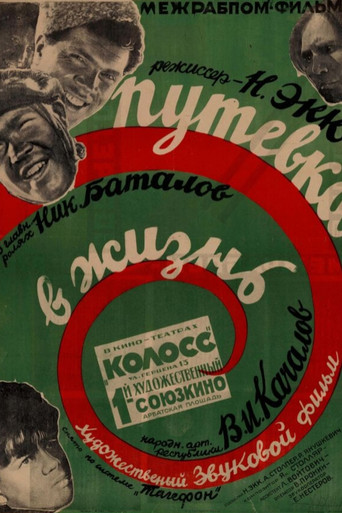 6.2
The first Russian talking picture which won a prize at the 1st Venice IFF. The action is set in 1923. The USSR is struggling with hunger and economic ruin. It is a story of homeless teenagers for whom a work commune is set up with the idea of uniting and reforming them.
Road to Life
1931
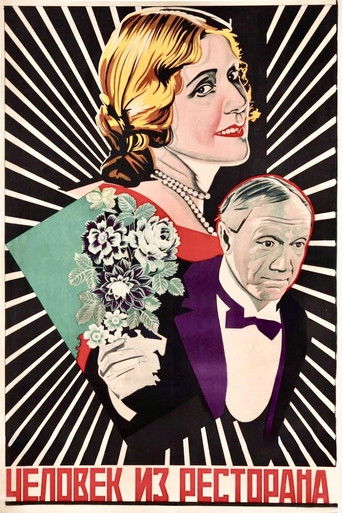 5.5
During the good old days of the Russian aristocracy, that is to say, before the October Revolution, in the city of Moscow there was a fancy restaurant which catered to the appetites and egos of the rich. In one such establishment works a middle-aged waiter who is devoted to serving his bourgeoisie clients correctly. However, his life outside his job is very different: His son was killed during the Russian civil war and the waiter's wife died of grief as a result....
The Man from the Restaurant
1927
 6.1
History of theft and double crossing when two thieves fall out over the theft of the money of the proceeds of the sale of a house by a banker to a religious community.
The Case of the Three Million
1926
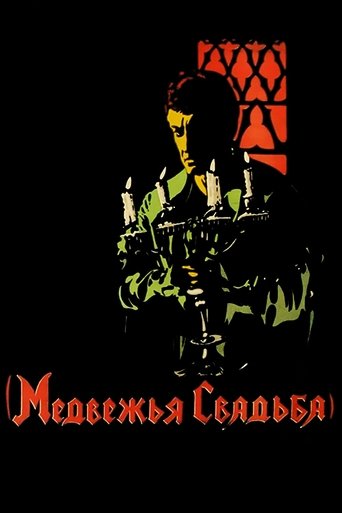 5.4
Konstantin Eggert both directed and starred as Count Shemet, cursed by his insane mother’s traumatic experience with a bear to have seizures during which he himself becomes a “bear” on the kill.
The Bear's Wedding
1925
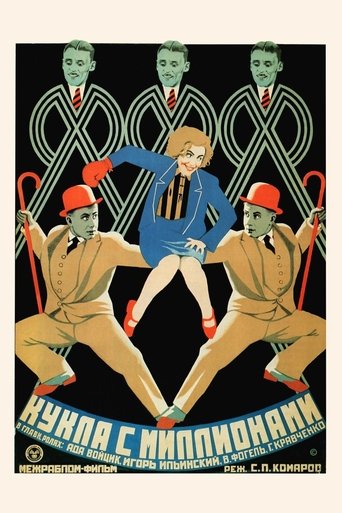 6.6
The rich widow Madame Collie leaves the fortune to her lost niece Maria Ivanova. Two cousins of Maria go from Paris to Moscow in order to search her. They have to find a 17 year old girl with the birthmark on her right shoulder. The documents of the heiress are hidden in her doll.
The Doll with Millions
1928
 6.5
Lowly Mongolian trapper Bair, shunned by his fellow trappers for fighting with a trader, flees his trading post and joins the Soviet partisans trying to oust the occupying British forces. After Bair is captured and shot by the British, they find an amulet on him suggesting he is a descendant of Genghis Khan. The soldiers nurse Bair back to health and use him to establish a puppet government, unaware that their plan will backfire when the puppet breaks his strings.
Storm Over Asia
1928
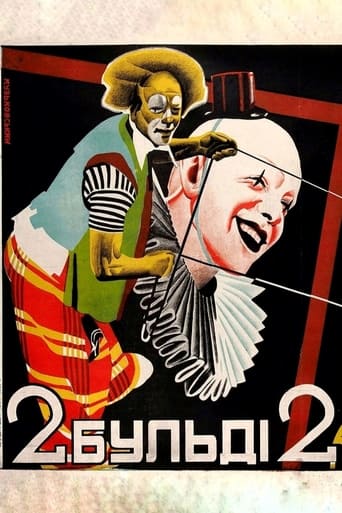 7.8
A father and son, both clowns, are to perform together for the first time, but the civil war separates them, and the elder Buldy, tempted for a moment to acquiesce to the White forces, casts his lot with the revolution.
Two-Buldi-Two
1929
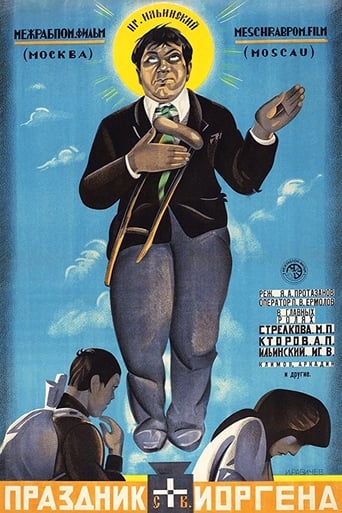 5.5
The priests, stock market officials, and police conspire to squeeze income out of pilgrims come to see relics of a Christ like figure. A pair of con men try to pass of a resurrected saint.
St. Jorgen's Day
1930
 4.7
Fearing the Soviet Union, rich businessmen who want more influence in Europe decide to give the nation of Boufferia a new king, an easy to handle drunkard.
Marionettes
1934
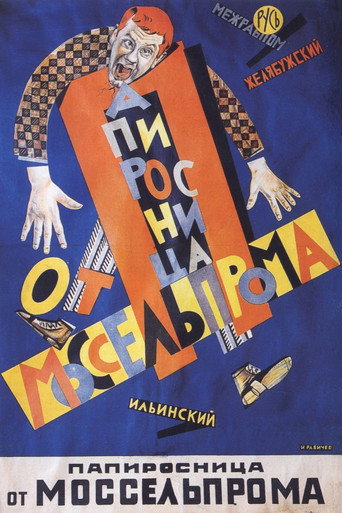 5.5
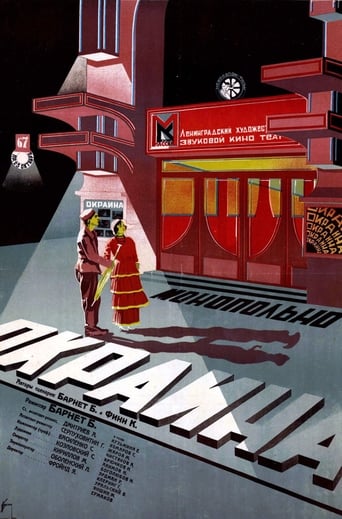
As she works in her tedious office job, Maria Ivanovna dreams about being married, and she has particular hopes that her co-worker Nikodim Mityushin will take an interest in her. Nikodim, though, is in love with Zina, who sells cigarettes on the sidewalk, and he frequently buys cigarettes from her even though he does not smoke. One day, a film crew uses Zina as an extra in an outdoor scene, and the cameraman, Latugin, falls in love with her. Latugin soon arranges an acting job for Zina. To complicate matters further, Zina has yet another admirer in Oliver MacBride, an American businessman who is visiting Moscow.
The Cigarette Girl of Mosselprom
1924
 6.4
A Moscow hat shop girl chances upon a penniless young man who has arrived from the countryside for university and takes pity on him.
The Girl with the Hat Box
1927
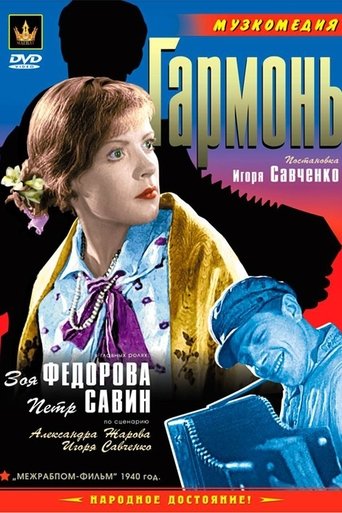 4.0
Igor Savchenko's Accordion (Garmon', 1934) was adapted from a poem by A. Zharov. This film sheds light on the reasons why the mass song came into being. In it, the country boy Timosha stops playing the accordion after being chosen leader of the local Komsomol. When he understands that he must compete with the sad kulak songs played by Tlskliby ("Mournful"), he recognizes his mistake in abandoning his accordion, and in the end he gathers the other youths around him with his lively and merry songs.
Accordion
1934
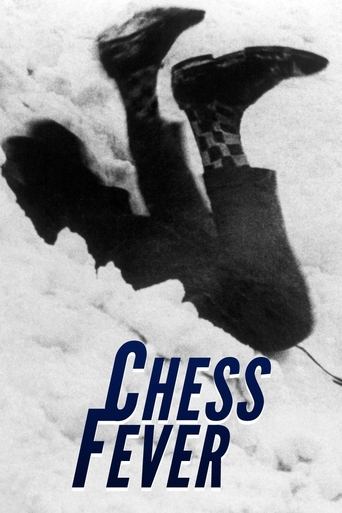 6.4
With an international chess tournament in progress, a young man becomes completely obsessed with the game. His fiancée has no interest in it, and becomes frustrated and depressed by his neglect of her, but wherever she goes she finds that she cannot escape chess. On the brink of giving up, she meets the world champion, Capablanca himself, with interesting results.
Chess Fever
1925
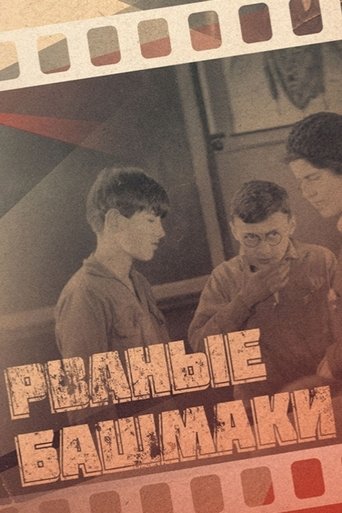 5.5
Working with children led Barskaya to create superb direct sound and an inspired style of shooting. Don’t look for conventional cinematic syntax here. The film is chaotic in the way that Soviet films still knew how to be, and Langlois couldn’t help but be seduced by its rebellious spirit, its anarchy and love of children, comparable to Vigo’s Zero de conduite. As well as being a film made with and for children, it offers a complex take on Western society. Pre-Nazi Germany is not named as such but is carefully reconstructed, possibly under advice from Karl Radek, and children offer a playful reflection of class struggle – doubly excluded, as proletarians and as minors. “They play in the same way that they live”, one intertitle says. The interaction between their comical games and the yet more ludicrous ones played by adults is developed on several levels.
Torn Boots
1933
 5.3
Following the end of the Russian Civil War, three close friends and former Red Army commanders—Langovoy, Zhyoltikov, and their elder comrade Uncle Sasha—return to their hometown to serve in the military headquarters. While Sasha and Zhyoltikov remain bachelors and share a room, Langovoy lives with his wife, Mashenka, whom he married during the war.
A Simple Case
1930
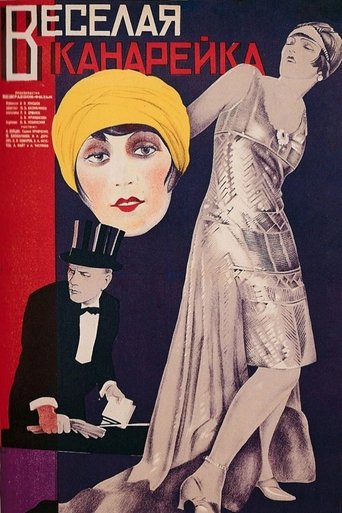 8.0
Actress Brio working in a cafe "The Happy Canary", does not suspect that her new acquaintances Brianski and Lugovec are Communists sent by an underground committee to fight the enemy's counter-intelligence.
The Happy Canary
1929
 7.0
A young Lyova travels with the hope of ascent from Czarist Russia to New York. Disappointed, he returns to the young Soviet Union and is glad to have found a simple work.
Horizon
1932
 6.3
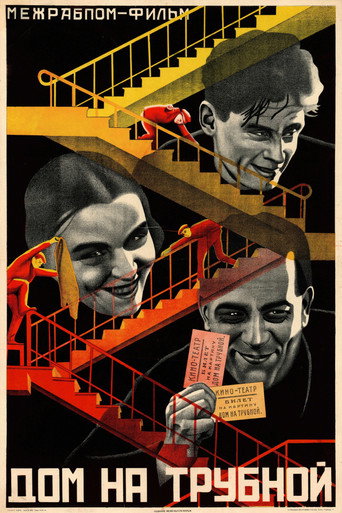
Life is short and full of oppression, but that doesn't mean Parasha can't find love and laughter when she leaves her country home to take a job as a maid in the overcrowded, overworked, and underpaid world in the big city.
The House on Trubnaya
1928
 7.0
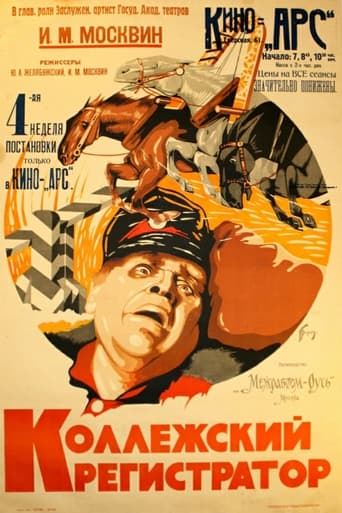
A small town postal official allows a military officer to take his lovely daughter away to St. Petersburg, assuming the man will do the right thing and marry her. Instead, a future of scandal and tragedy await her.
The Stationmaster
1925
 6.4
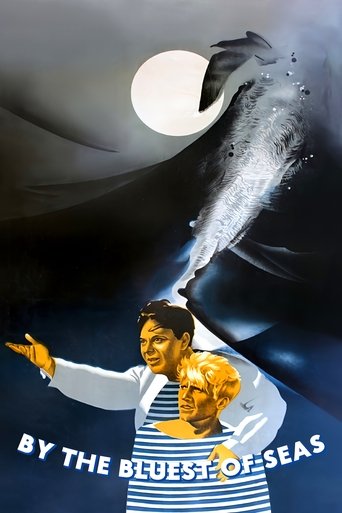
Two men shipwrecked on an island in the Caspian Sea are saved by members of a collective farm, where they work on its fishing boats and woo the young woman leading the fishermen.
By the Bluest of Seas
1936
 5.8
"Polikushka" was the only film directed by Aleksandr Sanin, one of Moscow Art Academic Theatre's founders, and is based on Lev Tolstoy's homonym short story. In spite the many differences between the literary oeuvre and its film adaptation it is a remarkable work that is outstanding for its depiction of the cruel realities of Russian society -the harsh life condition of its main character and his family in contrast to the wealth of his mistress;
Polikushka
1922
 8.0
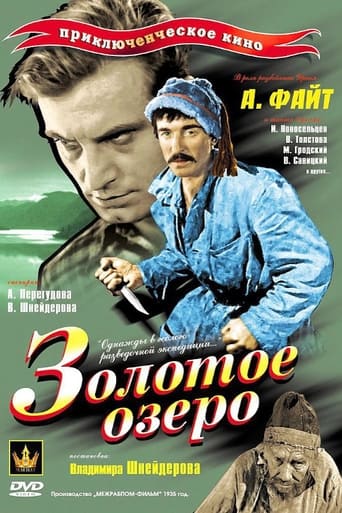
A geological expedition looking for gold in the Russian taiga is beset by a gang of thieves.
The Golden Lake
1935
 4.9
A young woman sharpshooter fighting with the Reds in Turkestan misses her forty-first victim, a handsome White lieutenant, and ends up escorting him, by boat, into captivity across the Aral Sea. A storm strands the two on an island.
The Forty-First
1927
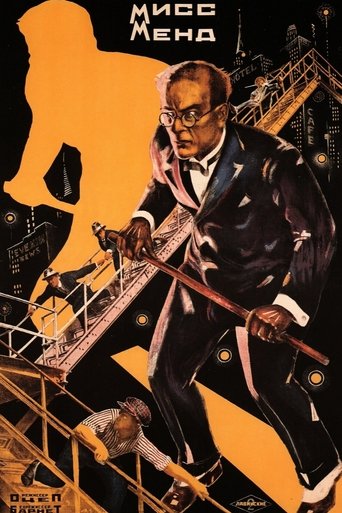 5.9
Three reporters and an office girl are trying to stop a bacteriological strike by some powerful western business leaders against the USSR.
Miss Mend
1926
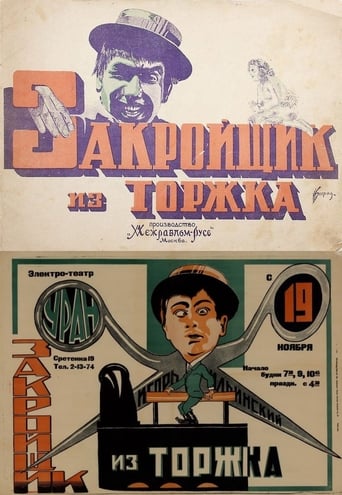 4.2
A 1925 Soviet comedy sponsored by the Soviet Finance Ministry, with a plot promoting the new economy. A small-town tailor, Petya Petelkin (Ilyinsky), bought a lottery ticket and handed it to his landlord, widow Shirinkina (Deykun) who wants to marry him. Petya is a hard-working tailor trying to start his own business. He is also in love with Katya (Maretskaya), whom he wants to marry. He has to survive a cascade of funny situations in the unstable Soviet reality, before his romance with Katya comes to a happy ending.
The Tailor from Torzhok
1925
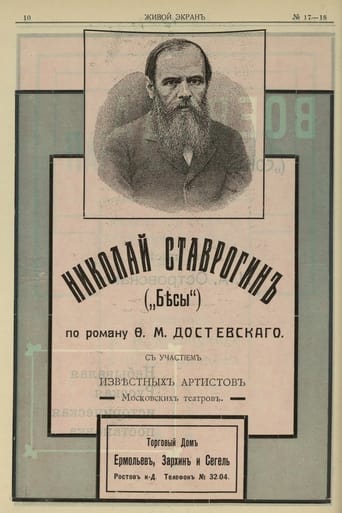 NR
No synopsis available yet.
Nikolay Stavrogin
1915
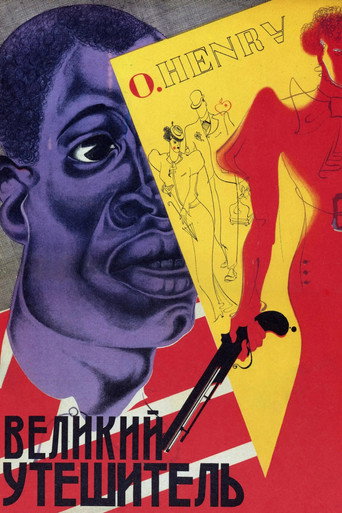 5.2
The Great Consoler is Lev Kuleshov’s most personal film reflecting both the facts of his life and his thoughts about the place of the artist in contemporary reality. It was the only film in the Soviet cinema of those years that raised the question of what role a creative person played in society.
The Great Consoler
1933
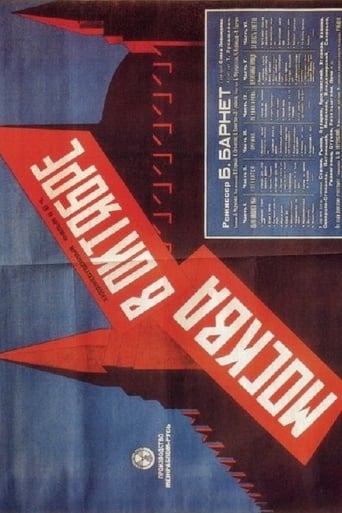 9.0
October reflects a general attempt in Russia to sustain the frenzy and dynamism of revolutionary fervour. This attempt increased in scale and ambition as they pushed it further, resulting in the theatricalisation of life. In other words, the boundaries between real events and fabricated drama became blurred as the portrayal of life became more exaggerated. It is important to remember that the film does not represent what actually happened during the 1917 Revolution, but is rather an adaptation.
Moscow in October
1927
 NR
Propaganda movie. Contrasting the cruel orders of the tsarist army with the conditions of service in the Red Army. Taras, a Red Army soldier, accidentally finds a bottle of moonshine. Being tempted, he gets drunk and falls asleep. In his dream Taras sees himself as a soldier of the tsar's army. Having left his post arbitrarily, he finds himself in the apartment of a frivolous girl and here he meets a general.
Taras's Dream
1919