

Acting
Tatjana Sais
Born — Died
1910-01-28 — 1981-02-26
Place of birth
Frankfurt am Main, Germany
Known for
Acting
Credits
19 titles
Tatjana Sais, born Hofler, was a German stage and screen actress, dancer, cabaret-performer and voice actress.
Known for
No synopsis available yet.
Gut gefragt ist halb gewonnen
1964
 6.2
6.2The quiet life of an extended family is shaken up when a circus comes into town.
Fireworks
1954
No synopsis available yet.
Aus dem Bücherschrank geholt
1960
 7.0
7.0No synopsis available yet.
Slim Callaghan greift ein
1964
 6.9
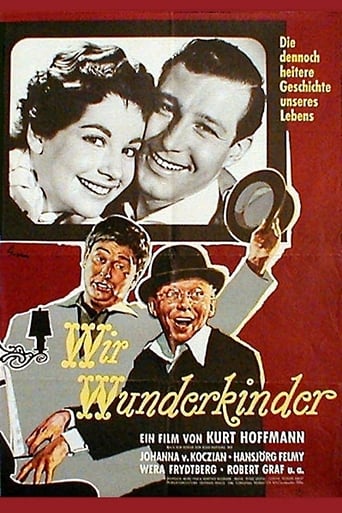
6.9Kurt Hoffmann′s satire concerning Germany′s development during the first half of the 20th century tells the story of two schoolmates - Hans and Bruno. They could not be more different. While Hans is ambitious and must always work hard for his career, it seems that the happy go lucky Bruno is carefree.
Aren't We Wonderful
1958
 5.9
5.9The countess is married, and the ghosts are still in the Spessart. Her husband becomes an astronaut and the story involved time travelling and space travelling starts.
Glorious Times in the Spessart
1967
Film credits
1960s · 5 titles
5.9The countess is married, and the ghosts are still in the Spessart. Her husband becomes an astronaut and the story involved time travelling and space travelling starts.
Glorious Times in the Spessart
1967
 5.4
5.4Kurt Hoffmann's remake of his own 1953 movie based on the play by Curt Goetz.
Hocuspocus
1966
 4.7
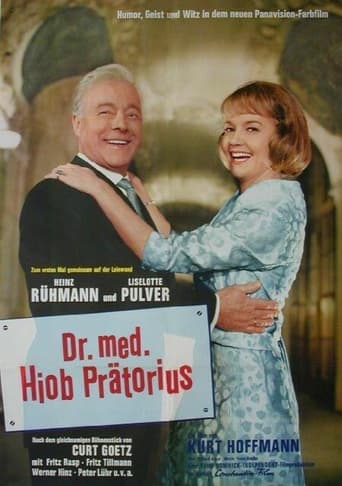
4.7Dr. med. Job Prätorius enjoys great popularity among patients, doctors and students alike thanks to his kindness and philanthropy. Only his colleague Prof. Speiter begrudges him his success. When his patient Maria Violetta wants to commit suicide because of an extramarital pregnancy, Prätorius takes care of the young woman. When he tries to gently prepare her father for the news, the latter considers Praetorius to be a more than welcome admirer of his daughter. As a deep affection develops between the doctor and his patient, the two eventually marry. Their private happiness fuels Prof. Speiter's envy. With the help of Praetorius' mysterious factotum Shunderson, he finally believes that he can uncover some dark secrets from the doctor's past. But Praetorius manages to refute all the accusations in a court of honor with wit and astonishing revelations.
Dr. med. Hiob Prätorius
1965
No synopsis available yet.
Klassische Frauen und andere
1964
No synopsis available yet.
Die Insulaner
1962
1950s · 4 titles
6.2The quiet life of an extended family is shaken up when a circus comes into town.
Fireworks
1954
6.9Kurt Hoffmann′s satire concerning Germany′s development during the first half of the 20th century tells the story of two schoolmates - Hans and Bruno. They could not be more different. While Hans is ambitious and must always work hard for his career, it seems that the happy go lucky Bruno is carefree.
Aren't We Wonderful
1958
 9.5
9.5One day, an exceptionally beautiful girl shows up at Josua Webmann's pawnshop to pawn a golden harp. Josua's apprentice, Klaas, immediately sees her as an angel. That evening, she meets him again and dances with him, causing even the previously indifferent Lissy to take notice of Klaas. Meanwhile, Josua worries about his money and negotiates with an instrument dealer who makes him a generous offer for the harp. The next day, the girl and the harp have disappeared again—but she has left behind unexpected wealth.
Der Engel, der seine Harfe versetzte
1959
 8.0
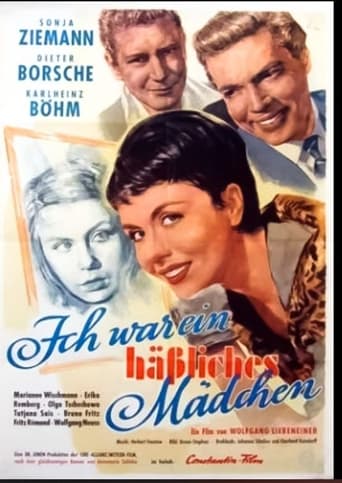
8.0No synopsis available yet.
Ich war ein häßliches Mädchen
1955
1940s · 2 titles
 7.4
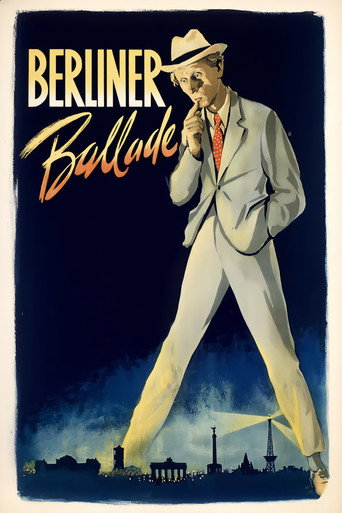
7.4Otto, a feckless Everyman, tries to adjust to the postwar travails of his defeated nation. Stymied by black-market profiteers and government bureaucrats, Otto begins fantasizing about a happier life at the end of that ever-elusive rainbow.
The Berliner
1948
Landowner Kurt Redwitz lost his wife early and has to raise his two sons Lutz and Lütte, who always like to paint, alone. When Redwitz hires the young pretty Bettina as an educator, everyone is enthusiastic about her. Especially the two boys love them hotly and intimately and from now on even show impeccable behavior. Only the strict housekeeper Mrs. Suhrmöller is jealous and tells Redwitz about the gossip in the village, which says that Bettina only planned to become Redwitz's wife. Redwitz then dismisses Mrs. Suhrmöller. But when Bettina finds out about it, she leaves the property and accepts a job as a social lady in the recreation home "Schloss Sorgenfrei". Now Redwitz slowly realizes what he feels for Bettina, and his sons try everything to bring the father and the educator together.
Meine Herren Söhne
1945
1930s · 5 titles
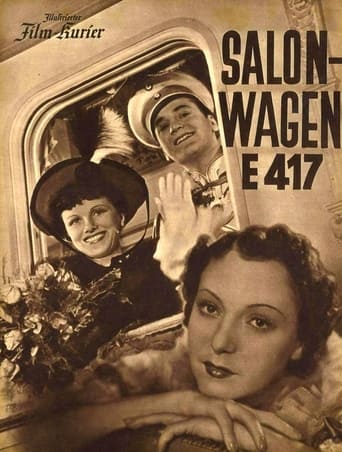 7.0
7.0In a transport museum, the items on display begin to tell their stories. Most interesting is the history of the Pullman car. In the beginning, it served as transport for a princely family; then became the headquarters car for the military high command; and then, most adventurous of all, it ended up with a circus. Converted to a bar, it finally had its day and was supposed to serve as a placard carrier. Luckily, the museum saved it from this sad fate.
Salonwagen E 417
1939
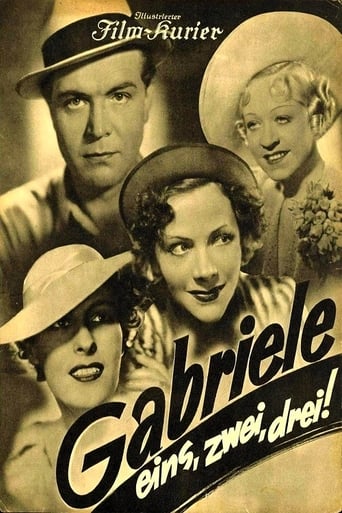 7.5
7.5Gabriele Bordersen, a woman from a good home, wants to see what real life is like among the common folk. With her stewardess Fanny Flint and the tour guide Simikry, she goes off to visit a sailors' bar. Fanny and Gabriele change clothes, which allows the stewardess to introduce herself as a fine lady. When Gabriele asks Fanny to leave with her, Fanny begs her to give her an hour more out of fear of embarrassment. Gabriele, however, is thrown out of the bar by the owner without money and papers; is picked up by the cops; and suffers a nervous breakdown, leading to her being sent to a hospital. No one believes in the slightest that she's really Gabriele Brodersen.
Gabriele eins, zwei, drei
1937
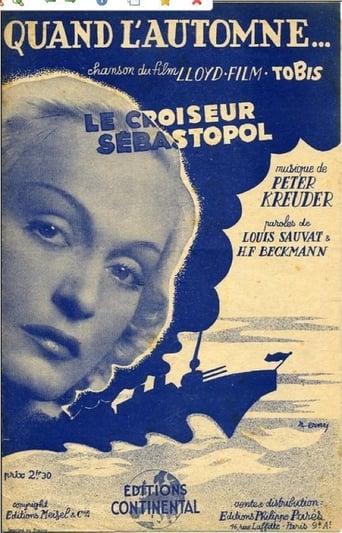 5.5
5.5Russia, 1917. Revolution is in the air. The Sevastopol anchors In Saint Petersburg. The sailors are thirsty for women and celebration. The ship becomes a dancehall. Bloodbath, pillage and kidnapping follows. A Nazi/Germany propaganda film.
White Slaves
1937
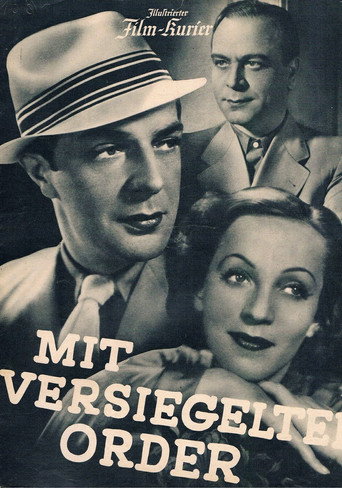 5.0
5.0In a Near East land, a German company building waterworks and mining copper is threatened by foreign interests.When the chief engineer is framed for a murder, the nephew of the ambassador makes a heroic sacrifice.
Under Sealed Orders
1938
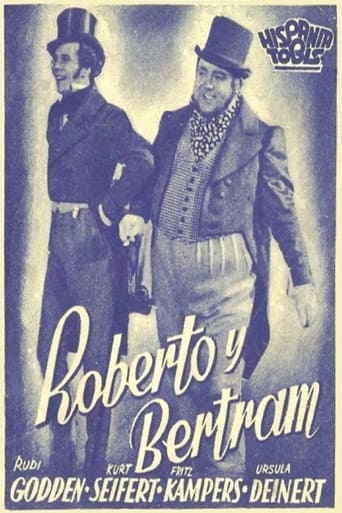 5.6
5.6After the two vagabonds Robert and Bertram flee from prison, they get to know the innkeeper’s daughter Lenchen at the “Silver Swan” Inn. Because her father is in desperate need of money, Lenchen is to marry the creditor Biedermeier instead of her beloved military recruit Michel. In order to prevent that, Robert and Bertram travel to the capital and, under false names, manage to make their way into the house of the Jewish commercial advisor Ipelmeyer, to whom Biedermeier is deep in debt. During an evening costume ball, the bums steal the family jewels and give them to Lenchen’s father. Lenchen and Michael get married and Robert and Bertram flee in a balloon into the sky.
Robert and Bertram
1939