
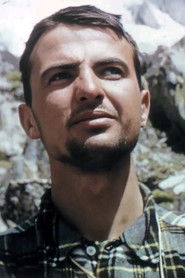
Directing
Gilbert Dassonville
Known for
Directing
Credits
9 titles
Gilbert Dassonville was a film and documentary director, as well as a cinematographer and cameraman, who distinguished himself in French cinema during the second half of the 20th century. Gilbert Dassonville was a documentary filmmaker whose experience as a cinematographer was used to create a keen eye for reality, whether documenting mountaineering feats, scientific or educational films, all shot with precision and realism. His experience as a cameraman gave him a concrete sense of framing and movement, which imbued his directing with great visual rigor. This concern for storytelling through images connects him to other French documentary filmmakers of his generation, committed to explorin…
Known for
 6.0
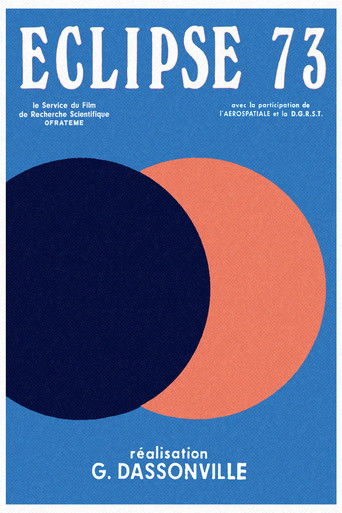
6.0No synopsis available yet.
Éclipse 73
1973
 10.0
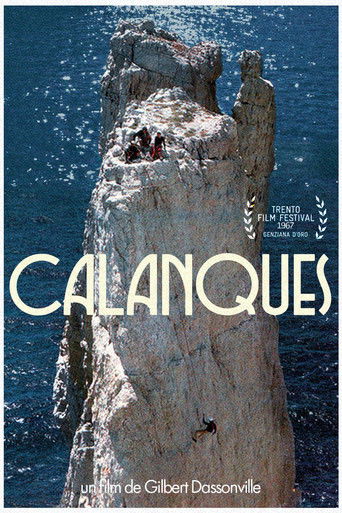
10.0Two climbers, Dany Badier and Françoise Dassonville, swim to explore an underground cave in the Calanques, near Marseille, then equip themselves with climbing gear to scale the spectacular cliffs of the Calanques. Their ascent culminates at the summit of the Grande Candelle. Directed by Gilbert Dassonville in 1970 and produced by Cérès Films, this film won first prize at the Trento Mountain Film Festival in 1967.
Calanques
1967
 10.0
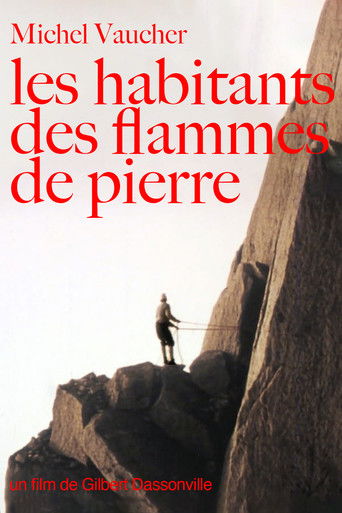
10.0"Les Habitants des Flammes de Pierre" is the making-of documentary for the film "The Pillar of Solitude," which recounts Walter Bonatti's historic 1955 ascent of the southwest pillar of the Drus (the Bonatti Pillar) in the Mont Blanc massif, an 800-meter-high vertical face, climbed solo in six days, despite having only three. In the film, the renowned Swiss mountaineer Michel Vaucher portrays Bonatti. Unlike the film "The Pillar of Solitude," which was shot in black and white, the making-of documentary was filmed in color.
Les Habitants des Flammes de Pierre
1959
 10.0
10.0Mountaineers Roberto Sorgato and Ignazio Piussi relive their 1961 adventure: the first winter ascent of the north face of Cima Ovest di Lavaredo, a formidable Dolomite wall reaching 2,973 meters. During this expedition, Sorgato accidentally fell 60 meters while the climbers were preparing their third bivouac and found himself suspended in mid-air by a rope. Through sheer perseverance, ingenuity, and courage, he managed to pull himself back to his partner. The film, shot eleven years later, is a reenactment with the protagonists playing themselves. The difficulties this climb presents, even for the most experienced climbers, are irrefutably highlighted. The film received the Genziana d'Oro award at the Trento Film Festival in 1973.
Abîmes
1972
 10.0
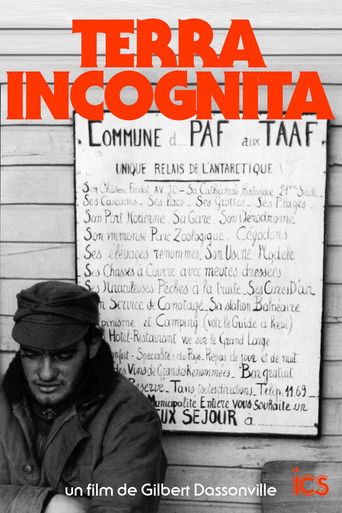
10.0The Kerguelen Islands, nicknamed the "Islands of Desolation," are a French archipelago of subantarctic islands in the southernmost part of the Indian Ocean. They constitute one of the five districts of the French Southern and Antarctic Lands (TAAF). Uninhabited, the archipelago was discovered in the southern Indian Ocean on February 12, 1772, by the French navigator Yves Joseph de Kerguelen de Trémarec. This scientific film by Gilbert Dassonville, intended for the general public and for educational purposes, presents the scientific missions underway in 1963 on the Kerguelen Islands. The permanent station at Port-aux-Français, founded in 1950, the archipelago, and the surrounding wildlife are documented by following the multidisciplinary teams (biology, geophysics, geology, meteorology).
Terra Incognita
1963
Film credits
Behind the camera
6.0No synopsis available yet.
Éclipse 73
1973
10.0Two climbers, Dany Badier and Françoise Dassonville, swim to explore an underground cave in the Calanques, near Marseille, then equip themselves with climbing gear to scale the spectacular cliffs of the Calanques. Their ascent culminates at the summit of the Grande Candelle. Directed by Gilbert Dassonville in 1970 and produced by Cérès Films, this film won first prize at the Trento Mountain Film Festival in 1967.
Calanques
1967
10.0Two climbers, Dany Badier and Françoise Dassonville, swim to explore an underground cave in the Calanques, near Marseille, then equip themselves with climbing gear to scale the spectacular cliffs of the Calanques. Their ascent culminates at the summit of the Grande Candelle. Directed by Gilbert Dassonville in 1970 and produced by Cérès Films, this film won first prize at the Trento Mountain Film Festival in 1967.
Calanques
1967
10.0"Les Habitants des Flammes de Pierre" is the making-of documentary for the film "The Pillar of Solitude," which recounts Walter Bonatti's historic 1955 ascent of the southwest pillar of the Drus (the Bonatti Pillar) in the Mont Blanc massif, an 800-meter-high vertical face, climbed solo in six days, despite having only three. In the film, the renowned Swiss mountaineer Michel Vaucher portrays Bonatti. Unlike the film "The Pillar of Solitude," which was shot in black and white, the making-of documentary was filmed in color.
Les Habitants des Flammes de Pierre
1959
10.0"Les Habitants des Flammes de Pierre" is the making-of documentary for the film "The Pillar of Solitude," which recounts Walter Bonatti's historic 1955 ascent of the southwest pillar of the Drus (the Bonatti Pillar) in the Mont Blanc massif, an 800-meter-high vertical face, climbed solo in six days, despite having only three. In the film, the renowned Swiss mountaineer Michel Vaucher portrays Bonatti. Unlike the film "The Pillar of Solitude," which was shot in black and white, the making-of documentary was filmed in color.
Les Habitants des Flammes de Pierre
1959
10.0Mountaineers Roberto Sorgato and Ignazio Piussi relive their 1961 adventure: the first winter ascent of the north face of Cima Ovest di Lavaredo, a formidable Dolomite wall reaching 2,973 meters. During this expedition, Sorgato accidentally fell 60 meters while the climbers were preparing their third bivouac and found himself suspended in mid-air by a rope. Through sheer perseverance, ingenuity, and courage, he managed to pull himself back to his partner. The film, shot eleven years later, is a reenactment with the protagonists playing themselves. The difficulties this climb presents, even for the most experienced climbers, are irrefutably highlighted. The film received the Genziana d'Oro award at the Trento Film Festival in 1973.
Abîmes
1972
10.0Mountaineers Roberto Sorgato and Ignazio Piussi relive their 1961 adventure: the first winter ascent of the north face of Cima Ovest di Lavaredo, a formidable Dolomite wall reaching 2,973 meters. During this expedition, Sorgato accidentally fell 60 meters while the climbers were preparing their third bivouac and found himself suspended in mid-air by a rope. Through sheer perseverance, ingenuity, and courage, he managed to pull himself back to his partner. The film, shot eleven years later, is a reenactment with the protagonists playing themselves. The difficulties this climb presents, even for the most experienced climbers, are irrefutably highlighted. The film received the Genziana d'Oro award at the Trento Film Festival in 1973.
Abîmes
1972
10.0The Kerguelen Islands, nicknamed the "Islands of Desolation," are a French archipelago of subantarctic islands in the southernmost part of the Indian Ocean. They constitute one of the five districts of the French Southern and Antarctic Lands (TAAF). Uninhabited, the archipelago was discovered in the southern Indian Ocean on February 12, 1772, by the French navigator Yves Joseph de Kerguelen de Trémarec. This scientific film by Gilbert Dassonville, intended for the general public and for educational purposes, presents the scientific missions underway in 1963 on the Kerguelen Islands. The permanent station at Port-aux-Français, founded in 1950, the archipelago, and the surrounding wildlife are documented by following the multidisciplinary teams (biology, geophysics, geology, meteorology).
Terra Incognita
1963