
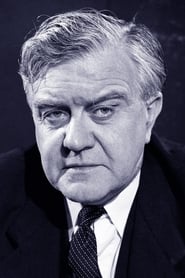
Acting
Andrew Cruickshank
Born — Died
1907-12-25 — 1988-04-28
Place of birth
Aberdeen, Scotland
Known for
Acting
Credits
41 titles
From Wikipedia, the free encyclopedia. Andrew John Maxton Cruickshank (25 December 1907 Aberdeen, Scotland – 29 April 1988 London, England) was a Scottish supporting actor, most famous for his portrayal of Dr Cameron in the long-running UK BBC television series, Dr Finlay's Casebook, which ran for 191 episodes from 1962 until 1971. Description above from the Wikipedia article Andrew Cruickshank , licensed under CC-BY-SA, full list of contributors on Wikipedia.
Known for
 5.2
5.2A BBC television anthology series featuring productions of classic and contemporary stage plays usually broadcast on BBC1. Each production featured a different work, often using prominent British stage actors in the leading roles. The series was transmitted from October 1965 to September 1983.
BBC Play of the Month
1965
 7.0
7.0ITV Playhouse is a British comedy-drama TV series that ran from 1967 to 1983, which featured contributions from playwrights such as Dennis Potter, Rhys Adrian and Alan Sharp. The series began in black and white, but was later shot in colour and was produced by various companies for the ITV network, a format that would inspire Dramarama. Actors appearing in the series included Leslie Anderson, Gwen Nelson, Ricky Alleyne, Pat Heywood, Michael Elphick, Ian Hendry, Edward Woodward, Margaret Lockwood, Jessie Matthews and Lloyd Peters.
ITV Playhouse
1967
 3.5
3.5Sunday Night Theatre was a long-running series of televised live television plays screened by BBC Television from early 1950 until 1959. The productions for the first five years or so of the run were re-staged live the following Thursday, partly because of technical limitations in this era, and the theatrical basis of early television drama. Some of the earliest collaborations between Rudolph Cartier and Nigel Neale were produced for this series, including Arrow to the Heart and Nineteen Eighty-Four. The Sunday night drama slot was subsequently renamed The Sunday-Night Play which ran for four seasons between 1960 and 1963. ITV transmitted its own unrelated run of Sunday Night Theatre between 1971 and 1974.
Sunday Night Theatre
1950
 7.0
7.0Anthology series of dramatic works.
ITV Saturday Night Theatre
1969
 6.7
6.7Dr Finlay's Casebook is a BBC television series that was broadcast from 1962 until 1971. Based on A. J. Cronin's novella Country Doctor, the storylines centred on a general medical practice in the fictional Scottish town of Tannochbrae during the late 1920s.
Dr. Finlay's Casebook
1962
 7.2
7.2Having helped his brother King Edward IV take the throne of England, the jealous hunchback Richard, Duke of Gloucester, plots to seize power for himself. Masterfully deceiving and plotting against nearly everyone in the royal court, including his eventual wife, Lady Anne, and his brother George, Duke of Clarence, Richard orchestrates a bloody rise to power before finding all his gains jeopardized by those he betrayed.
Richard III
1955
Film credits
1960s · 7 titles
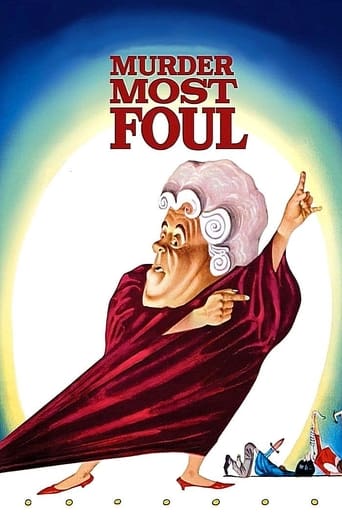 7.1
7.1A murderer is brought to court and only Miss Marple is unconvinced of his guilt. Once again she begins her own investigation.
Murder Most Foul
1964
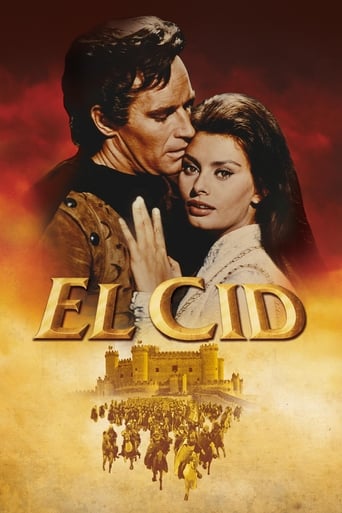 6.8
6.8Epic film of the legendary Spanish hero, Rodrigo Diaz ("El Cid" to his followers), who, without compromising his strict sense of honour, still succeeds in taking the initiative and driving the Moors from Spain.
El Cid
1961
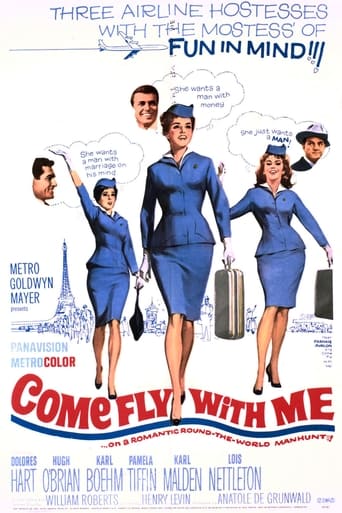 5.0
5.0Three airline hostesses combine their work crossing the Atlantic with searching for a rich handsome man to marry.
Come Fly with Me
1963
 6.9
6.9In Scotland 1865, An old shepherd and his little Skye terrier go to Edinburgh. But when the shepherd dies of pneumonia, the dog remains faithful to his master, refuses to be adopted by anyone, and takes to sleeping on his master's grave in the Greyfriars kirkyard, despite a caretaker with a "no dogs" rule. And when Bobby is taken up for being unlicensed, it's up to the children of Edinburgh and the Lord Provost to decide what's to be done.
Greyfriars Bobby
1961
 6.6
6.6When a law-abiding demolition expert is duped by a gang of criminals into helping them he is caught and jailed. When he is released he goes straight and then notices a leading citizen in his town is cheating his neighbours.
There Was a Crooked Man
1960
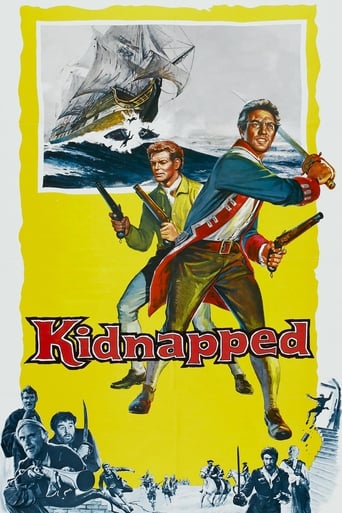 6.5
6.5Kidnapped and cheated out of his inheritance, young David Balfour falls in with a Jacobite adventurer, Alan Breck Stewart. Falsely accused of murder, they must flee across the Highlands, evading the redcoats.
Kidnapped
1960
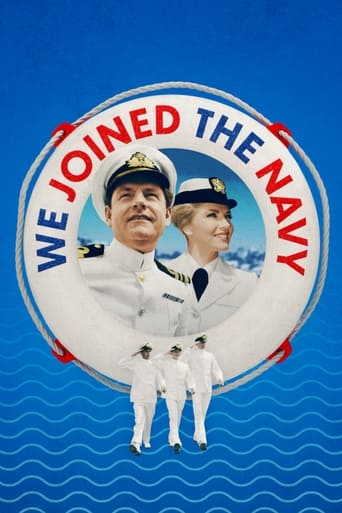 6.0
6.0Lt Commander Badger, RN: an exceptionally likeable fellow, the Artful Bodger has one besetting sin a shining honesty which compels him to say the right thing at entirely the wrong time! When untimely remarks to some new recruits are splashed across the tabloids, the rush is on to find him a new posting somewhere far away.
We Joined the Navy
1963
1950s · 12 titles
7.2Having helped his brother King Edward IV take the throne of England, the jealous hunchback Richard, Duke of Gloucester, plots to seize power for himself. Masterfully deceiving and plotting against nearly everyone in the royal court, including his eventual wife, Lady Anne, and his brother George, Duke of Clarence, Richard orchestrates a bloody rise to power before finding all his gains jeopardized by those he betrayed.
Richard III
1955
 6.5
6.5In 1826 British-ruled India, the secret Cult of Thugee demonstrates their worship of their goddess, Kali, by the mutilation and mass murder of thousands of Indians while pirating the shipments of the British East-Indian Tea Company. As the British military leaders play down the implications of the piracy and disappearances, a lone captain realizes that they are not just coincidence and sets out to uncover the source of the deviltry, at the risk of his career. Based on history.
The Stranglers of Bombay
1959
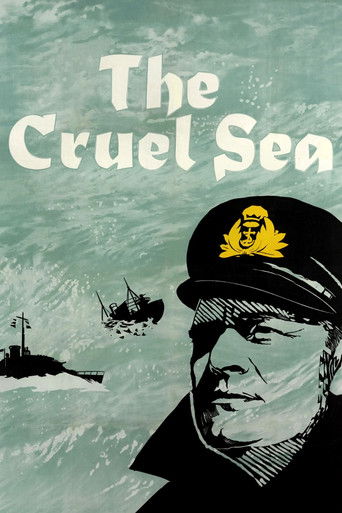 6.9
6.9At the start of World War II, Cmdr. Ericson is assigned to convoy escort HMS Compass Rose with inexperienced officers and men just out of training. The winter seas make life miserable enough, but the men must also harden themselves to rescuing survivors of U-Boat attacks, while seldom able to strike back. Traumatic events afloat and ashore create a warm bond between the skipper and his first officer.
The Cruel Sea
1953
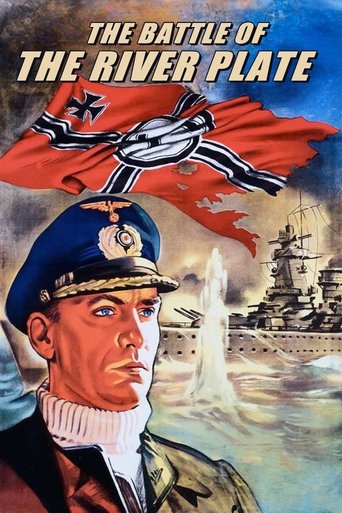 6.4
6.4In the early years of the World War II, the Royal Navy is fighting a desperate battle to keep the Atlantic convoy routes open to supply the British Isles, facing the great danger posed by the many German warships, such as the Admiral Graf Spee, which are scouring the ocean for cargo ships to sink.
The Battle of the River Plate
1956
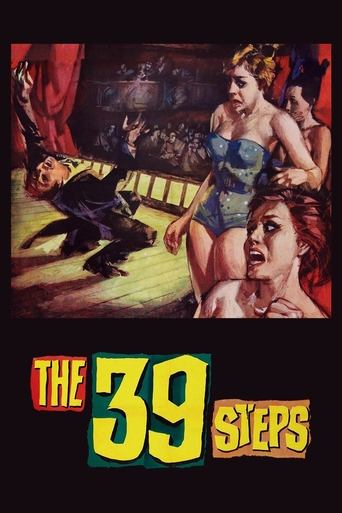 6.3
6.3In London, a diplomat accidentally becomes involved in the death of a British agent who's after a spy ring that covets British military secrets.
The 39 Steps
1959
 7.5
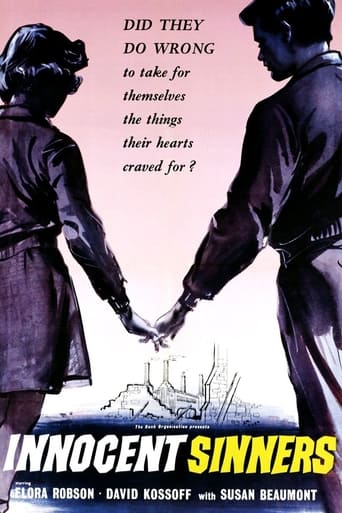
7.5A neglected girl in post-World War II London befriends street urchins who help her build a tiny garden in a bombed-out church.
Innocent Sinners
1958
 4.9
4.9The adventures of two children who runaway to London to see the coronation of Queen Elizabeth.
John and Julie
1955
 4.5
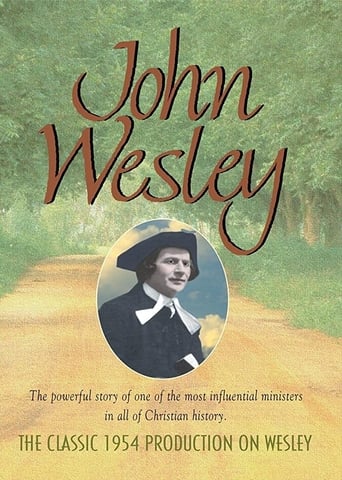
4.5Rescued from a burning house as a child, John Wesley believes the experience marked him for a higher purpose, a 'brand from the burning'. The film follows Wesley's years at Oxford and as a clergyman, his disagreements with the church over the social position of the clergy, his mission to America, the founding of Methodism, and his bringing of the Gospel into the lives of ordinary people.
John Wesley
1954
 6.2
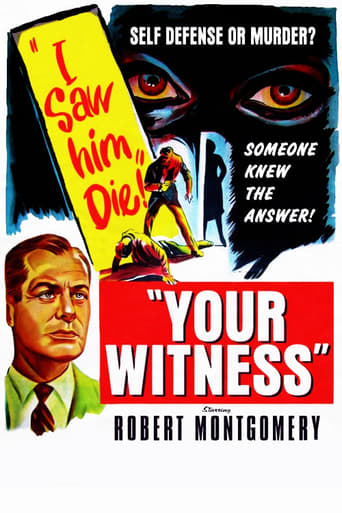
6.2Adam Hayward is a successful New York City defense lawyer. One day he receives a cable that the British war buddy who saved his life at Anzio Beach is now in trouble with the law in England. Taking the advice of his secretary to go to England rather than wire money, Adam arrives in his friend's village to find him about to stand trial for the murder of the hired stable-hand, Lawrence.
Your Witness
1950
 4.5
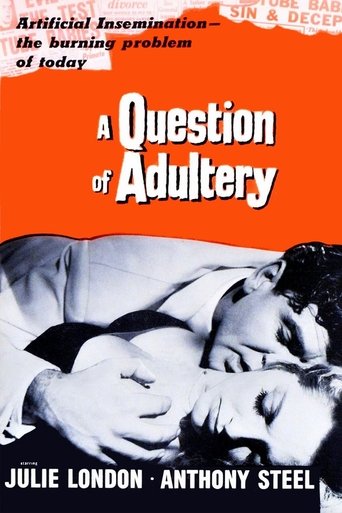
4.5Mark Loring is madly jealous of his wife, Mary, former American cabaret singer. Due to an automobile accident, she loses her unborn child, and Mark becomes sterile. His father, Brit-stuffy Sir John Loring, has never approved of the marriage and, again, tries to break it up. Believing that a child will hold the marriage together, Mary suggests artificial insemination to Mark, who finally agrees to accompany her to a clinic in Switzerland. However, when she is again pregnant, Mark finds it impossible to reconcile himself to the situation and leaves her. Prompted by his father, Mark sues for divorce, accusing her of adultery. She contests the divorce and a trial concerns itself with whether or not artificial insemination is a question of adultery. The Catholic Church's National League of Decency placed this film on its Condemned" list.
A Question of Adultery
1958
 7.0
7.0Sad tale of a woman who marries the man her family wishes her to wed, not Wooland, the man she truly loves. Years after her lover's suicide, Herlie joins him before the Gestapo can get to her because of her Jewish ancestry.
The Angel with the Trumpet
1950
A young governess becomes embroiled in French spy intrigue, in this adaptation of a Georgette Heyer novel.
The Reluctant Widow
1950
1940s · 4 titles
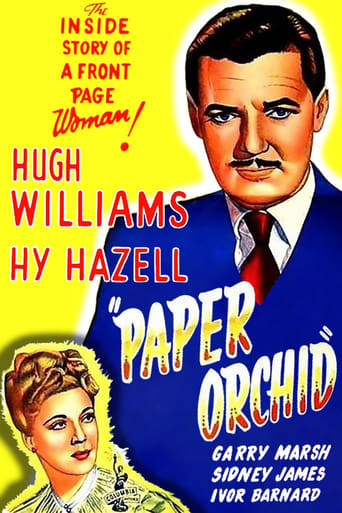 5.0
5.0Paper Orchid is a 1949 British crime film directed by Roy Ward Baker, with a script written by Val Guest. It featured Hugh Williams, Hy Hazell and Garry Marsh. It is perhaps most notable for an early film appearance of Sid James, later to find success through the Carry On series.
Paper Orchid
1949
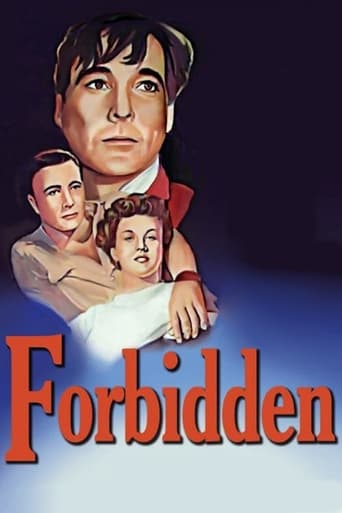 7.1
7.1Set on Blackpool’s Golden Mile, Jim (Douglass Montgomery), a once promising scientist, sets up in business as a patent medicine man selling hair tonic at the fair with his ex-army colleague Dan (Ronald Shiner). Following a fight with local hoods over pitch spaces, Jim falls for Jane (Hazel Court), the girl on a nearby candy floss stall. The two begin dating but Jim fails to mention he is already married.
Forbidden
1949
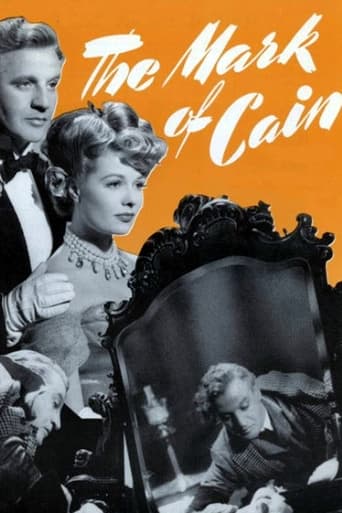 6.2
6.2An attractive young French girl instigates rivalry between two brothers when she becomes the bride of the younger one. As the situation festers it leads to murder…
The Mark of Cain
1947
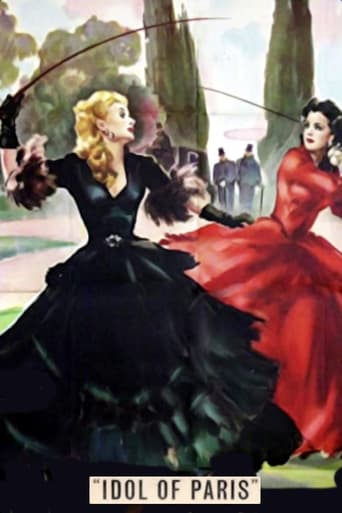 8.0
8.0The Idol of Paris is based on Paiva, Queen of Love, a novel by Alfred Schirokauer. Set in the mid-19th century, the film traces the rags-to-riches story of a girl named Theresa. Sleeping her way to the top, she becomes a highly sought-after Parisian courtesan, one worthy of the attentions of the Emperor Napoleon. But Theresa has no time for the Emperor, not with such virile lovers as Hertz around and about.
Idol of Paris
1948
Series credits
5.2A BBC television anthology series featuring productions of classic and contemporary stage plays usually broadcast on BBC1. Each production featured a different work, often using prominent British stage actors in the leading roles. The series was transmitted from October 1965 to September 1983.
BBC Play of the Month
1965
5.2A BBC television anthology series featuring productions of classic and contemporary stage plays usually broadcast on BBC1. Each production featured a different work, often using prominent British stage actors in the leading roles. The series was transmitted from October 1965 to September 1983.
BBC Play of the Month
1965
7.0ITV Playhouse is a British comedy-drama TV series that ran from 1967 to 1983, which featured contributions from playwrights such as Dennis Potter, Rhys Adrian and Alan Sharp. The series began in black and white, but was later shot in colour and was produced by various companies for the ITV network, a format that would inspire Dramarama. Actors appearing in the series included Leslie Anderson, Gwen Nelson, Ricky Alleyne, Pat Heywood, Michael Elphick, Ian Hendry, Edward Woodward, Margaret Lockwood, Jessie Matthews and Lloyd Peters.
ITV Playhouse
1967
3.5Sunday Night Theatre was a long-running series of televised live television plays screened by BBC Television from early 1950 until 1959. The productions for the first five years or so of the run were re-staged live the following Thursday, partly because of technical limitations in this era, and the theatrical basis of early television drama. Some of the earliest collaborations between Rudolph Cartier and Nigel Neale were produced for this series, including Arrow to the Heart and Nineteen Eighty-Four. The Sunday night drama slot was subsequently renamed The Sunday-Night Play which ran for four seasons between 1960 and 1963. ITV transmitted its own unrelated run of Sunday Night Theatre between 1971 and 1974.
Sunday Night Theatre
1950
3.5Sunday Night Theatre was a long-running series of televised live television plays screened by BBC Television from early 1950 until 1959. The productions for the first five years or so of the run were re-staged live the following Thursday, partly because of technical limitations in this era, and the theatrical basis of early television drama. Some of the earliest collaborations between Rudolph Cartier and Nigel Neale were produced for this series, including Arrow to the Heart and Nineteen Eighty-Four. The Sunday night drama slot was subsequently renamed The Sunday-Night Play which ran for four seasons between 1960 and 1963. ITV transmitted its own unrelated run of Sunday Night Theatre between 1971 and 1974.
Sunday Night Theatre
1950
3.5Sunday Night Theatre was a long-running series of televised live television plays screened by BBC Television from early 1950 until 1959. The productions for the first five years or so of the run were re-staged live the following Thursday, partly because of technical limitations in this era, and the theatrical basis of early television drama. Some of the earliest collaborations between Rudolph Cartier and Nigel Neale were produced for this series, including Arrow to the Heart and Nineteen Eighty-Four. The Sunday night drama slot was subsequently renamed The Sunday-Night Play which ran for four seasons between 1960 and 1963. ITV transmitted its own unrelated run of Sunday Night Theatre between 1971 and 1974.
Sunday Night Theatre
1950
7.0Anthology series of dramatic works.
ITV Saturday Night Theatre
1969
6.7Dr Finlay's Casebook is a BBC television series that was broadcast from 1962 until 1971. Based on A. J. Cronin's novella Country Doctor, the storylines centred on a general medical practice in the fictional Scottish town of Tannochbrae during the late 1920s.
Dr. Finlay's Casebook
1962
 9.0
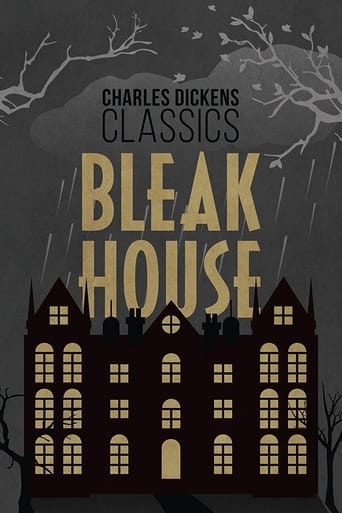
9.0The generous John Jarndyce, struggling with his own past, and his two young wards Richard and Ada, are all caught up, like Lady Dedlock, in the infamous case of Jarndyce vs Jarndyce, which will make one of them rich beyond imagination if it can ever be brought to a conclusion. As Tulkinghorn digs deeper into Lady Dedlock's past, he unearths a secret that will change their lives forever, and which is almost as astounding as the final outcome of the Jarndyce case.
Bleak House
1959
 7.5
7.5Amateur detective Miss Jane Marple investigates the murder of a young woman whose body is found in the library at Gossington Hall, home of Colonel and Mrs. Arthur Bantry.
Miss Marple: The Body in the Library
1984
An incompetently managed zoo becomes a metaphor for the state of Britain as a nuclear crisis looms over Europe.
The Old Men at the Zoo
1983
 6.0
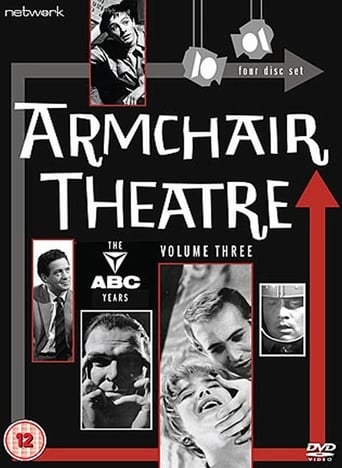
6.0Armchair Theatre is a British television drama anthology series of single plays that ran on the ITV network from 1956 to 1974. It was originally produced by Associated British Corporation, and later by Thames Television from mid-1968.
Armchair Theatre
1956
6.0Armchair Theatre is a British television drama anthology series of single plays that ran on the ITV network from 1956 to 1974. It was originally produced by Associated British Corporation, and later by Thames Television from mid-1968.
Armchair Theatre
1956
 NR
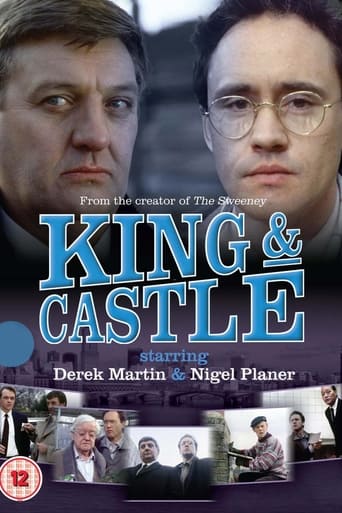
NRHaving hastily left the Met before his dubious activities finally caught up with him, ex-detective Ronald King has formed the Manor Debt Collection Agency with David Castle, a young, somewhat naive martial arts expert and part-time genealogist. Castle's skills come in handy in his new line of work, as do King's old police contacts, and in their dealings with a range of duplicitous, sometimes dangerous clients the chalk-and-cheese duo somehow manages to survive on the right side of the law.
King and Castle
1986
A 1973 BBC series featuring seven films about there aspects of their past made by seven European countries. Out of all seven episodes produced for the series six of them are believed now to be lost with episode one being the only surviving episode that is known to exist.
European Heritage
1973