
Known for
A film drawn and dubbed by children in a 6th grade class, animated by Franz Winzentsen.
Der Hafenfilm
1965
 NR
NRFigures in a side-scrolling landscape.
Windstill
1969
 NR
NRThe grotesque portrayal of an attempt at communication, graphically and rigorously depicted: In the LCB's second production, Peter Rühmkorf and Helmut Herbst bitingly trace a relationship story that is already over before it has begun.
Abends, wenn der Mond scheint
1965
 4.9
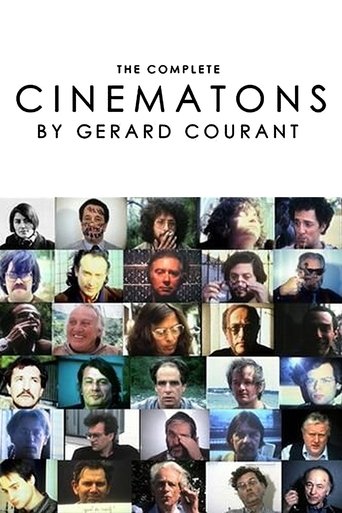
4.9Cinématon is a 156-hour long experimental film by French director Gérard Courant. It was the longest film ever released until 2011. Composed over 36 years from 1978 until 2006, it consists of a series of over 2,821 silent vignettes (cinématons), each 3 minutes and 25 seconds long, of various celebrities, artists, journalists and friends of the director, each doing whatever they want for the allotted time. Subjects of the film include directors Barbet Schroeder, Nagisa Oshima, Volker Schlöndorff, Ken Loach, Benjamin Cuq, Youssef Chahine, Wim Wenders, Joseph Losey, Jean-Luc Godard, Samuel Fuller and Terry Gilliam, chess grandmaster Joël Lautier, and actors Roberto Benigni, Stéphane Audran, Julie Delpy and Lesley Chatterley. Gilliam is featured eating a 100-franc note, while Fuller smokes a cigar. Courant's favourite subject was a 7-month-old baby. The film was screened in its then-entirety in Avignon in November 2009 and was screened in Redondo Beach, CA on April 9, 2010.
Cinématon
1978
 9.0
9.0A “film-noir” on double identity and role reversal. A man is looking for a woman to love. He finds her in a seedy bar and persuades her to marry him. The day she decides to flee… he kills her. To ward off suspicion, he moves in with the sister of the deceased.
Betrayed
1985
 7.0
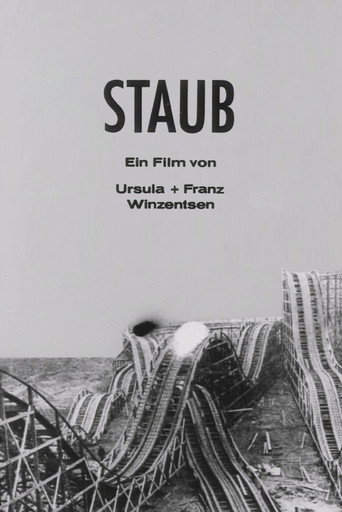
7.0A cloud of black dust, one of white dust, and the world.
Dust
1967
Film credits
1980s · 1 titles
1970s · 2 titles
4.9Cinématon is a 156-hour long experimental film by French director Gérard Courant. It was the longest film ever released until 2011. Composed over 36 years from 1978 until 2006, it consists of a series of over 2,821 silent vignettes (cinématons), each 3 minutes and 25 seconds long, of various celebrities, artists, journalists and friends of the director, each doing whatever they want for the allotted time. Subjects of the film include directors Barbet Schroeder, Nagisa Oshima, Volker Schlöndorff, Ken Loach, Benjamin Cuq, Youssef Chahine, Wim Wenders, Joseph Losey, Jean-Luc Godard, Samuel Fuller and Terry Gilliam, chess grandmaster Joël Lautier, and actors Roberto Benigni, Stéphane Audran, Julie Delpy and Lesley Chatterley. Gilliam is featured eating a 100-franc note, while Fuller smokes a cigar. Courant's favourite subject was a 7-month-old baby. The film was screened in its then-entirety in Avignon in November 2009 and was screened in Redondo Beach, CA on April 9, 2010.
Cinématon
1978
 9.0
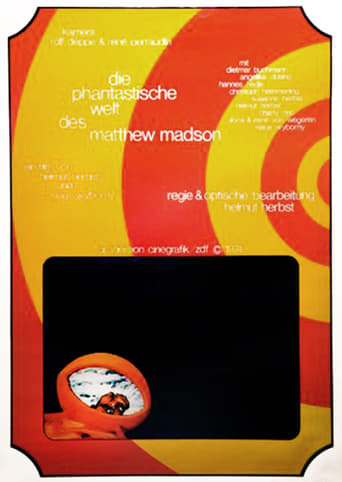
9.0Astronaut Mulligan sets out to find a mysterious planet.
The Fantastic World of Matthew Madson
1974
Behind the camera
A film drawn and dubbed by children in a 6th grade class, animated by Franz Winzentsen.
Der Hafenfilm
1965
NRFigures in a side-scrolling landscape.
Windstill
1969
NRThe grotesque portrayal of an attempt at communication, graphically and rigorously depicted: In the LCB's second production, Peter Rühmkorf and Helmut Herbst bitingly trace a relationship story that is already over before it has begun.
Abends, wenn der Mond scheint
1965
9.0A “film-noir” on double identity and role reversal. A man is looking for a woman to love. He finds her in a seedy bar and persuades her to marry him. The day she decides to flee… he kills her. To ward off suspicion, he moves in with the sister of the deceased.
Betrayed
1985
7.0A cloud of black dust, one of white dust, and the world.
Dust
1967
9.0Astronaut Mulligan sets out to find a mysterious planet.
The Fantastic World of Matthew Madson
1974
9.0Astronaut Mulligan sets out to find a mysterious planet.
The Fantastic World of Matthew Madson
1974
 8.0
8.0The year was 1972. A commune of Berlin stoners and intellectuals set adrift in space in a packing container clutched in a giant flying hand. Based on Herbst's 1974 animated sci-fi film DIE PHANTASTISCHE WELT DES MATTHEW MADSON.
The Cathedral of New Emotions
2006
8.0The year was 1972. A commune of Berlin stoners and intellectuals set adrift in space in a packing container clutched in a giant flying hand. Based on Herbst's 1974 animated sci-fi film DIE PHANTASTISCHE WELT DES MATTHEW MADSON.
The Cathedral of New Emotions
2006
 4.7
4.7Hollywood opening credits with crashing sea waves and expectant orchestral music opens the film. Then the viewer's gaze is carried through a room. In a mirror you see for a moment a naked girl holding the recording subjective camera under her arm, she pulls open a drawer, puts the camera inside and closes the drawer. The viewer's gaze and thus the viewer himself is caught in the darkness.
Why Did You Kiss Me Awake?
1967
 6.0
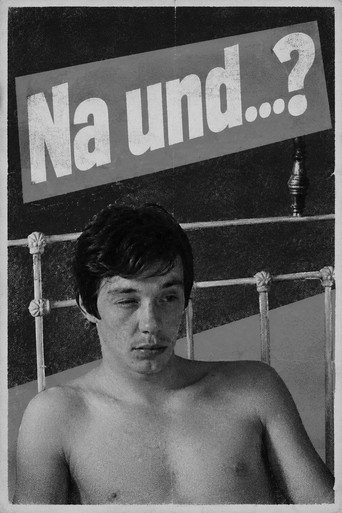
6.0A day in a young slacker's life in Hamburg, Germany.
So what ...?
1967
 NR
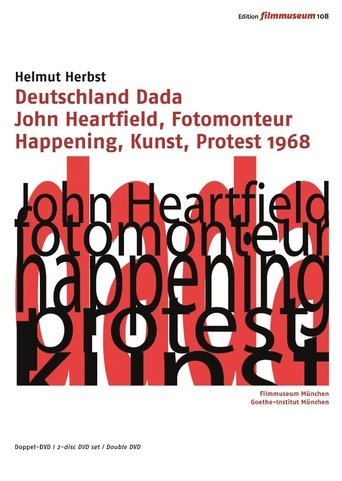
NRAn essayistic documentary about the action art movement that emerged in the 1960s: In interviews with various action artists, including Wolf Vostell, Joseph Beuys and Allan Kaprow, director Helmut Herbst illuminates the performative and participatory tendencies in art that began in the 1960s and outlines the diversity of motives and strategies.
Happening, Kunst, Protest 1968
1981
NRAn essayistic documentary about the action art movement that emerged in the 1960s: In interviews with various action artists, including Wolf Vostell, Joseph Beuys and Allan Kaprow, director Helmut Herbst illuminates the performative and participatory tendencies in art that began in the 1960s and outlines the diversity of motives and strategies.
Happening, Kunst, Protest 1968
1981
An animated film made from collages. With a film text by poet and left-wing essayist Peter Rühmkorf. A satire on advertising language.
Kleine Unterweisung zum glücklichen Leben
1963
An animated film made from collages. With a film text by poet and left-wing essayist Peter Rühmkorf. A satire on advertising language.
Kleine Unterweisung zum glücklichen Leben
1963
An animated film made from collages. With a film text by poet and left-wing essayist Peter Rühmkorf. A satire on advertising language.
Kleine Unterweisung zum glücklichen Leben
1963
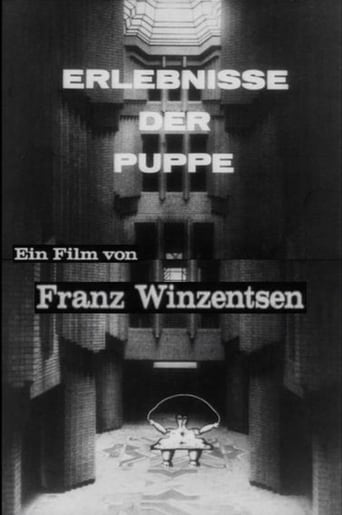 9.0
9.0Short stop motion animation by Franz Winzentsen.
The Adventures of a Doll
1966
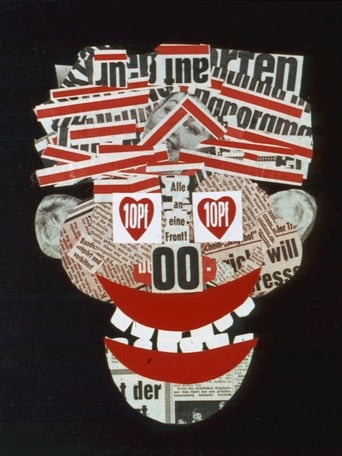 7.0
7.0The film makes fun of the superficial changes in power in their birthplaces. Herbst's painting depicts a society of excited string toys who first march to the strains of the Kaiser's anthem, whose black, white and red flag dominates the swastika, before being incorporated into the colors of a conglomerate of right-wing newspapers. Black, white, red. Three times, the Germans march organized in columns and ranks: under the colors of the Kaiser, the Führer and Axel Springer.
Schwarz-Weiß-Rot
1964
7.0The film makes fun of the superficial changes in power in their birthplaces. Herbst's painting depicts a society of excited string toys who first march to the strains of the Kaiser's anthem, whose black, white and red flag dominates the swastika, before being incorporated into the colors of a conglomerate of right-wing newspapers. Black, white, red. Three times, the Germans march organized in columns and ranks: under the colors of the Kaiser, the Führer and Axel Springer.
Schwarz-Weiß-Rot
1964
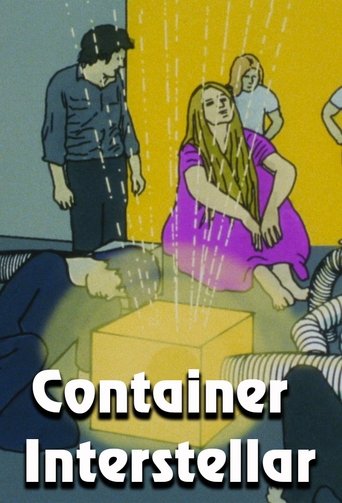 7.5
7.5Director Helmut Herbst’s animated sci-fi short with characters that would be more fully explored in CATHEDRAL OF NEW EMOTIONS.
Container Interstellar
2001
A short film by Franz Winzentsen
Das Ginzeck
1966
In the first half of the 19th century there was a revolt in the central state of Hesse, led by Georg Büchner (Gregor Hansen), the well-known German writer, and a fellow rebel, Pastor Weidig (Franz Wittich). Büchner wrote a kind of declaration of peasant rights against the tyranny of the landholders of the time, and once that declaration ("Der Hessische Landbote") was made public, Büchner escaped to Strasbourg, and then to Zurich where he was killed in 1937, at the age of 23. Pastor Weidig was captured, sent to prison, tortured, and killed in prison. The revolution the two men had hoped for died on the vine due to an informer -- a planned uprising was brutally squelched -- and the peasants had to bide their time for another 12 years before the 1848 Revolution would bring them some of the rights demanded in Büchner's pamphlet.
A German Revolution
1982
In the first half of the 19th century there was a revolt in the central state of Hesse, led by Georg Büchner (Gregor Hansen), the well-known German writer, and a fellow rebel, Pastor Weidig (Franz Wittich). Büchner wrote a kind of declaration of peasant rights against the tyranny of the landholders of the time, and once that declaration ("Der Hessische Landbote") was made public, Büchner escaped to Strasbourg, and then to Zurich where he was killed in 1937, at the age of 23. Pastor Weidig was captured, sent to prison, tortured, and killed in prison. The revolution the two men had hoped for died on the vine due to an informer -- a planned uprising was brutally squelched -- and the peasants had to bide their time for another 12 years before the 1848 Revolution would bring them some of the rights demanded in Büchner's pamphlet.
A German Revolution
1982
A man-made catastrophe depopulates entire regions. How do survivors observe this event, and how do others react?
Null-Null-Zero
1968
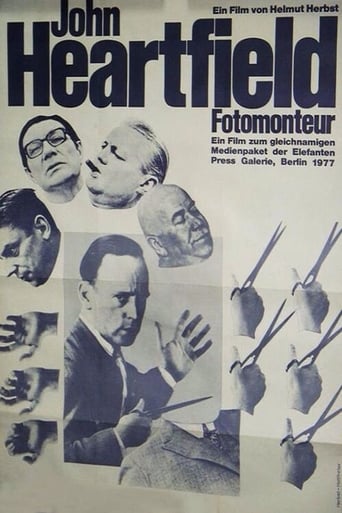 9.0
9.0A documentary which looks at Heartfield primarily as a political activist working in a specific historical context. It demonstrates this relationship by the use of documentary material, such as archive footage of inter-war Germany, in juxtaposition with Heartfield's works.
John Heartfield, Fotomonteur
1977
9.0A documentary which looks at Heartfield primarily as a political activist working in a specific historical context. It demonstrates this relationship by the use of documentary material, such as archive footage of inter-war Germany, in juxtaposition with Heartfield's works.
John Heartfield, Fotomonteur
1977
Austria/Hungary in 1905: At the annual fairs, the old cabinets displaying "abnormalities" and "living phenomena" are being replaced by cinematograph booths. Meanwhile, Viktor Conrad, the son of a photographer from Vac, falls in love with the image of a dancer he only knows from a film strip. With the booth he inherited from his father and his cinema equipment, Viktor joins the traveling troupe of the famous Doctor Giovanni in order to be close to his beautiful deaf-mute dancer.
Die Serpentintänzerin
1992
Austria/Hungary in 1905: At the annual fairs, the old cabinets displaying "abnormalities" and "living phenomena" are being replaced by cinematograph booths. Meanwhile, Viktor Conrad, the son of a photographer from Vac, falls in love with the image of a dancer he only knows from a film strip. With the booth he inherited from his father and his cinema equipment, Viktor joins the traveling troupe of the famous Doctor Giovanni in order to be close to his beautiful deaf-mute dancer.
Die Serpentintänzerin
1992
Drawn portraits of a man with a beard.
Sieben einfache Phänomene
1984
Drawn portraits of a man with a beard.
Sieben einfache Phänomene
1984
Drawn portraits of a man with a beard.
Sieben einfache Phänomene
1984
Documentary about the film pioneer Guido Seeber.
Lebende Photographien auf einem laufenden Bande
1979
Short film by Helmut Herbst.
Der Hut oder Mondo Uovo
1966
Short film by Helmut Herbst.
Der Hut oder Mondo Uovo
1966
In the 1970s, music critics and military personnel meet in a recording studio at NATO's European Command to discuss a final music program for Central Europe.
Das musikalische Opfer
1989
In the 1970s, music critics and military personnel meet in a recording studio at NATO's European Command to discuss a final music program for Central Europe.
Das musikalische Opfer
1989
No synopsis available yet.
Zwischen den Bildern. 3. Über die Trägheit der Wahrnehmung
1982
 6.3
6.3This documentary concerns the contributions of German artists to the Dadaist movement. Created in 1916, the organizers rejected previous convention and delighted in nihilistic satire in painting, sculpture and literature. Comparisons are made between the movement and the political and social upheaval at the time of the release of this feature (1969).
Germany Dada
1969
6.3This documentary concerns the contributions of German artists to the Dadaist movement. Created in 1916, the organizers rejected previous convention and delighted in nihilistic satire in painting, sculpture and literature. Comparisons are made between the movement and the political and social upheaval at the time of the release of this feature (1969).
Germany Dada
1969
An informative and entertaining documentary about special effects in film. The legendary 1930 film adaptation of "King Kong" serves as a central theme to trace the development of special effects in film from Méliès to the "New American Cinema." Helmut Herbst clearly illustrates filmmakers' dependence on technology and the resulting historical evolution of "cinematic language."
synthetischer film oder wie das monster King Kong von fantasie & präzision gezeugt wurde
1975