
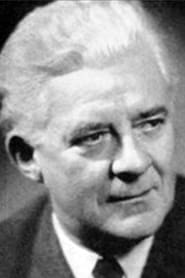
Acting
Walter Werner
Born — Died
1883-04-11 — 1956-01-08
Place of birth
Görlitz, Germany
Known for
Acting
Credits
42 titles
Known for
 4.4
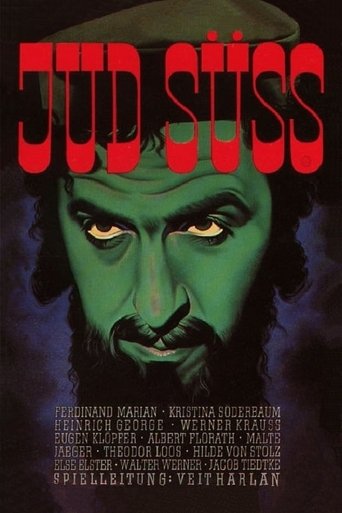
4.4Nazi historical drama about Duke Karl Alexander of Württemberg and his treasurer Süß Oppenheimer.
Süss, the Jew
1940
 7.3
7.3Two dubious characters disguise themselves as Holmes and Watson to gain attention and end up chasing counterfeiters and stolen stamps.
The Man Who Was Sherlock Holmes
1937
No synopsis available yet.
Excellency Petticoat
1921
 5.5
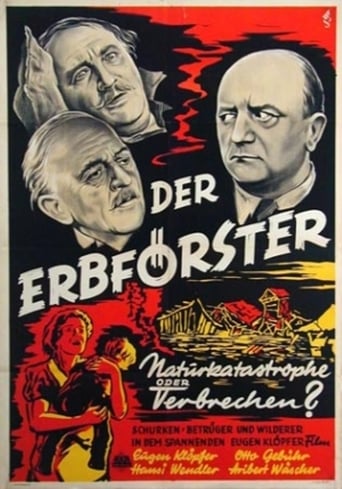
5.5For many years, Ulrich, the hereditary forester, and Steinbach, the landowner, were the best of friends. But one day, this friendship is put to a severe test: Driven by financial need, Steinbach wants to have the forest cleared, which Ulrich condemns as brutal exploitation of nature – and therefore refuses to grant permission for the project. To clear the way for his plan, Steinbach ensures that Ulrich is dismissed as forester. When, a few days later, the dam built by Steinbach is blown up and the floodwaters inundate Steinbach's sawmill, suspicion immediately falls on Ulrich. The hereditary forester is ostracized, threatened, and even fears for his life.
Der Erbförster
1945
A waitress takes all the gossip of a small town on the Rhine in stride, in spite of a distinguished composer being a loving husband and father for her illegitimate child.
Kornblumenblau
1939
 6.5
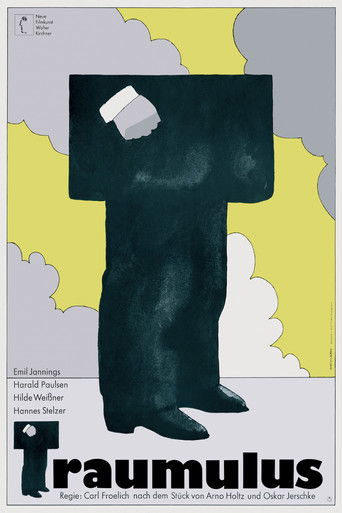
6.5This film is a fascinating showcase for Emil Janning's theatrical play. He's a gentle school teacher who believes in his boys and is easily fooled about all things, while the other town officials want him dismissed. Curiously it's very hard to see what the film is exactly aiming for. Disaster strikes and the lax prof proves to be too far removed of the real problems of the world, on the other hand his enemies are shown in the most unsympathetic, satirical way denouncing the militaristic, bourgeois ideology of the Kaiserreich.
Traumulus
1936
Film credits
1950s · 3 titles
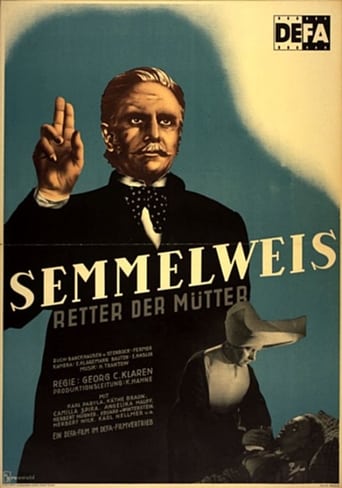 6.2
6.2In the middle of the 19th century, almost one in three women who gave birth died of puerperal fever. The Hungarian doctor Ignaz Philipp Semmelweis also observed these terrible occurrences in his clinic in Vienna. He came to the conclusion that it was primarily the unhygienic conditions in the clinic itself that led to this disease, as his colleagues were constantly shuttling back and forth between the anatomy department and the delivery room. He tries to convince the doctors of the absolute necessity of thorough disinfection by washing their hands with chlorinated lime. He meets with fierce resistance from his colleagues until he himself sets up an exemplary clinic in Budapest.
Semmelweis – Retter der Mütter
1950
 6.7
6.7An industrialist's wife was killed and now her lover is accused of murder.
Alibi
1955
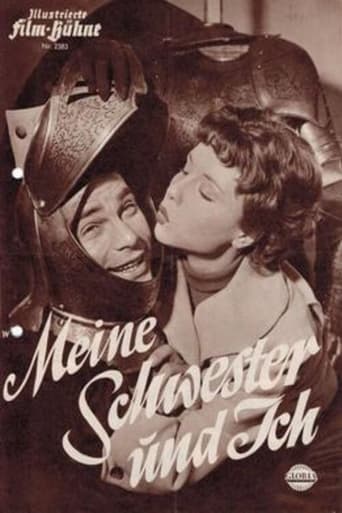 8.0
8.0After an accident, Princess Maria Christine ends up stranded in Rothenburg, where she falls in love with engineer Rudi Becker, but pretends to be a shoe saleswoman. Misunderstandings, mix-ups and intrigues lead to turmoil surrounding her planned wedding to the King of Slovenia.
My Sister and I
1954
1940s · 13 titles
4.4Nazi historical drama about Duke Karl Alexander of Württemberg and his treasurer Süß Oppenheimer.
Süss, the Jew
1940
5.5For many years, Ulrich, the hereditary forester, and Steinbach, the landowner, were the best of friends. But one day, this friendship is put to a severe test: Driven by financial need, Steinbach wants to have the forest cleared, which Ulrich condemns as brutal exploitation of nature – and therefore refuses to grant permission for the project. To clear the way for his plan, Steinbach ensures that Ulrich is dismissed as forester. When, a few days later, the dam built by Steinbach is blown up and the floodwaters inundate Steinbach's sawmill, suspicion immediately falls on Ulrich. The hereditary forester is ostracized, threatened, and even fears for his life.
Der Erbförster
1945
 7.3
7.3During his trip to the city, a naïve man from the countryside falls victim to a thief who steals his wallet. Since all his personal documents were in it, he not only looses his money but also his identity. The thief turns out to be a cunning con man, who uses the papers for his criminal schemes. Soon enough, a warrant is issued, and eventually both men – the thief and the innocent guy – are arrested. But since all the red tape of the government causes even more confusion, the odyssey of the victim searching for his lost identity has just started.
Der Mann, dem man den Namen stahl
1945
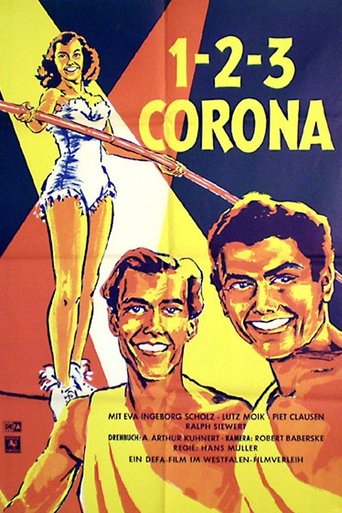 6.3
6.3Post-war Germany 1945: Two rival gangs of uprooted boys fight each other in the ruins of Berlin, whose business is the black market out of necessity in order to survive. Their respective leaders are Gerhard and Dietrich. A pretty young circus artist named Corona comes to the destroyed city with a traveling circus. She immediately caught the boys' attention. When the latter notice that the circus director is abusing the girl, the two gangs join forces and plot an act of revenge against the tyrant. But with the hustle and bustle caused by this, Corona falls from the trapeze and is seriously injured. When the circus moves on, the boys organize a doctor for the sick artist who has been left behind. Their collectively concern for the blonde beauty makes them forget their enmity. This welds the troops closer together and sets the course for a common, meaningful future.
1-2-3 Corona
1948
 5.9
5.9A biographical film of Otto von Bismarck, the Prime Minister of Prussia, and how he and his policies - including aggressive war - helped to unite Germany.
Bismarck
1940
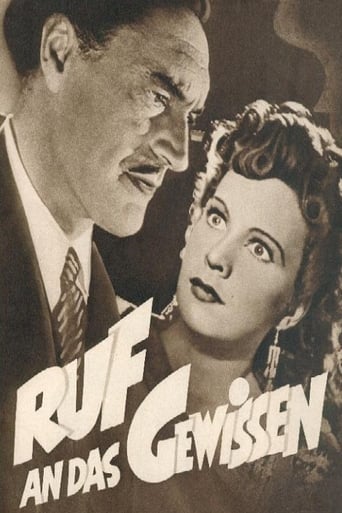 7.0
7.0Ten years ago, the "Andree case" was seemingly solved. Now criminal investigator Husfeld is to reopen it, as doubts have arisen about the guilt of Helga Andree, who was convicted at the time. She is said to have pushed her former rival, the singer Elinor Gyldenborg, off the roof garden and killed her. Husfeld seeks advice from his friend, the writer Volkmar Hollberg. He turns the case into a radio play, which is broadcast on the radio under the title The Jump from the Roof Garden. The broadcast brings back memories of the night of the crime for those present at the time...
The Appeal to Conscience
1949
 7.0
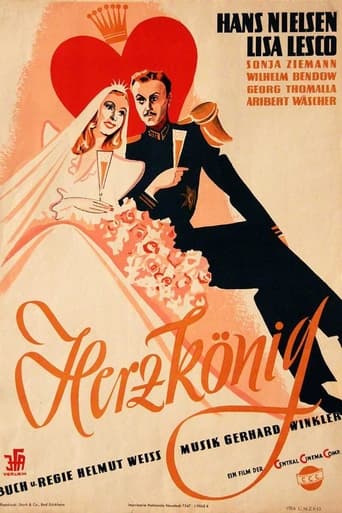
7.0After drinking too much alcohol, King Michael XXXVII promptly forgets his own wedding date! To avoid a scandal, his police minister asks the writer Peter Petroni, who looks deceptively like the king, to stand in for the alcoholic Michael at the ceremony. The only trouble is that the game quickly turns serious - because when Peter catches sight of "his" bride at the altar, it's love at first sight...
Herzkönig
1947
 5.4
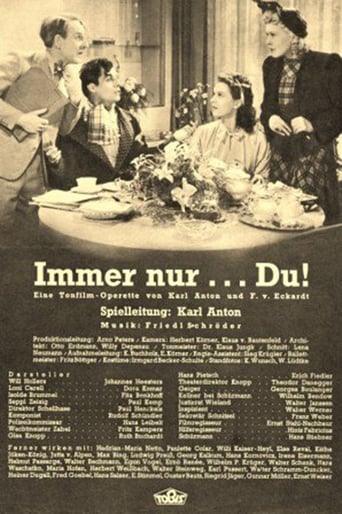
5.4The two stars of an upcoming operetta performance quarrel constantly. but they also fall in love with each other.
You Only You
1941
 6.2
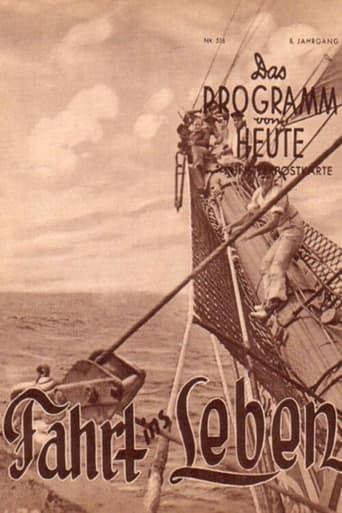
6.2The four sailing school cadets Gerhard, Fritz, Kurt, and Christian are close friends; there's hardly anything they don't do together. But when the charming Gerhard begins a romance with Charlotte, his comrade Christian's childhood sweetheart, a shadow falls over their close bond. Then, when the four young men are involved in an accident during a nighttime trip on the school ship's pinnace, their friendship is put to another severe test. While three of them manage to raise the money for the repairs, Kurt, unable to contribute his share, lies to his comrades, claiming he has already put the money into the communal kitty.
Fahrt ins Leben
1940
 7.2
7.2Set during the rise of the Nazi regime, Elisabeth Maurer and Hans Wieland enjoy successful careers as actors in Berlin. Confident in her career, Elisabeth, who is Jewish, ignores the advice of a colleague to leave Germany in the face of increasing anti-Semitism. Believing that he can protect her if she becomes his wife, Hans convinces Elisabeth to marry him. In the following years, as Hans's career thrives, Elisabeth awaits the end of the Nazi terror which bars her from public life. When the situation worsens in 1938 with the Kristallnacht pogrom, Elisabeth decides to leave the country, but Hans, who still believes he can protect her, convinces her to stay with him.
Marriage in the Shadows
1947
Professor Lorenz is nominated for the highest accolade of his profession, and he smiles about his sons' juvenile mismanagement of private funds. Then he learns that one of them has forged the professor's signature on several IOUs.
Ein glücklicher Mensch
1943
 5.5
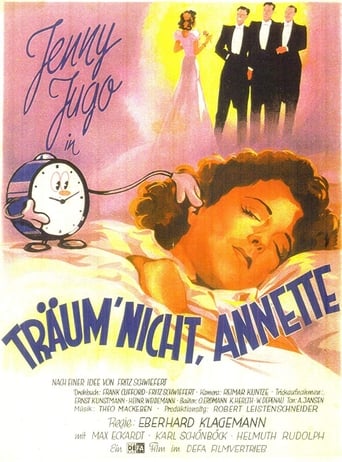
5.5French teacher Annette Müller has two ardent admirers who are constantly urging her to marry: diplomat Klaus and engineer Theo. But she can't make up her mind. Then a third one joins them, the pianist Hans. Sometimes she dreams of Klaus, sometimes of Theo. And although she is angry that Hans has taken up residence in her boarding house, she can't stop herself from dreaming about him too. When she asks him, of all people, which of the other two she should marry, there is a big row between them - and she realizes who the right man is.
Träum’ nicht, Annette!
1949
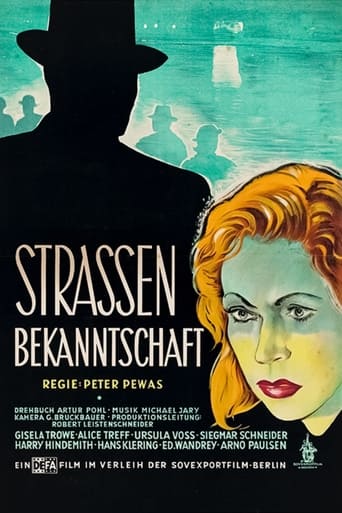 7.3
7.3The film centres around the young woman Erika, desperately seeking for love and escape from the depression of the times, drifting, and in the end becoming involved with a circle of rich people who sell goods for sexual favours.
Street Acquaintances
1948
1930s · 23 titles
7.3Two dubious characters disguise themselves as Holmes and Watson to gain attention and end up chasing counterfeiters and stolen stamps.
The Man Who Was Sherlock Holmes
1937
A waitress takes all the gossip of a small town on the Rhine in stride, in spite of a distinguished composer being a loving husband and father for her illegitimate child.
Kornblumenblau
1939
6.5This film is a fascinating showcase for Emil Janning's theatrical play. He's a gentle school teacher who believes in his boys and is easily fooled about all things, while the other town officials want him dismissed. Curiously it's very hard to see what the film is exactly aiming for. Disaster strikes and the lax prof proves to be too far removed of the real problems of the world, on the other hand his enemies are shown in the most unsympathetic, satirical way denouncing the militaristic, bourgeois ideology of the Kaiserreich.
Traumulus
1936
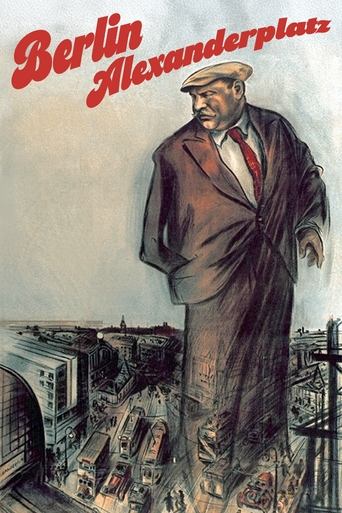 6.0
6.0Franz Biberkopf has served four years in prison. His return to normal life is not successful.
Berlin-Alexanderplatz: The Story of Franz Biberkopf
1931
 6.6
6.6Country Dr. Robert Koch is desperate: a tuberculosis epidemic is decimating the children in his district and no one is able to do anything about it. Every fourth child is already sick and the parents must helplessly watch as their young ones die. Now Koch is undertaking to find the cause of the tuberculosis --- something he has already been working on for years --- which has been causing this plague of illness. His work is made more difficult by envy; for example, that of his teacher, who was wounded defending his honor. But his greatest obstacle is the famous Berliner scientist and Reichstag deputy, Privy Councilor Rudolf Virchow: He is extraordinarily skeptical of Koch's theory, that the cause for tuberculosis is a bacteria.
Robert Koch, der Bekämpfer des Todes
1939
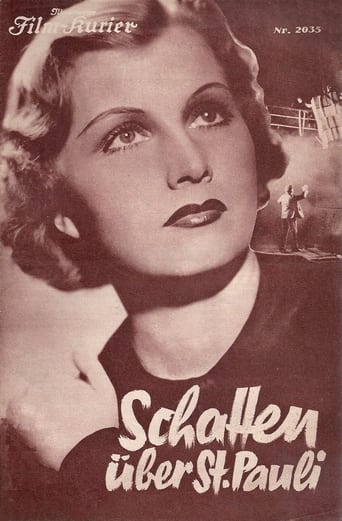 10.0
10.0Old John Carstens sells his marine‐equipment firm to Lafrenz, unaware it’s now a fuel‐smuggling front. Living above the showroom with daughter Hanna and son Jochen, he resists Lafrenz’s pressure. When Hanna falls for bargeman Oschi Rasmus, Lafrenz demands John either give up Hanna or settle his debts. John defies him and dies. Oschi clears John’s debts, but Lafrenz soon plots against the young couple.
Shadows over St. Pauli
1938
 6.3
6.3Paris, 1830: Jean-Gaspard Debureau performs on the stage and delights his audience with song, wit and charm. He is, however, very unpopular with King Charles X, who is the target of much of Debureau's scornful jests. That would be a somewhat tolerable situation if it weren't for the fact that Debureau has fallen for a countess, who happens to be the King's mistress.
Tanz auf dem Vulkan
1938
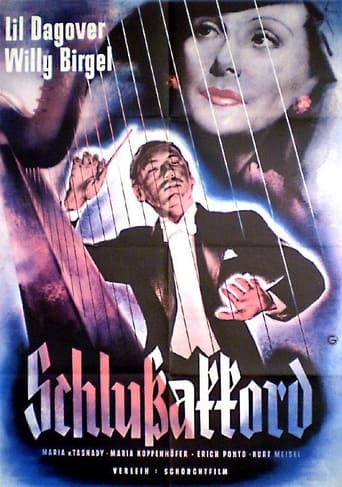 6.3
6.3After her husband dies, a German woman who gave up her infant for adoption to emigrate to America returns to Germany, discovering that her child is being raised by a married orchestra conductor.
The Final Chord
1936
Seven men in peaceful Switzerland swear lifelong friendship while the rest of the world is at strife. A conflict arises when the daughter of one falls in love with the son of another.
Hermine and the Seven Upright Men
1935
 7.2
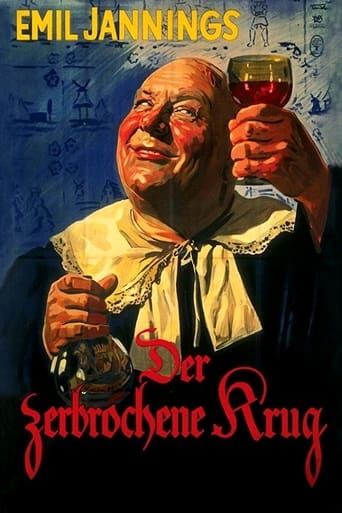
7.2Today is a fateful day for village judge Adam. Who broke Widow Kull’s jug fleeing head over heels after his nightly visit to her daughter? As the trial unfolds, it becomes clear to everyone that the judge himself is the culprit. Judge Adam twists and turns, invents countless explanations, and piles up the most absurd lies. But he is conducting a trial against himself—one he cannot win.
The Broken Jug
1937
 5.8
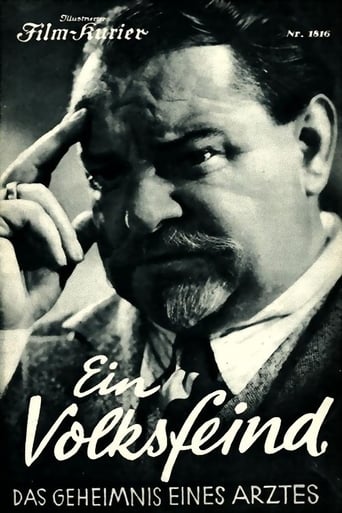
5.8Before the First World War, Dr. Hans Stockmann had a practice in a small town. His powerhungry brother is the mayor of Bad Trimburg, which has developed into a respectable resort. Dr. Stockmann is called in to become the town’s chief physician. He considers the sanitary conditions to be intolerable and insists on a clean-up. His ambitious brother and all those who, till now, have profited well from the corner cutting, are, of course, against that for financial reasons. The doctor is condemned from all sides and the conflict escalates.
An Enemy of the People
1937
 10.0
10.0Melodrama about an entrepreneur and his family.
You and I
1938
 5.5
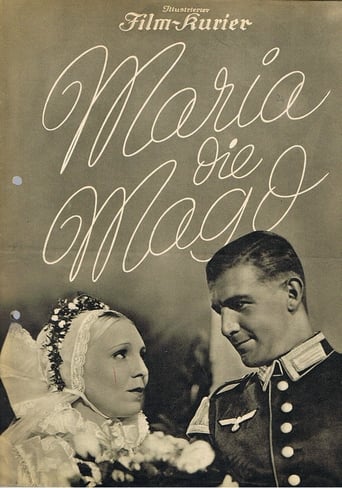
5.5An actress and her lawyer husband are so busy that their maid becomes the real mother to their six year old boy and at one point causes consternation by taking the child away to her home village.
Maria, the Servant
1936
A patriotic period melodrama in which a father and son are in love with the same lady.The son does not tell her that his father, an officer, has fought in a duel over her, but lies that he has left her for the army. Melodrama written by Douglas Sirk.
Triad
1938
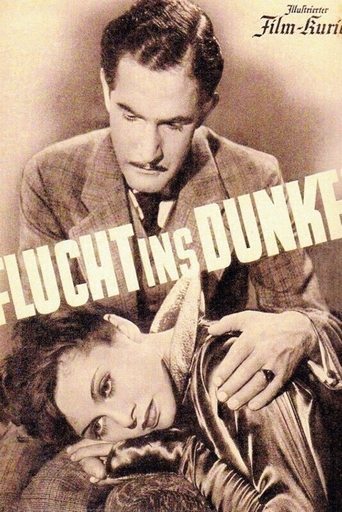 7.0
7.0No synopsis available yet.
Flucht ins Dunkel
1939
Sabine Heitmann, the young boss for the shipping company Heitmann, has become friends with Michael, the First Officer and Helmsman of the ship, the "Sabine Heitmann". He only knows Sabine by her first name and doesn't know that she's the boss. When he discovers the fact, however, he gets pissed and refuses to accept his promotion to Captain. Then the shipping company gets a lucrative offer: In a competition with another shipping company, they need to reach Baltimore in 18 days and pick up some freight. Whoever can move their rear ends faster, gets the very profitable contract from an American firm (correct me if I'm wrong, but didn't this sort of thing sink the Titanic?). Together with Michael, Sabine comes up with a plan, which should have them win the contest. The upshot? She wins back his heart and he becomes Captain.
Freight from Baltimore
1938
 7.5
7.5Prince Klemens von Metternich orders Friedrich Gentz, one of his aides, to keep the Duke of Reichstadt---Napoleon Francois Joseph Charles---son of Napoleon and heir to the French throne, from thinking about French politics. Gentz enlists the help of ballerina Fanny Elsser, all the rage in several European capitals, to keep the Duke distracted.
Fanny Elssler
1937
Lufthansa captain Hans Droste is friends with English pilot William Crossley, who saved his life during the war. Having just landed in Berlin, Hans receives a telegram from his friend urgently asking him to fly to London and check on his dying uncle, Sir Reginald Crossley. Sir Reginald has only one wish: he wants to right a past wrong and asks Hans to find a girl to whom he wants to bequeath a third of his fortune.
Gewitterflug zu Claudia
1937
Adaptation of Tolstoy story in which a female pianist is the center of a struggle between her husband and his violinist cousin ,a struggle that leads to a tragic conclusion.
The Kreutzer Sonata
1937
The physician Dr. Deruga is suspected of having poisoned his wife out of greed. She died after naming Deruga, poor and in debt, the sole heir in her will. There are a lot of people willing to testify against him in court, including Marta, the dead woman's best friend. Only his niece Mingo believes him to be innocent and goes out on her own to prove it.
The Deruga Case
1938
 5.8
5.8This pre-WW II German costume drama chronicles the French Revolution with a particular focus upon Danton, Robespierre, and Marat. It depicts the dramatic downfall and execution of Georges Danton in 1794 at the hands of Maximilien Robespierre. The film also presents an interesting, if not historically inaccurate, portrayal of Louis XVI.
Danton
1931
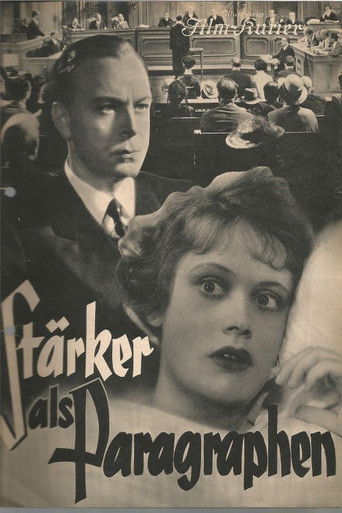 7.0
7.0Renate Hubricht finds her uncle, the money broker Theodor Hubricht, murdered in his villa. That very night, the banker Lorik is arrested, who was last seen in Hubricht’s house. Renate, who doesn’t wish to live alone in the eerie estate lodges with the lawyer Dr. Birk. She doesn’t tell him, that her lover, the musician Robert Wendland, had an argument with her uncle on the evening of the murder. When Lorik is sentenced to 10 years prison, Renate is thrown into a quandary. She believes she’s protecting the real culprit with her silence.
Stronger Than Paragraphs
1936
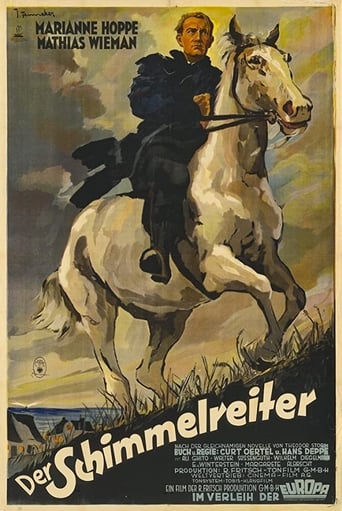 3.4
3.4Freely adapted from Theodor Storm's novella of the same name.
The Rider on the White Horse
1934
1920s · 3 titles
No synopsis available yet.
Excellency Petticoat
1921
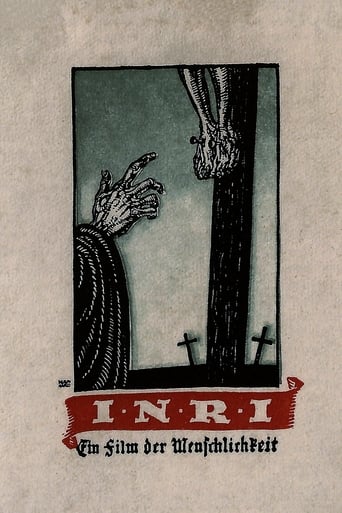 5.6
5.6From the director of Cabinet of Dr. Caligari, this is the Passion embedded in a contemporary story. An anarchist jailed for an attempted assassination is told the Passion story by the prison chaplain.
I.N.R.I. – A Film of Humanity
1923
 5.6
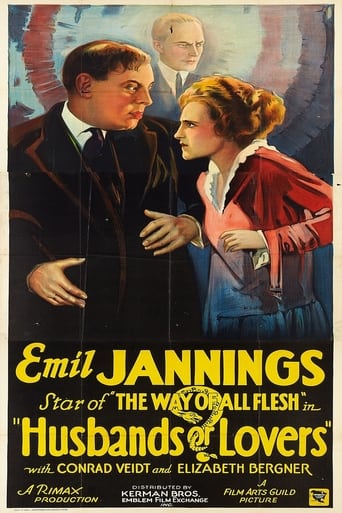
5.6A wife, bored by her overweight slob of a husband, gives in to the temptation of a slickly seductive poet.
Husbands or Lovers
1924