
Acting
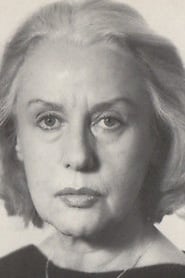
Doris Schade
Born — Died
1924-05-21 — 2012-06-25
Place of birth
Bad Frankenhausen, Thuringia, Germany
Known for
Acting
Credits
57 titles
Doris Schade (born May 21, 1924, in Frankenhausen; died June 25, 2012, in Munich) was a German actress. Doris Schade received her acting training at the *Altes Theater* in Leipzig and made her stage debut in 1946 as Luise in *Kabale und Liebe* (Intrigue and Love) at the *Städtische Bühnen* in Osnabrück. Over the following decades, she was a member of the ensembles at theaters in Bremen, Nuremberg, and Frankfurt am Main, among others, before becoming a defining actress at the *Münchner Kammerspiele* starting in 1961. Further engagements took her to venues such as the *Deutsches Schauspielhaus* in Hamburg, the *Burgtheater* in Vienna, and the Salzburg Festival. On stage, she collaborated with…
Known for
 6.2
6.2Tatort is a long-running German/Austrian/Swiss crime television series set in various parts of these countries. The show is broadcast on the channels of ARD in Germany, ORF in Austria and SF1 in Switzerland.
Scene of the Crime
1970
 6.3
6.3A police department, lead by an older, experienced detective solve crimes together.
The Old Fox
1977
 6.2
6.2Polizeiruf 110 is a long-running German language detective television series. The first episode was broadcast 27 June 1971 in the German Democratic Republic, and after the dissolution of Fernsehen der DDR the series was picked up by ARD. It was originally created as a counterpart to the West German series Tatort, and quickly became a public favorite.
Polizeiruf 110
1971
 6.0
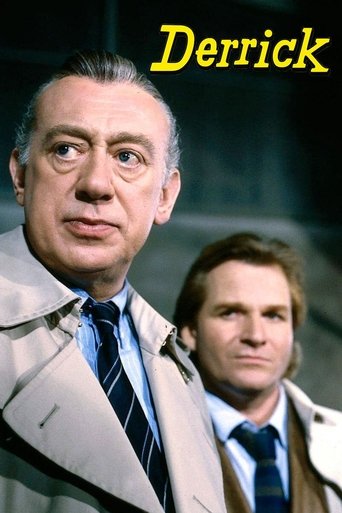
6.0Derrick was a German TV series produced by Telenova Film und Fernsehproduktion in association with ZDF, ORF and SRG between 1974 and 1998 about Detective Chief Inspector Stephan Derrick and his loyal assistant Inspector Harry Klein, who solve murder cases in Munich and surroundings.
Derrick
1974
 5.9
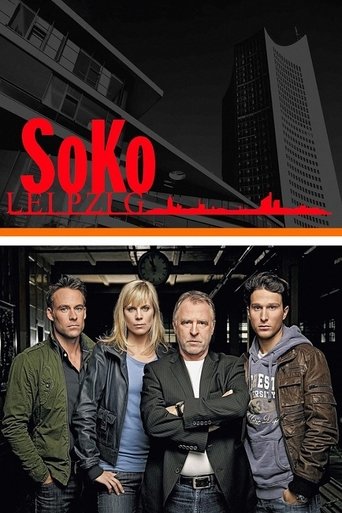
5.9SOKO Leipzig is a German police procedural television programme, a spin-off of the earlier German police programme SOKO 5113. It was first broadcast on 31 January 2001, on German television channel ZDF. On 12 November 2008, the first part of a two-part crossover between SOKO Leipzig and British police procedural The Bill was aired, with the same version being shown on both ZDF and British television channel ITV1.
Leipzig Homicide
2001
 8.0
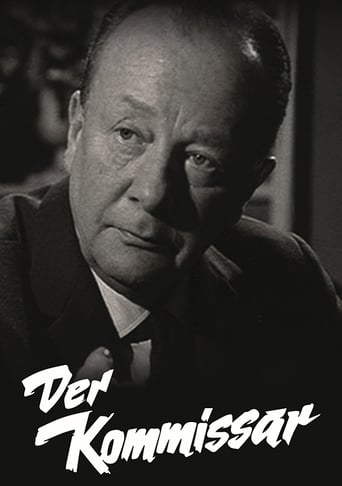
8.0Der Kommissar is a German television series about a group of detectives of the Munich homicide squad. All 97 episodes, which were shot in black-and-white and first broadcast between 1969 and 1976, were written by Herbert Reinecker and starred Erik Ode as Kommissar Herbert Keller. Keller's assistants were Walter Grabert, Robert Heines, and Harry Klein who, in 1974, was replaced by his younger brother Erwin Klein.
The Commissioner
1969
Film credits
2000s · 9 titles
 6.2
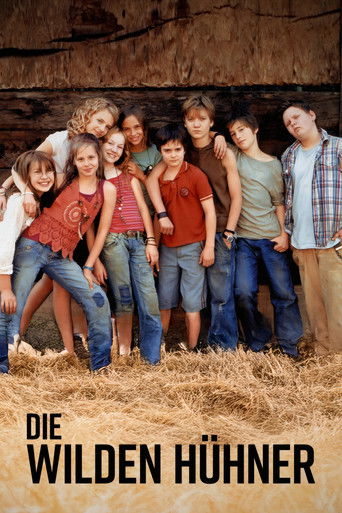
6.2Twelve-year-old Sprotte has a 'gang' with her three friends Frieda, Melanie, and Trude. Together, the girls care for Sprotte's grandmother's chickens. The new girl in school, Wilma, wishes to join the group, which Melanie is very unhappy about, and on top of all of that they have an ongoing revalisasion with a group of boys.
The Wild Chicks
2006
 6.0
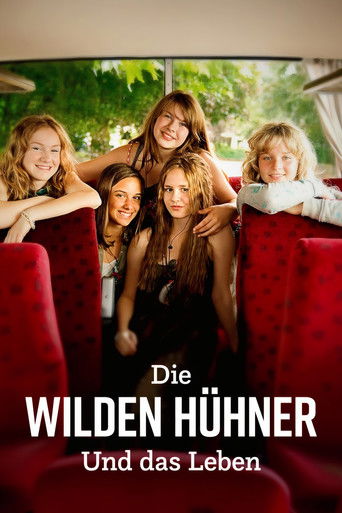
6.0The Wild Chicks are slowly growing out of their youthful gang years and have to face the worries of growing up on the sidelines of a big class trip before graduation.
The Wild Chicks and Life
2009
 6.4
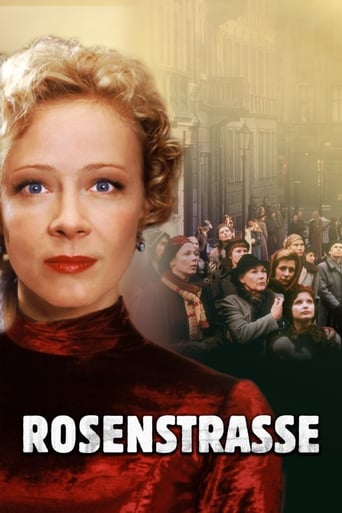
6.4When Ruth's husband dies in New York, in 2000, she imposes strict Jewish mourning, which puzzles her children. A stranger comes to the house - Ruth's cousin - with a picture of Ruth, age 8, in Berlin, with a woman the cousin says helped Ruth escape. Hannah, Ruth's daughter engaged to a gentile, goes to Berlin to find the woman, Lena Fisher, now 90. Posing as a journalist investigating intermarriage, Hannah interviews Lena who tells the story of a week in 1943 when the Jewish husbands of Aryan women were detained in a building on Rosenstrasse. The women gather daily for word of their husbands. The film goes back and forth to tell Ruth and Lena's story. How will it affect Hannah?
Rosenstrasse
2003
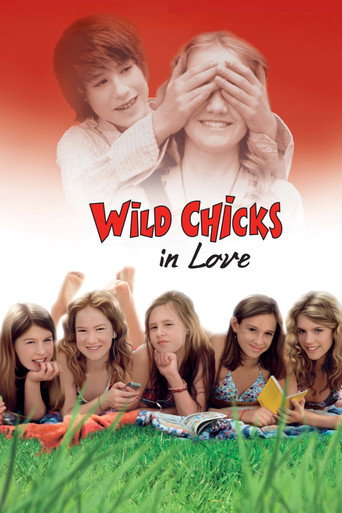 6.5
6.5Five teenage girls navigate the twists and turns of their complicated emotional lives, and learn the secrets of the heart through their friendship.
Wild Chicks in Love
2007
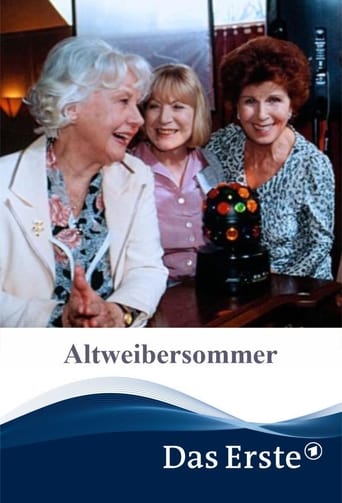 7.0
7.0Erika, Dorle and Ilse, three friends between 60 and 70, have always stuck together and always manage to take life on the bright side. Erika's big dream is to have an expensive breast reconstruction. But she doesn't have the money. In order to fulfill her friend's heart's desire, Dorle and Ilse take on temporary jobs and eventually even develop an unexpected criminal energy. However, problems are not long in coming.
Altweibersommer
2000
The history of a family, in the film business now for three generations, behind and in front of the camera. The film is not only a foray through the history of this remarkable family, but also through the history of German film and contemporary history as well.
Die Verhoevens
2003
 3.5
3.5In an effort to rekindle their romance, Barbara and Ralph rent a secluded farmhouse in Yorkshire for Christmas.
Charlotte Link: Das Haus der Schwestern
2002
No synopsis available yet.
Gameboy
2002
 4.6
4.6The relationship between journalist Nina and her mother Eva has always been tense. One day Nina is supposed to be interviewing Richard Gere in Budapest. Her friend Flora and her mother Eva accompany her there. Flora succeeds in defusing the tensions between mother and daughter. Then Eva is suddenly admitted to the hospital. Nina's visit to her mother's sickbed is moving for both women.
Die schönsten Jahre
2006
1990s · 8 titles
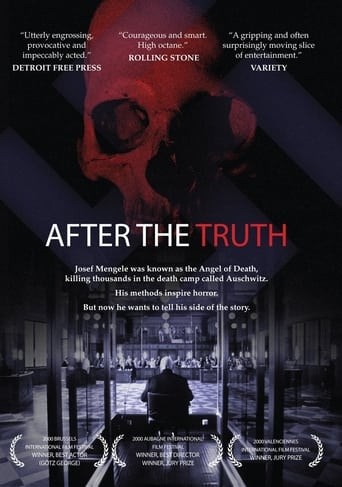 6.1
6.1Famous Nazi doctor Josef Mengele — the 'Death Angel of Auschwitz', who killed more than 300.000 people — emerges from his hideout in Argentina to Germany as a 87-year-old man, and must stand for his crimes in court. The young solicitor Peter Rohm is assigned to defend him, but Rohm himself — an expert on Mengele and his crimes — feels unable to do so. When he decides to take on the case, he endangers not only his marriage but also his and his wife's lives.
After the Truth
1999
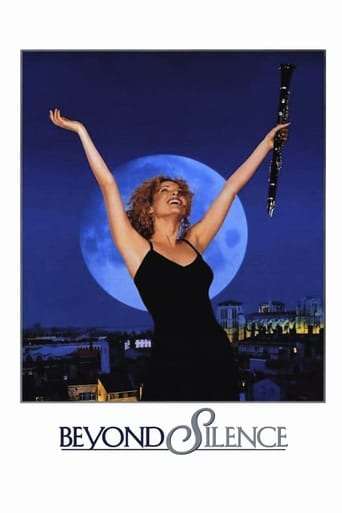 6.9
6.9Beyond Silence is about a family and a young girl’s coming of age story. This German film looks into the lives of the deaf and at a story about the love for music. A girl who has always had to translate speech into sign language for her deaf parents yet when her love for playing music grows strong she must decide to continue doing something she cannot share with her parents.
Beyond Silence
1996
No synopsis available yet.
Im Atem der Berge
1998
A TV adaptation of the stage comedy of the same name by Heinrich von Kleist.
Der zerbrochene Krug
1990
By 1941, Adolf Hitler had taken personal command of the German military apparatus. His initial successes made this seem like a good idea at the time, but by 1944, after an unparalleled series of military defeats that Hitler refused even to acknowledge, a group of high-ranking military and political figures in Germany decided to assassinate him and take over the government. Unfortunately for them, their assassination attempt failed, and the knives were out to find all the people involved in the attempt. The most wanted person in the coup was Carl Goerdeler (Dieter Schaad), a respected figure in German public life for many decades. Twenty years earlier, a girl by the name of Helene Schwärzel (Katherina Thalbach) met Goerdeler. After the coup attempt, during the nationwide manhunt, Helene recognized him and notified the authorities. In addition to receiving a huge reward, she became the focus of a nationwide propaganda campaign, and was widely resented for her "success."
The Denunciation
1993
No synopsis available yet.
Tödliche Wahrheit
1994
TV-movie based on the trial of Memmingen gynecologist Dr. Horst Theissen, who was sentenced for illegal abortions.
Abgetrieben
1992
No synopsis available yet.
Der Nebenbuhler
1993
1980s · 6 titles
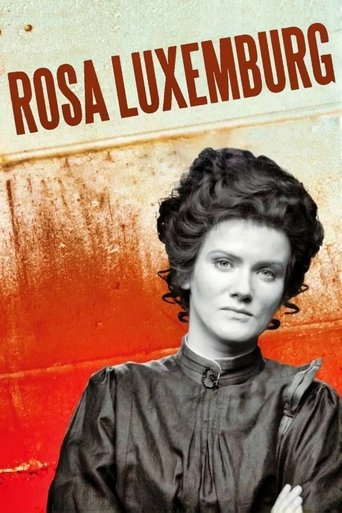 6.5
6.5Polish socialist and Marxist Rosa Luxemburg works tirelessly in the service of revolution in early 20th century Poland and Germany. While Luxemburg campaigns for her beliefs, she is repeatedly imprisoned as she forms the Spartacist League offering a new vision for Germany.
Rosa Luxemburg
1986
 7.2
7.2In Munich 1955, German film star Veronika Voss becomes a drug addict at the mercy of corrupt Dr. Marianne Katz, who keeps her supplied with morphine. After meeting sports writer Robert Krohn, Veronika begins to dream of a return to stardom. As the couple's relationship escalates in intensity, Veronika begins seriously planning her return to the screen -- only to realize how debilitated she has become through her drug habit.
Veronika Voss
1982
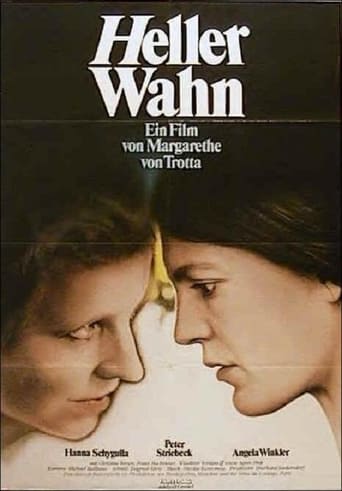 7.0
7.0Two women–a literature professor and a painter–start to rely upon their friendship as an alternative to their unhappy relationships with the men in their lives.
Sheer Madness
1983
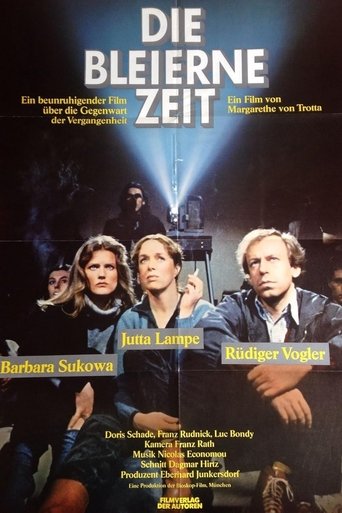 7.0
7.0Germany, 1968: The priest's daughters Marianna and Juliane both fight for changes in society, like making abortion legal. However their means are totally different: while Juliane's committed as a reporter, her sister joins a terroristic organization. After she's caught by the police and put into isolation jail, Juliane remains as her last connection to the rest of the world. Although she doesn't accept her sister's arguments and her boyfriend Wolfgang doesn't want her to, Juliane keeps on helping her sister. She begins to question the way her sister is treated.
Marianne and Juliane
1981
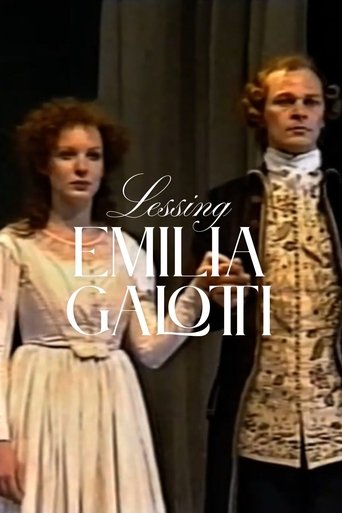 NR
NRA tragedy by Gotthold Ephraim Lessing.
Emilia Galotti
1984
Documentary about the shooting of BOURBON STREET BLUES.
Filmarbeit mit Douglas Sirk
1987
1970s · 13 titles
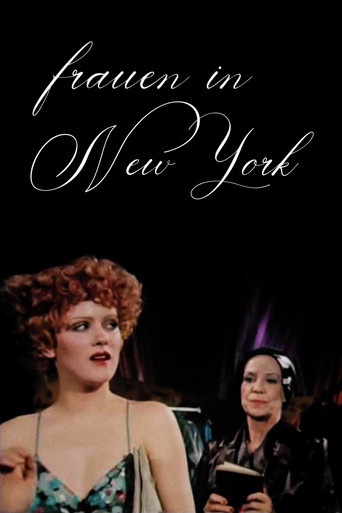 6.0
6.0In 1930s New York, a group of bored wealthy women convene in social situations and converse about their husbands and/or lovers.
Women in New York
1977
6.0In 1930s New York, a group of bored wealthy women convene in social situations and converse about their husbands and/or lovers.
Women in New York
1977
No synopsis available yet.
Geschichte für 24 Stunden
1972
No synopsis available yet.
Kur in Travemünde
1979
No synopsis available yet.
Wer kennt diesen Mann?
1971
No synopsis available yet.
Drei mal Hoffnung
1971
The writer, the publisher, the just-famous poet, the once-famous film director, the dreaded critic, the educated dentist and the half-educated goldsmith are at home in the culture industry, they know their way around, and they have learned to be wary of each other and of themselves: what they have in common is a secret fear that one day they will no longer belong, that one day they will no longer be able to keep up.
Piggies
1970
 6.1
6.1An adaptation of Tennessee Williams' "The Lady Larkspur Lotion" created by Douglas Sirk with the assistance of his film students and Rainer Werner Fassbinder. It depicts the conflict between a dreamy, delusional heroine and her brusque, practical landlady, who wants to kick her out of her apartment.
Bourbon Street Blues
1979
No synopsis available yet.
Polly oder Die Bataille am Bluewater Creek
1975
No synopsis available yet.
Cautio Criminalis
1974
No synopsis available yet.
Der Prozeß gegen die neun von Catonsville
1972
No synopsis available yet.
Vor Sonnenuntergang
1970
No synopsis available yet.
In freier Landschaft
1977
1960s · 8 titles
No synopsis available yet.
Der Auswanderer
1967
 9.0
9.0No synopsis available yet.
Sag’s dem Weihnachtsmann
1969
No synopsis available yet.
Leonce und Lena
1964
No synopsis available yet.
Eine Frau ohne Bedeutung
1969
No synopsis available yet.
Alte Kameraden
1969
No synopsis available yet.
In Lemgo 89
1967
No synopsis available yet.
Die Geschichte von Joel Brand
1964
"The ancestors heritage" - The Ahnenerbe was a scientific institute in the Third Reich dedicated to research the archaeological and cultural history of the Aryan Race. The films deals with trials against the guilty ones of this part of the Holocaust.
Ahnenerbe
1969
Series credits
6.2Tatort is a long-running German/Austrian/Swiss crime television series set in various parts of these countries. The show is broadcast on the channels of ARD in Germany, ORF in Austria and SF1 in Switzerland.
Scene of the Crime
1970
6.2Tatort is a long-running German/Austrian/Swiss crime television series set in various parts of these countries. The show is broadcast on the channels of ARD in Germany, ORF in Austria and SF1 in Switzerland.
Scene of the Crime
1970
6.3A police department, lead by an older, experienced detective solve crimes together.
The Old Fox
1977
6.3A police department, lead by an older, experienced detective solve crimes together.
The Old Fox
1977
6.2Polizeiruf 110 is a long-running German language detective television series. The first episode was broadcast 27 June 1971 in the German Democratic Republic, and after the dissolution of Fernsehen der DDR the series was picked up by ARD. It was originally created as a counterpart to the West German series Tatort, and quickly became a public favorite.
Polizeiruf 110
1971
6.0Derrick was a German TV series produced by Telenova Film und Fernsehproduktion in association with ZDF, ORF and SRG between 1974 and 1998 about Detective Chief Inspector Stephan Derrick and his loyal assistant Inspector Harry Klein, who solve murder cases in Munich and surroundings.
Derrick
1974
6.0Derrick was a German TV series produced by Telenova Film und Fernsehproduktion in association with ZDF, ORF and SRG between 1974 and 1998 about Detective Chief Inspector Stephan Derrick and his loyal assistant Inspector Harry Klein, who solve murder cases in Munich and surroundings.
Derrick
1974
6.0Derrick was a German TV series produced by Telenova Film und Fernsehproduktion in association with ZDF, ORF and SRG between 1974 and 1998 about Detective Chief Inspector Stephan Derrick and his loyal assistant Inspector Harry Klein, who solve murder cases in Munich and surroundings.
Derrick
1974
6.0Derrick was a German TV series produced by Telenova Film und Fernsehproduktion in association with ZDF, ORF and SRG between 1974 and 1998 about Detective Chief Inspector Stephan Derrick and his loyal assistant Inspector Harry Klein, who solve murder cases in Munich and surroundings.
Derrick
1974
6.0Derrick was a German TV series produced by Telenova Film und Fernsehproduktion in association with ZDF, ORF and SRG between 1974 and 1998 about Detective Chief Inspector Stephan Derrick and his loyal assistant Inspector Harry Klein, who solve murder cases in Munich and surroundings.
Derrick
1974
5.9SOKO Leipzig is a German police procedural television programme, a spin-off of the earlier German police programme SOKO 5113. It was first broadcast on 31 January 2001, on German television channel ZDF. On 12 November 2008, the first part of a two-part crossover between SOKO Leipzig and British police procedural The Bill was aired, with the same version being shown on both ZDF and British television channel ITV1.
Leipzig Homicide
2001
8.0Der Kommissar is a German television series about a group of detectives of the Munich homicide squad. All 97 episodes, which were shot in black-and-white and first broadcast between 1969 and 1976, were written by Herbert Reinecker and starred Erik Ode as Kommissar Herbert Keller. Keller's assistants were Walter Grabert, Robert Heines, and Harry Klein who, in 1974, was replaced by his younger brother Erwin Klein.
The Commissioner
1969
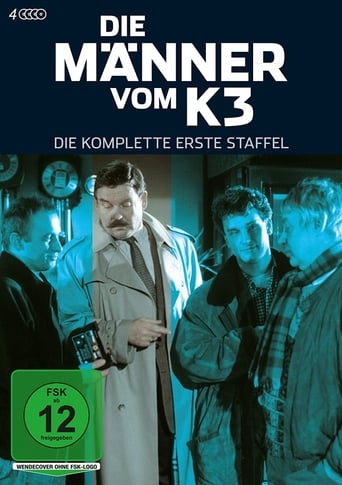 NR
NRDie Männer vom K3 is a German television series.
Die Männer vom K3
1988