
Acting
Magdalena Montezuma
Born — Died
1942-01-01 — 1984-07-15
Place of birth
Würzburg, Germany
Known for
Acting
Credits
37 titles
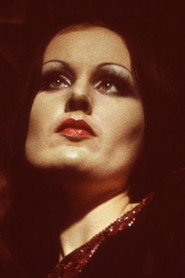
Magdalena Montezuma was born in 1943 in Würzburg, Bavaria, Germany as Erika Kluge. She was an actress, known for The Death of Maria Malibran (1972), Macbeth Oper von Rosa von Praunheim (1971) and The Rose King (1986). She died on July 15, 1984 in Berlin, Germany.
Known for
 6.2
6.2Tatort is a long-running German/Austrian/Swiss crime television series set in various parts of these countries. The show is broadcast on the channels of ARD in Germany, ORF in Austria and SF1 in Switzerland.
Scene of the Crime
1970
 7.3
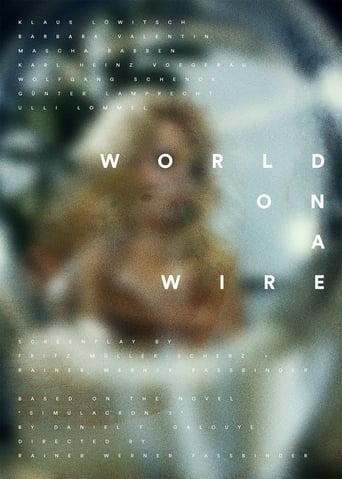
7.3In the future, Simulacron, a computer project simulating reality, encounters strange occurrences after its leader's death. Dr. Stiller questions the sudden disappearance of a friend and wonders if Simulacron holds the answers.
World on a Wire
1973
 7.3
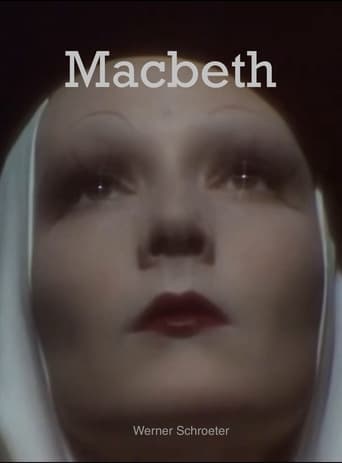
7.3Fusing Shakespeare‘s tragedy with the Verdi opera, Schroeter's Macbeth is a fascinating television experiment shot entirely in a studio with several electronic cameras. As Schroeter would recall, "I arranged the Verdi music for a quartet of violin, accordion, piano and oboe, but modeled the rhythms on Argentinian tangos and boleros. The actors sang with horrifying, shrill voices.... The use of video allowed me to produce extraordinary colors.... Of all my films, Macbeth was most unwelcome: Audiences don’t like their Shakespeare to be presented in this way, but I do not differentiate between kitsch and culture...". - MoMA
Macbeth
1971
 6.7
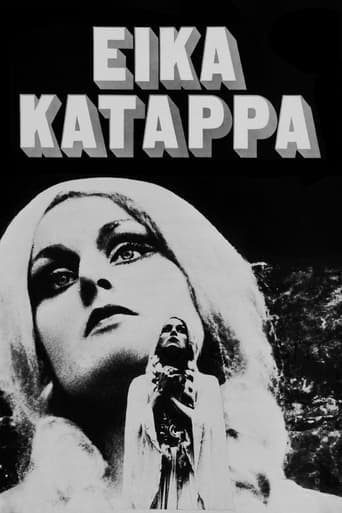
6.7Collage of dramatic scenes, some exaggerated to comic effect, with asynchronous sound from well known classic, operatic, and rock and roll music – with different approaches to love, suffering, and death.
Eika Katappa
1969
 5.6
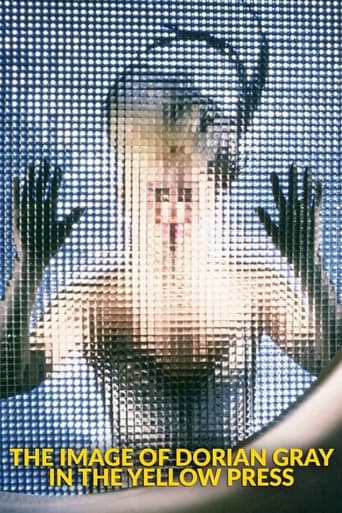
5.6The final installment in Ulrike Ottinger’s Berlin Trilogy (following TICKET OF NO RETURN and FREAK ORLANDO) casts Delphine Seyrig as the nefarious Fritz Lang supervillain Dr. Mabuse, here the head of a powerful media empire that seeks to create headlines by manufacturing (and then publicly destroying) its own celebrity: the wealthy, handsome playboy Dorian Gray.
Dorian Gray in the Mirror of the Yellow Press
1984
 7.5
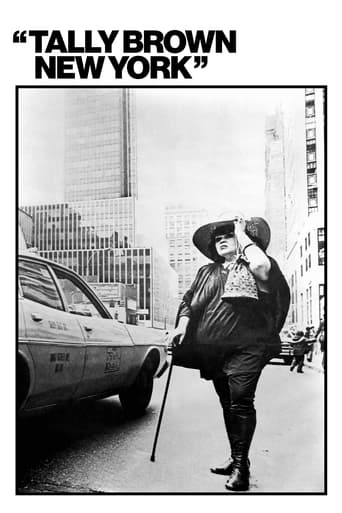
7.5Tally Brown, New York is a 1979 documentary film directed, written and produced by Rosa von Praunheim. The film is about the singing and acting career of Tally Brown, a classically trained opera and blues singer who was a star of underground films in New York City and a denizen of its underworld in the late 1960s. In this documentary, Praunheim relies on extensive interviews with Brown, as she recounts her collaboration with Andy Warhol, Taylor Mead and others, as well as her friendships with Holly Woodlawn, and Divine. Brown opens the film with a cover of David Bowie’s “Heroes” and concludes with “Rock ’n’ Roll Suicide.” The film captures not only Tally Brown’s career but also a particular New York milieu in the 1970s.
Tally Brown, New York
1979
Film credits
1980s · 11 titles
5.6The final installment in Ulrike Ottinger’s Berlin Trilogy (following TICKET OF NO RETURN and FREAK ORLANDO) casts Delphine Seyrig as the nefarious Fritz Lang supervillain Dr. Mabuse, here the head of a powerful media empire that seeks to create headlines by manufacturing (and then publicly destroying) its own celebrity: the wealthy, handsome playboy Dorian Gray.
Dorian Gray in the Mirror of the Yellow Press
1984
 6.3
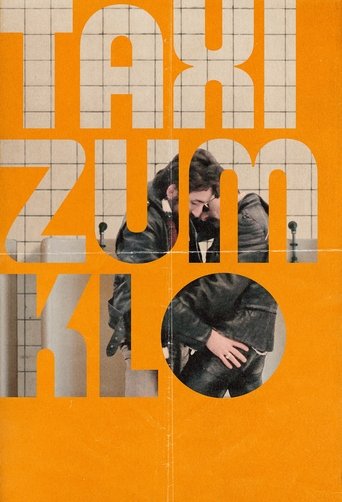
6.3Frank, a dedicated schoolteacher, embraces the sexual freedoms of the city’s underground scene—navigating a double life in public restrooms, cinemas, and cruising spots. When he meets Bernd, a sweet and steady museum worker, he finds himself torn between the comfort of domestic partnership and the allure of anonymous desire.
Taxi to the Toilets
1981
 10.0
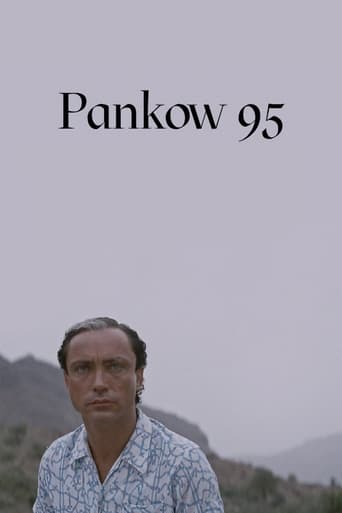
10.0Futuristic view of life in Pankow, East Berlin. The GDR has turned into a madhouse with serious economic problems.
Pankow ’95
1983
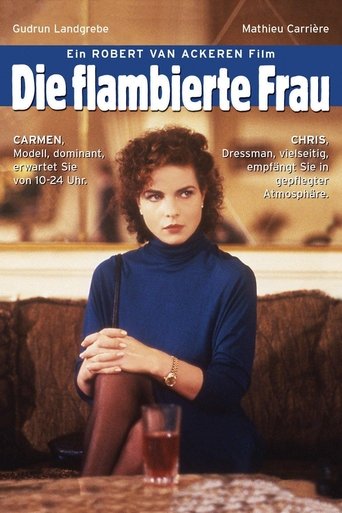 5.2
5.2Eva, an upper-class housewife, frustratedly leaves her arrogant husband and decides to enter the call girl business. She lets Yvonne, a prostitute, teach her the basics and both set out for prey together, until Eva starts an affair with Chris, who turns out to be a call boy, as well. Consequently, she moves into his penthouse, large enough for both to offer their services separately.
A Woman in Flames
1983
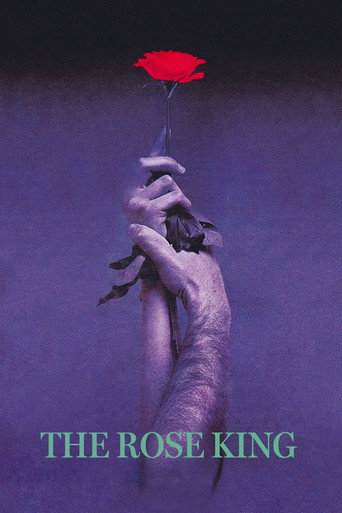 6.5
6.5A mentally unstable woman and her son move to a sprawling mansion in Portugal to grow roses.
The Rose King
1986
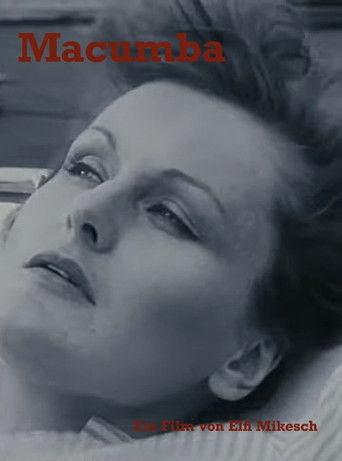 6.5
6.5Max Taurus, a sort of amateur detective, pursues the traces of general omni-present crime back to a partially demolished house. There, the remaining tenants try to gain pleasure and power from progressive abandonment in order to tear down their own conventionalities.
Macumba
1982
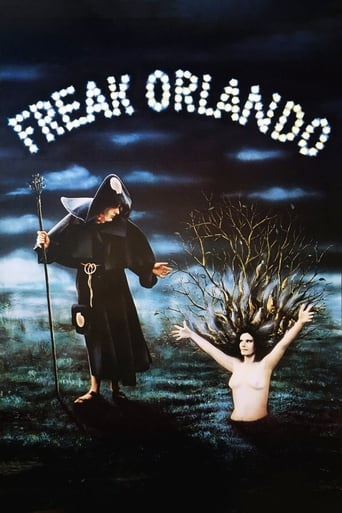 5.4
5.4Five more-or-less distinct sections, all featuring "Freak" Orlando, a woman played by the late Magdalena Montezuma, who appears in various guises and deformities throughout.
Freak Orlando
1981
 9.0
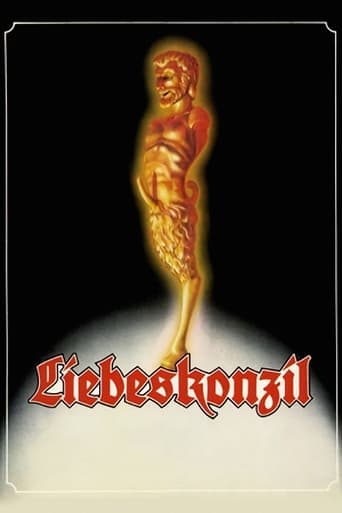
9.0Oskar Panizza’s The Council of Love (1895) is a blasphemous play set in 1495, during the first recorded outbreak of syphilis, which Panizza satirically presents as the punishment from Satan for sexually active humans. As a result, Panizza was imprisoned for obscenity. Schroeter alternates scenes from the Panizza’s work with a dramatization of his trial, presenting the play as an expressionist spectacle performed by actors wearing exaggerated makeup who gesture and grimace grotesquely. The film thus forms a bridge between Schroeter’s use of tableaux in his early experiments with the political urgency of his 1980s films. On the eve of the AIDS crisis, Schroeter is presciently worried about disease as an excuse for governmental repression and the oppression of sexuality. - Harvard Film Archive
Liebeskonzil
1982
 5.8
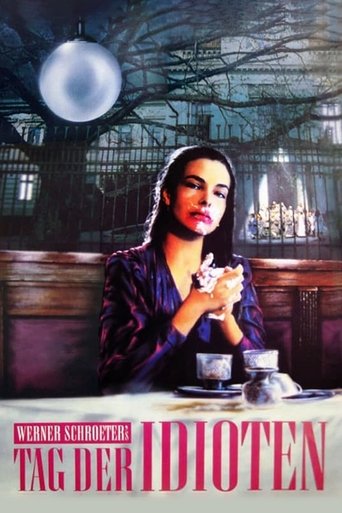
5.8A woman experiences psychic disintegration and ends up in a psychiatric hospital.
Day of the Idiots
1981
 5.5
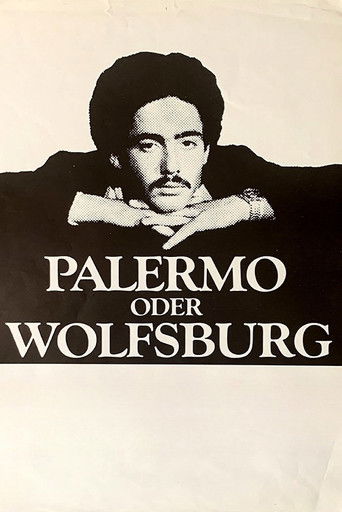
5.5An impoverished young man from Sicily travels to Wolfsburg, West Germany to find work. He takes a job in the Volkswagen factory after he travels through Northern Italy by train.
Palermo or Wolfsburg
1980
 4.5
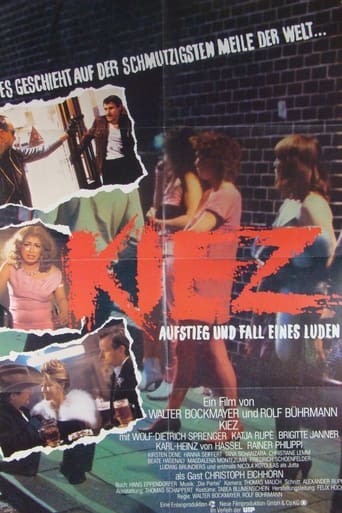
4.5Set in Hamburg's “Hell's Kitchen,” a waterfront milieu of gangsters, pimps, dealers and prostitutes, the story follows the attempts of an ex-seaman first to insinuate himself into the scene, and then to extricate himself from it. He becomes a small-time pimp, sending his naive girlfriend out onto the streets thinking she is financing their middle-class future. When he becomes involved with an old pal, Nil, he increases his criminal portfolio. But when he steals Nil's girlfriend and things heat up, he leaves for his sister's middle-class home in Berlin, where his attempts to fit in are doomed from the start. Returning to Hamburg, he starts a rapid decline that delivers him into the waiting arms of Nil, whose revenge is merciless.
Kiez
1983
1970s · 19 titles
7.3Fusing Shakespeare‘s tragedy with the Verdi opera, Schroeter's Macbeth is a fascinating television experiment shot entirely in a studio with several electronic cameras. As Schroeter would recall, "I arranged the Verdi music for a quartet of violin, accordion, piano and oboe, but modeled the rhythms on Argentinian tangos and boleros. The actors sang with horrifying, shrill voices.... The use of video allowed me to produce extraordinary colors.... Of all my films, Macbeth was most unwelcome: Audiences don’t like their Shakespeare to be presented in this way, but I do not differentiate between kitsch and culture...". - MoMA
Macbeth
1971
7.5Tally Brown, New York is a 1979 documentary film directed, written and produced by Rosa von Praunheim. The film is about the singing and acting career of Tally Brown, a classically trained opera and blues singer who was a star of underground films in New York City and a denizen of its underworld in the late 1960s. In this documentary, Praunheim relies on extensive interviews with Brown, as she recounts her collaboration with Andy Warhol, Taylor Mead and others, as well as her friendships with Holly Woodlawn, and Divine. Brown opens the film with a cover of David Bowie’s “Heroes” and concludes with “Rock ’n’ Roll Suicide.” The film captures not only Tally Brown’s career but also a particular New York milieu in the 1970s.
Tally Brown, New York
1979
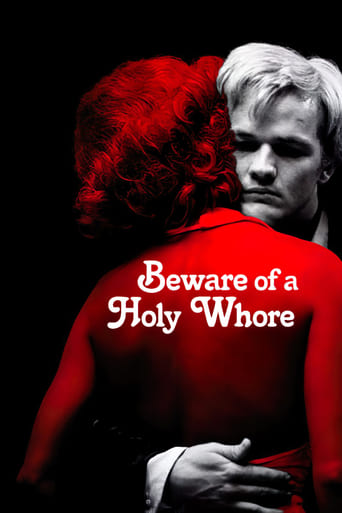 6.2
6.2Film director Jeff and his lead actor are taking their time getting to set. In their absence, the crew lack a purposeful way to spend their time waiting, so they drink heavily. However, as booze is downed and frustration sets in, morale hits rock bottom.
Beware of a Holy Whore
1971
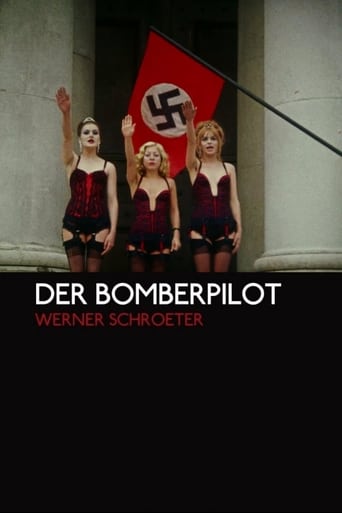 6.3
6.3Schroeter’s film is a chronicle of Germany from the Nazi era until the economic boom of the 1950s and 1960s, centering on three women who search for a career as singers and dancers.
Der Bomberpilot
1970
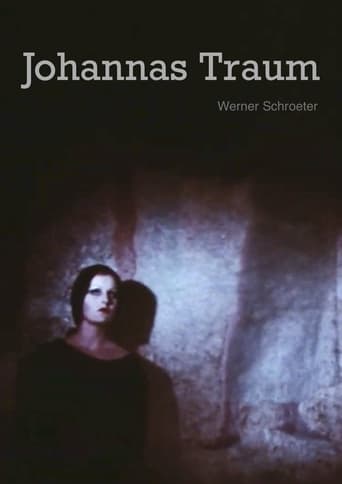 8.0
8.0With the ascetic grandeur of Carl Th. Dreyer’s The Passion of Joan of Arc, Schroeter evokes the visions of Saint Joan, partly through unused footage of Darling and Caven pantomiming in his 1972 film The Death of Maria Malibran. - MoMA
Joan's Dream
1975
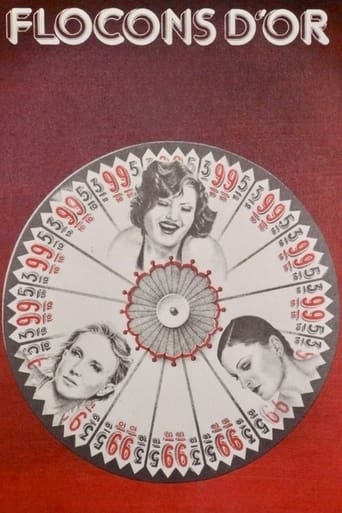 8.4
8.4Werner Schroeter's rhapsody of excess leaps from 1949 Cuba to contemporary France to points in between, while its feverishly shifting visual style evokes and parodies everything from kitschy Mexican telenovelas to silent French art films.
Gold Flakes
1976
 8.0
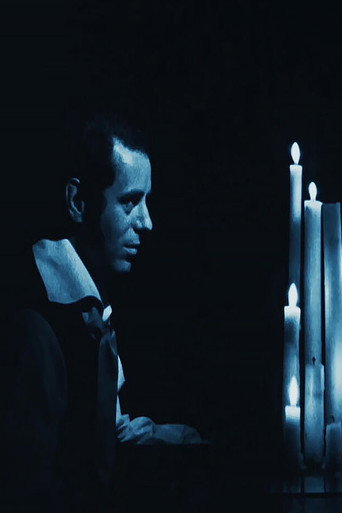
8.0Vienna, March 18, 1863: the poet Friedrich Hebbel, weakened by fever, spends his fiftieth — and final — birthday confined to bed. In feverish reverie, he recalls his life and work. The two blend with each other as well as with the present. A demanding reflection, filmed mostly in monochrome images, on this "ardent man" (a description by Eduard Mörike) and his work.
A Man Aglow
1975
 6.6
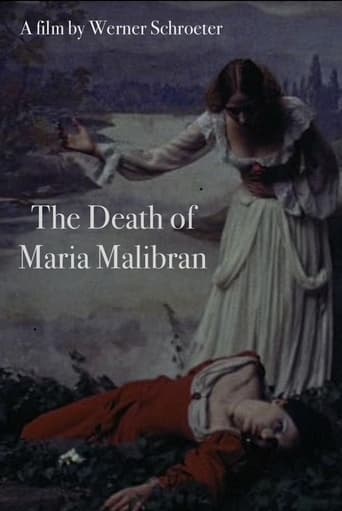
6.6A series of tableaux illustrating the life and death of a celebrated 19th century German opera singer.
The Death of Maria Malibran
1972
 5.8
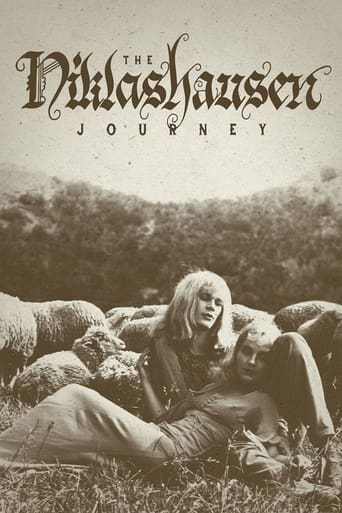
5.8Can a small group of people start a proletarian revolution, asks the "Black Monk" in a leather jacket? The medieval shepherd, Hans Boehm, claims to have been called by the Virgin Mary to create a revolt against the church and the landowners. The "Black Monk" suggests that he would have more success if he dressed up Johanna and had her appear as the Virgin Mary.
The Niklashausen Journey
1970
Former revolutionary Pat and sex worker Meg run a brothel in 1950s Dublin. In addition to five girls and two gay men, the old IRA general Musjö and Mr. Muleady also live in their establishment. One evening, two IRA fighters drag in a prisoner. The hostage is Leslie Williams, a young British soldier who was captured in Northern Ireland and is now to be exchanged for an IRA member...
Die Geisel
1977
 4.3
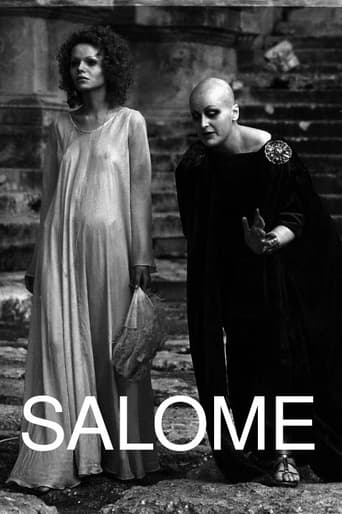
4.3Schroeter's virtuosic staging of the Oscar Wilde tragedy is a complex montage of image and sound, filmed on the grand steps of Baalbeck, the ancient Roman temple in Lebanon, and interweaving Lebanese and German folk songs with the music of Verdi, Wagner, Strauss, Mozart, Bellini, and Donizetti. Elfi Mikesch, the cinematographer of Schroeter’s later films, designed the film’s sumptuous costumes. A contemporary critic for Le Monde wrote admiringly of Schroeter’s depiction of "the deadly struggle between dark Christian morality and luminous paganism.“
Salome
1971
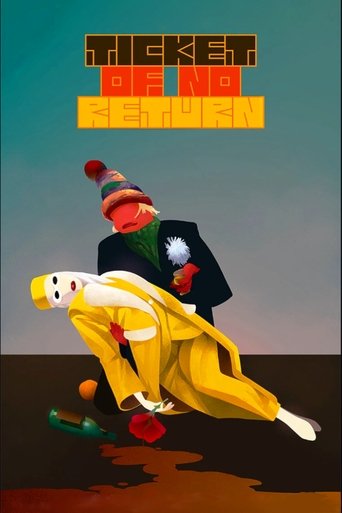 6.4
6.4A sartorially resplendent woman of few words arrives in Berlin with plans to live out the rest of her days as a drunkard.
Ticket of No Return
1979
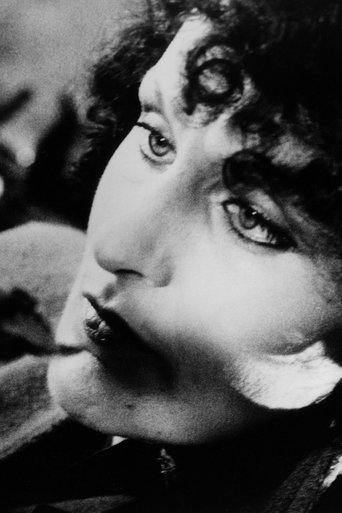 7.5
7.5This film is in effect a slideshow of exquisite single photographic images in sparkling black and white, representing Mikesch’s own version of Mary Stuart. “The drama of a woman who attempted a kind of liberal emancipation in a time of upheaval, but got caught in the snares of men,” in her words. Confronted with layers and layers of conflicting information about “how it really was” Mikesch decided not to try to be a historian, but to radicalise the narrative and condense it into striking images of passion, power, love, pain and death.
Exekution: A Study of Mary
1979
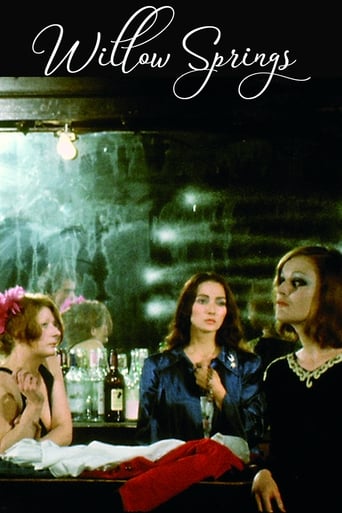 5.6
5.6Living together in an isolated house, three women go to murderous lengths to keep strangers out of their private retreat.
Willow Springs
1973
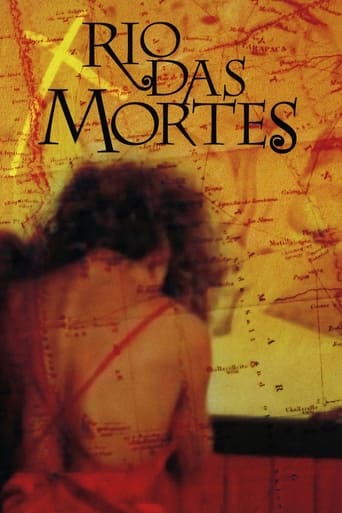 5.3
5.3Michel and Guenther, working in dead-end jobs, are obsessed with going to Peru to find buried treasure, using a map of the Rio das Mortes. Michel's girlfriend, Hanna, humors their plan, but really just wants to get married.
Rio das Mortes
1971
Early Rosa von Praunheim short film. Originally intended to be the ending of "Die Bettwurst".
Was die Rechte nicht sieht, kommt erst recht aus dem Ohr heraus
1972
Lady Macbeth, driven by ambition, urges her husband, Macbeth, to murder King Duncan. Macbeth becomes king but descends into madness. A Scottish nobleman, in a duel, ultimately kills Macbeth. The film, set 900 years later in Berlin, depicts this act with a blurred sequence.
Macbeth Oper von Rosa von Praunheim
1971
No synopsis available yet.
Grotesk – Burlesk – Pittoresk
1972
 7.0
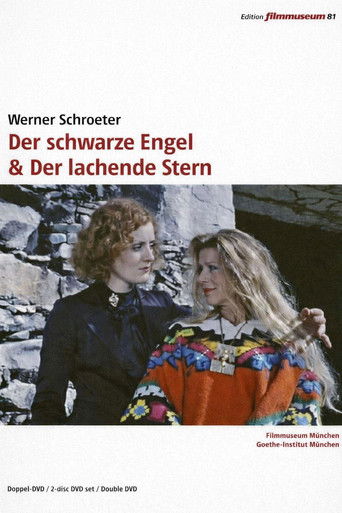
7.0Two women, one from Boston and one from Germany, flee their empty lives to seek fulfillment in Mexico. The Black Angel is a transitional film; on one hand, it is a companion piece to Willow Springs, featuring two Schroeter regulars as characters far from home and in extremis; on the other hand, it is a film essay about Mexico and as such a harbinger of Schroeter’s nonfiction work to come. While he clearly shares his characters’ fascination with Mexico, the filmmaker also savages touristic exoticism – the otherworldly appearances of his protagonists and their rapturous reactions to new surroundings contrast sharply with the sober perceptions of Mexican history and economics featured in the documentary segments and in the prosaic presence of a non-professional cast of locals. - Harvard Film Archive
The Black Angel
1974
1960s · 4 titles
6.7Collage of dramatic scenes, some exaggerated to comic effect, with asynchronous sound from well known classic, operatic, and rock and roll music – with different approaches to love, suffering, and death.
Eika Katappa
1969
 6.9
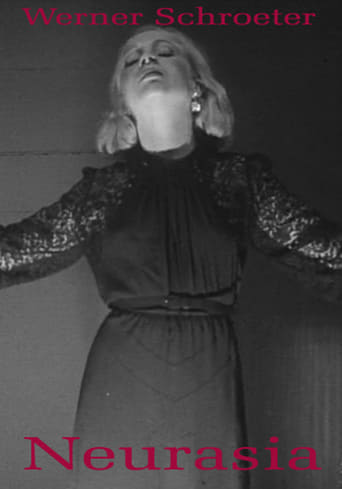
6.9In a dark and spare theatrical space, four characters use gesture, language, and movement to explore themes of desire and mortality.
Neurasia
1969
 8.0
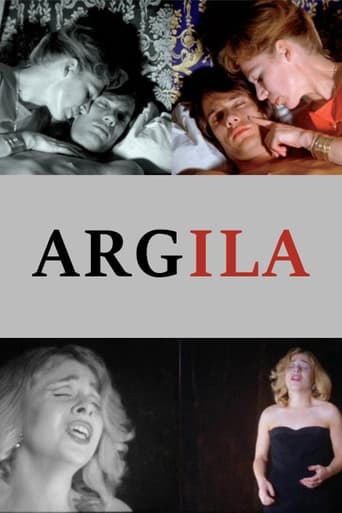
8.0Werner Schroeter's stunning split-screen short deals with what the director called "archaic, fundamental themes" of love and mourning.
Argila
1969
No synopsis available yet.
Magdalena
1968
Series credits
6.2Tatort is a long-running German/Austrian/Swiss crime television series set in various parts of these countries. The show is broadcast on the channels of ARD in Germany, ORF in Austria and SF1 in Switzerland.
Scene of the Crime
1970
7.3In the future, Simulacron, a computer project simulating reality, encounters strange occurrences after its leader's death. Dr. Stiller questions the sudden disappearance of a friend and wonders if Simulacron holds the answers.
World on a Wire
1973