
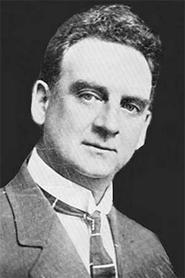
Acting
Justus D. Barnes
Born — Died
1862-10-02 — 1946-02-06
Place of birth
Little Falls, New York, USA
Known for
Acting
Credits
34 titles
Justus D. Barnes (October 2, 1862 – February 6, 1946), named George Barnes in some sources, was an American stage and film actor. He is best known for his role in the 1903 silent short The Great Train Robbery, which the American Film Institute and many film historians and critics recognize as the production that first established the Western genre, setting a new "narrative standard" in the motion picture industry. Barnes was born in Little Falls, New York. He was a veteran stage actor before he made his screen debut in 1903 in The Great Train Robbery. In that film's memorable ending, Barnes points his pistol at the camera and slowly fires all six shots at the viewer. The Great Train Robbery…
Known for
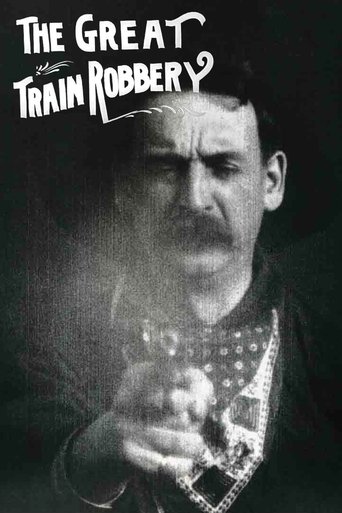 7.0
7.0After the train station clerk is assaulted and left bound and gagged, then the departing train and its passengers robbed, a posse goes in hot pursuit of the fleeing bandits.
The Great Train Robbery
1903
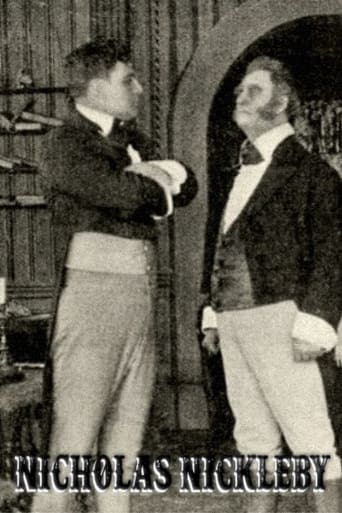 6.2
6.2With The Old Curiosity Shop and David Copperfield, both released in 1911, and Nicholas Nickleby in 1912, Thanhouser established itself as producer of the best Dickens adaptations in American film.
Nicholas Nickleby
1912
 10.0
10.0The pretty young stenographer in a New York lawyer's office had two weeks' vacation coining to her, and decided for once in her life she would cut a dash in society. She expended what for her was an enormous amount of money on clothes, and went to a fashionable seashore resort.
When a Count Counted
1912
When Mary Murdock is forced by circumstances to choose between the street and theft, she is caught breaking into the home of Robert Howard and is sentenced to prison. Unable to find employment after serving her prison term, Mary seeks out Howard and finds him about to commit suicide, depressed over his wife's leaving him for another man. Mary saves his life and convinces him to champion the cause of prison reform, in which he proves so successful that he is appointed warden, placing him in conflict with the political boss.
Her Life and His
1917
Unable to find help to work his farm, a farmer gets a bright idea--he advertises that any man willing to work on his farm will be permitted to court his two daughters. The girls and their mother don't take kindly to being offered as an "incentive", so when some college boys show up looking to take advantage of both offers, the girls come up with a plan of their own.
The Farmer's Daughters
1913
 5.0
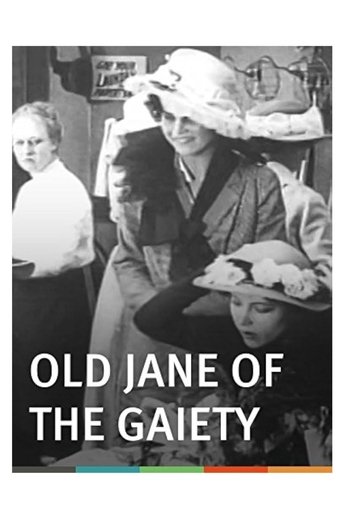
5.0A chorus girl in a theatrical show is being pursued by a "Stage Door Johnny" while her somewhat prudish boyfriend tries to "rescue" her from a life in the theater. Old Jane, the show's wardrobe mistress, takes the girl under her wing and gives her advice on how to handle her situation.
Old Jane of the Gaiety
1915
Film credits
1910s · 33 titles
6.2With The Old Curiosity Shop and David Copperfield, both released in 1911, and Nicholas Nickleby in 1912, Thanhouser established itself as producer of the best Dickens adaptations in American film.
Nicholas Nickleby
1912
10.0The pretty young stenographer in a New York lawyer's office had two weeks' vacation coining to her, and decided for once in her life she would cut a dash in society. She expended what for her was an enormous amount of money on clothes, and went to a fashionable seashore resort.
When a Count Counted
1912
When Mary Murdock is forced by circumstances to choose between the street and theft, she is caught breaking into the home of Robert Howard and is sentenced to prison. Unable to find employment after serving her prison term, Mary seeks out Howard and finds him about to commit suicide, depressed over his wife's leaving him for another man. Mary saves his life and convinces him to champion the cause of prison reform, in which he proves so successful that he is appointed warden, placing him in conflict with the political boss.
Her Life and His
1917
Unable to find help to work his farm, a farmer gets a bright idea--he advertises that any man willing to work on his farm will be permitted to court his two daughters. The girls and their mother don't take kindly to being offered as an "incentive", so when some college boys show up looking to take advantage of both offers, the girls come up with a plan of their own.
The Farmer's Daughters
1913
5.0A chorus girl in a theatrical show is being pursued by a "Stage Door Johnny" while her somewhat prudish boyfriend tries to "rescue" her from a life in the theater. Old Jane, the show's wardrobe mistress, takes the girl under her wing and gives her advice on how to handle her situation.
Old Jane of the Gaiety
1915
Lord Trevor and his ward, Nan Tremain are prominent figures in London society, as well as clandestine agents of the government. With the help of wealthy East Indian, Abdul, who posed as Trevor’s body servant, Nan dressed as a foreign noblewoman, recovers the plans of certain coast fortifications which had fallen into the hands of double agent, Col. Pfaff and would have been of irredeemable loss to her country had they reached another country.
A Debut in the Secret Service
1914
 8.0
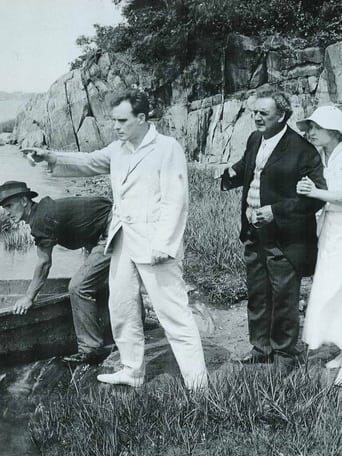
8.0A murder victim's spirit takes revenge on the man who killed him.
From the River's Depths
1915
 8.0
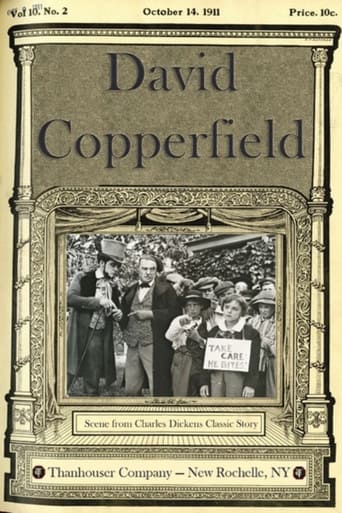
8.0Thanhouser Company three-reel silent film based on Charles Dickens’s story of an English lad's tribulation-filled journey to adulthood, Thanhouser released the three films over the course of three weeks beginning on October 17, 1911, one 1,000 foot reel per week.
David Copperfield
1911
The girl's father is Gunga Ras, a Hindu student of the occult. The girl's uncle is found dead and the lover blamed, but she personally investigates the crime. The father is suspected, but it develops that the death was really caused by use of liquid air in the hands of another
The Heart of the Princess Marsari
1915
 10.0
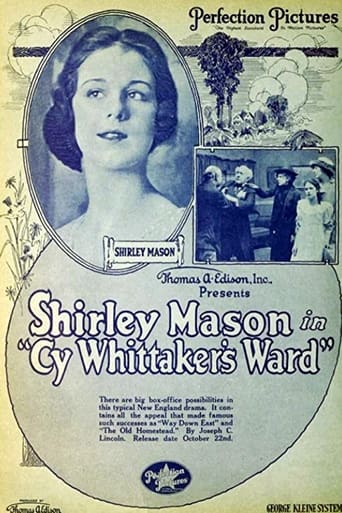
10.0Returning to the village of Bayport after twenty-two years, retired sea captain Cyrus Whittaker finds the community under the power of political boss Herman Atkins. Cy opposes Atkin's choice for the position of teacher and helps to elect Miss Daws instead, thus earning the enmity of the politician. One day, a young girl named Emily Thomas arrives with a note from Sarah Oliver, a relative of Cy, explaining that the girl is the daughter of his old sweetheart and that her father is in jail and her mother dead.
Cy Whittaker's Ward
1917
Nell leaves the farm to start a candy store in New York, but has a troubled start until she meets Jack Monroe, a young spendthrift who helps her attract business. They fall in love, marry, and move in with Jack's father. Nell soon discovers that Jack is a drug addict. In sympathy, Jack's father offers to annul the marriage, but Nell refuses, wishing instead to commit herself to the indefinite struggle of pursuing the road to Jack's rehabilitation.
The Candy Girl
1917
 7.5
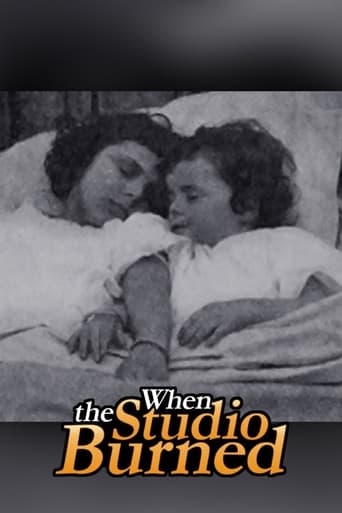
7.5A recreation of the Thanhouser Studio fire of 13 January 1913, it includes the rescue of a small child from the flaming building.
When the Studio Burned
1913
No synopsis available yet.
Weary Walker's Woes
1915
Nello was a little boy who lived with his aged grandfather near Antwerp. They were very poor, but because they loved each other so much were happier than many persons who enjoyed luxury. The child's only friend, outside of her grandfather, was an animal, who has gone down in history as "A Dog of Flanders."
A Dog of Flanders
1914
 8.0
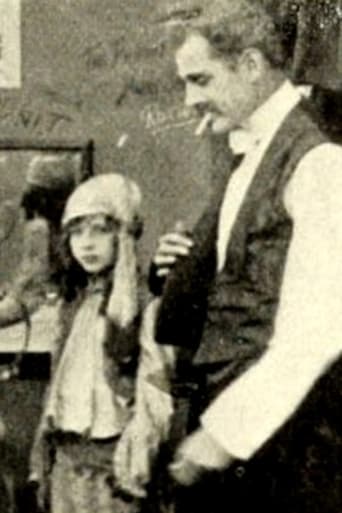
8.0One little girl lived in the country. She was a model child, everybody admitted it, but it cannot be denied that she was more or less of a cry-baby and a coward.
Cousins
1912
The film's heroine is a dancer of world-wide reputation who, in the days of her struggle, has offended the story's villain.
The Dancer
1914
 6.6
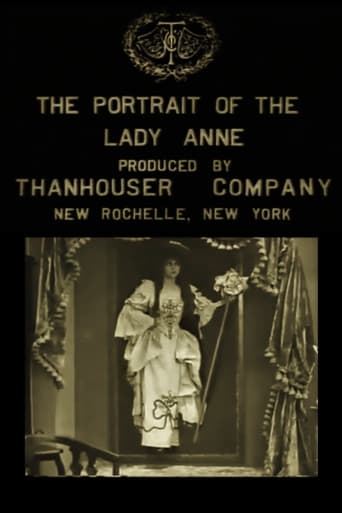
6.6The ghost of a selfish, inconsiderate woman must make up for her past transgressions by making sure that her descendant marries the man who is right for her.
The Portrait of Lady Anne
1912
 7.0
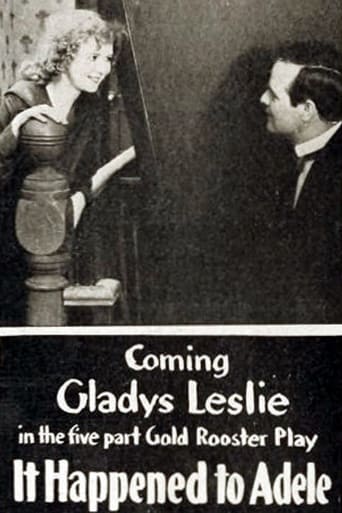
7.0Adele has grown up in a tenement, but she longs for greater things. She gets her chance at the stage when her mother runs into an old friend, Blanche. Blanche has been working steadily in the theater, and she helps Adele get work. The young girl finds romance with Vincent Harvey, an aspiring composer. One day Adele suffers an accidental fall out of a window.
It Happened to Adele
1917
A society woman who lives in the suburbs near the sea had laid her plans to insure the marriage of her daughter to a wealthy young banker.
Peggy's Invitation
1913
 NR
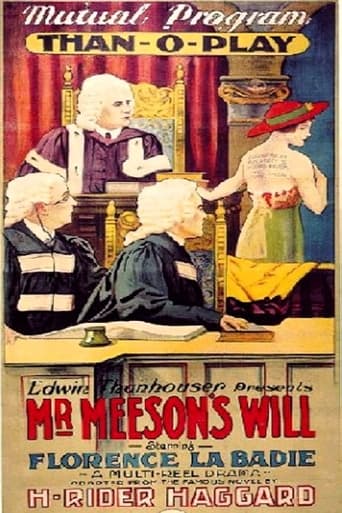
NRThe wealthy, greedy publisher Mr. Meeson exploits the writer Augusta Smithers. After a shipwreck, Meeson has his dying will tattooed onto Augusta's back before he dies, setting up a dramatic legal battle in England over his fortune.
Mr. Meeson's Will
1915
 5.0
5.0An energetic and vivacious Falstaff comedy with good pacing combining physical comedy (without slapstick) with situation comedy.
The Marvelous Marathoner
1915
Film realization of the Biblical story of Joseph, played here by future director James Cruze.
Joseph in the Land of Egypt
1914
No synopsis available yet.
His Two Patients
1915
: Count Eberhard von Alderstein was one of the robber barons who flourished in Europe during the Middle Ages. He was cruel and lawless, plundered the merchants who passed his castle, and cared for no one, except his little sister, Ermyntrude.
The Dove in the Eagle's Nest
1913
 6.5
6.5An American family in need of some money decides to pull a little innocent scam on a wealthy English relative.
Uncle's Namesakes
1913
No synopsis available yet.
Love and Money
1915
A young heiress was wooed and won by a man whom she believed would make her happy. She told of her engagement to her uncle, who was also her guardian, and was pleased and surprised when he interposed no objection. The uncle was a crafty man, however. His accounts of the estate were in a very bad way and he feared that if his niece married and his books were examined he might land in the penitentiary. Consequently he was not anxious to see her a happy bride, but being crafty to know what the worst thing for him to do would be to object to the man she selected, so he pretended to be very fond of the suitor and praised him on all occasions.
Their Best Friend
1914
The son of wealthy Lord Stanley has been disinherited and thrown out of the house. He travels to Africa for fortune and adventure. He finds a job as a horse groomer for a wealthy family. He falls for the family's daughter, but they are against the relationship because they think he's just a common stablehand.
Young Lord Stanley
1910
Two girls fall in love with the same man. Out motoring one day they are thrown from the machine and carried to the hospital. One of the girls poisons the other. The story swings into a very pleasant finish.
The Voice of Conscience
1912
A story is told of a woman who, disinherited after a scandal, later needs expensive surgery. Her father, General Darrington, initially refuses her plea for money, so she sends her daughter, Beryl, to him. The General dies from a falling andiron, Beryl is arrested, and a will favors a lawyer named Lennox. Beryl's brother, Bertie, arrives and provides exculpatory testimony supported by Lennox, who appears with a lightning-imprinted photograph. The siblings eventually discover love between Beryl and Lennox.
God's Witness
1915
Sisters Phyllis and Alithea are kept in the countryside until they reach the age of eighteen when their guardian, the Squire, takes them to London. Planning to marry them off to rich older men for mercenary reason he is thwarted when the girls both fall in love with more suitable men. When the Squire works to split the couples, the girls resort to subterfuge to gain their happiness.
The Country Girl
1915
 5.0
5.0Following a bright wandering star, three magi from the East travel to Bethlehem of Judea to meet a very special newborn baby. Meanwhile, King Herod, driven by a hideous prophecy, orders him to be found and murdered.
Star of Bethlehem
1912
 9.0
9.0Ted, a tiny orphan sees his first circus parade and is much impressed with it. So much so, in fact, that he follows the line of march to the "Big Tent," and manages to get a free ticket by helping to care for the animals. So he became a circus stowaway.
A Circus Stowaway
1911