
Directing
Tapan Bose
Known for
Directing
Credits
5 titles
Known for
 NR
Using rare archival footage and interviews with the legendary anthropologist, Christoph von Fürer-Haimendorf, and adivasi activists from the 80s and 90s, some of whom were killed by Indian security forces for their opposition to "commercial forestry projects", the film explores the continuing struggle of the adivasis. It also focused on a moment of hope when the government brought in the Forest Rights Act (2006) to right "historic wrongs" only to betray that promise, so as to protect predatory developers against these expendable peoples.
The Expendable People
2016
 7.0
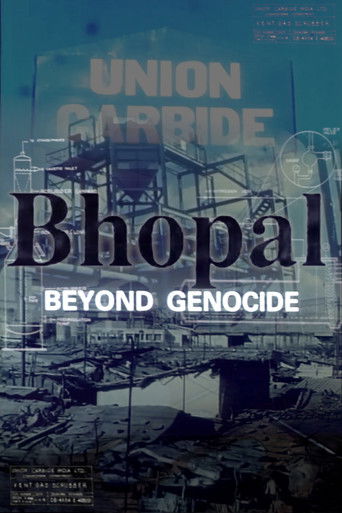
'Bhopal: Beyond Genocide', is an Indian documentary about the Bhopal Disaster of December 1984, in which a gas leak at the Union Carbide India Limited pesticide plant in Bhopal, India caused nearly 4000 deaths and over half a million injuries; directed by Salim Shaikh, Suhasini Mulay and Tapan K. Bose, 1985.
Bhopal: Beyond Genocide
1988
 7.0
In 1980, 33 people were blinded by police in the Bhagalpur district of Bihar. The police claimed they were criminals and that the measures were necessary to curb the soaring crime rate in that area. This 16 mm film was an enquiry into the suppression of civil and democratic rights in India and revealed the reality of Indian poverty, flagrant corruption and socio-economic exploitation in a caste-divided society.
An Indian Story
1997
Film on the militant Khalistan movement in Punjab. Tracing the development of Sikh political consciousness or what may be called the Sikh identity politics over a period of six decades from the 1930s, the film uses rare historic visuals and other material.
From Behind The Barricade
—
Behind the camera
NRUsing rare archival footage and interviews with the legendary anthropologist, Christoph von Fürer-Haimendorf, and adivasi activists from the 80s and 90s, some of whom were killed by Indian security forces for their opposition to "commercial forestry projects", the film explores the continuing struggle of the adivasis. It also focused on a moment of hope when the government brought in the Forest Rights Act (2006) to right "historic wrongs" only to betray that promise, so as to protect predatory developers against these expendable peoples.
The Expendable People
2016
7.0'Bhopal: Beyond Genocide', is an Indian documentary about the Bhopal Disaster of December 1984, in which a gas leak at the Union Carbide India Limited pesticide plant in Bhopal, India caused nearly 4000 deaths and over half a million injuries; directed by Salim Shaikh, Suhasini Mulay and Tapan K. Bose, 1985.
Bhopal: Beyond Genocide
1988
7.0In 1980, 33 people were blinded by police in the Bhagalpur district of Bihar. The police claimed they were criminals and that the measures were necessary to curb the soaring crime rate in that area. This 16 mm film was an enquiry into the suppression of civil and democratic rights in India and revealed the reality of Indian poverty, flagrant corruption and socio-economic exploitation in a caste-divided society.
An Indian Story
1997
Film on the militant Khalistan movement in Punjab. Tracing the development of Sikh political consciousness or what may be called the Sikh identity politics over a period of six decades from the 1930s, the film uses rare historic visuals and other material.
From Behind The Barricade
—