

Acting
Mouloud Feraoun
Born — Died
1913-03-08 — 1962-03-15
Place of birth
Tizi Hibel, Algeria
Known for
Acting
Credits
2 titles
Mouloud Feraoun (in Kabyle: Mulud At Ceɛban), born March 8, 1913 in Tizi Hibel in Haute Kabylie (Algeria) and died assassinated by the OAS in Algiers on March 15, 1962, is a Algerian speaking writer. His most famous work is the trilogy The Poor Man's Son (1950), The Earth and the Blood (1953) and The Roads That Rise (1957). Born officially on March 8, 1913 in the village of Tizi Hibel, he belongs to the clan (takheroubt) of Aït-Chabane, Feraoun being the name imposed by officers of Native Affairs responsible for the establishment of a civil status for the Algerian populations after the insurrection of 1871. His parents were poor peasants, who had eight children, only five of whom survived.…
Known for
 10.0
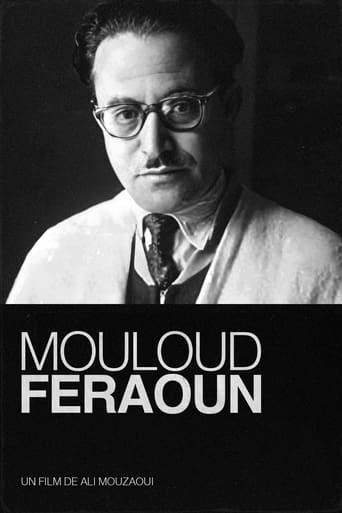
Docufiction about Mouloud Feraoun, an author who upholds the great values of the Universal Man. It is in the name of man that Feraoun stands up against injustice. It is in the name of man that he is tormented by war. Feraoun is a solitary creator who suffers to the point of wishing for liberating madness. It is through his work that the portrait of a humble and discreet author, a talented writer and convictions emerges. Most of the time, I let him talk about himself in simple and fair words. I compile his moments of hope, worry, dreams and fears. During all my research, a generous and good Mouloud Feraoun stood out to me who did not hesitate to expose an inhuman and shameful colonial system. His clear and straightforward voice echoes the cry of a people from whom he has never separated.
Mouloud Feraoun
2009
 10.0
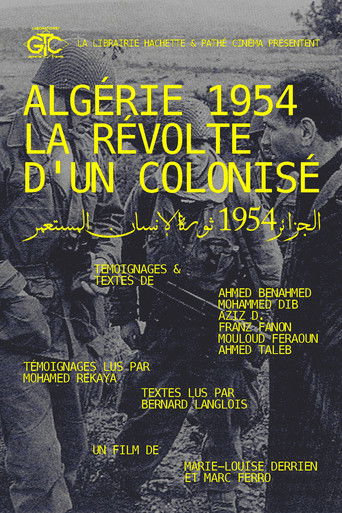
This film presents the point of view of an Arab from Algeria who rebels against colonization. He analyzes the process of awareness, the transition to revolt, to armed insurrection. Algeria and the settlers are seen through this lens and not the way a Frenchman saw the country. He gives voice to the Arabs at a time when this word was not heard: sometimes it was not even produced, at least publicly. The testimonies are based on real propositions, most of them were made to the author during his stay in Algeria from 1948 to 1956, then in 1958 and 1959. The comments are borrowed from the texts of Arab theorists of the revolution Algerian. This film thus completely evacuates the point of view of those who are not insurgents; he does not give the opinion of the colonists. It is the direct expression of what was the revolt of a colonized person: it thus constitutes the very type of the historical document.
Algeria 1954, The Revolt Of A Colonized
1974