
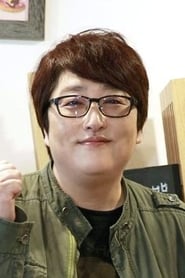
Directing
Byun Young-joo
Born
1966-12-20 (59)
Place of birth
Seoul, South Korea
Known for
Directing
Credits
24 titles
She is a founding member of the women's feminist film collective "Bariteo," which was established in 1989. She worked as a cinematographer on Even Little Grass Has Its Own Name (dir. Kim So-young, 1989), a short film about gender discrimination at work, and My Children (dir. Doe Sung-hee, 1990), a documentary film about childcare in a poor neighborhood. Her first documentary Women Being in Asia (1993) centers on the sex trade in Asia, particularly the sex tourism of Jeju Island.
Known for
 9.4
9.4Movie meets humanities! This talk show/variety show for movie enthusiasts features interesting discussions by a writer and two movie directors where film and humanities intertwine.
Movie Room
2018
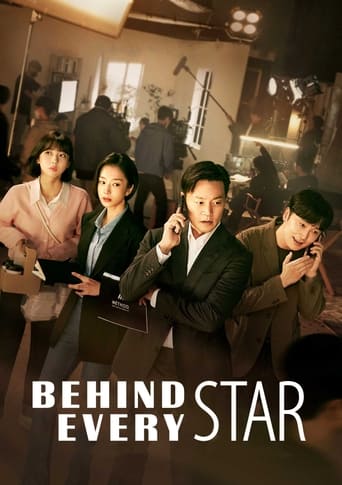 7.3
7.3Agents at a talent management firm tackle strong personalities and office politics while keeping their celebrity clients happy and helping them shine.
Behind Every Star
2022
 10.0
10.0The documentary series were made to look back on Korea’s modern history. It tells stories of specific moments in time weaving together relevant video clips from news broadcasts, dramas, shows and other documentaries
Modern Korea
2019
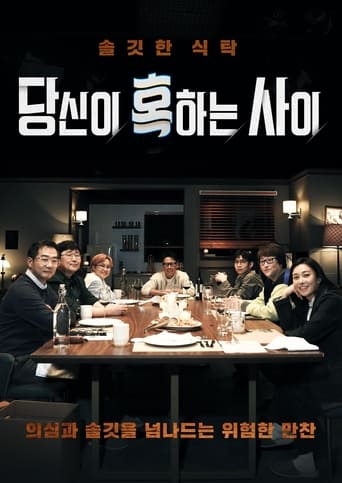 NR
NRA dangerous dinner that transcends suspicion and enticement. One day, friends gathered at the house of movie planner Yoon Jong-shin are always thirsty for new stories. Like natural storytellers, they present amazing stories they have recently collected in front of their friends today. "Have you ever heard of this?" Even those who do not believe in conspiracy theories tend to find themselves "unusually falling for themselves" at some point when they encounter conspiracy theories by chance and are sucked into algorithms. How will your thoughts change at the end of this talk dinner tonight?
While you are tempted
2021
 7.0
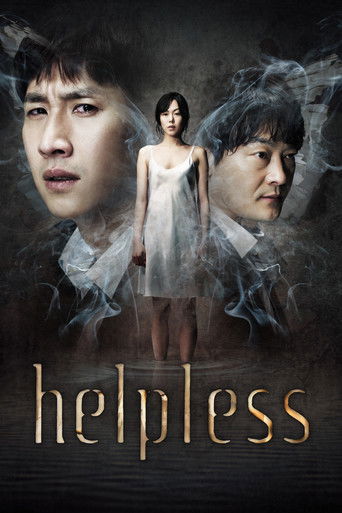
7.0A woman suddenly disappears. Her fiance then sets out to find her and, in the process, uncovers layers of dark hidden secrets.
Helpless
2012
 5.0
5.0In revenge for her husband's infidelity, a young beautiful housewife, Mi-heun, starts an affair with an attractive young doctor, In-gyu. Despite her husband's efforts to regain her love and the disapproval by the conservative little town, Mi-huen gradually finds happiness and satisfaction in the affair and decides to turn her back on her quiet life.
Ardor
2002
Film credits
2000s · 4 titles
Reveals the courageous lives of pioneer camerawomen from Hollywood to Bollywood, from war zones to children’s laughter, in a way that has never been seen before. Based on a book by Alexis Krasilovsky, the film tells the stories of camerawomen surviving the odds in Afghanistan, Australia, Canada, China, France, Germany, India, Iran, Mexico, the U.S. and other countries, as well as exploring their individual visions.
Women Behind the Camera
2007
 NR
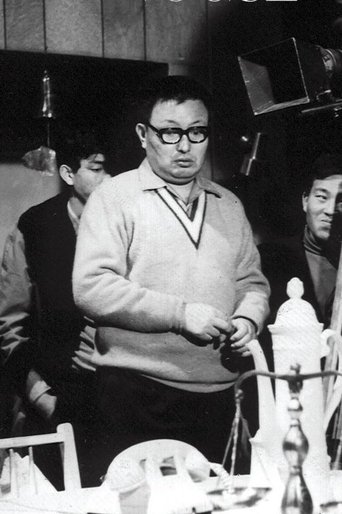
NRA documentary consisting of twenty-two Korean directors' interviews about Kim Ki-young and respect for his work and the influence
Two Or Three Things I Know About Kim Ki-young
2007
 8.0
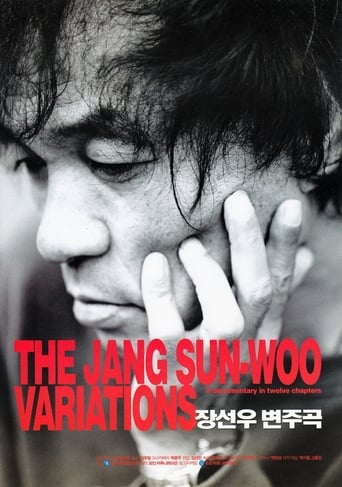
8.0Divided into chapters, the documentary examines Jang's career and films from many different angles and includes the voices not only of those who have worked with Jang but also of numerous ordinary Koreans who have been affected by his work. Individual chapters are devoted to such topics as Jang's idiosyncratic hairstyle and the controversy surrounding his previous feature Lies. The documentary tries to place Jang and his work in the widest possible social context, not only in the context of Korean cinema. At its heart is a series of remarkably candid and revealing interviews with Jang himself.
The Jang Sun-woo Variations
2001
 NR
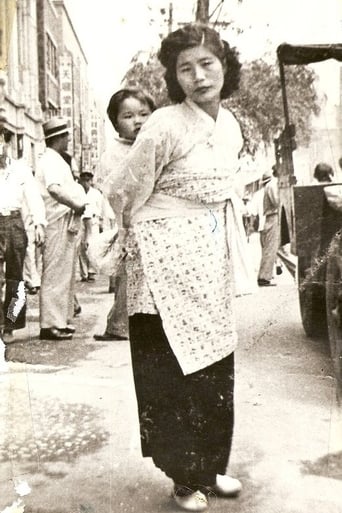
NRKeeping the Vision Alive is a documentary film containing the voices and images of Korean women filmmakers-both senior filmmakers and also the peers of director Yim. The film is Yim’s homage to both contemporary Korean women filmmakers, written by a filmmaker of the same age, and also to the history of women filmmakers in Korea. Yim does not reveal her own voice or opinion and lets the voices and images of the filmmakers speak for themselves through a non-interventionist camera. From the pioneers, Park Nam-ok, and Hwang Hye-mi, who directed First Experience in 70’s, to recent filmmakers, Byun Young-joo and Jang Hee-sun, the film traces their experiences, troubles, concerns and thoughts as women and women filmmakers. Keeping the Vision Alive calmly and enthusiastically encourages and celebrates the struggles, the resistance and the survival of women filmmakers in a conservative Korean film industry and a male-dominated and sexist social system. (Kwon Eun-sun)
Keeping the Vision Alive
2002
Series credits
9.4Movie meets humanities! This talk show/variety show for movie enthusiasts features interesting discussions by a writer and two movie directors where film and humanities intertwine.
Movie Room
2018
9.4Movie meets humanities! This talk show/variety show for movie enthusiasts features interesting discussions by a writer and two movie directors where film and humanities intertwine.
Movie Room
2018
7.3Agents at a talent management firm tackle strong personalities and office politics while keeping their celebrity clients happy and helping them shine.
Behind Every Star
2022
10.0The documentary series were made to look back on Korea’s modern history. It tells stories of specific moments in time weaving together relevant video clips from news broadcasts, dramas, shows and other documentaries
Modern Korea
2019
NRA dangerous dinner that transcends suspicion and enticement. One day, friends gathered at the house of movie planner Yoon Jong-shin are always thirsty for new stories. Like natural storytellers, they present amazing stories they have recently collected in front of their friends today. "Have you ever heard of this?" Even those who do not believe in conspiracy theories tend to find themselves "unusually falling for themselves" at some point when they encounter conspiracy theories by chance and are sucked into algorithms. How will your thoughts change at the end of this talk dinner tonight?
While you are tempted
2021
 NR
NRNo synopsis available yet.
역습: 팩추얼 웹툰 창작단
2022
Behind the camera
7.0A woman suddenly disappears. Her fiance then sets out to find her and, in the process, uncovers layers of dark hidden secrets.
Helpless
2012
7.0A woman suddenly disappears. Her fiance then sets out to find her and, in the process, uncovers layers of dark hidden secrets.
Helpless
2012
5.0In revenge for her husband's infidelity, a young beautiful housewife, Mi-heun, starts an affair with an attractive young doctor, In-gyu. Despite her husband's efforts to regain her love and the disapproval by the conservative little town, Mi-huen gradually finds happiness and satisfaction in the affair and decides to turn her back on her quiet life.
Ardor
2002
5.0In revenge for her husband's infidelity, a young beautiful housewife, Mi-heun, starts an affair with an attractive young doctor, In-gyu. Despite her husband's efforts to regain her love and the disapproval by the conservative little town, Mi-huen gradually finds happiness and satisfaction in the affair and decides to turn her back on her quiet life.
Ardor
2002
 6.4
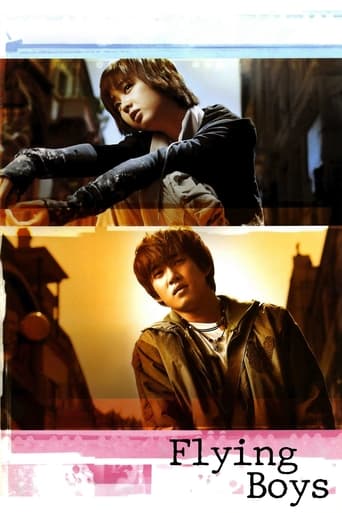
6.4Five high school teens on their way to college. But gradually they go through the struggles of life and end up discovering who they are and what it is they truly want in life.
Flying Boys
2004
 5.0
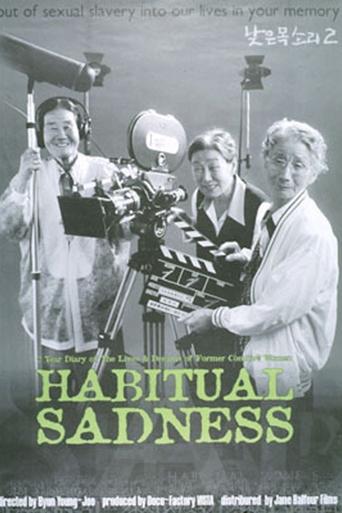
5.0The story of the women at the "House of Sharing" continues. Old women who share a common bond lead a peaceful life in the countryside, raising vegetables, chickens and painting pictures. They are no different from the elderly women we see every day. But they are all scarred by pain and sorrow from their collective history of being comfort women during World War 2. They became subject to prejudice in their own homeland after their return to Korea. It is painful for them to watch other peoples' children and grandchildren, and they feel rage when the Japanese government tries to cover up the unspeakable crimes they committed against them. The film asks us to remember what these women sacrificed and the shame and misery they faced even as these individuals pass away often forgotten by their own people.
Habitual Sadness
1997
5.0The story of the women at the "House of Sharing" continues. Old women who share a common bond lead a peaceful life in the countryside, raising vegetables, chickens and painting pictures. They are no different from the elderly women we see every day. But they are all scarred by pain and sorrow from their collective history of being comfort women during World War 2. They became subject to prejudice in their own homeland after their return to Korea. It is painful for them to watch other peoples' children and grandchildren, and they feel rage when the Japanese government tries to cover up the unspeakable crimes they committed against them. The film asks us to remember what these women sacrificed and the shame and misery they faced even as these individuals pass away often forgotten by their own people.
Habitual Sadness
1997
No synopsis available yet.
A Mark Against Thee
—
 NR
NRThis documentary is an "Asian report" on so-called international prostitution. The subject matter of parasitic tourism in Jeju Island in Korea is focused on, and it is said that international prostitution in Asia has a relationship between countries, focusing on Thailand and Japan, and that it is not only a problem between countries biased by the flow of capital, but also in the context of "sexual culture" with long roots. In the second half, the question is what is the alternative and what is the boundary between prostitution and non-prostitution in the current situation that is considered to be like "ghetto" because it is separated from the life of the general public.
A Woman Being in Asia
1993
 5.5
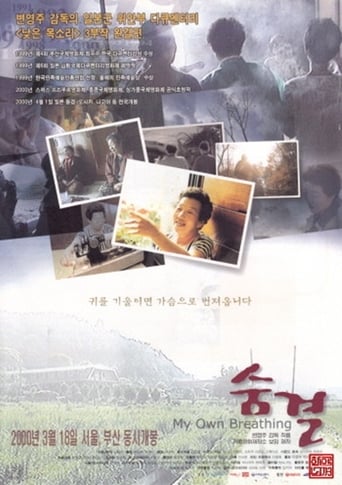
5.5"My Own Breathing" is the final documentary of the trilogy, The Murmuring about comfort women during the World War II directed by BYUN Young-joo. This is the completion of her seven years work. BYUN's first and second documentaries spoke of grandmothers' everyday life through the origin of their torment, while My Own Breathing goes back to their past from their everyday life. Deleting any device of narration or music, the camera lets grandmothers talk about themselves. Finally, the film revives their deep voices trampled by harsh history.
My Own Breathing
2000
Co-produced by Womenlink and the Feminist Film Collective Parituh, Even Little Grass Has Its Own Name was shot on 16mm film and was the first of its kind in Korea to address the issue of female office workers. The film is divided into two parts. Part 1 is about the conflicts of married female office workers who suffer from undertaking office work, housework, and childcare all at the same time. Part 2 focuses on single female workers who break away from being the traditional ‘flower of the company,’ and develop a greater sense of autonomy as they actively participate in forming a labor union.
Even Little Grass Has Its Own Name
1989
 5.8
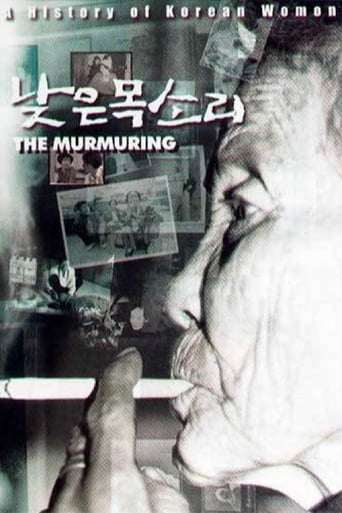
5.8Every Wednesday at noon, women who were kidnapped for sexual purpose by the Japanese army during its imperialism and their supporters demonstrate against Japanese government to request official apology and indemnity for their crimes. This documentary portrays sexually abused old women's suppressed story of overcoming of their shame and forced silence.
The Murmuring
1995
5.8Every Wednesday at noon, women who were kidnapped for sexual purpose by the Japanese army during its imperialism and their supporters demonstrate against Japanese government to request official apology and indemnity for their crimes. This documentary portrays sexually abused old women's suppressed story of overcoming of their shame and forced silence.
The Murmuring
1995