
Directing
Fernando Balmaceda
Known for
Directing
Credits
8 titles
Known for
No synopsis available yet.
Energía gris
1960
 NR
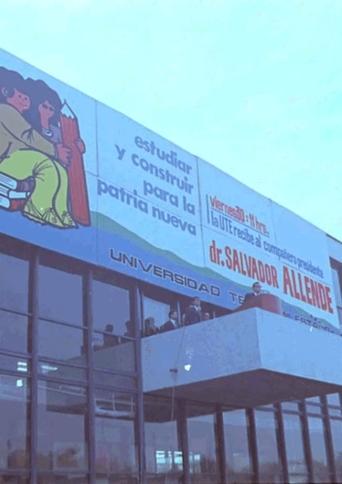
Made by Fernando Balmaceda in 1972, it is a documentary that shows the presence of the State Technical University throughout Chile through its provincial headquarters, with teaching, scientific research, technological development, cultural extension and the relationship with the historical moment of the country.
Compromiso con Chile
1972
No synopsis available yet.
Carbón
1965
No synopsis available yet.
Isla Guarello
1963
 NR
Institutional documentary about the exploitation of Chuquicamata mineral that, as is usual in Balmaceda's work, highlights the social role of this industry and the context - human and physical - in which it operates.
Chuqui-Cámac
1966
Film directed by the emblematic Chilean documentary filmmaker, Fernando Balmaceda, who gives a historical account of the exploitation of copper, from the control of North American companies to the desired nationalization of the mineral carried out during the Popular Unity government. It also testifies to the profound inequality that the country was experiencing, through the contrast of Chilean social classes.
El sueldo de Chile
—
Behind the camera
No synopsis available yet.
Energía gris
1960
NRMade by Fernando Balmaceda in 1972, it is a documentary that shows the presence of the State Technical University throughout Chile through its provincial headquarters, with teaching, scientific research, technological development, cultural extension and the relationship with the historical moment of the country.
Compromiso con Chile
1972
No synopsis available yet.
Carbón
1965
No synopsis available yet.
Isla Guarello
1963
NRInstitutional documentary about the exploitation of Chuquicamata mineral that, as is usual in Balmaceda's work, highlights the social role of this industry and the context - human and physical - in which it operates.
Chuqui-Cámac
1966
Film directed by the emblematic Chilean documentary filmmaker, Fernando Balmaceda, who gives a historical account of the exploitation of copper, from the control of North American companies to the desired nationalization of the mineral carried out during the Popular Unity government. It also testifies to the profound inequality that the country was experiencing, through the contrast of Chilean social classes.
El sueldo de Chile
—
Report after the election of September 4, 1970, where Salvador Allende obtained the relative majority of the votes. While awaiting ratification by Congress, different social actors are interviewed (workers, businessmen, a priest, a theater actress), who give their perspectives on the future and what is expected from the possible presidential term of the candidate of the Popular Unity.
4 de septiembre de 1970
1970
 NR
Film about a crime that occurred in the La Pincoya town, where two residents murdered two women. Through a popular song, poverty is talked about, but also about the strength of community life, breaking the prejudices established by the media.
Un Crimen tan Comentado
1973