Known for
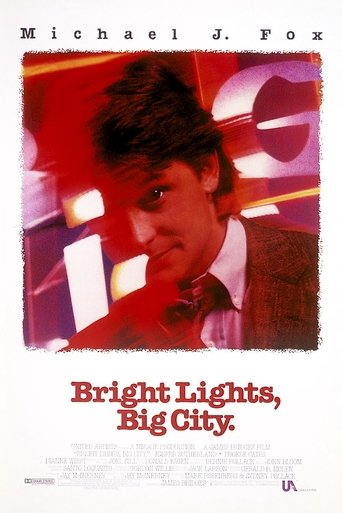 5.7
5.7A disillusioned young writer living in New York City turns to drugs and drinking to block out the memories of his dead mother and estranged wife.
Bright Lights, Big City
1988
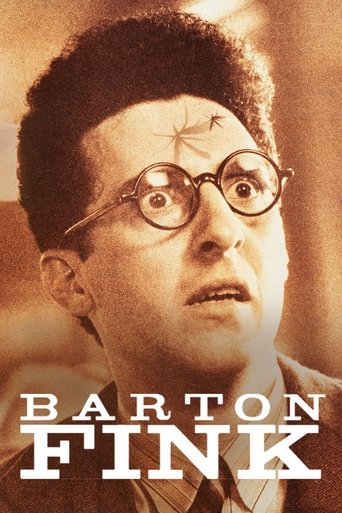 7.5
7.5A renowned New York playwright is enticed to California to write for the movies and discovers the hellish truth of Hollywood.
Barton Fink
1991
 7.0
7.0The Narrator tells us how the radio influenced his childhood in the days before TV. In the New York City of the late 1930s to the New Year's Eve 1944, this coming-of-age tale mixes the narrator's experiences with contemporary anecdotes and urban legends of the radio stars.
Radio Days
1987
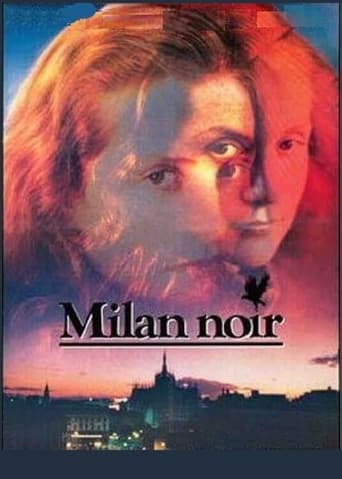 9.0
9.0The story of a woman whose past comes back to haunt her after a former lover re-enters her life.
Milan noir
1987
 10.0
10.0No synopsis available yet.
La Ferdinanda. Sonate für eine Medici-Villa
1981
 6.3
6.3Adaptation of an avant-garde play about Rhoda, a hysterical heroine who feels oppressed by the people around her. She suffers through her birthday party, goes to see a doctor, plans a vacation, argues a lot and even breaks the fourth wall.
Strong Medicine
1981
Film credits
1990s · 4 titles
7.5A renowned New York playwright is enticed to California to write for the movies and discovers the hellish truth of Hollywood.
Barton Fink
1991
 4.2
4.2A young woman who is obsessed with Buster Keaton stays in the sanatorium where the actor was once a patient.
Buster's Bedroom
1991
 6.9
6.9A brief, fictionalized time period in the life of Professor Kant. The story is set in his hometown, Konigsberg, chronicling his last few years prior to his death in 1804 at the age of 79.
The Last Days of Immanuel Kant
1996
A sensitive drama about a farm labourer's abused daughter who fantasises about the officers of the local U.S. Air Base to escape the guilt and hypocrisy of everyday life. But her dreams of glamour and excitement are shattered when she is seduced by a pilot, setting in motion a chain of events...
Dakota Road
1992
1980s · 8 titles
5.7A disillusioned young writer living in New York City turns to drugs and drinking to block out the memories of his dead mother and estranged wife.
Bright Lights, Big City
1988
7.0The Narrator tells us how the radio influenced his childhood in the days before TV. In the New York City of the late 1930s to the New Year's Eve 1944, this coming-of-age tale mixes the narrator's experiences with contemporary anecdotes and urban legends of the radio stars.
Radio Days
1987
9.0The story of a woman whose past comes back to haunt her after a former lover re-enters her life.
Milan noir
1987
10.0No synopsis available yet.
La Ferdinanda. Sonate für eine Medici-Villa
1981
6.3Adaptation of an avant-garde play about Rhoda, a hysterical heroine who feels oppressed by the people around her. She suffers through her birthday party, goes to see a doctor, plans a vacation, argues a lot and even breaks the fourth wall.
Strong Medicine
1981
 NR
NRThe elusive author of Waiting for Godot cooperated in the production of this portrait, which traces Beckett’s artistic life through his prose, plays, and poetry. Billie Whitelaw, Jack McGowran, and Patrick Magee—Beckett’s great dramatic interpreters—appear in selected extracts from the plays; Beckett specialist David Warrilow narrates a variety of texts.
Samuel Beckett: Silence to Silence
1984
 6.3
6.3A group of scientists take Simon, a psychology professor, as a test person for a brainwashing experiment and try to convince him that he is a living being from another planet.
Simon
1980
 8.0
8.0The Polish city of Łódź was under Nazi occupation for nearly the entirety of WWII. The segregation of the Jewish population into the ghetto, and the subsequent horrors are vividly chronicled via newsreels and photographs. The narration is taken almost entirely from journals and diaries of those who lived–and died–through the course of the occupation, with the number of different narrators diminishing as the film progresses, symbolic of the death of each narrator.
Łódź Ghetto
1989