
Directing
Nicolas Philibert
Born
1951-01-10 (75)
Place of birth
Nancy, Meurthe-et-Moselle, France
Known for
Directing
Credits
49 titles
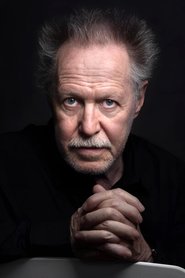
Nicolas Philibert (French: [filibɛʁ]; born 10 January 1951) is a French documentary filmmaker. He has directed films since 1978. At the 73rd Berlinale (2023), he receives the Golden Bear for his film "On the Adamant". Philibert's father was a film lecturer and he attended his talks in his youth. This encouraged him to embark on a film career. He started this with René Allio (1970), as a trainee on Les Camisards as an assistant on Rude Journée pour la reine (1973) and assistant-director on Moi, Pierre Rivière, ayant égorgé ma mère, ma sœur et mon frère... (1975). In 1978 he co-directed with Gérard Mordillat a feature documentary His Master's Voice, in which a dozen bosses of big industrial g…
Known for
 5.8
5.8Télématin is a French breakfast television news show, broadcast on France 2 since January 7, 1985. It is broadcast in Metropolitan France weekdays from 6:30 to 9:00 am CET. TV5 broadcast the show in Canada in its entirety until September 2011: it now shows a 90 minute version between 6:30 and 8:00 am Eastern Time, when the French original version is now 2h30 long. Télématin is hosted by William Leymergie. The show is daily seen by around 40% of the French morning audience, a very high percentage for French TV. In Metropolitan France, the newscasts are presented at 7:00, 7:30 and 8:00, with newsflashes at 6:30 and 8:50, and two press reviews at 7:20 and 8:30. The 6:30, 7:30 and 8:50 newscasts are usually presented by a female reader and the hourly newscasts by a male. The usual readers are Nathanaël de Rinquesen, Sophie Le Saint, Julien Benedetto, Sophie Gastrain, Patrice Romedenne and Frédéric Vion.
Télématin
1985
 5.0
5.0Talk show hosted by Léa Salamé, featuring incisive, funny, and surprising personalities debating current events in culture, society, politics, and the media. The set is designed as an arena where artists, polemicists, intellectuals, politicians, top athletes, and powerful figures come together. Permanent guest Christophe Dechavanne can intervene at any time during the show. Comedian Philippe Caverivière is also present with a segment dedicated to the political week and another devoted to celebrity news and social media.
Quelle époque !
2022
 NR
NRAs long as there is cinema, LE CERCLE will be there. It is the only television program of critical debates 100% devoted to cinema. Each week, it offers fiery, joyful and non-condescending jousts on the films on the bill; and invites with "Le questionnaire du CERCLE" directors to come and share their passion for cinema.
Le Cercle
2005
 7.0
7.0The Adamant is a unique day-care centre. A floating structure located on the Seine in the heart of Paris, it welcomes adults suffering from mental disorders, offering the kind of care that grounds them in time and space and helps them to recover or keep up their spirits. The team running it tries to resist the deterioration and dehumanisation of psychiatry as best as they can.
On the Adamant
2023
 7.3
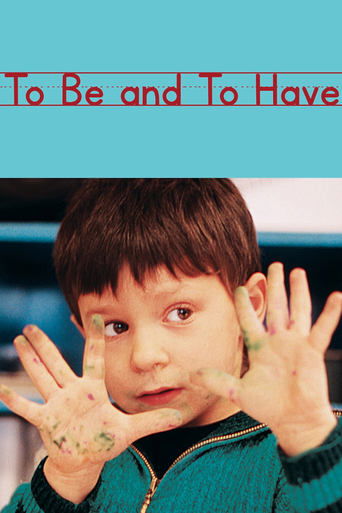
7.3The documentary's title translates as "to be and to have", the two auxiliary verbs in the French language. It is about a primary school in the commune of Saint-Étienne-sur-Usson, Puy-de-Dôme, France, the population of which is just over 200. The school has one small class of mixed ages (from four to twelve years), with a dedicated teacher, Georges Lopez, who shows patience and respect for the children as we follow their story through a single school year.
To Be and to Have
2002
 6.4
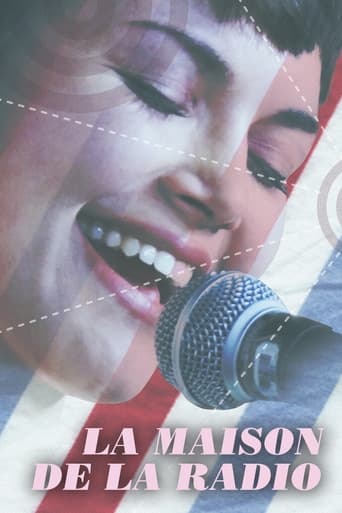
6.4Making a film about a radio station doesn’t sound like the most visually compelling of projects. How many takes do you need before the acoustic transition from the opening to the closing of a door is perfect or the reader's voice correctly modulated? Nicolas Philibert has accepted the challenge to portray that which cannot be seen. Shouldering his camera, he spent half a year wandering the endless corridors of Radio France’s ‘round house’ on the banks of the Seine where he filmed people who dedicate themselves utterly and meticulously to their work.
La Maison de la Radio
2013
Film credits
2000s · 2 titles
 NR
NRFrom January to November 2004, as a kind of carnet de voyage alongside our other activities, we asked one and the same question of various people we met on our journeys, including friends: "Do you remember a moment in your life when something really changed?" We requested them to tell us a story to illustrate their reply, and we filmed them.
Not Like Before
2005
 6.2
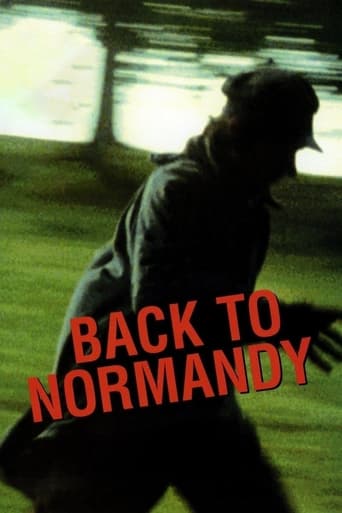
6.2A filmmaker returns to Normandy thirty years after a working on a movie based on a local homicide and tries to find the actors who worked on the project.
Back to Normandy
2007
1990s · 1 titles

Series credits
5.8Télématin is a French breakfast television news show, broadcast on France 2 since January 7, 1985. It is broadcast in Metropolitan France weekdays from 6:30 to 9:00 am CET. TV5 broadcast the show in Canada in its entirety until September 2011: it now shows a 90 minute version between 6:30 and 8:00 am Eastern Time, when the French original version is now 2h30 long. Télématin is hosted by William Leymergie. The show is daily seen by around 40% of the French morning audience, a very high percentage for French TV. In Metropolitan France, the newscasts are presented at 7:00, 7:30 and 8:00, with newsflashes at 6:30 and 8:50, and two press reviews at 7:20 and 8:30. The 6:30, 7:30 and 8:50 newscasts are usually presented by a female reader and the hourly newscasts by a male. The usual readers are Nathanaël de Rinquesen, Sophie Le Saint, Julien Benedetto, Sophie Gastrain, Patrice Romedenne and Frédéric Vion.
Télématin
1985
5.0Talk show hosted by Léa Salamé, featuring incisive, funny, and surprising personalities debating current events in culture, society, politics, and the media. The set is designed as an arena where artists, polemicists, intellectuals, politicians, top athletes, and powerful figures come together. Permanent guest Christophe Dechavanne can intervene at any time during the show. Comedian Philippe Caverivière is also present with a segment dedicated to the political week and another devoted to celebrity news and social media.
Quelle époque !
2022
NRAs long as there is cinema, LE CERCLE will be there. It is the only television program of critical debates 100% devoted to cinema. Each week, it offers fiery, joyful and non-condescending jousts on the films on the bill; and invites with "Le questionnaire du CERCLE" directors to come and share their passion for cinema.
Le Cercle
2005
Behind the camera
7.0The Adamant is a unique day-care centre. A floating structure located on the Seine in the heart of Paris, it welcomes adults suffering from mental disorders, offering the kind of care that grounds them in time and space and helps them to recover or keep up their spirits. The team running it tries to resist the deterioration and dehumanisation of psychiatry as best as they can.
On the Adamant
2023
7.0The Adamant is a unique day-care centre. A floating structure located on the Seine in the heart of Paris, it welcomes adults suffering from mental disorders, offering the kind of care that grounds them in time and space and helps them to recover or keep up their spirits. The team running it tries to resist the deterioration and dehumanisation of psychiatry as best as they can.
On the Adamant
2023
7.3The documentary's title translates as "to be and to have", the two auxiliary verbs in the French language. It is about a primary school in the commune of Saint-Étienne-sur-Usson, Puy-de-Dôme, France, the population of which is just over 200. The school has one small class of mixed ages (from four to twelve years), with a dedicated teacher, Georges Lopez, who shows patience and respect for the children as we follow their story through a single school year.
To Be and to Have
2002
7.3The documentary's title translates as "to be and to have", the two auxiliary verbs in the French language. It is about a primary school in the commune of Saint-Étienne-sur-Usson, Puy-de-Dôme, France, the population of which is just over 200. The school has one small class of mixed ages (from four to twelve years), with a dedicated teacher, Georges Lopez, who shows patience and respect for the children as we follow their story through a single school year.
To Be and to Have
2002
6.4Making a film about a radio station doesn’t sound like the most visually compelling of projects. How many takes do you need before the acoustic transition from the opening to the closing of a door is perfect or the reader's voice correctly modulated? Nicolas Philibert has accepted the challenge to portray that which cannot be seen. Shouldering his camera, he spent half a year wandering the endless corridors of Radio France’s ‘round house’ on the banks of the Seine where he filmed people who dedicate themselves utterly and meticulously to their work.
La Maison de la Radio
2013
6.4Making a film about a radio station doesn’t sound like the most visually compelling of projects. How many takes do you need before the acoustic transition from the opening to the closing of a door is perfect or the reader's voice correctly modulated? Nicolas Philibert has accepted the challenge to portray that which cannot be seen. Shouldering his camera, he spent half a year wandering the endless corridors of Radio France’s ‘round house’ on the banks of the Seine where he filmed people who dedicate themselves utterly and meticulously to their work.
La Maison de la Radio
2013
 10.0
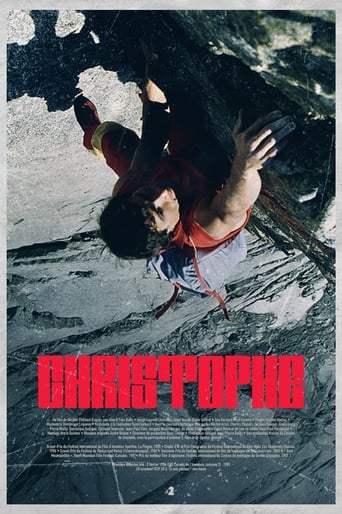
10.0It is 1 p.m. on June 30, 1982, when Christophe Profit, 24, shows up at the foot of Les Drus with his pof bag, his climbing shoes and nothing else. He will try the west face of Les Drus in "solo", in the Mont Blanc massif by "Directe Américaine", 1100 meters of vertical and smooth rock. Christophe will achieve the feat of climbing the wall in free solo, without using a rope or any belaying technique. At 4:10 p.m., barely more than three hours after the start of his ascent, the new climbing star can embrace the Virgin of the Drus at the same time as the career of a high-level mountaineer. Three years later, on July 25, 1985, he climbed the north faces of the Matterhorn, the Eiger and the Jorasses in the same day. Awarded at many mountain film festivals, this great documentary is a magnificent testimony to one man's passion for climbing, the mountains and adventure.
Christophe
1985
 6.4
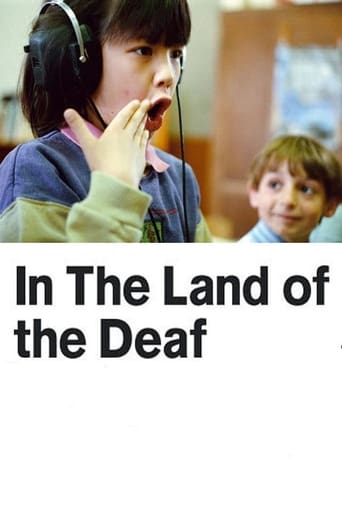
6.4Anyone who has ever ventured to the "Land of the Deafs" will have been struck by the strangeness of the choreographed signs with which deaf people express themselves. Developed ages ago, these signs constitute a veritable language. As precise and subtle as speech, they are as effective as spoken language in making a declaration love or providing a detailed technical description. Jean-Claude, Jeanine, Eric, Cyril, Alain, Juliette, Guy, Aurélien and René have one thing in common - they are all profoundly deaf. So they dream, think and communicate in sign language. Which means that they see the world differently. Viewers embark with them on a discovery of the distant land of the deaf, where sight and touch assume enormous importance.
In the Land of the Deaf
1992
6.4Anyone who has ever ventured to the "Land of the Deafs" will have been struck by the strangeness of the choreographed signs with which deaf people express themselves. Developed ages ago, these signs constitute a veritable language. As precise and subtle as speech, they are as effective as spoken language in making a declaration love or providing a detailed technical description. Jean-Claude, Jeanine, Eric, Cyril, Alain, Juliette, Guy, Aurélien and René have one thing in common - they are all profoundly deaf. So they dream, think and communicate in sign language. Which means that they see the world differently. Viewers embark with them on a discovery of the distant land of the deaf, where sight and touch assume enormous importance.
In the Land of the Deaf
1992
 6.4
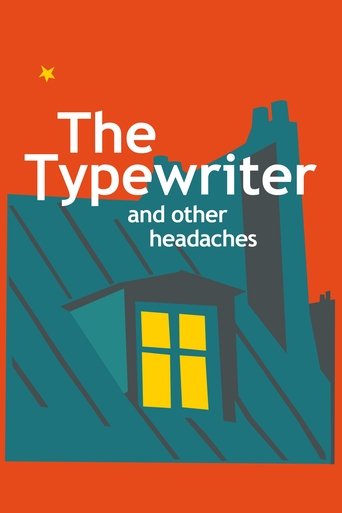
6.4This third opus will take us into the homes of some of the Adamant and Averroes & Rosa Parks’ protagonists, during the visits led by their caregivers.
The Typewriter and Other Headaches
2024
6.4This third opus will take us into the homes of some of the Adamant and Averroes & Rosa Parks’ protagonists, during the visits led by their caregivers.
The Typewriter and Other Headaches
2024
 10.0
10.0A film about the preparation of the "Trilogy For a Single Man," about the medical and nutritional monitoring of French mountaineer Christophe Profit during his climbing "trilogy" and the period of intensive training that preceded one of the most fabulous "chains" ever made by a mountaineer. On March 12 and 13, 1987, Christophe Profit, then 26, successfully climbed the three largest north faces of the Alps in winter in 40 hours: Grandes Jorasses, Eiger, Matterhorn. But beyond this coverage of the event, it is the behind-the-scenes that is revealed, the story of this project, the ups and downs of its preparations and the personality of its author, a dancer of the verticals, who concentrates at his fingertips the energy and reflexes of life itself.
The Measure of the Feat
1987
 6.6
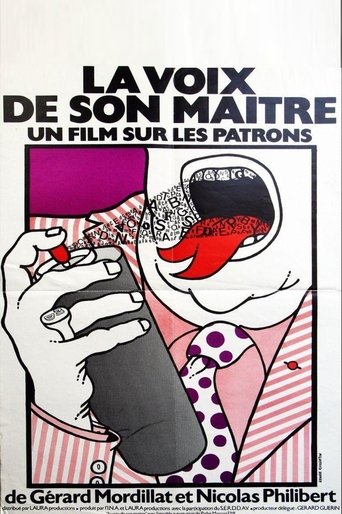
6.6Jacques Lemonnier of IBM France, Francois Dalle of L'Oreal and other ultrapowerful French moguls are surprisingly candid -- and cold-blooded -- as they discuss their attitudes about business in this startling 1978 documentary. After sounding off about unions, strikes, hierarchy and management, the subjects realized how callous they sounded and managed to convince the French government to suppress the film.
His Master's Voice
1978
6.6Jacques Lemonnier of IBM France, Francois Dalle of L'Oreal and other ultrapowerful French moguls are surprisingly candid -- and cold-blooded -- as they discuss their attitudes about business in this startling 1978 documentary. After sounding off about unions, strikes, hierarchy and management, the subjects realized how callous they sounded and managed to convince the French government to suppress the film.
His Master's Voice
1978
 7.2
7.2Averroès and Rosa Parks: two units of the Esquirol Hospital, which - like the Adamant - are part of the Paris Central Psychiatric Group. From individual interviews to «carer-patient» meetings, the filmmaker focuses on showing a form of psychiatry that continually strives to make room for and rehabilitate the patients’ words. Little by little, each one eases open the door to their world. Within an increasingly worn-out health system, how can the forsaken be given a place among others.
At Averroes & Rosa Parks
2024
7.2Averroès and Rosa Parks: two units of the Esquirol Hospital, which - like the Adamant - are part of the Paris Central Psychiatric Group. From individual interviews to «carer-patient» meetings, the filmmaker focuses on showing a form of psychiatry that continually strives to make room for and rehabilitate the patients’ words. Little by little, each one eases open the door to their world. Within an increasingly worn-out health system, how can the forsaken be given a place among others.
At Averroes & Rosa Parks
2024
 NR
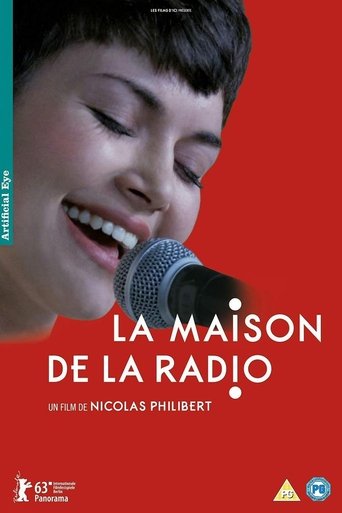
NRExcerpts from a reading of texts on the heroes of the Tour de France by Jacques Bonnaffé, accompanied by Louis Sclavis on clarinet and sax. Complementary bonus film to the DVD edition of "La Maison de la Radio" (November 2013).
Forcenés
2013
A new shorter and uncensored TV version of Patrons - Télévision (1979). The dates "1978 / 1991" are used in reference to the "missing years", the amount of time during which the film was not authorized to be shown on TV in France.
Patrons 78-91
1991
A new shorter and uncensored TV version of Patrons - Télévision (1979). The dates "1978 / 1991" are used in reference to the "missing years", the amount of time during which the film was not authorized to be shown on TV in France.
Patrons 78-91
1991
 7.0
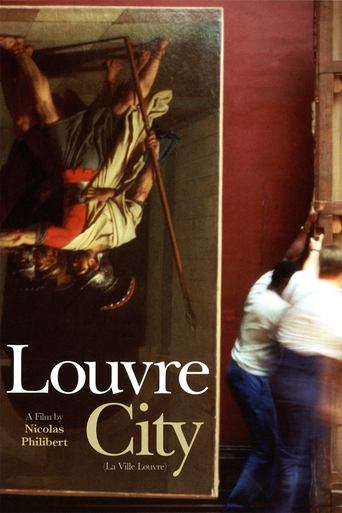
7.0A voyage into the museum's reserves, and part of the extra work involved to mount the expositions after the renovation of the Louvre in the 1980s, when the glass pyramid was added to the classic buildings. From the preservation rooms through the frame and painting retouches by experts, to the personnel instruction on how to be efficient in protecting the collections, and look nice to the visitors.
Louvre City
1990
7.0A voyage into the museum's reserves, and part of the extra work involved to mount the expositions after the renovation of the Louvre in the 1980s, when the glass pyramid was added to the classic buildings. From the preservation rooms through the frame and painting retouches by experts, to the personnel instruction on how to be efficient in protecting the collections, and look nice to the visitors.
Louvre City
1990
 10.0
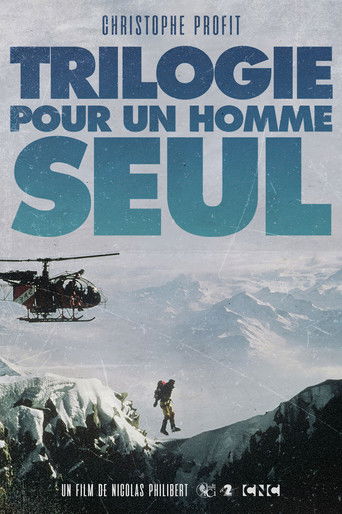
10.0The most legendary 'sequence' ever achieved by a mountaineer: on 12 and 13 March 1987, in 40 hours, 26-year-old Christophe Profit managed to climb three of the highest north faces in the Alps, in winter: Grandes Jorasses, Eiger, and Matterhorn. But over and above this 'coverage' of the feat, we discover the wings, the story behind the project, the peaks and troughs of the preparations for it, and the personality of the man behind the climbs, a dancer on sheer rock faces, focusing all the energy and reflexes of life itself in his fingertips.
Trilogy for One Man
1987
 6.5
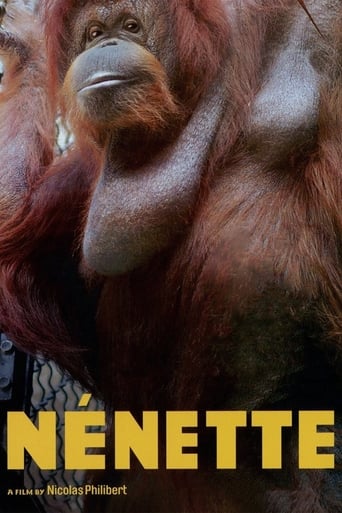
6.5Nénette, an orangutan, is the star of the Parisian zoo where she has lived most of her long life. She is a mother of four and has survived three mates, and she bonds only with a few select keepers. The camera rests throughout on Nénette and the other apes in everyday situations. We only see the visitors as occasional reflections in the glass, but we hear their recorded comments and conversations alongside interviews with the zoo keepers.
Nénette
2010
6.5Nénette, an orangutan, is the star of the Parisian zoo where she has lived most of her long life. She is a mother of four and has survived three mates, and she bonds only with a few select keepers. The camera rests throughout on Nénette and the other apes in everyday situations. We only see the visitors as occasional reflections in the glass, but we hear their recorded comments and conversations alongside interviews with the zoo keepers.
Nénette
2010
 10.0
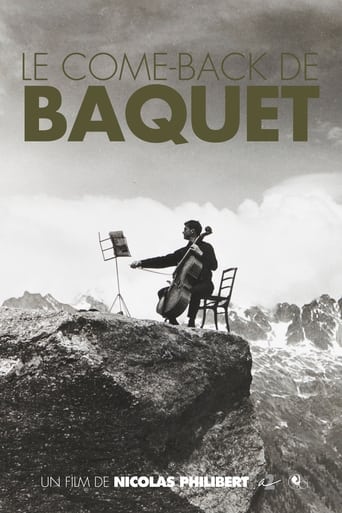
10.0July 1956: like every summer, the actor and cellist Maurice Baquet temporarily deserts the stage and the cinema studios to go to Chamonix where the mountaineer Gaston Rebuffat is waiting for him. A few days later, the two men achieved a historic first, that of the south face of the Aiguille du Midi (3,842 m), a magnificent wall rising like a rampart above the Vallée Blanche. July 1988: to pay tribute to the memory of his friend Gaston, now deceased, Maurice Baquet once again climbed this wall suspended between heaven and earth with the man who, 50 years his junior, is considered one of his best contemporary mountaineers: Christophe Profit.
Baquet's Comeback
1988
On the occasion of Catherine's 50th birthday, her parents, relatives, and friends step in front of the camera to wish her a happy birthday.
Pour Catherine
1995
 6.3
6.3Every year, thousands of students – mostly female – embark upon courses that will lead them to become nurses. This film follows the ups and downs of an apprenticeship that will confront them, often at a young age, with human fragility, suffering, illness, the flaws in souls and bodies.
Each and Every Moment
2018
6.3Every year, thousands of students – mostly female – embark upon courses that will lead them to become nurses. This film follows the ups and downs of an apprenticeship that will confront them, often at a young age, with human fragility, suffering, illness, the flaws in souls and bodies.
Each and Every Moment
2018
Interview with Jack Thiney, taxidermist at the National Museum of Natural History, in Paris. Complementary bonus film to the DVD edition of "Animals" (autumn 2002).
What Drives the Taxidermist
2002
Interview with Jack Thiney, taxidermist at the National Museum of Natural History, in Paris. Complementary bonus film to the DVD edition of "Animals" (autumn 2002).
What Drives the Taxidermist
2002
 10.0
10.0While shooting Gerard Mordillat's film, "Billy ze Kick", Christophe Profit, one of the best climbers in the world, was asked to stand in for an actor. He will, without ropes or belay, climb the smooth side of a 60 meter building.
The North Face of the Camembert
1985
 6.4
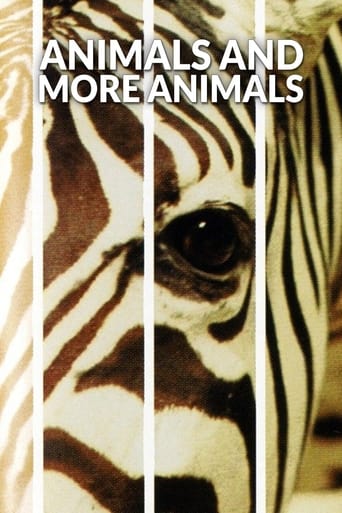
6.4This fascinating French documentary chronicles the reopening of the Zoology Hall in the Paris Museum of Natural History in 1993. It had been closed for almost thirty years and it took three years of hard work to restore it and the stuffed creatures within.
Animals and More Animals
1994
6.4This fascinating French documentary chronicles the reopening of the Zoology Hall in the Paris Museum of Natural History in 1993. It had been closed for almost thirty years and it took three years of hard work to restore it and the stuffed creatures within.
Animals and More Animals
1994
Interview with Jean Oury, director of the La Borde psychiatric clinic. Complementary bonus film to the DVD edition of "La Moindre des Choses" (Every Little Thing), autumn 2002.
The Invisible
2002
A TV-special offering more than three and a half hours of the latest standout production in the diverse and eclectic world of short films and documentaries.
La nuit du court 2011
2011
Four hundred animal portraits. This film was made for the renovated Grande Galerie in the National Natural History Museum in Paris.
Family Portraits
1994
Four hundred animal portraits. This film was made for the renovated Grande Galerie in the National Natural History Museum in Paris.
Family Portraits
1994
6.2A filmmaker returns to Normandy thirty years after a working on a movie based on a local homicide and tries to find the actors who worked on the project.
Back to Normandy
2007
Clinging to the middle of the mountain like so many spiders, a dozen filmmakers and mountain guides busy themselves above the abyss to film Christophe Profit's ascent of Le Dru. Little by little, the director finds himself dreaming of the tranquil seaside holidays he might have had, like so many other nice people.
No Problem
1986
 NR
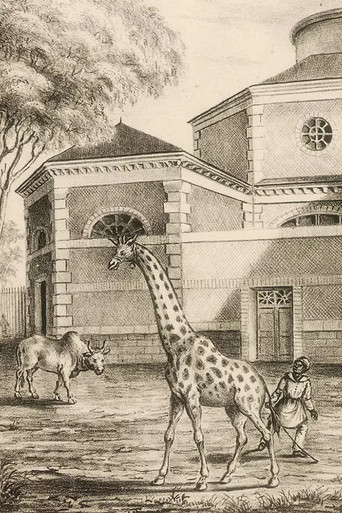
NRA visitors’ day in a Parisian zoo is about to end. The last guests, tired with attractions, are going back home. What happens to the zoo residents, which are not closely looked at, after the gates are closed? Tired animals listen to one another’s voices. Slowly, their calls fall silent deeper into the night, which drowns each cage in darkness. Before it becomes completely dark, the birds once again announce from afar the end of a long day.
Night Falls on the Menagerie
2010