
Directing
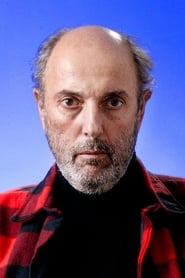
Héctor Babenco
Born — Died
1946-02-07 — 2016-07-14
Place of birth
Buenos Aires, Argentina
Known for
Directing
Credits
44 titles
Héctor Eduardo Babenco (born in Buenos Aires but raised in Mar del Plata) was an Argentine-born Brazilian film director, screenwriter, producer and actor. He has worked in several countries including Argentina, Brazil and the United States.
Known for
 7.0
7.0The story of two radically different men thrown together in a Latin American prison cell. One is Valentin, a journalist being tortured for his political beliefs. The other is Molina, a gay window-dresser who fills their lonely nights by spinning romantic fantasies drawn from memories of old movies.
Kiss of the Spider Woman
1985
 6.6
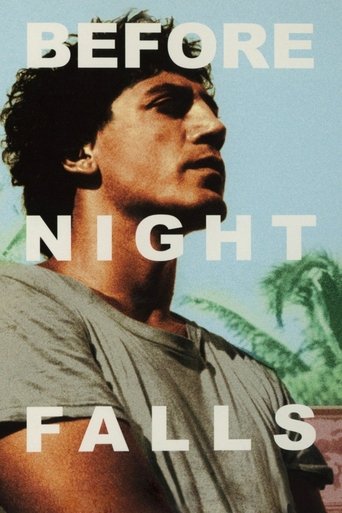
6.6Spanning several decades, this powerful biopic offers a glimpse into the life of famed Cuban poet and novelist Reinaldo Arenas, an artist who was vilified for his homosexuality in Fidel Castro's Cuba.
Before Night Falls
2000
 7.6
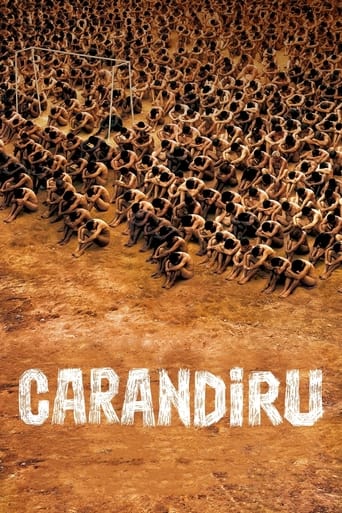
7.6When a doctor decides to carry out an AIDS prevention program inside Latin America’s largest prison: the Casa de Detenção de São Paulo – Carandiru, he meets the future victims of one of the darkest days in Brazilian history.
Carandiru
2003
 7.9
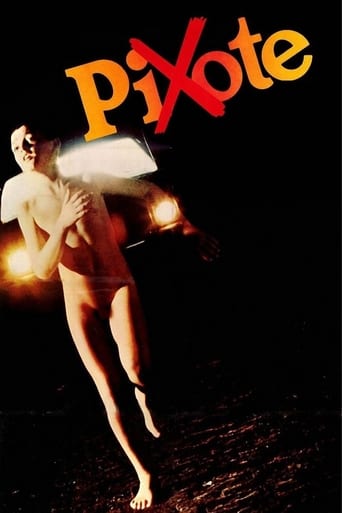
7.910-year-old Pixote endures torture, degradation, and corruption at a local youth detention center where two of its members are murdered by policemen who frame Lilica, a 17-year-old trans hustler. Pixote helps Lilica and three other boys escape and they start to make their living by a life of crime which only escalates to more violence and death.
Pixote
1980
 6.4
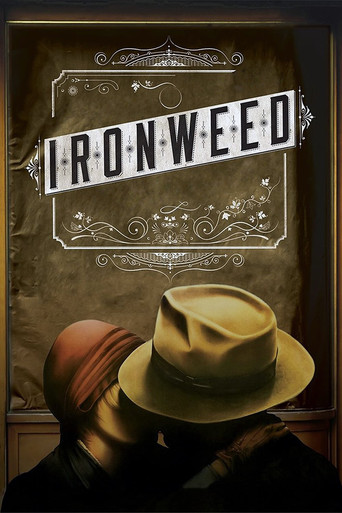
6.4An alcoholic drifter spends Halloween in his hometown of Albany, New York after returning there for the first time in decades.
Ironweed
1987
 NR
NRThe historical, political, and social context of Brazil in the 1960s, 1970s, and 1980s, and the impact of each decade on the life and work of the acclaimed actress Marília Pêra.
Viva Marília
2026
Film credits
2020s · 2 titles
NRThe historical, political, and social context of Brazil in the 1960s, 1970s, and 1980s, and the impact of each decade on the life and work of the acclaimed actress Marília Pêra.
Viva Marília
2026
 7.1
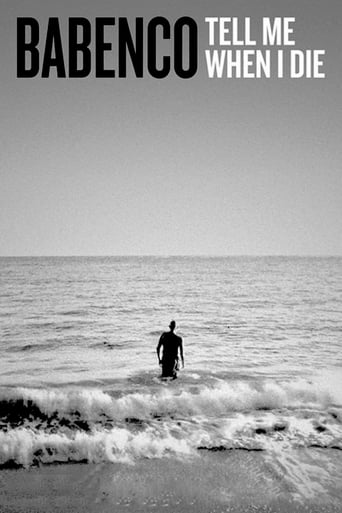
7.1Besieged by cancer and nearing the end, the genius Argentine-Brazilian filmmaker Héctor Babenco (1946-2016) asks Bárbara Paz, his wife, for one last wish: to be the protagonist of his own death.
Babenco: Tell Me When I Die
2020
2010s · 5 titles
 7.3
7.3A chronicle of the personal life and public career of the celebrated artist and filmmaker Julian Schnabel.
Julian Schnabel: A Private Portrait
2017
 8.2
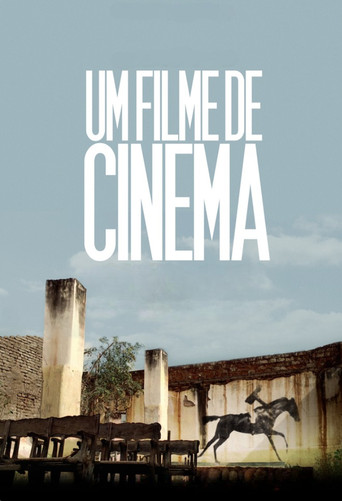
8.2An abandoned tumbledown theater in the outback of Paraíba state is the initial setting of a film about cinema, which explores the testimonials of the novelist and playwright Ariano Suassuna and other filmmakers such as Ruy Guerra, Julio Bressane, Ken Loach, Andrzej Wajda, Karim Ainouz, José Padilha, Hector Babenco, Vilmos Zsigmond, Béla Tarr, Gus Van Sant and Jia Zhangke. They all respond to two basic questions: why do they make movies and why do they serve the seventh art. The filmmakers share their thoughts about time, narrative, rhythm, light, movement, the meaning of tragedy, the audience‘s desires and the boundaries with other forms of art.
About Cinema
2015
 6.8
6.8This revealing documentary about the Brazilian sex symbol goes deep into her career as she pivoted from dancer to singer to adult film star.
Rita Cadillac: The Lady of the People
2010
 8.5
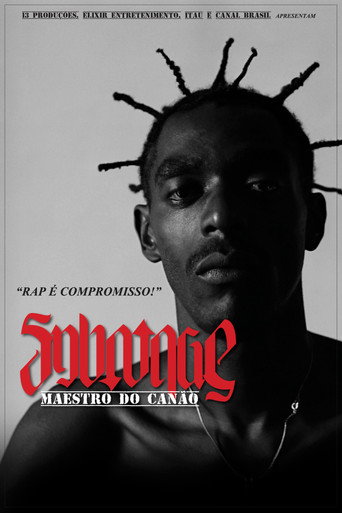
8.5Mauro Mateus dos Santos was known by another name: Sabotage. Growing up amidst poverty in São Paulo, the musician, who became a legend after his death, is one of the most important names in national rap.
Sabotage: Maestro do Canão
2015
 NR
NRDr. Drauzio Varella has a hypothetical conversation with his friend Hector Babenco, a filmmaker who died in 2016. The importance of friendship is addressed in the documentary based on the death of a friend — and shows the decrease in happiness and the irreplaceable void left by this game.
Talk to Him
2018
2000s · 7 titles
6.6Spanning several decades, this powerful biopic offers a glimpse into the life of famed Cuban poet and novelist Reinaldo Arenas, an artist who was vilified for his homosexuality in Fidel Castro's Cuba.
Before Night Falls
2000
 7.9
7.9Seventy critics and filmmakers discuss cinema around the conflict between the artist and the observer, the creator and the critic. Between 1998 and 2007, Kléber Mendonça Filho recorded testimonies about this relationship in Brazil, the United States and Europe, based on his experience as a critic.
Critic
2008
 NR
NRA making-of directed by Bodanzky himself, the documentary discusses the language of the film Iracema - Uma Transa Amazônica 30 years after it was made, gathering interviews with the authors, actors, critics and the filmmakers themselves.
Once Upon a Time There Was Iracema
2005
 7.3
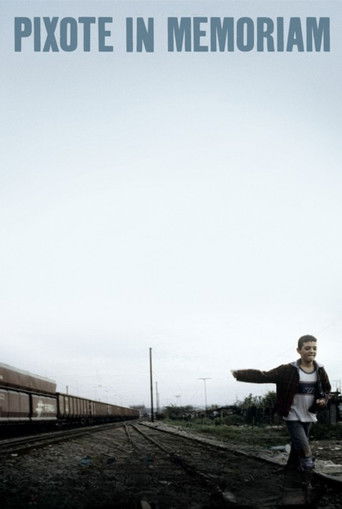
7.3A tribute documentary on Fernando Ramos da Silva, the famous child star of the acclaimed film by Hector Babenco, "Pixote, a Lei do Mais Fraco" (1981). 20 years after his assassination by the police, his co-stars and Babenco talk about Fernando's contributions to the film, his troubled life when his acting works didn't took off as expected (since he was typecast) and which made him turn back to his past life of poverty and crimes. The project also presents that film's influence to many directors and artists around the world.
Pixote In Memoriam
2007
 4.1
4.1Three metropolitan stories entwine in São Paulo. Would-be actress Marina arrives in the city looking for independence, falls madly in love with Justine, a bisexual rock singer, and is swept up into her wild, edgy lifestyle. Marina shares a flat on Avenida Paulista with Suzana, a mysterious lawyer who begins a relationship with a male colleague who is unaware that she's transsexual. Jay lives a few floors above them. He is a frustrated writer trying to give a meaning to his life by idealizing a stunningly beautiful prostitute, whom he transforms into a sort of muse. Following the frenetic pace of the city, the three "Paulista" characters will experience the euphoria of passion and its downside.
Paulista
2009
 6.2
6.2After 12 years, Sofía and Rímini decided to separate. While Rímini finds it easy to move on and start a new life, Sofía stays stuck in the past and constantly harasses him. She reappears again and again on Rímini's horizon to reconquer him, torture him or redeem him.
The Past
2007
 8.5
8.5Rare documents and details of the film's story. From its initial option to its critical reception and legacy. Director David Weisman, who also produced "Kiss of the Spider Woman", comes off as rightful creative force behind the production, as it was his true passion. Very detailed comments from all the participants, from the author of the book to the lawyer for the production company, the actors, director, writers, producer, and crew members.
Tangled Web: Making Kiss of the Spider Woman
2008

Behind the camera
7.0The story of two radically different men thrown together in a Latin American prison cell. One is Valentin, a journalist being tortured for his political beliefs. The other is Molina, a gay window-dresser who fills their lonely nights by spinning romantic fantasies drawn from memories of old movies.
Kiss of the Spider Woman
1985
7.6When a doctor decides to carry out an AIDS prevention program inside Latin America’s largest prison: the Casa de Detenção de São Paulo – Carandiru, he meets the future victims of one of the darkest days in Brazilian history.
Carandiru
2003
7.6When a doctor decides to carry out an AIDS prevention program inside Latin America’s largest prison: the Casa de Detenção de São Paulo – Carandiru, he meets the future victims of one of the darkest days in Brazilian history.
Carandiru
2003
7.6When a doctor decides to carry out an AIDS prevention program inside Latin America’s largest prison: the Casa de Detenção de São Paulo – Carandiru, he meets the future victims of one of the darkest days in Brazilian history.
Carandiru
2003
7.910-year-old Pixote endures torture, degradation, and corruption at a local youth detention center where two of its members are murdered by policemen who frame Lilica, a 17-year-old trans hustler. Pixote helps Lilica and three other boys escape and they start to make their living by a life of crime which only escalates to more violence and death.
Pixote
1980
7.910-year-old Pixote endures torture, degradation, and corruption at a local youth detention center where two of its members are murdered by policemen who frame Lilica, a 17-year-old trans hustler. Pixote helps Lilica and three other boys escape and they start to make their living by a life of crime which only escalates to more violence and death.
Pixote
1980
7.910-year-old Pixote endures torture, degradation, and corruption at a local youth detention center where two of its members are murdered by policemen who frame Lilica, a 17-year-old trans hustler. Pixote helps Lilica and three other boys escape and they start to make their living by a life of crime which only escalates to more violence and death.
Pixote
1980
6.4An alcoholic drifter spends Halloween in his hometown of Albany, New York after returning there for the first time in decades.
Ironweed
1987
 6.6
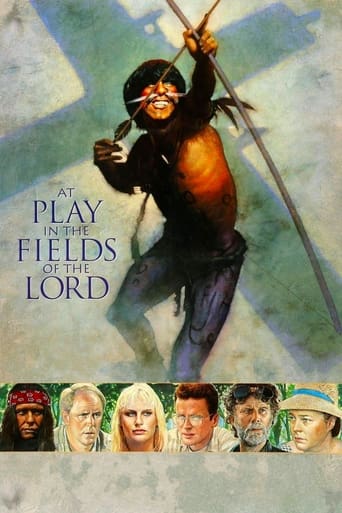
6.6Martin and Hazel Quarrier are small-town fundamentalist missionaries sent to the jungles of South America to convert the Indians. Their remote mission was previously run by the Catholics, before the natives murdered them all. They are sent by the pompous Leslie Huben, who runs the missionary effort in the area but who seems more concerned about competing with his Catholic 'rivals' than in the Indians themselves. Hazel is terrified of the Indians while Martin is fascinated. Soon American pilot Lewis Moon joins the Indian tribe but is attracted by Leslie's young wife, Andy. Can the interaction of these characters and cultures, and the advancing bulldozers of civilization, avoid disaster?
At Play in the Fields of the Lord
1991
6.6Martin and Hazel Quarrier are small-town fundamentalist missionaries sent to the jungles of South America to convert the Indians. Their remote mission was previously run by the Catholics, before the natives murdered them all. They are sent by the pompous Leslie Huben, who runs the missionary effort in the area but who seems more concerned about competing with his Catholic 'rivals' than in the Indians themselves. Hazel is terrified of the Indians while Martin is fascinated. Soon American pilot Lewis Moon joins the Indian tribe but is attracted by Leslie's young wife, Andy. Can the interaction of these characters and cultures, and the advancing bulldozers of civilization, avoid disaster?
At Play in the Fields of the Lord
1991
 5.7
5.7The first of four installments in the groundbreaking Heartbeat of the World anthology film series. Comprised of several short films by some of the world's most exciting directors, Words with Gods follows the theme of religion - specifically as it relates to an individual's relationship with his/her god or gods...or the lack thereof. In Words with Gods, each director recounts a narrative centered around human fragility, as well as environmental and cultural crises involving specific religions with which each has a personal relationship; including early Aboriginal Spirituality, Umbanda, Buddhism, the Abrahamic faiths, Hinduism, and Atheism. An animated sequence by Mexican animator Maribel Martinez is woven through each of the film segments, with each segment narratively connected as a feature-length film.
Words with Gods
2014
5.7The first of four installments in the groundbreaking Heartbeat of the World anthology film series. Comprised of several short films by some of the world's most exciting directors, Words with Gods follows the theme of religion - specifically as it relates to an individual's relationship with his/her god or gods...or the lack thereof. In Words with Gods, each director recounts a narrative centered around human fragility, as well as environmental and cultural crises involving specific religions with which each has a personal relationship; including early Aboriginal Spirituality, Umbanda, Buddhism, the Abrahamic faiths, Hinduism, and Atheism. An animated sequence by Mexican animator Maribel Martinez is woven through each of the film segments, with each segment narratively connected as a feature-length film.
Words with Gods
2014
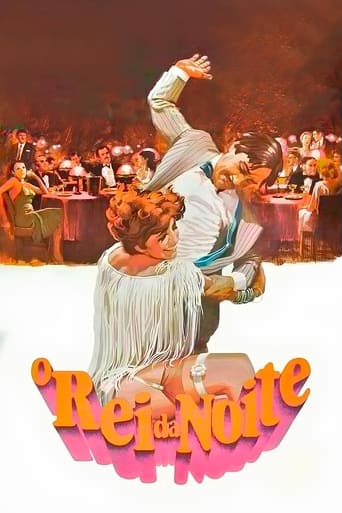 6.2
6.2In the 1940s, São Paulo nightlife is the setting for Tezinho's love affairs. In love with Aninha, he needs to get away from the girl and ends up getting involved with other women, including an obsessive relationship with a prostitute.
King of the Night
1975
6.2In the 1940s, São Paulo nightlife is the setting for Tezinho's love affairs. In love with Aninha, he needs to get away from the girl and ends up getting involved with other women, including an obsessive relationship with a prostitute.
King of the Night
1975
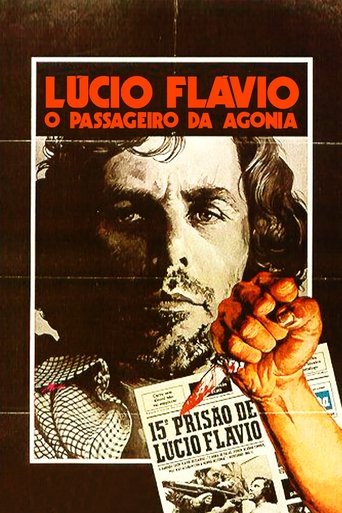 7.1
7.1Story of Brazilian bank-robber Lúcio Flávio, who fascinated some people in Rio de Janeiro during the 1970s for his bold robberies and spectacular escapes, and also because he was thought to be intelligent and "politically aware". Before dying, he disclosed a network of corruption in Brazilian Police, and its involvement with the infamous "Death Squad" of the time, a group of policemen who went about killing criminals without giving them a fair trial.
Lucio Flavio
1977
7.1Story of Brazilian bank-robber Lúcio Flávio, who fascinated some people in Rio de Janeiro during the 1970s for his bold robberies and spectacular escapes, and also because he was thought to be intelligent and "politically aware". Before dying, he disclosed a network of corruption in Brazilian Police, and its involvement with the infamous "Death Squad" of the time, a group of policemen who went about killing criminals without giving them a fair trial.
Lucio Flavio
1977
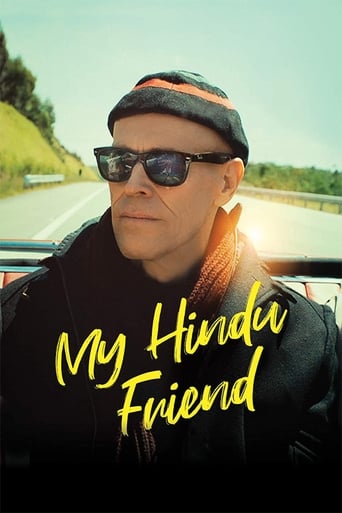 4.1
4.1Diego is a film director who, when he is told that he has a malignant disease which could be fatal, marries his girlfriend of many years, says goodbye to his friends and begins a routine of long days of treatment in hospital. While learning to live with the pain and also conversing with death, he meets a Hindu boy who is a fellow patient and who becomes his friend. But one day the boy disappears. Diego is discharged, but his life has changed forever. His marriage fails and, living alone, he begins to wonder whether he may in fact be dying and no one has told him. He tries to find out what happened to his Hindu friend, and eventually meets another woman.
My Hindu Friend
2016
4.1Diego is a film director who, when he is told that he has a malignant disease which could be fatal, marries his girlfriend of many years, says goodbye to his friends and begins a routine of long days of treatment in hospital. While learning to live with the pain and also conversing with death, he meets a Hindu boy who is a fellow patient and who becomes his friend. But one day the boy disappears. Diego is discharged, but his life has changed forever. His marriage fails and, living alone, he begins to wonder whether he may in fact be dying and no one has told him. He tries to find out what happened to his Hindu friend, and eventually meets another woman.
My Hindu Friend
2016
6.2After 12 years, Sofía and Rímini decided to separate. While Rímini finds it easy to move on and start a new life, Sofía stays stuck in the past and constantly harasses him. She reappears again and again on Rímini's horizon to reconquer him, torture him or redeem him.
The Past
2007
6.2After 12 years, Sofía and Rímini decided to separate. While Rímini finds it easy to move on and start a new life, Sofía stays stuck in the past and constantly harasses him. She reappears again and again on Rímini's horizon to reconquer him, torture him or redeem him.
The Past
2007
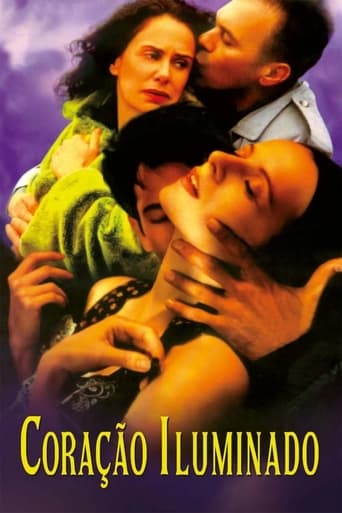 5.0
5.0Living with his parents, 17-year-old Juan hangs out with several intellectuals who would like to photograph the human soul. The girlfriend of the group's financier is Ana, and Juan is attracted to her, despite the knowledge that she spent two years at a clinic because she was "crazy." Juan sees Ana when he can and trains as a door-to-door salesman, but when the German photographer on the soul project gives him a viewfinder, it changes his life, putting him on the path to his later success as a Hollywood director.
Foolish Heart
1998
5.0Living with his parents, 17-year-old Juan hangs out with several intellectuals who would like to photograph the human soul. The girlfriend of the group's financier is Ana, and Juan is attracted to her, despite the knowledge that she spent two years at a clinic because she was "crazy." Juan sees Ana when he can and trains as a door-to-door salesman, but when the German photographer on the soul project gives him a viewfinder, it changes his life, putting him on the path to his later success as a Hollywood director.
Foolish Heart
1998
5.0Living with his parents, 17-year-old Juan hangs out with several intellectuals who would like to photograph the human soul. The girlfriend of the group's financier is Ana, and Juan is attracted to her, despite the knowledge that she spent two years at a clinic because she was "crazy." Juan sees Ana when he can and trains as a door-to-door salesman, but when the German photographer on the soul project gives him a viewfinder, it changes his life, putting him on the path to his later success as a Hollywood director.
Foolish Heart
1998
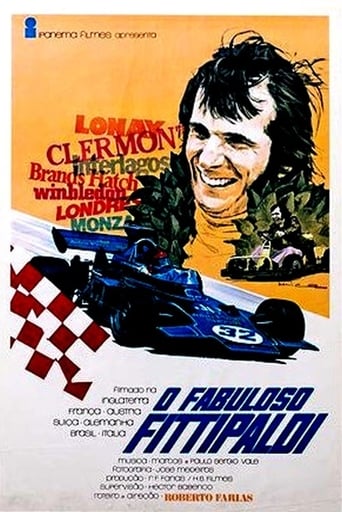 10.0
10.0Documentary about race car driver Emerson Fittipaldi
O Fabuloso Fittipaldi
1973
10.0Documentary about race car driver Emerson Fittipaldi
O Fabuloso Fittipaldi
1973
No synopsis available yet.
Museu de Arte de São Paulo Assis Chateaubriand
—
No synopsis available yet.
Museu de Arte de São Paulo Assis Chateaubriand
—
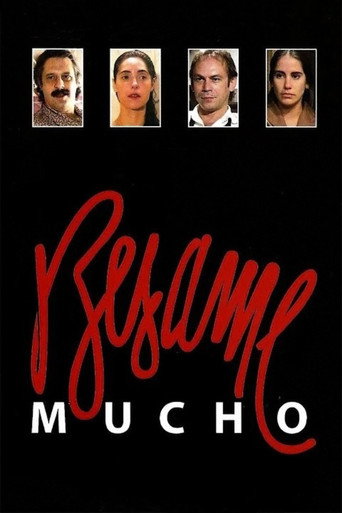 4.8
4.8The story of two couples - Xico and Olga, Tuca and Dina - through 20 years of friendship, from adolescent dreams to maturity frustrations. They meet in a small town in the State of São Paulo, but one of the couples decides to try their luck in the big city. As background, the political events in the 60's and 70's, and how they affect their lives.
Besame Mucho
1987
In a tragic example of life imitating art, Babenco returned to São Paolo to shoot this prologue to “Pixote” which examines the true story of Fernando Ramos da Silva, the lead actor from “Pixote,” and the circumstances of his death at the age of 19, killed by the police under dubious circumstances. - from Yahoo
The Earth is Round like An Orange
1984