

Directing
Marcel Pagnol
Born — Died
1895-02-28 — 1974-04-18
Place of birth
Aubagne, Bouches-du-Rhône, France
Known for
Directing
Credits
45 titles
Marcel Paul Pagnol (28 February 1895 – 18 April 1974) was a French novelist, playwright, and filmmaker. Regarded as an auteur, in 1946, he became the first filmmaker elected to the Académie française. Although his work is less fashionable than it once was, Pagnol is still generally regarded as one of France's greatest 20th-century writers and is notable for the fact that he excelled in almost every medium—memoir, novel, drama and film. Pagnol was born on 28 February 1895 in Aubagne, Bouches-du-Rhône department, in southern France near Marseille, the eldest son of schoolteacher Joseph PagnolA and seamstress Augustine Lansot. Marcel Pagnol grew up in Marseille with his younger brothers Paul a…
Known for
 5.0
5.0No synopsis available yet.
Reflets de Cannes
1954
Produced for television by Claude-Jean Philippe, the « Encyclopédie audiovisuelle du cinéma », recounts the history of French cinema from its birth to the beginning of the 1960s. With commentary read by Jean Rochefort.
Encyclopédie audiovisuelle du cinéma
1978
 7.3
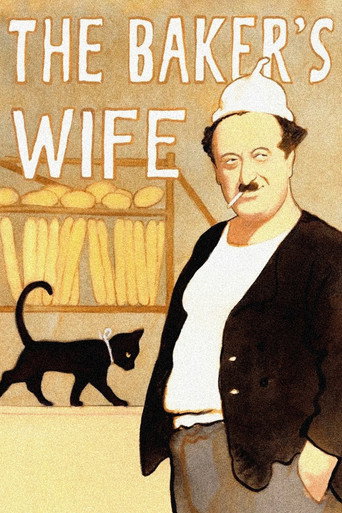
7.3In this little Provencal village, a new baker, Aimable, settles down. His wife Aurelie is beautiful and much younger than he. She departs with a shepherd the night after Aimable produces his first breads. Aimable is so afflicted that he can not work anymore. Therefore, the villagers, who initially laughed at his cuckoldry, take the matter very seriously (they want the bread) and organize a plan to find Aurelie and to bring her back to the bakery.
The Baker's Wife
1938
 6.3
6.3At the end of the 1950s, four humor specialists simultaneously experienced recognition. Fernandel with “The Cow and the Prisoner”, Bourvil with “The Hunchback”, Jacques Tati with “My Uncle” and Louis de Funès with “Oscar” at the theater. On the big screen or on stage, each of these artists has a unique style of humor. They are the kings of French comedy. But how did they manage to become true box office champions? How did they experience their immense popularity? How do they still influence the comedy genre? And above all, are- are they funny in life? Where is the line between their character in the cinema and their real personality?
Les Rois de la comédie
2023
 7.1
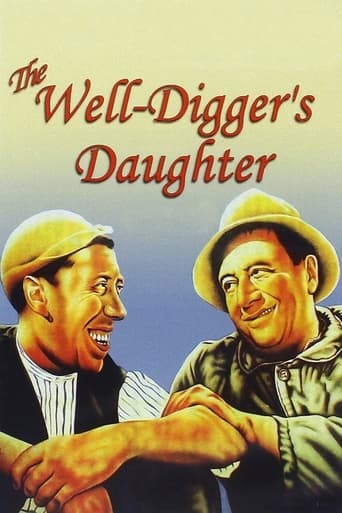
7.1A rural maiden's two suitors go off to war, leaving her pregnant.
The Well-Digger's Daughter
1940
 7.4
7.4César runs a bar along Marseilles' port, assisted by his 23-year-old son, Marius. Friends since childhood, Fanny and Marius love each other, but Marius has a secret wanderlust: every ship's whistle stirs a longing for foreign lands. When M. Panisse seeks Fanny's hand in marriage and when a departing clipper needs a deckhand, Marius and Fanny must decide who and what they love most. César, with his generous, wise spirit, tries to guide his son.
Marius
1931
Film credits

Series credits
5.0No synopsis available yet.
Reflets de Cannes
1954
Produced for television by Claude-Jean Philippe, the « Encyclopédie audiovisuelle du cinéma », recounts the history of French cinema from its birth to the beginning of the 1960s. With commentary read by Jean Rochefort.
Encyclopédie audiovisuelle du cinéma
1978
Behind the camera
7.3In this little Provencal village, a new baker, Aimable, settles down. His wife Aurelie is beautiful and much younger than he. She departs with a shepherd the night after Aimable produces his first breads. Aimable is so afflicted that he can not work anymore. Therefore, the villagers, who initially laughed at his cuckoldry, take the matter very seriously (they want the bread) and organize a plan to find Aurelie and to bring her back to the bakery.
The Baker's Wife
1938
7.3In this little Provencal village, a new baker, Aimable, settles down. His wife Aurelie is beautiful and much younger than he. She departs with a shepherd the night after Aimable produces his first breads. Aimable is so afflicted that he can not work anymore. Therefore, the villagers, who initially laughed at his cuckoldry, take the matter very seriously (they want the bread) and organize a plan to find Aurelie and to bring her back to the bakery.
The Baker's Wife
1938
7.3In this little Provencal village, a new baker, Aimable, settles down. His wife Aurelie is beautiful and much younger than he. She departs with a shepherd the night after Aimable produces his first breads. Aimable is so afflicted that he can not work anymore. Therefore, the villagers, who initially laughed at his cuckoldry, take the matter very seriously (they want the bread) and organize a plan to find Aurelie and to bring her back to the bakery.
The Baker's Wife
1938
7.1A rural maiden's two suitors go off to war, leaving her pregnant.
The Well-Digger's Daughter
1940
7.1A rural maiden's two suitors go off to war, leaving her pregnant.
The Well-Digger's Daughter
1940
7.4César runs a bar along Marseilles' port, assisted by his 23-year-old son, Marius. Friends since childhood, Fanny and Marius love each other, but Marius has a secret wanderlust: every ship's whistle stirs a longing for foreign lands. When M. Panisse seeks Fanny's hand in marriage and when a departing clipper needs a deckhand, Marius and Fanny must decide who and what they love most. César, with his generous, wise spirit, tries to guide his son.
Marius
1931
7.4César runs a bar along Marseilles' port, assisted by his 23-year-old son, Marius. Friends since childhood, Fanny and Marius love each other, but Marius has a secret wanderlust: every ship's whistle stirs a longing for foreign lands. When M. Panisse seeks Fanny's hand in marriage and when a departing clipper needs a deckhand, Marius and Fanny must decide who and what they love most. César, with his generous, wise spirit, tries to guide his son.
Marius
1931
 6.5
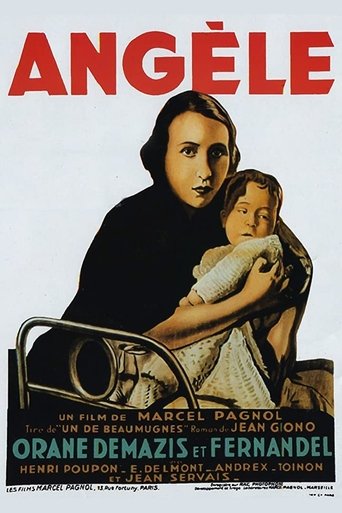
6.5Angèle is a 1934 French drama film directed, produced and written by Marcel Pagnol. It stars Orane Demazis as a naive young woman who is seduced and abandoned. It is based on the novel Un de Baumugnes by Jean Giono.
Angele
1934
6.5Angèle is a 1934 French drama film directed, produced and written by Marcel Pagnol. It stars Orane Demazis as a naive young woman who is seduced and abandoned. It is based on the novel Un de Baumugnes by Jean Giono.
Angele
1934
 6.9
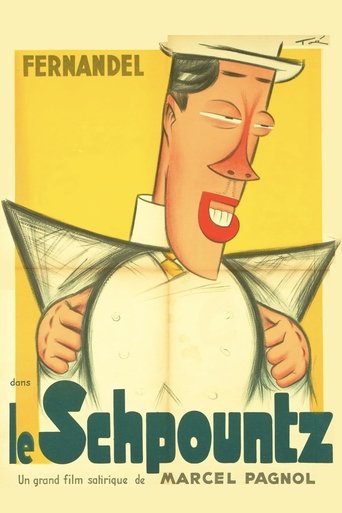
6.9A pompous grocer’s assistant in Marseille annoys a visiting film crew so much that they prank him with a phony acting contract; believing it to be real, the “schpountz” heads to Paris for his new career.
Heartbeat
1938
6.9A pompous grocer’s assistant in Marseille annoys a visiting film crew so much that they prank him with a phony acting contract; believing it to be real, the “schpountz” heads to Paris for his new career.
Heartbeat
1938
 7.7
7.7Leaping forward twenty years, the trilogy continues with the death of Fanny's husband, Panisse, and the discovery of her secret by her son, Césariot. The young man resolves to track down his biological father, Marius, whose life has been fraught with calamity and poverty.
César
1936
7.7Leaping forward twenty years, the trilogy continues with the death of Fanny's husband, Panisse, and the discovery of her secret by her son, Césariot. The young man resolves to track down his biological father, Marius, whose life has been fraught with calamity and poverty.
César
1936
7.7Leaping forward twenty years, the trilogy continues with the death of Fanny's husband, Panisse, and the discovery of her secret by her son, Césariot. The young man resolves to track down his biological father, Marius, whose life has been fraught with calamity and poverty.
César
1936
 7.5
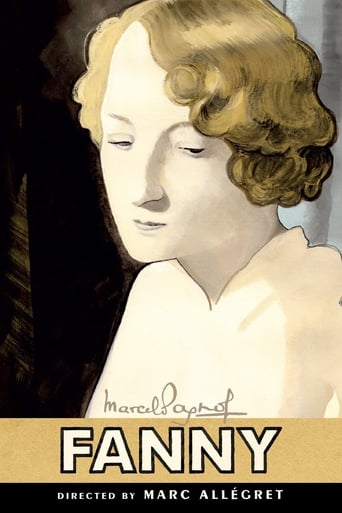
7.5Soon after Marius's departure, Fanny learns that she is pregnant with his child, to the disappointment of her mother and of Marius's father, César. To secure a better life for her unborn child, she accepts a marriage proposal from the aging widower Honoré Panisse.
Fanny
1932
7.5Soon after Marius's departure, Fanny learns that she is pregnant with his child, to the disappointment of her mother and of Marius's father, César. To secure a better life for her unborn child, she accepts a marriage proposal from the aging widower Honoré Panisse.
Fanny
1932
 NR
NRNo synopsis available yet.
La Prière aux étoiles (film inachevé)
1941
NRNo synopsis available yet.
La Prière aux étoiles (film inachevé)
1941
 6.6
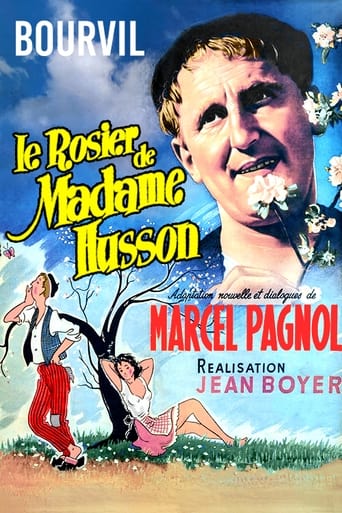
6.6Madame Husson and her circle of holier-than-thou ladies (including an old maid Madame Cadenas)are looking for a chaste and pure girl who will win a hefty sum.
The Prize
1950
 6.8
6.8Albert Topaze, sincere schoolteacher addicted to "rote" morality, works at a private school run by supremely money-grubbing M. Muche, whose daughter, also a teacher, makes cynical use of the knowledge that Topaze loves her. Alas, Topaze's naive honesty brings him unjust dismissal...and makes him fair game for the "aunt" of his private pupil, really the mistress of crooked politician Regis, who needs an honest-seeming "front man." Can artful Suzy Courtois keep Topaze on the string? With steadily escalating disillusion comes moral crisis...
Topaze
1951
6.8Albert Topaze, sincere schoolteacher addicted to "rote" morality, works at a private school run by supremely money-grubbing M. Muche, whose daughter, also a teacher, makes cynical use of the knowledge that Topaze loves her. Alas, Topaze's naive honesty brings him unjust dismissal...and makes him fair game for the "aunt" of his private pupil, really the mistress of crooked politician Regis, who needs an honest-seeming "front man." Can artful Suzy Courtois keep Topaze on the string? With steadily escalating disillusion comes moral crisis...
Topaze
1951
 6.8
6.8In the 30s, a small village in the Provence is losing its inhabitants because young people prefer to go to the city to find easy jobs and escape from being farmers living in relative poverty. Only a few old people and the poacher Panturle remain. Panturle dreams of bringing the village back to life, finding a wife, founding a family and work as a farmer. One day, the village is visited by a traveling knife-grinder, Urbain Gedemus and a young woman, Arsule. Gedemus treats Arsule like a slave, but Arsule accept this because she has nowhere to go and -we guess- her 'work' with Gedemus is the last thing that saves her from being a prostitute. When she meets Panturle and knows about his dreams, she escapes from Gedemus and decides to stay with him. Together, they start a new life, made of hard farming work but mostly of happiness to have each other, fulfilling the earlier dreams of Panturle. Can anything break the happiness of their new life?
Harvest
1937
6.8In the 30s, a small village in the Provence is losing its inhabitants because young people prefer to go to the city to find easy jobs and escape from being farmers living in relative poverty. Only a few old people and the poacher Panturle remain. Panturle dreams of bringing the village back to life, finding a wife, founding a family and work as a farmer. One day, the village is visited by a traveling knife-grinder, Urbain Gedemus and a young woman, Arsule. Gedemus treats Arsule like a slave, but Arsule accept this because she has nowhere to go and -we guess- her 'work' with Gedemus is the last thing that saves her from being a prostitute. When she meets Panturle and knows about his dreams, she escapes from Gedemus and decides to stay with him. Together, they start a new life, made of hard farming work but mostly of happiness to have each other, fulfilling the earlier dreams of Panturle. Can anything break the happiness of their new life?
Harvest
1937
 7.2
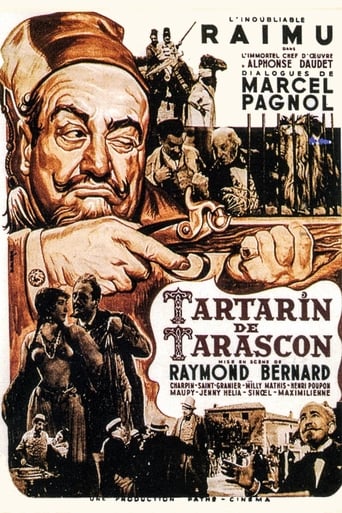
7.2Tartarin is the local hero in the small provincial town of Tarascon. He shows off about imaginary adventures in Africa, where he has never been, as a Lion Hunter, which he is only in his imagination. Even though the locals know he has never been to Africa, they keep hoping he will leave one day. After a misunderstanding, and much gossip, everyone thinks that Tartarin plans to actually take the trip.
Tartarin of Tarascon
1934
 7.1
7.1In the 1920s, the Provence is a magnet for immigrants seeking work in the quarries or in the agriculture. Many mingle with locals and settle down for good — like Toni, an Italian who has moved in with Marie, a Frenchwoman. Even a well-ordered existence is not immune from boredom, friendship, romance, or enmity, and Toni becomes entangled in a web of increasingly passionate relationships. For there is his best pal Fernand, but also Albert, his overbearing foreman; there is Sebastian, a steady Spanish peasant, but also Gabi, his young rogue relative; there is Marie, but there is also Josefa.
Toni
1935
 6.6
6.6Marcel Pagnol's adaptation of his own novel Manon des sources, the story of a shepherdess who exacts her revenge on the townsfolk she blames for killing her father, in two parts: Manon des sources and Ugolin.
Manon of the Spring
1953
6.6Marcel Pagnol's adaptation of his own novel Manon des sources, the story of a shepherdess who exacts her revenge on the townsfolk she blames for killing her father, in two parts: Manon des sources and Ugolin.
Manon of the Spring
1953
6.6Marcel Pagnol's adaptation of his own novel Manon des sources, the story of a shepherdess who exacts her revenge on the townsfolk she blames for killing her father, in two parts: Manon des sources and Ugolin.
Manon of the Spring
1953
 6.5
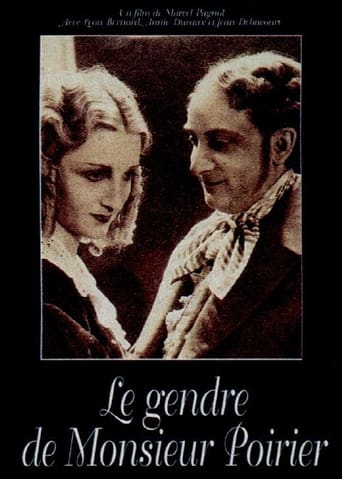
6.5This is the story of a wealthy bourgeois who marries his only child, a daughter, to a penniless nobleman because he hopes to use his son-in-law to get a title. The son-in-law is a lazy, affected stereotype; but M. Poirier is also a stereotype, of the obnoxious big businessman. The poor daughter, who falls in love with her husband, lets him walk all over her.
Mr Poirier's Son-in-Law
1933
6.5This is the story of a wealthy bourgeois who marries his only child, a daughter, to a penniless nobleman because he hopes to use his son-in-law to get a title. The son-in-law is a lazy, affected stereotype; but M. Poirier is also a stereotype, of the obnoxious big businessman. The poor daughter, who falls in love with her husband, lets him walk all over her.
Mr Poirier's Son-in-Law
1933
 NR
NRAnthology film by three directors, "A Day in the Country", "Jofroi" and "The Miracle".
The Ways of Love
1950
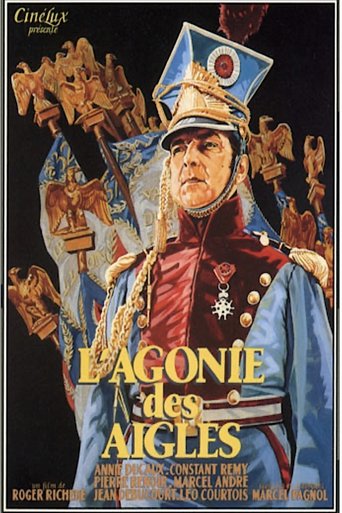 6.4
6.4Under the regime of Louis XVIII. Years after Waterloo, Napoleon's loyal officers live in retirement on half-pay. Useless and idle, they have lost their prestige and keep meeting in the hope of the Emperor’s return. When Napoleon dies, they decide to plot the rise to power of Napoleon II.
L'Agonie des aigles
1933
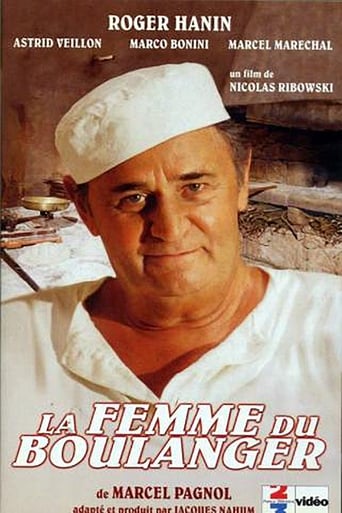 3.5
3.5In a small village of Haute-Provence, it is an event. The abandoned bakery comes back to life. Aimable and his wife Aurélie bring out the first batch of bread for the happiness of the inhabitants. Among the first customers, Dominique, a young shepherd, does not leave Aurélie indifferent...
La femme du boulanger
1999
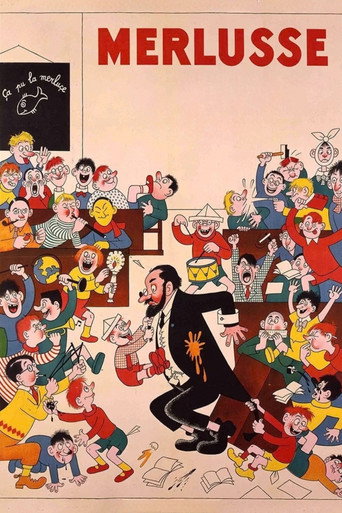 7.2
7.2"Merlusse" is French schoolboy slang for codfish, and M. Blanchard, a professor at a certain lycée, was known to his victims by that name. On Christmas Eve, when some twenty of the students—orphans, foreigners or just plain "unwanteds"—had to remain in the boarding school, Merlusse is placed in charge. His glass eye glares at them stonily, his good one with no less severity. He sets them to tasks, marches like a proctor up and down the aisles, exacts to the utmost the last measure of discipline. But when the youngsters awake in the morning, there are toys by each bed in the dormitory and M. Blanchard, no longer to be called Merlusse, is exposed for the softhearted fraud he is.
Merlusse
1935
7.2"Merlusse" is French schoolboy slang for codfish, and M. Blanchard, a professor at a certain lycée, was known to his victims by that name. On Christmas Eve, when some twenty of the students—orphans, foreigners or just plain "unwanteds"—had to remain in the boarding school, Merlusse is placed in charge. His glass eye glares at them stonily, his good one with no less severity. He sets them to tasks, marches like a proctor up and down the aisles, exacts to the utmost the last measure of discipline. But when the youngsters awake in the morning, there are toys by each bed in the dormitory and M. Blanchard, no longer to be called Merlusse, is exposed for the softhearted fraud he is.
Merlusse
1935
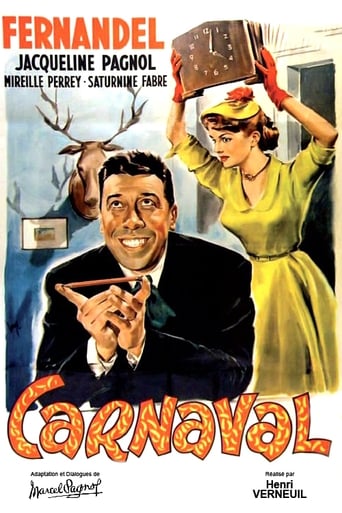 7.8
7.8Dardamelle does not conceal the fact that his wife has made him a cuckold.How will his fellow townspeople react?
Carnival
1953
7.8Dardamelle does not conceal the fact that his wife has made him a cuckold.How will his fellow townspeople react?
Carnival
1953
 7.0
7.0Pierre and Florence meet at the fair in Paris. They vow eternal love and go to Cassis, under the Southern sun. But Florence has a burdensome past: before meeting Pierre she was a kept woman. Her chivalrous lover, Dominique, chooses to set her free. But Pierre is an uncompromising man and, furious with Florence, threatens to leave her...
La Prière aux étoiles
1941
7.0Pierre and Florence meet at the fair in Paris. They vow eternal love and go to Cassis, under the Southern sun. But Florence has a burdensome past: before meeting Pierre she was a kept woman. Her chivalrous lover, Dominique, chooses to set her free. But Pierre is an uncompromising man and, furious with Florence, threatens to leave her...
La Prière aux étoiles
1941
 6.2
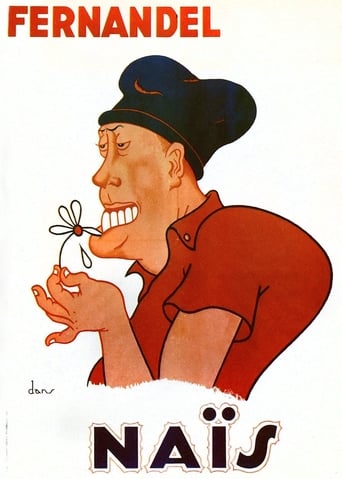
6.2Toine, the local hunchback, works at the tile manufacturing plant, but during the summer, he gives a hand to Micoulin, the farmer, thereby being able to spend more time close to Nais, Micoulin's daughter. That summer, the estate owner's son, Frederic Rostaing, decides to rest on the farm during his vacation from Law school. But his real motives are to seduce young Nais, whom he knows from their childhood days, after having seen her in town. Who will win the power struggle between the possessive father, the naive daughter, the vile student and the golden-hearted cripple?
Naïs
1945